
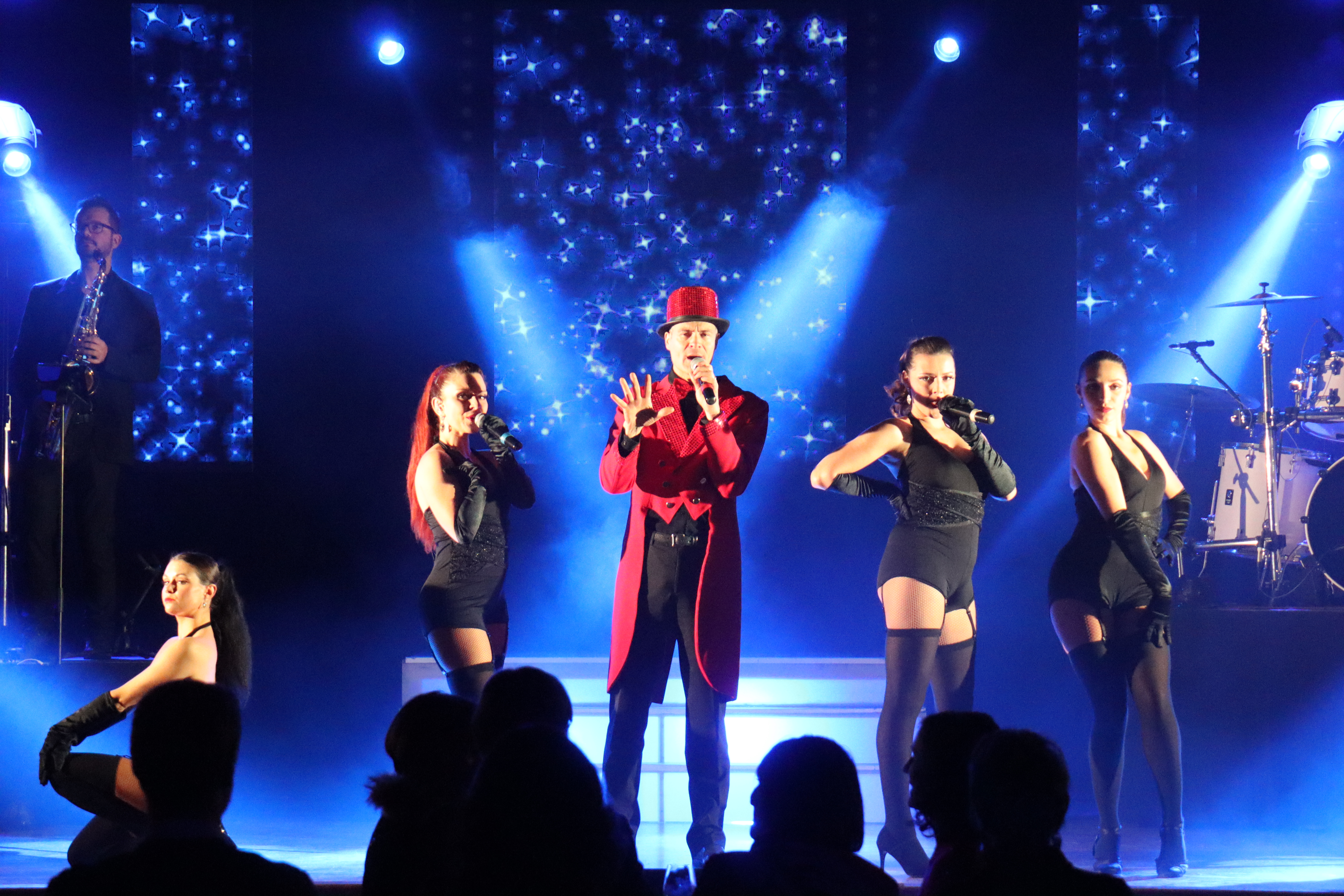
Corporate entertainment show that keeps teams engaged and on-brand
INNOV'events is a Brussels-based event agency delivering corporate entertainment show programmes for 50 to 2,000+ participants across Belgium. We manage the concept, casting, stage direction, technical production, rehearsals, venue coordination and guest experience—so your leadership team can host with confidence.
Whether you need a show to energise a sales kick-off, reward teams after a peak year, or elevate a client evening in Brussels, Antwerp, Ghent or Liège, we build entertainment that matches your culture, message and risk profile.
Sommaire
A corporate entertainment show is not “nice-to-have” entertainment; it is a controlled moment of attention where you can reinforce culture, celebrate performance and support change management. When built correctly, it creates a shared reference point that travels back into offices, plants and project teams long after the applause.
Organisations expect more than a stage and a performer: they need a coherent running order, punctual timing, a safe technical set-up, content suitable for a mixed audience, and a clear division of responsibilities between internal teams and suppliers. They also need certainty: what happens if the CEO runs late, the keynote overruns, or the venue has sound restrictions?
We bring field-proven production discipline—artist contracting, technical riders, cue sheets, rehearsal planning, and contingency options—while protecting your brand and your people. As an event management company, we align entertainment with your objectives, not the other way round.
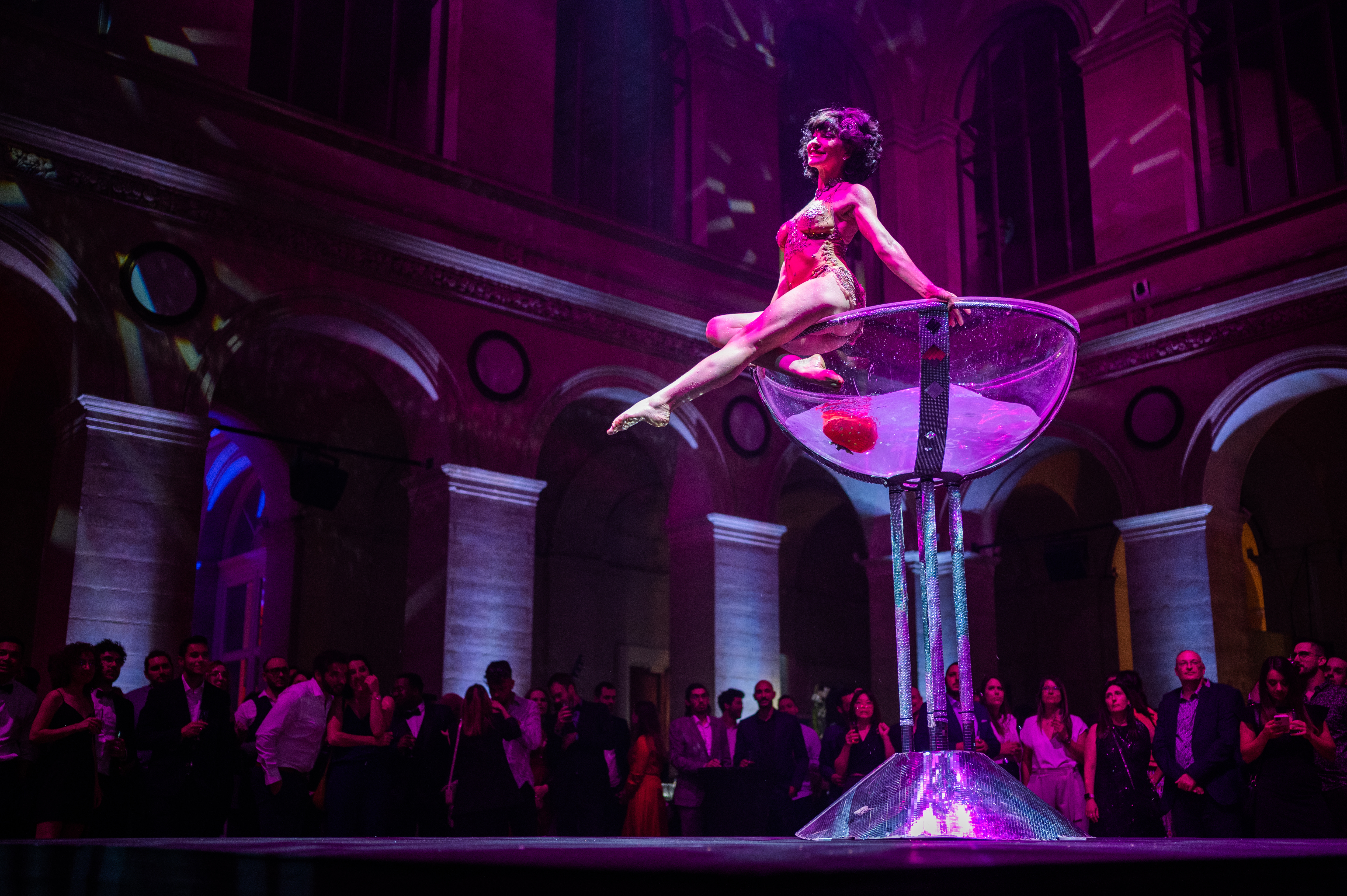
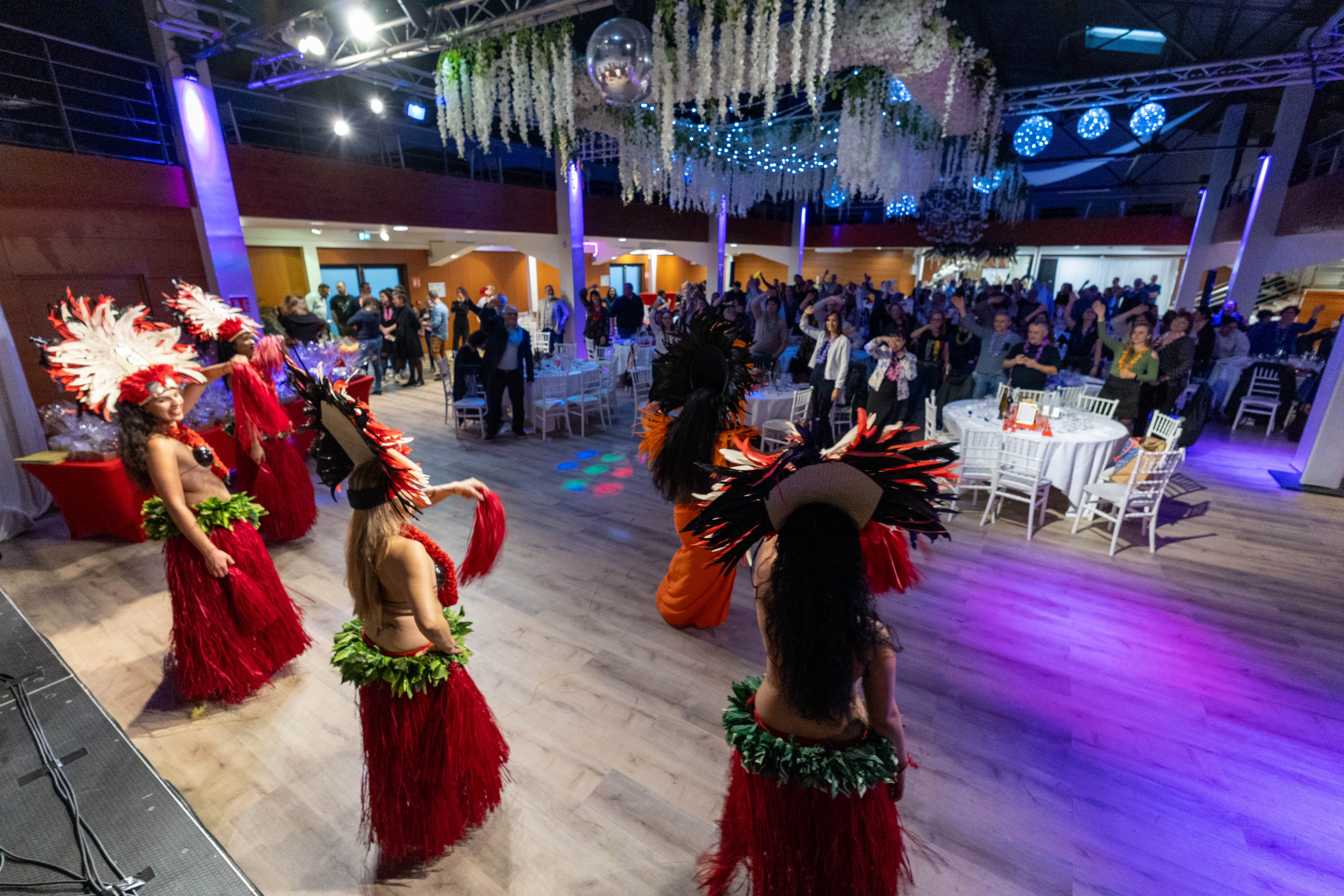
Fast facts decision-makers ask before approving a show
Belgium-wide delivery from Brussels with regular operations in Antwerp, Ghent and Liège, including venue coordination and supplier management.
Scalable formats from compact dinner shows for 80 guests to multi-act programmes for 1,500+ attendees with stage management, rehearsals and full technical production.
Production-ready approach: we work with cue-to-cue running orders, stage plots, sound checks, and a designated show caller to keep timing under control.
Reliable supplier network across Belgium for staging, lighting, sound, video, backline, transport, security and crew—reducing last-minute sourcing risk.
How to organize a professional event ?
- Define the objective (cohesion, announcement, fidelity, performance).
- Set date, format and size (20–1 000 people).
- Secure the venue and accommodation according to seasonality.
- Lock down technical, suppliers and logistics.
- Drive the day J (timing, scene, entrance, flow).
We send you a first proposal within 24h.
Why organise a corporate show event in Belgium?
A corporate show event works when it supports a business moment: a strategic shift, a performance milestone, a culture initiative, or a client relationship objective. In many companies, attention is the rarest resource—an entertainment show earns it, then helps you use it wisely.
We often see this format chosen when teams are dispersed (hybrid work, multiple sites, Benelux structures) and leadership needs one strong collective moment that feels human, not procedural.
Reinforce leadership messages without “corporate fatigue”: a well-paced programme can bracket a keynote with energy, making content more digestible and helping messages land.
Support retention and recognition: recognition moments embedded in the show (awards, promotions, service anniversaries) drive stronger emotional impact than a stand-alone speech, while keeping it professional.
Strengthen cross-team cohesion: interactive show segments (safe, opt-in, well-briefed) create shared stories between departments that rarely collaborate day to day.
Enhance client hospitality: for client evenings, the right entertainment creates a premium feel without turning the night into a “party”. It keeps conversation flowing and supports relationship goals.
Mark change with credibility: after a merger, rebrand, or reorganisation, a show can signal stability and confidence—provided it is aligned with tone and avoids anything that looks disconnected from reality.
Improve event flow: entertainment segments are operational tools—used to manage room resets, dinner service pacing, or transitions between plenary and networking.
In Belgium’s pragmatic business culture, people quickly spot when an event is “just for show”. That is why we design a company entertainment show as a business asset: it must respect budgets, time, safety and brand reputation, while still delivering genuine energy in the room.
Business show animation ideas that work in real corporate rooms
Activities create engagement when they are designed for the context: time of day, audience energy, room layout, and your organisation’s comfort level. We favour formats that are easy to brief, inclusive, and controllable on timing—because the best entertainment fails if it disrupts service or puts guests on the spot.
Interactive animations
Hosted show with structured audience moments: a professional host keeps pacing tight and can integrate leadership messages, awards and transitions. Audience interaction is opt-in (QR vote, short prompts), avoiding awkward “volunteer” pressure.
Live quiz show with team tables: ideal for 120–600 guests. We run it with clean scoring, branded visuals and short rounds to match dinner pacing. Works well for sales kick-offs and internal conventions.
Improvised business theatre: performers turn real workplace scenarios into short sketches after a careful pre-brief with HR/Comms (topics agreed in advance). This is effective for culture themes when handled sensitively.
Art animations
Contemporary live band with tight sets: 2–3 sets of 20–30 minutes keeps energy without turning the event into a nightclub. We manage sound limits, stage footprint and changeovers.
Visual performance acts: LED or light-based shows work well in large plenaries and are language-neutral for international audiences. We verify sightlines, rigging constraints and safety distances.
High-level close-up magic during reception: strong for networking because it creates small-group conversation starters. We brief performers on brand boundaries and sensitive topics.
Innovative animations
Chef-led live finishing stations: rather than a generic buffet, we position 2–4 stations to reduce queues and create a premium feel. We plan power, extraction and service timing with the caterer.
Pairing moments with moderation: structured tastings (coffee, chocolate, alcohol-free cocktails) work well in Belgium when kept short (10–15 minutes) and aligned with responsible hosting policies.
Dessert reveal linked to awards: a timed dessert service can be used as a programme cue (e.g., after recognition) to re-focus the room without shouting for attention.
Gourmand animations
Interactive content wall: curated messages, photos and team shout-outs displayed on screens with moderation. Good for employee events where you want participation without stage pressure.
Short-form video + live performance hybrid: leadership clips, customer testimonials and a musical cue can create a show-like arc while keeping the business story central.
Silent disco networking reset: used as a 20-minute “energy reset” after dinner in venues with strict sound limits—headsets keep noise controlled while still delivering a party feel.
The key is consistency: the entertainment must fit your brand image and your internal reality. A conservative financial services audience in Brussels will not react like a creative agency crowd in Ghent. We calibrate the programme, humour level, staging and interaction so your corporate event entertainment supports credibility rather than distracting from it.
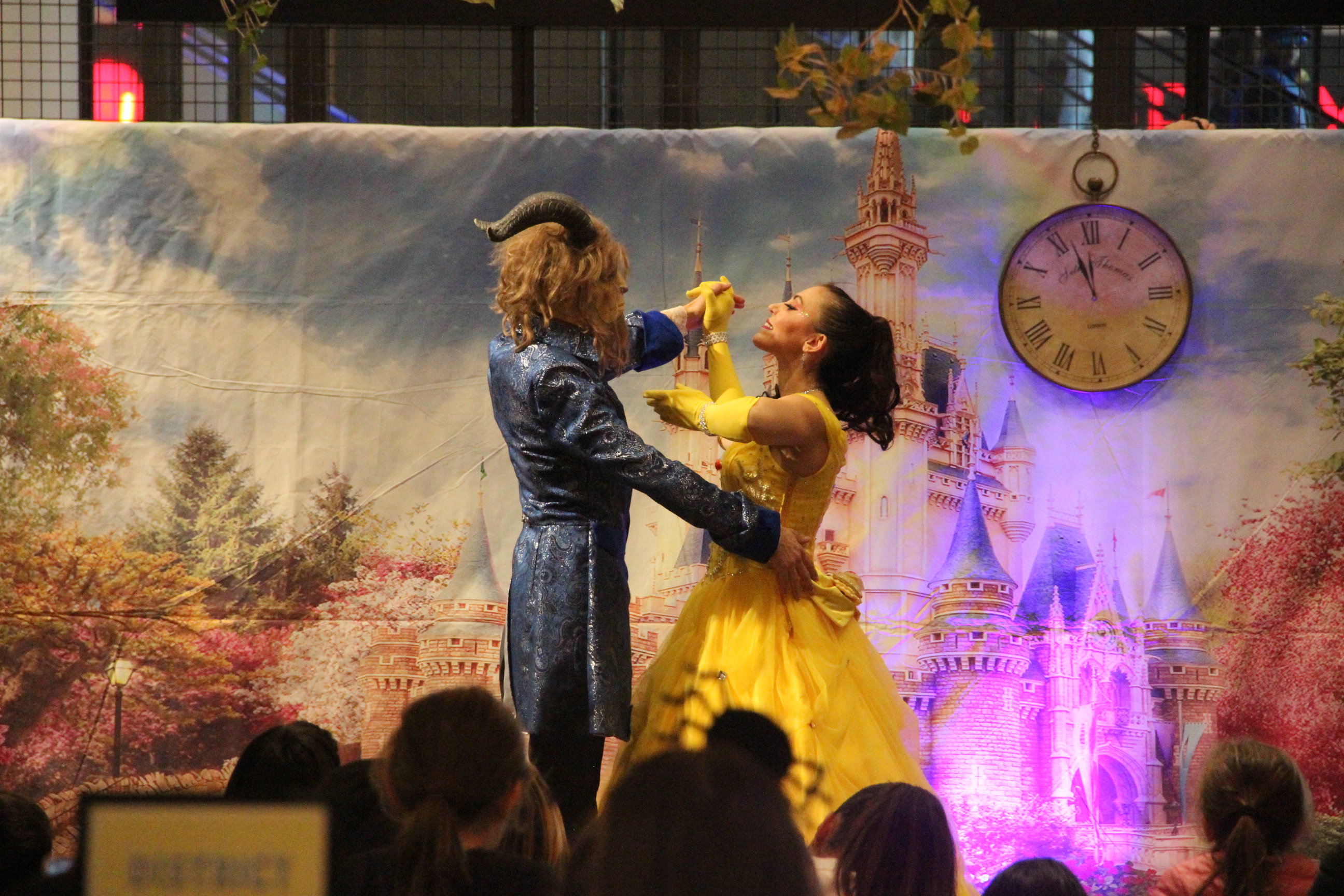
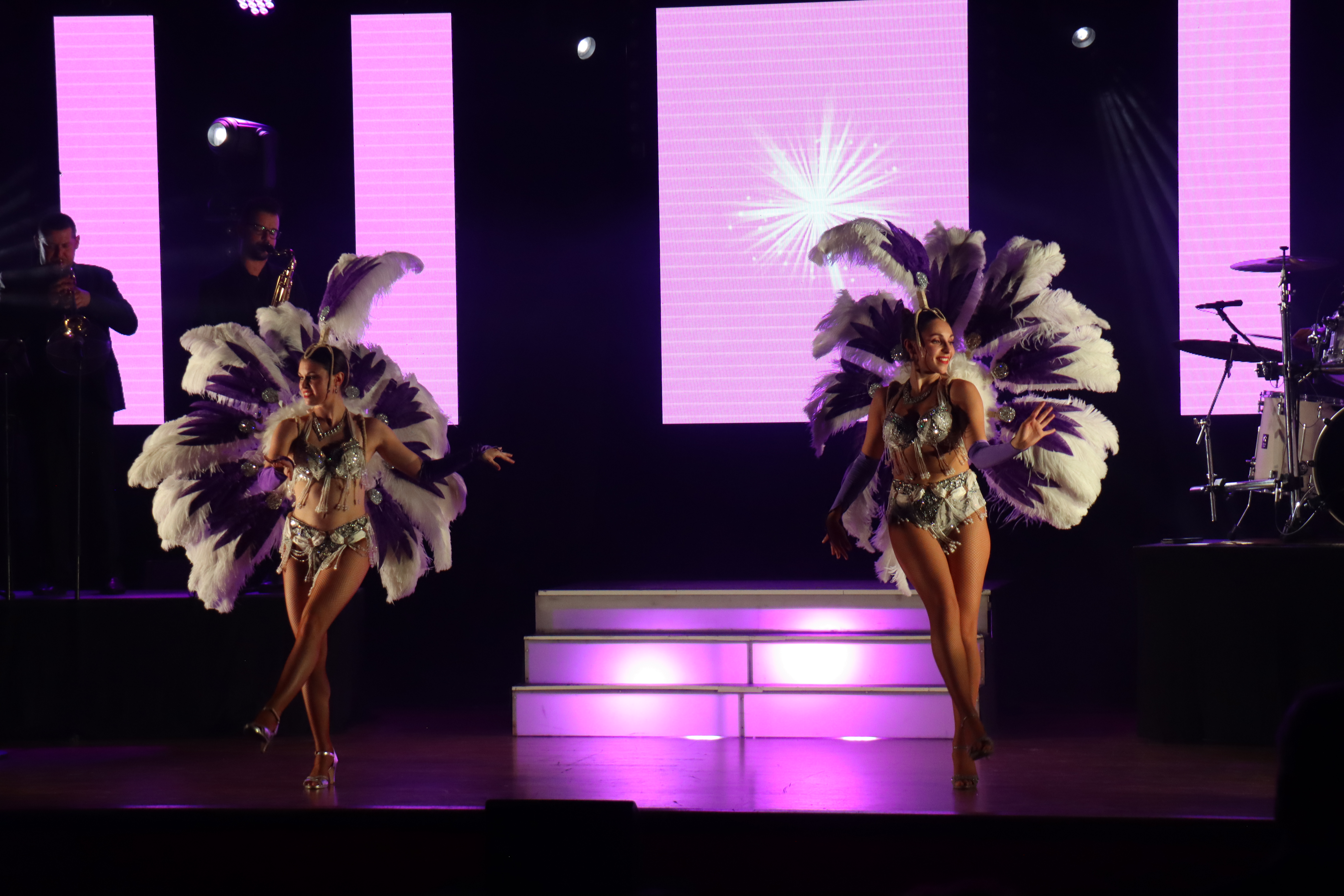
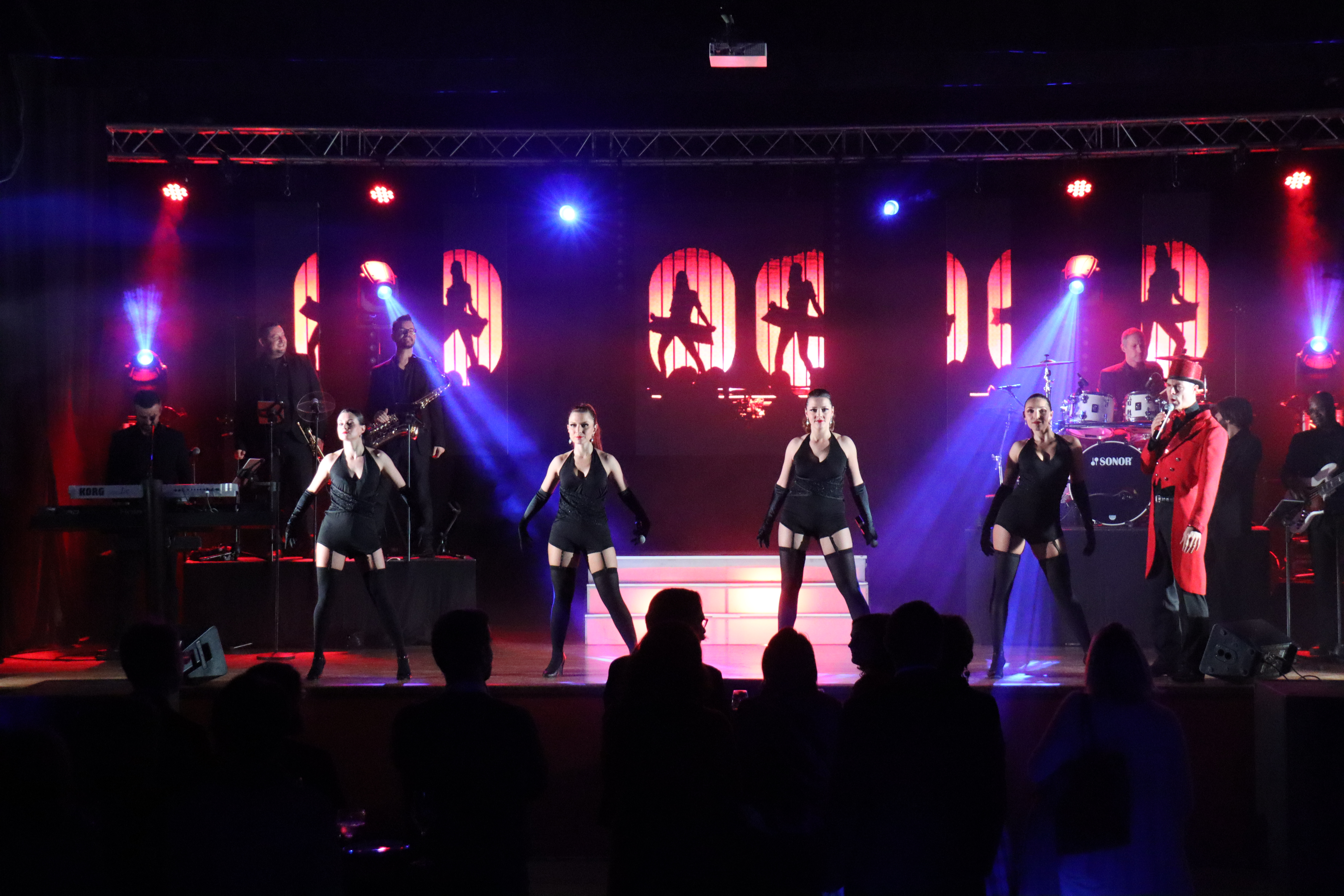
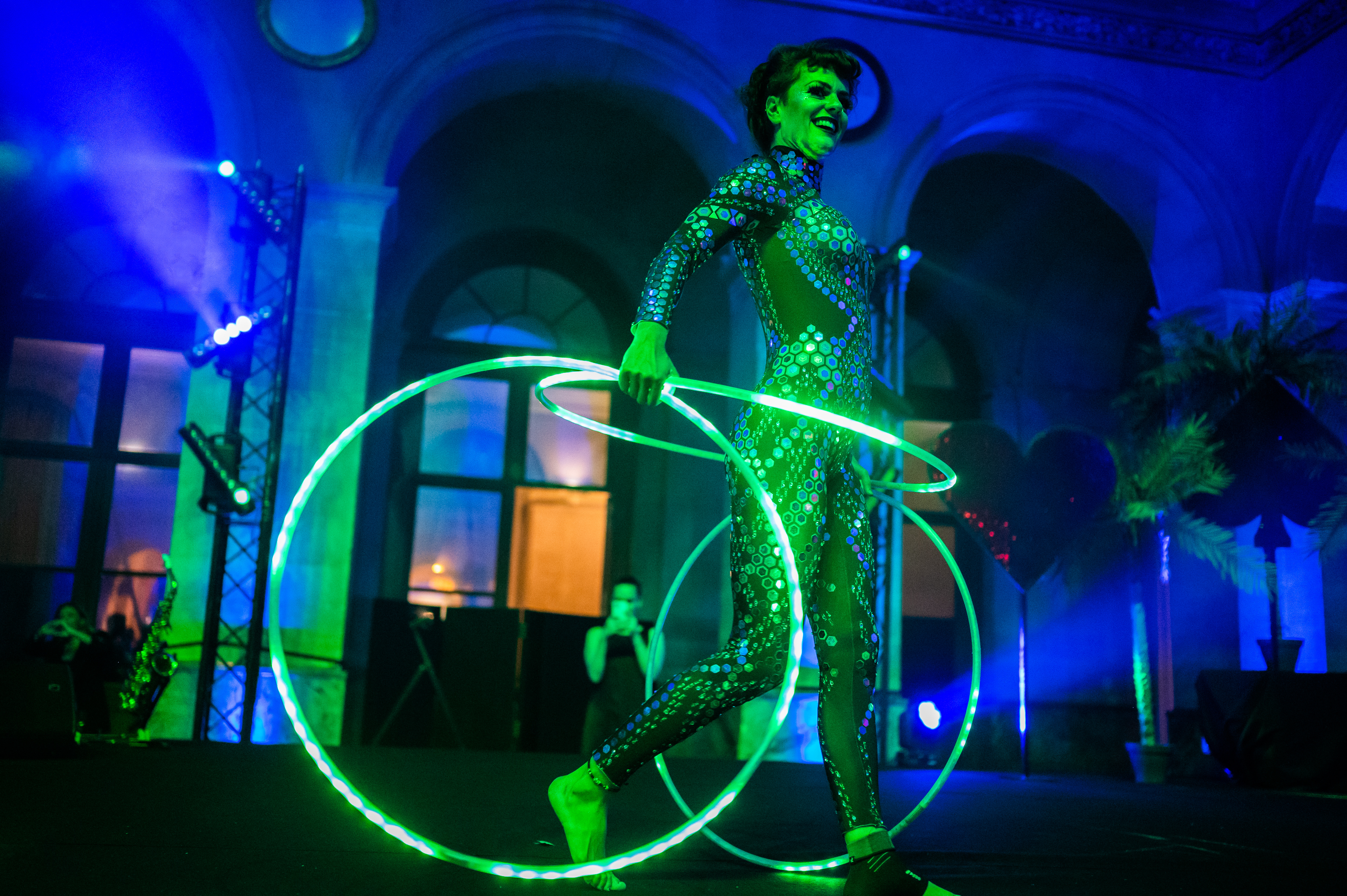
Which venues work best for a corporate entertainment show in Brussels, Antwerp, Ghent or Liège?
Venue choice impacts everything: technical feasibility, guest comfort, running order, and cost. We start with your audience size, format (seated dinner, theatre-style, cabaret, standing reception), and technical needs (rigging, screen size, backstage, loading). Then we shortlist venues that can handle the show professionally and safely.
Below are practical venue profiles we often use as reference points during scoping. Final selection depends on date availability, budget and technical constraints.
Brussels – Conference hotels and business venues
Best for: leadership events, international guests, strict timing. Considerations: loading restrictions, sound limits, union or in-house AV rules. Ideal when you need reliable guest flow and overnight stays.
Antwerp – Industrial and waterfront venues
Best for: brand-driven client evenings, product moments, larger receptions. Considerations: acoustics, heating in winter, complex load-in. Strong when you want atmosphere but still need a controlled show.
Ghent – Historic and contemporary event spaces
Best for: dinner shows, awards nights, cultural positioning. Considerations: access for trucks, ceiling height, rigging permissions. Works well for language-neutral visual acts.
Liège – Large halls and modular venues
Best for: staff events, regional gatherings, larger seated audiences. Considerations: crew call times, local supplier availability, transport planning. Good value for larger capacities.
Company sites – HQ atriums, warehouses, production sites
Best for: authenticity, employer branding, cost control on venue hire. Considerations: power distribution, safety zoning, acoustics, permits and insurance. Requires stronger technical planning and risk assessment.
We do not shortlist venues based on photos. We look at technical riders, loading plans, ceiling points, backstage routes and operational constraints—because a venue that is “beautiful” can still be impractical for a professional corporate show organization.
What does a corporate entertainment show cost in Belgium?
Pricing depends on the format, the level of technical production, the calibre of artists, rehearsal needs and the venue constraints. To keep budgeting predictable, we build line-by-line estimates and identify the few elements that move the budget most.
As a working reference for Belgium, a professionally produced corporate entertainment show typically falls between €8,000 and €120,000+, with the largest variations driven by technical production, headline talent and venue complexity.
Artist fees and availability: a single premium act is priced differently from a multi-act programme with host, musicians and dancers. Date proximity and exclusivity clauses can also influence costs.
Technical production: staging, lighting design, sound system, video/IMAG, special effects (where permitted), and crew (show caller, stage manager, technicians). Larger rooms require more reinforcement and often additional screens.
Venue constraints: limited load-in times, mandatory in-house AV, restricted rigging, or sound level limits can increase crew time and equipment needs.
Programme structure: short headline set versus a full evening run-of-show with multiple cues, awards, and video content. More cues = more rehearsal and stage management.
Guest size and room layout: theatre seating, cabaret, dinner tables and balcony layouts affect sightlines, screen needs and audio coverage.
Compliance and safety: insurance, security staffing, risk assessments, child safeguarding (if family events), and any required permits for effects.
Content and branding: if you need custom scripts, branded graphics, video editing, or rehearsed leadership moments, we scope those deliverables clearly to avoid scope creep.
Return on investment is not only “morale”. We track practical indicators such as attendance rate, time-on-programme, engagement (votes, participation), stakeholder satisfaction, and post-event outcomes (e.g., internal comms reach, recruitment referrals, client follow-up meetings). With a structured budget and measurable objectives, entertainment becomes a controlled investment rather than a leap of faith.











What we deliver in practice: show formats across different corporate contexts
Our projects vary because corporate realities vary. A technology scale-up in Ghent might want a high-energy programme that still respects a tight timeline; a listed company in Brussels may require conservative scripting and strict brand approvals; a manufacturing group near Liège may prioritise inclusivity for shift teams and practical transport planning.
Examples of delivery patterns we regularly produce:
- Sales kick-off show arc: opening act to set energy, short leadership segments with controlled transitions, awards, and a headline act timed to dinner service. Built with a disciplined cue-to-cue run-through.
- Client hospitality evening: reception entertainment that supports networking, a seated segment with a host and one premium act, followed by a controlled after-dinner set that keeps guests in the room without forcing a party atmosphere.
- Internal celebration with recognition: multi-site audience, inclusive content, clear audio intelligibility, and safety-first crowd flow—often with a mix of stage entertainment and roaming acts to avoid bottlenecks.
- Leadership town hall + show: entertainment used as pacing and attention management around strategic updates, with video integration and professional stage direction to keep executives comfortable on stage.
Across all formats, the constant is production discipline: documented programme, clear roles, and technical choices that serve the audience rather than the supplier catalogue.
Common pitfalls with corporate show organisation (and how we prevent them)
Booking talent before checking venue constraints: ceiling height, rigging, load-in times and sound limits can make an act impossible or expensive. We validate feasibility before contracting.
No single run-of-show owner: when the venue, AV supplier, caterer and internal teams each run their own timing, delays cascade. We assign a show caller and produce a shared cue sheet.
Entertainment that clashes with company culture: content that is too edgy, too loud, or too “party” can damage credibility. We define tone and boundaries in writing and brief performers accordingly.
Underestimating rehearsal needs: awards, walk-ons, videos and microphones need practice. We schedule at least one cue-to-cue run and protect critical transitions.
Technical under-specification: weak audio coverage or poor sightlines creates disengagement. We plan coverage based on room geometry, not attendee count alone.
Last-minute stakeholder changes: leadership requests on the day can derail the programme. We lock decision gates early and build buffer time for realistic changes.
Ignoring duty-of-care: accessibility, safe crowd flow, responsible hosting and security are not optional. We integrate these from the first site plan.
Our job is to remove these risks before your audience ever sees them. A professional corporate show event should feel smooth and confident—because the complexity has been handled backstage.
Why corporate clients stay with the same event management company
Loyalty is rarely about creativity alone. Companies return to the same partner when delivery is predictable: budgets stay under control, stakeholder expectations are managed, and the day-of operations run without drama. That is what protects internal credibility for HR, Communications and leadership.
High repeat potential: many corporate entertainment programmes become annual rhythms (end-of-year, summer celebration, kick-off). When the production framework is documented, each new edition becomes more efficient to deliver.
Reduced internal workload: clients typically involve fewer internal hours after the first project, because approvals, brand boundaries and technical standards are already established.
Operational learning: we keep production notes (what worked, what to adjust, venue specifics), which prevents repeating the same issues each year.

When a client comes back, it is proof that the show delivered value without creating risk. In corporate environments, that reliability is the strongest form of endorsement.
Our end-to-end method for corporate entertainment show organisation
👉 Step 1: Brief and constraints mapping
We run a structured scoping call with HR/Comms and the event owner: objectives, audience profile, tone boundaries, must-have messages, venue shortlist (or site), date constraints, and decision-makers. We also identify operational constraints early (sound limits, union rules, loading times, security policies).
👉 Step 2: Programme concept and format proposal
We propose 2–3 show formats with timing, level of interaction, and production footprint. Each option includes a draft running order that shows where entertainment supports dinner service, awards, speeches and networking. We highlight what is realistic within your venue and budget.
👉 Step 3: Talent selection and contracting
We shortlist performers based on audience fit, language neutrality where needed, professionalism, and technical feasibility. Contracts include deliverables, timings, rider requirements, usage rights and cancellation conditions. We align content boundaries in writing to protect your brand.
👉 Step 4: Technical design and production planning
We translate the programme into a technical plan: stage, lighting, sound, video, cueing, backstage needs, and crew roles. We produce stage plots, input lists, cue sheets and a load-in schedule. We coordinate with venue and caterer to avoid clashes (service timing, room resets).
👉 Step 5: Rehearsals, show call and on-site execution
We schedule sound checks and rehearsals appropriate to complexity, including at least one cue-to-cue review for key transitions. On the day, our team runs show calling and stage management, coordinates artists and technicians, and protects timing so your leadership and guests experience a smooth event.
👉 Step 6: Debrief and re-use for next edition
Within days, we debrief with your stakeholders: what delivered against objectives, what to adjust, and what can be reused (technical specs, supplier learnings, programme structure). This is how repeat editions become more efficient and consistent.
FAQ sur l'organisation Corporate entertainment show
How long should a corporate entertainment show last?
For most corporate evenings, the sweet spot is 20–45 minutes for a headline act, or 2–4 shorter sets of 10–15 minutes spaced through dinner. Longer is possible, but attention drops quickly if the programme is not paced and hosted properly.
What budget range is realistic for a company entertainment show?
In Belgium, a professional show typically ranges from €8,000 to €120,000+. Small formats (one act, basic AV) sit at the lower end; multi-act programmes with staging, lighting design and IMAG move towards the higher end.
Can you organise a corporate show at our own offices?
Yes, provided we can secure safe power distribution, loading access, crowd flow and an appropriate sound plan. We usually recommend a site visit and a technical check early, because offices and atriums often need extra work on acoustics, staging, and safety zoning.
How do you ensure the show matches our brand image?
We define tone, boundaries and non-negotiables in the brief, then validate content with the performers in advance. For hosted or scripted segments, we align a draft script and run-of-show with your Communications team, including what is off-limits (topics, jokes, audience interaction).
How far in advance should we book the performers?
For strong talent and peak dates (June, September–December), plan for 8–16 weeks minimum, and ideally 3–6 months for headline acts. Shorter timelines can work, but choices narrow and costs can increase due to availability and logistics.
Request a free quote for your corporate entertainment show
If you are comparing agencies, we can provide a structured proposal with a clear running order, production scope, and line-by-line budget—so you can validate feasibility internally with HR, Communications and leadership.
Share your date, city (Brussels, Antwerp, Ghent, Liège or elsewhere in Belgium), approximate guest count, venue status, and the business purpose of the event. We will come back with practical show formats and a realistic cost range, then refine it into a production-ready plan.
Contact INNOV'events to request your free quote and secure availability before calendars fill up.