
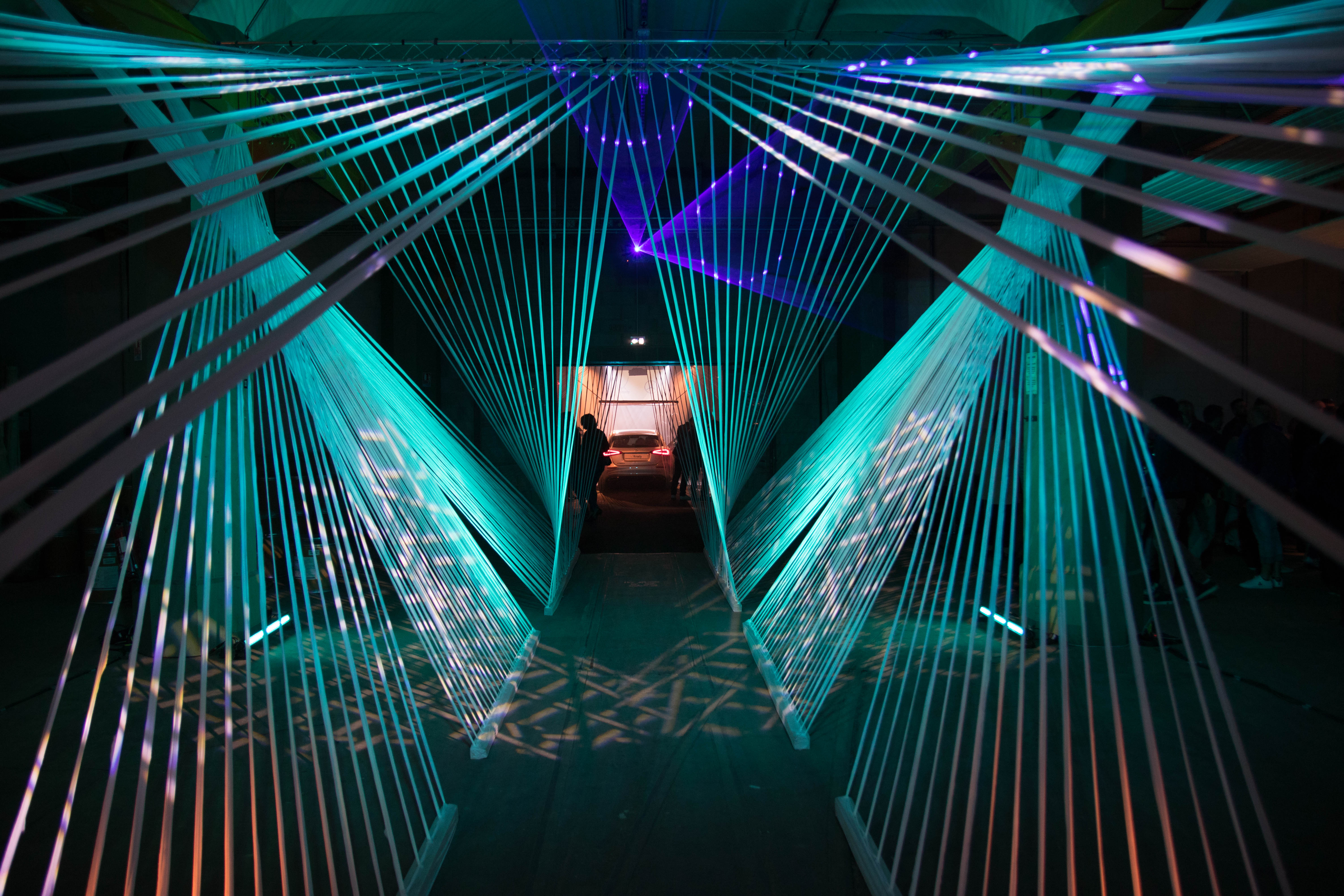
Stage design that supports your message and runs flawlessly on the day
INNOV'events is a Brussels-based event agency delivering stage design and production for corporate events from 50 to 5,000+ participants across Belgium. We manage concept, technical drawings, build, AV integration, rehearsals, show-calling, and teardown—so your speakers and teams can focus on content.
Whether you are launching a strategy in Brussels, running a leadership conference in Antwerp, or hosting an awards night in Ghent, we translate your objectives into a stage that looks right on camera and behaves predictably under pressure.
Sommaire
In corporate environments, the stage is not decoration—it is a decision-making tool. Your stage design corporate event influences how clearly strategy lands, how confident speakers feel, and how credible your brand appears to employees, partners, and media.
Executives, HR, and communications teams typically expect three things: a strong visual identity aligned with brand guidelines, zero surprises for safety and timing, and a setup that works for both the room and the livestream. They also need an agency that can coordinate internal approvals without slowing the production.
We bring field-proven event scenography production expertise: detailed technical planning, practical build solutions, and disciplined show operations. You get one accountable partner who understands Belgian venues, union rules where relevant, and the realities of last-minute agenda changes.
Quick facts decision-makers typically ask us for
Belgium-wide delivery from Brussels, with regular builds in Antwerp, Liège and Ghent.
Scalable formats: from a CEO town hall stage to multi-day conference plenaries with breakouts and branded broadcast.
One production lead accountable for planning, suppliers, on-site crew, and show-calling.
Technical documentation provided as standard: stage plans, power plans, rigging notes, run-of-show, cue sheets and risk controls.
How to organize a professional event ?
- Define the objective (cohesion, announcement, fidelity, performance).
- Set date, format and size (20–1 000 people).
- Secure the venue and accommodation according to seasonality.
- Lock down technical, suppliers and logistics.
- Drive the day J (timing, scene, entrance, flow).
We send you a first proposal within 24h.
What business outcomes does stage design actually improve?
When the agenda matters—strategy, transformation, leadership messaging—your stage is the interface between leadership and the room. A well-designed stage reduces friction: people see, hear, and understand faster. That directly impacts alignment and confidence.
Message clarity for large rooms: correct stage height, sightlines, and content display prevent the “back rows missed half of it” problem that ruins internal alignment.
Speaker performance and confidence: safe access, stable lectern positioning, proper confidence monitors, and rehearsal time reduce on-stage hesitation—especially for non-professional speakers.
Brand credibility: a controlled colour palette, correct logo usage, and lighting that flatters skin tones makes your leadership look deliberate—not improvised.
Operational predictability: a stage designed with load-in constraints and power distribution in mind reduces day-of technical incidents and overtime.
Hybrid readiness: framing, camera positions, and lighting temperature choices protect the experience for remote participants and recordings used later by HR and communications.
Compliance and duty of care: staging, drape, rigging and cabling decisions affect safety. We integrate risk controls early rather than “fixing it on the day”.
Belgian corporate culture is pragmatic: you want proof, not promises. Stage design organisation done properly is measurable in fewer technical escalations, shorter changeovers, cleaner recordings, and better audience feedback—without inflating budgets unnecessarily.
Which stage elements and interactions keep a corporate audience engaged?
Engagement is rarely about “more entertainment”. It is about giving the audience a reason to pay attention at the right moments. We use stage elements and controlled interactions to support your content: making it easier to follow, easier to remember, and easier to share internally afterwards.
Interactive animations
Structured Q&A with moderation: live questions via app or microphones, filtered and grouped by theme. We plan mic runners, timing windows, and on-screen display to keep it sharp.
Executive interviews rather than long speeches: armchairs or high stools with defined blocking, broadcast lighting and two-camera framing for pace and authenticity.
Live polling with on-stage reveal: we design the moment—countdown, music cue, screen layout—so it feels decisive and not like an afterthought.
On-stage demos with a technical reset plan: dedicated demo table, backstage storage, rehearsed reset steps, and contingency if a device fails.
Art animations
Opening sequence with disciplined timing: a short music sting, lighting build, and video opener that lands your theme in under 60 seconds.
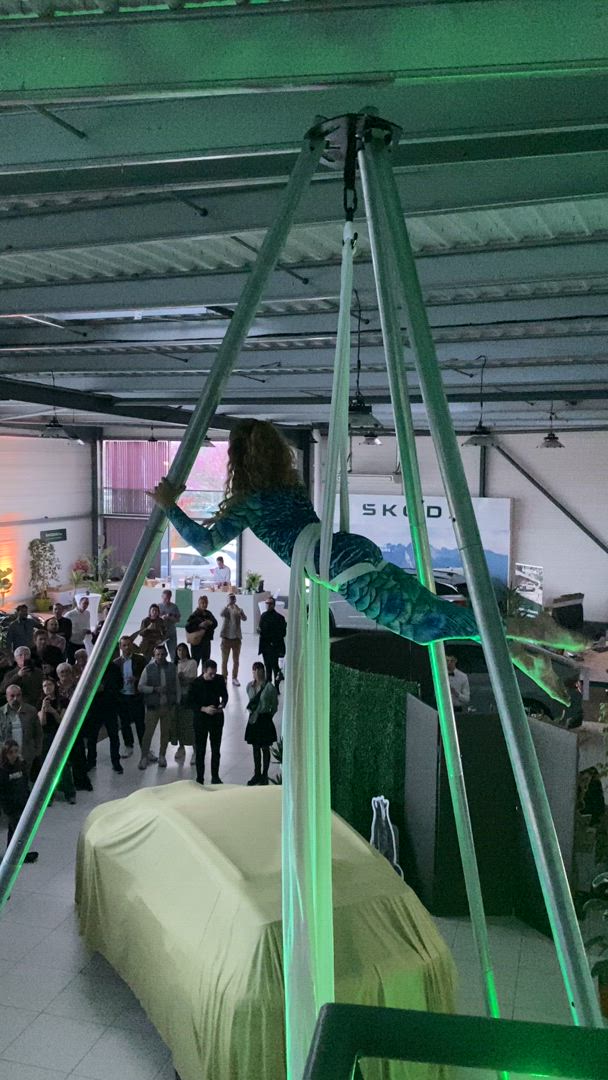
Brand-compatible performance: where appropriate (e.g., awards or client celebration), we integrate short acts that respect tone, diversity expectations, and the audience profile.
Scenic reveal moments: curtain drops, lighting reveals, or moving scenic pieces—only when the agenda benefits from emphasis (product, new identity, or milestone).
Innovative animations
Stage-managed tasting moments: for internal celebrations, we coordinate timing so catering service does not clash with key messages (noise, movement, sightlines).
Presenter-friendly formats: if you include a toast or tasting on stage, we plan glassware, spill protection, and cleaning access to avoid slips and delays.
Gourmand animations
Hybrid-first scenography: stage framing designed for camera, including key light placement, background depth, and clean branded areas for lower thirds.
LED integration with content governance: we specify pixel pitch and brightness based on viewing distance and camera needs, and we set a content approval workflow to avoid late-night exports.
Accessibility-first staging: ramps, wider steps, handrails where required, and reserved camera-safe paths—especially important for diverse speaker line-ups.
The common thread is consistency. Every interactive or scenic element must reinforce your brand image and your message. If a stage feature is visually impressive but introduces rehearsal risk, safety constraints, or agenda instability, we will say so—and propose a safer alternative that still looks intentional.
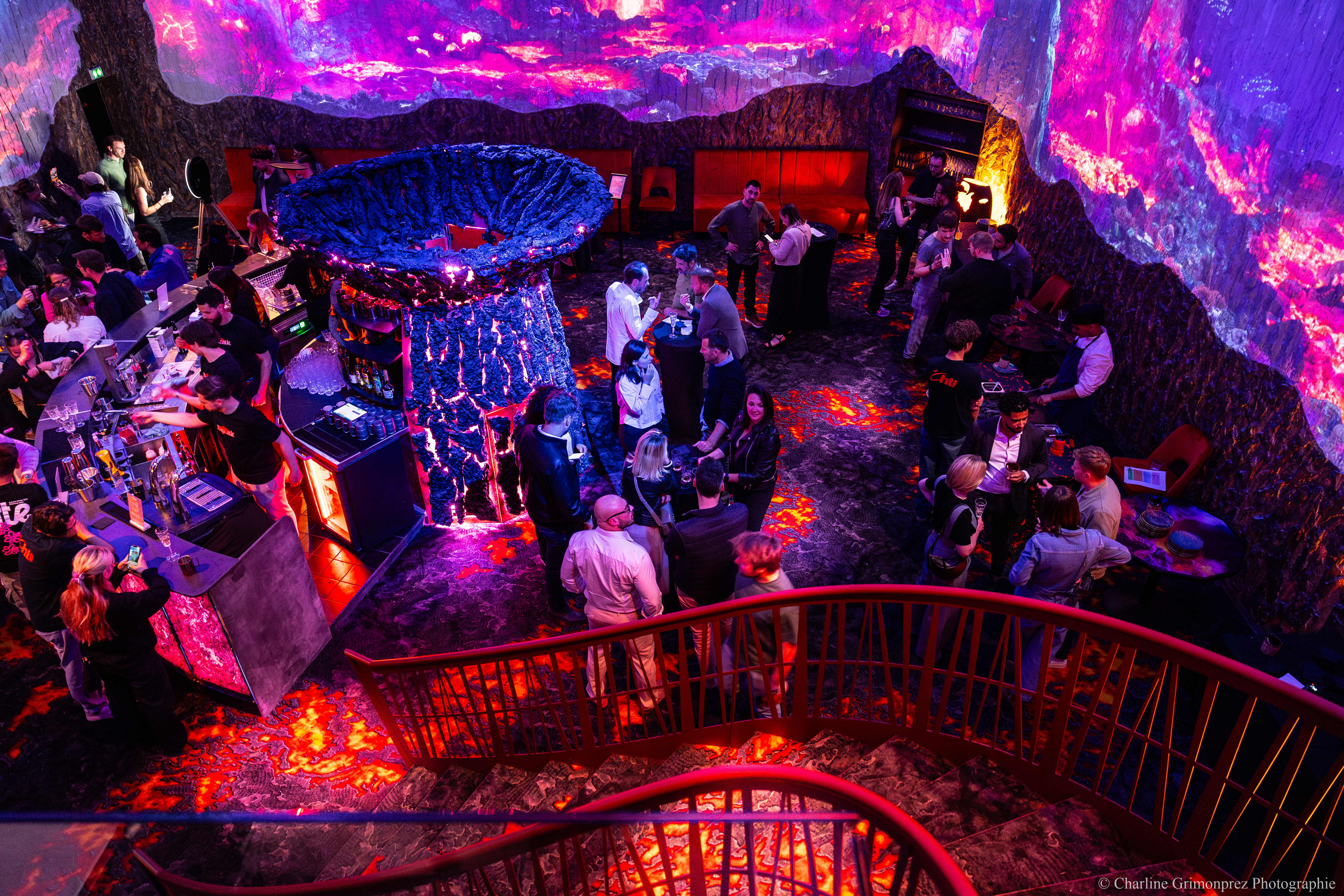
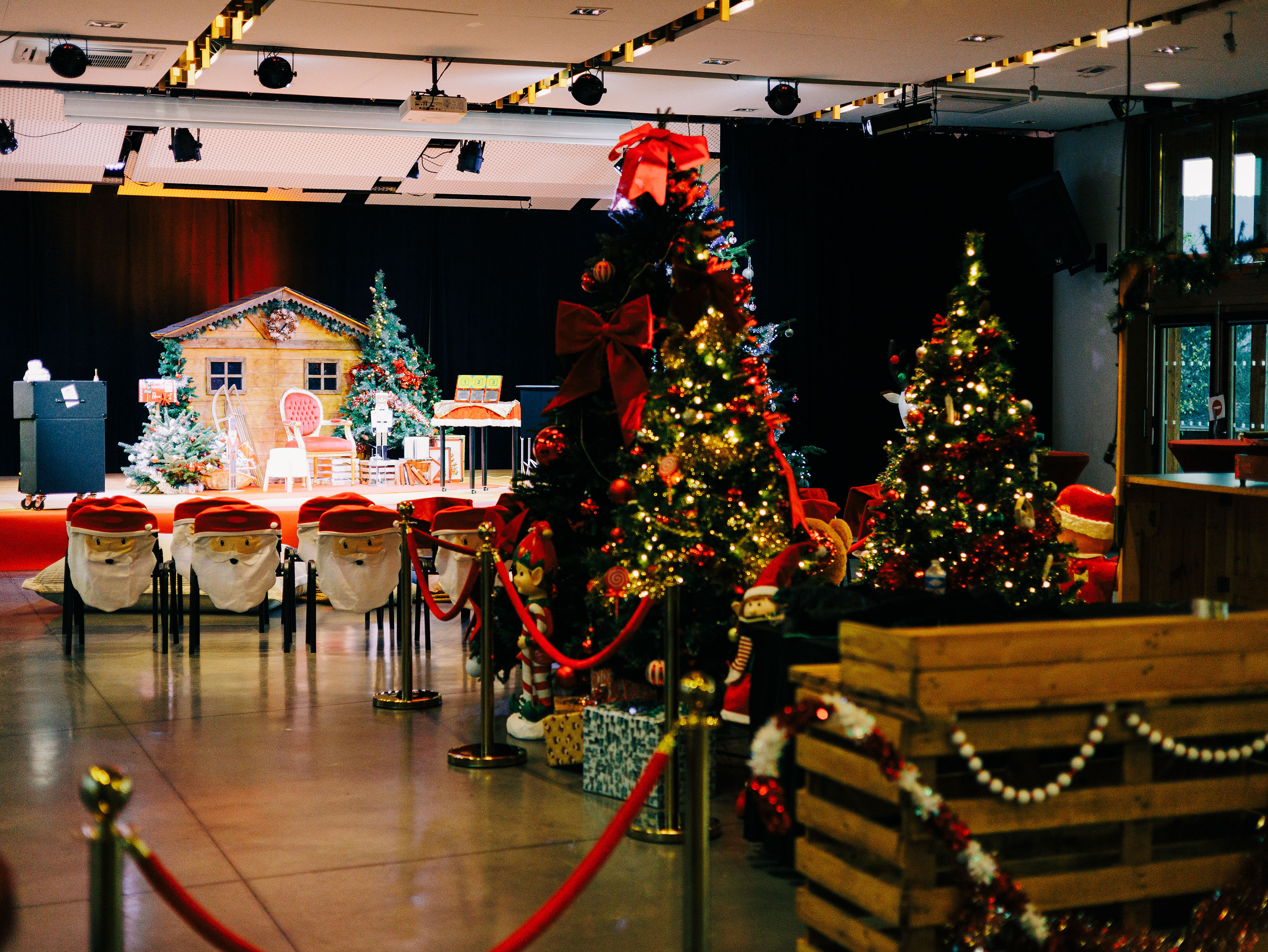
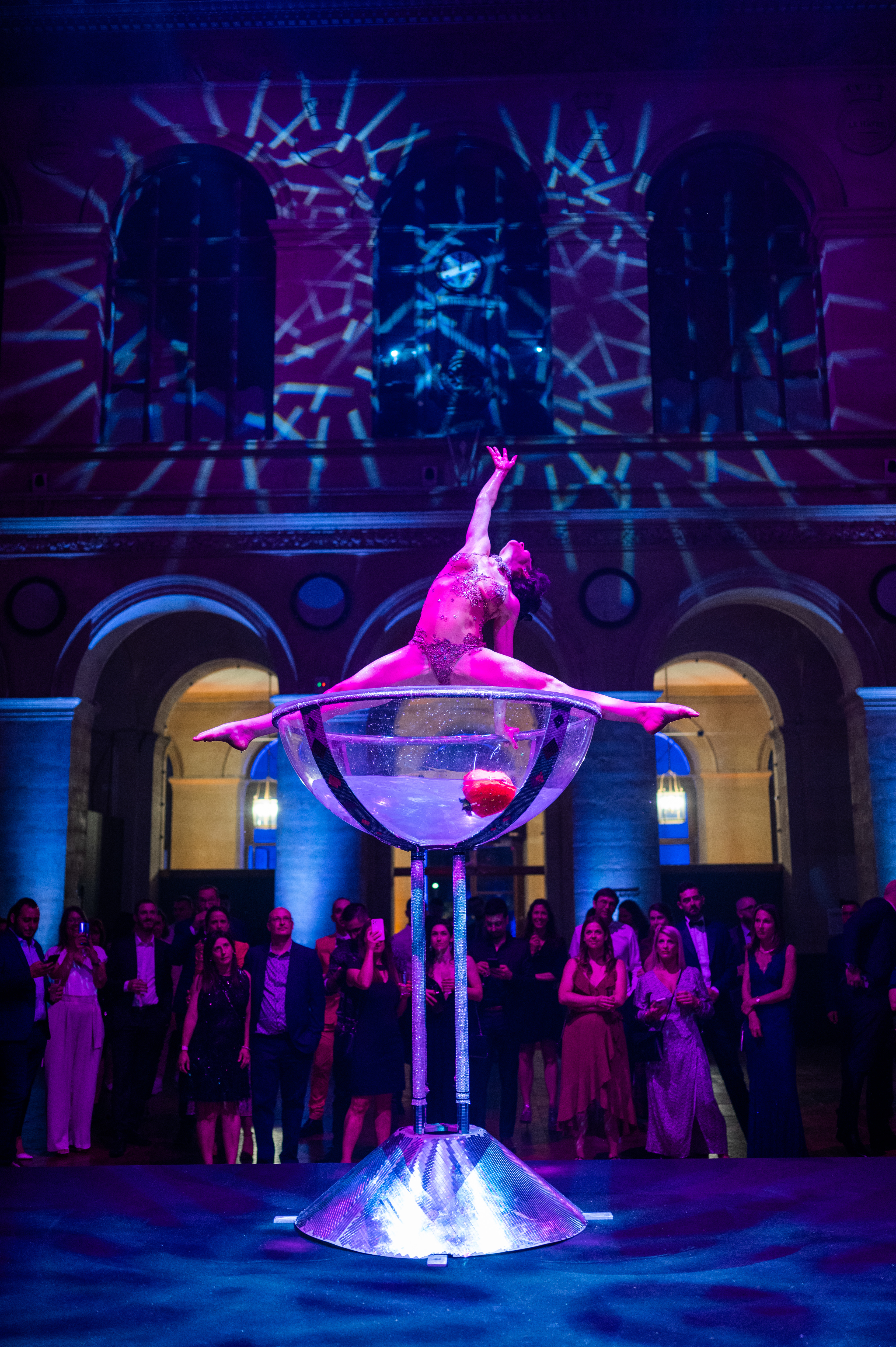
Which Belgian venues suit your stage design and technical set-up?
Venue choice changes everything: rigging options, loading access, noise restrictions, ceiling height, power availability, and even how fast you can turn the room between plenary and dinner. As your event scenography agency, we evaluate venues through a production lens and translate constraints into a design that works.
Venue type: Conference centres (Brussels, Antwerp)
Best for: multi-screen plenaries, hybrid events, tight run-of-show
Stage design considerations: fixed rigging points, strong power, fast load-in; align screen sizes to room depth; manage acoustic reflections.
Venue type: Hotels with ballrooms (Brussels, Liège)
Best for: leadership kick-offs, awards with dinner, board-level events
Stage design considerations: ceiling height can limit truss; loading routes may be long; plan quiet build times; integrate scenic elements that elevate the room.
Venue type: Industrial and event halls (Antwerp, Ghent)
Best for: large audiences, product launches, brand conventions
Stage design considerations: blank canvas with heavy production potential; plan heating/comfort, back-of-house zoning, and additional power distribution.
Venue type: Heritage locations (Ghent, Brussels)
Best for: VIP receptions, thought leadership, partner events
Stage design considerations: stricter protection rules; limited rigging and fixings; use self-supporting structures, controlled lighting, and discreet cable paths.
We can join your venue shortlist review early. A 30-minute technical conversation at the right moment often saves weeks of redesign later—especially when stakeholders discover last-minute that “the ceiling points are not where the render assumed”.
What does corporate stage design cost in Belgium?
The cost of stage design depends on what you are building, how fast it must be installed, and how many technical disciplines are involved. A reliable budget discussion starts with the format (conference, town hall, awards), the audience size, and whether the stage must work for cameras as well as the room.
As a practical guide in Belgium, many corporate stages fall into these ranges (excluding venue hire and catering): €8,000–€20,000 for a clean branded stage with basic scenic, screens and standard lighting; €20,000–€60,000 for a more complex plenary with multiple screens, deeper scenic, stronger show control and rehearsals; €60,000–€150,000+ for large-scale launches or multi-day conferences with LED, advanced rigging, multi-camera broadcast integration, and multiple spaces.
Scenic build approach: modular stage decks and printed scenic are cost-efficient; custom carpentry, curved structures, and premium finishes add labour and transport.
Screen strategy: projection vs LED wall vs multiple displays. LED costs depend on surface area and pixel pitch; projection depends on throw distance, ambient light control, and rigging.
Lighting design: basic stage wash is one level; broadcast-quality key lighting for cameras, scenic accent lighting, and dynamic cues require more fixtures, programming time, and control.
Audio and microphone plan: number of wireless channels, Q&A coverage, stage monitors, and redundancy. In executive settings, intelligibility is non-negotiable.
Rigging and safety requirements: certified rigging, structural checks, ballast, and safety lines depend on venue infrastructure and hanging loads.
Labour and schedule: overnight builds, tight load-in windows in city centres, and weekend work influence crew size and cost.
Content and rehearsals: motion graphics, video editing, presentation optimisation, and rehearsal time can represent a meaningful share—especially for hybrid events.
Logistics: trucking, parking permits, access control, and storage. Brussels city-centre deliveries can be a planning item on their own.
We treat budget as a design constraint, not an afterthought. Our goal is to protect your return: fewer last-minute changes, less overtime, less risk, and assets (visual system, content templates, recordings) that can be reused across internal communications.








What our stage design work looks like across different corporate formats
Our projects range from high-stakes internal communications to customer-facing events where brand scrutiny is high. A few examples of what we commonly deliver as an event management company:
- Leadership town halls: a clean stage with excellent audio, disciplined lighting for faces, confident monitors for speakers, and a Q&A set-up that avoids chaos. We plan for last-minute speaker swaps and ensure the room still runs on time.
- Multi-day conferences: plenary stage with consistent scenic language extended into breakouts and signage. We manage technical rehearsals, content deadlines, and show-calling to keep transitions tight.
- Awards and celebration evenings: stage access and winner flow are designed like logistics, not guesswork. We plan mic handovers, walk-on cues, and photo moments that do not block cameras or delay service.
- Product launches: controlled reveal moments, demo robustness, and camera-friendly lighting. We design the stage so the product is the hero, not the background.
- Hybrid events: stage framing, lighting temperature, and screen placement adapted for camera. We coordinate with streaming teams to avoid the common issue of a great room experience but poor recordings.
In all cases, our approach is the same: practical design, realistic schedules, and risk control—because in corporate settings, “almost ready” is not acceptable five minutes before doors.
Which stage design mistakes create the biggest day-of risks?
Designing for looks only and discovering late that sightlines, ceiling height or power capacity do not support the plan.
Underestimating rehearsal needs for executives who do not present weekly, leading to awkward pacing, wrong stage positions, or microphone issues.
Ignoring camera reality: glossy backdrops that moiré on video, LED brightness that blows out faces, or lighting that looks fine in the room but harsh on stream.
Unmanaged changeovers: panels, awards, or demos without a timed reset plan, causing delays that cascade into catering, transport and venue overtime.
Cable and access hazards: trip points, unclear backstage paths, or unsafe steps—small issues that can become serious incidents.
Last-minute content chaos: missing file naming conventions, wrong aspect ratios, or untested embedded videos. The stage suffers because the system lacks governance.
Our role is to remove these risks before you arrive on site. We do it with technical validation, precise documentation, realistic rehearsals, and a show-calling discipline that keeps the event on schedule even when executives make late requests.
Why corporate clients stay with the same stage design partner
Repeat business in events is rarely about being the cheapest. It is about predictability: stakeholders know what will happen, who will decide, and how issues will be handled. That is what long-term clients value when they run annual kick-offs, recurring conferences, or quarterly town halls.
Consistent brand execution across years: once the scenic system is built and documented, updates are faster and more controlled.
Lower internal workload: fewer meetings spent aligning suppliers, fewer escalations, and clearer sign-off steps for communications teams.
Continuous improvement: we keep a post-event log (what worked, what did not, what to adjust) and apply it to the next edition.

Loyalty is a practical indicator: teams return when the stage looks right, the show runs on time, and no one is left managing technical stress in parallel with their day job.
Our stage design method from brief to show-calling
👉 Step 1: Brief and stakeholder alignment
We start with the business objective, audience profile, agenda structure, and brand constraints. We clarify decision-makers (executive sponsor, HR, communications), approval cadence, and non-negotiables such as accessibility, multilingual moderation, or hybrid requirements. Output: a written scope and initial budget guardrails.
👉 Step 2: Technical recce and feasibility check
We review the venue from a production perspective: loading access, ceiling points, permitted fixings, power, internet, noise restrictions, and emergency routes. We validate sightlines, camera positions if relevant, and backstage zoning. Output: feasibility notes and constraint-driven recommendations before design is finalised.
👉 Step 3: Concept, scenic system and preliminary drawings
We propose a stage concept that serves the agenda: speaker positions, screen strategy, scenic depth, lighting mood, and branding placement. We develop preliminary plans and visuals that are buildable, not just attractive. Output: concept deck, draft stage plan, and an itemised production budget estimate.
👉 Step 4: Detailed design and production planning
We convert the concept into technical reality: final drawings, rigging notes, power distribution, cable paths, build method, and content specifications (formats, aspect ratios, deadlines). We confirm crew roles and build schedule with the venue and suppliers. Output: production pack and confirmed timeline.
👉 Step 5: Build, rehearsals and show operations
On site, we manage load-in, build, technical checks, and rehearsals. We run speaker confidence checks, cue-to-cue runs, and final sign-off with your team. During the event, we show-call: lighting, video, audio cues, stage management and changeovers. Output: a controlled, punctual show and a structured teardown.
👉 Step 6: Post-event review and asset handover
We close with a debrief focused on actionable improvements: timing, content flow, technical notes, and audience feedback patterns. We hand over reusable assets where relevant (stage templates, content specs, run-of-show structure) to reduce effort for your next edition.
FAQ sur l'organisation Stage design
How early should we book stage design for a conference?
For a corporate conference in Belgium, plan 8–12 weeks for a robust stage design and production cycle. For larger builds (LED, complex rigging, multi-space scenography), 12–20 weeks is safer, especially if your internal approval process is multi-layered.
What information do you need to quote stage design?
We need: date and city (Brussels, Antwerp, Liège, Ghent), venue or shortlist, audience size, agenda (plenary length, panels, awards, demos), hybrid needs, brand guidelines, and any must-haves (LED wall, lectern, interpreter booth, accessibility). With that, we can produce a clear range and options within 3–7 working days.
Is LED always better than projection for corporate events?
No. LED is strong for bright rooms, camera use, and high-impact branding, but it can be costlier and requires content discipline. Projection can be excellent for conferences with controlled lighting and longer viewing distances. We decide based on room brightness, throw distance, camera requirements, and content type (data-heavy slides vs high-contrast video).
Can you match our brand guidelines exactly on stage?
Yes, within technical limits of materials and lighting. We work from your brand book (colours, safe areas, typography) and adapt finishes so they reproduce well under stage lighting and on camera. We also flag common risks like colour shifts under LED lighting and moiré patterns on textured backdrops.
How do you reduce technical risk during executive keynotes?
We build redundancy where it matters (critical microphones, playback paths), run a timed rehearsal, and operate a strict cue sheet with a show caller. We also keep a controlled backstage flow (who enters when, where they stand, who hands the mic) so the keynote stays calm and punctual even if the agenda changes.
Request a free quote for your stage design in Belgium
If you are comparing agencies, we can make that comparison easier: share your date, city, venue (or shortlist), audience size, and agenda. We will come back with a structured proposal, clear options, and a realistic production timeline—so you can decide with confidence.
For executive and HR programmes, earlier planning pays off: it protects your internal approvals, secures technical availability, and reduces day-of pressure. Contact INNOV'events to request your free quote and a first-stage feasibility check.