
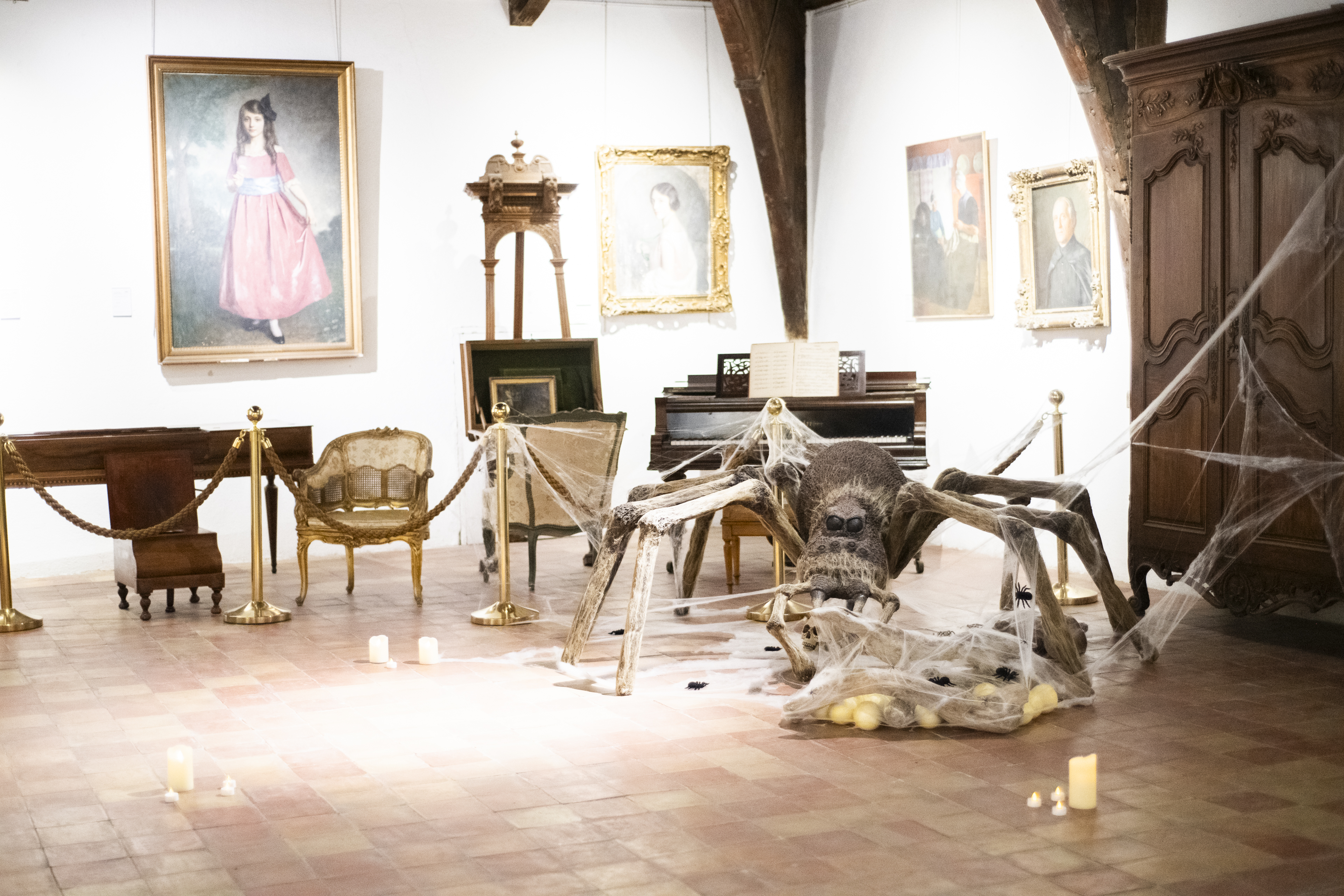
Halloween animatie in Brussel that protects your brand and schedule
INNOV'events is a Brussels-based event team delivering Halloween animatie for corporate settings from 50 to 1,500+ attendees. We manage the full chain: concept, casting, permits where needed, technical rider, venue coordination, and on-site stage management.
For executives, HR and communication teams, our priority is predictable execution: no surprises on safety, timing, or audience fit—only controlled engagement aligned with your internal culture and external image.
Sommaire
In a corporate context, entertainment is not a “nice-to-have”: it is a tool to move people. A well-designed Halloween animatie increases participation rates, reduces awkward downtime, and helps teams mix beyond silos—without compromising professionalism.
Organizations in Brussel typically expect three things at once: multicultural sensitivity (mixed languages and norms), strict timing (tight agendas, late arrivals, early departures), and brand-safe content (nothing that risks HR escalation or social media backlash).
We operate locally across the Brussels-Capital Region with trusted performers, technicians, and suppliers. That local footprint matters on event day: quicker site checks, realistic load-in plans, and immediate contingency options when traffic, building rules, or last-minute stakeholder requests change the plan.
Operational facts that matter in Brussel event delivery
10+ years delivering corporate entertainment programs in Belgium, including recurring seasonal events.
200+ vetted talents in our Belgian network (actors, make-up artists, magicians, MCs, dancers, musicians, SFX technicians).
48-hour casting capability for replacements in Brussels when illness or transport disruptions occur (subject to availability and role complexity).
1 point of contact + on-site stage manager included for most corporate formats, to protect your internal teams’ time.
0 “surprise invoices” policy: we pre-validate overtime rules, technical needs, and access constraints before contracting.
Brussel continuity: teams who rebook because execution is stable
We support Brussels-based organizations and international headquarters with offices in the capital—especially those running annual internal moments (Halloween, end-of-year, family days) and needing consistent delivery despite changing stakeholders. Many collaborations continue year after year because the operational framework stays reliable: clear schedules, controlled content, and fast alignment with venue rules.
In practice, our recurring clients are often HR and internal communications teams who cannot afford a reputational issue or a safety incident. They value that we document what worked, what didn’t, and what must be improved—then apply that learning the following year with updated risk checks, talent briefings, and an improved run-of-show.
If you share the company names you want referenced, we will integrate them here in a compliant way (with permission if required), and we can also provide anonymized Brussels case examples during a call.
 Besoin d’un devis rapide ?
Nous vous envoyons une première proposition sous 24h.
Why plan Halloween animatie for teams in Brussel
Halloween in the workplace can either look childish—or become a controlled, high-engagement internal activation. For Brussels employers, the strategic value is often less about “scaring people” and more about creating a safe pretext to bring teams together after intense periods (Q3/Q4 reporting, project delivery peaks, budget cycles).
When designed with corporate codes, Halloween animatie in Brussel can reinforce culture without putting managers in uncomfortable situations: the experience is structured, optionality is built in, and the tone is consistent with your brand.
Higher participation with low friction: short, well-timed activations (10–25 minutes) fit into packed calendars and still create visible momentum.
Cross-team mixing without forced networking: interactive stations (mystery games, make-up corners, photo setups) naturally create micro-conversations without awkward icebreakers.
Employer branding inside the building: a well-produced lobby activation improves perception among employees and visitors (partners, candidates) without turning your office into a theme park.
Message delivery with better attention: leaders can attach a quick internal message (safety, compliance, recognition, strategy update) to a moment when people are present and receptive.
Stress relief with boundaries: offering a controlled “play moment” reduces end-of-year pressure while keeping content HR-safe and inclusive.
Predictable operations: with a clear run-of-show, you avoid typical pitfalls such as noise complaints, blocked fire exits, or performers wandering into restricted areas.
Brussels’ economic culture combines institutional environments, international corporate codes, and multi-tenant buildings with strict rules. A Halloween format that works here is one that respects those constraints while still creating genuine engagement.
What Brussel venues and offices really require for Halloween animatie
Delivering entertainment in Brussel is rarely just about the show. The “real” project is navigating building policies, neighborhood constraints, and mixed audiences. We regularly see corporate events where the concept is strong but the execution fails because access and compliance were treated as an afterthought.
Common Brussels realities we plan for:
- Multi-tenant building rules: limited load-in windows, mandatory protective flooring, restricted freight elevators, and security badges for each supplier.
- Noise and neighbor sensitivity: offices near residential zones or shared atriums often require noise caps after specific hours; we adjust sound design and choose silent/low-noise formats when needed.
- Multicultural audience fit: “horror” intensity, costumes, and physical interaction must be calibrated. We propose clear tone levels (light, playful, cinematic, or “thriller-lite”) and validate with HR/Comms.
- Language mix: French/Dutch/English signage and MC scripts can be aligned to your internal reality; we avoid long speeches and design visual-first activations.
- Transport and timing: Brussels traffic impacts supplier arrival and participant flow; we build buffer time and stagger activations to avoid congestion at entrances.
Our job is to translate these constraints into a workable plan: who arrives when, via which entrance, with what equipment, who signs in, what gets tested, and what the fallback is if an area becomes unavailable.
Which Halloween animatie options work best in Brussel offices
Engagement comes from interaction design, not from “more props.” In corporate environments, the best Halloween animatie creates short participation loops (30 seconds to 5 minutes) so people can join without committing their whole evening.
Animations Interactives à Brussel
Mystery micro-game (10–20 minutes) in teams of 3–6: a light investigation with clues placed across a lobby or meeting area. Works well when you want cross-team mixing without loud music.
Roaming characters with a scripted mission: actors circulate with clear boundaries (no touching, no blocking corridors) and a goal such as “collecting fear factors” or “testing bravery” via short questions. Ideal for cocktail formats.
Corporate-safe scare lab: a “myth-busting” station where a host explains Halloween illusions (sound tricks, misdirection) and involves participants in a controlled demo—good for executive audiences who prefer smart content over pure fantasy.
Photo activation with compliance options: staffed photo corner with explicit opt-in signage, no automatic uploads, and the possibility to deliver images via internal channels only. We can also provide a “no-face” option (hands, silhouettes) for privacy-sensitive teams.
Animations Artistiques à Brussel
Close-up magic with dark aesthetics: elegant, low-volume performances at cocktail tables. This fits Brussels corporate codes because it’s premium and non-intrusive, with short sets.
LED or light choreography (no fire, low noise): a short show (5–8 minutes) followed by meet-and-greet photos. Useful when venues have strict safety rules and you still want a “moment.”
Live soundtrack duo (jazz noir / cinematic): sets an atmosphere without turning the event into a nightclub—often preferred in institutions and headquarters.
Animations Innovantes à Brussel
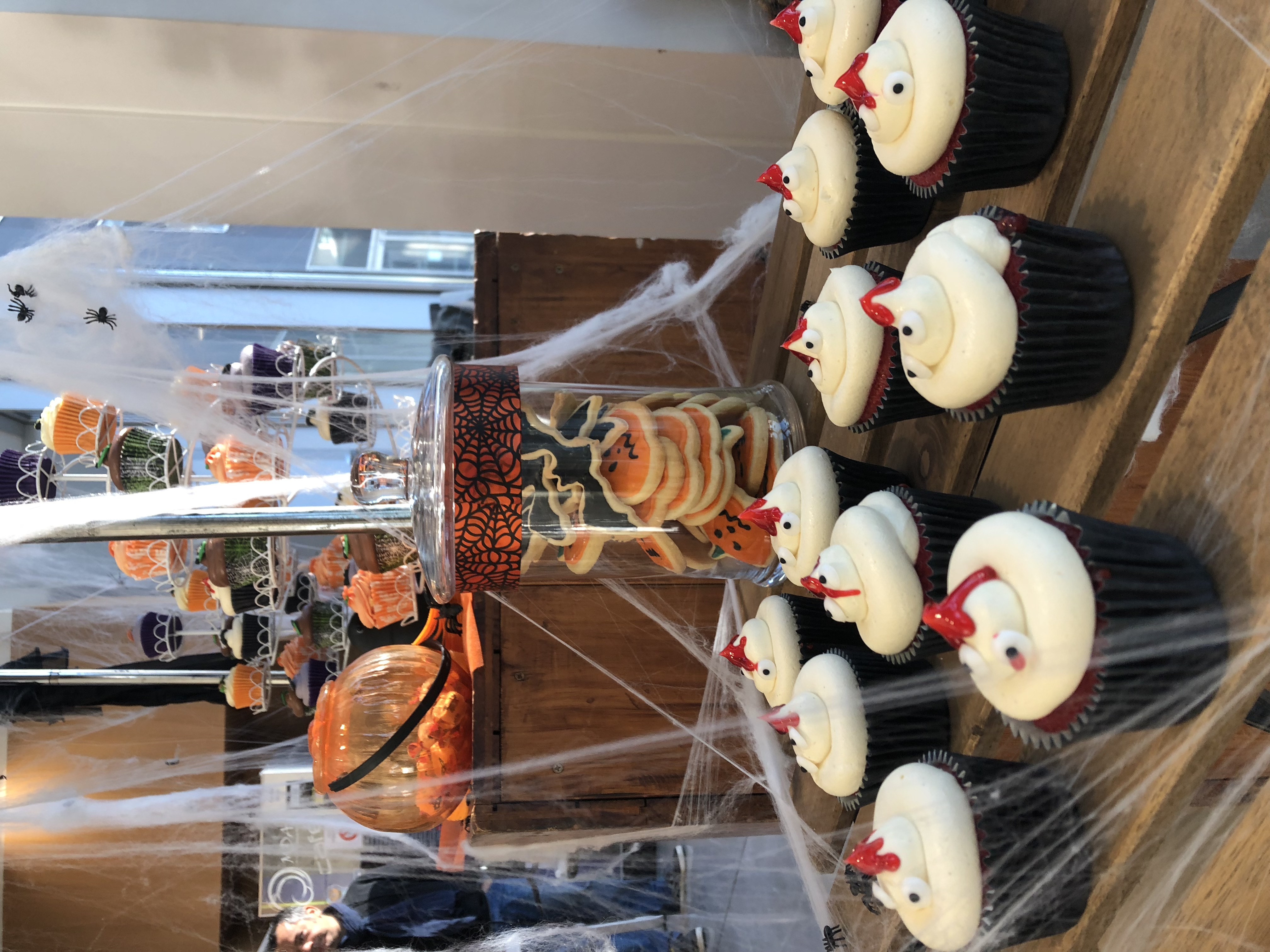
Monster mocktail lab with branded recipes: a bartender-led station that serves 2–4 signature drinks (including zero-alcohol) with controlled throughput. We plan staffing ratios to keep queues under control.
Halloween dessert plating done live: visually engaging but quiet. Works in office cafeterias or event spaces where cooking permissions are limited.
Chocolate “alchemy” tasting with Belgian references: structured tasting (15–25 minutes) that feels premium and fits Brussels expectations for quality food experiences.
Animations Gourmandes à Brussel
AR filter experience for internal comms: a branded Halloween face filter accessible via QR code, deployed on your internal platform. Good for hybrid teams and for extending engagement beyond the event space.
AI portrait booth with strict data handling: we set clear rules on storage, consent, and delivery (e.g., local processing, no public gallery). This addresses the reality that Brussels organizations often have stricter privacy standards.
Interactive lighting zones using battery-powered fixtures: creates impact in spaces where you cannot rig or plug into ceiling power. Particularly useful in multi-tenant buildings with limited technical permissions.
Whatever the format, we align entertainment with brand image: dress codes that match your culture, scripts that avoid sensitive themes, and a level of “spookiness” that HR can defend. The question is not “what is the most spectacular idea,” but “what your organization can comfortably own the next morning.”
Where to host Halloween animatie in Brussel for the right impact
The venue determines the perceived quality of the entertainment before the first performer even appears. In Brussel, the same concept can feel premium in a controlled corporate space—or chaotic in a room with poor acoustics, long queues, and strict access rules. We select formats based on your objective: visibility, team bonding, VIP hosting, or internal communications.
| Venue type | For which objective? | Main strengths | Possible constraints |
|---|---|---|---|
| Corporate HQ lobby / reception area | High visibility internal activation; short participation loops during arrivals | Maximum footfall; easy to brand; works with roaming characters and photo corners | Security and access control; must keep circulation and fire routes clear; noise limits in shared buildings |
| Meeting room floor converted into “mystery zones” | Team bonding and structured interaction (games, investigations) | Controlled environment; easy timing; better focus for clues and facilitation | Requires room blocking; signage and wayfinding needed; limited ceiling rigging in many offices |
| External event venue in the Brussels-Capital Region | Stronger experiential impact; evening cocktail or dinner with a show moment | More technical freedom; easier to manage sound/lighting; better guest comfort | Transport planning; budget impact; vendor policies and union/technical rules may apply |
We strongly recommend a site visit or at least a technical walk-through with your facility/security contact. Many Brussels venues look similar on paper, but load-in routes, elevator sizes, power access, and “no-go” areas will determine whether entertainment runs smoothly or becomes a series of compromises.
What does Halloween animatie cost in Brussel for a corporate event
Budget for Halloween animatie in Brussel depends less on “the idea” and more on production parameters: audience size, the number of activation points, technical constraints, staffing ratios, and compliance requirements. To help you benchmark, most corporate programs fall into clear ranges once scope is defined.
Typical Brussels corporate ranges (guidance, excluding VAT, depending on access/technical complexity):
- €1,200–€3,500: one entertainment feature (e.g., close-up magician or 1–2 roaming actors) for a 2–3h slot, light tech.
- €3,500–€8,500: multiple stations (photo + make-up + roaming) with stage management and basic décor.
- €8,500–€20,000+: full thematic program with several performers, larger décor footprint, dedicated tech (sound/light), structured games, and extended on-site control.
Format and duration: 45 minutes during lunch is not the same cost structure as a 4-hour evening with multiple rotations.
Number of performers and roles: interactive acting requires more people than a single stage show because you need coverage and breaks.
Technical rider: sound system, wireless microphones, lighting, haze (often not allowed), and power distribution can change the budget quickly.
Access constraints in Brussel buildings: limited load-in windows, security badging, elevator limits, and parking rules add labor time and planning.
Décor and branding: branded backdrops, signage, and printed clue materials are production items; we specify quantities and quality levels.
Compliance and safety: risk assessment, insurance certificates, and sometimes additional security coordination—especially in high-profile locations.
ROI is usually measured in participation, internal sentiment, and the quality of cross-team interaction—not in “likes.” We help you choose the smallest scope that still delivers a visible cultural effect, and we document what to keep for next year to avoid re-paying for avoidable trial-and-error.
When you choose an event agency in Brussel, what changes
For corporate entertainment, local presence is not a branding argument—it is an operational advantage. With a Brussels-based team, planning becomes more realistic and execution more secure: we know building types, supplier lead times, traffic patterns, and the on-the-ground realities of multi-tenant sites.
As an event agency in Brussel, we also maintain working habits with local technicians and performers: the right call times, the paperwork expectations, and the informal “what usually causes delays” that only appears after many event days.
- Faster site checks and technical validation: fewer assumptions, fewer last-minute changes.
- Reliable supplier ecosystem: performers and technicians who are used to Brussels corporate standards (dress codes, languages, behavior).
- Better contingency: quick replacement options and backup equipment when unavoidable disruptions occur.
- Cost control: less transport overhead, more accurate labor estimates, and fewer “hidden constraints” discovered too late.
ROI is usually measured in participation, internal sentiment, and the quality of cross-team interaction—not in “likes.” We help you choose the smallest scope that still delivers a visible cultural effect, and we document what to keep for next year to avoid re-paying for avoidable trial-and-error.




Examples of corporate event entertainment in Brussel we deliver
Our projects in Brussel range from understated executive cocktails to high-energy staff parties—always with corporate constraints in mind. Typical assignments include:
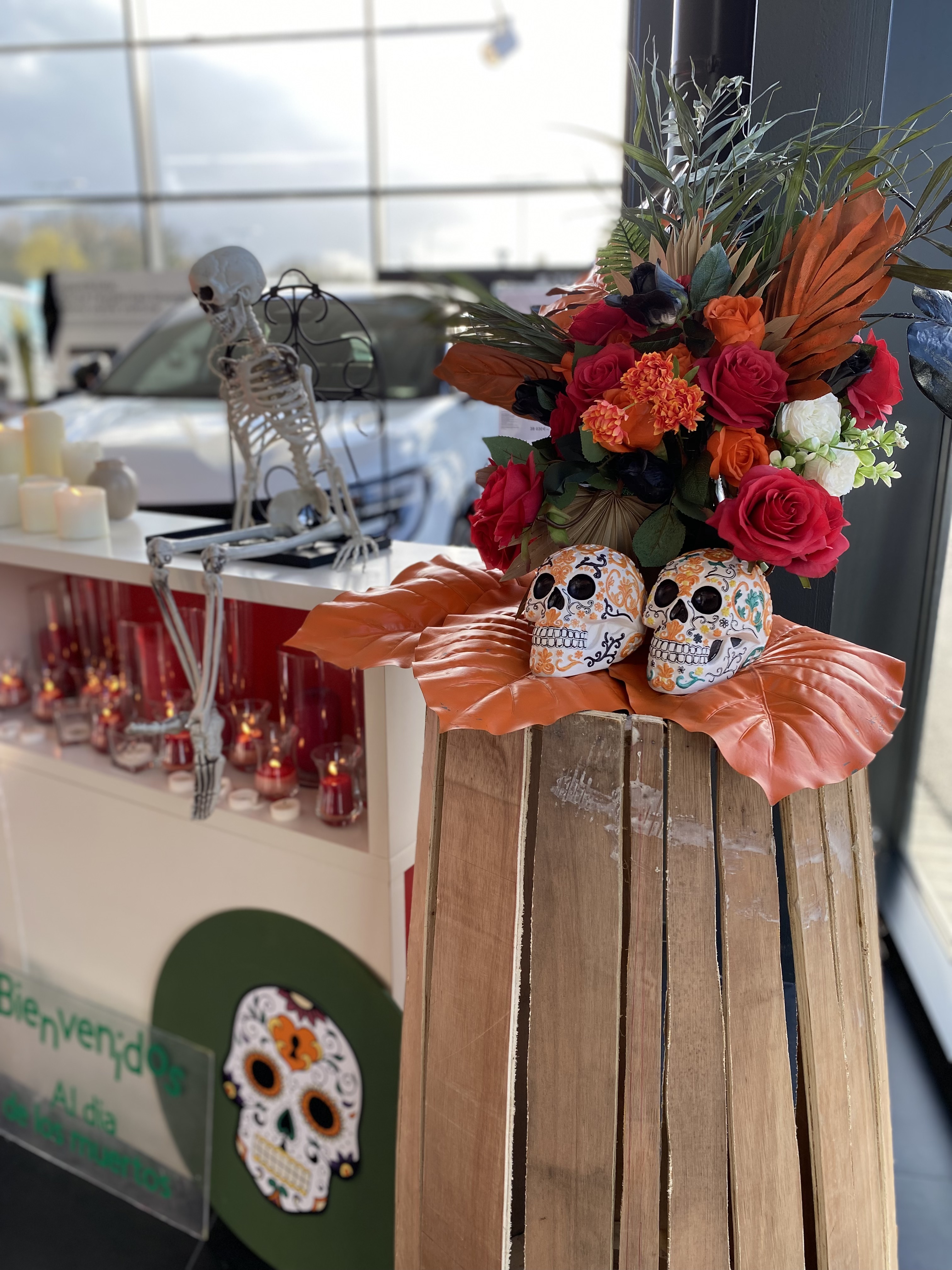
- Office-based Halloween activations for HQs: roaming characters with controlled scripts, a staffed photo corner with privacy-compliant delivery, and a dessert/mixology station designed for throughput.
- Internal comms-driven events: a short show moment followed by a leadership message, supported by lighting cues and a tight run-of-show so the agenda stays on track.
- Hybrid engagement: an in-person activation plus digital elements (AR filters, internal contest mechanics) to include remote teams without forcing them into a video call “party.”
- Institutional environments: elegant, low-noise formats (close-up magic, live duo) where discretion, dress code, and stakeholder sensitivity are essential.
Across these formats, the same discipline applies: clear scope, documented brief, technical validation, and on-site supervision. That is what protects your internal sponsor from “event chaos” and lets leadership participate without managing logistics.
Common Halloween animatie mistakes we prevent in Brussel
Underestimating building security and access: performers stuck at reception, missing badges, or no freight access leads to late starts and visible stress.
Choosing “scary” without HR alignment: jump scares, physical contact, or suggestive costumes can create complaints and reputational risk.
Ignoring crowd flow: a photo corner placed at an entrance can block arrivals; one station for 400 people creates queues and frustration.
Assuming technical needs are minimal: a simple show still needs power, sound checks, and acoustic planning—especially in echoing lobbies.
No contingency plan: illness, transport delays, or last-minute VIP agenda changes happen; we plan replacements and modular set-ups.
Unclear ownership on event day: when nobody is responsible for cues and timing, the internal sponsor gets pulled into micro-decisions all evening.
Our role is to remove these risks upstream: validate constraints early, document decisions, and run the floor on the day. That is what executives notice—even if they never see the checklist.
Why Brussel clients rebook INNOV'events for seasonal activations
Recurring collaboration is usually earned through consistency, not creativity alone. HR and communication teams come back when the agency reduces internal workload and delivers the same level of control even when the context changes (new leadership, new office rules, different budget).
70–85% of our seasonal clients request either a repeat format or an adapted version the following year (typical range depending on internal budget cycles and organizational changes).
1–3 planning meetings are often enough for returning clients because the venue constraints, brand guardrails, and preferred tone are already documented.
15–30% average time saved for internal sponsors on logistics when stage management and supplier coordination are fully outsourced (based on internal feedback shared after events).

Loyalty is a practical indicator: it means the event day ran without reputational issues, the program matched the culture, and the internal sponsor did not spend the night troubleshooting.
Our production process in Brussel from brief to show call
👉 Scope and risk calibration in Brussel
We start with a 30–45 minute working call to define objective, audience profile, and constraints: building rules, languages, HR boundaries, timing, and stakeholder sensitivities. We then propose 2–3 formats with a clear recommendation, not a long list.
👉 Site validation and operational design
We confirm access routes, load-in times, power availability, sound constraints, and security processes. We map crowd flow and define activation locations that do not interfere with fire routes, reception, or badge gates.
👉 Casting and briefing of talents
We select performers based on corporate behavior, reliability, and language fit—not only artistic skill. Each talent receives a written brief: tone, scripts, do/don’t rules, dress code, arrival procedure, and escalation contacts.
👉 Technical preparation and run-of-show
We produce a cue sheet, confirm technical rider and timings, and coordinate with venue or in-house AV. If you have speeches, awards, or internal messages, we integrate them into the run-of-show so entertainment supports the agenda rather than competing with it.
👉 On-site stage management and post-event wrap
On event day, a stage manager coordinates suppliers, timing, and stakeholder requests, while ensuring safety and brand alignment. After the event, we debrief quickly: what to keep, what to adjust, and what operational notes should be documented for the next edition.
FAQ sur l'organisation Halloween animatie à Brussel
How early should we book Halloween animatie in Brussel?
For October dates, plan 6–10 weeks ahead for the best talent availability. For simpler formats (1–2 performers, no heavy décor), 2–4 weeks can work, but choices become limited—especially on Thursdays and Fridays.
What budget range is realistic for Brussel corporate Halloween entertainment?
Most corporate requests in Brussel fall between €3,500 and €8,500 excluding VAT for a multi-activation setup (photo/make-up/roaming) with on-site coordination. A single feature can start around €1,200; larger productions often exceed €10,000.
Can you deliver Halloween animatie in Brussel inside an office lobby?
Yes, provided we validate access, security badging, and circulation. We typically use low-noise formats (close-up, roaming, photo) and modular décor that does not block fire routes. A quick technical walk-through is strongly recommended.
How do you keep Halloween animatie HR-safe in Brussel companies?
We agree a tone level in writing (e.g., playful, cinematic, no jump scares), define clear do/don’t rules (no physical contact, no offensive costumes), and brief performers accordingly. We also provide opt-in participation and privacy-compliant photo handling when images are involved.
Do you manage permits or insurance for Brussel entertainment events?
We provide insurance certificates and supplier documentation as required. Permits depend on the location and format: most indoor corporate activations do not require public permits, but certain outdoor installations or public-facing activations may. We clarify this during scoping and coordinate with the venue or local authorities when needed.
Request a Brussel quote with a clear scope and run-of-show
If you are comparing agencies, we suggest starting with constraints: date, venue type, attendee volume, and your HR/brand guardrails. Send us those elements and we will respond with a structured proposal for Halloween animatie in Brussel: recommended format, staffing plan, technical needs, a realistic schedule, and a budget range you can defend internally.
For October availability, earlier planning makes a measurable difference (talent choice, smoother logistics, less overtime risk). Contact INNOV'events to align on scope and secure a production slot.
Agence INNOV'events Brussel
Justin JACOB est le responsable de l'agence événementielle Brussel. Contactez-le directement par mail via l'adresse belgique@innov-events.be ou par formulaire.
Contacter l'agence BrusselToutes nos prestations & animations Brussel, Belgique
Découvrez nos prestations événementielles
Découvrez nos animations événementielles disponibles au Belgique
- Hôtesse événementielle à Brussel
- Escape Game à Brussel
- Cours de cuisine type MasterChef à Brussel
- Magicien à Brussel
- Location de chapiteau à Brussel
- Atelier colorimétrie à Brussel
- Jeux gonflables à Brussel
- Service de voiturier à Brussel
- Simulateur de football à Brussel
- Location de mobilier lumineux à Brussel
- Flocage lumineux à Brussel
- Repas insolite à Brussel
- Light Painting à Brussel
- Murder Party à Brussel
- Jeu concours à Brussel
- PLV événementielle à Brussel
- Réalité virtuelle à Brussel
- Cuisine moléculaire à Brussel
- Animation Halloween à Brussel
- Feu d’artifice à Brussel
- Jeux géants à Brussel
- Animateur événementiel à Brussel
- Animation photo à Brussel
- Père Noël à Brussel
- Animation enfants à Brussel
- Visite guidée à Brussel
- Rallye urbain à Brussel
- Piscine à balles à Brussel
- Simulateur de vol à Brussel
- Location de food truck à Brussel
- Record du monde à Brussel
- Simulateur de surf à Brussel
- Casino du vin à Brussel
- Atelier relooking à Brussel
- Atelier création de parfum à Brussel
- Atelier acting à Brussel
- Animations RSE à Brussel
- Tir à l’arc à Brussel
- Agent de sécurité à Brussel
- Œnologie à Brussel
- Mime à Brussel
- Jeu télévisé à Brussel
- Fête foraine à Brussel
- Atelier gestion de crise à Brussel
- Atelier négociation de crise à Brussel
- Jeux d’arcade à Brussel
- Simulateur de chute libre à Brussel
- Simulateur de ski à Brussel
- Simulation circuit automobile à Brussel
- Baptême de l’air à Brussel
- Dégustation à Brussel
- Création de baby-foot à Brussel
- Rallye 2CV à Brussel
- Challenge LEGO à Brussel
- Animation casino à Brussel
- Interprète / traducteur à Brussel
- Goodies à Brussel
- Bus / transfert à Brussel