
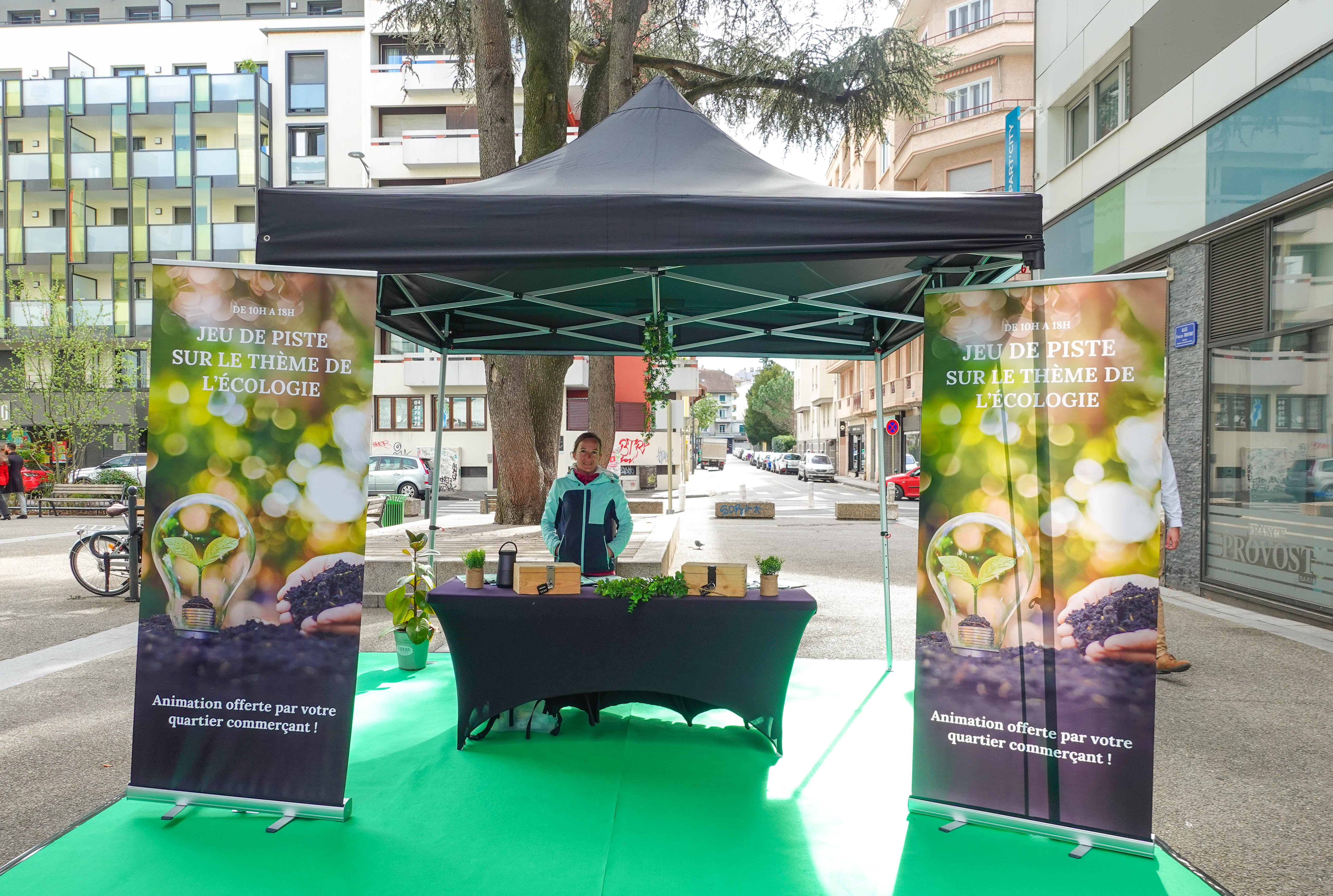
CSR activities in Brussel that deliver real impact and smooth execution
INNOV'events is a Brussels-based team supporting executives, HR and communication departments with CSR activiteiten for Brussel events from 20 to 500+ participants. We handle partner sourcing, risk management, on-site operations, and impact reporting so your teams stay focused on stakeholders and message.
Whether you need a hands-on community day, an ESG-aligned team activity, or a purpose-driven gala segment, we design actions that are credible locally and defensible at board level.
Sommaire
On a corporate agenda, CSR activiteiten are not “nice-to-have entertainment”: they protect employer brand, support retention, and turn internal communication into visible proof of commitments—provided the execution is rigorous and the impact is measurable.
In Brussel, organizations expect multilingual facilitation, stakeholder sensitivity, and operational reliability across dense mobility and strict venue constraints; a CSR concept that fails on logistics becomes a reputational risk.
Our advantage is field execution in Brussel: vetted local NGOs and social enterprises, tested run-of-show methods, and a production team used to corporate standards (HSE, timing discipline, brand compliance).
INNOV'events figures that de-risk your CSR day in Brussel
10+ years supporting corporate events and CSR activiteiten in Brussel with the same production discipline as executive offsites.
120+ corporate projects/year delivered through our Brussels team and partner network (team days, conferences, client events, activation moments).
20–500+ participants handled routinely, with scalable staffing, facilitator pools, and contingency planning for weather and transport disruption.
3 languages commonly managed on-site (EN/FR/NL) with briefing packs and signage aligned to brand and accessibility.
CSR activities trusted by organizations active in Brussel
We regularly support international groups, Belgian HQs, and public-interest organizations with offices in Brussel. Many of our CSR formats are renewed year after year because they solve recurring constraints: limited employee time, compliance validation, and the need to show tangible outcomes beyond internal photos.
Typical recurring profiles include: EU and public-affairs environments around the European Quarter, finance and professional services near Arts-Loi and Central Station, and tech/scale-up teams across Etterbeek, Ixelles and the canal area. In practice, repeat collaborations happen when the activity is credible for employees and safe for the brand: clear NGO governance, transparent costs, and an impact summary that communication teams can publish without greenwashing concerns.
When you share your internal references (previous suppliers, preferred NGOs, or existing sponsorships), we integrate them into a coherent program so your initiative feels consistent with your CSR roadmap rather than an isolated event.
 Besoin d’un devis rapide ?
Nous vous envoyons une première proposition sous 24h.
Why schedule CSR activities in Brussel for your leadership agenda
Most organizations do not struggle to “motivate people to join an activity”; they struggle to align purpose, compliance, and operational execution within a tight corporate calendar. Well-structured CSR activiteiten in Brussel create a management lever: they make the CSR strategy tangible, they create cross-team collaboration, and they deliver a narrative that stands up to scrutiny from employees and external stakeholders.
Make ESG priorities operational: translating topics like inclusion, circularity, or food waste into tasks people can perform in 2–3 hours, with an output you can quantify (kits assembled, meals packed, kilos sorted, mentoring hours booked).
Strengthen employer brand without overpromising: when your activity is built around real partner needs and realistic claims, HR can communicate confidently—particularly important in Brussels’ competitive talent market.
Improve cross-silo collaboration: CSR formats designed with mixed teams (functions, seniority, languages) accelerate relationships more effectively than “classic” icebreakers, because the task focus reduces hierarchy friction.
Reduce reputational risk: a structured approach prevents the common pitfalls—non-inclusive formats, questionable charities, unsafe materials, or claims that cannot be verified.
Create a repeatable internal ritual: leadership teams often want a quarterly or annual anchor. We design formats you can scale across departments or replicate in other cities while keeping Brussel as the local flagship.
Brussel is a stakeholder-dense environment: institutions, NGOs, corporate HQs, and media ecosystems coexist within a few kilometers. A credible CSR day here has disproportionate visibility—so it needs the same governance mindset as any high-stakes corporate event.
What Brussel organizations expect from CSR activities on the ground
In Brussel, expectations are pragmatic and high. Many companies already have CSR policies and reporting obligations; employees are also experienced and quickly detect “CSR as a photo-op”. The winning formats are those that respect time constraints, bring concrete usefulness to local partners, and remain compatible with corporate controls.
Operationally, Brussels brings specific constraints we plan for from day one:
- Mobility and punctuality: the city’s traffic and public transport variability affect arrival waves. We build check-in windows, staggered rotations, and short walking routes from key hubs (Schuman, Brussels-Luxembourg, Central).
- Multilingual reality: facilitation and safety briefings often need EN/FR/NL. We provide standardized briefing scripts and visual task boards to reduce misunderstandings.
- Venue rules: many corporate venues in Brussels have strict load-in times, waste policies, and security checks. CSR activities involving materials (food, hygiene products, packaging) require detailed logistics sheets.
- Procurement and compliance: legal teams may ask for partner due diligence (non-profit statutes, insurance, data protection when working with beneficiaries, and anti-corruption checks). We prepare a partner dossier so your internal validation is fast.
We also see an increasing expectation for impact proof. Not a 40-page report—rather a concise, defensible recap: what was done, for whom, with which partner, and what measurable outputs were generated in Brussels.
Which CSR activity formats work best in Brussel for corporate teams
Engagement happens when participants understand the “why”, see the immediate usefulness, and can complete a task with visible output. The best CSR activiteiten in Brussel are designed as structured stations with real deliverables, not as vague goodwill gestures. Below are field-tested formats we regularly deploy, adapted to corporate constraints (time, brand, compliance).
Animations Interactives à Brussel
Impact sprint with local NGO briefings: short plenary + rotating stations (45–60 minutes each) where teams solve concrete operational needs (e.g., sorting donations, creating multilingual information leaflets, mapping volunteer recruitment messaging). Works well for 60–250 participants in a half day.
Mentoring marketplace in Brussel: speed-mentoring with pre-screened local associations (employment, youth guidance, newcomer integration). We schedule slots, prep mentors, and manage consent. Output is measurable: number of sessions booked and follow-up plan.
CSR challenge with procurement realism: teams receive a “budget envelope” and must design an action for a partner while respecting constraints (transport, storage, accessibility). This format resonates with executives because it mirrors real decision trade-offs.
Animations Artistiques à Brussel
Community mural or signage workshop: co-creation with a Brussels community partner (school, social enterprise, neighborhood initiative). We secure permissions, protect surfaces, and build a clear design approval chain so brand and values remain aligned.
Upcycling studio with local circular actors: teams transform corporate waste streams (banners, textiles) into usable items. This is particularly effective when communication teams want a visible “before/after” story grounded in circular economy principles.
Animations Innovantes à Brussel
Meal packing with food-rescue partners: strict hygiene workflow, quantified output (meals prepared), and a logistics plan for cold chain if required. Suitable for 30–200 participants; often combined with a short talk on food waste in Brussel.
Solidarity grocery assembly: assembling balanced boxes (dry goods + hygiene products) based on partner-defined lists. We manage sourcing, allergen labeling, and packaging standards.
Animations Gourmandes à Brussel
Digital accessibility audit: cross-functional teams test your own or a partner’s digital assets for accessibility, then produce a prioritized fix list. This fits knowledge-worker audiences and creates a concrete output that outlives the event.
Carbon-smart event lab: participants map the footprint drivers of your own Brussels event (mobility, catering, materials) and propose reduction actions. Communication teams like it because it improves future events and strengthens credibility.
Micro-volunteering content studio: creation of multilingual social posts, short videos, or recruitment materials for local partners, with clear brand and consent governance. Useful when physical volunteering is limited by time or weather.
Whatever the format, we align the activity with your brand image and governance: what you can credibly claim, what you can measure, and what your stakeholders in Brussel will consider meaningful. That alignment is what turns a “corporate event entertainment in Brussel” moment into a defensible CSR initiative.
Where to host CSR activities in Brussel for the right perception
The venue influences participation, safety, and the perceived seriousness of your CSR commitment. In Brussel, the right setting also reduces friction: transport, loading access, acoustic constraints, and waste management rules. We select venues based on the activity mechanics (stations, storage, hygiene) and your audience flow (arrival waves, multilingual briefings, VIP presence).
| Venue type | For which objective? | Main strengths | Possible constraints |
|---|---|---|---|
| Corporate office / HQ (on-site) | Maximize participation and minimize travel time for 30–300 people | Strong internal adoption; easy scheduling; controlled brand environment; easier inclusion of leadership drop-ins | Elevator/load limits; waste and storage capacity; building security rules; need to protect floors/walls for material-based activities |
| Social enterprise workshop space | Reinforce authenticity and local immersion for 20–150 people | Direct link to beneficiary impact; partner-led facilitation; strong story for internal comms with concrete context in Brussel | Limited capacity; stricter timing; sometimes less flexible AV; accessibility must be checked case-by-case |
| Conference venue with adjacent breakout rooms | Combine leadership messages + CSR stations for 80–500+ people | Professional AV; smooth plenary briefings; multiple rooms for parallel tasks; catering and cloakroom services | Load-in windows; venue-approved suppliers; higher fixed costs; must ensure the CSR activity does not feel “detached” from real impact |
We strongly recommend a site visit (or at least a technical walk-through) before confirming: in Brussels, a missing loading bay, a narrow corridor, or a strict waste rule can change the whole station design. Our production team checks access, storage, power, water points, acoustic zones, and emergency routes to keep the day predictable.
What budget to plan for CSR activities in Brussel
Pricing for CSR activiteiten in Brussel depends less on “the idea” and more on production variables: participant volume, material intensity, partner fees, venue constraints, and the level of reporting you require. For executives, the key is to budget for risk control and measurable output—not for decorative elements.
As practical ranges (excluding VAT, indicative):
- 30–60 participants: typically €3,500–€9,000 depending on materials, facilitation languages, and location logistics.
- 60–150 participants: typically €8,000–€25,000 with multi-station setup, partner capacity scaling, and on-site staff.
- 150–500+ participants: typically €20,000–€70,000+ where venue, safety supervision, storage/transport, and production staffing drive costs.
Partner economics and donations: some formats include a transparent donation component, others are service-based. We clarify what is operational cost versus support to the cause, to protect your governance narrative.
Materials and logistics: packing activities can require pallets, sorting tables, labels, gloves, boxes, and transport planning with timed deliveries in Brussels.
Facilitation ratio: the difference between a smooth experience and chaos is often staffing. We define supervisor ratios per station and language coverage.
Venue and compliance: security checks, waste rules, and load-in slots can require extra crew time or alternative suppliers.
Impact measurement and reporting: from a simple KPI sheet to a more structured post-event impact note aligned to internal ESG reporting lines.
We frame ROI in executive terms: reduced reputational risk, stronger retention signals, and reusable content for HR/communications—while delivering concrete community value in Brussel. If you share your target outcomes and constraints, we will propose options at different investment levels with clear trade-offs.
Why a Brussel-based agency reduces risk for CSR activities
Running credible CSR activiteiten is mostly about coordination: partner reliability, timing, and on-site control. A team established in Brussel reduces operational risk because we know the local “friction points” and we can intervene fast when something changes (supplier delay, venue restriction, partner capacity issue).
As an event agency in Brussel, we also maintain a working ecosystem of local NGOs, social enterprises, facilitators and production suppliers. That ecosystem matters when you need to scale from 60 to 250 participants, switch a venue last minute, or ensure multilingual facilitation without compromising the message.
- Faster due diligence: we already have partner documentation workflows (insurance, governance, invoicing practices) to support your procurement and legal checks.
- On-site responsiveness: a local producer can be on location quickly for a technical check or incident management.
- Realistic mobility planning: we build arrival and rotation schedules that reflect Brussels traffic patterns and public transport options.
- Stronger stakeholder sensitivity: formats that involve public space, beneficiaries, or local communities require a tone and approach that fits Brussels’ context.
We frame ROI in executive terms: reduced reputational risk, stronger retention signals, and reusable content for HR/communications—while delivering concrete community value in Brussel. If you share your target outcomes and constraints, we will propose options at different investment levels with clear trade-offs.





Examples of CSR activities delivered in Brussel across industries
Our projects vary by sector and constraint set, which is exactly why methodology matters more than slogans. We’ve delivered CSR formats for:
- Professional services teams needing a half-day CSR block between client meetings: compact station design, high time discipline, and a post-event impact recap ready for internal comms.
- International HQs with multilingual audiences: EN/FR/NL briefings, clear visual task boards, and a facilitation plan that avoids mixing sensitive topics with informal jokes.
- Scale-ups wanting authenticity without heavy bureaucracy: lightweight governance, strong partner immersion, and clear guidance on what can be communicated publicly.
- Regulated environments (finance/health-related ecosystems): strict supplier validation, controlled photography rules, and careful selection of beneficiaries to avoid conflicts of interest.
In the field, adaptability often means managing last-minute constraints: a delayed delivery, a venue that reduces load-in time, or a partner who suddenly needs a different output. We plan contingencies (buffer stock, alternative stations, adjusted rotations) so the day remains smooth and your leadership does not have to “solve logistics” on site.
Mistakes to avoid with CSR activities in Brussel
Choosing a cause without checking partner capacity: a well-known NGO may not be able to operationalize 200 volunteers in one slot. We validate capacity, staffing, and storage before committing.
Underestimating venue constraints: no loading access, insufficient storage, or strict waste rules can derail material-heavy activities. We confirm technical feasibility early.
Overclaiming impact: communication that exaggerates results or implies long-term outcomes without evidence creates greenwashing risk. We stick to verifiable outputs and partner-approved wording.
Ignoring inclusion: activities that require physical strength, standing for long periods, or complex language can exclude participants. We design accessible roles and clear instructions.
No operational ownership: when “everyone” is responsible, no one is. We set a clear chain of command: your internal sponsor, our producer, partner lead, station leads.
Skipping the debrief: without a structured wrap-up, the day becomes a one-off. We end with a factual recap and next steps (follow-up volunteering, donation logistics, mentoring calendar).
Our role is to prevent these risks before they become visible. In Brussels, where stakeholder scrutiny can be high, prevention is not a luxury—it is the condition for a CSR initiative that your leadership can stand behind.
Why Brussel clients renew their CSR activities with INNOV'events
Client loyalty comes from predictability. Directors and HR teams come back when the agency consistently delivers on timing, compliance, and the employee experience—without turning CSR into a marketing exercise.
High repeat rate on annual CSR days: many clients rebook because we document what worked (station capacity, staffing ratios, venue constraints) and improve year after year.
Stable partner ecosystem in Brussel: repeating partners increases credibility and reduces onboarding risk, while still allowing you to refresh the activity mechanics.
Operational continuity: the same producer remains accountable from concept to on-site delivery, which reduces loss of information and last-minute surprises.

Loyalty is the most reliable proof point in events: it means the day was delivered smoothly, the internal sponsor looked good, and the CSR message remained credible for Brussel stakeholders.
Our production process for CSR activities in Brussel
👉 Step 1 (Brussel): align objectives, constraints, and stakeholder sensitivities
We start with a working session (30–60 minutes) to capture your non-negotiables: audience profile, internal policies, preferred causes, ESG priorities, language requirements, and comms constraints (what you can/can’t publish). We also map stakeholder sensitivities specific to Brussel (public affairs context, NGO landscape, reputational considerations).
👉 Step 2 (1000): propose 2–3 scenarios with clear trade-offs
You receive 2–3 options, each with: activity mechanics, partner profile, timing, staffing plan, preliminary budget range, and KPIs. We explicitly state trade-offs (e.g., higher material cost but stronger measurable output; lower venue cost but more mobility friction).
👉 Step 3 (Brussel): partner due diligence and feasibility lock
Once an option is selected, we run partner validation (governance, insurance, invoicing, data protection if needed) and confirm operational feasibility: storage, transport, load-in, waste plan, and safety workflow. This is where most risks are removed.
👉 Step 4 (1000): production build and run-of-show
We create the run-of-show, station plans, task scripts, signage text (EN/FR/NL if required), and staffing schedule. Communication teams receive a content plan (what to shoot, consent approach, and factual claims you can safely use).
👉 Step 5 (Brussel): on-site delivery and command center
On the day, we run check-in, briefings, station rotations, and quality control. We manage suppliers, partner coordination, and incident flow. Your internal host can focus on leadership presence and employee engagement rather than logistics.
👉 Step 6 (1000): impact recap within 5 working days
You receive a concise post-event pack: KPIs, partner feedback, participant highlights, and a set of approved visuals. If relevant, we add recommendations to improve next editions and maintain a consistent CSR storyline in Brussel.
FAQ sur l'organisation CSR activiteiten à Brussel
How long should CSR activities in Brussel last?
Most corporate formats work best in 2 to 4 hours (including briefing and wrap-up). For deeper partner immersion or combined plenary moments, plan half a day. Full-day formats are effective for 150+ participants only if logistics and rotations are tightly managed.
What budget range for CSR activities in Brussel for 100 people?
For 100 participants in Brussel, a realistic range is €8,000–€18,000 (excl. VAT). The range depends mainly on material intensity (packing/sorting vs mentoring), venue choice, language facilitation, and transport/storage constraints.
Can CSR activities in Brussel be run in three languages?
Yes. We plan EN/FR/NL delivery by combining multilingual station leads, standardized briefing scripts, and clear visual task boards. Expect a small uplift in staffing cost, but it significantly reduces confusion and improves safety and inclusion.
How do you measure impact after CSR activities in Brussel?
We measure outputs that can be verified: volunteer hours, number of kits/meals assembled, kilograms sorted/collected, mentoring sessions scheduled, and partner satisfaction feedback. We deliver a compact recap within 5 working days with partner-approved figures and wording.
Which CSR activities in Brussel work in bad weather?
Indoor options are the most reliable: meal or kit packing, upcycling workshops, mentoring marketplaces, and micro-volunteering content sprints. For outdoor actions, we build a defined weather plan (thresholds, alternate indoor station, and communication timing) so you don’t decide last-minute onsite.
Request a proposal for CSR activities in Brussel
If you are comparing agencies, we recommend starting with three inputs: participant count, time window (2–4 hours or half-day), and the CSR themes you can credibly champion in Brussel. With that, we can propose scenarios with clear budgets, operational plans, and measurable KPIs.
Contact INNOV'events to schedule a short scoping call. Early planning (ideally 4–8 weeks ahead for 100+ participants) gives you better partner availability, smoother venue logistics, and stronger impact reporting.
Agence INNOV'events Brussel
Justin JACOB est le responsable de l'agence événementielle Brussel. Contactez-le directement par mail via l'adresse belgique@innov-events.be ou par formulaire.
Contacter l'agence BrusselToutes nos prestations & animations Brussel, Belgique
Découvrez nos prestations événementielles
Découvrez nos animations événementielles disponibles au Belgique
- Hôtesse événementielle à Brussel
- Escape Game à Brussel
- Cours de cuisine type MasterChef à Brussel
- Magicien à Brussel
- Location de chapiteau à Brussel
- Atelier colorimétrie à Brussel
- Jeux gonflables à Brussel
- Service de voiturier à Brussel
- Simulateur de football à Brussel
- Location de mobilier lumineux à Brussel
- Flocage lumineux à Brussel
- Repas insolite à Brussel
- Light Painting à Brussel
- Murder Party à Brussel
- Jeu concours à Brussel
- PLV événementielle à Brussel
- Réalité virtuelle à Brussel
- Cuisine moléculaire à Brussel
- Animation Halloween à Brussel
- Feu d’artifice à Brussel
- Jeux géants à Brussel
- Animateur événementiel à Brussel
- Animation photo à Brussel
- Père Noël à Brussel
- Animation enfants à Brussel
- Visite guidée à Brussel
- Rallye urbain à Brussel
- Piscine à balles à Brussel
- Simulateur de vol à Brussel
- Location de food truck à Brussel
- Record du monde à Brussel
- Simulateur de surf à Brussel
- Casino du vin à Brussel
- Atelier relooking à Brussel
- Atelier création de parfum à Brussel
- Atelier acting à Brussel
- Animations RSE à Brussel
- Tir à l’arc à Brussel
- Agent de sécurité à Brussel
- Œnologie à Brussel
- Mime à Brussel
- Jeu télévisé à Brussel
- Fête foraine à Brussel
- Atelier gestion de crise à Brussel
- Atelier négociation de crise à Brussel
- Jeux d’arcade à Brussel
- Simulateur de chute libre à Brussel
- Simulateur de ski à Brussel
- Simulation circuit automobile à Brussel
- Baptême de l’air à Brussel
- Dégustation à Brussel
- Création de baby-foot à Brussel
- Rallye 2CV à Brussel
- Challenge LEGO à Brussel
- Animation casino à Brussel
- Interprète / traducteur à Brussel
- Goodies à Brussel
- Bus / transfert à Brussel