
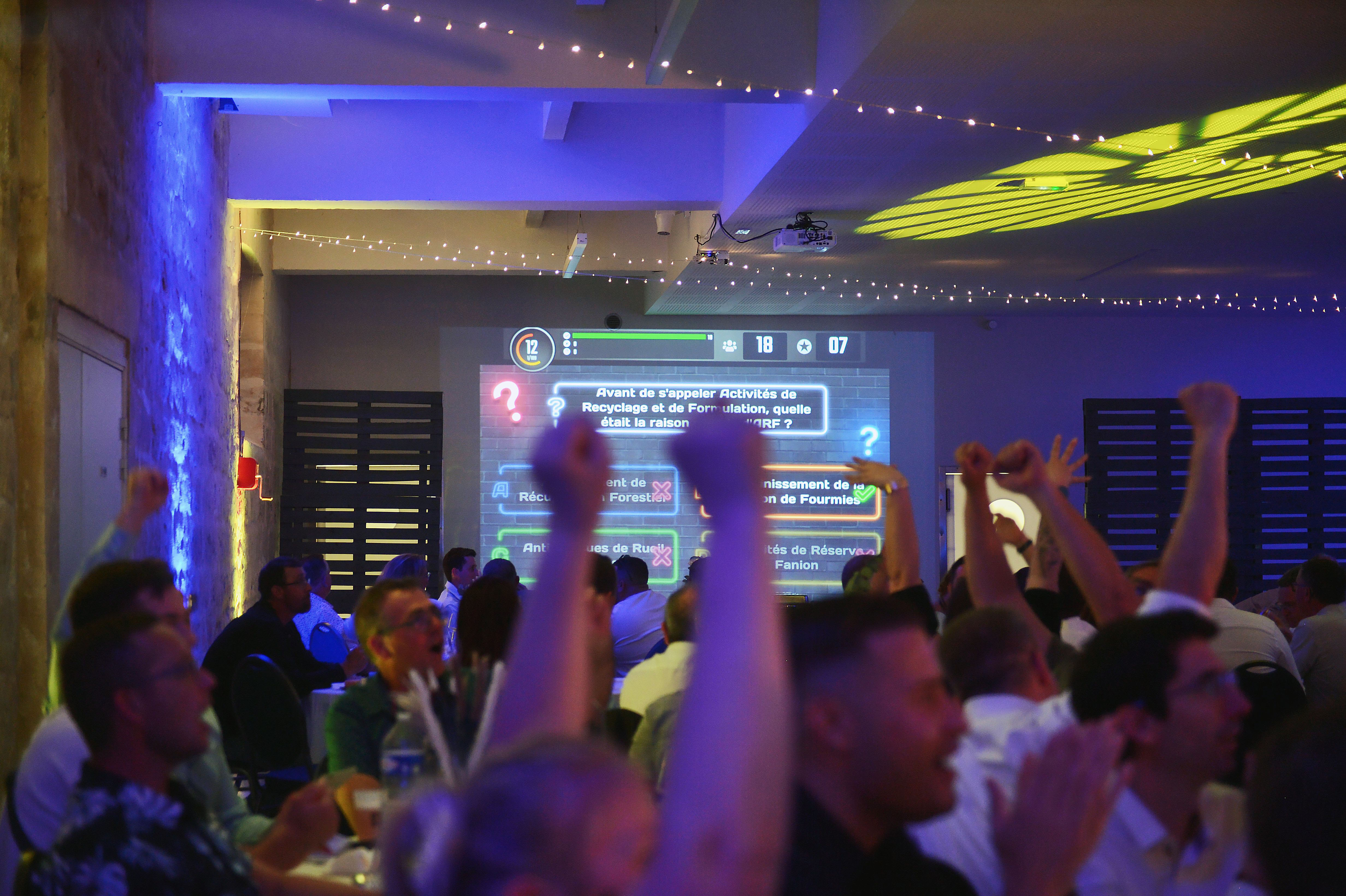
TV spelshow in Brussel that keeps teams sharp and engaged
INNOV'events produces TV spelshow formats for corporate events in Brussel, typically for 20 to 500 attendees. We handle the full chain: game design, studio-style staging, host, technical AV, rehearsals, and on-site direction so your leadership team can focus on guests.
Whether it’s an HR-driven team moment, a communication milestone, or an executive offsite, we build a game show that feels professional on stage and controlled behind the scenes.
Sommaire
Entertainment is not “extra” when you need alignment: a TV spelshow creates a shared narrative, turns passive audiences into participants, and gives management a controlled way to reinforce key messages without another slideshow.
Organizations in Brussel often expect bilingual facilitation, strict timing (transport, ministerial/board agendas), and a production level that matches the city’s institutional and international standards—without blocking the whole day for rehearsals.
As a Brussels-based team, we plan with local venue constraints, union/technical rules, and realistic load-in schedules. You get one accountable producer, one run-of-show, and a technical setup sized to your room—not a generic “package.”
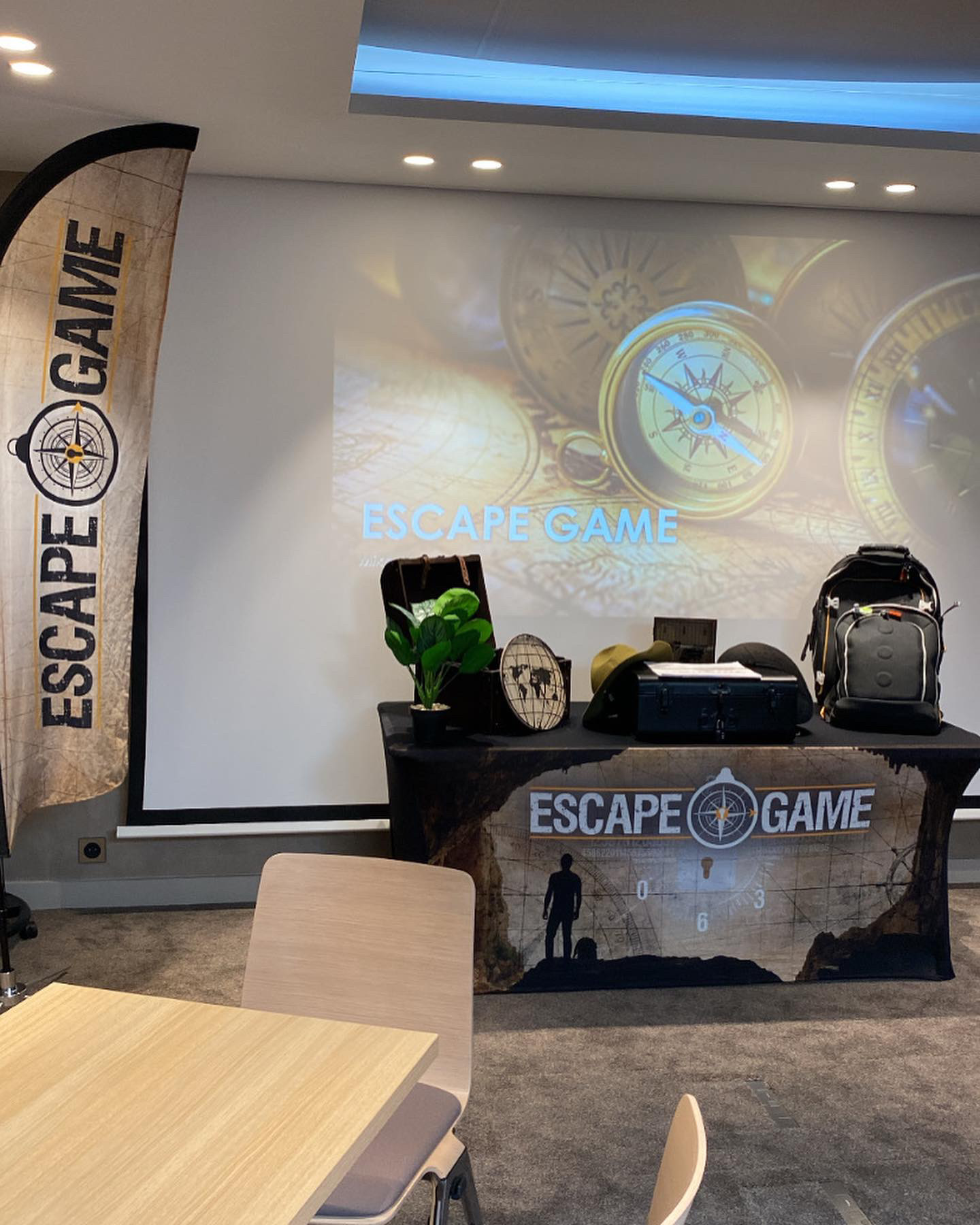
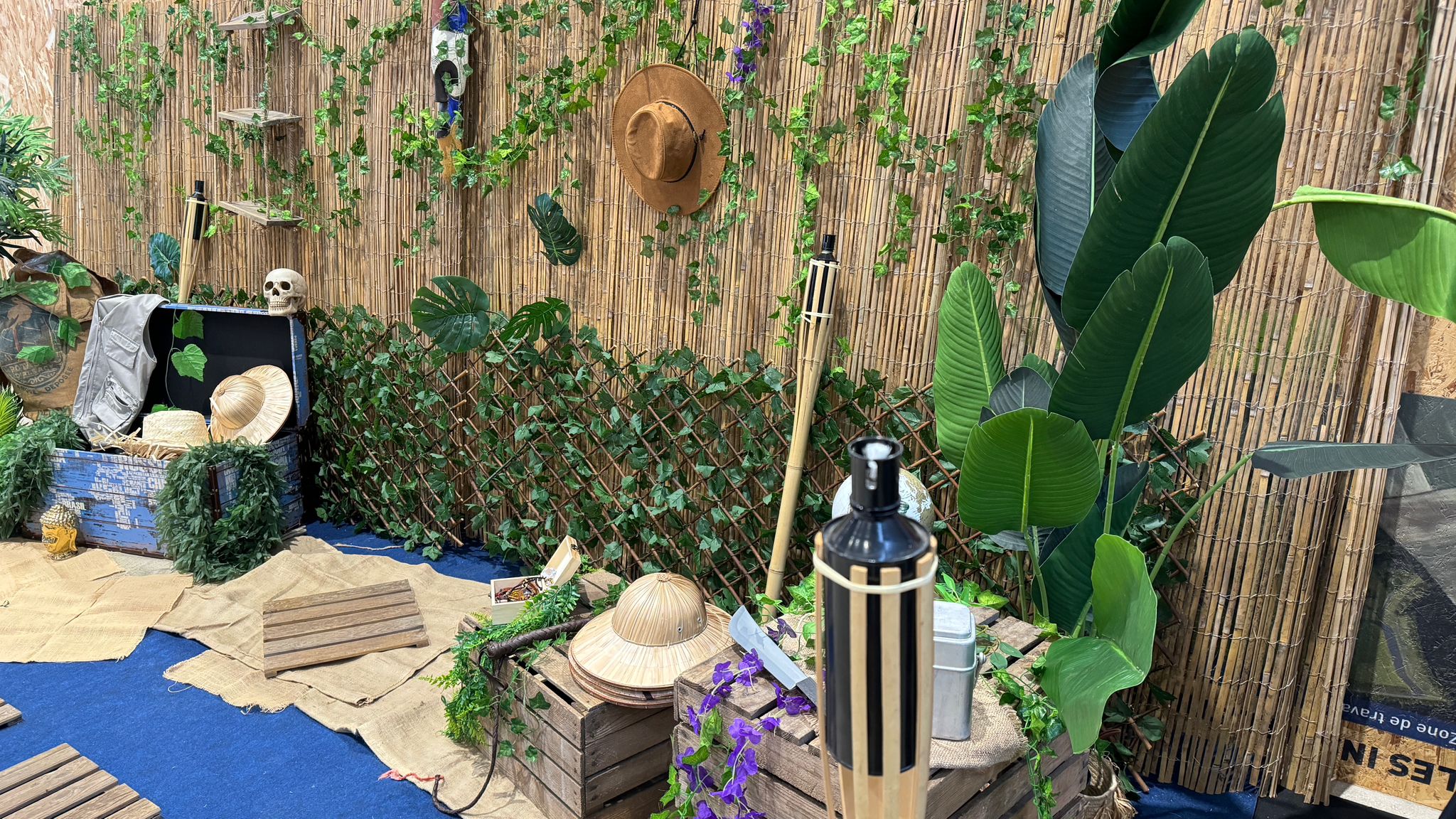
Operational track record in Brussel you can measure
10+ years delivering corporate entertainment and production formats in Belgium, including studio-style games and live show direction.
30 to 120 minutes is the most common effective game duration we produce (with optional breaks and awards), optimized for attention and agenda constraints.
Typical staffing on event day: 5 to 14 crew (producer, stage manager, host, AV lead, sound, lighting, video, runners) depending on the room and ambition.
Audience sizes handled for TV spelshow in Brussel: 20 to 500 in a single room; above that we propose multi-room streaming or staggered sessions.
Who we support across Brussel year after year
We regularly support Brussels-based and Brussels-operating organizations that need reliable execution: private companies with HQ functions, EU-facing teams, federations, and service firms hosting international colleagues. A significant part of our work is repeat business—because once a format works internally, HR and Comms often reuse it for onboarding, culture moments, or quarterly all-hands.
If you share specific company references you want us to mention, we will integrate them precisely (format delivered, audience size, objective, and what was managed on site). In the meantime, we can walk you through comparable Brussels projects during a call, including constraints we solved (short load-in windows, bilingual hosting, last-minute speaker changes, and strict brand compliance).
 Besoin d’un devis rapide ?
Nous vous envoyons une première proposition sous 24h.
Why a TV game show works for leaders in Brussel
In many companies, the real challenge is not “getting people in a room”; it’s getting consistent attention, creating safe interaction, and making messages stick across departments and seniority levels. A TV spelshow in Brussel gives you an executive-friendly tool: a structured, timed, moderated format where participation is designed—not improvised.
Culture and values, demonstrated not declared: we convert your principles into game mechanics (scenarios, dilemmas, quick choices). Teams experience the “right reflex” rather than hearing it.
Cross-silo interaction without awkward forced networking: tables or squads compete in rounds that require mixed skills (strategy, speed, listening). This is effective when mergers, reorgs, or multi-site friction are on the agenda.
Message retention and internal comms impact: we design question banks and “reveal moments” around your real priorities (customer promise, compliance, cybersecurity, new brand platform). The content becomes repeatable for future cohorts.
Leadership visibility with controlled risk: executives can appear in a short cameo round, deliver a timed prompt, or award points. The show structure protects against off-topic drift while still feeling human.
Employer branding in a realistic way: for Brussels offices competing for talent, a well-produced internal event creates credible content (photos, short clips) that reflects energy and professionalism—without pretending it’s a festival.
Brussel is a dense decision-making hub: agendas are tight, teams are diverse, and stakeholders are demanding. A TV game show format respects that reality—high engagement in a predictable timeframe, with production discipline and measurable outputs (participation, feedback, replayable content).
What Brussel audiences expect from corporate entertainment
Brussels audiences tend to be mixed: local teams, commuters from across Belgium, and international colleagues. That changes the way a corporate event entertainment in Brussel must be built. We routinely design formats where instructions are clear, humor stays inclusive, and participation does not rely on cultural references that only one group understands.
Practical expectations are also specific in Brussel: venues may have strict load-in hours, limited truck access, and noise constraints. We plan technical setups that are scalable—meaning we can deliver a “studio” feel with the right lighting angles, sound intelligibility, and stage sightlines even in challenging rooms (columns, low ceilings, daylight).
Finally, Brussels decision-makers often require governance: GDPR awareness for filming, brand approvals, and a single accountable partner who can talk both “creative” and “risk.” We provide a run-of-show, technical rider, and responsibilities matrix so your procurement, HR, and comms teams can validate quickly.
Which TV game show formats work best in Brussel offices
Entertainment creates engagement when it gives people a clear role and a shared goal. A TV spelshow in Brussel is effective because it combines structure (rules, timer, scoring) with spontaneity (team decisions, reactions). Below are formats we use often—selected based on audience profile, brand tone, and the amount of risk you want to take.
Animations Interactives à Brussel
Buzz-in quiz with live scoreboard: classic, fast, and highly controllable. Best for 50–300 guests. We can align questions to your company knowledge, safety reminders, product updates, or culture.
“Two truths and a lie” about the business: excellent for onboarding, post-merger integration, or leadership myth-busting. Works well with bilingual hosting and avoids niche references.
Deal-or-no-deal style choices: teams decide under time pressure with visible trade-offs (budget vs speed, quality vs scope). Useful for strategy workshops where you want to surface decision habits without confrontation.
Live polling rounds (phone-based): ideal when you must include remote participants or want anonymous participation (e.g., culture, values, change readiness). We keep it GDPR-safe and communicate clearly about data use.
Animations Artistiques à Brussel
Host + sidekick dynamic: a professional host keeps pace; a sidekick (internal or external) adds warmth. This is effective when the CEO wants to appear without carrying the full show.
“Studio band sting” or sound design: short audio cues (correct/incorrect, round changes) lift energy without turning it into a concert. Particularly useful in formal Brussels gala settings.
Video inserts: pre-recorded clues, leader cameos, or customer messages. We manage filming guidelines and ensure the screen format and audio levels match the room.
Animations Innovantes à Brussel
Taste test round: teams identify flavors or match products to stories. Works well for FMCG, hospitality, or client events—kept short and clean with allergen labeling and service coordination.
Chocolate or beer pairing mini-challenge: a Brussels-friendly twist when appropriate for your brand and audience. We keep it compliant with your alcohol policy and offer non-alcohol alternatives.
“Mystery box” supplier challenge: teams guess ingredients or propose a menu item; perfect when you want light participation during a walking dinner.
Animations Gourmandes à Brussel
Hybrid studio setup: in-room show plus a moderated stream for remote colleagues. We plan camera angles, latency-safe interactions, and a dedicated online moderator to avoid distraction for the host.
Role-based game mechanics: each team assigns roles (analyst, spokesperson, fact-checker). This reduces dominance by a single loud participant and makes collaboration visible.
Brand-safe “AI round”: teams improve a prompt or detect hallucinations in a controlled environment. Useful for companies rolling out AI guidelines—handled carefully to avoid confidentiality issues.
The strongest results come when the show mechanics match your brand image. A regulated sector in Brussel may need tighter tone control and clearer validation steps; a creative company can take more improvisation. Our job is to calibrate the format so it feels bold enough for employees and safe enough for leadership.
Which venue types in Brussel fit a TV spelshow setup
The venue defines what “TV-quality” can mean in practice: ceiling height impacts lighting, room depth affects sightlines, and acoustic treatment determines whether the host sounds crisp or washed out. In Brussel, we often adapt the show design to the venue rather than forcing a heavy technical rig that complicates access and timing.
| Venue type | For which objective? | Main strengths | Possible constraints |
|---|---|---|---|
| Hotel conference ballroom | Corporate all-hands, awards night, end-of-year event (80–300) | Built-in AV options, good logistics, catering on site, reliable staff | Lighting can be flat; strict schedules for setup; cost can rise with AV upgrades |
| Company auditorium / HQ event space | Internal culture moment, product update, leadership roadshow (50–250) | Brand-controlled environment, easy access for internal speakers, lower venue rental | Often limited stage depth; audio must be checked; security and access badges need planning |
| Industrial/event hall with blackbox potential | “Studio” feel, larger staging, immersive set (150–500) | High ceilings for lighting, flexible layout, strong production potential | Requires more technical build; load-in coordination; may need additional heating/acoustics |
We strongly recommend a site visit in Brussel before locking the final format. A 30-minute walkthrough avoids common issues: screen visibility from the back, mic feedback zones, power distribution, and realistic backstage circulation for contestants and executives.
What a TV spelshow in Brussel costs and why
Pricing for a TV spelshow in Brussel depends on production level and risk management. A well-run show is not only “a quiz”: it’s a combination of content engineering, stage direction, and technical delivery. We quote transparently by line items so procurement and stakeholders can understand what drives cost.
Audience size and participation model: 30 people on stage is different from 300 people playing from tables with voting devices. More participants typically means more facilitation and more testing.
Technical ambition: screens, camera capture, streaming, lighting design, sound reinforcement, and backup systems. The “TV look” mainly comes from lighting, sound clarity, and stage dressing—not from gadgets.
Content complexity: number of rounds, bilingual content, custom questions validated by your experts (legal, compliance, product). This is where many projects underestimate internal validation time.
Talent and staffing: host profile, rehearsal time, stage manager, additional crew for fast changeovers, and whether you need an on-camera moderator for hybrid audiences.
Logistics in Brussel: access hours, parking/truck constraints, security checks, and the need for faster setup due to venue turnover. These are real cost drivers because they affect crew time.
From an ROI perspective, leaders typically value three outcomes: higher participation (measured by teams engaged or votes cast), clearer message retention (post-event pulse survey), and reusable assets (question bank, short video clips, internal comms recap). A controlled production makes those outcomes reliable rather than accidental.
Why choose a Brussel-based partner for your TV game show
When the agenda is tight and reputational stakes are high, proximity is not a slogan—it’s operational leverage. Working with a local Brussels team reduces uncertainty: we know the rhythm of venues, the access realities, and the supplier ecosystem for professional AV and show staffing. It also speeds up decision-making when something changes late (speaker availability, room switch, security requirements).
As your event agency in Brussel, we also protect internal bandwidth: your HR or Comms lead should not be chasing technical confirmations, cue sheets, or last-minute print files. We run the coordination and keep your stakeholders aligned.
- Faster site visits and realistic load-in planning: we validate sightlines, acoustics, and backstage flow early—so the show is designed for the actual room.
- Supplier accountability: we work with proven Brussels technicians and rental partners; if something fails, there is no “remote handover” blame chain.
- Local compliance reflexes: filming permissions, GDPR-sensitive capture, and venue-specific safety rules are addressed upfront.
- Reduced day-of stress for executives: local teams can pre-position, adapt to traffic/access, and keep the run-of-show on time.
From an ROI perspective, leaders typically value three outcomes: higher participation (measured by teams engaged or votes cast), clearer message retention (post-event pulse survey), and reusable assets (question bank, short video clips, internal comms recap). A controlled production makes those outcomes reliable rather than accidental.










Examples of TV spelshow scenarios we deliver in Brussel
Our projects range from compact quizzes for leadership offsites to full stage productions during end-of-year celebrations. For example, we often support HR teams who need to re-energize engagement after a restructuring: we build a show where mixed teams answer “how we work now” scenarios, and leadership closes with a short, timed commitment round. The impact comes from structure: clear rules, short rounds, and a scoring logic that rewards collaboration—not just speed.
We also produce comms-driven moments where brand consistency is non-negotiable: stage visuals match brand guidelines, lower-thirds on screen use approved typography, and the host follows a vetted script to avoid off-tone improvisation. In Brussels, this is common for organizations visible to regulators, partners, or international boards.
Finally, we regularly adapt to constraints that happen in real companies: a keynote runs over, a VP arrives late from an EU meeting, or the room layout changes because of catering. Our approach is to design “decision buffers” in the run-of-show (flex rounds, optional tie-breakers, compressible segments) so the show still lands cleanly.
Common mistakes with corporate game shows in Brussel
Underestimating sound and room acoustics: poor intelligibility kills participation faster than any weak question. We plan the audio system to the venue, not to a generic checklist.
Too many rules, not enough rhythm: executives may enjoy complexity, but audiences need pace. We typically keep rounds short and explain rules with on-screen prompts.
Overexposing employees on stage: not everyone wants public performance. We build safe participation paths (table play, captains, anonymous votes).
Ignoring bilingual reality: in Brussel, language choices can include sensitivities. We plan bilingual hosting or bilingual on-screen guidance when needed, and we avoid jokes that rely on one language only.
No contingency for timing: if you cannot compress the show, you will either cut key messages or run late. We build optional segments and clear cut lines.
Mixing internal comms and entertainment without governance: when content is not validated, you risk factual errors or sensitive topics. We set up a validation workflow and lock content at the right time.
Our role is to remove those risks before they appear on stage: we anticipate technical constraints, control the pacing, and protect your stakeholders with a disciplined production process.
Why Brussel teams rebook the same format with INNOV'events
When clients come back, it’s rarely because they want “more fun.” It’s because the event ran on time, the content was on-point, and nobody had to manage crises in front of colleagues. In corporate environments, that reliability is what HR and Comms can build on year after year.
Many repeat clients reuse the same game shell with new question sets 2 to 4 times across a year (onboarding, mid-year pulse, end-of-year), which reduces cost and internal effort.
For recurring Brussels events, we often keep a ready-to-deploy kit list and technical plan, cutting preproduction time by 20–30% compared to a first edition.
Post-event feedback targets we commonly set with clients: 80–90%+ “clear and well-paced” ratings for the show segment, measured via a simple pulse survey.

Loyalty is a strong indicator of quality in event production: it means the format delivered engagement without creating operational debt for internal teams.
How we produce a TV spelshow in Brussel from brief to showtime
👉 Step 1 (Brussel): Executive brief and constraints mapping
We start with a 30–45 minute call to clarify your non-negotiables: audience profile, tone, bilingual needs, brand rules, risk tolerance, and what leadership wants to achieve (alignment, recognition, change adoption). We also capture hard constraints: venue, agenda, union/security rules, filming permissions, and internal validation owners.
👉 Step 2 (1000): Format proposal and run-of-show skeleton
We propose 1–2 game structures with timings (e.g., 45 minutes with 6 rounds + 1 tie-breaker), participation model (tables, captains, stage contestants), and technical approach (screens, buzzers, microphones, lighting). You receive a first run-of-show with decision points and a clear list of client inputs required.
👉 Step 3 (Brussel): Content design and validation workflow
We build the question bank and prompts from your materials (strategy deck, values, compliance notes, product updates). We establish a validation loop with named approvers (HR, Comms, Legal if needed) and a lock date—because content chaos is the number one risk for game shows.
👉 Step 4 (1000): Technical planning and venue coordination
We produce a technical plan: stage layout, screen placement, audio requirements, cueing, power distribution, and load-in schedule. We coordinate directly with the venue and AV partners in Brussels to confirm access times, rigging limits, and rehearsal windows.
👉 Step 5 (Brussel): Rehearsal, show calling, and on-site direction
On event day, we run a technical check and a short rehearsal (host cues, mic handovers, key transitions). The producer calls the show from a cue sheet, the stage manager controls on-stage flow, and the AV team follows timed cues. If the agenda shifts, we compress the show using predefined cut lines so you stay on time.
👉 Step 6 (1000): Debrief and reuse plan
After the event, we debrief quickly: what rounds worked best, where timing tightened, participation rate, and what to adjust. For clients planning recurring editions, we provide a reuse roadmap: updated question sets, seasonal themes, and a lightweight production plan to reduce future costs.
FAQ sur l'organisation TV spelshow à Brussel
How long should a TV spelshow run in Brussel?
Most corporate formats perform best at 30–75 minutes. If you add awards, executive messages, or a break, plan 60–120 minutes total including transitions.
What group size works for a TV spelshow in Brussel?
We commonly produce for 20–500 people in one room. For larger groups, we recommend either multi-session play (e.g., 2 x 300) or a hybrid approach with a moderated stream.
Do we need a big stage for a TV spelshow in Brussel?
Not necessarily. For table-based play, a small stage plus a strong screen and good audio is enough. For on-stage rounds, plan roughly 6–10 m stage width depending on contestant count and set elements.
Can you host bilingually for audiences in Brussel?
Yes. We can provide bilingual hosting (EN/FR or EN/NL) and/or bilingual on-screen instructions. We typically align languages with your audience split and keep the pacing tight by using short, standardized prompts.
How far in advance should we book in Brussel?
For a solid production with venue coordination, plan 4–8 weeks. If you need heavy customization, filming, or a peak-season date, 8–12 weeks is safer.
Plan your TV spelshow in Brussel with a clear run-of-show
If you want a TV spelshow in Brussel that is engaging for teams and predictable for leadership, let’s work from your constraints: agenda, audience, venue, and brand rules. Share your date, estimated headcount, languages, and venue (or short-list), and we will respond with a concrete format proposal, technical approach, and a transparent budget range.
Early planning makes a visible difference in show quality: it secures the right host, avoids content approval bottlenecks, and ensures the technical setup matches the room rather than fighting it.
Agence INNOV'events Brussel
Justin JACOB est le responsable de l'agence événementielle Brussel. Contactez-le directement par mail via l'adresse belgique@innov-events.be ou par formulaire.
Contacter l'agence BrusselToutes nos prestations & animations Brussel, Belgique
Découvrez nos prestations événementielles
Découvrez nos animations événementielles disponibles au Belgique
- Hôtesse événementielle à Brussel
- Escape Game à Brussel
- Cours de cuisine type MasterChef à Brussel
- Magicien à Brussel
- Location de chapiteau à Brussel
- Atelier colorimétrie à Brussel
- Jeux gonflables à Brussel
- Service de voiturier à Brussel
- Simulateur de football à Brussel
- Location de mobilier lumineux à Brussel
- Flocage lumineux à Brussel
- Repas insolite à Brussel
- Light Painting à Brussel
- Murder Party à Brussel
- Jeu concours à Brussel
- PLV événementielle à Brussel
- Réalité virtuelle à Brussel
- Cuisine moléculaire à Brussel
- Animation Halloween à Brussel
- Feu d’artifice à Brussel
- Jeux géants à Brussel
- Animateur événementiel à Brussel
- Animation photo à Brussel
- Père Noël à Brussel
- Animation enfants à Brussel
- Visite guidée à Brussel
- Rallye urbain à Brussel
- Piscine à balles à Brussel
- Simulateur de vol à Brussel
- Location de food truck à Brussel
- Record du monde à Brussel
- Simulateur de surf à Brussel
- Casino du vin à Brussel
- Atelier relooking à Brussel
- Atelier création de parfum à Brussel
- Atelier acting à Brussel
- Animations RSE à Brussel
- Tir à l’arc à Brussel
- Agent de sécurité à Brussel
- Œnologie à Brussel
- Mime à Brussel
- Jeu télévisé à Brussel
- Fête foraine à Brussel
- Atelier gestion de crise à Brussel
- Atelier négociation de crise à Brussel
- Jeux d’arcade à Brussel
- Simulateur de chute libre à Brussel
- Simulateur de ski à Brussel
- Simulation circuit automobile à Brussel
- Baptême de l’air à Brussel
- Dégustation à Brussel
- Création de baby-foot à Brussel
- Rallye 2CV à Brussel
- Challenge LEGO à Brussel
- Animation casino à Brussel
- Interprète / traducteur à Brussel
- Goodies à Brussel
- Bus / transfert à Brussel