
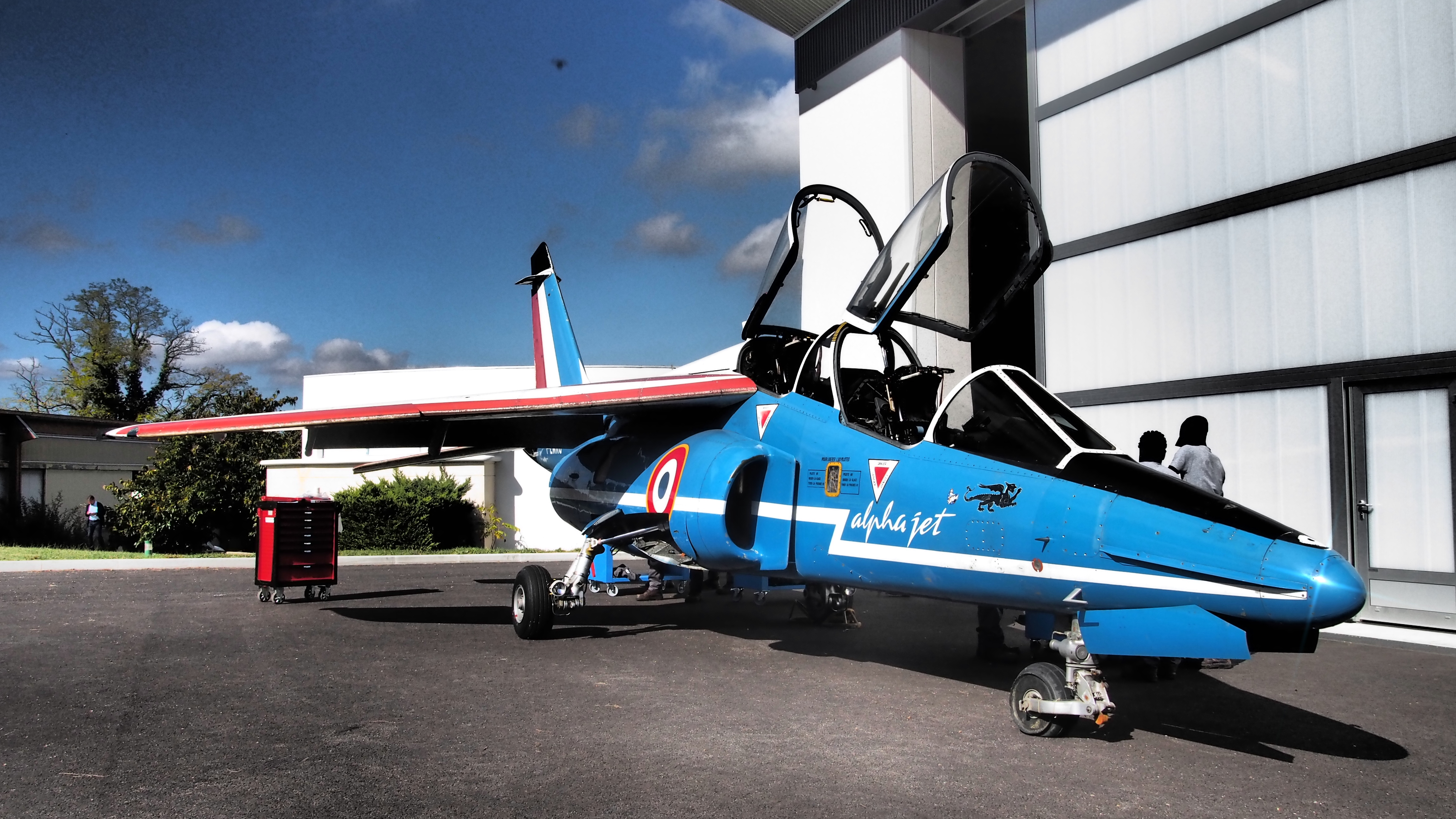
Initiatievlucht in Brussel that fits your agenda, your brand and your risk standards
INNOV'events is a Brussels-based corporate events agency coordinating Initiatievlucht formats for leadership teams, HR and communication departments, typically for 10 to 300 participants. We handle venue fit, permits, transport flows, safety briefings, supplier management, and run-of-show so your teams can stay focused on stakeholders.
Whether you need a short adrenaline sequence inside a broader conference day or a stand-alone team moment, we align the experience with business objectives, compliance expectations and the realities of Brussels mobility.
Sommaire
In a corporate agenda, entertainment is not “extra”; it is a management lever. A well-framed Initiatievlucht in Brussel creates a shared reference point that accelerates trust, increases cross-team cooperation, and makes your internal messages land—provided the experience is professionally controlled.
In Brussel, organizations expect punctuality, multilingual facilitation (FR/NL/EN), clear security rules, and a plan that works with traffic constraints and last-minute schedule changes. Decision-makers also expect traceable supplier compliance and a predictable guest journey.
We operate locally and coordinate on the ground with pilots, venues and transport partners. Our approach is designed for executive-level pressure: tight timelines, brand exposure, and zero appetite for improvisation on event day.
Operational track record in Brussel you can benchmark quickly
10+ years supporting corporate events with complex logistics and supplier ecosystems in Belgium.
100+ corporate projects/year coordinated through our network (team-building, executive offsites, client events, internal campaigns).
3 languages delivered on site (FR/NL/EN) for briefings, signage and host coordination—standard in Brussel.
1 dedicated run-of-show owner per event (single point of accountability from technical rehearsal to wrap-up).
Companies in Brussel that require repeatable, board-safe event execution
INNOV'events works with organizations active in Brussel and across Belgium where the expectations are explicit: clear governance, tight timing, and a guest experience that protects reputation. Many of our clients renew year after year because they need consistency more than novelty—especially when executives, key clients or social partners are present.
You mentioned providing company names as references; to keep this page accurate and compliant, we will integrate those exact references once you share the list. In practice, the profiles we support most often in Brussels include EU-affiliated ecosystems, regulated sectors (finance, pharma, public utilities), and headquarters teams managing multi-site communication.
What these organizations have in common: they want a partner who can translate an “idea” into a controlled operational plan—supplier contracting, safety and insurance checks, participant comms, and a day-of control room mindset.
 Besoin d’un devis rapide ?
Nous vous envoyons une première proposition sous 24h.
What an Initiatievlucht unlocks for leadership teams in Brussel
A corporate Initiatievlucht is effective when it is treated as a managed sequence inside a broader management narrative: onboarding, recognition, cross-department collaboration, or a strategic change moment. The goal is not adrenaline; the goal is measurable engagement with minimal operational risk.
In Brussels, we see this format work particularly well when teams are hybrid, multicultural, or distributed across multiple sites. A short, well-briefed experience creates a common language and a concrete story employees actually share—internally and sometimes externally—without forcing artificial “team spirit” exercises.
Accelerate trust after reorg or leadership change: we structure the experience with pre-briefing and debrief prompts so participants connect the moment to a business reality (decision-making under uncertainty, role clarity, communication loops).
Support HR objectives without being HR-heavy: used for onboarding cohorts, talent programs or employer branding—while staying professional and compliant. We frequently integrate a short leadership message and a clean photo/video setup that respects consent rules.
Create cross-silo collaboration: pairing participants from different departments (Finance/Operations/Sales) with a timed rotation reduces “same-team clustering” and increases new interactions—especially useful in headquarters settings common in Brussel.
Offer recognition that feels earned: for sales achievements or project milestones, the experience signals appreciation while keeping high standards (clear schedule, quality catering, premium guest handling).
Improve internal communication recall: when the experience is placed right before a key message (strategy update, safety campaign, culture values), the retention is higher because attention is already engaged.
Brussels has a pragmatic economic culture: stakeholders expect substance, not spectacle. When we design an Initiatievlucht in Brussel, we connect the experience to your business storyline and make sure it stands up to executive scrutiny—timing, safety, and reputational control.
Brussel constraints executives actually care about on event day
Running corporate entertainment in Brussel is rarely about creativity; it is about eliminating friction. Your guests may arrive from Zaventem, Brussels-Midi, or from offices spread across the European Quarter, Louise, Anderlecht, or the canal area—often with different arrival times and limited tolerance for delays.
Typical Brussels-specific constraints we plan for include: unpredictable traffic around the Ring and key arteries, last-minute security perimeters near institutional zones, limited coach parking, and strict venue access windows (loading bays, badge procedures, noise regulations). If you do not model these constraints early, the “fun moment” becomes a timeline risk for the entire event.
We also see high expectations around multilingual communication and inclusivity. It is not enough to translate a welcome slide: safety briefings, waivers, signage, and on-site host instructions must work in FR/NL/EN to avoid confusion and liability exposure. Finally, many Brussels organizations are sensitive to perception—what is shown on social media, how partners are acknowledged, and whether the experience aligns with corporate values (sustainability, safety, respect).
Which Initiatievlucht formats work best for corporate groups in Brussel?
Engagement comes from controlled participation: people need to understand what will happen, how long it takes, and what the boundaries are. In a corporate context, the best entertainment is the one that integrates smoothly into your program and is inclusive for different comfort levels.
Below are formats we commonly deploy around a Initiatievlucht in Brussel, either as the main highlight or as supporting sequences to keep the day fluid and professional.
Animations Interactives à Brussel
Timed rotation with executive-friendly pacing: small groups move through briefing → flight/experience → debrief. This avoids queues and keeps senior guests on schedule.
Decision-making mini-scenarios: short pre-flight challenges (communication under pressure, role clarity) designed to be light but meaningful. Useful for leadership programs and change moments.
Live commentary and Q&A with professionals: participants can ask technical and safety questions; it reassures risk-aware audiences and increases perceived credibility.
Animations Artistiques à Brussel
Discrete content capture (photo/video) with consent workflow: staged shot list, quiet camera presence, and clear opt-in. Particularly important in Brussel where guests may include public officials or regulated-sector leaders.
Brand-aligned hosting: a bilingual host who can manage transitions, keep tone professional, and protect timing. This reduces the “amateur MC” risk that undermines premium perception.
Animations Innovantes à Brussel
Briefing-friendly catering: formats that do not interfere with safety and comfort (light, non-greasy options, hydration points). We plan food timing so participants are not rushed into the experience immediately after a heavy meal.
Local Brussels touchpoints: a small tasting corner or curated coffee service that respects the venue’s operational constraints and keeps the event grounded in the territory.
Animations Gourmandes à Brussel
Digital check-in and slot management: QR check-in, time-slot reminders, and live capacity monitoring to keep rotations smooth and reduce on-site stress.
Real-time operational dashboard: a simple control sheet shared with key suppliers (timing, group status, incident notes). It is not “tech for show”; it is a reliability tool.
Plan B experience modules: if conditions change, we switch to alternative interactive content (expert talk, simulator-style sequence, or indoor challenge) without losing the day’s purpose.
The key is alignment with your brand image and internal culture. A high-compliance organization needs different framing than a scale-up celebrating growth. We position the Initiatievlucht so it feels natural for your company—and safe for your leadership team to sponsor.
Where to host an Initiatievlucht around Brussel without logistics pain
The venue determines your risk level, your timing reliability, and how “corporate” the day feels. In Brussel, the right setting is often the one that reduces transport uncertainty and provides an indoor back-up space for briefings, catering and debrief moments.
| Venue type | For which objective? | Main strengths | Possible constraints |
|---|---|---|---|
| Airfield / aviation partner site near Brussels | Core Initiatievlucht experience with strong credibility | Professional instructors, clear safety perimeter, natural storytelling for leadership/offsite days | Weather sensitivity, strict schedules, transport and parking management required |
| Conference venue with nearby outdoor activity zone | Integrate the experience into a strategy day or town hall | Indoor briefing space, AV readiness, reliable catering, easy stakeholder hosting | Need precise coordination for rotations; noise/access restrictions may apply |
| Corporate HQ / office hub in Brussels + offsite activity location | Minimize time away from work while keeping a strong highlight | Fast start, easier governance (security badges, known environment), efficient for executives | Transport split increases complexity; must avoid losing participants between sites |
We strongly recommend a site visit (or at minimum a technical walk-through) before confirming. In Brussels, small access details—loading bay rules, badge procedures, parking windows—are often the difference between a smooth executive experience and a stressful day-of scramble.
What budget to plan for an Initiatievlucht in Brussel (real ranges)
Pricing for a corporate Initiatievlucht in Brussel depends on scale, format, duration, and the level of risk-management and hospitality you require. The critical point for executives is not the cheapest line; it is cost predictability and the avoidance of hidden operational add-ons (transport overtime, extra staffing, last-minute venue constraints).
As a working reference, Brussels corporate projects typically fall into these envelopes:
- €3,500–€7,500: small group, short sequence, limited production, basic coordination.
- €8,000–€20,000: mid-size group with rotations, bilingual hosting, structured participant journey, and controlled content capture.
- €20,000–€45,000+: large attendance, multi-supplier setup, higher hospitality level, transport plan, strong contingency design, and on-site project team.
Participant volume and rotation design: the number of instructors/pilots, check-in staff, hosts, and the duration of slots directly impacts cost.
Venue and access constraints around Brussels: whether coach parking is possible, access windows, and the need for additional marshals/security.
Transport and mobility: shuttles from central Brussels, staggered arrivals, VIP transfers, and buffers to protect the main agenda.
Safety and compliance layer: waiver workflow, insurance validation, briefing quality, incident protocol, and documentation requirements.
Hospitality level: catering, branded welcome desk, cloakroom, and indoor spaces for briefings/debriefs.
Content production: photo/video capture, editing, usage rights, and consent management—often requested by Comms teams.
We frame budget as an ROI discussion: not “cost per thrill”, but cost per engaged participant and cost of risk avoided. For leadership and HR, a controlled experience that runs on time often delivers more value than a more ambitious concept that destabilizes the rest of the program.
Why a Brussel-based agency reduces risk for Initiatievlucht projects
For this kind of entertainment, local presence is not a nice-to-have; it is a risk reducer. A Brussels-based team understands the practical constraints that affect your run-of-show: traffic patterns, venue access rules, and the service level expected by international guests.
Working with an event agency in Brussel also means faster supplier alignment and the ability to perform quick on-site checks when something changes (which it often does): a venue modifies access, a keynote timing shifts, or a client asks for an additional stakeholder moment.
We approach it like an operations project: clear responsibilities, a documented timeline, and one accountable owner. That is what executives and communication directors typically benchmark when comparing agencies.
- Faster troubleshooting: local teams can be on site for technical checks and rehearsals without adding travel overhead.
- Supplier accountability: we work with partners who understand corporate governance requirements and accept structured reporting.
- Better mobility planning: realistic routing and time buffers based on Brussels reality, not generic maps estimates.
- Consistency for repeat events: once the format is validated, we can replicate it for yearly cycles with controlled improvements.
We frame budget as an ROI discussion: not “cost per thrill”, but cost per engaged participant and cost of risk avoided. For leadership and HR, a controlled experience that runs on time often delivers more value than a more ambitious concept that destabilizes the rest of the program.






Brussel case realities: what we adapt when stakes are high
Across corporate projects in Brussel, we rarely execute the same blueprint twice. The difference is not “theme”; it is stakeholder constraints. An HR-led talent day requires inclusivity and psychological safety; a client event requires VIP handling and brand control; an executive offsite requires timing discipline and discretion.
Typical adaptations we manage in the field include: splitting groups to protect executive schedules, building a silent check-in process to avoid lobby congestion, creating bilingual briefing materials validated by legal/compliance, and setting up a parallel hospitality zone so participants who opt out are still engaged (and not isolated).
We also design for real-world friction: participants arriving late from Brussels-Midi, last-minute dietary changes, weather shifts that require a quick program swap, and senior stakeholders who want “just 10 minutes” of additional networking time—without breaking safety or logistics. Our value is making these changes without visible stress on the floor.
Common mistakes with Initiatievlucht in Brussel (and how we prevent them)
Underestimating Brussels mobility: no buffer for traffic or limited coach parking, leading to a late start and a compressed experience.
Safety briefings treated as a formality: unclear rules, inconsistent messages across languages, and participants feeling insecure or confused.
No inclusive alternative: participants who opt out are left with “nothing to do”, which damages engagement and HR perception.
Supplier silos: pilots, venue, catering and AV each follow their own timeline; handovers are not explicit.
Comms risk: photos/videos captured without a consent workflow or without respecting sensitive guest profiles.
Plan B only exists on paper: weather or access changes trigger last-minute improvisation instead of an operationally ready swap.
Our role is to eliminate these risks before they become visible. We do this with a detailed run-of-show, validated responsibilities, and contingency options that keep your business objective intact even when conditions change.
Why Brussel clients renew with INNOV'events for high-stakes days
Repeat business in corporate events is rarely about “liking the concept”; it is about trusting execution under pressure. Clients come back when they know the agency can protect timing, reputation and stakeholder comfort—especially when the audience includes leadership, key clients or social partners.
In Brussels, we see loyalty driven by the ability to operate in complexity: multilingual context, strict building access, and higher-than-average sensitivity to public perception.
70–85% of our corporate activity is recurring or referral-based depending on the year and program cycles.
0 tolerance for day-of ambiguity: we formalize decision rights and escalation paths so your internal teams are not forced into operational arbitration.
1 consolidated post-event report: what worked, what to improve, supplier notes, and budget reconciliation to support future procurement.

Loyalty is not a slogan; it is the consequence of predictable delivery. When a Brussels client renews, it is typically because the event ran on time, the stakeholder experience was controlled, and internal teams were not pulled into last-minute firefighting.
How we deliver Initiatievlucht projects in Brussel step by step
👉 Brussels scoping call and constraints mapping
We start with a 30–45 minute working session to capture objectives, audience profile, timing constraints, brand rules, and risk appetite. We ask practical questions executives care about: Who must be protected from schedule drift? What is the acceptance level for weather dependency? What is your internal approval chain (HR, Legal, Comms, Procurement)?
👉 Concept and operational blueprint for the Initiatievlucht
We translate objectives into a concrete format: duration, rotations, staffing, briefing script, guest communications, and the minimum viable experience if time is compressed. You receive a first run-of-show draft, a supplier map, and clear assumptions (what is included, what is optional).
👉 Supplier selection and compliance validation
We confirm instructors/pilots and key suppliers, validate insurance and responsibilities, and document boundaries (who can stop the activity, who signs off on conditions, how incidents are handled). For Brussels audiences, we also validate language coverage and signage needs.
👉 Participant communication and slot management
We prepare invitation text, practical info (timing, dress code, accessibility), and a check-in/slot system if needed. This prevents day-of confusion and ensures participants arrive prepared, which is essential for both safety and schedule reliability.
👉 Technical walk-through, rehearsal and event-day control
We run a site walk-through and align all suppliers on timing, access, and handovers. On the day, one project lead owns the run-of-show, manages changes, and protects the client team from operational interruptions. If a Plan B is triggered, the switch is executed as a predefined procedure, not an improvisation.
👉 Debrief and procurement-ready wrap-up
Within days, we provide a concise debrief: attendance, timing performance, incidents (if any), content deliverables, and recommended improvements. This is typically what HR and Comms teams need for internal reporting and what Procurement expects for supplier evaluation.
FAQ sur l'organisation Initiatievlucht à Brussel
How far in advance should we book in Brussel?
Plan for 4–8 weeks for small groups and 8–12 weeks for larger groups or multi-supplier setups. If you need a specific weekday, VIP handling or stronger contingency options, earlier is safer.
What group size works for an Initiatievlucht in Brussel?
Most corporate formats work well for 10–120 participants with timed rotations. For 120–300, we typically add parallel modules (hospitality, talks, indoor activities) to keep flows smooth and avoid long waiting times.
What budget range is realistic in Brussel?
Typical envelopes are €3,500–€7,500 (small/simple), €8,000–€20,000 (mid-size with hosting and structure), and €20,000–€45,000+ (large group with transport, hospitality and strong contingency).
Can we run it in Brussel with multilingual briefings?
Yes. We plan FR/NL/EN delivery for briefings, signage and host scripts. The key is to avoid mixing languages informally during safety moments; we structure the briefing so every participant receives the same instructions clearly.
What happens if weather disrupts plans near Brussel?
We build a Plan B that keeps your program valuable: schedule shifts, indoor modules, expert Q&A, or alternative activities depending on the venue and format. Decision rules are defined in advance (who decides, by what time, and how participants are informed).
Request a quote for an Initiatievlucht in Brussel
If you are comparing agencies, we suggest starting with a short constraints-based call: group size, preferred date window, venue starting point in Brussel, timing anchors (speech, dinner, awards), and your compliance expectations. From there we can propose a realistic format, an operational plan, and a budget envelope that will hold on event day.
Contact INNOV'events to receive a structured proposal for your Initiatievlucht in Brussel, including run-of-show logic, supplier responsibilities, and contingency options. The earlier we lock the critical path (venue access, transport, staffing), the more predictable the experience becomes for your executives and your teams.
Agence INNOV'events Brussel
Justin JACOB est le responsable de l'agence événementielle Brussel. Contactez-le directement par mail via l'adresse belgique@innov-events.be ou par formulaire.
Contacter l'agence BrusselToutes nos prestations & animations Brussel, Belgique
Découvrez nos prestations événementielles
Découvrez nos animations événementielles disponibles au Belgique
- Hôtesse événementielle à Brussel
- Escape Game à Brussel
- Cours de cuisine type MasterChef à Brussel
- Magicien à Brussel
- Location de chapiteau à Brussel
- Atelier colorimétrie à Brussel
- Jeux gonflables à Brussel
- Service de voiturier à Brussel
- Simulateur de football à Brussel
- Location de mobilier lumineux à Brussel
- Flocage lumineux à Brussel
- Repas insolite à Brussel
- Light Painting à Brussel
- Murder Party à Brussel
- Jeu concours à Brussel
- PLV événementielle à Brussel
- Réalité virtuelle à Brussel
- Cuisine moléculaire à Brussel
- Animation Halloween à Brussel
- Feu d’artifice à Brussel
- Jeux géants à Brussel
- Animateur événementiel à Brussel
- Animation photo à Brussel
- Père Noël à Brussel
- Animation enfants à Brussel
- Visite guidée à Brussel
- Rallye urbain à Brussel
- Piscine à balles à Brussel
- Simulateur de vol à Brussel
- Location de food truck à Brussel
- Record du monde à Brussel
- Simulateur de surf à Brussel
- Casino du vin à Brussel
- Atelier relooking à Brussel
- Atelier création de parfum à Brussel
- Atelier acting à Brussel
- Animations RSE à Brussel
- Tir à l’arc à Brussel
- Agent de sécurité à Brussel
- Œnologie à Brussel
- Mime à Brussel
- Jeu télévisé à Brussel
- Fête foraine à Brussel
- Atelier gestion de crise à Brussel
- Atelier négociation de crise à Brussel
- Jeux d’arcade à Brussel
- Simulateur de chute libre à Brussel
- Simulateur de ski à Brussel
- Simulation circuit automobile à Brussel
- Baptême de l’air à Brussel
- Dégustation à Brussel
- Création de baby-foot à Brussel
- Rallye 2CV à Brussel
- Challenge LEGO à Brussel
- Animation casino à Brussel
- Interprète / traducteur à Brussel
- Goodies à Brussel
- Bus / transfert à Brussel