
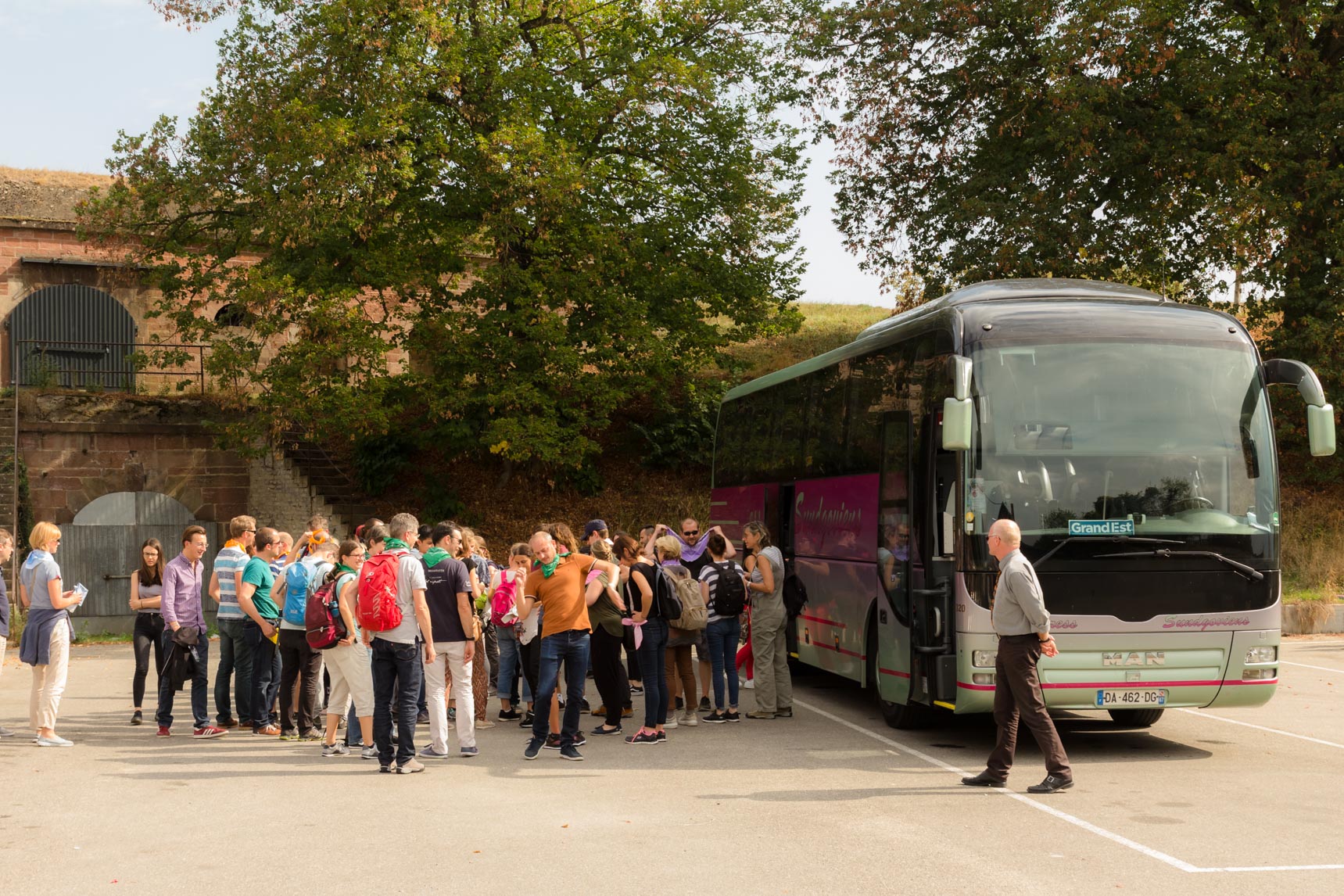
Shuttle transport in Brussel that keeps your event on time
Sommaire
In corporate events, transport is not a “logistics detail”: it is a direct driver of punctuality, attendance rate, and leadership credibility. When a plenary starts late because arrivals are scattered, the business message is weakened before the first slide.
In Brussel, expectations are operational: tight agendas, multilingual audiences, high security standards, and venues with strict access windows. HR and Comms teams need predictable flows, not improvisation—especially when VIPs, speakers, or press are involved.
As an events agency based in Brussel, we run Shuttle transport with the same rigor as stage management: written schedules, dispatch roles, driver briefings, guest comms, and fallback vehicles. The objective is simple: no one asks “where is the bus?” on event day.
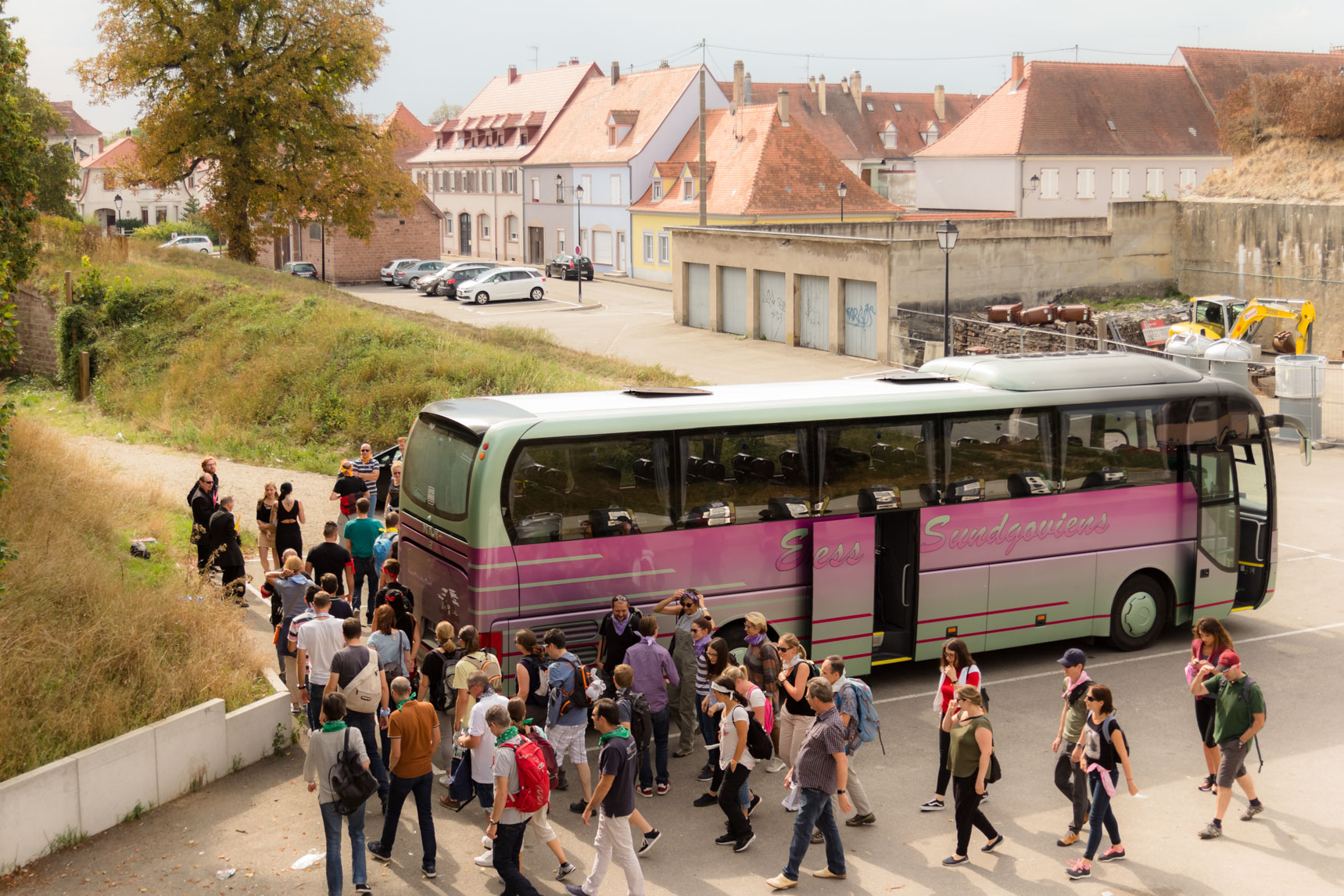
Operational shuttle transport in Brussel: fast facts
15+ years coordinating corporate logistics in Belgium, with a recurring portfolio of HR, executive and institutional events.
Typical shuttle operations: 2 to 60 vehicles in rotation (vans, minibuses, coaches), depending on peak flows and venue constraints.
Standard dispatch coverage: 2 to 10 staff (route coordinator, loading marshals, VIP host, baggage support) for controlled boarding and real-time adjustments.
Common pickup ecosystems in Brussel: Gare du Midi, Gare Centrale, Gare du Nord, airport corridors (BRU/CRL), hotel clusters and business districts.
Brussel references and recurring shuttle operations
We support organizations that operate in Brussel and need reliable guest mobility: headquarters hosting leadership meetings, European-facing teams welcoming international participants, and HR departments running recruitment or training days across multiple sites. Many of our clients return year after year because transport is one of the hardest parts to stabilize: venue access rules change, traffic patterns shift, and attendee profiles evolve.
If you have specific reference names you want us to include (group entities, brands, or internal programs), send them and we will integrate them precisely. In the meantime, what we can state clearly is our working reality in Brussel: recurring hotel-to-venue shuttles, station-to-venue rotations, and multi-stop loops that must hold timing despite urban congestion and security perimeters.
 Besoin d’un devis rapide ?
Nous vous envoyons une première proposition sous 24h.
Why companies in Brussel invest in shuttle transport
When a corporate event brings people to Brussel, the transport plan becomes part of the employee and guest experience—and part of risk management. A shuttle is not “a bus”; it is a managed flow that protects timing, safety, and brand perception.
Agenda protection for executives: controlled arrivals mean plenaries start on time, VIPs are discreetly routed, and tight meeting sequences remain feasible.
Higher attendance and less no-show: clear pickup points and time slots reduce friction for participants unfamiliar with Brussel (especially international guests arriving at BRU).
Consistency for HR programs: for training days or onboarding cohorts, group transport prevents late arrivals that disrupt sessions and trainers.
Duty of care and safety: a supervised return plan (especially after an evening format) reduces individual risk and aligns with internal policies.
Budget control vs. ad-hoc taxis: shuttles allow forecasting and caps; taxi reimbursements often drift and are hard to govern at scale.
Brand and communication discipline: branded signage, consistent wayfinding, and staffed pickup points avoid the “crowd confusion” that can damage a premium corporate image.
Brussel is a city where institutions, multinationals, and fast-paced service companies coexist. The local business culture values punctuality and operational discipline—shuttle transport is one of the most visible proofs of that discipline on event day.
What makes shuttle transport difficult in Brussel
Decision-makers often underestimate how specific Brussel is for event mobility. The issue is not distance; it is variability and access conditions. Traffic can shift in minutes around the inner ring, EU quarter, and major stations. Strikes, demonstrations, football matches, or institutional convoys can create sudden restrictions.
Venues and districts also impose constraints that impact shuttle design: coach drop-off limitations, narrow streets, limited holding areas, and strict loading windows. In some locations, a vehicle cannot wait—meaning dispatch timing must be engineered, not “estimated.”
Then there is the human side: multilingual guest populations, varying digital habits, and high expectations from senior participants. We frequently see issues when companies rely on generic instructions (“be there at 8:30”) without micro-details: exact pickup side of the station, landmark photos, what to do if a train is delayed, and who to call. A proper Shuttle transport in Brussel plan anticipates those questions and answers them before they become problems.
How shuttle transport in Brussel improves the on-site experience
Transport is also a lever for engagement: when arrivals are smooth, people start the day calm, available, and on time. When arrivals are chaotic, your first hour becomes troubleshooting instead of networking. We treat Shuttle transport in Brussel as part of the participant journey, and we can connect it to event touchpoints without turning it into “marketing noise.”
Animations Interactives à Brussel
Arrival check-in on the shuttle timeline: for larger groups, we synchronize shuttle waves with badge pick-up capacity. This prevents bottlenecks that HR teams often face at 08:45.
Live info channel: a lightweight WhatsApp/Teams/SMS update flow for pickup confirmations and last-minute gate changes, controlled by dispatch (one source of truth).
Host-guided boarding: multilingual hosts at major pickup points in Brussel (stations/hotels) to answer the same recurring questions quickly and consistently.
Animations Artistiques à Brussel
Discreet brand presence: tasteful signage and wayfinding (not intrusive) so guests feel guided without feeling “sold to.” Works well for executive events in Brussel where tone matters.
VIP routing protocol: when speakers or leadership require privacy, we separate their transfer plan (vehicle type, timing, meeting point) without creating visible hierarchy issues.
Animations Innovantes à Brussel
Timing-based hospitality: if the venue allows, we schedule coffee/water at the arrival wave rather than “all-day,” avoiding wasted spend and keeping the first touchpoint efficient.
Airport arrival smoothing: for international guests landing at BRU, a small refresh station at the hotel before the main shuttle can reduce late arrivals caused by check-in delays.
Animations Gourmandes à Brussel
Staggered departures with capacity tracking: for 300+ attendees, we can manage boarding counts per wave so the last bus is not overloaded and the first is not half empty.
Multi-stop loop optimization: for hotel clusters in Brussel, we reduce dwell time by pre-assigning hotels to loops and publishing clear pickup ETAs.
Whatever the format, the transport layer must match your brand image: a financial services group will prioritize discretion and compliance; a tech scale-up may prefer speed and simplicity. Our role is to translate that identity into concrete operational choices within Brussel.
Which Brussel venues work best with shuttle transport logistics
Venue choice determines the complexity—and cost—of Shuttle transport. In Brussel, the same headcount can require very different fleet sizes depending on access, holding areas, and the last-mile constraints. We advise venues not only on aesthetics but on arrival/departure mechanics.
| Venue type | For which objective? | Main strengths | Possible constraints |
|---|---|---|---|
Conference center with dedicated drop-off | Plenaries, leadership meetings, international conferences | Structured access, signage potential, predictable guest flow management | Access windows, security checkpoints, limited holding bays at peak times |
Hotel conference facilities in central Brussel | All-in-one events with accommodation + sessions | Reduced transfers, easier duty of care, strong guest comfort | Coach restrictions on narrow streets, loading/unloading time pressure |
Industrial or cultural venue (evening format) | Awards nights, client receptions, internal celebrations | Stronger “destination” feel, flexible staging for arrivals | Parking scarcity, neighborhood noise rules, return shuttles must be tightly supervised |
We strongly recommend a site visit (or at least a technical recce) focused on access points, turning radii, holding areas, and guest walking paths. In Brussel, a venue that looks perfect on paper can become risky if a coach cannot wait or if arrivals overlap with local traffic peaks.
What shuttle transport costs in Brussel and what drives it
Budget for Shuttle transport in Brussel depends on operational reality, not on headcount alone. Two events with 400 participants can have very different costs depending on peak concentration, pickup dispersion, and the venue’s access constraints.
Fleet type and comfort level: vans vs minibuses vs coaches; VIP vehicles; luggage requirements for airport/station arrivals.
Operating model: continuous loop (frequency-based) vs fixed time slots (appointment-based). Loops can require more vehicles but reduce waiting and late risk.
Time windows: early mornings, late evenings, and split shifts can increase staffing and driver hours.
Number of pickup points: one hub is efficient; multiple hotels across Brussel increases dwell time and requires route optimization.
On-site staffing: dispatchers, hosts, bilingual support, and baggage handling materially improve reliability, especially at stations.
Contingency level: standby vehicle(s) and buffer time. We size this based on criticality (VIP speakers vs general attendees) and exposure to variability (airport waves, roadworks).
Permits and access rules: certain locations require strict compliance with drop-off rules; non-compliance can lead to fines or forced rerouting, which is a hidden cost if not planned.
We approach transport as a risk-adjusted investment: the cost of one delayed plenary, missed keynote, or frustrated client arrival can exceed the incremental cost of proper dispatch and a measured contingency plan. We provide transparent options (base vs reinforced operations) so you can make an executive-level decision with clear trade-offs.
Why a Brussel-based agency reduces shuttle transport risk
A shuttle plan looks simple until you run it in real conditions. Having an agency established in Brussel is an operational advantage: we know the practical pickup realities at major stations, the traffic sensitivity of EU quarter corridors, and the venue access patterns that impact boarding schedules. More importantly, we can be on-site early, coordinate in person with drivers and venue security, and adjust fast when the city changes the rules for the day.
For many corporate teams, the hidden challenge is internal bandwidth: HR and Comms are already managing speakers, branding, registration, and stakeholders. Our job is to remove the transport burden with a clear plan, defined responsibilities, and day-of control—so your internal team does not become a transport helpdesk.
- Local dispatch capability: we can deploy coordinators quickly and maintain real-time control at key hubs in Brussel.
- Practical venue access know-how: understanding where vehicles can actually stop, wait, and turn—beyond what maps suggest.
- Supplier network: access to a scalable fleet mix (vans to coaches) and backup options when volumes or timings change.
- Compliance and duty of care: structured processes for passenger lists, incident handling, and safe returns after evening events.
- Integrated event production: transport aligned with check-in, security, and program timing (not managed in a silo). See our approach as an event agency in Brussel with strong operations.
We approach transport as a risk-adjusted investment: the cost of one delayed plenary, missed keynote, or frustrated client arrival can exceed the incremental cost of proper dispatch and a measured contingency plan. We provide transparent options (base vs reinforced operations) so you can make an executive-level decision with clear trade-offs.









Shuttle transport scenarios we deliver in Brussel
Our shuttle operations in Brussel cover a wide range of corporate realities. Typical examples include: airport-to-hotel-to-venue transfers for international leadership meetings; station-to-venue rotations for large internal conferences; multi-hotel loops for client events where guest experience must feel effortless; and late-evening return shuttles where duty of care and sober, supervised departures are non-negotiable.
We also regularly handle “messy” realities: last-minute speaker time changes, delayed trains into Brussel, attendees arriving at the wrong station exit, and security teams that tighten access on the morning of the event. Our value is not pretending these things do not happen—it is having a system that absorbs them with minimal noise for your executives and participants.
Common shuttle transport mistakes we prevent in Brussel
Underestimating station complexity: using vague pickup points at Gare du Midi or Gare Centrale leads to missed connections and staff being overwhelmed by calls.
Planning for average traffic: “Google timing” without buffers is fragile in Brussel, especially around peak hours and institutional zones.
No dispatch role defined: when nobody owns boarding control, vehicles leave half empty or wait too long, creating a domino effect.
Ignoring the last-mile constraint: venues with limited curb space require timed arrivals; without a holding plan, vehicles block traffic or are sent away.
One-size-fits-all for VIPs: senior leaders and speakers often need a different transfer protocol (privacy, punctuality, security coordination).
Weak return plan after evening events: unclear departures and no supervision increase safety risk and reputational exposure.
Our role is to remove these risks through design, staffing, and real-time control—so transport supports your agenda instead of threatening it.
Why Brussel clients renew their shuttle transport partner
Loyalty in transport logistics is earned through predictability. Corporate teams come back when they feel the operation is under control and when the agency communicates like a reliable internal partner: clear options, documented decisions, and calm execution.
In recurring programs (annual conferences, quarterly leadership meetings), we typically reduce day-of transport questions by 30–60% after the first edition by improving instructions, signage, and hub staffing.
For events with multiple hotel pickups in Brussel, route optimization commonly reduces total shuttle mileage by 10–20% without increasing guest waiting time.
For high-stakes transfers (keynote speakers, VIP clients), we recommend a standby capacity that covers at least 5–15% of critical seats, sized to exposure and schedule rigidity.

When clients renew, it is not because transport is “exciting.” It is because it becomes boring—in the best sense: on time, supervised, and predictable. That is the clearest proof of quality for Shuttle transport in Brussel.
Our Brussel shuttle transport process from brief to day-of control
👉 Step 1 (Brussel): define flows, priorities, and risk level
We start with a short but structured intake: attendee volume range, origin points (hotels, stations, airport), VIP list and security requirements, venue access constraints, and program timing. We identify what is “non-negotiable” (e.g., keynote start time, board arrival window) and what can flex (e.g., networking start). This sets the right operating model and contingency level.
👉 Step 2 (1000): route plan, fleet sizing, and staffing design
We build a routing plan with realistic buffers and propose fleet composition (vans/minibuses/coaches) matched to peaks. We define staffing posts: dispatch at primary hub, marshal at venue, and optional hotel hosts. You receive a clear plan you can validate internally (including responsibilities and escalation paths).
👉 Step 3 (Brussel): guest communications and wayfinding package
We prepare practical instructions: pickup point descriptions, landmark references, maps, and timing rules (e.g., “arrive 10 minutes before slot”). For multilingual audiences, we provide versions aligned with your tone. The goal is to reduce inbound questions and keep HR/Comms focused on the event itself.
👉 Step 4 (1000): supplier confirmation and driver briefing
We confirm vehicles, driver schedules, and contact lists, and we brief drivers on exact access points, turnarounds, holding logic, and the dispatch chain of command. In Brussel, this briefing is essential to avoid drivers defaulting to the wrong entrance or stopping where they cannot wait.
👉 Step 5 (Brussel): on-site operations, monitoring, and real-time adjustments
On event day, our coordinator runs dispatch, manages boarding rhythm, and triggers contingency options when needed (standby van, reroute, slot shifts). We keep communication short and operational: what changed, why, and what the next action is. After the event, we debrief with metrics (peak wait times, missed pickups, adjustments) to improve the next edition.
FAQ sur l'organisation Shuttle transport à Brussel
How many shuttles do we need in Brussel for 300 guests?
It depends on peak concentration and trip time. As a rule of thumb in Brussel, for a single hub to one venue, you typically plan 3–6 coaches (or a mix of coaches and minibuses) if arrivals are concentrated within 30–45 minutes. If you accept a wider arrival window (60–90 minutes), the fleet can often be reduced with a continuous loop model.
What pickup points work best near Brussels-Midi station?
Use a single, unambiguous meeting point with a landmark and a staffed host. At Bruxelles-Midi, “outside the station” is not precise enough. We recommend selecting one exit side, giving a photo/landmark, and setting a check-in rule (e.g., present QR code to the host). This reduces missed shuttles and avoids dozens of calls to your team.
Can you handle airport shuttles to Brussel event venues?
Yes. We manage BRU (Zaventem) and Charleroi flows with flight wave tracking, luggage-appropriate vehicles, and a buffer strategy. For international groups, we often plan 2–4 arrival waves and keep at least 1 standby vehicle for delays or no-show reallocation.
How early should we book shuttle transport in Brussel?
For standard corporate dates, aim for 4–8 weeks. For peak periods (large conferences, end-of-year, major venue calendars), we recommend 8–12 weeks, especially if you need a high vehicle count or VIP vehicles. Booking early also improves driver briefing quality and contingency options.
Do you provide on-site staff for shuttles in Brussel?
Yes. For smooth operations, we typically deploy 2–6 staff depending on scale: a dispatch lead at the main hub, a venue marshal, and optional hotel/station hosts. This staffing is what turns transport into a controlled flow rather than a series of individual problems.
Request a Brussel shuttle transport plan and quote
If you are planning an internal conference, leadership meeting, client event, or multi-site program, we can produce a clear Shuttle transport in Brussel proposal: routes, fleet sizing, staffing, timing, and contingency options. Share your date, estimated headcount, origin points (hotels/stations/airport), and venue short-list—then we will revert with a practical plan you can validate with stakeholders.
Transport gets harder (and more expensive) when it is treated late. Contact INNOV'events early so we can secure the right vehicles, design a realistic dispatch model, and protect your agenda on event day in Brussel.
Agence INNOV'events Brussel
Justin JACOB est le responsable de l'agence événementielle Brussel. Contactez-le directement par mail via l'adresse belgique@innov-events.be ou par formulaire.
Contacter l'agence BrusselToutes nos prestations & animations Brussel, Belgique
Découvrez nos prestations événementielles
Découvrez nos animations événementielles disponibles au Belgique
- Hôtesse événementielle à Brussel
- Escape Game à Brussel
- Cours de cuisine type MasterChef à Brussel
- Magicien à Brussel
- Location de chapiteau à Brussel
- Atelier colorimétrie à Brussel
- Jeux gonflables à Brussel
- Service de voiturier à Brussel
- Simulateur de football à Brussel
- Location de mobilier lumineux à Brussel
- Flocage lumineux à Brussel
- Repas insolite à Brussel
- Light Painting à Brussel
- Murder Party à Brussel
- Jeu concours à Brussel
- PLV événementielle à Brussel
- Réalité virtuelle à Brussel
- Cuisine moléculaire à Brussel
- Animation Halloween à Brussel
- Feu d’artifice à Brussel
- Jeux géants à Brussel
- Animateur événementiel à Brussel
- Animation photo à Brussel
- Père Noël à Brussel
- Animation enfants à Brussel
- Visite guidée à Brussel
- Rallye urbain à Brussel
- Piscine à balles à Brussel
- Simulateur de vol à Brussel
- Location de food truck à Brussel
- Record du monde à Brussel
- Simulateur de surf à Brussel
- Casino du vin à Brussel
- Atelier relooking à Brussel
- Atelier création de parfum à Brussel
- Atelier acting à Brussel
- Animations RSE à Brussel
- Tir à l’arc à Brussel
- Agent de sécurité à Brussel
- Œnologie à Brussel
- Mime à Brussel
- Jeu télévisé à Brussel
- Fête foraine à Brussel
- Atelier gestion de crise à Brussel
- Atelier négociation de crise à Brussel
- Jeux d’arcade à Brussel
- Simulateur de chute libre à Brussel
- Simulateur de ski à Brussel
- Simulation circuit automobile à Brussel
- Baptême de l’air à Brussel
- Dégustation à Brussel
- Création de baby-foot à Brussel
- Rallye 2CV à Brussel
- Challenge LEGO à Brussel
- Animation casino à Brussel
- Interprète / traducteur à Brussel
- Goodies à Brussel
- Bus / transfert à Brussel