
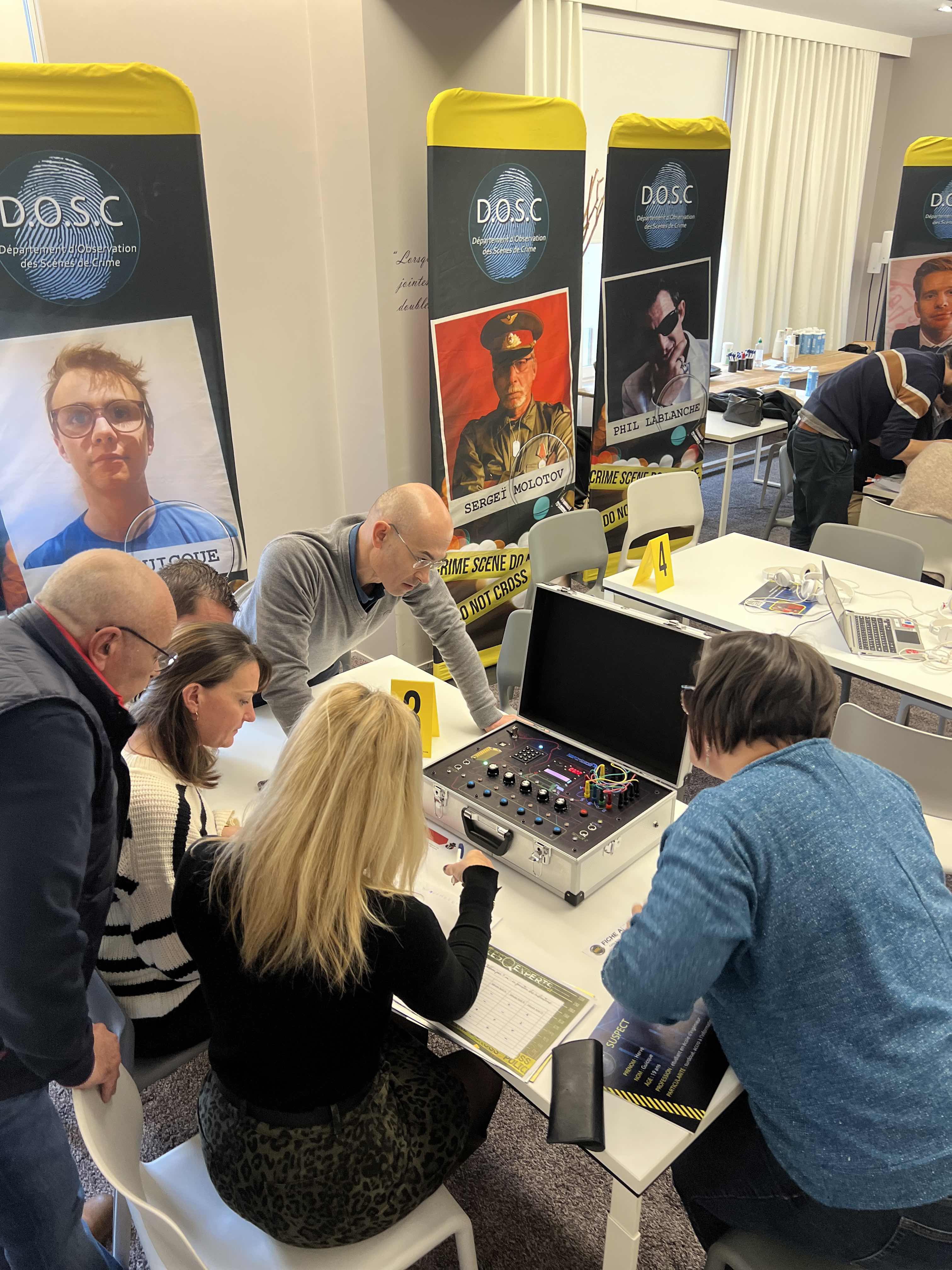
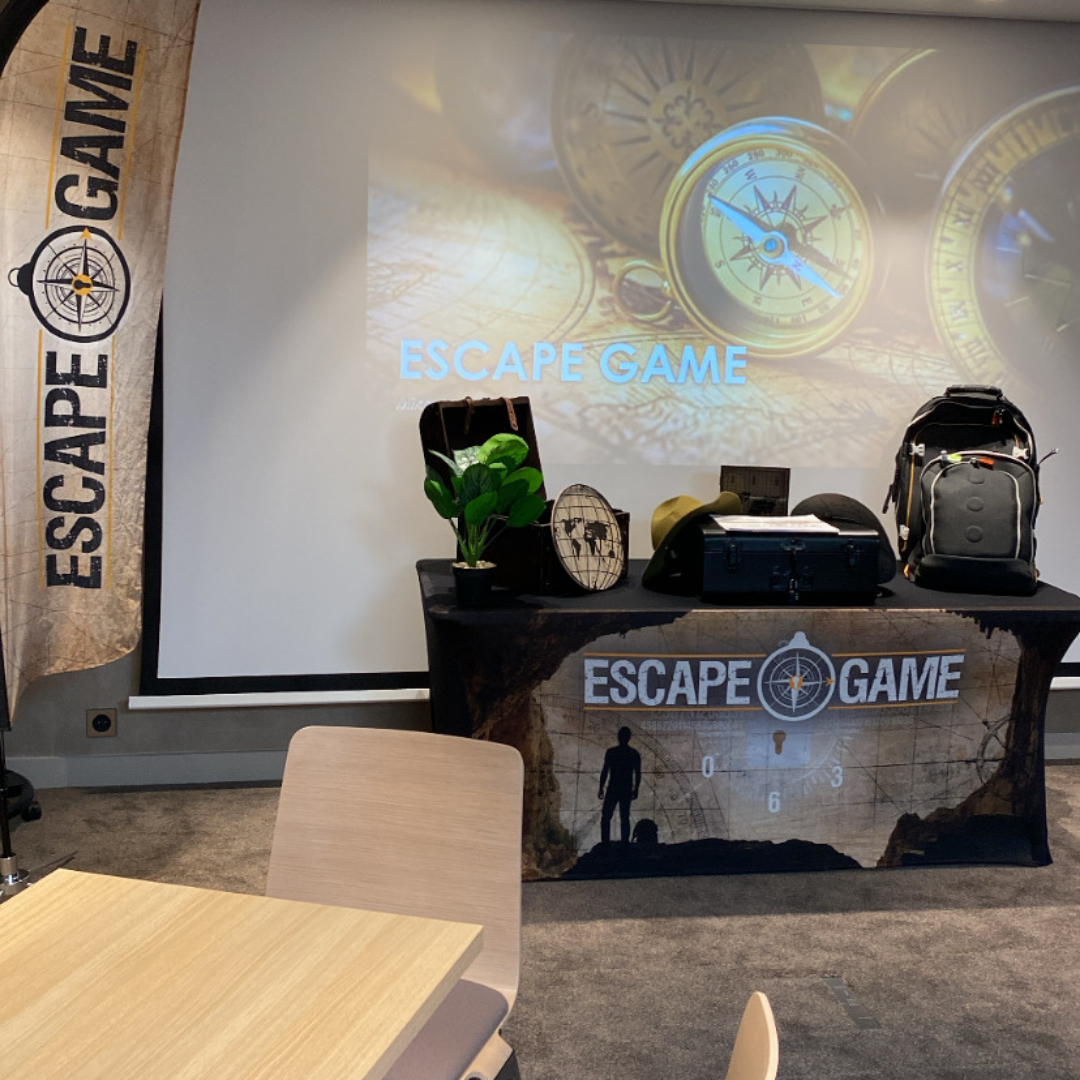
Escape Game in Antwerpen that builds alignment, not just excitement
INNOV'events (Brussels) designs and runs Escape Game in Antwerpen formats for executives, HR and communication teams—typically 10 to 300 participants, indoor or on-site at your offices. We manage scenario choice, timing, facilitation, safety, venue coordination, bilingual staffing (NL/FR/EN) and post-event feedback so your day stays on-track.
Whether you need a tight 60-minute energizer between plenaries or a full evening program for a leadership offsite, we deliver a controlled experience that supports your objectives: collaboration, communication, onboarding, culture change or cross-site cohesion.
Sommaire
In a corporate agenda, entertainment is not a “nice-to-have”: it is the moment where people actually behave like a team. A well-run Escape Game creates observable collaboration under time pressure—useful for leaders who want stronger execution, not only good vibes.
In Antwerpen, organizations typically expect punctuality, clear briefing, measurable outcomes (even simple ones) and a format that respects privacy and brand image. HR and Comms often need a solution that works for mixed seniority, mixed languages and tight time slots.
We bring Brussels-level production discipline with hands-on delivery in Antwerpen: pre-checks, scenario testing, contingency plans, and facilitators who can handle executives without over-directing them. Our role is to make the activity feel effortless for your teams while staying fully controlled behind the scenes.
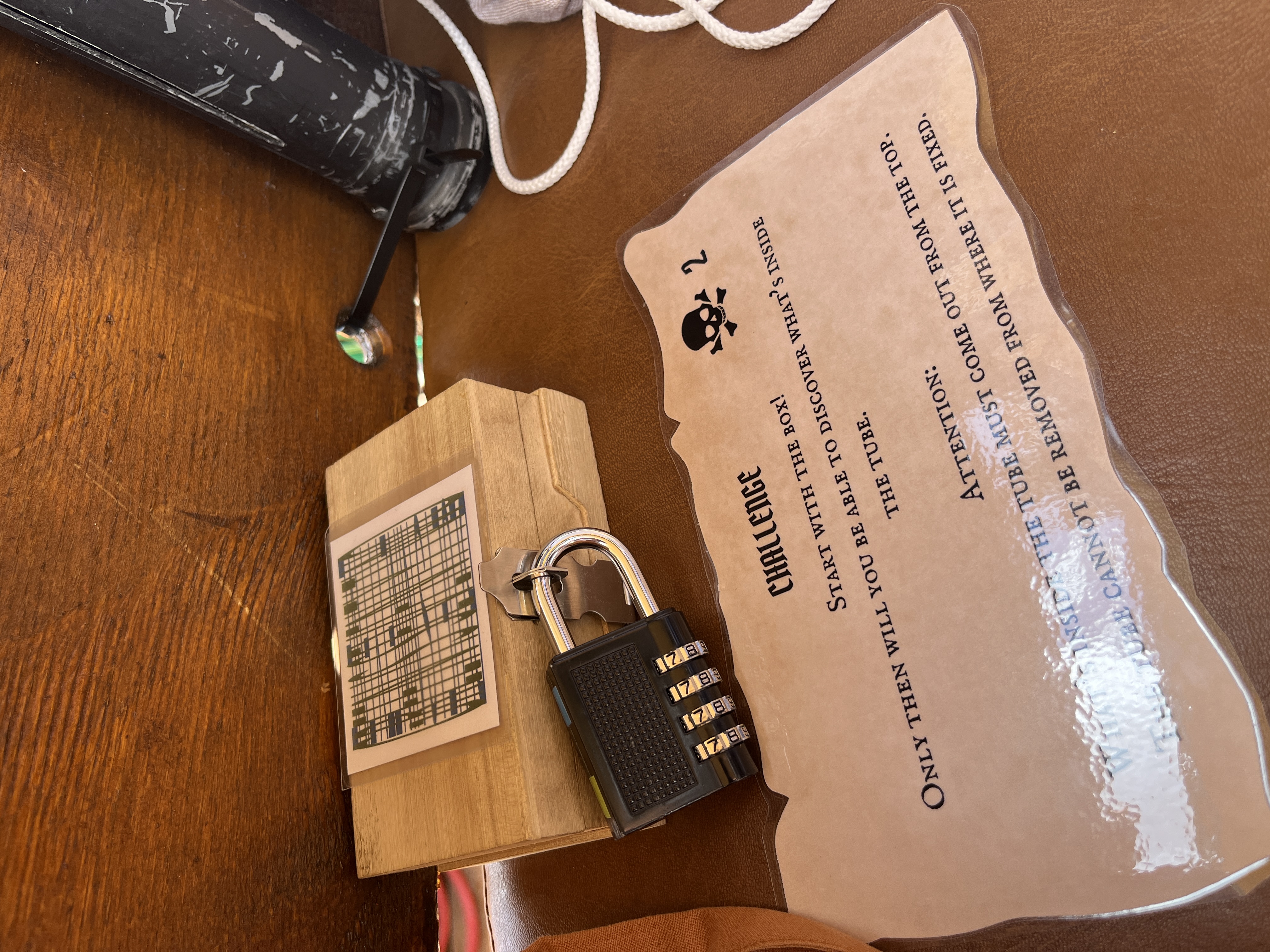
INNOV'events track record in Belgium you can benchmark
10+ years delivering corporate team events across Belgium, with recurring programs for multi-site organizations.
120+ corporate events/year managed through our partner network (venues, caterers, technical suppliers, facilitators) with one accountable project lead.
3 languages operational (NL/FR/EN) on event day—briefings, facilitation, safety instructions and debriefs.
10–300 participants is our common operating range for Escape Game formats, with proven rotation systems to avoid downtime.
48-hour feasibility response for standard requests in Antwerpen (date, group size, venue type, objectives, constraints).
Corporate teams we support in Antwerpen, year after year
We regularly support organizations active in Antwerpen and the wider port and services ecosystem—especially when they need reliable execution with minimal internal workload. Many of our collaborations become recurring because the operational reality stays the same: limited prep time, a strong expectation of punctuality, strict venue rules, and a need to protect the employer brand.
You mentioned you would provide company names as references; we can integrate them exactly as you prefer (publicly visible, anonymized, or sector-based). In practice, we often work with HR and Internal Comms teams who run quarterly onboarding moments, annual kick-offs, safety culture campaigns, or leadership sessions around the city center and Berchem/Wilrijk corridors. The recurring pattern is consistent: a clear objective, a controlled format, and facilitation that respects the hierarchy while still engaging everyone.
If you want references aligned with your sector (pharma, logistics, professional services, retail, public sector), we can share comparable case profiles and constraints handled in Antwerpen during the quote phase.
 Besoin d’un devis rapide ?
Nous vous envoyons une première proposition sous 24h.
Why plan an Escape Game in Antwerpen for real management outcomes
A corporate Escape Game in Antwerpen works when it is used as a managerial tool: it creates a shared problem, a fixed deadline and limited information—exactly the conditions where communication quality and decision habits become visible. For executives and HR, this is valuable because it turns “teamwork” from an abstract value into behaviors you can observe and discuss.
We design the experience to fit the moment you are protecting: a leadership offsite, a department day, a safety stand-down, or a client-facing hospitality sequence. The point is not to “play more”, but to build alignment faster and make the rest of your event flow better.
Speed up cross-silo collaboration: mixed teams (Ops/Commercial/Support) must exchange information quickly; we set rules to prevent one department dominating.
Make leadership styles tangible: who listens, who decides, who delegates, who freezes under pressure—useful for leadership programs when handled respectfully.
Improve meeting quality afterwards: teams that just experienced structured problem-solving tend to shorten discussions and clarify ownership in the following workshops.
Support onboarding and integration: new hires and recently merged teams get a “safe” first success together, without forcing personal disclosure.
Create shared language for change projects: the debrief can link behaviors to your values (safety, customer focus, ownership) with concrete examples from the game.
Protect the energy curve of a full-day program: inserted before a plenary or after lunch, it re-engages people without extending your agenda.
Antwerpen has a strong execution culture—port, logistics, industry, fast-paced services. A well-run Escape Game resonates because it rewards clear roles, practical communication and disciplined time management. When aligned with your event narrative, it feels coherent with how people work here.
What teams in Antwerpen typically expect from corporate entertainment
In Antwerpen, decision-makers tend to evaluate entertainment with a pragmatic lens: “Will it run on time, will it reflect well on us, will it work for everyone?” We see three recurring constraints that shape the right Escape Game choice.
1) Punctuality and flow control. Many events are built around fixed windows: a venue slot, a speaker schedule, a train timetable for visitors, or a restaurant reservation. Your entertainment must be engineered with buffers (briefing, rotation, transition) so you don’t lose 30 minutes in crowd management.
2) Mixed profiles and mixed languages. It’s common to have a mix of Dutch-speaking local teams, French-speaking colleagues from Brussels/Wallonia, and English-speaking international managers. A corporate format in Antwerpen must avoid language becoming a performance barrier. We plan bilingual facilitation and game mechanics that do not punish non-native speakers.
3) Brand and compliance sensitivity. For port-related or regulated environments (safety, pharma, finance), you cannot run a “random fun activity” that triggers reputational risk. We check content tone (no inappropriate themes), data handling (no participant recording without consent), accessibility needs, and venue safety rules. This is where an agency’s field discipline matters more than creative claims.
What to combine with an Escape Game in Antwerpen for better engagement
An Escape Game in Antwerpen becomes more effective when it is part of a coherent sequence: arrival, context, activity, debrief, and a next step (workshop, dinner, awards). The right add-ons are not “more entertainment”; they are tools to manage pacing, networking and message retention.
Animations Interactives à Antwerpen
Team-based quiz with local Antwerpen cues (15–25 min): ideal as a warm-up before the game, using company facts and safe local references (port, architecture, mobility) without being touristy.
Facilitated networking prompts for multi-site groups: structured micro-conversations that help people meet outside their usual circle, useful after the game when energy is high.
Mini “after-action review” wall: participants post 1 behavior to keep / 1 to stop. HR often uses this as lightweight qualitative feedback without personal exposure.
Animations Artistiques à Antwerpen
Close-up mentalism during reception (30–60 min): works well for executive dinners because it creates small-group interaction without taking over the room.
Live illustrator capturing key messages from your leadership plenary: especially relevant for transformation programs; output can be reused internally.
Animations Innovantes à Antwerpen
Antwerpen-inspired tasting stations with clear service speed (important for rotations): coffee and pralines for daytime events, or a structured beer/0.0 pairing with responsible service guidelines.
Timed food service designed around game slots: we coordinate catering waves so participants are not eating while they should be briefing, and we avoid queues that break the schedule.
Animations Gourmandes à Antwerpen
Hybrid digital clue layer (QR + short tasks): useful when you want company content integrated (values, safety rules, product facts) without turning the game into training.
On-site office takeover: a controlled “escape” route in your own building in Antwerpen, with pre-approved zones and a safety walkthrough—good for internal culture days when travel is not desired.
The deciding factor is alignment with your brand image. If your organization positions itself as discreet and premium, we avoid noisy formats. If you are in a safety-critical environment, we avoid any mechanic that incentivizes running, climbing or ignoring instructions. Good entertainment reinforces reputation; it should never create a “what were they thinking?” moment.
Which venue types in Antwerpen work best for an Escape Game
Venue choice changes how people perceive the day: serious vs. playful, premium vs. practical, open vs. confidential. For a corporate Escape Game, we also evaluate operational constraints: acoustics, room separation, circulation, technical access, and the ability to keep teams from overhearing each other.
| Venue type | For which objective? | Main strengths | Possible constraints |
|---|---|---|---|
Dedicated escape rooms in Antwerpen city center | Pure team bonding, short format between meetings |
|
|
Hotel meeting rooms (Antwerpen Zuid / Berchem axis) | Leadership offsite with plenary + activity + dinner |
|
|
Your offices or warehouse site in the province | Culture day, onboarding, “inside our company” narrative |
|
|
We strongly recommend a site visit (or at least a technical call with photos and a floor plan) for any group above 40 participants. It is the most cost-effective way to prevent day-of issues: bottlenecks at doors, insufficient briefing space, or a room layout that forces teams to overhear puzzles.
What budget to plan for an Escape Game in Antwerpen (and why)
Pricing for a corporate Escape Game in Antwerpen depends less on “the game” and more on the production parameters around it: group size, rotation complexity, facilitation level, venue constraints and how much customization you genuinely need.
To help directors and HR plan realistically, we typically see three budget bands (excluding VAT, venue and catering unless specified): €45–€90 per person for standard escape-room rotations, €90–€160 per person for premium mobile/on-site setups with stronger facilitation, and €160–€250+ per person when you require heavy customization, multi-language content layers, branded assets and extended debrief/workshop components.
Participant volume and concurrency: 30 people in one wave is not the same as 120 people in rotations; staffing and space multiply.
Venue type in Antwerpen: dedicated escape venues have fixed pricing; hotels and offices introduce setup and room rental considerations.
Languages (NL/FR/EN): bilingual facilitation is standard; tri-lingual or mixed-language teams may require additional staff and adapted briefings.
Timing constraints: a hard stop before a dinner reservation requires tighter control, sometimes additional game masters to keep flow.
Debrief depth: a light debrief is quick; a structured workshop debrief (45–90 min) requires facilitation design and often HR alignment.
Branding and confidentiality: branded materials, private venue buyouts, or stricter privacy requirements can increase costs but reduce reputational risk.
Travel and logistics: transport, loading constraints, parking, and access times matter in Antwerpen center.
We frame budget in terms of return on the day you are protecting: reduced downtime, fewer organizational headaches, stronger cross-team connections, and a program that reflects well on leadership. For many clients, the real ROI is that the rest of the event runs better—because people are engaged, on time, and already collaborating.
Why working with a local partner in Antwerpen reduces event risk
For corporate teams, the biggest risk is not that the activity is “less fun”; it is that the day becomes messy: late start, unclear roles, frustration, or a venue conflict. A partner with operational habits in Antwerpen reduces those risks through practical knowledge: access restrictions, realistic transfer times, supplier punctuality, and how to keep flow in dense urban areas.
INNOV'events is based in Brussels and delivers frequently in Antwerpen. When clients ask for local anchoring, we work with a stable set of Antwerp-based venues and operational suppliers, and we keep one accountable project lead. If your brief includes a broader scope than the game itself, you can also rely on our local event production capabilities via our event agency in Antwerpen page.
The advantage for directors is governance: one accountable point of contact, clear production documents, and a team that can escalate and decide on-site without involving your internal staff.
- Faster feasibility checks on venues, parking, load-in, noise constraints and room availability in Antwerpen.
- More predictable timing thanks to local routing and realistic buffers around the city center and the Ring.
- Supplier coordination with partners who already understand corporate requirements (invoicing, insurance, safety documentation).
- On-site authority: our team can enforce timing and rules diplomatically, which protects your internal organizer’s position.
We frame budget in terms of return on the day you are protecting: reduced downtime, fewer organizational headaches, stronger cross-team connections, and a program that reflects well on leadership. For many clients, the real ROI is that the rest of the event runs better—because people are engaged, on time, and already collaborating.





Examples of Escape Game formats delivered around Antwerpen
Our projects vary because corporate reality varies. A single “best” format does not exist; the right Escape Game is the one that respects your constraints and supports your narrative.
Leadership offsite (35 pax) near Antwerpen Zuid. Objective: rebuild trust after a reorganization. We ran a 75-minute game with intentionally incomplete information per team member to encourage listening and synthesis. The debrief was short and structured: decision-making, conflict handling, and how to keep a single “truth” in fast projects. Outcome: the client used the same debrief framework in their monthly management meetings.
Multi-site onboarding day (110 pax) with mixed languages. Objective: integrate new hires from three locations. We built a rotation model (parallel sessions + networking prompts) so people met outside their function. Key operational focus: bilingual facilitation and clear wayfinding to avoid bottlenecks. Outcome: HR reported higher participation during the afternoon workshops because energy stayed high and groups mixed naturally.
On-site culture moment (60 pax) in an operational environment. Objective: reinforce collaboration across shifts. We designed a mobile game that worked with safety rules: no running, no restricted areas, no personal data collection. Key operational focus: safety briefing, clear “do not enter” zones, and a strict time grid aligned with shift changes. Outcome: strong attendance because travel time was removed and supervisors were comfortable with the risk controls.
These examples illustrate what we bring: not a “concept”, but a controlled delivery that adapts to corporate constraints in Antwerpen.
Common mistakes we prevent for Escape Games in Antwerpen
Underestimating rotation time: briefing, walking, cloakroom and regrouping can add 10–20 minutes per wave if not engineered.
Choosing a format that humiliates participants: executives and senior experts disengage if the tone is childish or if failure is made public.
Ignoring language reality: mixed-language groups need adapted instructions; otherwise you reward fluency instead of collaboration.
No Plan B for late arrivals: in Antwerpen, traffic and parking can impact start time; we design entry points that don’t break the whole schedule.
Over-customization without purpose: adding branding everywhere can inflate costs and complicate gameplay without improving outcomes.
Poor confidentiality management: in mergers, audits or sensitive contexts, careless photos or open scoreboards can create internal tension.
Mismatch with venue constraints: noise leakage between rooms, shared corridors, or strict supplier rules can undermine the experience.
Our role is to absorb these risks: we ask the uncomfortable questions early, we document assumptions, and we run the day with clear authority so your internal sponsor can focus on stakeholders—not operational firefighting.
Why Antwerp-based teams repeat with INNOV'events
Recurring clients usually return for one reason: predictability. Not predictability in creativity, but predictability in outcomes and operational calm. HR and Comms teams often run on limited bandwidth; they value partners who can deliver the same quality across years, venues and group profiles.
60–70% of our corporate clients rebook within 18 months for another team moment or a different internal audience.
Typical recurrence: 1–3 events/year for organizations with multiple departments or sites around Antwerpen.
Average planning lead time we see: 4–8 weeks for standard formats; 8–12 weeks for on-site takeovers or premium venues.

Loyalty is a consequence of controlled delivery: clear budgets, realistic schedules, and facilitators who can handle senior stakeholders. If you are comparing agencies, ask for planning documents and staffing ratios—this is usually where quality becomes visible.
Our production process for an Escape Game in Antwerpen
👉 Antwerpen scoping call (30–45 min) to lock objectives and constraints
We clarify your non-negotiables: date, start/end time, participant count, seniority mix, languages, venue situation, and success criteria. We also ask what you want to avoid (competitive ranking, photos, alcohol, certain themes). You receive a first recommendation on format (venue-based vs. mobile, with or without debrief) and a realistic timeline.
👉 Proposal with scenario options and an operational schedule
You get 2–3 scenario approaches with clear pros/cons, a rotation model, staffing plan (game masters/facilitators), and what we need from you (floor plan, room access, internal comms). We also include operational notes specific to Antwerpen (arrival windows, parking suggestions, venue access rules) so you can brief leadership confidently.
👉 Pre-production: venue confirmation, risk checks, participant comms
We confirm rooms, timings, supplier access, insurance and safety constraints. We provide participant instructions (dress code, arrival time, language notes) in NL/FR/EN if needed. For on-site formats, we do a walkthrough or a remote technical validation with photos and a plan.
👉 Event-day delivery with a single accountable lead
We arrive early for setup, test game materials, brief your internal contact, and run the activity to the minute. We manage transitions, handle late arrivals without disrupting other teams, and keep facilitation consistent. If you have a plenary or dinner afterwards, we protect that schedule.
👉 Debrief and post-event feedback you can use
Depending on your objectives, we deliver a short debrief on-site and/or a concise post-event note: what worked, what to improve, and optional anonymized feedback themes. HR teams often use this to justify the budget internally and to improve the next edition in Antwerpen.
FAQ sur l'organisation Escape Game à Antwerpen
How long should an Escape Game in Antwerpen last?
Plan 60–90 minutes for the game itself, plus 10–15 minutes briefing and 10–20 minutes transition time. If you want a useful debrief, add 10–15 minutes (light) or 45–90 minutes (workshop-style).
What group size works best for Escape Games in Antwerpen?
Best team size is usually 4–6 people. For corporate groups, we typically manage 10–300 participants by running parallel rooms or mobile stations with a rotation grid. Above 80, flow design becomes the main success factor.
What is the budget for an Escape Game in Antwerpen?
Most corporate programs fall between €45 and €160 per person (excl. VAT), depending on venue type, facilitation level, languages and customization. Heavily branded or multi-module formats can reach €250+ per person.
Can we run an Escape Game at our Antwerp offices?
Yes. We can deliver a mobile Escape Game on-site in Antwerpen if you have enough rooms or a controllable area. We validate safety rules, noise constraints and circulation, and we propose a setup that avoids disrupting normal operations.
How do you handle Dutch, French and English in Antwerpen?
We plan facilitation and materials to match your audience: NL/FR/EN briefings, mixed-language team guidance, and game mechanics that don’t reward language fluency over collaboration. For very mixed groups, we increase staffing slightly to keep the pace and avoid frustration.
Request an Escape Game quote for Antwerpen with a clear run plan
If you share date, participant count, venue situation (city center / hotel / your offices), and your objective (team bonding, onboarding, leadership, change), we will respond with a practical proposal: scenario recommendation, staffing, timing grid and a budget range.
For Antwerpen, we recommend securing your slot early—especially for peak periods (September–November and March–June). Contact INNOV'events to align the format with your agenda and to remove operational risk from your event day.
Agence INNOV'events Antwerpen
Justin JACOB est le responsable de l'agence événementielle Antwerpen. Contactez-le directement par mail via l'adresse belgique@innov-events.be ou par formulaire.
Contacter l'agence AntwerpenToutes nos prestations & animations Antwerpen, Belgique
Découvrez nos prestations événementielles
Découvrez nos animations événementielles disponibles au Belgique
- Hôtesse événementielle à Antwerpen
- Escape Game à Antwerpen
- Cours de cuisine type MasterChef à Antwerpen
- Magicien à Antwerpen
- Location de chapiteau à Antwerpen
- Atelier colorimétrie à Antwerpen
- Jeux gonflables à Antwerpen
- Service de voiturier à Antwerpen
- Simulateur de football à Antwerpen
- Location de mobilier lumineux à Antwerpen
- Flocage lumineux à Antwerpen
- Repas insolite à Antwerpen
- Light Painting à Antwerpen
- Murder Party à Antwerpen
- Jeu concours à Antwerpen
- PLV événementielle à Antwerpen
- Réalité virtuelle à Antwerpen
- Cuisine moléculaire à Antwerpen
- Animation Halloween à Antwerpen
- Feu d’artifice à Antwerpen
- Jeux géants à Antwerpen
- Animateur événementiel à Antwerpen
- Animation photo à Antwerpen
- Père Noël à Antwerpen
- Animation enfants à Antwerpen
- Visite guidée à Antwerpen
- Rallye urbain à Antwerpen
- Piscine à balles à Antwerpen
- Simulateur de vol à Antwerpen
- Location de food truck à Antwerpen
- Record du monde à Antwerpen
- Simulateur de surf à Antwerpen
- Casino du vin à Antwerpen
- Atelier relooking à Antwerpen
- Atelier création de parfum à Antwerpen
- Atelier acting à Antwerpen
- Animations RSE à Antwerpen
- Tir à l’arc à Antwerpen
- Agent de sécurité à Antwerpen
- Œnologie à Antwerpen
- Mime à Antwerpen
- Jeu télévisé à Antwerpen
- Fête foraine à Antwerpen
- Atelier gestion de crise à Antwerpen
- Atelier négociation de crise à Antwerpen
- Jeux d’arcade à Antwerpen
- Simulateur de chute libre à Antwerpen
- Simulateur de ski à Antwerpen
- Simulation circuit automobile à Antwerpen
- Baptême de l’air à Antwerpen
- Dégustation à Antwerpen
- Création de baby-foot à Antwerpen
- Rallye 2CV à Antwerpen
- Challenge LEGO à Antwerpen
- Animation casino à Antwerpen
- Interprète / traducteur à Antwerpen
- Goodies à Antwerpen
- Bus / transfert à Antwerpen