
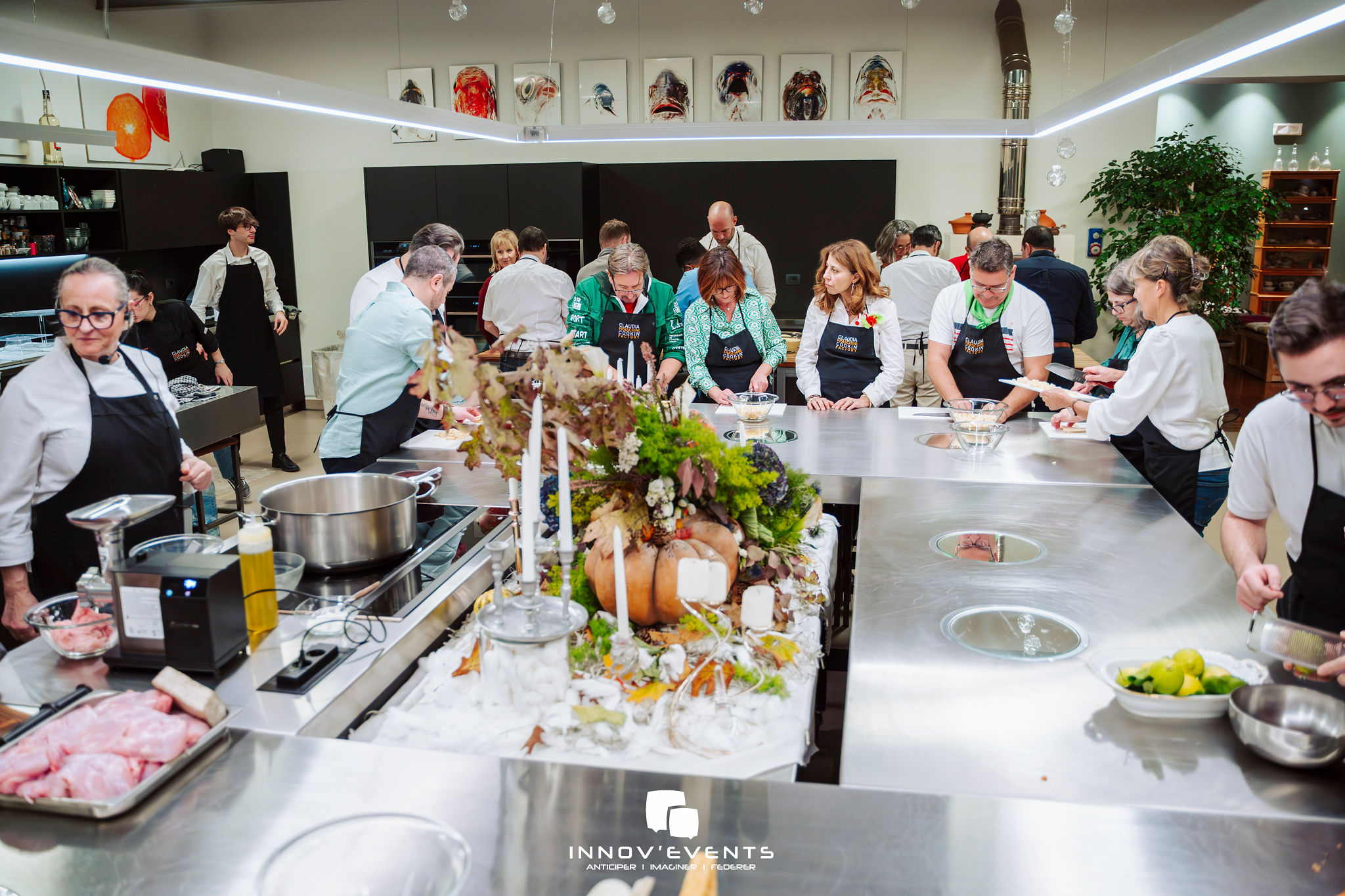
MasterChef kookworkshop in Antwerpen for sharper teamwork and leadership
INNOV'events (Brussels) designs and produces MasterChef kookworkshop in Antwerpen formats for executive teams, HR and communication departments, typically for 12 to 120 participants. We manage venue sourcing, chef staffing, ingredients, kitchen setup, run-of-show, and on-site coordination.
You keep control of objectives (culture, onboarding, recognition, or cross-team alignment); we translate them into a structured culinary challenge with measurable outcomes and a smooth guest experience.
Sommaire
In a corporate event, “entertainment” is not a nice-to-have: it is the operational lever that changes how people talk to each other. A well-run culinary workshop creates real-time collaboration under time pressure—exactly the conditions where leadership, decision-making and communication habits show up.
In Antwerpen, organizations typically expect high standards of logistics, punctuality and discretion: no amateur cooking corners, no unclear hygiene responsibilities, no improvisation on guest flow. Your teams want something engaging, but your directors want risk control and brand consistency.
We bring field-proven production methods from national corporate events and apply them locally in Antwerpen: vetted chef teams, pre-checked equipment lists, food safety protocols, and a facilitator-driven format that keeps the experience professional from briefing to wrap-up.
Operational facts that matter in Antwerpen
10+ years delivering corporate event formats across Belgium with repeat clients in HR, internal comms and executive offices.
A network of 30+ active culinary partners (chefs, kitchen assistants, rental suppliers, venues) to secure capacity during peak periods in Antwerpen.
Standard operating checklists covering food safety, allergen control, and on-site coordination—used on every culinary activation, regardless of group size.
Typical workshop throughput: 12–120 guests in one session; split formats available for 120–240 via rotating teams and staggered service.
Companies we support around Antwerpen, year after year
We regularly work with organizations that operate in and around Antwerpen—from HQ teams to regional departments—because they need suppliers who understand corporate constraints: procurement steps, legal checks, privacy rules for internal filming, and the reality of last-minute agenda changes.
You mentioned providing company names as references; include them here to strengthen credibility (e.g., “We delivered for X, Y, Z in Antwerp and supported recurring quarterly team moments”). In practice, many of our local collaborations renew annually because the format is reliable: the same venue standards, the same quality of ingredients, and the same run-of-show discipline—so HR and Comms don’t have to “re-explain” expectations each time.
For directors, what matters is not a one-off success but repeatability. Our Antwerp clients come back when they see that the workshop supports real objectives (cross-functional cooperation, leadership behaviours, post-merger integration) and that the production is predictable: timing, safety, guest flow, and clear responsibilities.
 Besoin d’un devis rapide ?
Nous vous envoyons une première proposition sous 24h.
Why choose a MasterChef workshop in Antwerpen for leadership goals?
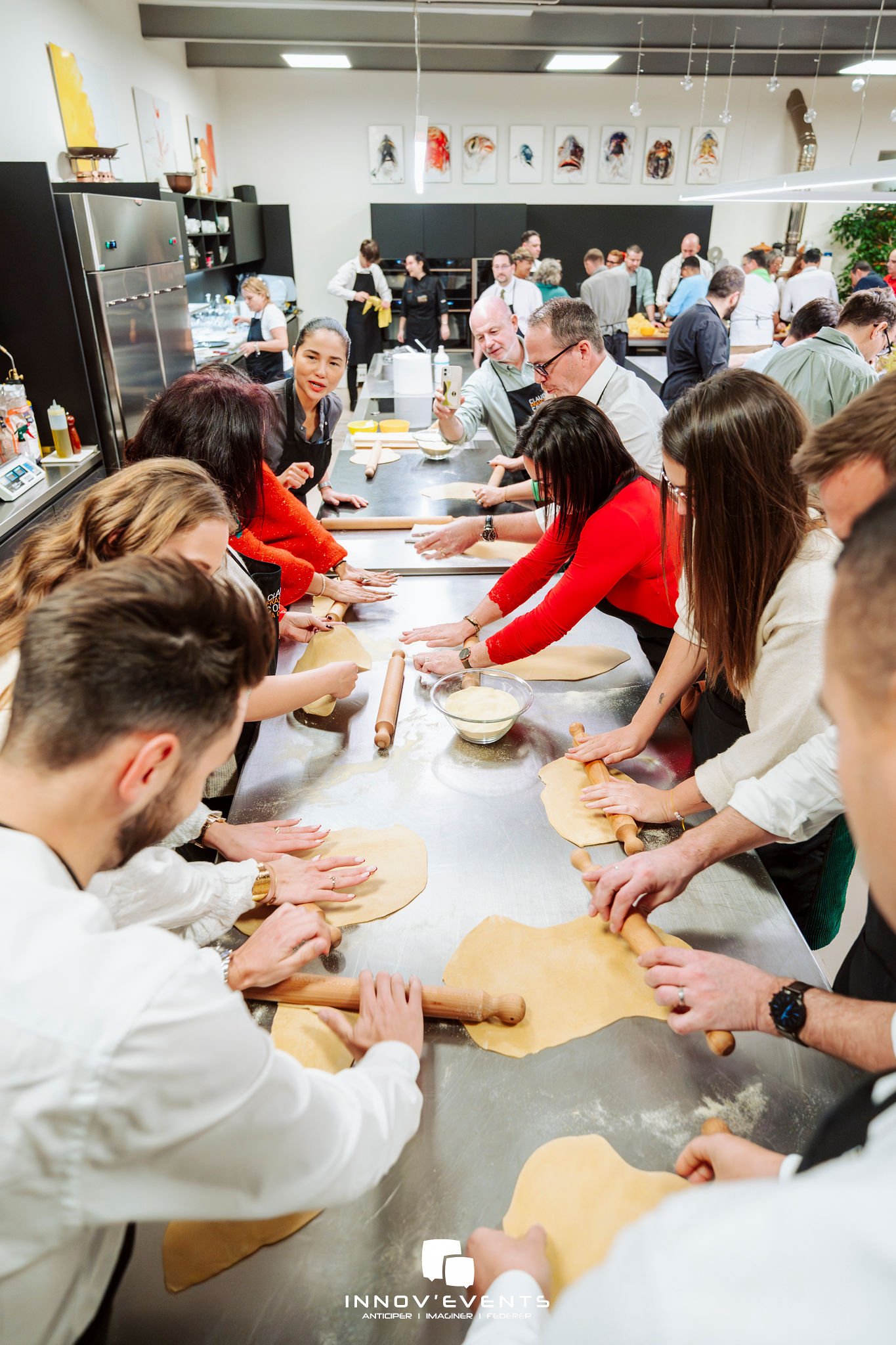
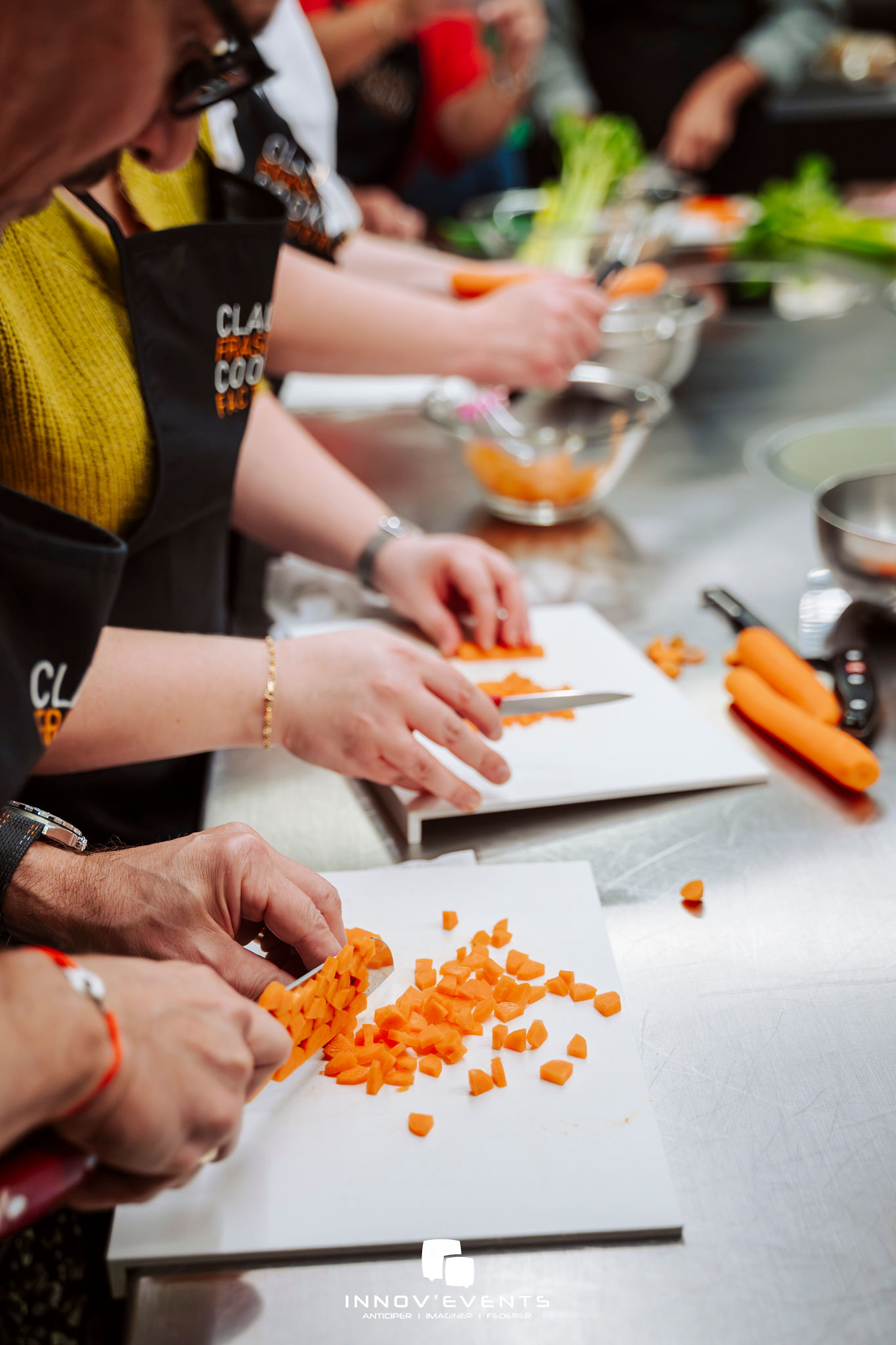
A MasterChef kookworkshop is a structured simulation of business reality: limited time, shared resources, role clarity, quality expectations and a final delivery that must be “client-ready”. For executives and HR, it’s one of the rare entertainment formats where the learning happens naturally—without forcing a training tone.
Cross-team alignment without speeches: in mixed teams (sales/ops/finance), the kitchen forces shared vocabulary, prioritization and trade-offs. You can observe who clarifies, who escalates, who listens—and debrief it cleanly.
Leadership under pressure, in a safe setting: a 60–90 min cooking sprint reveals decision styles and delegation habits. We can frame roles (captain, quality lead, timekeeper) to match what your leaders practice at work.
Concrete recognition and employer branding: ending with a plated result and a juried moment is more tangible than many “team activities”. It supports internal communication: photos of teamwork and outcomes, not just posed group shots.
Inclusive engagement: unlike sports or nightlife-based entertainment, a culinary challenge is accessible for varied ages and profiles. We design options for non-alcohol preferences, dietary requirements, and different comfort levels with cooking.
Measurable structure: we set scoring criteria (timing, taste, presentation, collaboration, waste control). This lets HR capture insights without turning the event into an assessment center.
Antwerpen has a strong international business culture and a high bar for service quality. A properly produced workshop fits that mindset: pragmatic, results-oriented, and respectful of people’s time while still creating genuine connection.
What Antwerp teams expect from corporate event entertainment
Delivering corporate event entertainment in Antwerpen means dealing with real constraints beyond the “fun idea”. In our experience, companies in Antwerp typically look for three things: operational reliability, polished execution, and a format that doesn’t feel childish for senior participants.
Mobility and timing: guest arrivals are often staggered due to ring traffic, limited parking near central districts, and tight calendars (board meetings, client visits, shift changes). We therefore design check-in and briefing so late arrivals can join without disrupting teams—e.g., staggered stations, pre-assigned roles, and a briefing that can be repeated in a compact way.
Venue standards: decision-makers want real kitchens or professional pop-up setups—not cramped spaces that create safety risks. In Antwerp, we also plan for building rules (freight elevators, noise limitations, waste disposal, and fire safety) and confirm them in writing with the venue.
Language and facilitation: many Antwerp organizations are multilingual. We can facilitate in English, align signage and recipes accordingly, and keep instructions concise so the workshop stays fast and professional.
Compliance and reputation: directors will not accept surprises on hygiene, allergens, alcohol service, or filming permissions. We implement clear allergen labeling, separate utensils when required, and a documented process for any content capture (internal comms, employer branding, or client-facing channels).
Which entertainment options pair well with a workshop in Antwerpen?
Entertainment creates engagement when it is integrated into the flow of the event—arrival, transition moments, dinner pacing, and networking. Around a MasterChef kookworkshop, we typically add elements that support energy and conversation without stealing attention from the cooking challenge.
Animations Interactives à Antwerpen
Ingredient auction (10–15 min): teams bid with points or tokens. It sparks strategy and negotiation—useful if your objective is collaboration across departments.
Blind tasting mini-round (5–8 min): participants calibrate taste and vocabulary, useful for mixed seniority groups where people hesitate to speak up.
Table-hosted debrief cards: short prompts aligned with your leadership model (e.g., “How did we decide?”, “What did we delegate?”). Keeps the tone executive-friendly.
Animations Artistiques à Antwerpen
Discreet acoustic set during tasting: works well when you want networking without shouting over a DJ. Particularly relevant for client-facing evenings in Antwerpen where service standards are high.
Live illustrator for recipe boards: creates visual assets for internal comms and gives teams a sense of progression without adding operational complexity.
Animations Innovantes à Antwerpen
Local pairing corner: optional focus on regional Belgian products (e.g., seasonal produce, local beverages) with clear non-alcohol alternatives. Keeps it grounded and avoids “gimmick” tasting.
Dessert finishing station: teams complete plating with a pastry chef. This reduces risk (desserts can be complex) while still giving a high-end final impression.
Animations Gourmandes à Antwerpen
Digital scoring with QR ballots: guests score taste/presentation/collaboration. Results displayed live with moderation to keep it classy, not game-show chaotic.
Short-form content kit: if Comms needs assets, we produce a controlled set of vertical clips (15–30 seconds each) with a pre-approved shot list and consent management.
Whatever add-ons you choose, we ensure alignment with your brand image: tone of voice, dress code for chefs, signage discretion, and the level of competitiveness. The goal is to reinforce how your organization works—not to distract from it.
Where to host a MasterChef kookworkshop in Antwerpen?
The venue determines the perceived level of your event before the first ingredient is cut. For a corporate cooking workshop, the practical details (kitchen capacity, ventilation, storage, guest flow) directly impact safety and the calmness of the experience—especially with senior participants who won’t tolerate chaos.
| Venue type | For which objective? | Main strengths | Possible constraints |
|---|---|---|---|
Professional cooking studio in Antwerp | Structured team-building, leadership workshop, predictable timing | Built-in kitchen stations, reliable equipment, strong hygiene baseline, easy facilitation | Fixed capacity per station; limited branding; availability can be tight in peak seasons |
Restaurant with private kitchen access (off-peak) | Client hospitality, executive dinner with a hands-on segment | High service level, strong final plating, easy transition to seated dinner | Strict house rules; less flexibility on recipes; loading/unloading constraints |
Corporate venue or meeting space with pop-up kitchens | On-site team moment, internal culture event, multi-room agenda | Convenient for guests, integrates with plenary sessions, scalable layouts | Requires technical validation (power/ventilation); higher production responsibility for the agency |
We strongly recommend a site visit (or at least a technical walkthrough) before you sign off. In Antwerpen, small details—service elevators, waste routes, noise limits, and timing of deliveries—make the difference between a confident, premium experience and an event your teams remember for the wrong reasons.
What budget to plan for a MasterChef workshop in Antwerpen?
Pricing depends on format and production level rather than “a cooking activity”. For a MasterChef kookworkshop in Antwerpen, the budget is shaped by staffing ratios, venue constraints, ingredient quality, and how much you want the event to look and feel like a branded corporate moment.
Group size and staffing ratio: a common baseline is 1 lead chef + assistants depending on stations; larger groups need more floor coordination to keep timing tight.
Venue type: studios include equipment; pop-up setups require rentals (hobs, fridges, worktops), delivery scheduling, and longer build/strike.
Recipe architecture: a 60-minute pasta challenge is not the same as a 3-course menu with proteins and plating. Complexity impacts prep time, risk, and staffing.
Ingredient and beverage level: standard corporate quality vs. premium sourcing; clear handling for allergies and cross-contamination may require extra SKUs and separate prep.
Timing and agenda: half-day vs. evening, staggered groups, or integration into a larger event (plenary + workshop + dinner) affects coordination and venue hours.
Branding and content: aprons, signage, printed recipe cards, photo/video capture, and usage rights can be added without inflating operational risk—if planned upfront.
From a return-on-investment perspective, the relevant question is often: “Does this reduce friction between teams and create usable internal content?” When designed properly, the workshop supports engagement and employer branding while remaining cost-controlled through clear scope (stations, timing, menu, deliverables).
When does an event agency in Antwerpen make the difference?
Even when the concept is clear, delivery in the field is where corporate events succeed or fail. Working with a partner that is operationally present in Antwerpen reduces risk on the non-glamorous details: supplier timing, last-minute replacements, and fast decision-making when something changes on-site.
At INNOV'events, we combine Brussels-based project governance with a practical network in Antwerp. If you are comparing providers, ask who will physically manage supplier arrivals, who holds the venue keys, and who can source replacement equipment within hours if needed. This is where a strong local footprint matters more than a flashy proposal.
For companies that want a single partner for the full ecosystem, you can also coordinate this workshop with our event agency in Antwerpen production capabilities—so venue, entertainment, AV and guest flow are managed as one system, not separate vendors.
- Faster troubleshooting: replacement equipment, extra staff, or ingredient sourcing without derailing the agenda.
- Venue familiarity: realistic load-in times, building rules, and noise constraints are anticipated rather than discovered mid-event.
- Supplier accountability: clear responsibility chain, written confirmations, and on-site checks to protect your brand.
- Better budget control: fewer “unknowns” that turn into last-minute costs (extra delivery slots, overtime, additional security).
From a return-on-investment perspective, the relevant question is often: “Does this reduce friction between teams and create usable internal content?” When designed properly, the workshop supports engagement and employer branding while remaining cost-controlled through clear scope (stations, timing, menu, deliverables).










What we’ve delivered in Antwerpen across different corporate contexts
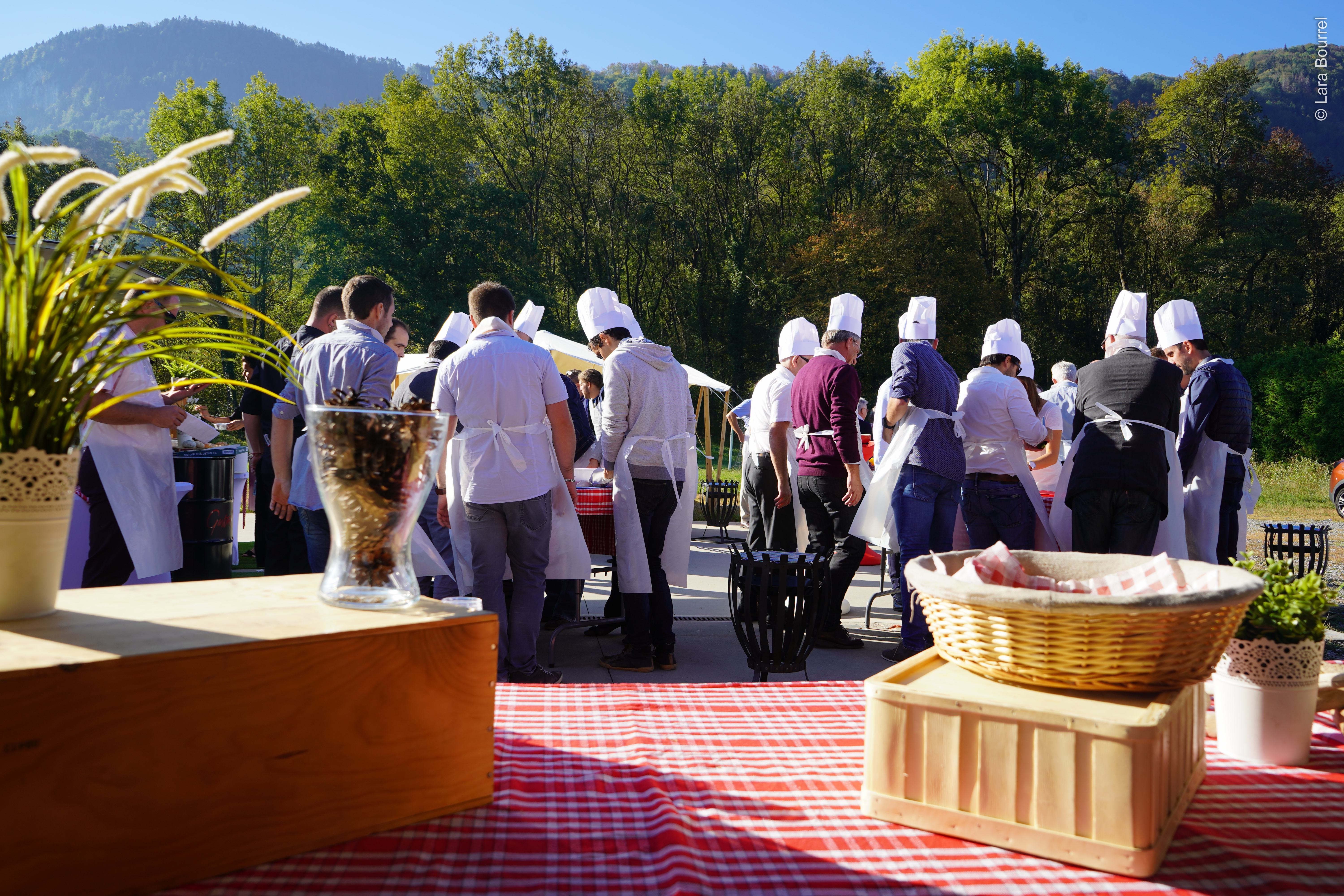
Our culinary formats are used in different scenarios depending on your organizational reality. For example, we regularly support:
Executive offsites: a high-pace workshop as the evening anchor after strategic sessions—designed to keep senior participants engaged without draining them.
Post-merger integration: mixed teams intentionally composed across legacy entities, with a scoring system that rewards collaboration and communication (not just culinary skills).
Sales kick-offs: competitive structure with clear timeboxing and a final jury moment, followed by a seated dinner for networking.
Employer branding / recruitment events: controlled content capture, bilingual facilitation, and a format that showcases culture without feeling scripted.
In Antwerpen, the most successful projects are those where we protect the basics: realistic timing, reliable kitchen capacity, clean facilitation, and a calm on-site command structure. That is what your participants notice—even if they don’t name it.
Common pitfalls we prevent in Antwerpen cooking workshops
Underestimating venue technical constraints: insufficient power, poor ventilation, or inadequate waste routes lead to stress and delays.
Unclear allergen and hygiene responsibilities: without a documented approach, one incident can become an HR and reputational issue.
Agenda overload: trying to combine too many activities results in a rushed workshop and frustrated participants.
Wrong team sizing: teams that are too large create “spectators”; teams that are too small overload participants and reduce fun.
No real run-of-show: relying on chefs to “just manage it” often fails when executives arrive late or speeches extend.
Brand mismatch: too loud, too gimmicky, or overly competitive formats can feel off for leadership audiences.
Our role is to remove these risks before they appear: validate the venue, lock responsibilities, design a realistic timeline, staff adequately, and keep your brand standards intact on the day.
Why Antwerp clients renew with INNOV'events
Repeat business is rarely about the “concept”. It is about predictability and accountability—especially for HR and communication teams who carry the internal risk if a supplier fails.
Many corporate clients rebook within 12–18 months when they see the workshop supports onboarding cycles, annual meetings, or quarterly team moments.
Recurring accounts typically expand scope over time: from one MasterChef kookworkshop to a full agenda (venue + AV + entertainment + content capture) as trust builds.
For returning groups, we rotate menus and difficulty levels to avoid repetition, while keeping the same production standards that made the first edition safe and smooth.

Loyalty is a practical indicator: it means the event ran on time, feedback was strong, procurement was clean, and the internal sponsor felt protected. That is the standard we aim for in Antwerpen.
How we build your MasterChef workshop in Antwerpen from brief to delivery
👉 Antwerpen discovery call and constraint mapping
We align on objectives (team cohesion, leadership behaviours, recognition, client hospitality) and map constraints: date windows, group size, languages, dietary needs, procurement rules, and brand guidelines. You receive a first recommendation on format (duration, menu complexity, team sizes) within clear parameters.
👉 Format design and operational scenario
We propose 1–2 scenarios with a precise run-of-show: welcome, briefing, cooking sprint(s), jury, service and wrap-up. We define roles (team captain, plating lead, timekeeper) and scoring criteria aligned with your culture. This is where we make the workshop “corporate-proof”.
👉 Venue shortlisting in Antwerpen and technical validation
We source suitable venues or validate your chosen location. We check kitchen stations, power, ventilation, water points, storage, waste management, access times, and delivery routes. If we build a pop-up kitchen, we lock an equipment manifest and schedule load-in/load-out to avoid overtime surprises.
👉 Chef staffing, ingredient plan and food safety controls
We staff the event with a lead chef and assistants based on the number of teams and the complexity of the menu. We confirm allergen handling, labeling, separate utensils if needed, and sanitation stations. Ingredients are planned with buffers to absorb last-minute participant changes.
👉 On-site production and executive-grade facilitation
On the day, our coordinator manages timing, supplier arrivals, and guest flow while the chef team runs the cooking. We keep the tone professional, handle late arrivals without disruption, and ensure the final tasting/jury moment is polished. After the event, you receive a concise debrief (what worked, what to improve, and options for next editions).
FAQ sur l'organisation MasterChef kookworkshop à Antwerpen
How long does a MasterChef workshop in Antwerpen last?
Most corporate formats run 2 to 3 hours door-to-door (welcome, briefing, cooking, jury, tasting). If you combine it with a seated dinner, plan 4 to 5 hours total depending on speeches and networking.
What group size works best for Antwerpen executive teams?
The sweet spot is 16 to 48 participants, split into teams of 4 to 6. For 60 to 120, we recommend staggered starts, rotating stations, or a hybrid with some participants as jury/guests to keep engagement high.
Can you manage allergens and dietary needs in Antwerpen?
Yes. We collect constraints in advance and implement labeling and separation where required. For corporate groups, we typically plan 2–4 dietary variants (e.g., vegetarian, no pork, gluten-light) and avoid high-risk cross-contamination steps unless the venue setup allows strict separation.
Do we need a cooking studio in Antwerpen or can it be onsite?
Both are possible. A studio is the most predictable for timing and equipment. Onsite is feasible if we can validate power capacity, ventilation, water access, and waste routes. If those are limited, we adapt the menu and use pop-up equipment to keep safety and flow under control.
When should we book a MasterChef workshop in Antwerpen?
For prime dates (Thu–Fri, end-of-year periods), book 6 to 10 weeks ahead to secure chefs and venues. For smaller groups with flexible timing, 3 to 4 weeks can work, but venue choice will be more limited.
Request a quote for your Antwerpen MasterChef workshop
If you want a MasterChef kookworkshop in Antwerpen that runs on time, respects executive audiences, and protects your brand standards, we should align early on objectives and constraints. Share your preferred date window, estimated headcount, language needs, and any dietary requirements; we will respond with a clear scenario, a realistic timeline, and a transparent budget framework.
Contact INNOV'events to schedule a short decision-maker call and receive a proposal you can validate internally without guesswork.
Agence INNOV'events Antwerpen
Justin JACOB est le responsable de l'agence événementielle Antwerpen. Contactez-le directement par mail via l'adresse belgique@innov-events.be ou par formulaire.
Contacter l'agence AntwerpenToutes nos prestations & animations Antwerpen, Belgique
Découvrez nos prestations événementielles
Découvrez nos animations événementielles disponibles au Belgique
- Hôtesse événementielle à Antwerpen
- Escape Game à Antwerpen
- Cours de cuisine type MasterChef à Antwerpen
- Magicien à Antwerpen
- Location de chapiteau à Antwerpen
- Atelier colorimétrie à Antwerpen
- Jeux gonflables à Antwerpen
- Service de voiturier à Antwerpen
- Simulateur de football à Antwerpen
- Location de mobilier lumineux à Antwerpen
- Flocage lumineux à Antwerpen
- Repas insolite à Antwerpen
- Light Painting à Antwerpen
- Murder Party à Antwerpen
- Jeu concours à Antwerpen
- PLV événementielle à Antwerpen
- Réalité virtuelle à Antwerpen
- Cuisine moléculaire à Antwerpen
- Animation Halloween à Antwerpen
- Feu d’artifice à Antwerpen
- Jeux géants à Antwerpen
- Animateur événementiel à Antwerpen
- Animation photo à Antwerpen
- Père Noël à Antwerpen
- Animation enfants à Antwerpen
- Visite guidée à Antwerpen
- Rallye urbain à Antwerpen
- Piscine à balles à Antwerpen
- Simulateur de vol à Antwerpen
- Location de food truck à Antwerpen
- Record du monde à Antwerpen
- Simulateur de surf à Antwerpen
- Casino du vin à Antwerpen
- Atelier relooking à Antwerpen
- Atelier création de parfum à Antwerpen
- Atelier acting à Antwerpen
- Animations RSE à Antwerpen
- Tir à l’arc à Antwerpen
- Agent de sécurité à Antwerpen
- Œnologie à Antwerpen
- Mime à Antwerpen
- Jeu télévisé à Antwerpen
- Fête foraine à Antwerpen
- Atelier gestion de crise à Antwerpen
- Atelier négociation de crise à Antwerpen
- Jeux d’arcade à Antwerpen
- Simulateur de chute libre à Antwerpen
- Simulateur de ski à Antwerpen
- Simulation circuit automobile à Antwerpen
- Baptême de l’air à Antwerpen
- Dégustation à Antwerpen
- Création de baby-foot à Antwerpen
- Rallye 2CV à Antwerpen
- Challenge LEGO à Antwerpen
- Animation casino à Antwerpen
- Interprète / traducteur à Antwerpen
- Goodies à Antwerpen
- Bus / transfert à Antwerpen