
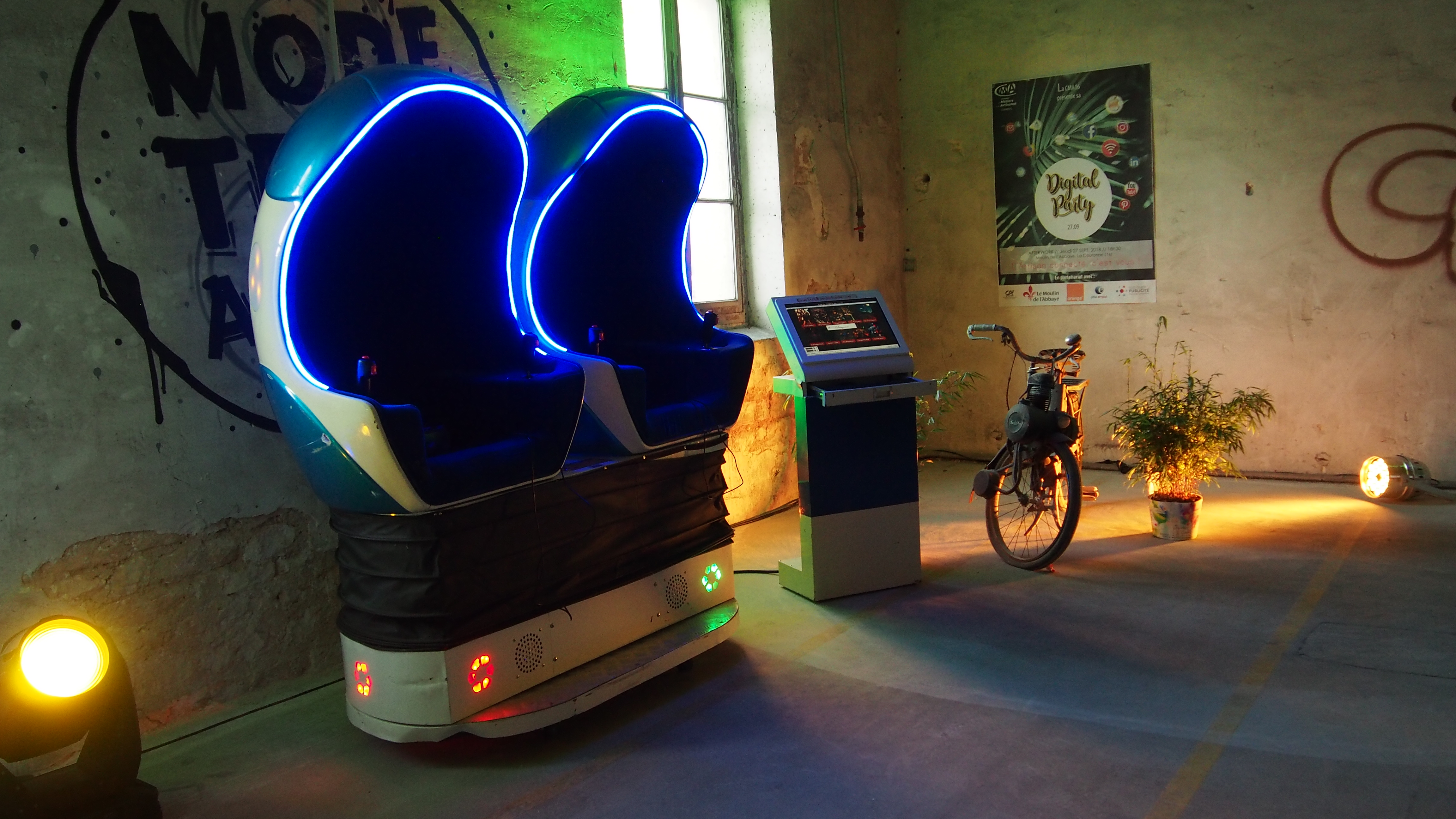
Vluchtsimulator in Antwerpen to engage teams without losing event control
INNOV'events delivers Vluchtsimulator in Antwerpen activations for corporate events from 30 to 600+ attendees. We handle logistics, safety, staffing, and participant flow so your leadership team can focus on hosting. Expect a professional setup that works in real venues (tight load-in windows, union rules, AV constraints) and still protects your brand image.
Sommaire
Entertainment is not “nice to have” on a corporate agenda: it is a practical tool to increase attendance, keep energy high between plenaries, and create structured networking moments without forcing people into awkward icebreakers. A well-run Vluchtsimulator delivers measurable engagement because it gives participants a clear goal, a short time-boxed challenge, and an immediate shared talking point.
Organizations in Antwerpen typically expect operational discipline: predictable timing, clear signage, bilingual hosting (NL/EN, often FR on request), and a setup that respects venue rules and security. Executives also expect the activation to fit the brand context (no “funfair look”), to be scalable, and to avoid queues that disrupt catering, keynote schedules, or VIP moments.
From Brussels, we work on the ground in Antwerpen week after week with local venues and suppliers. Our teams plan load-in/load-out, power and network requirements, staffing ratios, and contingency plans so the simulator feels premium and runs smoothly under real event-day pressure.
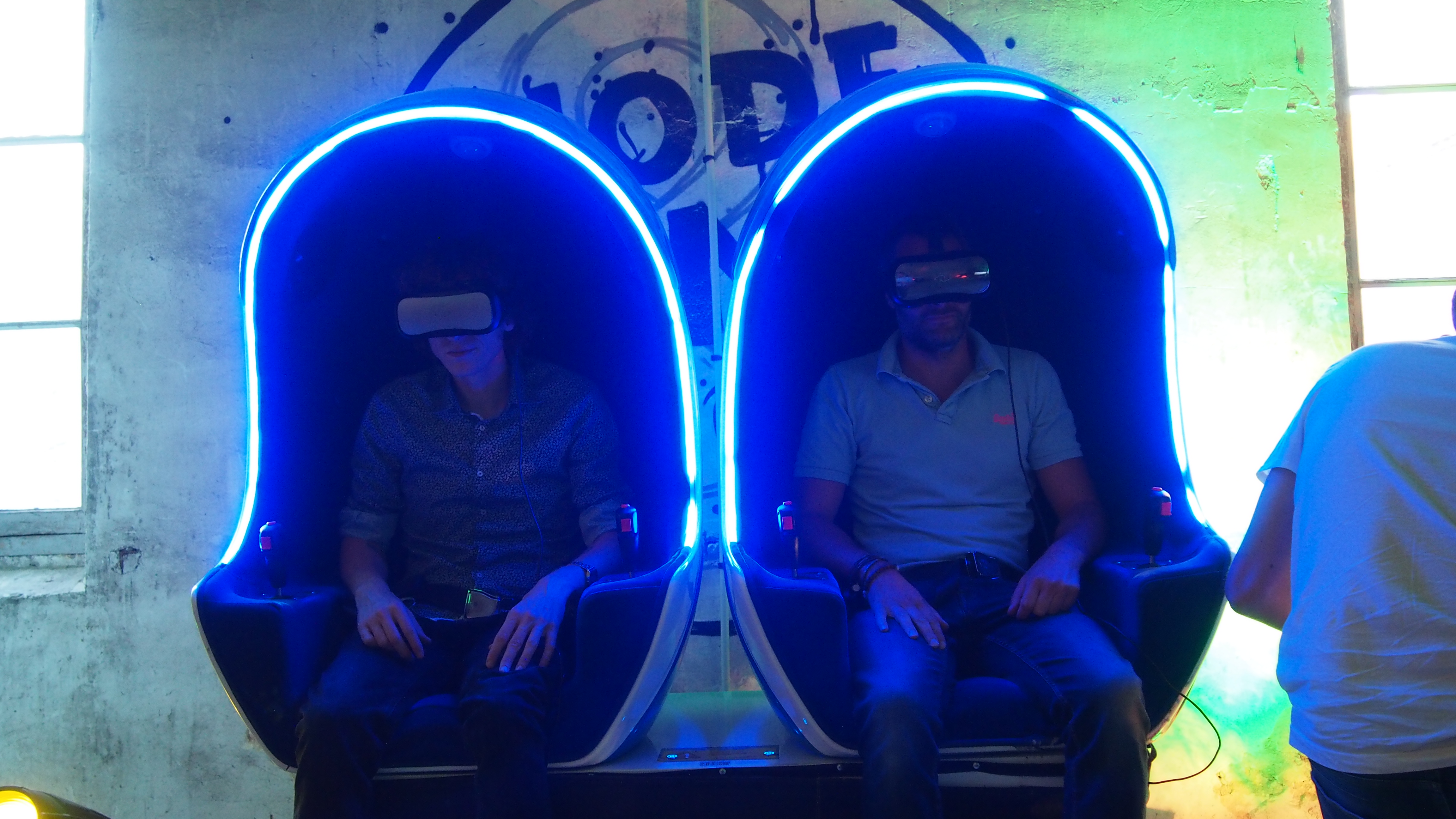
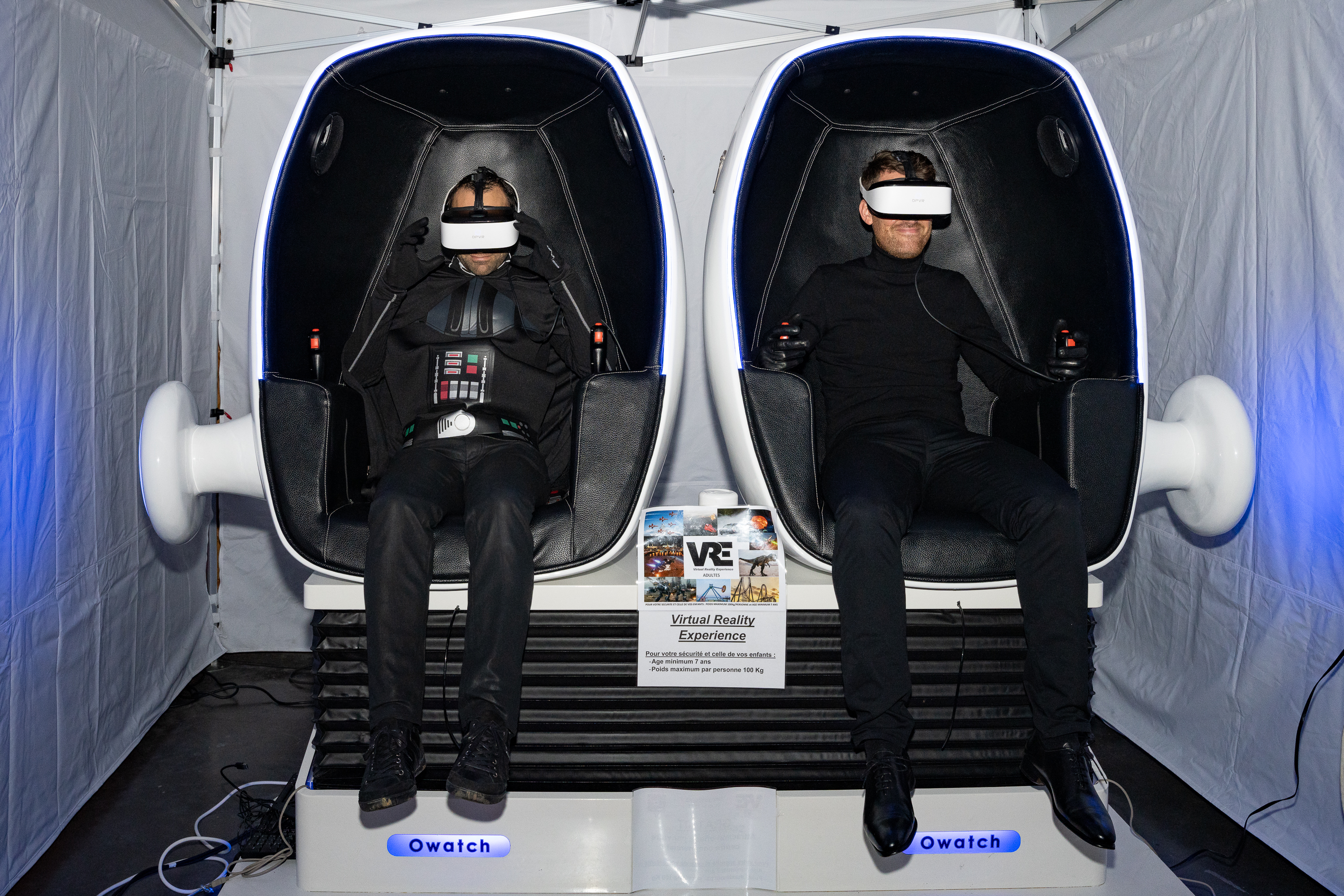
INNOV'events numbers executives use to de-risk Antwerpen events
10+ years delivering corporate entertainment and complex event logistics across Belgium, including recurring activations in Antwerpen.
200+ corporate events/year supported through our Belgian partner network (AV, venues, caterers, security, host staffing).
99%+ on-time readiness target for activations (setup completed before doors) thanks to pre-checklists, technical riders, and on-site run-of-show discipline.
1 single point of contact from briefing to event day, with an operational lead on site to coordinate venue, AV, and simulator crew.
Antwerpen references and local delivery habits you can verify
We regularly support corporate teams in Antwerpen and the wider port region where expectations are pragmatic: start on time, keep flows tight, respect safety rules, and make the experience look like it belongs to the company. Many clients rebook year after year because they cannot afford “activation improvisation” on an executive event.
If you shared internal reference names during your briefing, we can structure the proposal in a way that mirrors what worked for those organizations (timing, host tone, queue management, branding level, reporting). In addition, we can provide anonymized examples from comparable sectors active in Antwerpen (logistics, chemicals, maritime services, tech, professional services) to help you benchmark what “good” looks like in your context.
Operationally, our local approach is simple: we plan around the realities of Antwerpen venues (load-in restrictions, limited freight elevators, strict noise windows, and the common need for bilingual on-site communication). That is how we keep your internal stakeholders comfortable: HR sees participation and inclusivity, Communications sees brand consistency, and the executive sponsor sees a smooth program.
 Besoin d’un devis rapide ?
Nous vous envoyons une première proposition sous 24h.
Why book a Vluchtsimulator in Antwerpen for leadership outcomes
A Vluchtsimulator in Antwerpen is not just an activity; it is a format that lets you engineer behavior on site: participation, conversation, and a shared challenge that cuts across hierarchy. When it is designed properly, it becomes a controlled “engagement engine” that supports HR goals, culture messaging, and client-facing credibility.
Higher voluntary participation than many workshop-style activations: short sessions (often 4–8 minutes) and clear rules reduce reluctance, especially among technical and operational profiles common in the Antwerpen economy.
Queue-driven networking that does not feel forced: with smart lane design (time slots, fast-track for speakers/VIPs, team heats), people talk naturally while waiting, which supports communication goals for town halls or strategy days.
Leadership visibility without awkwardness: executives can “take a turn” and create a human moment, but the format stays professional because it is moderated, time-boxed, and supported by clear safety and brand guidelines.
Cross-department collaboration: we can run team challenges (pilot + co-pilot roles, decision prompts, scoring) that reflect real company behaviors (handover quality, communication under pressure, checklist discipline).
Content opportunities for Comms: controlled photo/video angles, branded backdrops, and pre-approved captions let your team publish internally (and externally when appropriate) without risking off-brand visuals.
Data you can report: participation counts, peak times, average wait time, and satisfaction pulse (quick QR survey) give HR and internal communications concrete post-event proof.
Antwerpen is a results-driven business environment. When you bring a simulator, it should feel like a well-run operational asset: safe, timed, premium-looking, and aligned with the message you want people to remember when they leave the room.
What Antwerpen companies expect from corporate entertainment on event day
In Antwerpen, we often work with organizations where operational rigor is part of the culture (port activities, logistics, industrial services, engineering, international headquarters). That translates into clear expectations for an activation like a Vluchtsimulator:
- Predictable timing: the simulator must fit into plenary blocks, catering windows, and speaker arrivals. We plan session durations, buffer time, and capacity so you do not get a queue that blocks circulation or delays the program.
- Safety and compliance clarity: venue managers in Antwerpen will ask about power load, cable management, emergency exits, and insurance. We prepare a simple technical and safety file to speed approvals.
- Bilingual hosting: NL/EN is often required, with FR sometimes needed for national teams. We staff accordingly and ensure scripts match your tone of voice.
- Premium look, not a “kermis” setup: clients frequently ask for clean branding, tidy barriers, discreet crew clothing, and controlled sound levels to keep the atmosphere corporate.
- Fast troubleshooting: industrial and tech audiences notice when something is “almost working.” We plan spare parts, backups, and an escalation path so small issues do not become visible problems.
Finally, there is a practical local reality: many Antwerpen venues have strict load-in rules and limited dock access during peak hours. We schedule transport and crew calls to avoid last-minute stress and to protect your internal team from operational firefighting.
What to pair with a Vluchtsimulator in Antwerpen for engagement
A Vluchtsimulator performs best when it is not isolated. We often combine it with complementary formats that manage crowd movement and support your event objectives (team bonding, employer branding, client hospitality). In Antwerpen, where events often mix international and local profiles, the best combinations are simple to understand and quick to join.
Animations Interactives à Antwerpen
Team flight challenge (scored heats): participants register in small teams, rotate roles (pilot/co-pilot/timekeeper), and compete on landing accuracy or checklist completion. Practical benefit: you control peaks with time slots and create interdepartmental mixing.
Brief “pre-flight briefing” corner: a host runs a 2-minute briefing every 10 minutes, which standardizes the experience and reduces operator time spent repeating instructions—this increases throughput and reduces queue frustration.
Leadership fast-track lane: discreet, pre-booked slots for executives, speakers, and clients. This avoids the visible “VIP cutting the line” effect while protecting protocol needs.
Animations Artistiques à Antwerpen
Aviation-themed MC (corporate tone): not a costume act, but a professional host using aviation vocabulary (checklists, ATC, decision gates) to connect the experience to leadership behaviors.
Sound design kept under control: subtle ambient audio around the zone creates atmosphere without hijacking the room. This is particularly important in many Antwerpen venues where networking and speeches happen in the same space.
Animations Innovantes à Antwerpen
“Captain’s break” coffee bar near the activation: placing a high-quality coffee point next to the simulator turns waiting time into a positive moment and keeps people in the zone without creating congestion at the main bar.
Timed tasting tokens: a simple token system (issued after a flight) spreads catering load and creates a natural completion loop that reduces repeated re-queuing.
Animations Gourmandes à Antwerpen
Branded performance dashboard: a screen showing top scores, average landing rate, and participation count. This makes the activity feel like a corporate challenge, not an arcade game, and gives Communications ready-made metrics.
QR-based time-slot booking: lightweight booking reduces queues and helps HR ensure inclusive participation across departments and shifts.
Photo output with brand guardrails: controlled framing and background so photos can be used internally without last-minute approvals. We keep it compliant with your privacy rules and venue policies.
Whatever we add, we keep one rule in Antwerpen: the entertainment must serve your brand image and your program flow. If an extra element increases complexity without increasing engagement or control, we advise against it.
Which Antwerpen venues work best for a Vluchtsimulator setup
The venue is not a backdrop; it determines whether your Vluchtsimulator in Antwerpen runs smoothly. Ceiling height, power distribution, loading access, noise tolerance, and circulation space directly impact safety, queue management, and the perceived quality of the activation.
| Venue type | For which objective? | Main strengths | Possible constraints |
|---|---|---|---|
| Corporate conference venue / congress center | Town halls, strategy days, large HR events (200–600+) | Professional AV, predictable access rules, large open areas for safe queue lanes | Strict load-in windows, noise limitations during plenaries, approvals needed for rigging/signage |
| Industrial-chic event space / converted warehouse | Employer branding nights, product launches, client hospitality | High ceilings, strong visual impact, space for spectator zone and branded wall | Power distribution may require extra planning; acoustic control needed to keep it corporate |
| Hotel ballroom in central Antwerpen | Leadership offsites, awards dinners, mixed international audience | Easy guest logistics, catering integration, clear staff protocols | Freight elevator limits, tight back-of-house access, careful cable routing required |
We strongly recommend a site visit (or at least a technical call with venue operations) for Antwerpen setups. It is the fastest way to validate loading access, power availability, and the best placement to avoid bottlenecks.
What does a Vluchtsimulator cost in Antwerpen for a corporate event?
Budgeting a Vluchtsimulator in Antwerpen is straightforward when you break it down into operational drivers. The price is not only the device; it is the full delivery: transport, crew, timing, safety, and the ability to handle your attendee volume without compromising the rest of the event.
Duration and staffing: half-day vs. full-day vs. evening peak operation changes the number of operators and hosts required. For corporate flow control, we typically recommend 2–4 staff depending on throughput and whether you add time-slot booking.
Simulator type and realism level: single-seat experiences optimize cost and footprint; multi-seat or higher-fidelity cockpits improve spectator appeal and perceived value but require more space and setup time.
Logistics in Antwerpen: access to the venue, dock availability, distance from parking/loading, and time restrictions can add crew hours. This is common in city-center locations and premium hotels.
Branding and content: branded walls, scoreboard screens, photo outputs, and custom UI elements are optional but often requested by Communications teams who need clean assets.
Safety and infrastructure: cable ramps, barriers, dedicated power circuits, and sometimes additional insurance certificates depending on venue policy.
Capacity engineering: if you need guaranteed participation for a certain group (e.g., all managers, all new hires), we may propose booking slots and adding a second station to avoid end-of-event rush.
From an ROI perspective, the right comparison is not “simulator vs. no simulator,” but “controlled engagement vs. dead time.” In Antwerpen, where many events blend internal culture with client-facing image, the simulator often pays back by improving attendance, keeping participants on site longer, and giving Communications measurable content and participation data.
Why work with an event agency in Antwerpen for a simulator project
When you add a Vluchtsimulator to a corporate program, most risks are operational and local: access times, venue rules, power, and the human reality of event flow. Working with an event agency in Antwerpen (or a team that operates locally every week) reduces friction because the agency already knows how venues enforce loading, how strict they are about noise and crowding, and which suppliers consistently deliver on time.
For executives, the real value is governance: fewer unknowns, faster decisions, and an on-site lead who can coordinate venue ops, AV, catering, and simulator crew without escalating every detail to your internal team.
- Faster technical validation: local knowledge of common room layouts, power availability, and access constraints speeds up feasibility checks.
- Supplier accountability: when something shifts on the day (dock time, room flip), local teams can react quickly and keep your run-of-show intact.
- Better cost control: fewer last-minute crew hours and fewer “emergency rentals” because the plan is realistic from the start.
- Stakeholder comfort: venue managers and security teams respond better when documentation and procedures match their local standards.
From an ROI perspective, the right comparison is not “simulator vs. no simulator,” but “controlled engagement vs. dead time.” In Antwerpen, where many events blend internal culture with client-facing image, the simulator often pays back by improving attendance, keeping participants on site longer, and giving Communications measurable content and participation data.










Antwerpen-style delivery: examples of how we adapt on real events
In the field, a simulator activation rarely happens in a perfect black box. We routinely deliver in mixed-use rooms where registration, catering, and plenary sessions coexist. Our approach is to design for that reality rather than fight it.
Examples of situations we manage in Antwerpen-area events:
- Program overruns: a keynote runs 20 minutes late, and the coffee break shortens. We switch to faster session mode (shorter briefing, optimized reset) and use a host to keep the line moving while protecting safety.
- VIP protocol constraints: a client delegation arrives unexpectedly. We activate pre-agreed VIP slots without visibly disrupting the queue, keeping both protocol and fairness intact.
- Brand sensitivity: Communications requests “no clutter” visuals. We reduce visible barriers, align staff dress code, and position the branded wall to control camera angles.
- Space pressure: the venue reduces usable floor area due to fire lane requirements. We redesign the queue into a “U-flow” and add time-slot booking to eliminate crowding.
What these cases have in common: we plan options upfront, so decisions are quick and controlled when reality changes.
Mistakes to avoid when booking a Vluchtsimulator in Antwerpen
Underestimating throughput: the most common issue is a beautiful simulator with an uncontrolled queue. If you expect 300 people to “all try it” in a 90-minute window, you need time slots and/or multiple stations.
Placing it in the wrong spot: putting the activation on a main circulation axis blocks service and creates safety issues. We always protect exits, catering flows, and venue operational routes.
No clear rules for VIPs and speakers: without a plan, you either upset the queue or disappoint VIPs. A discreet fast-track solves this.
Ignoring noise and focus moments: in many Antwerpen rooms, speeches and networking share the same space. We plan sound levels and “quiet mode” periods.
Weak branding governance: random backgrounds and unapproved visuals create internal approvals pain. A clean branded wall and controlled photo angle prevent this.
No contingency for access changes: late access to the room happens. Buffer planning and a modular setup prevent panic and protect your start time.
Our role is to remove these risks before they become visible. A simulator can look simple, but in a corporate setting the success is in the operational detail.
Why Antwerpen clients rebook INNOV'events for simulator activations
Recurring clients do not come back for “ideas”; they come back for reliability under pressure. When HR and Communications have one chance to deliver a flawless moment in front of leadership, they prioritize partners who protect the run-of-show and manage stakeholders calmly.
High rebooking rate on entertainment formats where flow and safety are critical (internal benchmark tracked per format and venue type).
Reduced internal workload: clients report fewer last-minute escalations because we bring clear documentation (timings, staffing, technical needs) and enforce it on site.
Consistent guest experience: standardized briefing and queue design lead to fewer complaints and better post-event feedback.

Loyalty is the most practical proof point: if a client repeats an activation in Antwerpen, it is because the delivery held up in the real constraints of event day.
Our delivery process for Antwerpen corporate simulator projects
👉 Step 1 (Antwerpen): brief-to-objective translation
We start with your constraints: audience size, agenda structure, stakeholder sensitivity (Works Council, H&S, brand rules), and success criteria. Then we translate that into a simulator format: session duration, staffing, capacity targets, and integration points with plenary/catering.
👉 Step 2 (2000): technical validation and venue alignment
We confirm access routes, loading times, power circuits, floor space, ceiling height, sound constraints, and safety rules. If needed, we run a technical call with venue operations and AV to avoid conflicts (screen placement, cable routing, emergency lanes).
👉 Step 3 (Antwerpen): flow design and participant experience
We design the physical layout (entry/exit, queue lanes, spectator zone) and operational flow (briefing cadence, reset procedures, VIP slots). We also define what the host says, in which languages, and how we keep the tone aligned with your corporate culture.
👉 Step 4 (2000): production plan, staffing, and documentation
You receive a clear production sheet: timings, responsibilities, contact list, and a concise technical and safety pack. We validate branding elements (wall, signage, scoreboard screen) and confirm on-site roles (operator vs. host vs. floor manager).
👉 Step 5 (Antwerpen): on-site execution and live coordination
On event day, we arrive early enough to absorb delays without impacting doors. Our on-site lead coordinates with venue ops and AV, manages last-minute changes, and protects the run-of-show. We monitor queue time and adjust session mode if the program shifts.
👉 Step 6 (2000): wrap-up and measurable reporting
After the event, we provide participation numbers, peak times, and operational feedback. If you plan a recurring Vluchtsimulator activation in Antwerpen, we document improvements to reduce cost and friction on the next edition.
FAQ sur l'organisation Vluchtsimulator à Antwerpen
How much space is needed for a Vluchtsimulator in Antwerpen?
Plan typically 20–40 m² for the simulator zone plus 10–30 m² for a queue/spectator area. Exact footprint depends on cockpit size and whether you add a branded wall or scoreboard screen.
How many guests per hour can a Vluchtsimulator handle in Antwerpen?
In real corporate conditions, expect around 30–80 participants/hour per station. The range depends on session length (4–8 minutes is common), briefing time, reset time, and whether you use time-slot booking.
Can we run the simulator during speeches at an Antwerpen venue?
Yes, with controls. We plan “quiet mode” (lower audio, no MC voice projection) and place the zone away from the stage sightline. If the room is shared, we often pause sessions for key moments (opening, award announcements) to protect attention.
What are typical power requirements in Antwerpen locations?
Most setups need a dedicated 230V circuit; larger cockpits or multi-screen rigs may require 2 separate circuits. We confirm with the venue whether the circuit is shared with catering/AV to avoid overload and nuisance trips.
How early should we book a Vluchtsimulator in Antwerpen?
For standard dates, plan 4–8 weeks. For peak periods (end-of-year parties, spring conferences) or if you need specific branding and content outputs, plan 8–12 weeks to secure equipment, crew, and venue approvals.
Request a Vluchtsimulator quote for Antwerpen with a realistic capacity plan
If you are comparing agencies, we suggest starting with two numbers: your attendee count and the minutes you can allocate to the activation. Send us your draft agenda and venue (or shortlist) in Antwerpen, and we will respond with a concrete recommendation: simulator format, staffing, footprint, throughput estimate, and a clear budget range.
Early planning is what keeps this type of entertainment professional: it avoids queues, protects speeches and catering, and prevents last-minute technical surprises. Contact INNOV'events to lock the concept and validate feasibility before you commit the full event plan.
Agence INNOV'events Antwerpen
Justin JACOB est le responsable de l'agence événementielle Antwerpen. Contactez-le directement par mail via l'adresse belgique@innov-events.be ou par formulaire.
Contacter l'agence AntwerpenToutes nos prestations & animations Antwerpen, Belgique
Découvrez nos prestations événementielles
Découvrez nos animations événementielles disponibles au Belgique
- Hôtesse événementielle à Antwerpen
- Escape Game à Antwerpen
- Cours de cuisine type MasterChef à Antwerpen
- Magicien à Antwerpen
- Location de chapiteau à Antwerpen
- Atelier colorimétrie à Antwerpen
- Jeux gonflables à Antwerpen
- Service de voiturier à Antwerpen
- Simulateur de football à Antwerpen
- Location de mobilier lumineux à Antwerpen
- Flocage lumineux à Antwerpen
- Repas insolite à Antwerpen
- Light Painting à Antwerpen
- Murder Party à Antwerpen
- Jeu concours à Antwerpen
- PLV événementielle à Antwerpen
- Réalité virtuelle à Antwerpen
- Cuisine moléculaire à Antwerpen
- Animation Halloween à Antwerpen
- Feu d’artifice à Antwerpen
- Jeux géants à Antwerpen
- Animateur événementiel à Antwerpen
- Animation photo à Antwerpen
- Père Noël à Antwerpen
- Animation enfants à Antwerpen
- Visite guidée à Antwerpen
- Rallye urbain à Antwerpen
- Piscine à balles à Antwerpen
- Simulateur de vol à Antwerpen
- Location de food truck à Antwerpen
- Record du monde à Antwerpen
- Simulateur de surf à Antwerpen
- Casino du vin à Antwerpen
- Atelier relooking à Antwerpen
- Atelier création de parfum à Antwerpen
- Atelier acting à Antwerpen
- Animations RSE à Antwerpen
- Tir à l’arc à Antwerpen
- Agent de sécurité à Antwerpen
- Œnologie à Antwerpen
- Mime à Antwerpen
- Jeu télévisé à Antwerpen
- Fête foraine à Antwerpen
- Atelier gestion de crise à Antwerpen
- Atelier négociation de crise à Antwerpen
- Jeux d’arcade à Antwerpen
- Simulateur de chute libre à Antwerpen
- Simulateur de ski à Antwerpen
- Simulation circuit automobile à Antwerpen
- Baptême de l’air à Antwerpen
- Dégustation à Antwerpen
- Création de baby-foot à Antwerpen
- Rallye 2CV à Antwerpen
- Challenge LEGO à Antwerpen
- Animation casino à Antwerpen
- Interprète / traducteur à Antwerpen
- Goodies à Antwerpen
- Bus / transfert à Antwerpen