
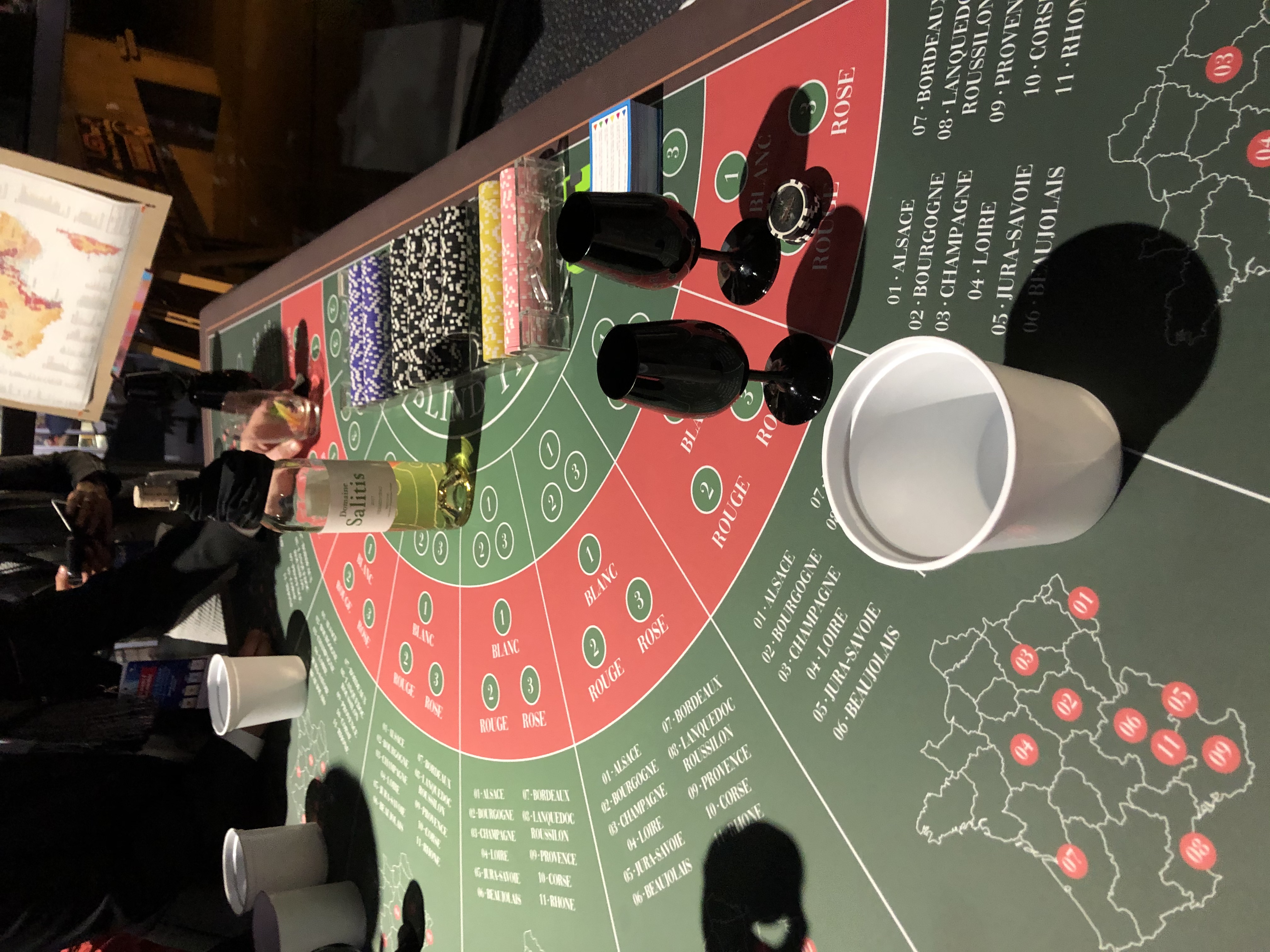
Wijnproeverij in Antwerpen that supports your business objectives
INNOV'events (Brussels) designs and produces Wijnproeverij formats in Antwerpen for executive events, HR moments and client relations—typically from 20 to 500 attendees. We handle the full chain: venue matching, sommelier staffing, wine sourcing, glassware, flow, branding, and risk controls so your team stays focused on guests.
Whether you need a structured tasting for leadership alignment or a walk-around format for networking, we translate your objectives into a reliable run-of-show and an operational plan that holds on event day.
Sommaire
In corporate events, entertainment is only useful when it supports a business result: stronger connections, better retention, smoother onboarding, or higher-quality conversations with clients. A Wijnproeverij works because it creates a shared, low-friction topic that helps people talk—without forcing “team games” that many executives dislike.
In Antwerpen, organisations tend to be time-sensitive and outcome-driven: tight agendas, senior attendees arriving late from meetings, international guests, and strong expectations around hospitality standards. The tasting must be readable, well-paced and professionally facilitated—otherwise it becomes noise instead of value.
We bring Brussels agency discipline with local execution in Antwerpen: vetted sommeliers, tested suppliers, and a production approach built around flow management, compliance, and brand protection. You get a controlled experience, not a “wine corner” that improvises on the night.
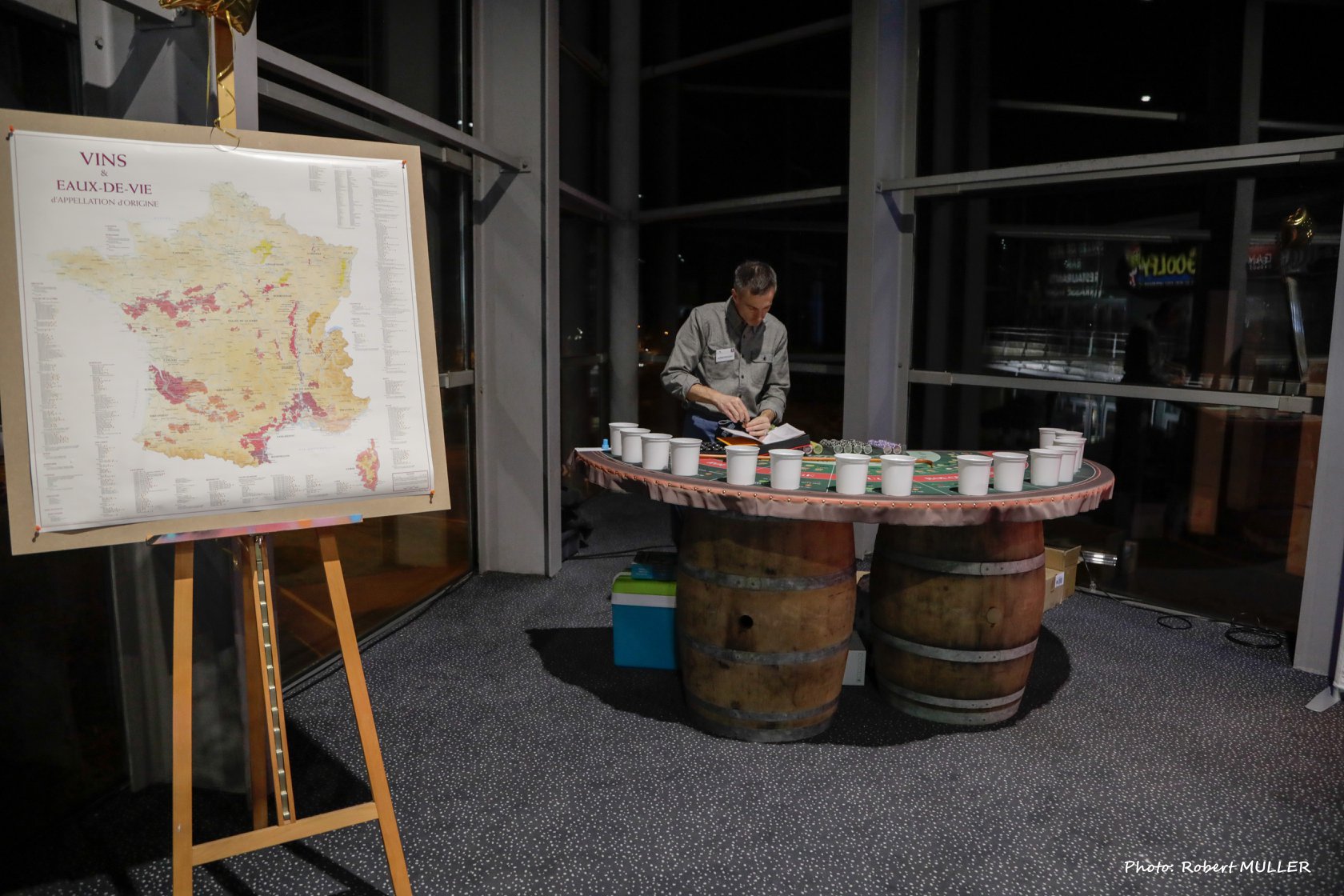
INNOV'events track record for Antwerpen decision-makers
10+ years producing corporate events across Belgium, with recurring clients and multi-site rollouts.
300+ corporate productions delivered (executive offsites, HR moments, client events, product launches), with documented run-sheets and supplier scorecards.
20–500 attendees is our most frequent range for Wijnproeverij in Antwerpen formats (seated tastings, walk-arounds, or hybrid).
48-hour contingency capability for critical replacements (sommelier, glassware, wine volumes, staffing) via our Belgian partner network.
Corporate wine tastings in Antwerpen with recurring collaboration
We regularly support companies active in Antwerpen and the wider port ecosystem, as well as national headquarters that host teams and clients in the city. Many teams rebook year after year because the deliverable is stable: the same quality of service, the same production discipline, and clear reporting after the event.
You mentioned you have company names you want used as references; integrate them here once you share the list. Our standard practice is to reference only projects we can substantiate (date, venue type, approximate headcount, and scope) and to align on what can be communicated publicly, especially when the event involved executive leadership or strategic partners.
For procurement and comms teams, we can also provide practical evidence: staffing plans, risk assessments (alcohol policy, transport advice, allergen documentation), and a post-event recap including consumption ratios and operational learnings—useful when you need to justify budgets internally.
 Besoin d’un devis rapide ?
Nous vous envoyons une première proposition sous 24h.
Why organize a corporate Wijnproeverij in Antwerpen now?
A corporate Wijnproeverij in Antwerpen is not a “nice extra”; it is a structured social mechanism that supports leadership and people priorities. When designed properly, it upgrades the quality of conversations in the room and gives you a controlled rhythm for networking, recognition or client relationship building.
For executives, the key question is always: “What business problem does this solve?” In our experience, wine tasting works best when it is treated as a facilitation tool—timed, hosted, and aligned with your agenda—rather than a self-serve bar that competes with speeches and dilutes attention.
Faster relationship-building across silos: the tasting provides a shared vocabulary and prompts people to talk beyond their usual circles—useful after reorganisations or post-merger integration.
Higher-quality client conversations: a guided tasting (even in short 20-minute sequences) creates natural “pause points” for account teams to rotate and connect with different stakeholders.
Employer brand in a controlled way: showing care for sourcing, service level, and pacing signals professionalism without flashy staging. In competitive talent markets, details matter more than spectacle.
Better event flow control: a tasting has built-in chapters (welcome, 2–5 wines, pairing bites, wrap-up). That structure helps you protect keynote times and avoid the typical “people keep drifting” issue.
Inclusive participation: with a serious non-alcoholic pairing track (0.0 wines/teas/ferments) and clear moderation messaging, you reduce exclusion and risk while keeping the format engaging.
Measurable operational outcomes: we plan realistic consumption ratios, glassware counts, staffing density, and service timing—so you avoid last-minute procurement stress and reputational issues.
Antwerpen is a city of international business, logistics and fast decision cycles. A well-run Wijnproeverij fits that culture: it is refined but pragmatic, and it respects time—two factors senior audiences notice immediately.
What corporate audiences expect in Antwerpen (and what they reject)
Decision-makers in Antwerpen often compare events the way they compare suppliers: reliability, timing, and the ability to handle complexity without drama. In practice, that translates into a few non-negotiables when you choose a Wijnproeverij as corporate event entertainment.
First: punctuality and flow. Many guests arrive in waves (client meetings running late, traffic, last-minute agenda changes). A tasting must be designed to “absorb” late arrivals without disrupting the group. We typically solve this with a staged welcome pour, a short optional intro loop every 10–15 minutes, and a clear service rhythm so nobody feels they missed the story.
Second: international accessibility. Antwerpen events frequently host Dutch-, French- and English-speaking guests. We plan bilingual or trilingual facilitation where needed, and we ensure wine notes are readable (not poetic) and aligned with business context: region, style, pairing, and a short takeaway guests can repeat to clients.
Third: brand protection. A corporate Wijnproeverij should never look like a public fair. Glassware quality, service attire, signage, and table layout must match your brand level. The risk is not only aesthetic; a messy setup signals weak control and can undermine a leadership message or a client pitch.
Fourth: risk and compliance maturity. HR and HSE teams increasingly ask about alcohol policies, safe transport recommendations, and inclusion. We integrate moderation messaging, a strong non-alcoholic alternative track, and operational choices that reduce overconsumption (smaller pours, food pairing, pacing, and clear end-of-service timing).
Finally: operational realism. Antwerp venues have constraints (loading windows, noise limits, narrow access points, union rules in some locations). We plan around these early—because the most common event-day problems in the city are not creative issues, they are logistics.
Which Wijnproeverij formats work best in Antwerpen corporate events?
Engagement comes from clarity and participation, not from adding gimmicks. The best Wijnproeverij formats create structured interaction: guests taste, compare, and share opinions in a safe, guided way. Below are options we deploy in Antwerpen depending on your objectives, venue constraints, and audience maturity.
Animations Interactives à Antwerpen
Guided tasting in chapters (30–60 minutes): ideal for leadership offsites or smaller groups where you want shared references. We usually run 3 to 5 wines with short prompts (“What do you notice first?”) and a clear takeaway per wine.
Walk-around tasting stations: best for receptions and client events. Guests choose stations (e.g., “Old World vs New World”), and the sommelier rotates. This protects networking while still offering structure.
Blind tasting challenge with teams: a light competitive layer without childish games. We keep it business-appropriate with scoring cards, short timeboxes, and optional participation so nobody feels forced.
Executive networking prompts: we place subtle prompts on tasting cards (e.g., “What would you pair this with at a client dinner?”) to stimulate conversation relevant to business relationships.
Animations Artistiques à Antwerpen
Live illustration of tasting notes: a visual artist captures keywords and aromas as a branded board. Works well when comms teams need shareable content that still feels premium and not promotional.
Soft acoustic set with volume control: only when the venue acoustics allow it. In Antwerpen locations with hard surfaces, we plan sound checks to avoid killing conversation.
Animations Innovantes à Antwerpen
Pairing bites designed for service speed: rather than complex plates, we choose bite formats that can be served quickly and safely (temperature stability, allergen clarity). The goal is to support the wine and avoid queues.
Local and seasonal pairing angle: when relevant, we integrate Belgian producers (cheeses, charcuterie alternatives, vegetarian options) while keeping the narrative credible and not “touristic”.
Non-alcoholic pairing track: 0.0 pairings, tea infusions or fermented beverages presented with the same seriousness as wine. This is increasingly requested by HR and inclusion leads.
Animations Gourmandes à Antwerpen
Digital tasting cards with QR access: guests can save the wines, ratings, and food pairings. Useful when you want post-event engagement without pushing social media.
Sustainability lens with concrete data: rather than vague eco-claims, we can curate wines with clear sourcing narratives (e.g., organic certification, transport choices) and communicate it in one factual line per wine.
Mini-masterclasses for VIP clusters: for client events, we can run a 12–20 person focused tasting in a side room while the main reception continues—helpful when you need to “upgrade” attention for top accounts.
Whatever format you select in Antwerpen, alignment with brand image is not optional: script tone, service level, and design elements must match your company’s positioning. A premium brand with a strict compliance culture will need a different approach than a scale-up celebrating a funding round—same tool, different execution.
Where to host a Wijnproeverij in Antwerpen for the right impact
The venue determines how your Wijnproeverij in Antwerpen will be perceived: premium vs. casual, controlled vs. improvised, intimate vs. transactional. We advise venue types based on your objective, not on what looks good in photos. Key criteria include acoustics (conversation vs. echo), logistics (loading and storage), and layout (queue management and station placement).
| Venue type | For which objective? | Main strengths | Possible constraints |
|---|---|---|---|
| Hotel meeting & reception spaces in central Antwerpen | Executive offsites, client receptions with predictable service standards | Reliable back-of-house, trained hospitality staff, easy AV integration, clear timing control | Cost per person can be higher; fixed catering rules; less “wow” if you need a strong thematic setting |
| Contemporary event venues / loft-style spaces in Antwerpen | Modern employer-brand events, internal celebrations, mixed seated + walk-around formats | Flexible layout for tasting stations, branding opportunities, strong atmosphere for networking | Acoustics can be challenging; requires more production (lighting, furniture, service corners) |
| Private rooms in quality restaurants in Antwerpen | Small to mid-size tastings (20–60) with high conversation quality | Food pairing excellence, controlled service pace, premium guest experience with minimal setup | Limited branding; restaurant schedule constraints; less adaptable for speeches or hybrid agendas |
We recommend a site visit (or a structured venue tech call if time is tight) because small details decide success: where the glasswash happens, how staff crosses the room, whether there is space for water points, and how noise carries. In Antwerpen, these practicalities are often the difference between an elegant tasting and a congested service line.
What a corporate Wijnproeverij in Antwerpen costs in practice
Budgeting a Wijnproeverij in Antwerpen is straightforward once the scope is defined. Pricing depends less on “wine prestige” than on operational requirements: staffing density, glassware logistics, venue constraints, and whether you need a guided format or a flowing reception.
To help you estimate internally, most corporate tastings fall into three realistic envelopes (excluding venue rental when applicable): €45–€85 per person for a simple but professional walk-around tasting, €85–€140 per person for guided tastings with stronger pairing and production, and €140–€220+ per person for premium selections, VIP breakouts, and higher staffing/production expectations. Final numbers depend on headcount and complexity.
Format and duration: 45 minutes guided vs. 3-hour reception changes staffing and wine volumes significantly.
Number of wines and pour sizes: typical corporate setups run 3–5 wines; more than that often reduces attention and increases operational load.
Headcount and service model: seated service, station service, or roaming sommeliers require different staff-to-guest ratios.
Food pairing level: simple bites vs. curated pairing plates; also impacts allergen management and kitchen coordination.
Glassware and wash logistics: do we rotate glasses, use dedicated glasses per wine, or require on-site washing capacity?
Venue constraints in Antwerpen: loading restrictions, limited storage, or required vendor lists can increase production time and costs.
Branding and content: printed tasting cards, bilingual materials, signage, and optional digital follow-up.
Non-alcoholic track: not expensive by itself, but it must be curated and staffed properly to feel equal.
From an ROI perspective, the goal is not to “buy expensive bottles”; it is to buy predictability and conversation quality. When a tasting helps a commercial team host clients with confidence or helps leadership align teams after a change, the value is measured in reduced friction and better outcomes—not only in event satisfaction scores.
When you plan in Antwerpen, why choose a local agency setup?
For corporate events, local is not a slogan—it is a risk reducer. An agency that is operationally established in Antwerpen brings practical advantages that show up on event day: faster onsite response, deeper venue familiarity, and a supplier bench that has been tested under real constraints (loading, timing, staffing reliability).
INNOV'events is based in Brussels, but we produce frequently in Antwerpen with a local execution model and an Antwerp-ready supplier ecosystem. If you are comparing options, look for evidence of local readiness: named venue experience, contingency plans, and a clear production chain.
If you need broader support beyond the tasting itself, our event agency in Antwerpen capabilities cover full corporate event production, from agenda design to on-site coordination.
- Venue and supplier control: we know what is feasible in specific Antwerp venue types (access, storage, staffing rules) and we plan accordingly.
- Faster troubleshooting: replacement glassware, missing ice, delayed delivery—local networks solve these within hours, not “next day”.
- Cost realism: local sourcing reduces transport and uncertainty, and helps keep budgets stable.
- Better guest experience: local knowledge supports practical guidance (arrival flows, taxis, safe transport recommendations) that HR and comms teams appreciate.
From an ROI perspective, the goal is not to “buy expensive bottles”; it is to buy predictability and conversation quality. When a tasting helps a commercial team host clients with confidence or helps leadership align teams after a change, the value is measured in reduced friction and better outcomes—not only in event satisfaction scores.









What we deliver in Antwerpen: project types and real constraints
Our Wijnproeverij projects in Antwerpen are rarely “just a tasting”. They are usually inserted into a larger corporate moment with constraints that matter to executives: tight schedules, speech blocks, brand exposure, and stakeholders who notice every operational weakness.
Example situations we handle frequently:
- Leadership offsite conclusion: after a day of workshops, you want a premium but controlled social moment. We design a 45–60 minute guided tasting with a concise script, then transition to networking with light pairing. We protect the CEO’s closing remarks by structuring service pauses.
- Client reception for account teams: you need a format that supports rotation and introductions. We build stations by theme (e.g., “fresh & accessible” vs. “structured & cellar-worthy”), assign sommeliers to manage pace, and create short conversation prompts that help account managers start relevant discussions.
- Employer-brand evening: HR wants something refined but inclusive. We implement a clear non-alcoholic track, moderation messaging, and a layout that avoids “bar pressure” while keeping energy high.
- End-of-year or milestone celebration: you want warmth without chaos. We plan staffing density, glassware logistics, and a realistic consumption plan, then anchor the evening with a short tasting chapter to keep the room aligned.
In all cases, we document the run-of-show, define responsibilities (who cues speeches, who manages service pauses, who is the single point of contact), and build a contingency plan. That is what keeps reputational risk low when the room is full of senior stakeholders.
Common mistakes we prevent in Antwerpen corporate wine tastings
Understaffing the service: not enough hands leads to queues, warm wine, and rushed pours. We plan staffing based on format, venue layout and guest arrival waves.
No temperature control: whites too warm, reds too hot in bright spaces. We plan ice, coolers, staging, and timing so each wine is served at the right moment.
Competing with speeches: pouring during keynotes kills attention. We design “service windows” and communicate them to venue and staff.
Inadequate glassware plan: running out of clean glasses is a classic failure. We calculate quantities and define wash/rotation logistics.
Ignoring inclusion and policy: no non-alcoholic equivalent, no allergen clarity, no moderation approach. We treat this as a core requirement, not a last-minute add-on.
Overcomplicated wine selection: too many wines or overly niche styles create confusion. Corporate tastings need clarity and pacing to support conversation.
Weak supplier accountability: late delivery or missing items with nobody owning the fix. We centralise responsibility and keep a contingency buffer.
Our role is to reduce operational and reputational risk for your leadership, HR, and communication teams. In Antwerpen, where audiences are demanding and time-sensitive, professionalism is not optional—and the event day is not the moment to discover gaps in planning.
Why Antwerp clients rebook INNOV'events
Repeat business is earned when the agency makes your internal life easier: fewer emails, clearer decisions, and no surprises on site. Teams come back to us for Wijnproeverij in Antwerpen projects because we operate like an extension of their internal team—especially when HR and comms are under pressure.
High repeat rate on corporate formats: many clients renew annually because the operational template is solid and easy to adapt to new themes or audiences.
Structured debriefs after each event: consumption ratios, flow issues, timing deviations, and actionable improvements documented for the next edition.
Stable supplier bench in Belgium: consistent sommeliers and service standards reduce variability across events.

Loyalty is not about “liking an agency”; it is proof that the delivery is dependable under pressure. When your leadership is in the room, that dependability is the real premium.
How we scope and deliver your Antwerpen Wijnproeverij
👉 Step 1 (Antwerpen): align on objectives, constraints, and success metrics
We start with a working session (30–60 minutes) with the event owner (often HR or Comms) and, when relevant, a business sponsor. We confirm the event purpose (client retention, leadership alignment, employer brand), the audience mix, and constraints: venue shortlists, agenda blocks, language needs, alcohol policy, and brand guidelines. We also define what “success” looks like (e.g., networking quality, timekeeping, inclusivity, VIP handling).
👉 Step 2 (Antwerpen): propose format, run-of-show, and operational design
We translate your objective into a format: guided tasting, stations, or a hybrid. You receive a clear run-of-show with timing windows, staffing plan, and a preliminary bill of quantities (wines, glasses, water points, spittoons, pairing bites). We also highlight decision points early (budget level, number of wines, bilingual facilitation) to avoid late scope creep.
👉 Step 3 (Antwerpen): curate wines and pairings that fit the room
We select wines for readability and pacing, typically 3–5 wines with a coherent story (contrast, region theme, or style evolution). For corporate audiences, we prioritise wines that are expressive without being polarising. If you want a premium angle, we propose it with rationale (what it signals, what it costs, what it changes operationally). We also curate a non-alcoholic track with equal attention.
👉 Step 4 (Antwerpen): lock logistics, compliance, and supplier accountability
We confirm delivery windows, storage needs, temperature control, glassware counts, staffing call times, and responsibilities. We align with the venue on waste handling and food safety, and we integrate your internal policies (moderation, duty of care, transport guidance). We then issue a final production sheet so every stakeholder knows who does what, and when.
👉 Step 5 (Antwerpen): on-site production and tight show-calling
On the day, we run a staff briefing, verify setup against the floor plan, and test critical elements (microphone if needed, station signage, water points). A single production lead calls cues and manages deviations: late arrivals, speech shifts, or venue timing constraints. The goal is calm execution—so your leadership can focus on people, not on operations.
👉 Step 6 (Antwerpen): debrief, reporting, and next-edition improvements
Within days, we provide a debrief: what worked, what to adjust, and practical numbers (consumption estimates vs actual, service timing, station performance). For recurring events in Antwerpen, this creates a continuous improvement loop and makes next year’s planning faster and more cost-effective.
FAQ sur l'organisation Wijnproeverij à Antwerpen
How long should a corporate Wijnproeverij in Antwerpen last?
Most corporate formats in Antwerpen work best at 45–90 minutes for a guided tasting, or 2–3 hours for a walk-around reception with tasting stations. Longer than that often reduces attention and increases overconsumption risk.
What headcount works best for a Wijnproeverij in Antwerpen?
Common sweet spots are 20–60 for seated or boardroom-style tastings (high conversation quality) and 80–250 for station-based receptions. Above 250, we recommend multiple stations and strict service windows to avoid queues.
What budget range is realistic in Antwerpen for corporate wine tasting?
As a practical range (excluding venue), expect €45–€85 per person for a straightforward professional station setup, €85–€140 per person for guided tastings with stronger pairing/production, and €140–€220+ per person for premium selections and VIP layers. Final pricing depends on staffing, glassware logistics and duration.
Can you run a Wijnproeverij in Antwerpen with non-alcohol options?
Yes. We design a parallel non-alcoholic track (0.0 wines, teas, or ferments) with the same structure and tasting notes, so participation is inclusive. Operationally, plan for separate glassware and a dedicated service point to keep it equal in experience.
How far in advance should we book a sommelier in Antwerpen?
For corporate dates in Antwerpen, book 4–8 weeks ahead for best availability (venue + sommelier + logistics). For peak periods (end-of-year, major trade weeks), 8–12 weeks is safer. We can sometimes deliver faster, but choice and cost control improve with lead time.
Request a quote for your Antwerpen Wijnproeverij
If you are planning a Wijnproeverij in Antwerpen, involve us early—before the venue and agenda are locked. That is when we can protect flow, service quality and budget most effectively.
Share three elements and we will revert with a concrete proposal: date, estimated headcount, and event objective (client, HR, leadership, celebration). We will then recommend the right format, a realistic budget envelope, and the operational plan to deliver it reliably on the day.
Agence INNOV'events Antwerpen
Justin JACOB est le responsable de l'agence événementielle Antwerpen. Contactez-le directement par mail via l'adresse belgique@innov-events.be ou par formulaire.
Contacter l'agence AntwerpenToutes nos prestations & animations Antwerpen, Belgique
Découvrez nos prestations événementielles
Découvrez nos animations événementielles disponibles au Belgique
- Hôtesse événementielle à Antwerpen
- Escape Game à Antwerpen
- Cours de cuisine type MasterChef à Antwerpen
- Magicien à Antwerpen
- Location de chapiteau à Antwerpen
- Atelier colorimétrie à Antwerpen
- Jeux gonflables à Antwerpen
- Service de voiturier à Antwerpen
- Simulateur de football à Antwerpen
- Location de mobilier lumineux à Antwerpen
- Flocage lumineux à Antwerpen
- Repas insolite à Antwerpen
- Light Painting à Antwerpen
- Murder Party à Antwerpen
- Jeu concours à Antwerpen
- PLV événementielle à Antwerpen
- Réalité virtuelle à Antwerpen
- Cuisine moléculaire à Antwerpen
- Animation Halloween à Antwerpen
- Feu d’artifice à Antwerpen
- Jeux géants à Antwerpen
- Animateur événementiel à Antwerpen
- Animation photo à Antwerpen
- Père Noël à Antwerpen
- Animation enfants à Antwerpen
- Visite guidée à Antwerpen
- Rallye urbain à Antwerpen
- Piscine à balles à Antwerpen
- Simulateur de vol à Antwerpen
- Location de food truck à Antwerpen
- Record du monde à Antwerpen
- Simulateur de surf à Antwerpen
- Casino du vin à Antwerpen
- Atelier relooking à Antwerpen
- Atelier création de parfum à Antwerpen
- Atelier acting à Antwerpen
- Animations RSE à Antwerpen
- Tir à l’arc à Antwerpen
- Agent de sécurité à Antwerpen
- Œnologie à Antwerpen
- Mime à Antwerpen
- Jeu télévisé à Antwerpen
- Fête foraine à Antwerpen
- Atelier gestion de crise à Antwerpen
- Atelier négociation de crise à Antwerpen
- Jeux d’arcade à Antwerpen
- Simulateur de chute libre à Antwerpen
- Simulateur de ski à Antwerpen
- Simulation circuit automobile à Antwerpen
- Baptême de l’air à Antwerpen
- Dégustation à Antwerpen
- Création de baby-foot à Antwerpen
- Rallye 2CV à Antwerpen
- Challenge LEGO à Antwerpen
- Animation casino à Antwerpen
- Interprète / traducteur à Antwerpen
- Goodies à Antwerpen
- Bus / transfert à Antwerpen