
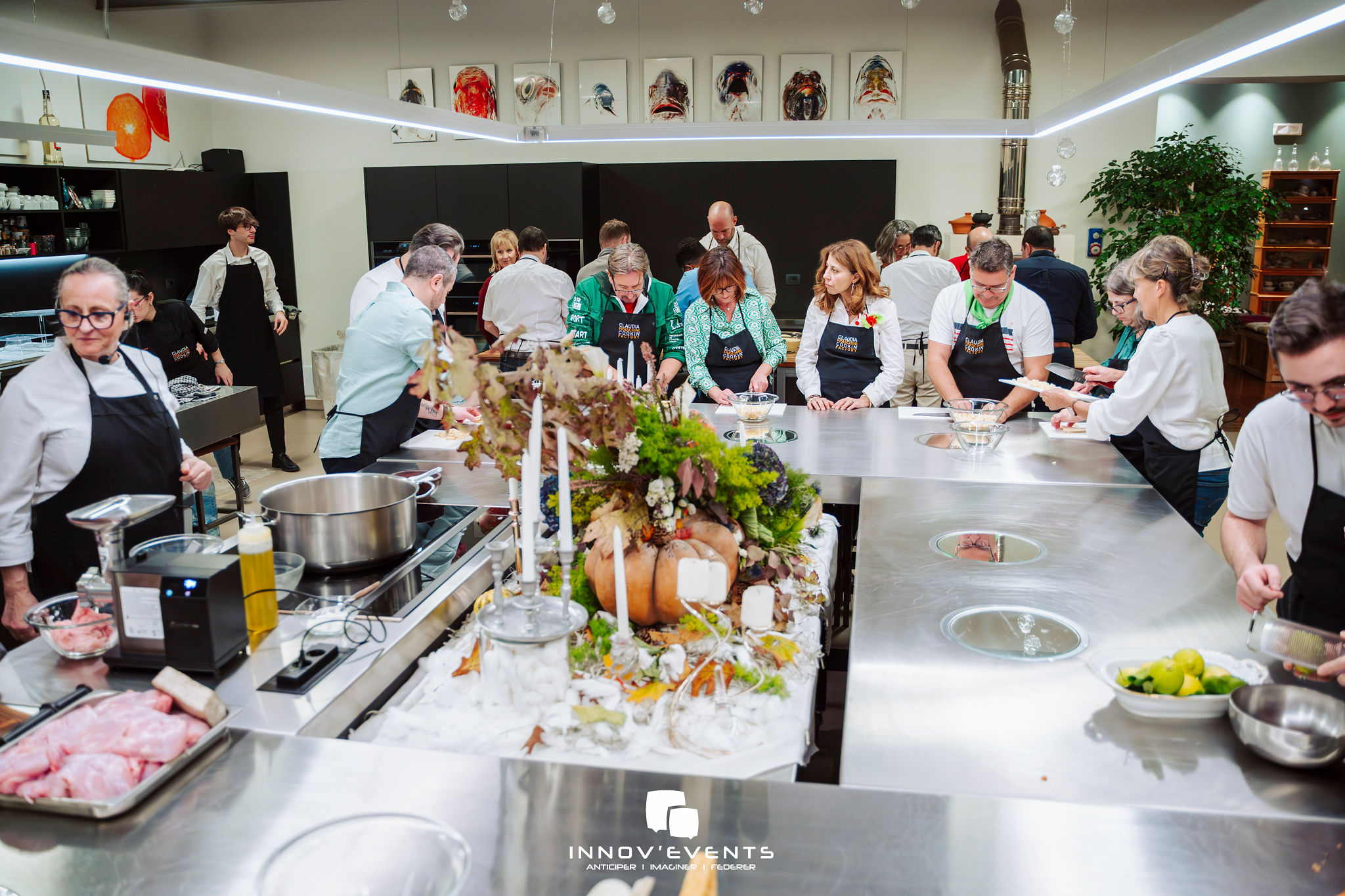
Molecular gastronomy workshop in Brussel that actually runs on time
INNOV'events designs and delivers a Moleculaire gastronomie workshop in Brussel for executive offsites, client evenings and HR moments—typically 10 to 200 participants. We handle venue fit, chefs, food safety, equipment, bilingual facilitation, and on-site coordination so your agenda stays credible.
This format works when you need a structured activity with a clear output (tasting, plating, team roles) rather than “ambient entertainment”. It is particularly effective in Brussel where mixed audiences, tight schedules and brand scrutiny are the norm.
Sommaire
In a corporate event, entertainment is not a “nice-to-have”: it is the mechanism that protects attention, creates informal cross-team contact, and anchors key messages. A Moleculaire gastronomie workshop in Brussel is effective because it combines controlled surprise with measurable structure (briefing, timed steps, deliverables, tasting).
Organizations in Brussel expect timing discipline, bilingual or multilingual facilitation, and a format that looks serious in front of clients, partners or board members. They also expect zero noise with building rules, allergens, and venue restrictions—especially near EU quarter hotels and corporate venues.
INNOV'events is based in Brussel and operates like an operational partner: pre-event risk scan, production sheet, supplier call times, and a clear run-of-show. We come with chefs used to corporate pace, not just public “workshop” tempo.
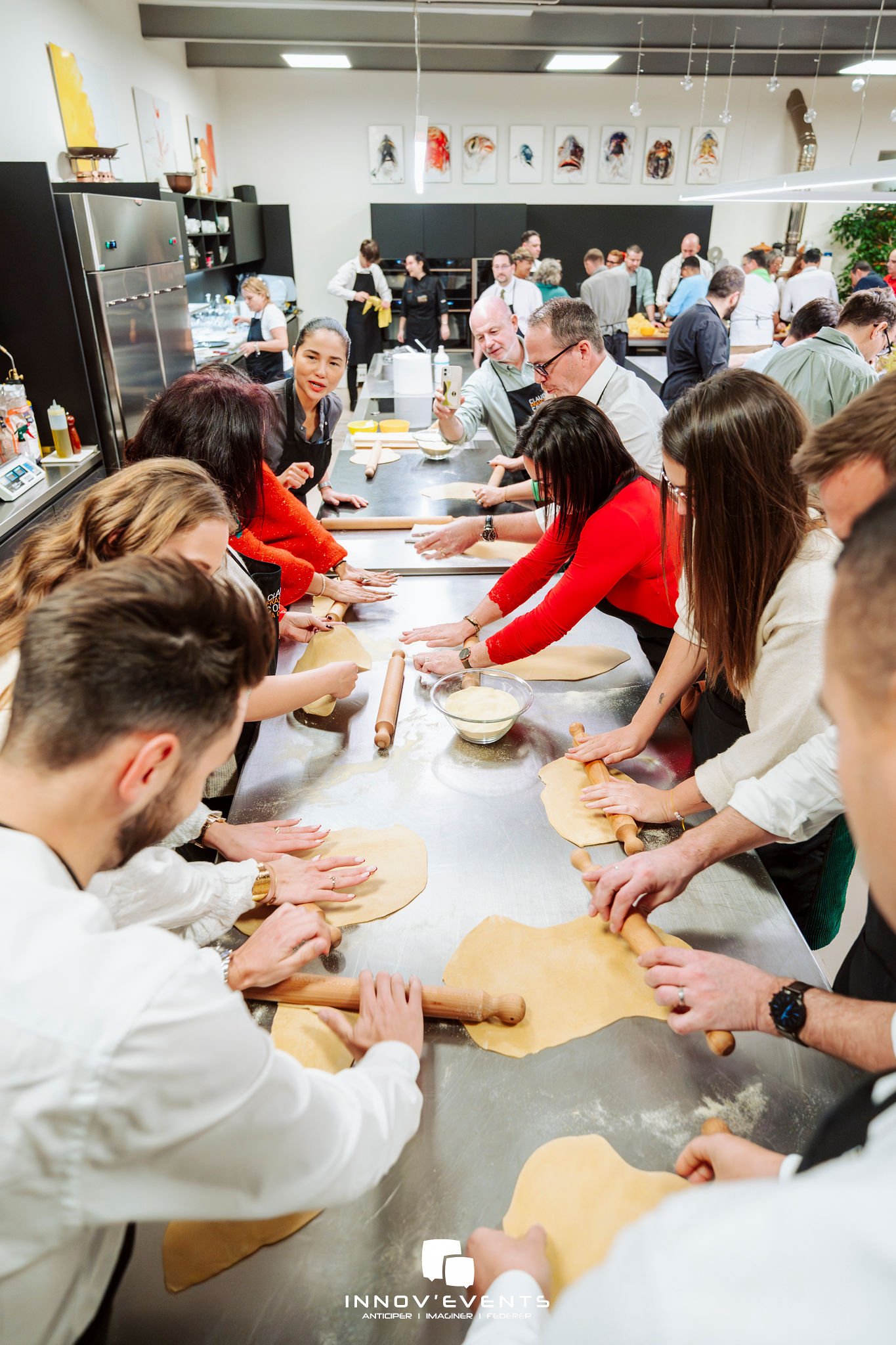
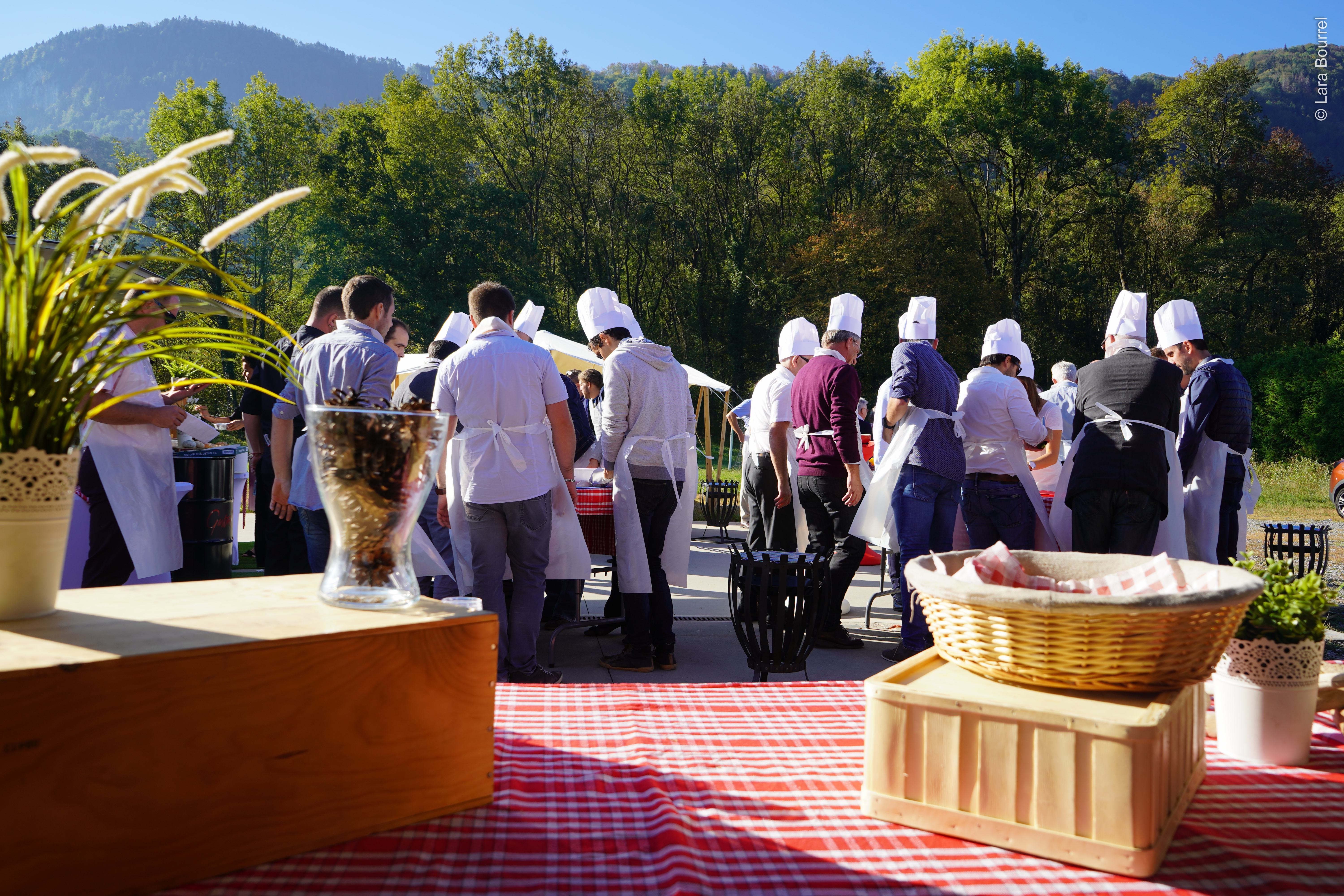
Key delivery facts in Brussel decision-makers ask for
10–200 participants handled with the same methodology: a stable run-of-show, fixed checkpoints, and an on-site lead.
2 languages (EN/FR or EN/NL) available on the floor for instructions, safety briefings, and group coaching—common requirement in Brussel.
60–120 minutes of workshop time, plus setup/strike planned to match venue access windows and your plenary schedule.
Allergen and HACCP-aware workflow: ingredients list, cross-contamination prevention, and clear labeling for corporate duty-of-care.
Multiple formats: standing cocktail version, seated team lab, or hybrid with keynote + tasting, depending on your executive agenda.
Brussel delivery experience that matches corporate standards
We regularly support corporate and institutional audiences across Brussel: headquarters teams, regional offices, and international groups meeting for one day only. Many clients come back year after year because the expectation is consistent: the activity must look premium, start on time, and never compromise brand image.
You did not provide specific company names to cite as references. If you share the list, we will integrate them in this section exactly as requested (and we can align the tone: discreet “selected references” vs. explicit logos/names depending on your comms policy).
What we can state transparently today: our operational approach is built for the realities of Brussel events—complex access logistics, multilingual audiences, and venues with strict constraints (delivery times, noise, waste sorting, and kitchen limitations). That is where a workshop can either feel “smooth and corporate” or quickly become improvised. We design it to be the former.
 Besoin d’un devis rapide ?
Nous vous envoyons une première proposition sous 24h.
Why executives in Brussel use a molecular gastronomy workshop
A Moleculaire gastronomie workshop works when you need a team moment that is engaging without being childish, and collaborative without forcing vulnerability. In leadership offsites, integration after M&A, or cross-country meetings in Brussel, it provides an immediate shared task with visible results—ideal when the group does not know each other well.
Structured collaboration under time pressure: participants must distribute roles (measuring, plating, timing, hygiene), which mirrors project work without making it feel like training.
Cross-silo interaction without awkward icebreakers: people talk naturally because they need inputs (“who has the pipettes?”, “timing on the spheres?”) and can switch stations.
Reinforces leadership messages (quality, precision, innovation, customer experience): the chef can link each step to your themes with short, controlled interventions.
Brand-safe entertainment: compared to loud games, the tone remains professional; photos and short videos are usable for internal comms without embarrassment.
Inclusive participation: we design non-alcoholic pairings, vegetarian/halal options, and allergen-managed alternatives—critical for international groups meeting in Brussel.
Clear output for stakeholders: the deliverable is tangible (plated bite, tasting tray, team “signature”), which satisfies executives who dislike “activity for activity’s sake”.
Brussel is a city where many corporate events mix cultures, hierarchies, and functions. A workshop that is precise, time-boxed and visibly premium fits that economic culture: pragmatic, international, and demanding on execution.
What Brussel corporate audiences expect from this format
In Brussel, the workshop is often part of a packed schedule: arrivals from abroad, a plenary with leadership, then a networking moment. That creates non-negotiables: the activity must absorb late arrivals without punishing the group, and it must end exactly when catering or the next session starts. We plan entry/exit in modules (briefing, stations, final tasting) so you can keep your program credible.
Venues are another local reality. Many spaces in Brussel have limited kitchen access, restricted deliveries, or strict waste separation. A molecular gastronomy setup can require siphons, induction, liquid nitrogen alternatives, chilled storage, and precise mise en place. We therefore choose techniques based on venue constraints: for example, using reverse spherification and cold gels when LN2 is not allowed, or focusing on foams/airs and rapid infusions when refrigeration is limited.
Finally, corporate duty-of-care is scrutinized. HR and comms teams in Brussel want allergen clarity, safe handling, and a calm, controlled atmosphere—especially with VIP clients present. We provide ingredient lists, labeled stations, and a short safety briefing that stays professional (not theatrical) while ensuring compliance.
Which molecular gastronomy formats work best in Brussel venues
Entertainment creates engagement when it gives people a role, a goal, and a social pretext to interact. In a Moleculaire gastronomie workshop in Brussel, we use culinary techniques as the “toolkit”, and your event objective as the “brief”. Below are formats we deploy depending on whether your priority is networking, team cohesion, or client hospitality.
Animations Interactives à Brussel
Team lab challenge (60–90 min): teams receive a brief (brand values, market theme, color codes) and must produce a set of bites with two required techniques (e.g., spherification + foam). Works well for management days when you want collaboration without a childish vibe.
Rotating stations (45–75 min): participants circulate through 3–4 stations (gels, rapid pickling, aromatics, plating). Best for networking-heavy evenings in Brussel because people can join/leave without breaking the flow.
Executive “precision session” (30–45 min): a compact, high-end demo + hands-on plating for VIPs or board-level guests. Minimal mess, maximum control, strong for client dinners where discretion matters.
Animations Artistiques à Brussel
Plating as visual identity: we integrate brand palette and shapes (without turning it into a logo exercise). For example, structured lines, geometric plating, or Brussels-inspired elements (seasonal herbs, regional textures) that photograph well for comms.
Chef narration with corporate tone: short, disciplined storytelling (why a technique exists, what precision changes) rather than showmanship. This matches Brussel audiences used to professional moderation.
Animations Innovantes à Brussel
Alcohol-free pairings and “smart” cocktails: rapid infusions, clarified juices, aromatic mists—useful when you want sophistication without pushing alcohol, a frequent HR requirement.
Dietary-inclusive menu engineering: vegetarian and halal-friendly cores with optional add-ons; allergen swaps planned in advance. We do not improvise alternatives on-site.
Corporate-friendly portions: bite sizes designed so guests can taste while holding a glass and still continue networking—important in Brussel cocktail formats.
Animations Gourmandes à Brussel
“Innovation pipeline” scenario: each technique represents a project phase (prototype, test, iterate, launch). The chef facilitates quick links that resonate with executive audiences without becoming a training workshop.
Hybrid with keynote: 15-minute leadership talk, then station-based execution, ending with a curated tasting. Keeps attention high while protecting the agenda.
Comms-ready capture: short, planned photo moments (final plating line-up, team tray reveal) so your comms team gets usable assets without disrupting service.
The key is alignment with your brand image: luxury codes require restraint and perfection; a tech scale-up can accept more experimentation; an institutional group in Brussel needs neutrality and inclusiveness. We select techniques, language and pacing accordingly.
How to choose a Brussel venue for a molecular gastronomy workshop
The venue impacts perception more than most teams anticipate. For a Moleculaire gastronomie workshop in Brussel, you need not only the right look, but also practical conditions: reliable power, access windows for loading, ventilation, water points, and enough space for safe circulation. A beautiful room that cannot accommodate cold storage or waste management will force compromises that guests notice.
| Venue type | For which objective? | Main strengths | Possible constraints |
|---|---|---|---|
Hotel conference space (EU quarter / city center) | Executive offsite, international groups, agenda with plenary + workshop | Predictable operations, staff on-site, easy guest access in Brussel | Strict delivery times, limited customization, sometimes restricted kitchen access |
Corporate HQ or office in Brussel | Internal team-building, employer branding, after-work session | Zero travel time, brand environment, easier attendance | Building rules (noise, waste, elevators), limited washing points, security badges |
Event venue / industrial loft | Client night, innovation theme, strong experiential impact | Flexible layout, strong aesthetics, room for stations and staging | Power distribution planning needed, sometimes no professional kitchen, extra staffing for logistics |
We recommend a short site visit or at minimum a technical call with photos and floor plan. In Brussel, the difference between a smooth workshop and a stressful one is often one detail: service elevator size, access time, or where waste can be stored between courses.
What does a molecular gastronomy workshop cost in Brussel
Pricing for a Moleculaire gastronomie workshop in Brussel is driven by production realities more than “concept”. The same idea can shift significantly depending on participant count, venue constraints, and how much is edible production vs. guided demo. We scope transparently so finance, HR and comms can validate without hidden costs.
Group size and format: 10–30 guests can be one guided group; 50–200 typically requires multiple stations, additional chefs, and more duplicate equipment.
Duration: 60–120 minutes workshop time changes staffing and venue rental windows; it also impacts how complex the recipes can be without risking delays.
Venue constraints in Brussel: limited kitchen, no cold room, long load-in, strict waste rules—these add production time, staff, or equipment (mobile refrigeration, additional prep).
Menu complexity and dietary coverage: allergy-safe alternatives, halal/vegetarian planning, and labeling increase prep but reduce HR risk.
Bilingual facilitation: EN/FR or EN/NL support is often needed and affects staffing on the floor.
Service level: do you want a workshop only, or also cocktail service, table service, and full event coordination (timing with speeches, AV cues, photography moments)?
From an ROI perspective, this format is chosen when you want measurable engagement (participation rate, content capture, cross-team mixing) while keeping reputational risk low. The right design prevents the classic failure mode: an activity that runs late and forces you to cut speeches, networking, or client time.
Why working with a Brussel-based agency reduces event risk
In Brussel, operational friction is real: traffic and access windows, venue rules, multilingual audiences, and suppliers moving between institutional and corporate standards. A local agency adds value because it reduces unknowns. We know how long load-in actually takes in central zones, how to brief venue teams, and how to keep your internal hosts out of day-of firefighting.
As an event agency in Brussel, we also maintain short lines with local venues and technicians. That matters when you need a last-minute adjustment: extra induction plates, a different waste collection plan, or shifting station layout because the room configuration changed after a plenary.
- Faster technical validation: quicker site checks and supplier coordination in Brussel.
- Stronger contingency planning: realistic buffers for access, security, and timing.
- Supplier accountability: chefs, staff, and equipment providers used to corporate standards and documentation.
- On-site leadership: a single accountable point who protects your agenda and executive experience.
From an ROI perspective, this format is chosen when you want measurable engagement (participation rate, content capture, cross-team mixing) while keeping reputational risk low. The right design prevents the classic failure mode: an activity that runs late and forces you to cut speeches, networking, or client time.




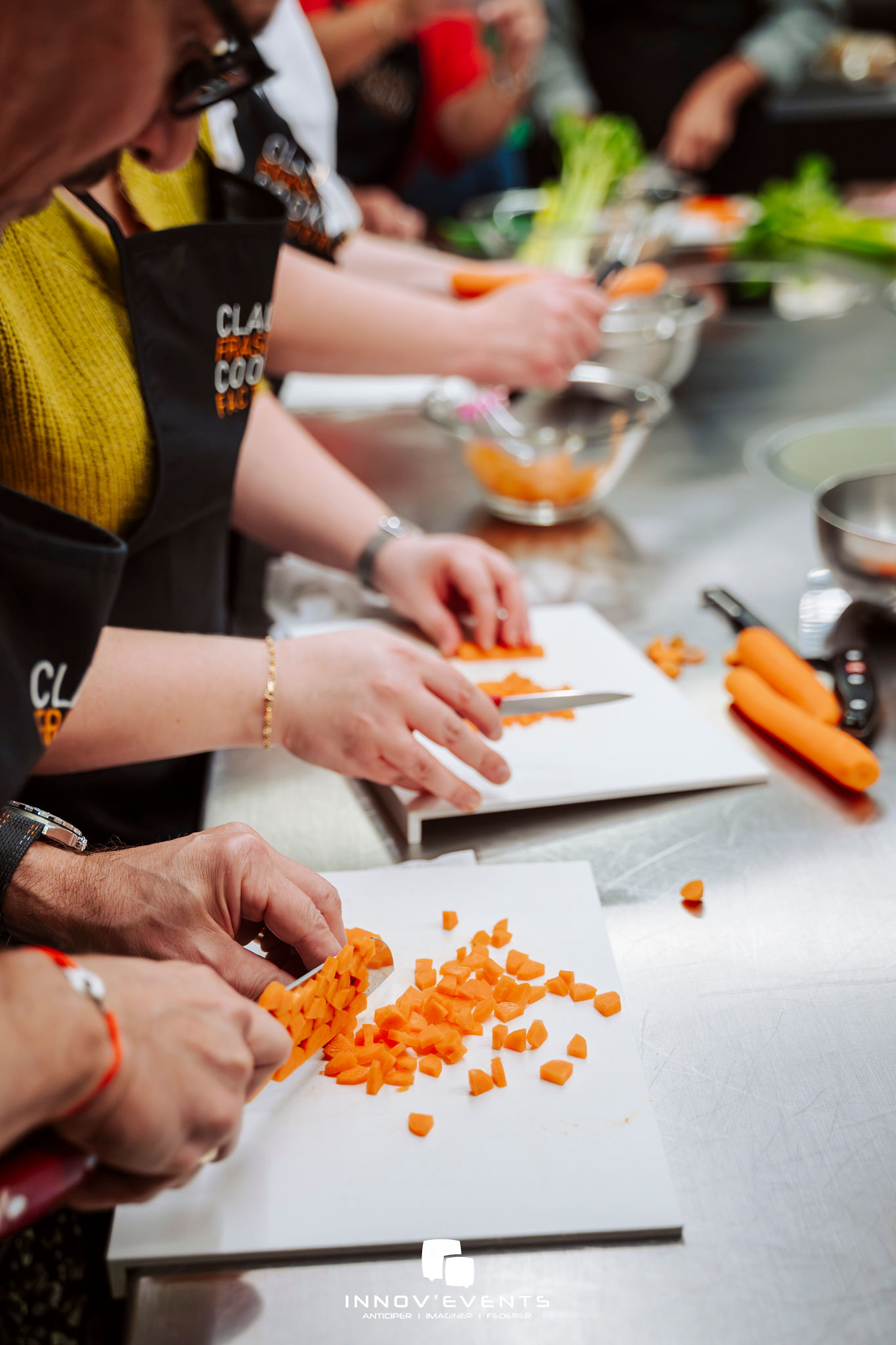
Examples of Brussel use-cases we deliver with this workshop
We adapt the same culinary techniques to different corporate realities in Brussel. For HR, we often run integration workshops after re-orgs: mixed teams rotate stations to avoid cliques, with a structured debrief tied to collaboration habits (without becoming a training session). For communication teams, the workshop becomes a content engine: controlled photo moments, a final “signature tray” reveal, and short quotes captured during tasting.
For executive committees, we typically favor a compact, premium approach: fewer techniques, higher precision, quieter facilitation, and impeccable timing around speeches. For client events, we emphasize hospitality: more guided tasting, smoother service, and discreet staffing so clients feel hosted rather than “worked”.
Across these projects, the constant is operational discipline: ingredient lists validated in advance, station maps, hygiene plan, and a run-of-show aligned with your program owner. That is what makes a Moleculaire gastronomie workshop in Brussel feel corporate-grade rather than “public workshop brought into a company”.
Common pitfalls we prevent in Brussel workshops
Underestimating venue constraints: no cold storage, limited sinks, or strict delivery windows in Brussel venues. We validate before proposing techniques.
Over-complex recipes that look good on paper but fail under corporate timing. We design for repeatability and flow, not culinary ego.
Insufficient staffing: one chef cannot coach 80 people. We plan chef/station support so executives are not waiting.
Allergen ambiguity: “we’ll see on the day” is not acceptable for HR. We provide clear labeling and planned alternatives.
No contingency for late arrivals: common with international meetings in Brussel. We build a modular onboarding so late guests can join safely.
Weak sound/briefing: if instructions are missed, chaos follows. We ensure mic needs, room acoustics, and bilingual clarity.
Our role is to remove these risks before your stakeholders ever see them: we translate your objective into a production plan, then deliver it calmly on-site in Brussel.
Why Brussel clients rebook INNOV'events for culinary workshops
Repeat business in Brussel is rarely about creativity alone; it is about predictability under pressure. Clients return when their internal sponsors (HR, Comms, Executive Assistants) feel protected: clear preparation, realistic timing, and fast response when constraints change.
Typical lead time: 3–8 weeks for a smooth setup; faster is possible but narrows venue and menu options.
Workshop duration: 60–120 minutes is the sweet spot for engagement without fatigue.
Participant sweet spots: 12–36 for deep collaboration; 40–120 for station-based networking; up to 200 with scaled staffing and simplified steps.

Loyalty is the most operational proof: when stakeholders rebook, it means the activity delivered on time, looked professional, and did not create internal stress. That is the standard we aim for in Brussel.
Our delivery process in Brussel from brief to on-site management
👉 Step 1 (Brussel): 20-minute scoping call with HR/Comms/EA
We clarify objective (team cohesion, client hospitality, employer branding), audience profile (seniority mix, languages), success criteria, and hard constraints (agenda, venue, dietary rules). You receive a short written recap with assumptions so internal alignment is easy.
👉 Step 2 (Brussel): Technical validation of venue and access
We confirm load-in route, power availability, refrigeration options, water points, waste rules, and any restrictions (open flame, liquid nitrogen, noise, security). If needed, we propose alternatives that preserve the premium effect without operational risk.
👉 Step 3 (Brussel): Workshop design and menu engineering
We select techniques that match your brand tone and timing: spherification, foams, gels, rapid infusions, plating work. We build dietary variants in advance and share a clear allergen approach for duty-of-care.
👉 Step 4 (Brussel): Production planning and run-of-show
We produce a practical run sheet: staff call times, station map, briefing script, tool duplication list, and contingency buffers. This is the document that keeps the day calm and lets your internal host focus on guests.
👉 Step 5 (Brussel): On-site delivery and executive-level coordination
Our lead coordinates with venue and your event owner, manages timing, and ensures smooth transitions (speeches, photo moments, tasting). We finish with a quick wrap-up: what worked, what to improve, and feedback usable for internal reporting.
FAQ sur l'organisation Moleculaire gastronomie workshop à Brussel
How long should a workshop last in Brussel events?
Plan 60–90 minutes for a team workshop and 45–75 minutes for rotating stations. Add 30–60 minutes total for guest arrival buffering and final tasting if you have speeches or VIP remarks in Brussel.
How many people can join in Brussel without losing quality?
Deep collaboration works best for 12–36. For networking formats, 40–120 works with 3–4 stations and adequate staffing. Up to 200 is feasible in Brussel if we simplify steps, duplicate tools, and reinforce on-floor assistants.
Can you run this in our office in Brussel?
Yes, if we can validate power, access, waste rules, and at least minimal water points. We often adapt techniques (more cold processes, less heavy prep) for office settings in Brussel and bring protective flooring and a cleanup plan to meet building standards.
Is it safe for allergens and dietary needs in Brussel groups?
Yes—when planned. We request dietary data in advance and provide labeled ingredients and station rules. We typically offer vegetarian bases and defined swaps, and we separate high-risk allergens where possible. For corporate duty-of-care in Brussel, we avoid “last-minute improvisation”.
What budget range is realistic in Brussel for this workshop?
Budgets vary mainly with headcount, venue constraints and staffing. As a practical corporate planning range in Brussel, expect mid-to-high two to five figures for most groups, with a precise quote after we confirm format (stations vs. single group), duration, and dietary coverage.
Plan your Brussel workshop early to secure the right chefs
If you are comparing agencies, the fastest way to decide is to validate feasibility: participant count, venue, timing, languages, and dietary scope. Send us your agenda and the venue name (or shortlist) and we will reply with a clear proposal: recommended format, staffing, technical needs, and a budget range for a Moleculaire gastronomie workshop in Brussel.
Early planning matters in Brussel because the best venues and corporate-ready culinary teams book quickly around peak periods. Contact INNOV'events to lock the date and avoid last-minute compromises that affect quality and timing.
Agence INNOV'events Brussel
Justin JACOB est le responsable de l'agence événementielle Brussel. Contactez-le directement par mail via l'adresse belgique@innov-events.be ou par formulaire.
Contacter l'agence BrusselToutes nos prestations & animations Brussel, Belgique
Découvrez nos prestations événementielles
Découvrez nos animations événementielles disponibles au Belgique
- Hôtesse événementielle à Brussel
- Escape Game à Brussel
- Cours de cuisine type MasterChef à Brussel
- Magicien à Brussel
- Location de chapiteau à Brussel
- Atelier colorimétrie à Brussel
- Jeux gonflables à Brussel
- Service de voiturier à Brussel
- Simulateur de football à Brussel
- Location de mobilier lumineux à Brussel
- Flocage lumineux à Brussel
- Repas insolite à Brussel
- Light Painting à Brussel
- Murder Party à Brussel
- Jeu concours à Brussel
- PLV événementielle à Brussel
- Réalité virtuelle à Brussel
- Cuisine moléculaire à Brussel
- Animation Halloween à Brussel
- Feu d’artifice à Brussel
- Jeux géants à Brussel
- Animateur événementiel à Brussel
- Animation photo à Brussel
- Père Noël à Brussel
- Animation enfants à Brussel
- Visite guidée à Brussel
- Rallye urbain à Brussel
- Piscine à balles à Brussel
- Simulateur de vol à Brussel
- Location de food truck à Brussel
- Record du monde à Brussel
- Simulateur de surf à Brussel
- Casino du vin à Brussel
- Atelier relooking à Brussel
- Atelier création de parfum à Brussel
- Atelier acting à Brussel
- Animations RSE à Brussel
- Tir à l’arc à Brussel
- Agent de sécurité à Brussel
- Œnologie à Brussel
- Mime à Brussel
- Jeu télévisé à Brussel
- Fête foraine à Brussel
- Atelier gestion de crise à Brussel
- Atelier négociation de crise à Brussel
- Jeux d’arcade à Brussel
- Simulateur de chute libre à Brussel
- Simulateur de ski à Brussel
- Simulation circuit automobile à Brussel
- Baptême de l’air à Brussel
- Dégustation à Brussel
- Création de baby-foot à Brussel
- Rallye 2CV à Brussel
- Challenge LEGO à Brussel
- Animation casino à Brussel
- Interprète / traducteur à Brussel
- Goodies à Brussel
- Bus / transfert à Brussel