
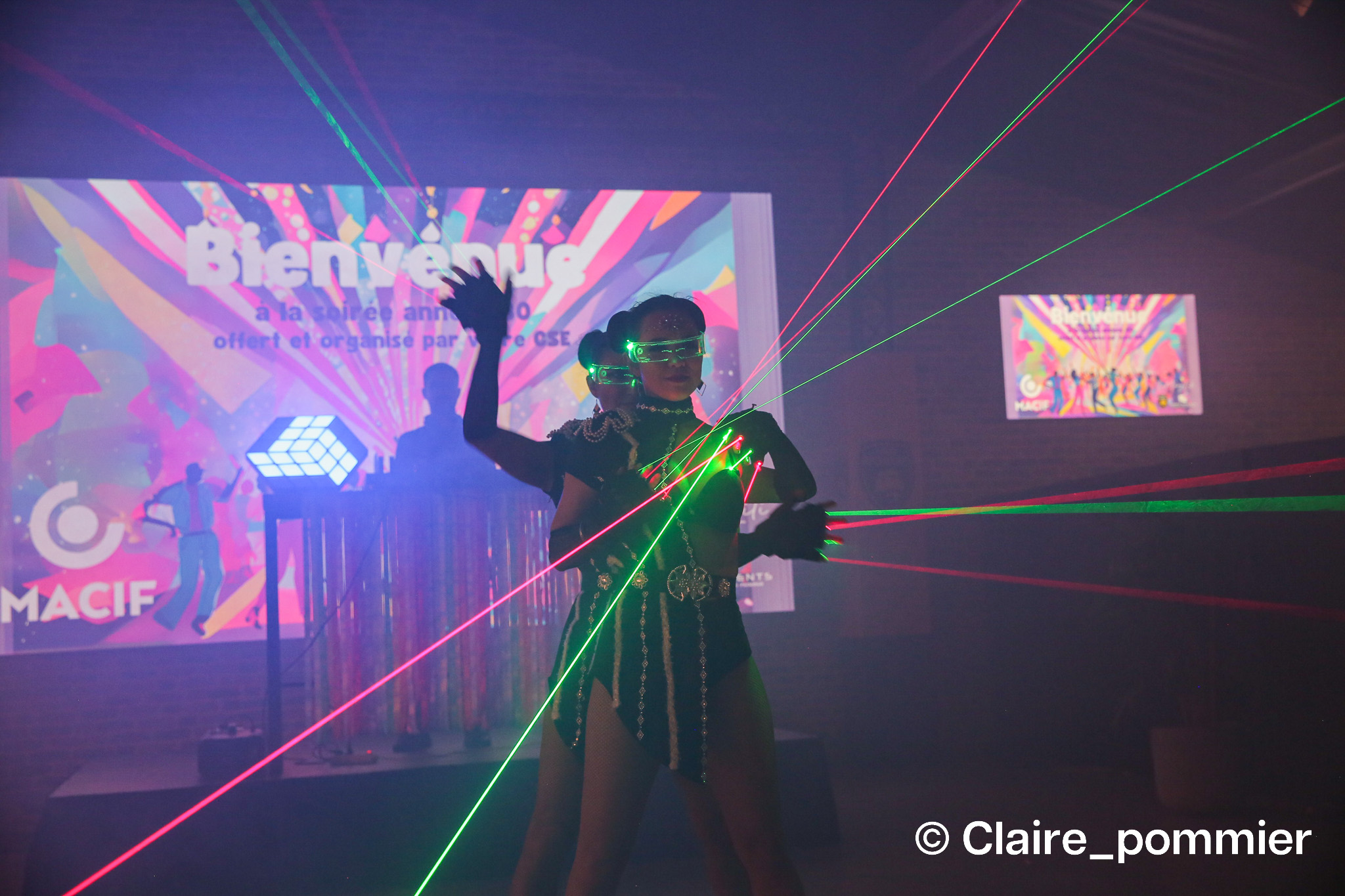
Audiovisual Production Services for corporate events that run on time
INNOV'events is a Brussels-based event management company delivering Audiovisual Production Services for corporate events from 30 to 3,000+ participants across Belgium. We handle technical design, equipment, crew, rehearsals and show-calling, so your leadership team can focus on the message.
Whether it is a town hall, product launch, conference, awards night or hybrid event, we align audio, lighting, video and staging with your brand standards and operational realities.
Sommaire
In a corporate setting, audiovisual is not decoration; it is the delivery system for strategy. If sound drops during a CEO message or slides are unreadable, confidence and credibility take a hit in real time.
Strong production ensures every key moment lands: announcements are clear, transitions are sharp, and the room feels controlled rather than improvised.
Executives and HR teams expect predictable timing, safe installations, and a seamless attendee experience, even with last-minute agenda changes. Communications teams need consistent branding on screens, lower-thirds, walk-in visuals and recordings they can reuse internally.
Procurement and facilities want transparent pricing, clear responsibilities, and a crew that respects venue rules, loading constraints and noise limitations.
We bring field-proven expertise in corporate audio, lighting, video, staging and streaming, with structured technical planning and experienced Belgian crews. From a board-level town hall in Brussels to a multi-room conference in Antwerp, we build the same discipline: pre-production, rehearsals, and a run-of-show managed minute by minute.
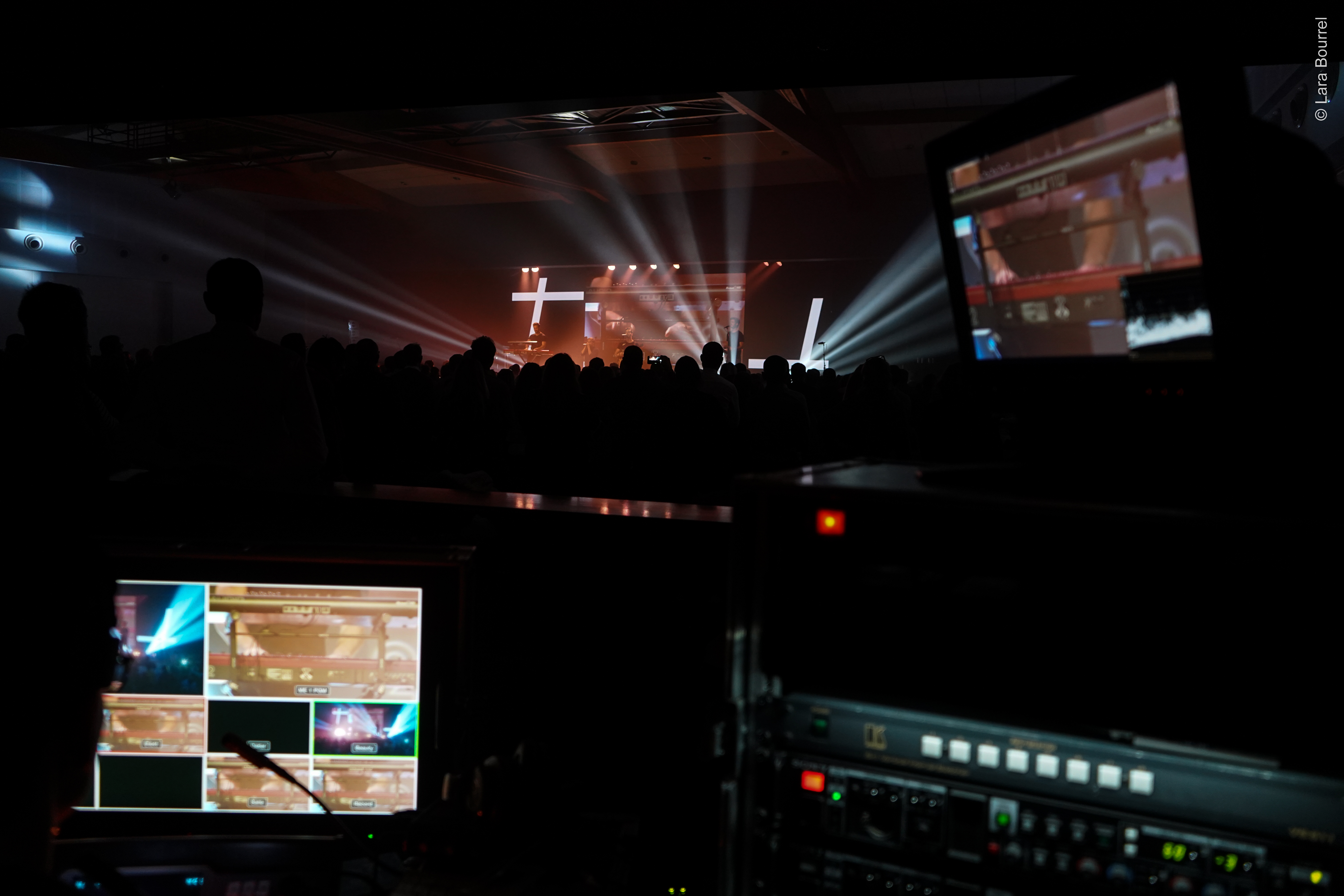
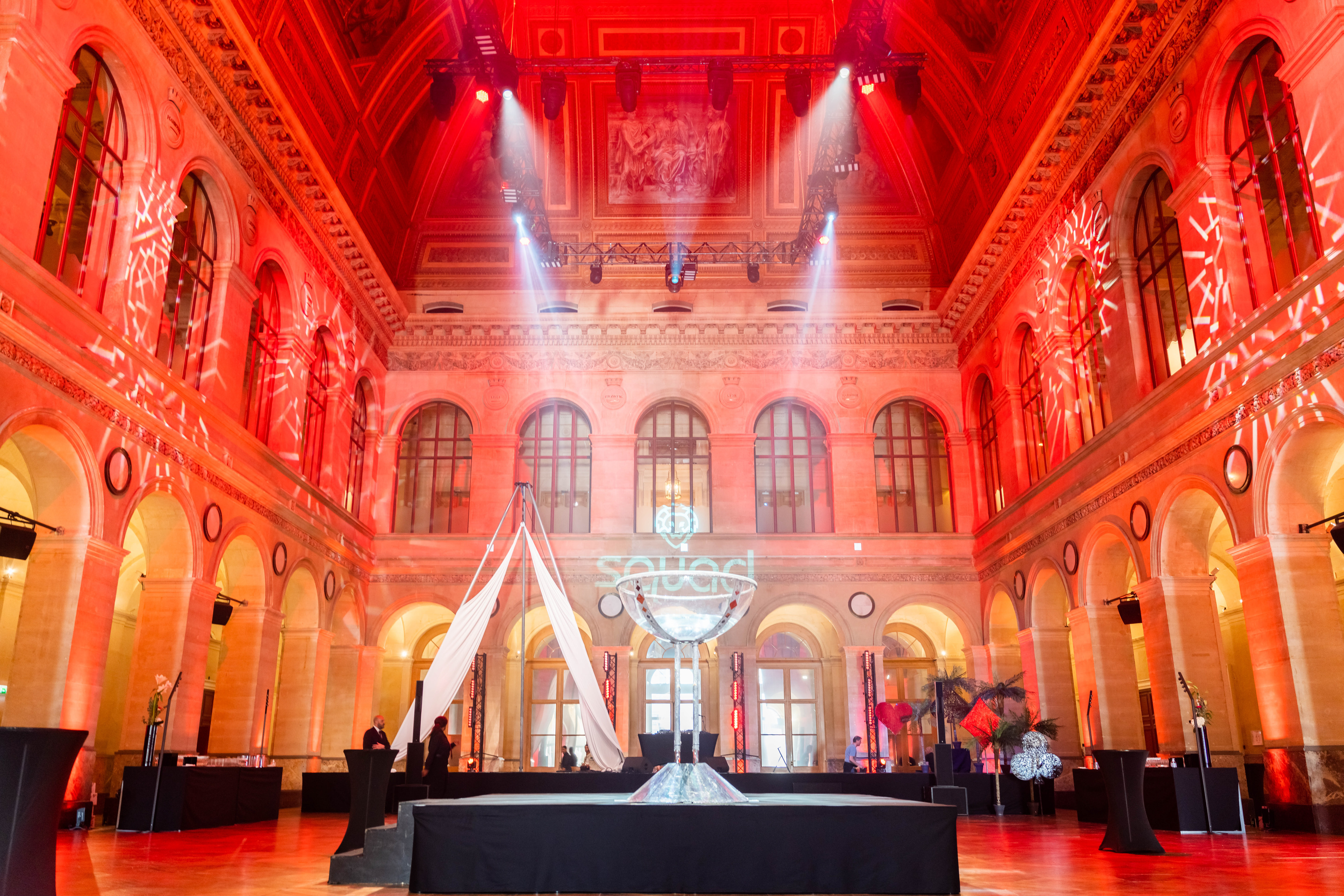
Quick facts decision-makers ask for before appointing an audiovisual partner
Belgium-wide coverage with operational reach in Brussels, Antwerp, Ghent and Liège, including venue coordination and local compliance.
Single point of accountability: one project lead coordinating audio, lighting, video, staging and streaming vendors to avoid split responsibilities on show day.
Scalable delivery: from a 30-person executive briefing to 3,000+ attendees in plenary with breakouts, overflow rooms and live translation.
Redundancy mindset: backup microphones, playback, signal paths and recording plans defined in advance, not “if something happens”.
Corporate-ready documentation: technical riders, risk assessment inputs, power plans, rigging points, crew schedules, and a detailed run-of-show.
How to organize a professional event ?
- Define the objective (cohesion, announcement, fidelity, performance).
- Set date, format and size (20–1 000 people).
- Secure the venue and accommodation according to seasonality.
- Lock down technical, suppliers and logistics.
- Drive the day J (timing, scene, entrance, flow).
We send you a first proposal within 24h.
Why invest in corporate audiovisual production instead of “basic AV”
Basic AV can display slides and amplify speech. Audiovisual Production Services go further: they turn an agenda into a controlled show where timing, attention and comprehension are managed deliberately. That is what protects your leadership narrative and your employer brand.
In Belgian corporate environments, where audiences are often multilingual and stakeholders expect measurable outcomes, production quality directly influences engagement, retention of information and post-event communication value.
Message clarity for leadership: crisp voice reinforcement, correct mic choices, and consistent levels mean the CEO is heard without strain in the back of the room and on the recording.
Stronger employer brand signals: lighting, staging and visuals communicate professionalism. It matters for onboarding days, graduate recruitment, and internal culture moments.
Higher audience attention: camera work on IMAG screens, walk-in playlists, and disciplined transitions reduce “dead air” and keep the room focused.
Content reuse: clean multi-track recordings and properly framed camera shots give communications teams usable assets for intranet, LinkedIn edits, leadership clips and training modules.
Operational risk reduction: structured power distribution, cable management, rigging checks, and rehearsal time reduce safety and reputational risk.
Consistency across locations: for roadshows between Brussels, Ghent and Liège, we replicate look-and-feel and technical standards so audiences get the same experience.
In Belgium’s pragmatic business culture, stakeholders quickly notice whether an event is controlled or improvised. Investing in proper production is not about spectacle; it is about reliability, comprehension and protecting the company’s credibility in front of employees, partners and press.
What production-led activities increase engagement at corporate events
Activities work when they serve a business goal: participation, alignment, recognition or learning. In corporate contexts, engagement is often limited by room dynamics and pace. Thoughtful production—sound, light, screens, camera and cueing—lets you run interactive formats with confidence and without awkward delays.
Interactive animations
Live Q&A with moderation: mics in the room plus a moderated question feed on screen. We set clear cueing so the moderator always knows who is next, avoiding long pauses and repeated questions.
Real-time polling: short pulses during plenary to check understanding or sentiment (e.g., after a strategy segment). We ensure results appear instantly and remain readable from the back of the room.
Panel debates with broadcast-style audio: individual lapel mics per panellist, strict mixing, and stage foldback so speakers do not talk over each other. This is essential when sessions are recorded.
Art animations
Branded opening moment: a controlled walk-in visual with a voice-over and lighting build can set a professional tone without feeling theatrical. It is effective for product launches and partner conferences.
Sting transitions: short audio-visual bumpers between agenda blocks, aligned with brand guidelines. These reduce dead time while speakers walk on and off stage.
Awards reveal cues: precise lighting states, music hits and camera framing for award handovers. This matters when recognition is part of your HR retention strategy.
Innovative animations
Chef demo with proper audio: if you run a culinary segment during a client event, we use headsets and overhead cameras to keep it intelligible and visible. Without this, the room hears nothing and sees only backs.
Networking soundtrack management: music levels set to support conversation, not fight it. We plan zoning so bar areas feel lively while meeting corners remain workable.
Gourmand animations
Hybrid speaker integration: remote keynote or client testimonial delivered with monitored return video, dedicated audio mix-minus, and a backup connection plan. This avoids the typical “can you hear me?” start.
Multi-room overflow: when plenary capacity is tight, we distribute the programme to an overflow room with correctly delayed audio and clear camera framing, maintaining an equal experience.
Live captions and accessibility: for large internal events, captions improve comprehension for multilingual audiences and accessibility. We plan screen real estate and legibility.
Whatever the format, consistency with your brand image is non-negotiable. We align screen templates, colour temperature, lighting style and music choices with your corporate identity so the production feels like an extension of your communications, not a separate layer.
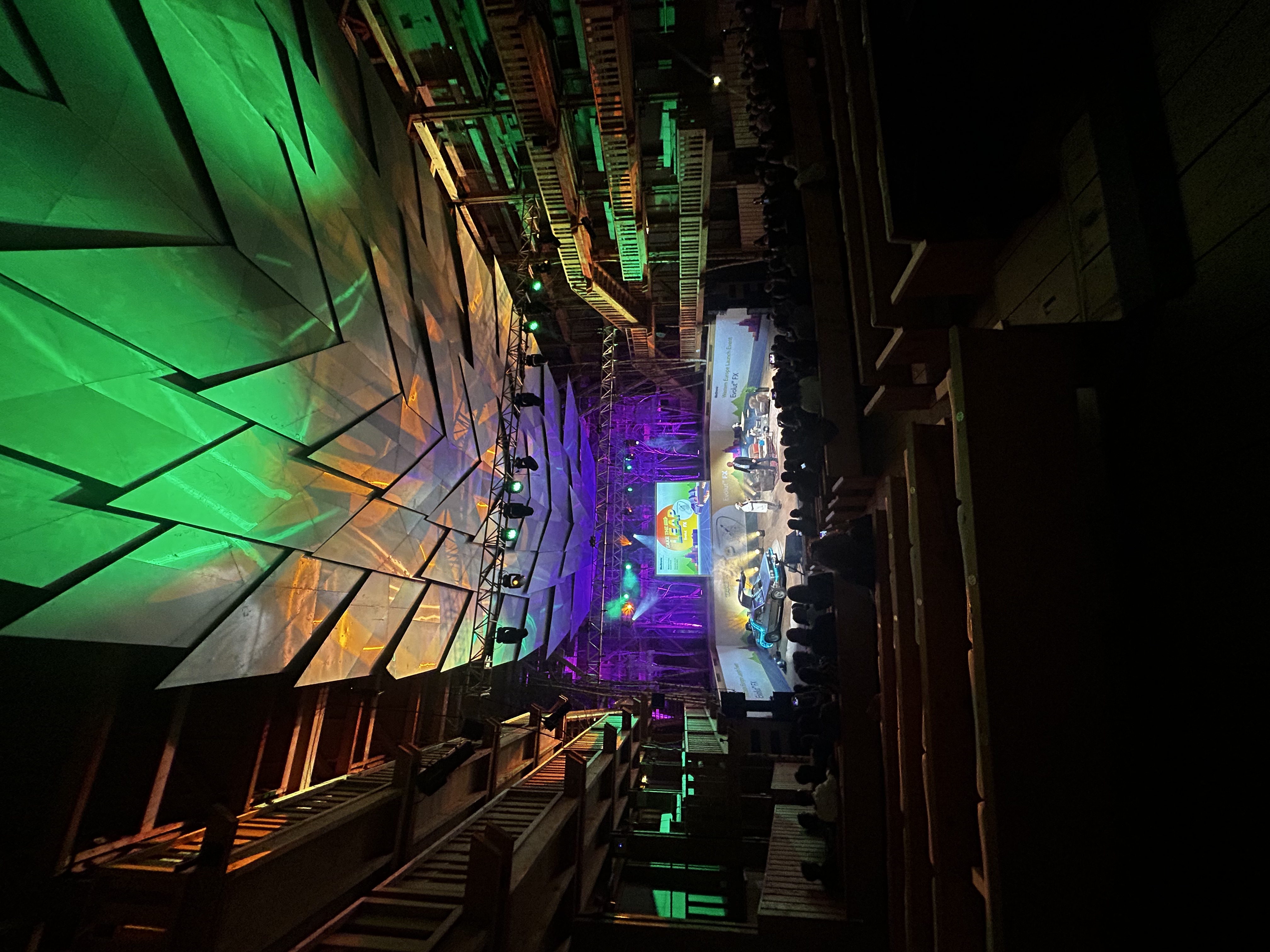
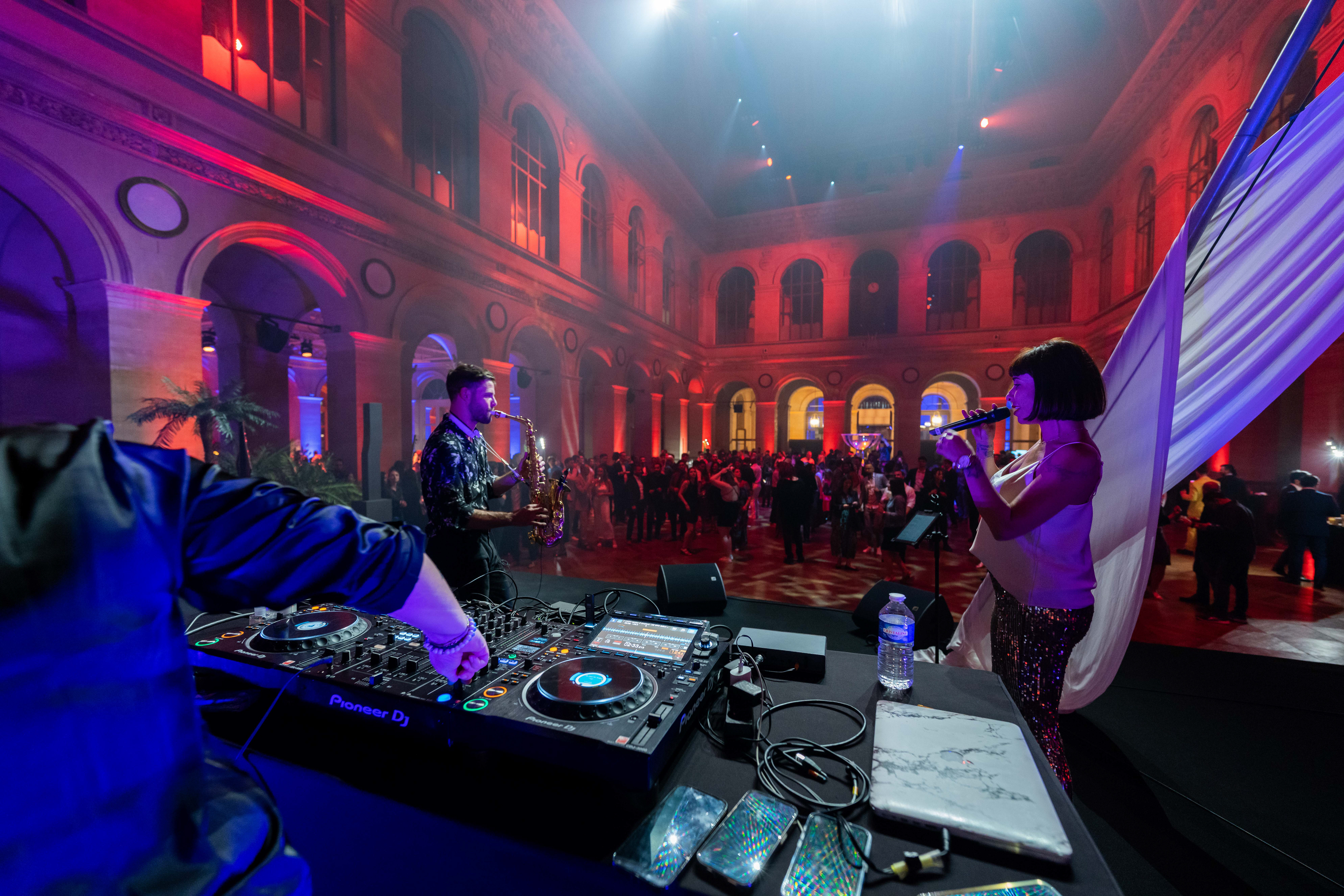
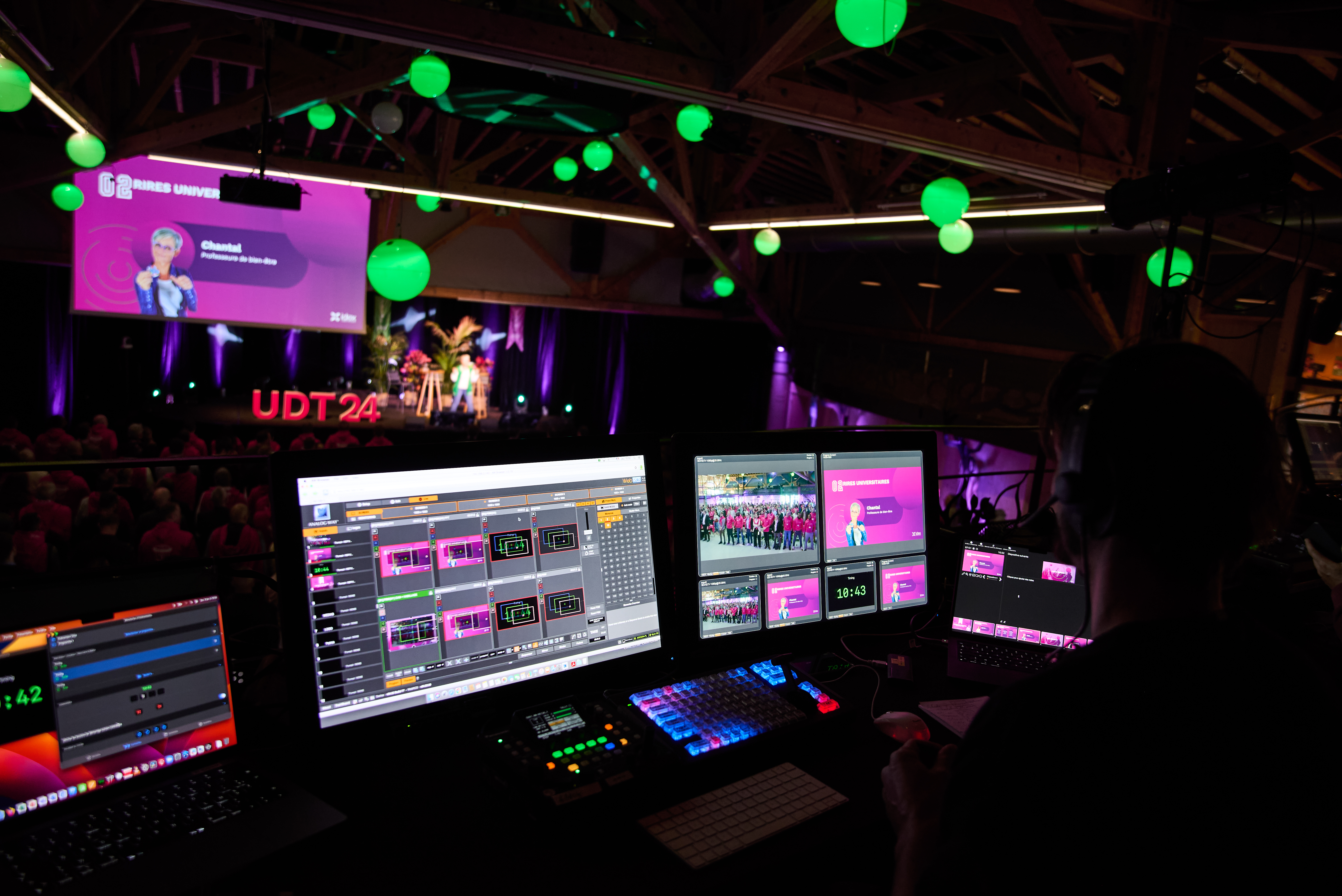
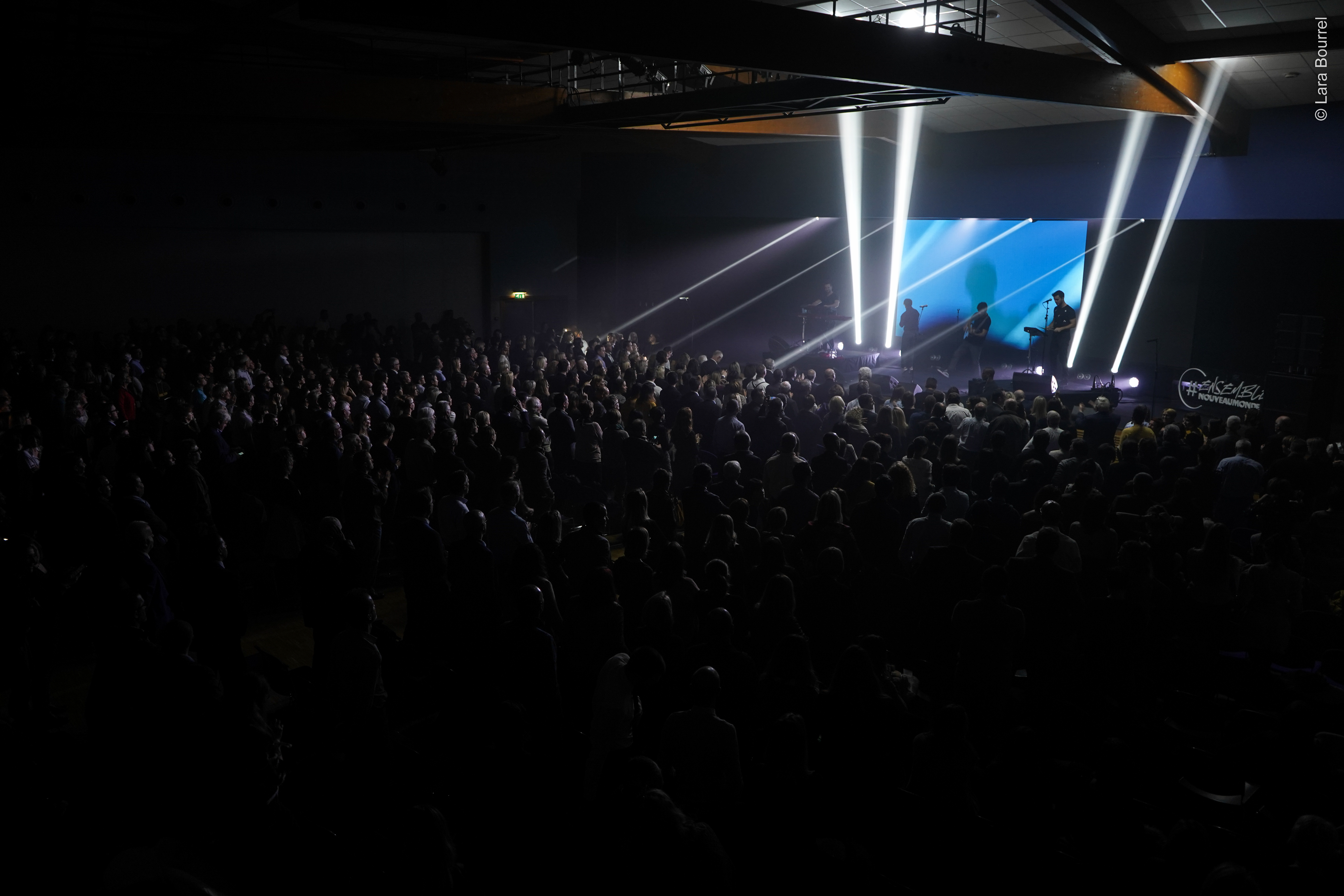
Which Belgian venues work best for corporate audiovisual setups
Venue choice impacts production cost and risk more than most teams expect. Ceiling height, rigging points, acoustics, power distribution, loading access and curfews determine what is feasible. We regularly support clients across Brussels, Antwerp, Ghent and Liège and advise early to avoid expensive workarounds.
Below are venue considerations that directly affect corporate audiovisual equipment planning (screens, truss, sound coverage, cameras, streaming, and interpretation).
- Brussels (European quarter and city centre): strong conference infrastructure, but access windows and loading constraints are common. Plan for controlled deliveries, quieter rigging options, and precise scheduling.
- Antwerp: excellent for brand events and partner gatherings; verify rigging permissions and acoustic treatments, especially in architecturally distinctive spaces.
- Ghent: popular for corporate offsites and awards evenings; check sightlines and pillar obstructions early to avoid screen compromises.
- Liège: good value for larger spaces; confirm power availability and distance to control positions for stable signal routing.
- Hotels vs dedicated venues: hotels are practical for breakouts and accommodation, but ballrooms can be acoustically challenging. Dedicated venues may offer rigging and control rooms but have stricter technical rules.
If you already have a venue shortlist, we can quickly sanity-check it from an audiovisual provider perspective and flag likely cost drivers (extra rigging, additional delays, acoustic treatment, cable runs, or overtime). That early check often saves more than it costs.
What corporate audiovisual production costs in Belgium and why
Pricing for Audiovisual Production Services depends on scale, complexity, risk tolerance and timelines. A small internal briefing is priced differently from a hybrid conference with cameras, LED, interpretation and multiple breakouts.
We prefer to quote transparently: line items for equipment, crew, transport, pre-production, rehearsals, and venue-specific requirements. That makes it easier for procurement and for internal budget approvals.
Audience size and room acoustics: larger rooms need more speakers (and often delays), additional microphones, and more detailed tuning to keep speech intelligible.
Screen choice: projection vs LED wall: LED is brighter and more flexible but typically higher cost. Projection is cost-effective but sensitive to ambient light and throw distance.
Content complexity: frequent video playback, multiple presenters, live demos, and tight cueing increase operator needs and rehearsal time.
Camera and streaming requirements: single-camera recording is not the same as multi-camera live mixing with graphics, remote speaker integration and redundant encoders.
Interpretation and multilingual needs: booths, IR or RF receivers, additional audio routing and floor management. This is common in Brussels-based organisations.
Venue constraints: limited access hours, high rigging points, long cable runs, or strict sound limits can add labour and specialised equipment.
Risk management and redundancy: backup playback, spare mics, duplicate recording, and UPS power for critical devices add cost but reduce failure probability.
Timeline: shorter lead times can require additional crew, expedited logistics, and less opportunity to consolidate deliveries.
Return on investment is usually visible in three places: fewer operational incidents, higher audience comprehension, and reusable content. When leadership messages and recordings are clear, internal alignment improves and communications teams get assets that continue working after the event.








Examples of corporate audiovisual production scenarios we deliver
Our projects cover a wide range of corporate formats, with production scaled to business need rather than spectacle. For an internal town hall in Brussels, the focus is typically speech intelligibility, clean IMAG, and a recording workflow that produces publishable clips. We often build a simple but robust setup: lectern mic plus two roaming Q&A mics, a confidence monitor, one or two cameras, and controlled slide playback operated by a technician.
For a partner conference in Antwerp with multiple breakouts, the challenge is consistency and flow. Plenary needs broadcast-style mixing and clear stage management, while breakouts require reliable sound and fast room turnover. We plan shared assets (playback, graphics templates, comms) and schedule crews so changeovers do not cause delays.
For product launches and leadership roadshows, the typical complexity is brand precision and timing: lighting looks aligned with brand colours, tight music cues, video intros, and controlled reveal moments. We build a run-of-show with clear cue language and rehearsal time, because leadership rarely has spare time to “figure it out on stage”.
For hybrid events in Ghent or Liège, we design around network and redundancy. We separate in-room sound from the streaming mix, integrate remote speakers with a test protocol, and record locally as a safeguard. This is where corporate audiovisual equipment planning is essential: the stream must remain stable even if the venue network fluctuates.
Common AV mistakes that damage corporate credibility (and how we prevent them)
Underestimating speech intelligibility: the room is loud, HVAC is running, and a “small PA” is not enough. We model coverage, choose the right mic types, and tune the system for speech.
No content governance: speakers bring different slide formats, embedded videos fail, or brand templates are inconsistent. We set file specs, deadlines and a controlled playback workflow.
Insufficient rehearsal time: complex transitions are attempted live. We schedule technical and speaker rehearsals proportionate to the agenda.
Single points of failure: one laptop, one wireless mic, one network path for streaming. We plan redundancy where the business risk justifies it.
Poor stage logistics: no clear walk-on/walk-off routes, no backstage monitoring, unclear cueing. We use show-calling, intercom and stage management discipline.
Ignoring venue constraints: last-minute rigging restrictions, access limits, or noise curfews. We validate constraints early and design accordingly.
Wrong lighting for cameras: presenters look flat or backlit on screen and in recordings. We light for both the room and the camera image.
Our role is to remove these risks before they reach your audience. The best compliment in corporate production is when attendees remember the message, not the technical setup.
Why corporate teams stay with the same audiovisual partner
When a company repeats events—quarterly updates, annual conventions, leadership meetings—continuity saves time and reduces risk. Loyalty is rarely driven by price alone; it is driven by predictability, responsiveness and the ability to handle executive pressure without drama.
Clients come back when they feel the production partner understands their internal processes: approval cycles, speaker habits, brand guardianship, and the reality of last-minute changes.
24–72 hours is the typical turnaround window many comms teams require for usable recordings and clips; we plan capture and handover to match that expectation.
2–4 stakeholder groups (HR, Comms, IT, Facilities/Procurement) are commonly involved in corporate AV decisions; we structure meetings and documentation to keep alignment.
1 run-of-show shared with all crews reduces timing drift and avoids contradictory instructions during the event.

Repeat collaboration is the clearest proof of quality in corporate events: it means the client trusts the partner to deliver under pressure, protect the brand, and make internal teams’ lives easier.
Our audiovisual production process for corporate events in Belgium
👉 Step 1: Technical discovery and scope validation
We start with a structured call covering objectives, audience profile, agenda, speakers, languages, venue shortlist, and post-event deliverables. We confirm what “good” looks like: intelligibility, recording quality, brand visuals, interactivity, and timing constraints.
Output: an initial production outline and a list of decisions needed to finalise design (e.g., screen format, camera needs, interpretation, streaming, breakout count).
👉 Step 2: Site check and production design
We validate access, loading, power, rigging, acoustics, sightlines, FOH position and backstage areas. We then design the full system: audio plot, lighting states, video distribution, camera positions, comms, and contingency options.
Output: a clear technical plan aligned with the venue and your programme.
👉 Step 3: Content workflow and brand alignment
We define slide and video specifications, deadlines, and a playback method. If required, we build or coordinate screen graphics (lower-thirds, bumpers, holding slides) consistent with your brand guidelines.
Output: a controlled content pipeline that prevents on-stage surprises and supports the communications team’s expectations.
👉 Step 4: Quotation, staffing, and risk planning
We provide a transparent quote with equipment, crew roles, transport, pre-production and rehearsal time. We highlight optional items that reduce risk (backup playback, spare wireless channels, extra rehearsal) so you can make informed trade-offs.
Output: a budget and staffing plan that procurement can validate and that production can execute.
👉 Step 5: Load-in, setup, line check, and rehearsals
We schedule load-in to match venue access and programme needs. We run line checks (audio, video, lighting), tune the system for speech, and test playback and streaming paths. Rehearsals cover speaker mic handling, walk-ons, video cues, panel dynamics and Q&A processes.
Output: a show that is rehearsed, timed and technically stable.
👉 Step 6: Show-calling and live operations
During the event, a show-caller coordinates cues across departments with intercom and manages timing against the run-of-show. We adapt to changes without losing control: re-ordering segments, cutting videos, extending Q&A, or handling remote speaker delays.
Output: a professional delivery where your team is not forced into technical problem-solving.
👉 Step 7: Post-event handover and debrief
We deliver agreed assets: recordings, isolated audio if required, and any edited outputs. We also debrief operationally: what worked, what to improve, and how to optimise the next edition for cost, timing or content reuse.
Output: measurable improvements and faster preparation for the next event.
FAQ sur l'organisation Audiovisual Production Services
What is included in corporate Audiovisual Production Services?
Typically: technical design, sound and light event setup, video display (projection or LED), playback, crew (audio/video/lighting technicians), rehearsals, show-calling, and dismantling. For hybrid events we add streaming, graphics, recording, and remote speaker integration. We confirm inclusions in a line-by-line quote so responsibilities are clear.
How much does event sound system rental cost in Belgium?
For a small corporate room (up to 100 people), event sound system rental with basic technician support often starts around €1,200–€2,500 depending on microphones and access constraints. For larger plenaries (300–800+) with multiple wireless mics, delays, and tuning, budgets commonly sit around €3,500–€9,000+. Final pricing depends on room acoustics, rigging needs, and operating hours.
Projection or LED wall for a corporate conference stage?
Projection is cost-effective and works well in controlled lighting, but it loses contrast in bright rooms. LED walls are brighter, flexible in size, and look excellent on camera, but cost more and require careful pixel pitch selection based on audience distance. For many corporate conferences in Belgium, LED becomes attractive when you need strong brand visuals, filming, or daylight conditions.
How do you prevent technical failures during executive keynotes?
We use redundancy where it matters: at least 2 microphones ready (primary + backup), duplicate playback for critical videos, tested click-through of all slides, and clear cueing with a show-caller. We also schedule a short executive rehearsal to confirm mic technique, stage marks, confidence monitor positioning, and walk-on timing.
Can you handle hybrid events with remote speakers reliably?
Yes, with the right preparation. We run technical tests in advance, use a dedicated audio mix-minus so remote speakers do not hear themselves, monitor network stability, and record locally as a backup. For higher-stakes events, we recommend a secondary connection path (for example, a bonded mobile option) and a defined fallback plan if the remote contribution drops.
Request a free quote for Audiovisual Production Services in Belgium
If you are comparing partners, we can provide a clear technical proposal and a transparent budget, with options for redundancy and content reuse. Share your date, venue (or shortlist), estimated attendance, agenda outline, and whether you need streaming or recordings.
For Brussels, Antwerp, Ghent and Liège events, earlier planning usually reduces cost and risk because we can secure the right crew, validate venue constraints, and lock a realistic rehearsal schedule. Contact INNOV'events to request your free quote and a practical production plan.