
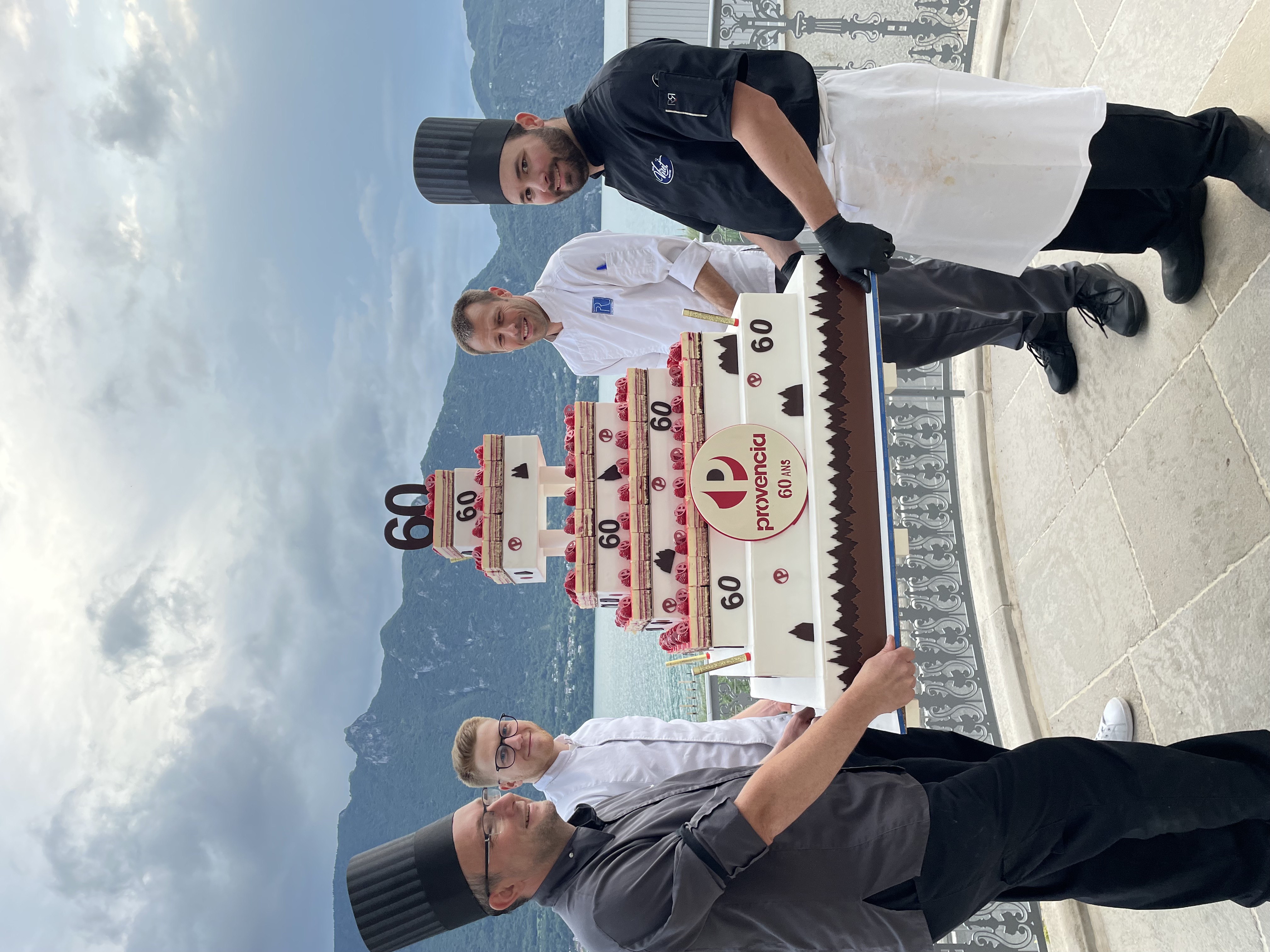
Event catering that supports your agenda, your brand and your guests
INNOV'events is a Brussels-based event management company managing event catering for corporate audiences from 30 to 3,000+ guests across Brussels, Antwerp, Ghent, Liège and beyond. We handle menu design, tastings, staffing, timing, technical constraints, and on-site execution so your programme runs on time.
From executive breakfasts to large-scale staff celebrations, we deliver catering that is consistent, compliant, and operationally realistic for corporate venues.
Sommaire
In a corporate context, catering is never “just food”. It is the visible operational proof that the company is organised: queues, timing, dietary handling, service attitude and cleanliness shape the perception of leadership, HR and Communications.
Organisations expect punctual service aligned with agendas (plenary sessions, breakouts, speeches), predictable guest flow, and zero surprises around allergens, invoices or venue restrictions. The real KPI is simple: guests feel looked after without disrupting the programme.
As an event agency used to Belgian corporate realities, we translate your objectives into a catering plan that works on the day: supplier coordination, service choreography, HACCP-aware processes, and contingency planning for last-minute headcount changes.
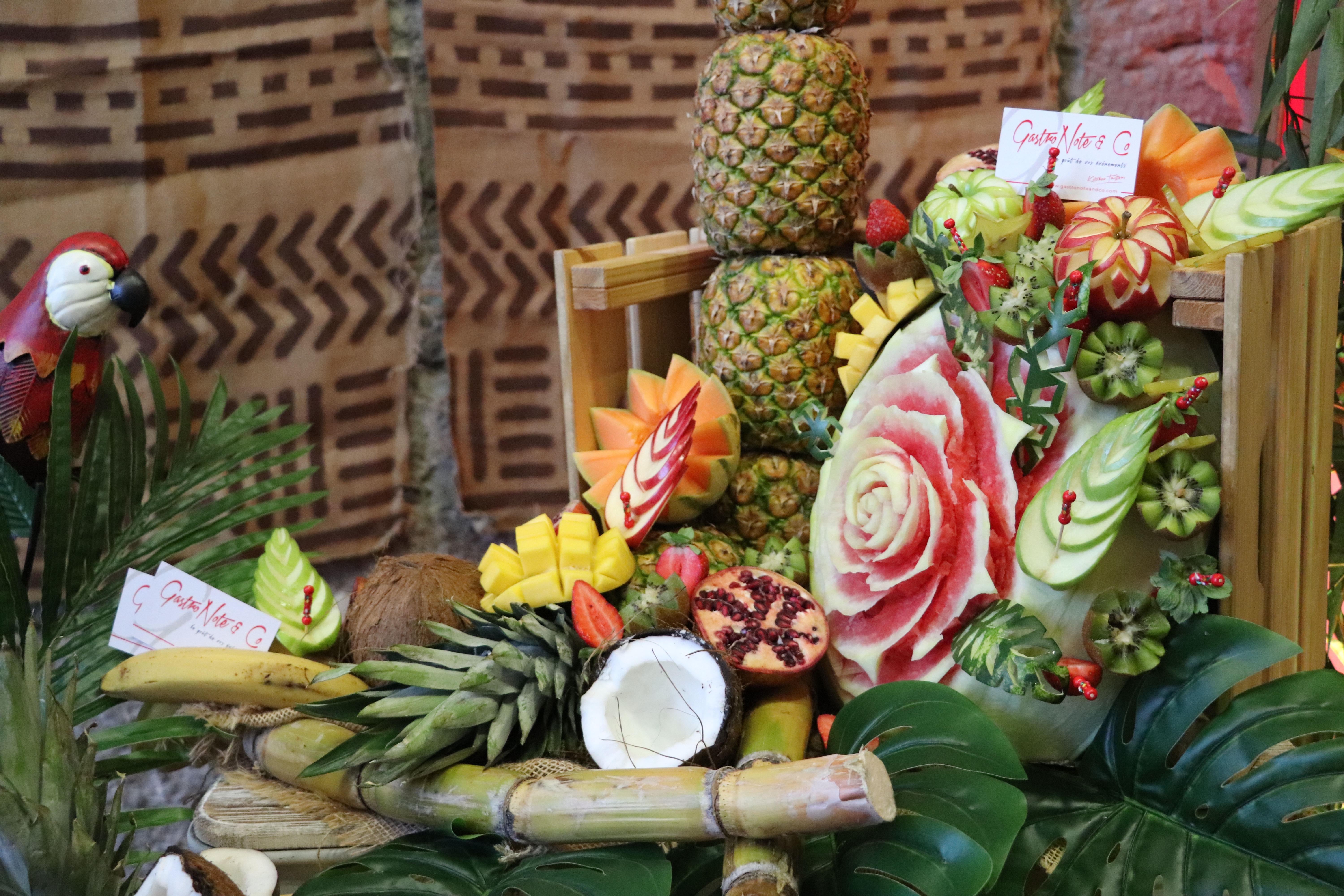
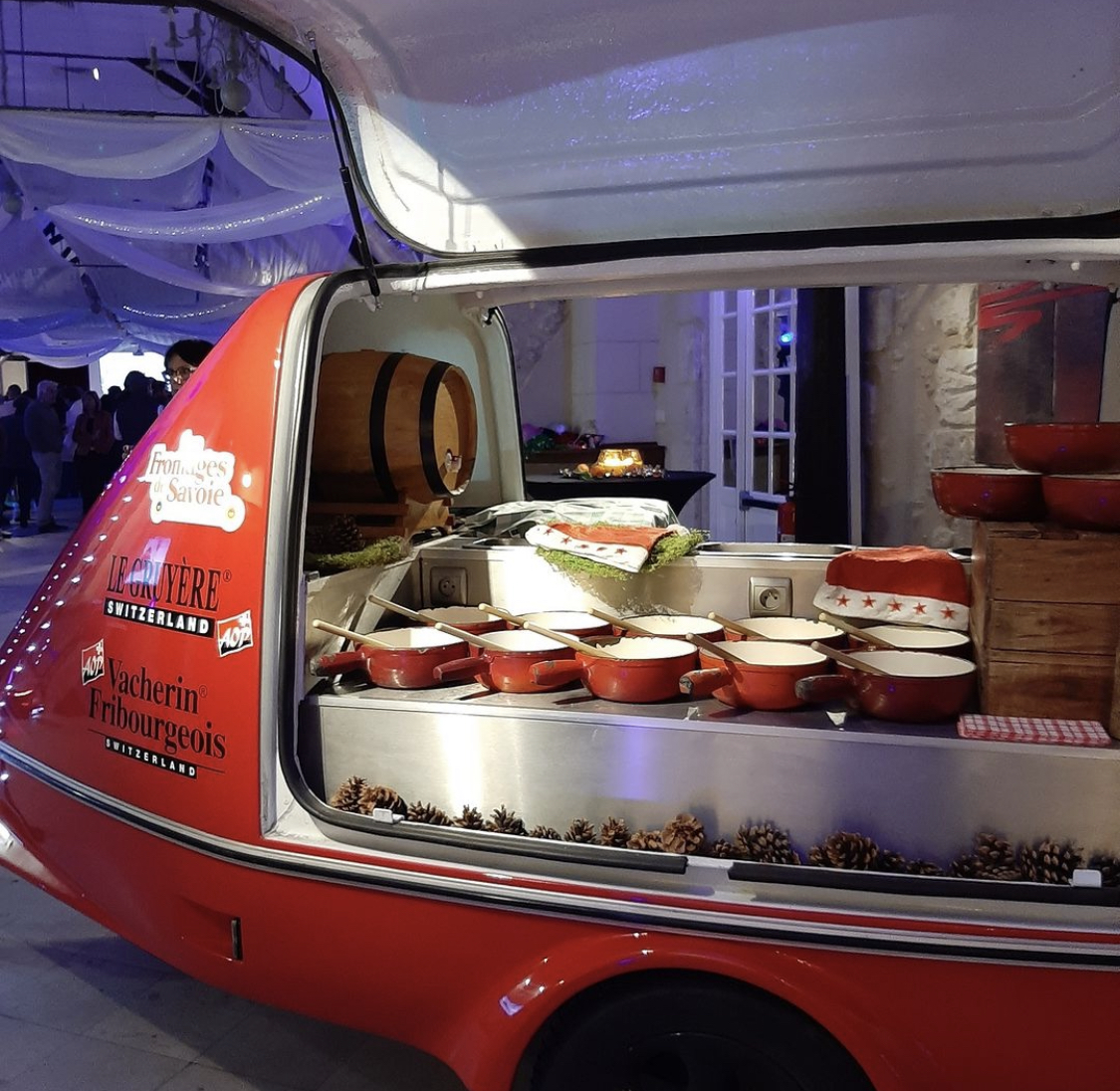
Operational credibility, not promises
Brussels-based delivery team with a Belgian network of caterers, rental partners and staffing across Brussels, Antwerp, Ghent and Liège.
Experience across 30 to 3,000+ guests: from board-level working lunches to multi-zone staff events with staggered breaks.
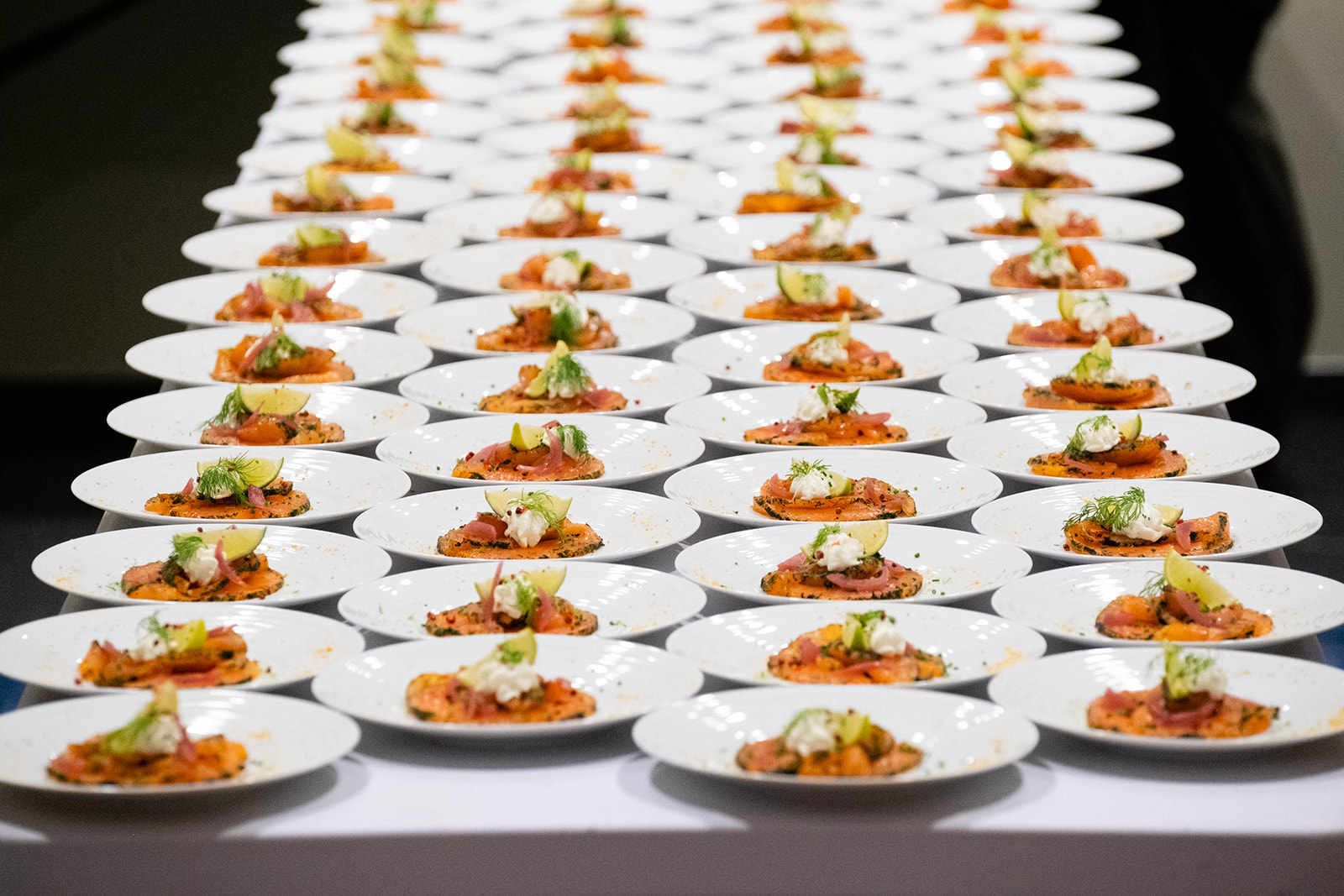
Service formats managed end-to-end: catering seminar event breaks, plated dinners, buffets, cocktail receptions, food stations, bar service and late-night options.
We routinely handle allergen and dietary matrices (vegetarian, vegan, halal, gluten-free, lactose-free) with clear labelling and service briefing.
On-site coordination includes: delivery slots, lift access, back-of-house layout, waste flow, water and power points, and venue rules (noise, open flame, glass policy).
How to organize a professional event ?
- Define the objective (cohesion, announcement, fidelity, performance).
- Set date, format and size (20–1 000 people).
- Secure the venue and accommodation according to seasonality.
- Lock down technical, suppliers and logistics.
- Drive the day J (timing, scene, entrance, flow).
We send you a first proposal within 24h.
Why corporate event catering is a strategic lever (not a line item)
Whether you are planning a town hall, leadership offsite, client cocktail or seminar, catering is one of the few elements every participant experiences directly. It influences energy levels, networking behaviour and how smoothly your programme is perceived.
For executives, HR and Communications, the strategic value is operational: catering supports attention, reduces friction, and protects the company image in front of staff, clients or partners.
Programme stability: correctly timed coffee breaks and lunch service prevent schedule drift, which is often the difference between a professional seminar and a stressful day.
Higher engagement: smart formats (grab-and-go, food stations, staggered service) keep people talking and moving rather than queuing, especially during catering corporate cocktail formats after plenaries.
Inclusion and duty of care: clear allergen handling and dietary options reduce risk and show respect for diverse teams and guests, a growing expectation in Belgian workplaces.
Brand coherence: presentation, service style and menu choices can reflect brand values (precision, sustainability, local sourcing, premium hospitality) without becoming gimmicky.
Budget control through planning: when service design matches guest flow, you avoid hidden costs like emergency staff, last-minute rentals, or food overproduction.
In Belgium’s pragmatic business culture, people quickly notice operational maturity. When catering is planned as part of the overall event system, it reduces risk, improves experience, and supports your internal and external narrative.
Catering ideas that make networking easier (without turning it into a show)
Activities around food can improve engagement when they serve a clear purpose: easing networking, keeping energy levels stable, or reinforcing a message. In corporate settings, the best “animations” are operationally simple, quick to understand, and consistent with your brand tone.
Interactive animations
Guided tasting corners: a short, structured tasting (3–4 items) hosted by a knowledgeable staff member. Works well for client evenings in Brussels or Antwerp where guests need an easy conversation starter.
Build-your-own bowls or wraps: guests choose base + protein + toppings. It accelerates service and visibly supports dietary needs, ideal for catering service corporate event lunches with mixed preferences.
Speed networking supported by service rhythm: we align bite-size service waves with your networking rounds so people move naturally and don’t cluster around a single bar.
Art animations
Live but discreet music sets: a trio or acoustic set during cocktail hour to create atmosphere while keeping conversation possible. We coordinate sound checks and volume limits typical in urban venues.
Table centrepiece design linked to the menu: for dinners, we align floral style and table accessories with the culinary theme, avoiding over-designed setups that block sightlines or complicate service.
Innovative animations
Belgian dessert station done professionally: mini waffles, chocolate tasting, or praline pairing with coffee. Done well, it feels local and premium; done poorly, it creates queues and sticky surfaces. We manage portions, floor protection and cleaning rotations.
Zero-alcohol cocktail bar: increasingly requested for corporate cocktails. We plan throughput, glass policy and garnish prep to keep service fast.
Late-afternoon energy boost: a structured “second coffee” station (espresso, tea, fruit, high-protein snacks) to maintain focus during long seminar days.
Gourmand animations
Smart labelling and dietary assurance: QR-based ingredient lists and allergen summaries at stations (supported by printed backups). It reduces service questions and helps guests self-serve confidently.
Waste-aware portion planning: we propose portion sizes and replenishment schedules based on event type (seminar vs cocktail vs dinner) to reduce food waste without under-serving.
Multi-zone catering design: different food “moments” per zone (networking bar, quieter conversation area, VIP corner) so guests can choose their experience without congestion.
The key is consistency. Food, service style, and any activation should match your company image and the event’s purpose. A leadership offsite in Ghent needs a different tone than a product cocktail in Antwerp or a recruitment event in Brussels.
Which venues in Belgium work best for corporate catering formats?
Venue choice has a direct impact on catering feasibility: access, back-of-house space, kitchen capability, noise rules, and guest flow. Below are typical venue profiles we see in Brussels, Antwerp, Ghent and Liège, and how they affect corporate event catering.
Hotel conference venues (Brussels, Antwerp, Liège): Strong for seminars and executive dinners. Usually reliable kitchen infrastructure and staffing, but menus can be less flexible and corkage policies apply. Best when you need predictable service and on-site accommodation.
Conference centres and auditoriums (Brussels, Ghent): Excellent for plenaries and large groups. Catering success depends on foyer size and number of service points. We often recommend multiple identical stations and strict break timing to prevent queues.
Industrial or cultural venues (Antwerp, Ghent, Brussels): Great brand impact for product launches and staff events. Often require full temporary build: mobile kitchens, power distribution, refrigeration, waste management, and stricter delivery scheduling.
Office-based events (Brussels business districts): Efficient for internal meetings and town halls. Key constraints: lifts, corridor width, fire safety, and limited back-of-house. We design formats like boxed lunches, grab-and-go, and controlled coffee points to keep the workplace operational.
Outdoor or semi-outdoor spaces (Belgium-wide): Perfect for summer staff events, but require weather contingencies. We plan tenting, floor protection, temperature control, insect management and food safety timing.
We do not start by proposing a venue “because it looks good”. We start by checking whether it can deliver your agenda without catering bottlenecks, and we adapt the service design to the venue’s real operational constraints.
How to budget corporate event catering in Belgium
Pricing for event catering depends on format, staffing, equipment, venue constraints and service level. The most common budgeting mistake is to compare “price per head” without aligning what is included: staffing hours, bar setup, rentals, service timing, or dietary handling.
As a rule of thumb, corporate catering is a combination of food & beverage cost, labour, logistics, rentals, and coordination. We build budgets that are transparent and defensible internally.
Format and service level: breakfast and breaks are generally predictable; cocktails depend on bar throughput and can require more staff; plated dinners drive staffing and timing complexity.
Guest count and arrival pattern: 300 guests arriving over 60 minutes is easier than 300 guests released at once from a plenary. Release pattern drives the number of stations and staff required.
Menu composition: premium proteins, seasonal availability and prep complexity affect costs. We recommend menus that are elegant but operationally stable at scale.
Staffing hours and night work: setup, service, clearing and load-out time matter. Evening events with late breakdown can increase labour cost significantly.
Rentals: glassware, crockery, linen, furniture, bar counters, heating/cooling and kitchen equipment. In “empty room” venues, rentals can rival the food cost.
Logistics and access: city-centre load-in constraints, limited docks, multiple floors, or long carry distances increase labour and timing buffers.
Dietary and allergen management: higher variety can mean additional prep lines and stricter labelling. We price this clearly to protect safety and service quality.
Sustainability choices: reusable serviceware, local sourcing, waste sorting and donation logistics can be integrated, but need planning and sometimes additional handling.
Return on investment is rarely about “spending less”; it is about spending on the right drivers. When catering design prevents queues, protects the agenda, and reduces operational risk, it directly supports the value of the event itself: better conversations, better focus, and fewer escalations for your team.








Examples of corporate catering formats we manage
Our projects range from structured seminar catering to high-traffic cocktail receptions. We adapt the format to your objective, venue and audience profile.
Catering seminar event (200–800 guests): registration coffee, two breaks, and a lunch designed for speed and dietary clarity. Typical challenges: short break windows, sponsor areas in the foyer, and the need to keep the plenary on time.
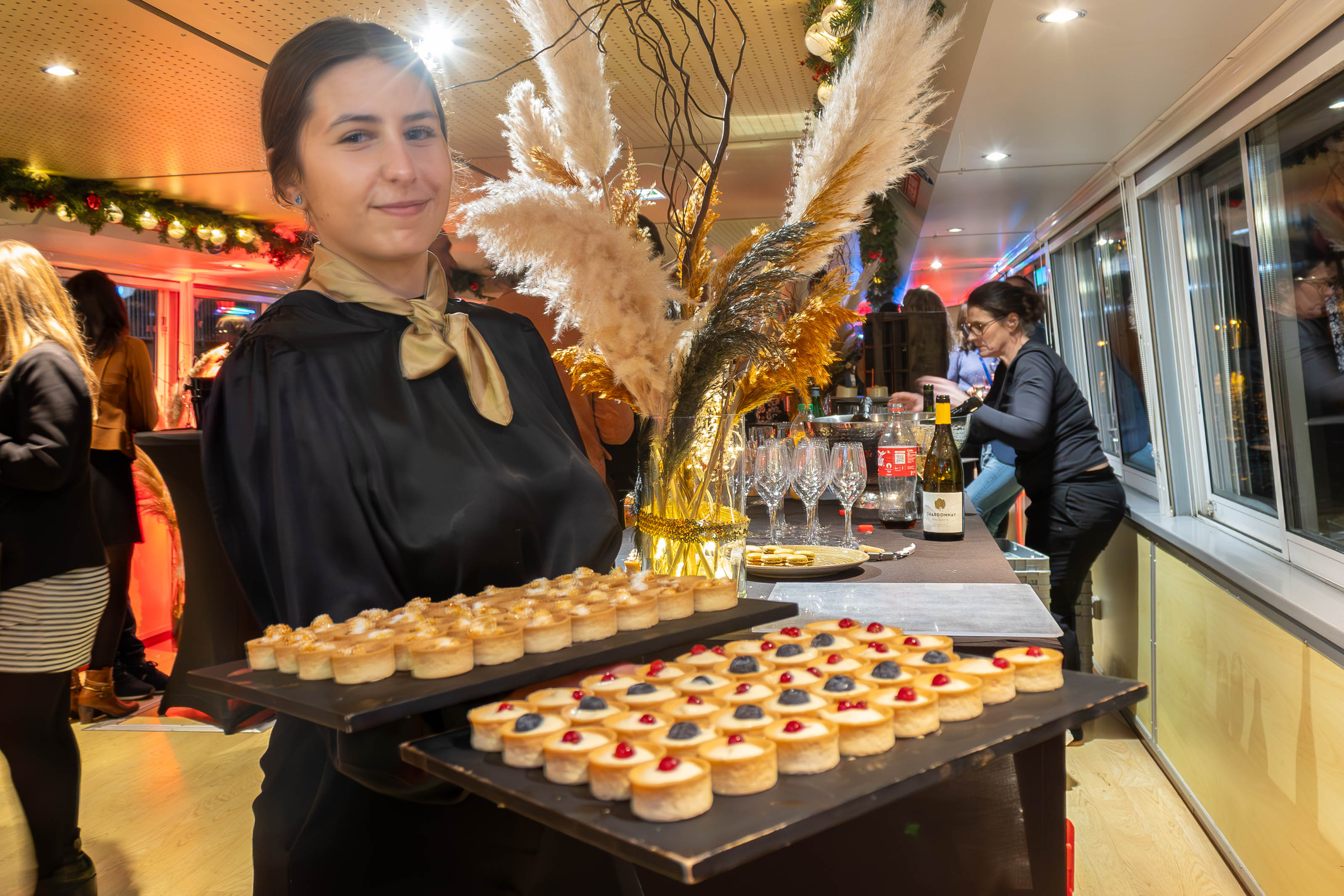
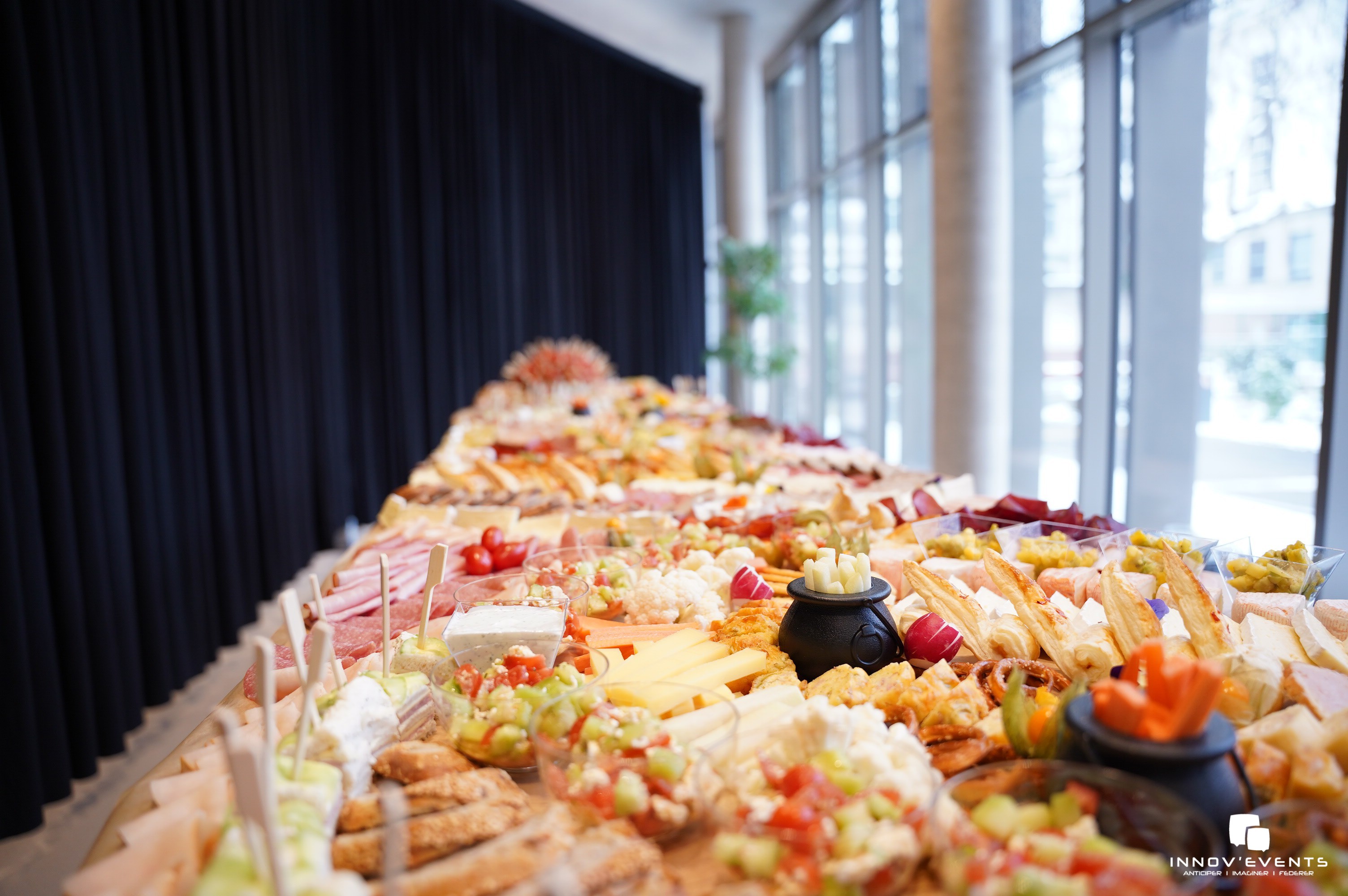
Catering business event cocktails (150–1,500 guests): bar throughput planning, tray service rhythm, sufficient food density to avoid guests leaving early, and clear signage to distribute guest flow across stations.
Executive working lunches (20–80 guests): discreet service, low-noise setup, punctual clearing, and careful attention to dietary needs. Often hosted in Brussels offices or private rooms in hotels.
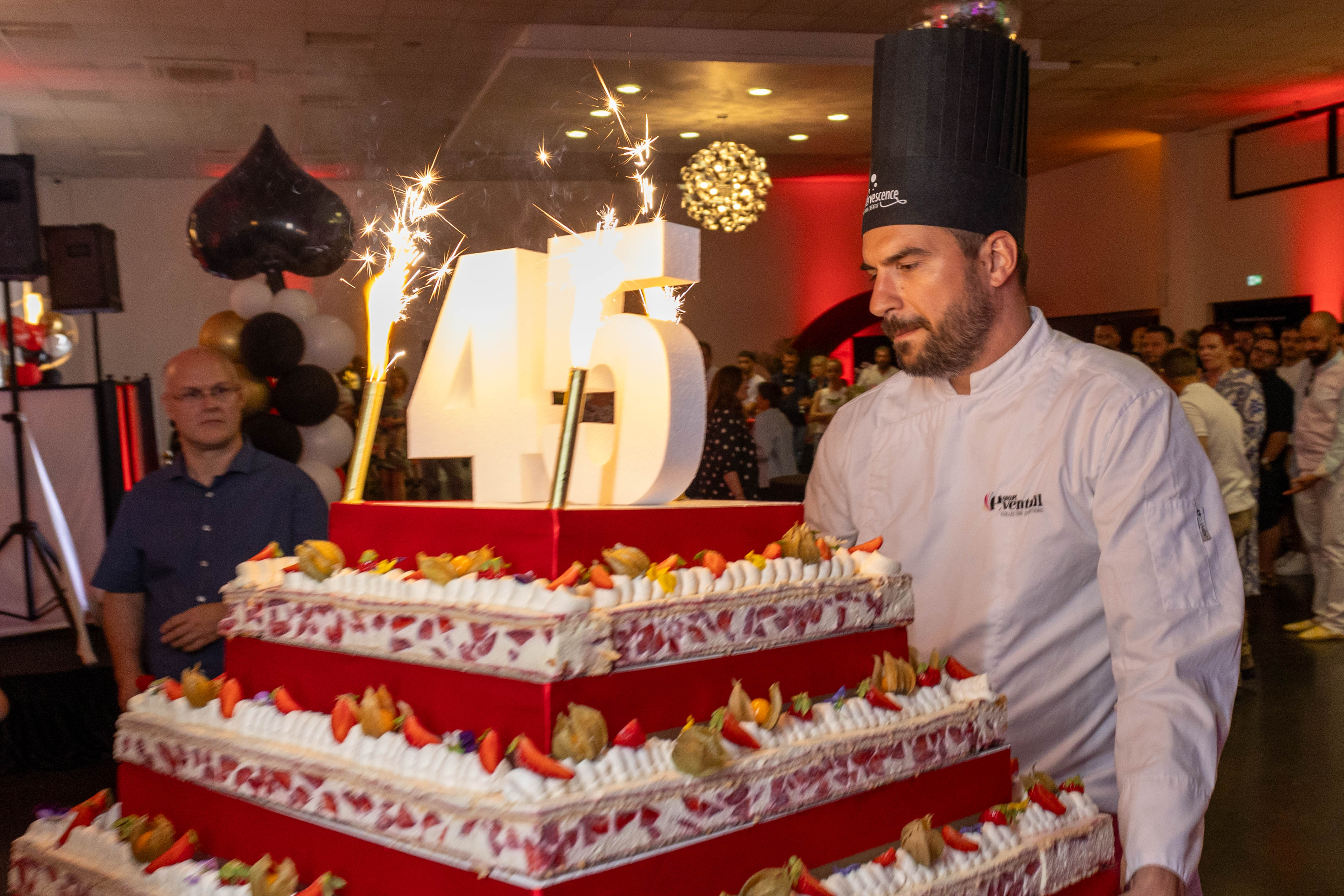
Staff celebrations (300–3,000+ guests): multiple zones, staggered service, robust waste management, and practical late-night options. We design service so it remains efficient even when guests move unpredictably.
Multi-day corporate programmes: consistent quality across days, controlled variation in menus, and reliable early-morning delivery timelines.
Across these formats, the common thread is operational discipline: the best catering is the one that nobody has to “manage” during the event because it simply runs.
Common corporate catering mistakes (and how we prevent them)
Underestimating queue dynamics: one buffet line for 400 guests creates frustration and delays. We calculate stations and staffing based on release timing and service speed.
Planning the menu without checking venue realities: limited lifts, no prep space, or strict load-in windows can break service. We validate constraints early and adjust the approach.
Allergen handling treated as an afterthought: unclear labelling and unbriefed staff create risk. We run a dietary matrix and a briefing process with clear responsibilities.
Bar throughput miscalculated: too few bartenders or a slow cocktail menu leads to long waits. We simplify the bar menu and size staffing to your peak moments.
Hidden costs in “cheap” offers: rentals, overtime, transport, and cleaning can appear late. We build transparent budgets with inclusions clearly stated.
No contingency for headcount changes: corporate attendance is never perfectly stable. We plan buffers and define flex items that can scale without waste.
Our role is to remove these risks before they reach your guests. That means planning with operational facts, not assumptions—and being present on-site to coordinate service in real time.
Why corporate clients stay with the same catering partner
Corporate teams come back when catering becomes predictable: timings are respected, dietary needs are handled calmly, budgets are transparent, and feedback is acted on. Loyalty is built through consistent delivery and continuous improvement, not one-off creativity.
Recurring-event optimisation: we standardise what should be standard (staffing ratios, station counts, signage, service timing) and only change what adds value (menu rotation, seasonal products, format upgrades).
Faster internal approvals: once Finance and Procurement trust the structure of the offer and the invoicing logic, decision cycles shorten for future editions.
Documented learnings: debrief notes, consumption tracking and floorplan adjustments reduce risk each time, especially for seminars and town halls.

When clients return, it is usually because their internal teams can focus on content and people—while we protect the operational backbone of the event.
Our method for corporate event catering organisation
👉 Step 1: Brief, constraints and success criteria
We start with your objective, audience profile, and programme. Then we capture non-negotiables: venue rules, budget framework, dietary requirements, brand tone, and internal approval process. We define measurable success criteria such as maximum acceptable queue time, service windows, and required staffing posture.
👉 Step 2: Concept and service design linked to your agenda
We propose 1–3 catering approaches with clear pros/cons: format, sample menus, service timing, staffing model, and guest-flow logic. For example, for a 60-minute lunch with 600 guests, we may recommend multiple identical stations plus pre-set water points and a separate dietary station to prevent congestion.
👉 Step 3: Supplier sourcing, tastings and selection
We source caterers and partners who match your constraints (volume capability, dietary handling, service standards, price discipline). We organise tastings when relevant and ensure the final proposal includes the real operational costs: rentals, transport, staffing hours, and contingency.
👉 Step 4: Operational planning and documentation
We build a floorplan for catering zones and back-of-house, define load-in schedules, and write a service schedule aligned with the run-of-show. We produce a practical briefing pack for the service captain covering dietary matrix, VIP handling, signage, and escalation contacts.
👉 Step 5: On-site coordination and real-time control
On the day, we manage deliveries, setup, and service rhythm. We monitor queue dynamics and adjust: opening additional stations, redirecting flow, or synchronising service with programme changes. We handle issues discreetly so your team is not pulled into operational firefighting.
👉 Step 6: Debrief, consumption review and next-edition improvements
Within a structured debrief, we review timings, consumption levels, staffing adequacy and guest feedback. We document recommendations for the next event: station counts, improved signage, menu adjustments, and budget optimisation opportunities.
FAQ sur l'organisation Event catering
How far in advance should we book event catering?
For 50–150 guests, ideally 3–6 weeks in advance. For 150–800 guests, plan for 6–10 weeks, especially in peak periods (end-of-year, June, September). For 800+ guests or complex venues, 10–16 weeks is safer to secure staffing, rentals and delivery slots.
What affects the price per person for corporate catering?
Main drivers are service format (buffet vs plated), staffing hours, bar complexity, rentals, and venue access constraints. A “price per head” only makes sense if it clearly includes staffing, setup/breakdown, transport, rentals and VAT where applicable. We always provide an itemised structure so Finance can validate assumptions.
How do you handle allergens and special diets safely?
We collect dietary info during registration, build a matrix, and brief service staff. On-site we use clear labelling, separate utensils where needed, and a defined point person for dietary questions. For VIP or seated meals, we pre-assign dietary plates to names to avoid mistakes.
Can you manage catering in our Brussels or Antwerp office?
Yes. Office catering works best with formats that respect lifts, corridors and fire safety: quality sandwich and salad lunches, boxed meals, grab-and-go stations, and controlled coffee points. We schedule deliveries to avoid reception congestion and we plan waste flow and cleaning so your workplace is usable immediately after service.
What is the best format for a corporate cocktail reception?
For most business audiences, a mix of 8–12 savoury bites per person over 2 hours plus a small sweet close works well, with enough “substantial” items (mini bowls, warm bites) to avoid early drop-off. Bar throughput typically requires 1 bartender per 60–90 guests depending on menu complexity and glass policy.
Request your free quote for event catering in Belgium
If you need reliable event catering that respects your agenda, brand and operational constraints, we will build a clear proposal with options and transparent inclusions. Share your date, city (Brussels, Antwerp, Ghent, Liège or elsewhere in Belgium), guest count range, venue (if known), and the key moments of your programme.
Contact INNOV'events to request a free quote and secure the right partners early—especially if your event falls in a peak period or requires complex logistics.