Promotional Event organisation that drives measurable brand and sales impact
INNOV'events is a Brussels-based event management company specialised in Promotional Event delivery across Belgium, from single-site activations to multi-city corporate roadshows. We typically manage programmes for 50 to 5,000+ visitors per day, depending on footfall, venue constraints, and your sampling or lead targets. We handle concept, production, permits, staffing, logistics, safety, and post-event reporting so your teams can focus on brand messaging and stakeholder relationships.
Sommaire
A Promotional Event is not a “nice-to-have”: it is a controlled environment to create demand, shorten sales cycles, and prove marketing effectiveness with real-world data. When executed properly, it connects brand promise to a lived product experience, with measurable outcomes such as qualified leads, trials, retail uplift, or pipeline influence.
Organisations come to us with clear expectations: brand compliance across every touchpoint, predictable delivery in Brussels, Antwerp, Ghent, Liège (and beyond), and operational calm on the day. They also expect governance: risk assessments, clear supplier management, and reporting that a director can defend internally.
Our expertise is field-based: route planning for promotional tour events, site technical checks, staffing rosters, crowd-flow and queue management, and real-time issue handling. We bring the structure of a corporate production team and the agility needed for public-facing activations in Belgian city centres.
Quick facts decision-makers ask for
Belgium-wide delivery: operational coverage across Brussels, Antwerp, Ghent, Liège and secondary cities, with scalable logistics for itinerant corporate event formats.
Multi-site capability: planning and supervising several activation points on the same day (e.g., shopping centre + street team + evening stakeholder moment) with one integrated run-of-show.
Compliance-first production: documented RAMS (risk assessment and method statements), supplier insurance checks, and clear responsibilities for public space, venues, and brand partners.
Reporting culture: post-event dashboards including footfall estimates, engagement rates, leads captured, sampling volumes, staffing notes, and recommendations for iteration.
How to organize a professional event ?
- Define the objective (cohesion, announcement, fidelity, performance).
- Set date, format and size (20–1 000 people).
- Secure the venue and accommodation according to seasonality.
- Lock down technical, suppliers and logistics.
- Drive the day J (timing, scene, entrance, flow).
We send you a first proposal within 24h.
Why organise a Promotional Event instead of another media buy?
Digital reach is useful, but it does not replace a real product interaction, a credible conversation with trained staff, or a controlled demo. A Promotional Event gives you a live channel where you can test messaging, qualify prospects, generate content, and create a measurable impact at specific locations and times.
For executives, the strategic value is simple: it brings marketing, sales, and operations into the same room (or route) with shared KPIs and a clear plan.
Faster trust-building: customers and partners can see, touch, and challenge the product, which is hard to replicate online.
Lead capture with context: collecting contacts is not enough; we set up scripts, consent flows, and qualification questions so your CRM receives usable data.
Retail and channel support: for FMCG and consumer brands, an activation near a store or in a shopping centre can translate into short-term uplift when aligned with in-store visibility and promotions.
Message validation: we observe objections, questions, and reactions in real time; this is often more actionable than survey results alone.
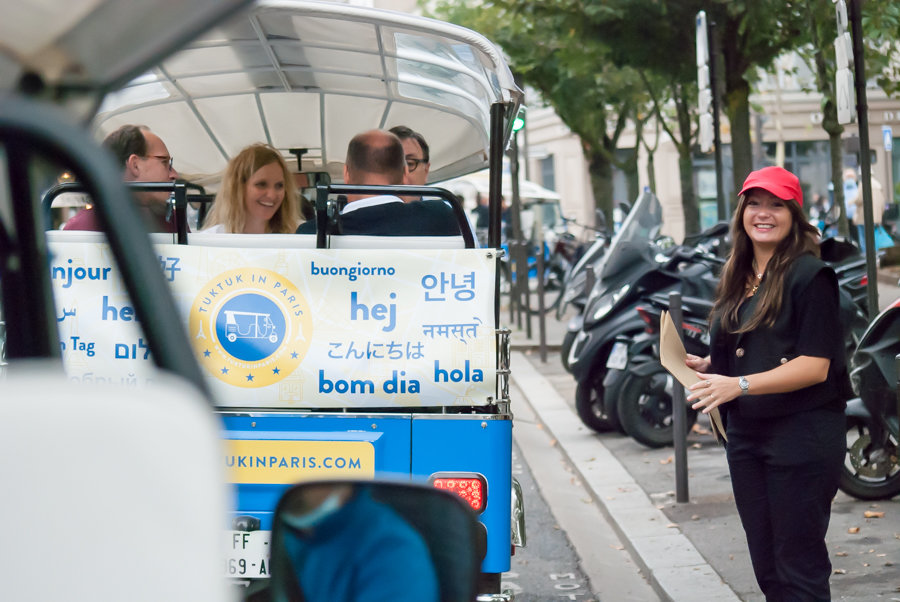
Employer and stakeholder visibility: a brand tour organisation approach can include a recruitment angle, community partners, or a VIP time slot without diluting the public-facing core.
Content production: planned photo/video capture, testimonials, and micro-stories created on the ground can fuel campaigns for weeks.
Team alignment: when marketing and sales attend the same activation, it becomes easier to agree on positioning and next steps.
In Belgium’s pragmatic business culture, the question is always “what did it deliver?”. We design Promotional Event organisation programmes with measurable objectives, realistic resource planning, and an operational approach that stands up to internal scrutiny.
Which activation ideas work for modern Promotional Events in Belgium?
Activities are not “entertainment” by default; they are tools to increase dwell time, improve message recall, and create a reason to engage. The right activation mechanic depends on your audience, location rules, staffing model, and the conversion action you need (trial, sign-up, purchase, meeting request).
Interactive animations
Guided product demos with timed slots: ideal when you need quality conversations. We set up a simple queue and “next available” flow so staff can keep throughput consistent.
Micro-challenges linked to key messages: short activities (60–120 seconds) that make people repeat the product benefit (e.g., speed, durability, taste profile), with a clear prize logic.
Lead capture with a clear value exchange: instant reward (sampling, voucher, content download) plus a short qualification step to protect data quality.
Partner co-activation corner: useful for B2B brands that need credibility; we plan branding hierarchy and talking points to avoid mixed messaging.
Art animations
Live illustration or personalisation station: works well for premium brands and HR-focused activations; we define throughput (e.g., 25–40 items/hour) so expectations are managed.
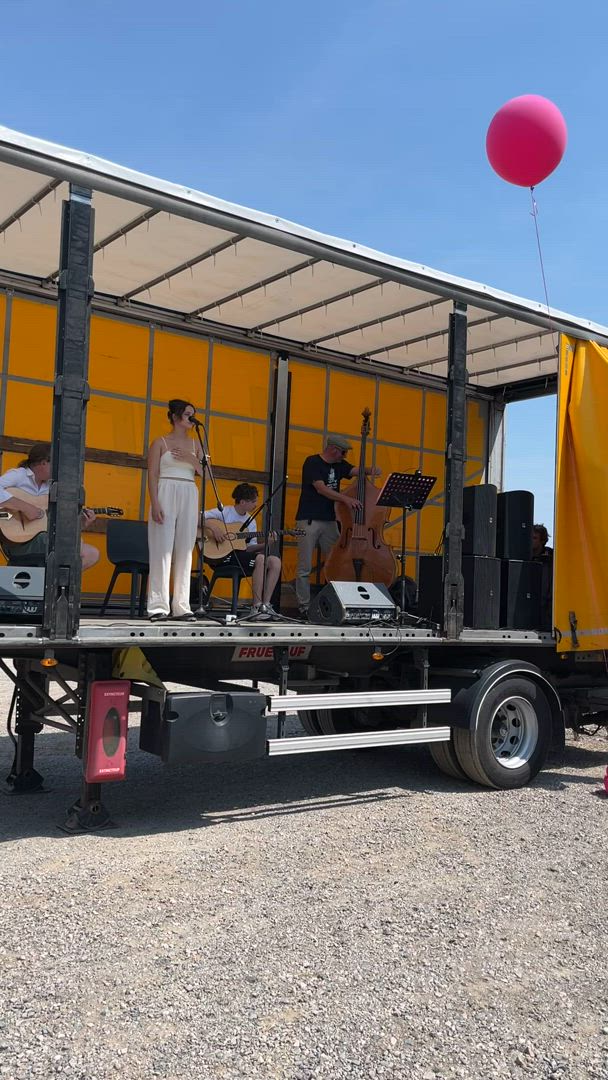
Small-format acoustic set: suited for controlled venues or permitted public spaces; we plan sound limits, schedules, and audience flow to avoid blocking circulation.
Brand photo set with professional lighting: creates content value for visitors and for your channels; we manage consent signage and image usage approvals.
Innovative animations
Sampling with hygiene and stock control: cold chain management where needed, allergen information visible, and waste planning. We monitor distribution rates to avoid running out early.
Pairing experience: linking your product with a complementary tasting to strengthen the brand story, with clear responsible consumption rules when relevant.
Timed “rush hour” offer: designed to convert peaks into measurable action (coupon redemption, QR scan, sign-up) rather than uncontrolled giveaways.
Gourmand animations
Lightweight AR layer: a QR-based experience that works on visitors’ own phones, reducing hardware risk and increasing scalability for a promotional tour planning route.
RFID or smart badge interactions: relevant for semi-controlled environments (venues, campuses, trade zones) where you want precise engagement tracking.
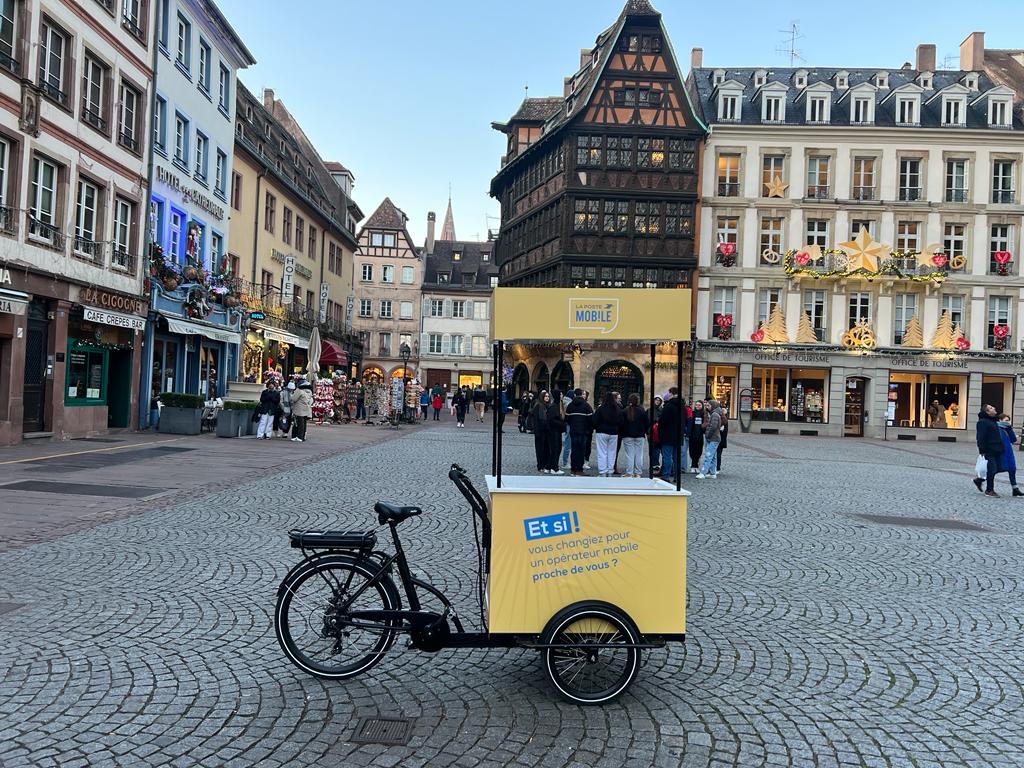
Mobile pop-up unit: a branded vehicle or modular container approach for a promotional tour event; we plan power, security, overnight parking, and set-up time per city.
Every activity must be consistent with brand image and operational reality. If your brand is premium, the finish quality, staff language, and queue experience matter more than the number of gimmicks. If your priority is lead volume, we build a faster funnel and protect data quality. Consistency is what makes a Promotional Event credible.
Where should a Promotional Event take place in Brussels, Antwerp, Ghent or Liège?
Location choice is where many programmes win or lose. “High footfall” alone is not a strategy: you need the right audience, sufficient visibility, feasible logistics, and permission to operate without constant intervention. For a brand tour organization approach, we also plan travel time, set-up windows, and staff accommodation in a way that keeps quality stable across the route.
City centre public space (e.g., Brussels, Antwerp): Best for awareness and mass trial. Watch-outs: permits, stricter rules, weather contingency, queueing and circulation constraints.
Shopping centres (nationwide): Best for predictable footfall and conversion near retail. Watch-outs: commercial conditions, branding restrictions, fixed set-up hours, and security protocols.
Business districts and office zones (Brussels, Antwerp): Best for B2B lead quality and lunch-hour peaks. Watch-outs: shorter engagement windows and the need for a clear, fast value proposition.
Transport-adjacent zones (near key stations/flows): Best for quick interactions and sampling. Watch-outs: limited dwell time, strict safety rules, and the need for a compact set-up.
Corporate venues and partner sites: Best for controlled demos, stakeholder confidence, and data capture. Watch-outs: lower footfall, requiring stronger invitation mechanics and internal alignment.
Festivals and public gatherings: Best for large exposure when the audience fits. Watch-outs: higher fees, heavier compliance requirements, and brand clutter.
We typically shortlist locations using three filters: audience match, operational feasibility, and conversion potential. Then we validate with a site visit and a practical run-through: where the van parks, how power is sourced, where stock is stored, and how we keep the experience smooth even at peak times.
How much does Promotional Event organisation cost in Belgium?
The budget for a Promotional Event depends on format, number of cities, technical build, staffing intensity, and compliance requirements. A single-day activation in a controlled venue is structurally different from a two-week itinerant corporate event with a mobile unit, storage, and multiple permits.
We build budgets transparently with clear lines: what is fixed (production, design, core staff) and what scales (brand ambassadors, sampling volumes, travel, security). This lets executives choose: do you want more cities, more impact per city, or more content and reporting?
Format and footprint: pop-up stand vs modular build vs mobile unit; larger builds require more transport, crew, and set-up time.
Number of locations and route complexity: a corporate roadshow event needs transport planning, accommodation, and buffer time for delays.
Permits, venue fees, and compliance: costs vary by location type and rules; public spaces often require more documentation and contingency planning.
Staffing model: number of brand ambassadors, supervisors, technical crew, security, and potential bilingual staffing needs (planned without mixing languages in public messaging where not required).
Production quality: printing, signage, lighting, AV, finishing materials, and storage solutions that keep the stand looking sharp across multiple days.
Sampling and consumables: volume, logistics, cold chain, waste management, and replenishment planning.
Data capture and reporting: tools, consent flows, CRM export requirements, and daily dashboards.
Contingency and weather planning: tenting, weights, flooring, heaters, rain covers, and backup power where needed.
Return on investment should be defined upfront: cost per qualified lead, cost per trial, retail uplift indicators, or pipeline influence. We help you set realistic targets and measure what matters, so spend is defensible and repeatable.



What we deliver in practice: from pop-ups to corporate roadshows
Our portfolio covers both high-visibility and high-control environments. For public activations, we focus on safe, efficient visitor flow and consistent brand delivery under real conditions: rain, wind, peak footfall, and tight loading windows. For semi-private activations (partner sites, campuses, corporate venues), we focus on lead quality, stakeholder care, and smoother data capture.
Typical scenarios we manage include:
- Promotional tour planning for a consumer brand across Brussels, Antwerp, Ghent and Liège, with a modular build reused across cities, daily stock replenishment, and a consistent reporting format.
- A product launch pop-up where the client’s leadership needs a press-friendly moment while the public activation continues uninterrupted, requiring separate timings, security coordination, and discreet backstage logistics.
- A recruitment-focused activation attached to a brand experience, where HR needs qualified candidate conversations while marketing protects tone of voice and visual standards.
- An itinerant corporate event for a B2B service: short demos, meeting booking, and follow-up workflow integrated into the client’s CRM so the sales team can act within 24–48 hours.
The common point is operational discipline: the experience must look the same at 10:00 and at 17:00, and in the first city as well as in the last.
Common risks we actively prevent on Promotional Events
Choosing a location without feasibility checks: great footfall but no power, no storage, or restrictive rules that block your activation mechanic.
Understaffing at peak times: queues grow, visitors leave, staff panic, and the brand looks disorganised. We plan rosters to match footfall patterns.
Overcomplicated visitor journeys: too many steps for sign-up or demos reduces conversion. We simplify the funnel and protect throughput.
Inconsistent brand execution: mismatched print colours, unclear signage, improvised talking points. We lock assets and scripts early.
Weak data capture and consent: collecting unusable contacts or missing consent creates reputational and compliance risk. We design clean, documented flows.
Logistics gaps: no buffer stock, late delivery windows, missing consumables, or poor waste planning. We build checklists and backup plans.
Weather exposure: no rain plan or inadequate wind safety. We specify appropriate structures, weights, and fallback scenarios.
No post-event learning loop: repeating the same issues city after city. We run debriefs and adjust the playbook.
Our role is to remove operational uncertainty so your brand can show up confidently. We plan like production managers, not like last-minute coordinators, because the cost of a visible failure is higher than the cost of doing it properly.
Why clients keep INNOV'events as their long-term partner
In corporate environments, loyalty is earned through predictability, clarity, and results. Clients return when their internal workload decreases, when leadership feels safe with the delivery, and when reporting makes next budget approvals easier.
Repeatable playbooks: consistent documents, templates, and on-site standards that make each new activation faster to validate internally.
Stable teams: a core production team that understands your brand rules and stakeholder preferences, reducing ramp-up time.
Continuous improvement: structured debriefs and route adjustments that increase conversion over a multi-city programme.
Procurement-friendly documentation: clear quotes, supplier breakdowns, and compliance files that support corporate buying processes.

Loyalty is not sentiment. It is a practical signal that the event agency delivers under pressure, protects the brand, and produces outcomes executives can stand behind.
Our process for Promotional Event organisation
👉 Step 1: Brief, objectives, and non-negotiables
We start with a structured briefing: target audience, desired action (trial, lead, sale, meeting), brand constraints, legal/compliance requirements, and internal stakeholders. We clarify non-negotiables early (brand assets, safety thresholds, data capture rules, union or venue restrictions) to avoid late rework.
👉 Step 2: Concept, route, and feasibility validation
We propose activation mechanics that match your KPIs and the reality of each location. For a promotional tour event, we build a draft route with set-up times, travel buffers, and site-specific constraints. We validate feasibility through site checks and stakeholder conversations before any build is locked.
👉 Step 3: Budget build and production planning
We present a transparent budget with options (more cities vs more impact per city; premium build vs modular reuse). Then we produce a full production plan: supplier selection, technical specs, graphics, logistics, staffing, and risk management documentation.
👉 Step 4: Staffing, training, and rehearsal readiness
We recruit or assign the right profiles (brand ambassadors, supervisors, technical crew), build shift rosters, and run briefings with talking points and escalation paths. Where relevant, we test the visitor journey to check throughput, queueing, and lead capture timing before going live.
👉 Step 5: Delivery, supervision, and live optimisation
On the day, we run production control: set-up, quality checks, timing, supplier coordination, and incident handling. We monitor peaks and adjust flow (additional staff at the funnel, simplified steps, repositioned signage) without compromising brand standards.
👉 Step 6: Reporting, debrief, and next-wave improvements
Within agreed timelines, we deliver reporting: engagement counts, leads, sampling volumes, qualitative insights, and operational notes. For multi-city programmes, we implement improvements immediately for the next stop, so the brand tour organization becomes stronger as it progresses.
FAQ sur l'organisation Promotional Event
How far in advance should we book a Promotional Event?
For a single-site activation, plan 4 to 8 weeks to secure venue slots, permits, and staffing. For a multi-city corporate roadshow event, allow 8 to 16 weeks depending on build complexity and permit lead times.
What KPIs should we set for a Promotional Event programme?
Use KPIs tied to your commercial goal: qualified interactions, leads captured, demo completion rate, sampling volume, voucher redemption, meeting bookings, and a clear cost per qualified lead or cost per trial. We recommend setting daily targets per site and a cumulative target for the tour.
Do you handle permits and city coordination in Belgium?
Yes. We manage the permit workflow and stakeholder coordination based on the location type (public space, shopping centre, corporate site). We also prepare the operational documentation typically requested: site plans, timing, safety approach, and supplier details.
How do you capture leads compliantly during activations?
We implement clear consent messaging, minimal necessary data fields, and an agreed qualification script. Data capture can be via QR, tablets, or controlled forms, with export formats aligned to your CRM. As a rule of thumb, simpler flows increase conversion; we balance speed with data quality.
What budget range is typical for a Belgian roadshow?
It depends on footprint and number of cities. As an indication, a light multi-city activation can start around €25,000 to €60,000, while a larger mobile unit with higher staffing and production can reach €80,000 to €200,000+. We provide options so you can trade off cities, build quality, staffing intensity, and reporting depth.
Request your free quote for a Promotional Event in Belgium
If you are planning a Promotional Event, a promotional tour event, or a corporate roadshow event in Brussels, Antwerp, Ghent or Liège, we can help you move from idea to executable plan quickly. Share your target audience, preferred dates, and success metrics, and we will revert with a structured proposal, a realistic timeline, and a transparent budget.
The earlier we start, the more control you have over locations, staffing quality, and production costs. Contact INNOV'events to request your free quote and secure the right set-up before calendars fill up.