
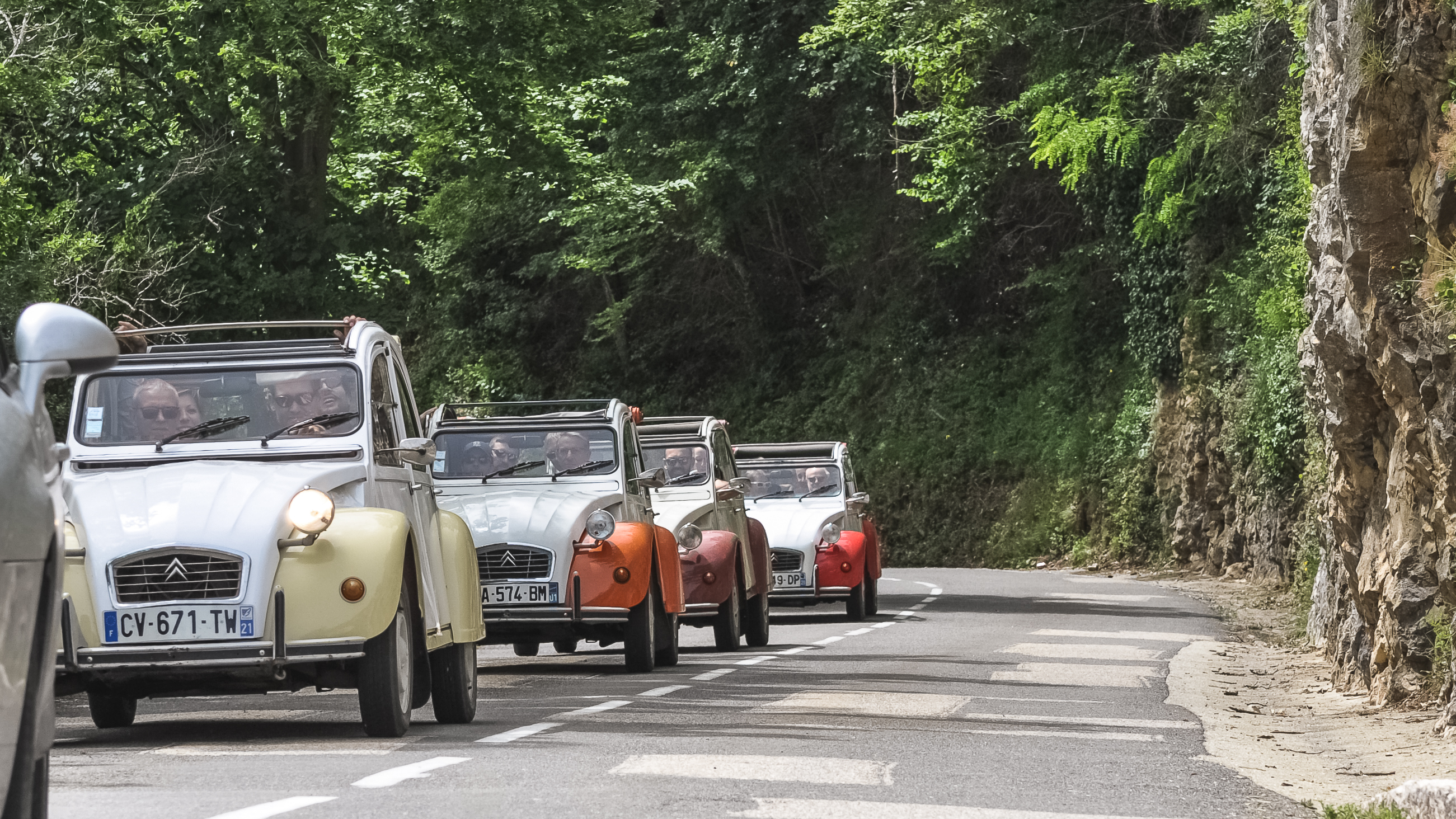
Run a 2CV rally in Antwerpen that stays on time, safe, and on brand
INNOV'events (Brussels) designs and delivers 2CV rally programs for corporate teams in Antwerpen, typically for 20 to 200 participants. We handle the fleet, route design, permits, briefing, roadbook, safety, and on-site production so your leaders can focus on hosting and outcomes.
Whether your objective is onboarding, leadership alignment, client hospitality or a full-company celebration, we translate it into a controlled itinerary with measurable engagement moments and a tight run-of-show.
Sommaire
Entertainment at a corporate event is not “nice to have” in Antwerp; it is a managerial lever. A well-run 2CV rally in Antwerpen creates a shared reference in a single afternoon: teams coordinate, make decisions with incomplete information, and manage time pressure—exactly what executives want to observe and reinforce outside the office.
Local organisations typically expect three things: punctuality around traffic and venue constraints, a premium but authentic experience (no gimmicks), and risk control (insurance, safe driving rules, alcohol policy). In Antwerpen, reputational risk is real: one poorly managed stop or a noisy arrival can quickly irritate neighbours or partners.
We bring field discipline: detailed route reconnaissance, driver briefings, contingency plans for ring-road congestion, and an on-site team that runs like a production unit. INNOV'events operates regularly across Flanders and Brussels, with suppliers and marshals who know the Antwerpen context and event expectations.
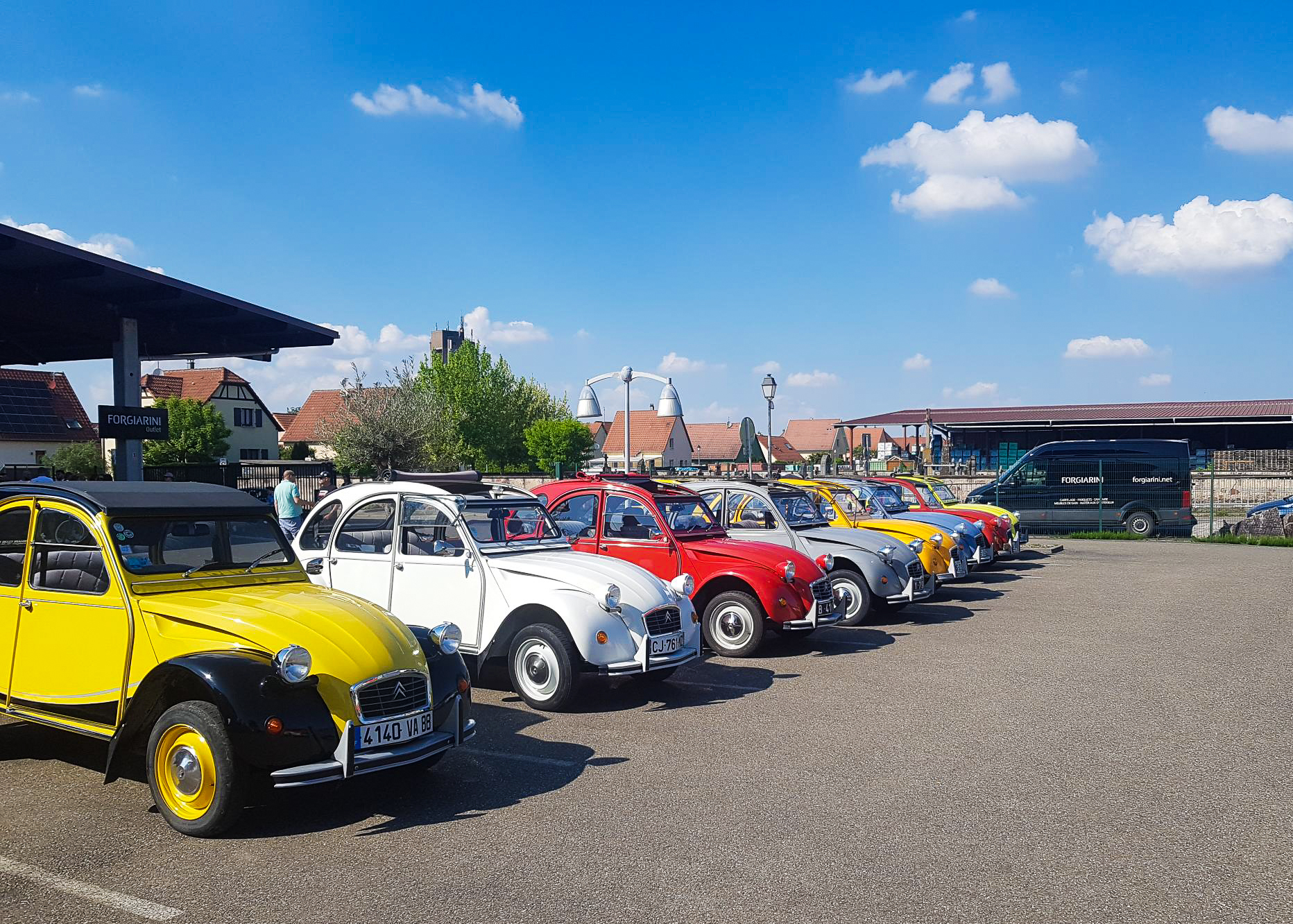
INNOV'events delivery capacity for Antwerpen productions
10+ years delivering corporate events across Belgium, with recurring programs in Flanders and Brussels.
Operational formats from 20 to 800 attendees (team activities, conferences, brand events), with production standards adapted to executive audiences.
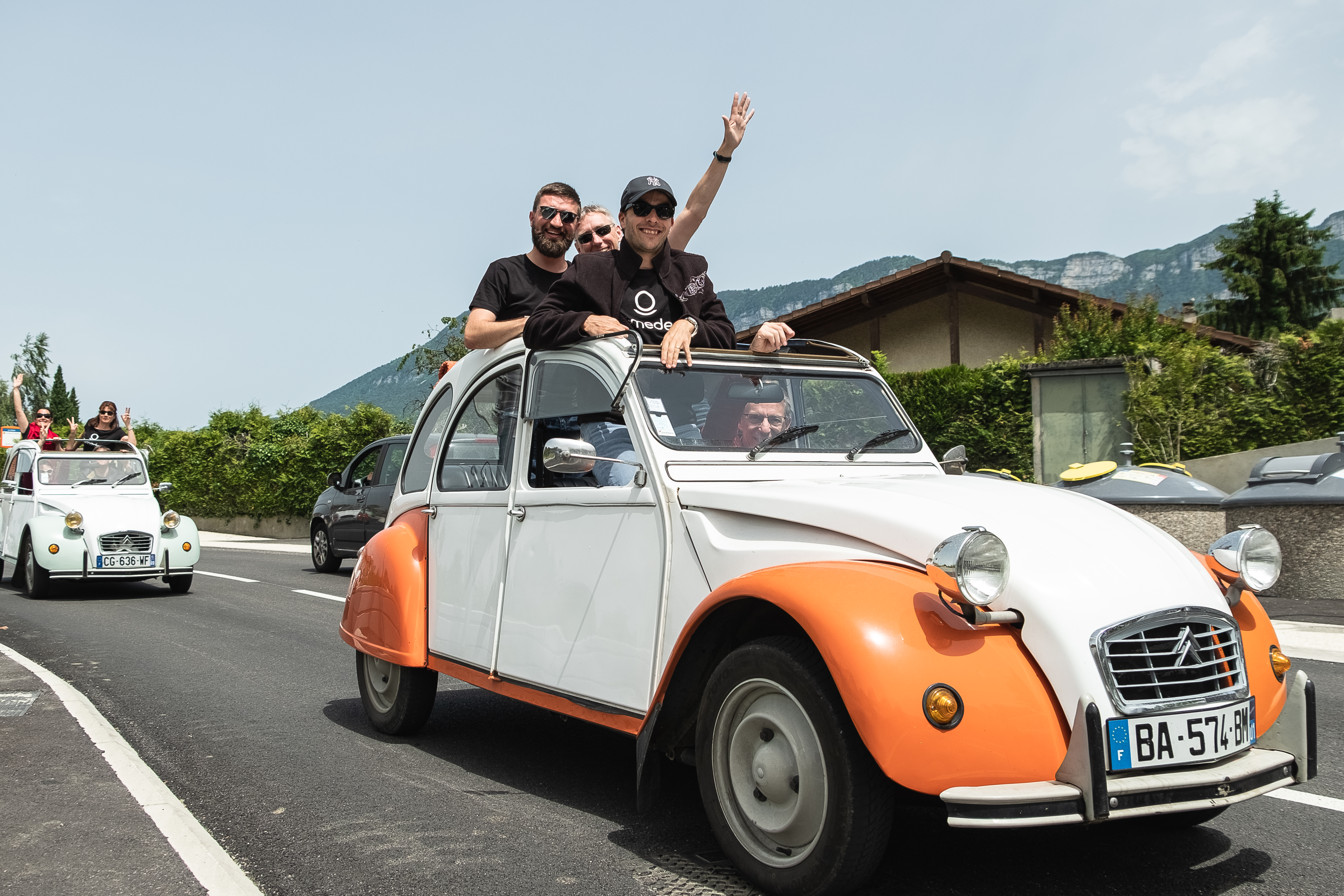
Fleet management capacity up to 35+ vehicles in parallel through vetted partners (2CV, Dyane and classic variants), including maintenance checks and backup units.
Standard safety toolkit on rallies: written briefings, route recon, marshal positions, and incident protocols; designed to keep schedules stable and liability controlled.
Corporate clients we support year after year around Antwerpen
We regularly support organisations operating in and around Antwerpen—from HQ teams to regional divisions—because they value predictable delivery and partners who do not improvise on event day. Many of our corporate clients renew yearly for a specific reason: once a format is proven (flow, safety, supplier reliability, tone), they prefer to iterate rather than restart from zero with a new agency.
You asked us to “use the company names you provided as references”; we did not receive a list in your brief. If you share your approved reference names, we will integrate them here exactly as validated by your legal/brand teams. In the meantime, we can also structure this section by sector (port & logistics, chemical & industrial, finance, tech, public institutions) which reflects the economic reality of Antwerpen without naming brands.
In practice, recurring clients typically come back for: annual management offsites, HR-led onboarding days, client hospitality during trade periods, and cross-site integration after reorganisations. A 2CV rally works well in those situations because it is both structured (roadbook, checkpoints, timings) and social (shared driving, rotation, storytelling).
 Besoin d’un devis rapide ?
Nous vous envoyons une première proposition sous 24h.
Why executives in Antwerpen choose a 2CV rally for team alignment
A 2CV rally is not a “driving activity”; it is a controlled scenario where leadership and teams experience coordination under constraints. In Antwerpen, where many organisations operate with tight operational rhythms (logistics slots, production schedules, client deadlines), this activity resonates because it mirrors everyday reality—without the workplace friction.
Fast cross-team bonding without forced icebreakers: two to four people in a car must collaborate immediately (navigation, timekeeping, decision-making). This is effective for post-merger integration, new leadership teams, and mixed-site groups.
Observable behaviours for leadership and HR: who takes structure, who listens, who stays calm under pressure, who delegates. We can design checkpoints that make those behaviours visible without turning it into an assessment centre.
A narrative that supports communication goals: internal comms can build content around a clear storyline (route, missions, local landmarks, team names). We also integrate brand-safe photo moments and pre-approved messaging points.
Time-boxed engagement: a rally can be run in 2.5 to 4.5 hours, which fits an agenda with plenary sessions, workshops, and a dinner. This is often crucial for executive calendars.
Inclusive participation compared to sport-heavy activities: we design missions that reward observation and collaboration, not physical performance. This lowers exclusion risk and supports DEI objectives.
Client hospitality that feels authentic: for B2B guests, arriving together at a partner venue after a well-managed route creates the right level of “special” without looking extravagant.
It also matches the economic culture of Antwerpen: pragmatic, schedule-driven, and relationship-oriented. When it is produced properly, the rally becomes a credible extension of how the company wants to operate—disciplined, safe, and human.
What changes operationally when your rally is in Antwerpen
Running a 2CV rally in Antwerpen requires local thinking. The city’s mobility patterns, ring road pressure, and the mix of urban and peri-urban zones mean you cannot rely on generic “Belgium routes”. We plan for realistic average speeds, buffer times, and alternative segments when traffic peaks or roadworks appear.
Corporate groups in Antwerpen also tend to be sensitive to reputational detail: where you park, how you brief safe driving, how you manage noise at arrival points, and how you handle alcohol around driving. Executives do not want a “fun” activity that creates HR or legal headaches the next day.
Finally, many Antwerp-based organisations host international colleagues. That impacts production: bilingual briefings, simple roadbook design, and clear rules that work for guests unfamiliar with Belgian road habits. We routinely build the experience so it stays easy to follow while still feeling like a real rally.
Which add-ons work best for corporate event entertainment in Antwerpen
A rally alone is strong; the right add-ons turn it into a corporate program that supports leadership goals. We select modules that increase engagement without creating operational drag. For corporate event entertainment in Antwerpen, we also pay attention to noise, traffic impact, and the brand perception of each element.
Animations Interactives à Antwerpen
Roadbook missions with business-relevant behaviours: timed decision points, resource trade-offs, and team roles (captain, navigator, timekeeper) to mirror project governance.
Checkpoint facilitation by marshals: short, high-clarity challenges (5–8 minutes) to avoid queues; scoring is transparent so teams accept outcomes.
Executive “message drop” checkpoint: a brief audio or printed message linked to strategy themes; good for internal comms when a transformation is ongoing.
Animations Artistiques à Antwerpen
Retro photo corner with brand controls: branded backdrop and approved framing; avoids uncontrolled imagery while still providing shareable content.
Live illustrator at the finish: quick team portraits or “rally moments” that participants can take back to the office; works well for leadership offsites.
Animations Innovantes à Antwerpen
Local tasting checkpoint around Antwerpen: small-format bites with clear allergen labels and fast service; designed to keep the rally moving.
Finish-line aperitif with strict driving policy: if driving continues after the finish, we keep it alcohol-free and move the celebratory drink to the post-driving segment (or provide transfers).
Animations Gourmandes à Antwerpen
Light digital tracking (optional): a simple QR or web-based check-in to time teams without forcing app installs; practical for mixed corporate devices.
CSR-integrated missions: micro-actions during checkpoints (e.g., assembling kits, local partnership donations) that are auditable and not performative.
We always align add-ons with brand image and stakeholder expectations. A bank, industrial group, or listed company in Antwerpen may require a more sober tone than a creative or consumer brand; we design accordingly and validate touchpoints before production.
Where to start and finish a 2CV rally around Antwerpen
The venue is not just a parking area; it defines perceived quality and logistics. In Antwerpen, the right start/finish point reduces traffic stress, protects timing, and sets a tone that matches your audience (executives, clients, or staff). We select locations based on access, parking manoeuvrability for classic cars, neighbour impact, and the ability to host a briefing and a controlled arrival.
| Venue type | For which objective? | Main strengths | Possible constraints |
|---|---|---|---|
Business venue with private parking on the outskirts of Antwerpen | Efficient kick-off for tight agendas; works well for executive offsites | Predictable access, controlled briefing space, easy signage, reduced city-centre congestion risk | Less “city identity” in the first minutes; requires a strong roadbook to create immersion |
Partner hotel with meeting rooms near Antwerpen | Combine plenary + rally + dinner with one contract owner | Single coordination point, guest comfort, clear fallbacks in bad weather | Parking capacity must be verified; arrival noise management is essential |
Industrial heritage or cultural site in the Antwerpen region | Brand storytelling, client hospitality, internal pride moments | High perceived value, strong photo moments, natural narrative for checkpoint design | Permit and neighbour sensitivity; load-in rules and time windows can be strict |
We recommend a site visit and a short route recon before final confirmation. On paper, two venues look similar; on the ground, turning radius, parking flow, and briefing acoustics make a decisive difference for a 2CV rally in Antwerpen.
What a 2CV rally budget looks like in Antwerpen
Pricing depends less on “the idea” and more on operational parameters: how many vehicles, how long the route, what level of staffing, and which risk controls you require. For decision-makers in Antwerpen, we present budgets in clear modules so you can arbitrate without losing quality where it matters.
Number of participants and cars: most corporate setups run 3–4 people per car. More cars means more marshals, more parking management, and more coordination.
Program duration: a 2.5-hour rally is not priced like a full half-day with multiple checkpoints and a finish event.
Route complexity and permits: urban segments, controlled stops and specific sites may require additional authorisations or coordination.
Staffing level: host/briefing lead, marshals, mechanics support, scoring desk, and an event manager. Cutting staffing is the fastest way to create delays.
Insurance and safety framework: documentation, incident protocols, and contingency resources (backup vehicles) influence cost but protect the company.
Branding and content: roadbooks, signage, photo/video coverage, and internal comms assets; often requested by communication teams.
Catering and venue costs: start coffee, checkpoint tastings, finish aperitif, room rental, and parking fees.
We frame ROI in operational terms: one well-produced rally can replace multiple disconnected initiatives by achieving onboarding, cross-team connection, and leadership visibility in a single program. The goal is not to spend more; it is to spend where it prevents schedule failure and reputational risk in Antwerpen.
When an event agency in Antwerpen is the safer choice
For a 2CV rally in Antwerpen, local execution capacity matters. A partner who knows local mobility patterns, supplier reliability, and site constraints will protect your timing and reduce last-minute surprises. That is why we often build the project with our Antwerp-facing production network and, when relevant, coordinate with our local page as an event agency in Antwerpen resource for venue and supplier context.
From a director’s perspective, the advantage is not “local charm”; it is operational certainty: quicker recces, faster replacement solutions, and fewer unknown stakeholders on the day.
- Faster decision loops: scouting and route tests can be done quickly, which reduces risk when your dates are tight.
- Supplier accountability: local partners protect their reputation and tend to respond faster when a change is needed.
- Better contingency planning: alternative stops, indoor fallbacks, and backup parking options identified in advance.
- Stakeholder management: smoother coordination with venue managers and local constraints (noise, access windows, neighbour relations).
We frame ROI in operational terms: one well-produced rally can replace multiple disconnected initiatives by achieving onboarding, cross-team connection, and leadership visibility in a single program. The goal is not to spend more; it is to spend where it prevents schedule failure and reputational risk in Antwerpen.








What we have delivered in Antwerpen-like conditions
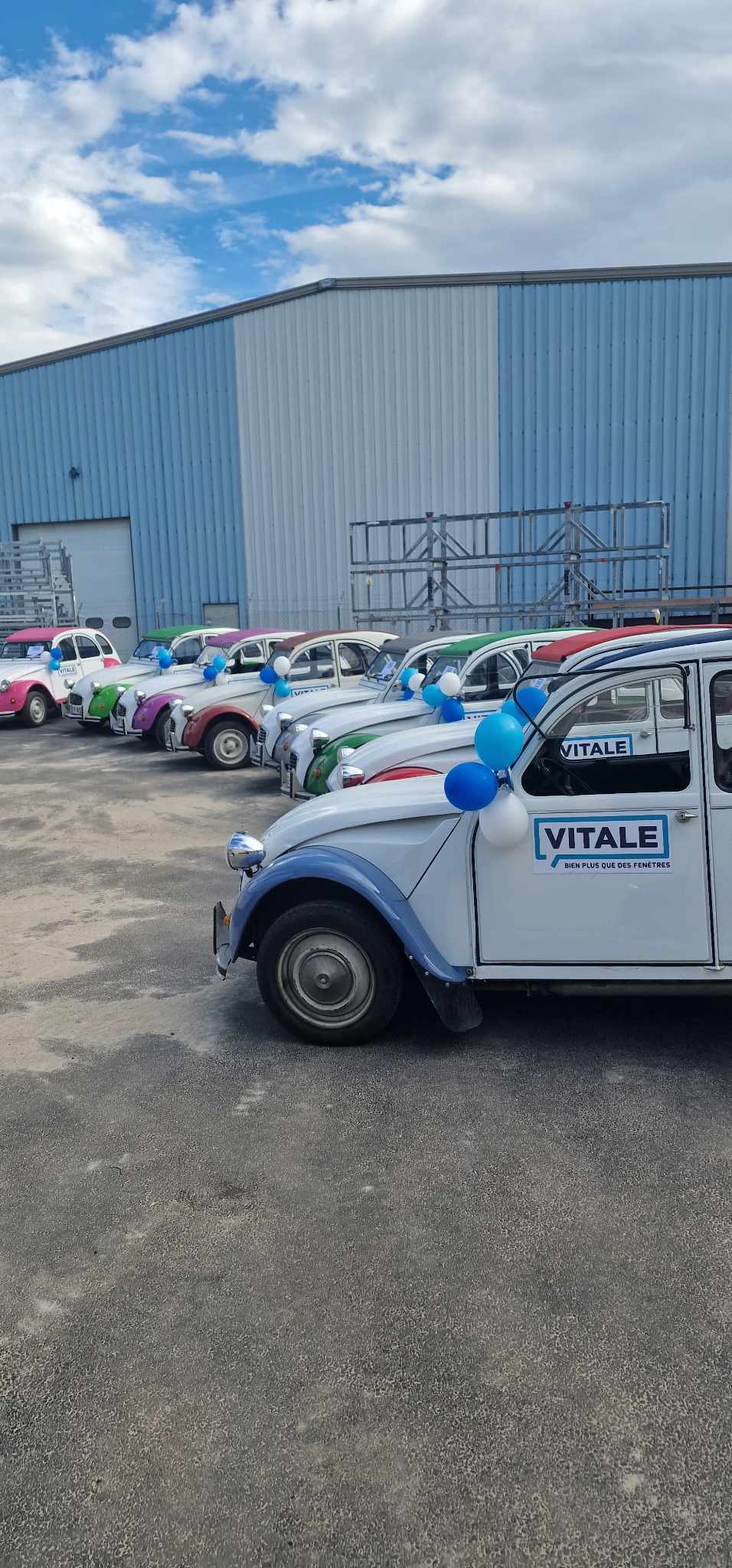
Our rally productions range from compact leadership afternoons to multi-wave programs for larger headcounts. The common thread is operational control: clear run-of-show, managed traffic flow at start/finish, and checkpoints that do not collapse under volume.
Examples of situations we routinely handle for executive and HR stakeholders:
- Late plenary finish: when a CEO Q&A runs over by 20 minutes, we switch to a compressed briefing format and adjust checkpoint timing to recover the schedule without cutting safety.
- Mixed language groups: we provide bilingual briefing materials and marshal scripts so international guests in Antwerpen are not dependent on one colleague.
- Brand sensitivity: for listed companies, we control photo angles, branding placement and alcohol policy so internal communications can publish confidently.
- Mechanical incident mid-route: we deploy a backup car and reorganise teams at a checkpoint so the experience stays fair and the group arrives together.
This is the difference between an activity provider and an event producer: the participant experience stays smooth even when reality introduces friction.
Common mistakes to avoid on a 2CV rally in Antwerpen
Underestimating traffic and buffers: the Antwerp ring and urban access can stretch timings quickly. We design with realistic averages and pre-approved shortcuts.
Choosing a start point without testing parking flow: classic cars need space and time to line up; a poor parking layout creates immediate stress and delays.
Vague rules on alcohol and driving: this exposes HR and executives. We implement a written policy and structure the program accordingly.
Overcomplicated roadbooks: if navigation becomes frustration, engagement collapses. We calibrate difficulty by audience profile and ensure teams can recover.
Too few marshals: one delayed checkpoint can cascade into a late dinner and irritated venue partners. Staffing is a core quality lever.
No backup plan for a car issue: without a swap strategy, the program becomes unfair and disorganised.
Our role is to prevent these risks with preparation and on-site discipline. The objective is not perfection on paper; it is resilience on the day, in real Antwerpen conditions.
Why Antwerpen clients renew with INNOV'events
Loyalty is rarely about creativity; it is about trust under pressure. When an HR director or a communications lead rebooks, it is typically because the agency protected their internal credibility: the event started on time, executives were comfortable, and participants felt cared for.
Recurring programs are often built on annual cycles (onboarding, leadership offsite, client moments), which benefit from continuous improvement rather than reinvention.
When clients return, they often ask us to keep the rally core stable and evolve 20–30% of checkpoints or storytelling—enough novelty without operational risk.

In practice, repeat business is the clearest signal that delivery matched expectations. In Antwerpen, where stakeholders compare suppliers carefully, that matters more than any promise.
Our production process for Antwerpen rally events
👉 Scope and stakeholder mapping in Antwerpen
We start with a short working session: objectives (HR, leadership, client), constraints (timing, alcohol policy, mobility), audience profile, and brand tone. We identify decision owners and approval points early so we do not lose time later (legal, insurance, venue, comms).
👉 Route concept and feasibility check for Antwerpen
We propose 1–2 route concepts with durations, checkpoint count, and start/finish options. We then run a feasibility check: parking flow, manoeuvring, traffic buffers, and whether the route supports your narrative (values, strategy themes, local identity).
👉 Supplier locking and fleet planning in Antwerpen
We secure vehicles, confirm maintenance checks, and plan backup resources. We align with venue managers on access windows and neighbour constraints. If your group size is large, we plan waves and staggered departures to keep the experience smooth.
👉 Briefing pack, roadbook, and scoring system
We produce clear roadbooks, marshal scripts, safety briefings, and a simple scoring model. Communication teams receive content guidelines (photo moments, brand placements, messaging) so outputs are usable internally.
👉 Event-day production and contingency management in Antwerpen
We run the rally with an event manager and marshals: check-in, timed departures, checkpoint management, and finish-line coordination. We keep a live log of incidents and timing. If something shifts (traffic, weather, a vehicle issue), we execute pre-planned alternatives to protect your schedule.
👉 Debrief and reuse for future Antwerpen editions
After the event, we share a concise debrief: what worked, where timing shifted, participant feedback highlights, and recommendations for the next edition. This helps HR and comms build continuity and improves ROI year over year.
FAQ sur l'organisation 2CV rally à Antwerpen
How many people fit in a 2CV rally in Antwerpen?
Most corporate teams run 3–4 participants per car. For comfort and rotation, 3 is ideal; for budget efficiency, 4 works if the route is not too long. We typically recommend 20–200 participants total depending on venue parking and staffing.
How long should a 2CV rally in Antwerpen last?
Common formats are 2.5–3 hours for an afternoon module, or 4–4.5 hours for a half-day with more checkpoints and a stronger narrative. We build duration around your fixed constraints (plenary end time, dinner booking, transfers).
Is a 2CV rally in Antwerpen safe for corporate groups?
Yes, when produced with a written safety framework: pre-briefing, clear driving rules, controlled checkpoints, and an incident protocol. We also recommend a strict approach to alcohol: either no alcohol before driving ends or organised transfers after the finish.
What is the typical budget range in Antwerpen?
As a working range, corporate projects often fall between EUR 150–350 per person depending on number of cars, duration, staffing, venue, and content production. Larger groups can optimise per-person costs through wave planning; premium venues and heavier branding push the range upward.
How far in advance to book a 2CV rally in Antwerpen?
Plan for 6–10 weeks to secure the best fleet availability and venues, especially in spring and early autumn. For large groups (many vehicles) or complex venue requirements, 10–14 weeks is safer.
Request a quote for a 2CV rally in Antwerpen
If you are comparing agencies, we suggest a practical next step: share your date window, approximate headcount, start/finish preference (single venue or different locations), and any non-negotiables (timing, alcohol policy, branding constraints). We will respond with a structured proposal: route concept, staffing plan, risk controls, and a modular budget you can arbitrate quickly.
For Antwerpen, earlier planning materially improves quality: more vehicle availability, better venue options, and time for a proper route recon. Contact INNOV'events to lock feasibility before diaries and suppliers fill up.
Agence INNOV'events Antwerpen
Justin JACOB est le responsable de l'agence événementielle Antwerpen. Contactez-le directement par mail via l'adresse belgique@innov-events.be ou par formulaire.
Contacter l'agence AntwerpenToutes nos prestations & animations Antwerpen, Belgique
Découvrez nos prestations événementielles
Découvrez nos animations événementielles disponibles au Belgique
- Hôtesse événementielle à Antwerpen
- Escape Game à Antwerpen
- Cours de cuisine type MasterChef à Antwerpen
- Magicien à Antwerpen
- Location de chapiteau à Antwerpen
- Atelier colorimétrie à Antwerpen
- Jeux gonflables à Antwerpen
- Service de voiturier à Antwerpen
- Simulateur de football à Antwerpen
- Location de mobilier lumineux à Antwerpen
- Flocage lumineux à Antwerpen
- Repas insolite à Antwerpen
- Light Painting à Antwerpen
- Murder Party à Antwerpen
- Jeu concours à Antwerpen
- PLV événementielle à Antwerpen
- Réalité virtuelle à Antwerpen
- Cuisine moléculaire à Antwerpen
- Animation Halloween à Antwerpen
- Feu d’artifice à Antwerpen
- Jeux géants à Antwerpen
- Animateur événementiel à Antwerpen
- Animation photo à Antwerpen
- Père Noël à Antwerpen
- Animation enfants à Antwerpen
- Visite guidée à Antwerpen
- Rallye urbain à Antwerpen
- Piscine à balles à Antwerpen
- Simulateur de vol à Antwerpen
- Location de food truck à Antwerpen
- Record du monde à Antwerpen
- Simulateur de surf à Antwerpen
- Casino du vin à Antwerpen
- Atelier relooking à Antwerpen
- Atelier création de parfum à Antwerpen
- Atelier acting à Antwerpen
- Animations RSE à Antwerpen
- Tir à l’arc à Antwerpen
- Agent de sécurité à Antwerpen
- Œnologie à Antwerpen
- Mime à Antwerpen
- Jeu télévisé à Antwerpen
- Fête foraine à Antwerpen
- Atelier gestion de crise à Antwerpen
- Atelier négociation de crise à Antwerpen
- Jeux d’arcade à Antwerpen
- Simulateur de chute libre à Antwerpen
- Simulateur de ski à Antwerpen
- Simulation circuit automobile à Antwerpen
- Baptême de l’air à Antwerpen
- Dégustation à Antwerpen
- Création de baby-foot à Antwerpen
- Rallye 2CV à Antwerpen
- Challenge LEGO à Antwerpen
- Animation casino à Antwerpen
- Interprète / traducteur à Antwerpen
- Goodies à Antwerpen
- Bus / transfert à Antwerpen