
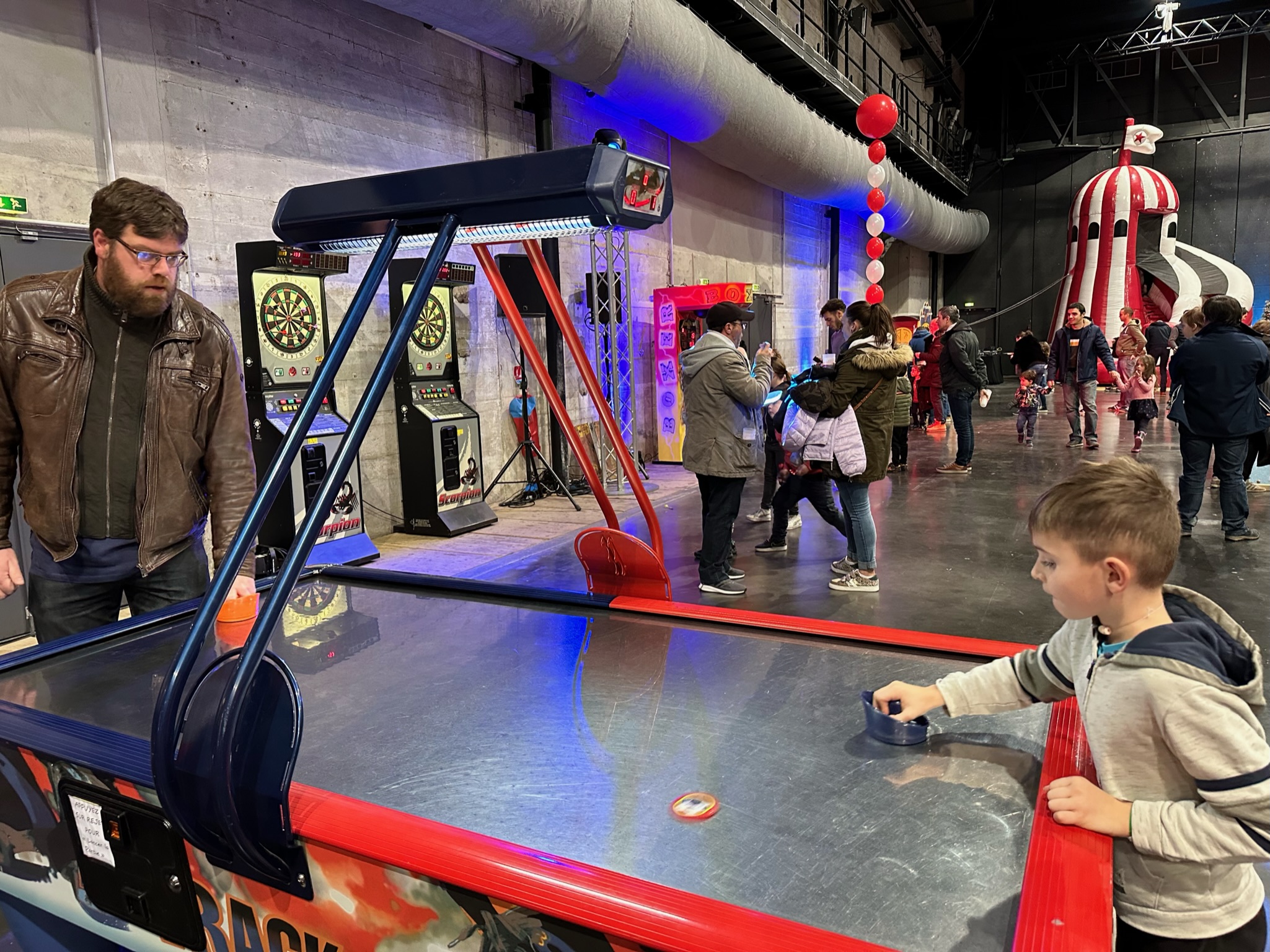
Arcade games in Brussel for corporate events that actually deliver engagement
INNOV'events designs and operates Arcade games activations for corporate events in Brussel, typically from 30 to 800 attendees. We handle equipment selection, delivery, installation, staffing, and on-site flow so your teams can focus on hosting—not troubleshooting.
From afterworks and office parties to conferences and family days, we build formats that fit your objectives: participation rate, networking velocity, and a measurable “buzz” without compromising brand image or venue constraints.
Sommaire
In a corporate event, entertainment is not decoration: it is a practical lever to increase participation, reduce awkward downtime, and accelerate cross-team interactions. Arcade games work particularly well because they create short, repeatable experiences that keep the room moving and the energy stable.
Organizations in Brussel usually expect three things at once: a professional setup that respects venues and neighbors, multilingual guest handling (FR/NL/EN), and a concept that looks credible for executives and clients. We design arcade zones that feel intentional, not like a random corner of “games.”
Our team is Brussels-based and used to the realities of local access windows, city-center logistics, and premium venues. We plan power distribution, sound levels, and crowd flow with the same rigor as staging—because on event day, details decide whether it runs smoothly.
Operational facts INNOV'events uses to secure events in Brussel
10+ years delivering corporate entertainment across Belgium, with recurring clients in Brussels and the wider Brabant economic area.
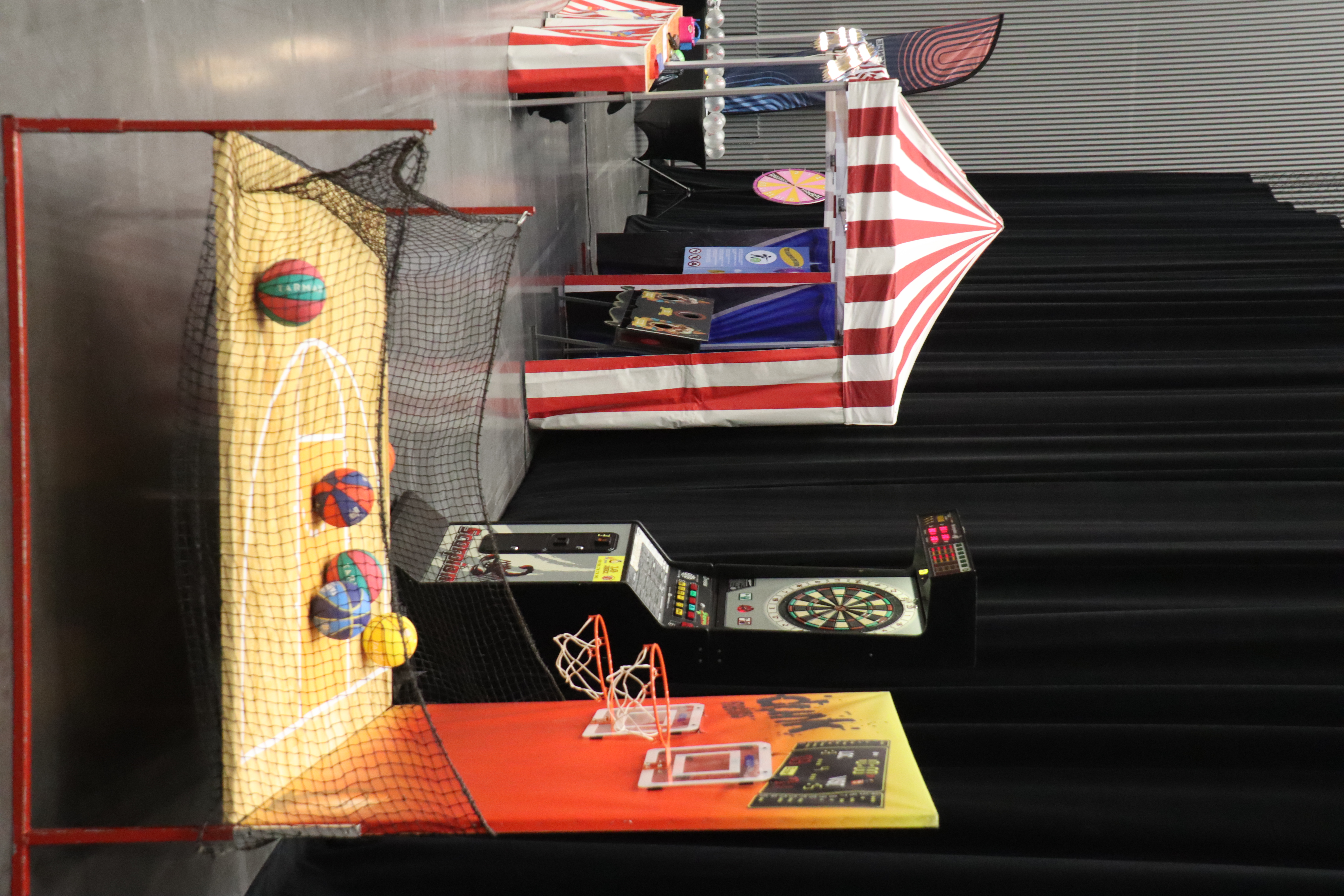
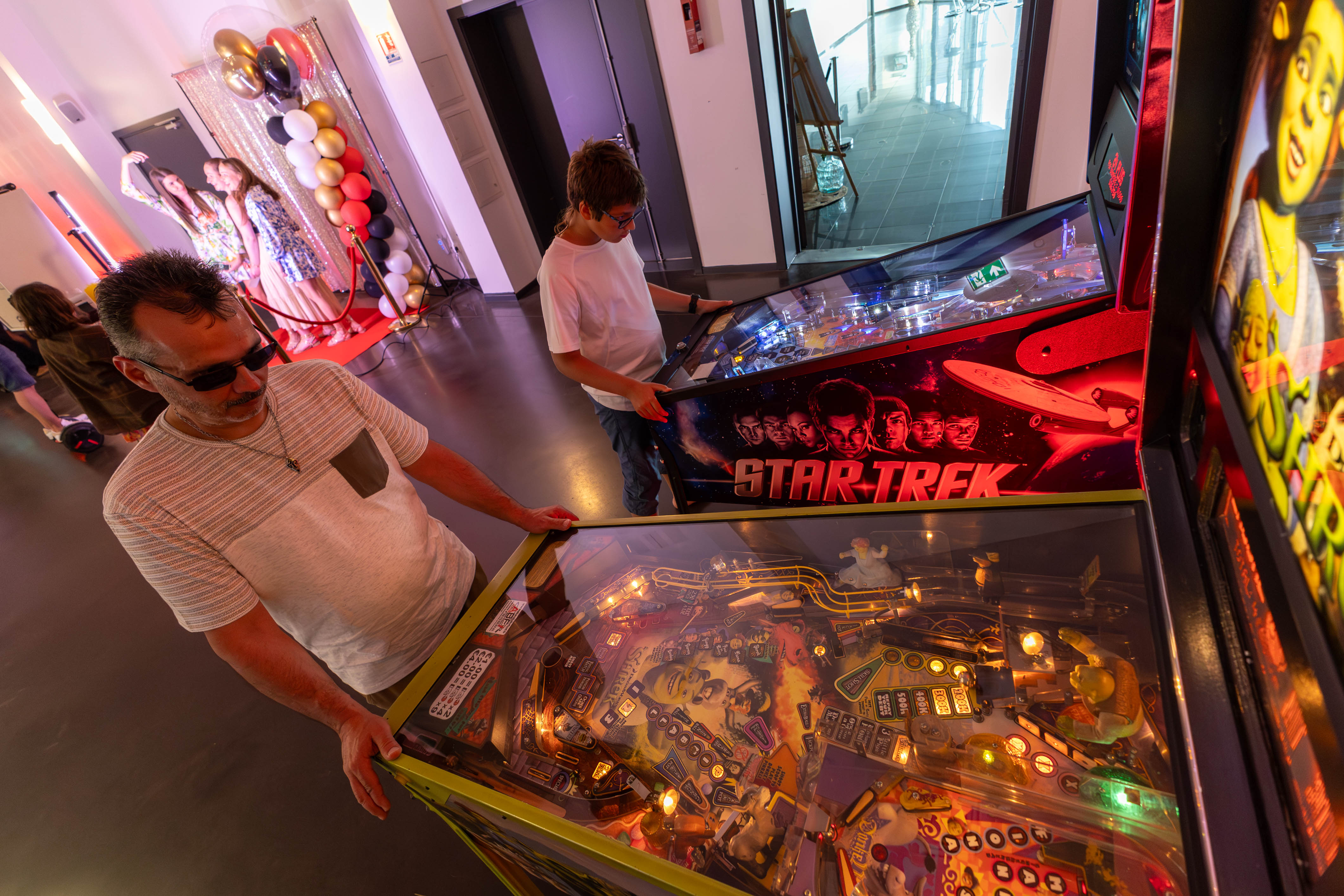
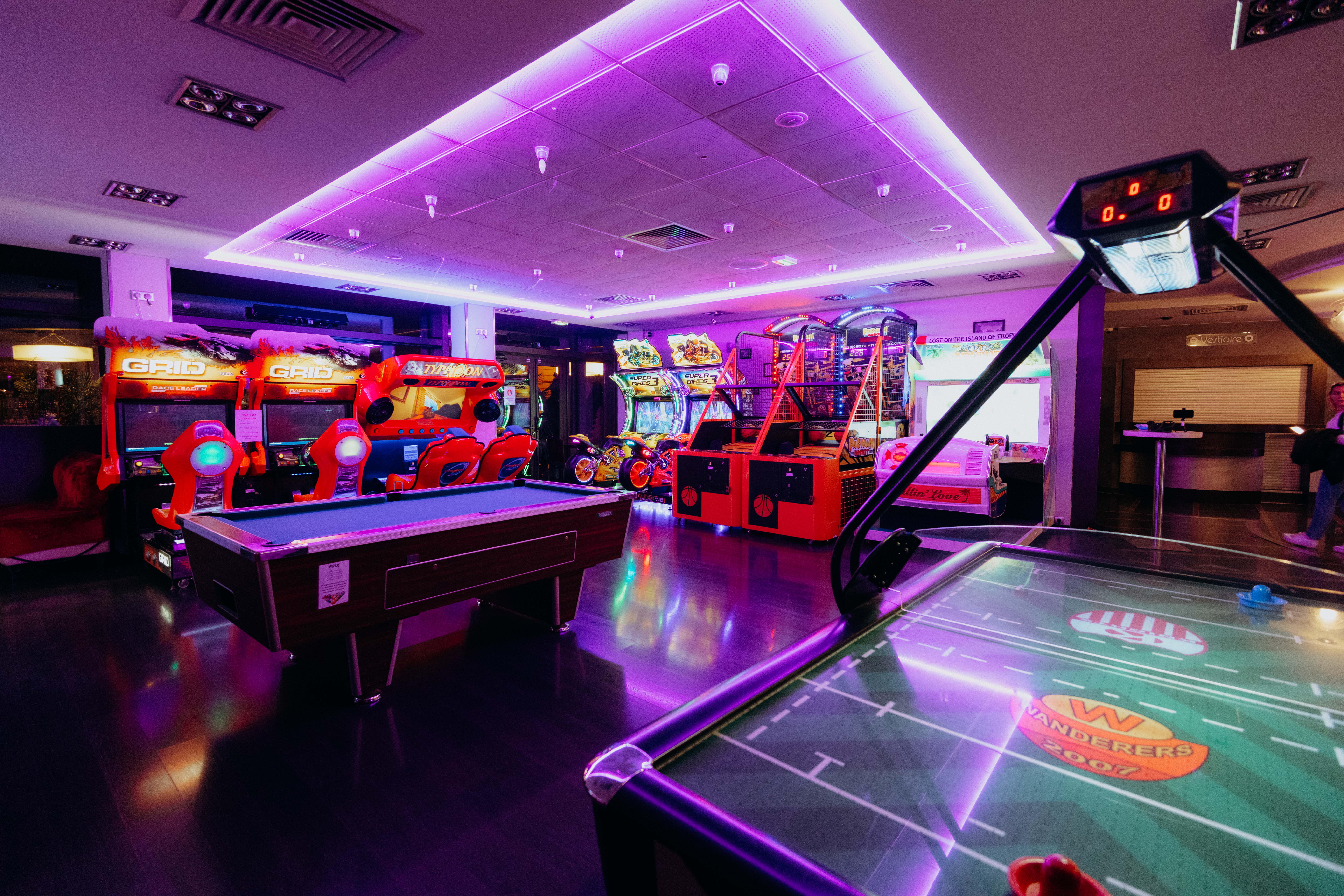
Typical arcade deployments from 6 to 40 game stations (classic cabinets, pinball, driving simulators, air hockey, VR-ready corners), scaled to your guest count and venue footprint.
On-site staffing ratio we recommend: 1 facilitator per 6–10 stations depending on complexity, tournament format, and guest profile.
Set-up time ranges from 2 to 6 hours for most Brussels venues; we plan load-in around strict time slots and lift access.
Who we support year after year in Brussel
INNOV'events supports organizations operating in Brussel—from HQ teams and EU-facing departments to fast-growing scale-ups around the canal and established institutions near the European Quarter. Many clients come back because they want the same reassurance every year: a concept that looks sharp, a schedule that respects internal speeches and VIP moments, and a partner that can absorb last-minute changes without creating stress for the organizing committee.
We frequently work with HR and Internal Comms teams who are accountable for participation rates and inclusion, as well as executive assistants managing tight agendas. In practice, this means we plan the arcade zone with clear “entry points,” queue management, and multilingual facilitation so nobody feels excluded or lost.
If you have internal references you want us to align with (brand guidelines, employer branding messages, or a business unit’s narrative), we integrate that upfront—so the entertainment supports your communication instead of competing with it.
 Besoin d’un devis rapide ?
Nous vous envoyons une première proposition sous 24h.
Why executives in Brussel use arcade games to drive real outcomes
When leadership sponsors an event, the expectation is clear: deliver a business benefit (retention, culture, cross-silo collaboration, client proximity) while keeping risk low. A well-designed Arcade games in Brussel activation is one of the most reliable formats to generate participation across age groups and job levels—without forcing people into uncomfortable “icebreakers.”
Higher participation rate with controlled intensity: Arcade formats provide quick entry (30 seconds to start) and short cycles (2–5 minutes), which increases “try rate” and prevents the room from stalling after speeches.
Cross-team mixing without awkward facilitation: We see it repeatedly in Brussels HQ events: finance plays against sales, IT challenges marketing, and the conversation becomes natural because the game creates a shared reference point.
Employer branding that feels credible: Instead of generic fun, you can connect the activation to values—precision, speed, teamwork—through scoring, team brackets, and branded leaderboards.
Measurement-friendly: Participation counts per station, tournament registrations, average dwell time, and “top 10” leaderboards can be captured and reported to HR/Comms.
Risk containment: Compared with high-risk entertainment, arcade zones are predictable in terms of safety, sound, and timing—important for venues with strict rules in central Brussel.
Brussels is a dense, international business environment where events are compared quickly—internally and externally. Arcade entertainment works when it is executed with discipline: the concept supports your culture, and the operational delivery matches the standards of the city’s premium venues.
What companies in 1000 expect from arcade entertainment
In postal code 1000 and the broader Brussels region, expectations are shaped by three recurring constraints we plan for from day one.
1) Logistics and access are rarely “simple.” Load-in can mean narrow streets, limited parking authorizations, strict dock schedules, and shared lifts. For Arcade games, this matters because cabinets and simulators are bulky and require careful handling. We prepare a realistic access plan: arrival windows, protection of floors/walls, and a contingency path if a truck cannot stop where planned.
2) Venues enforce strict technical rules. Power distribution, maximum decibels, and fire safety routes are non-negotiable—especially in conference venues, hotels, and listed buildings. We design the arcade zone so it never blocks emergency exits and we split the electrical load properly (no “multi-socket chaos”).
3) Guests are diverse. In Brussels you often have mixed audiences: executives, international teams, new joiners, and sometimes clients or partners. We therefore propose stations with different comfort levels: casual classics (easy start), competitive skill games (for challengers), and cooperative options (for inclusive team play). Multilingual signage and facilitation are part of the plan, not an afterthought.
Which arcade games format works best in Brussel for your audience
Entertainment creates engagement when it is easy to join, socially acceptable for different personality types, and aligned with the event’s “why.” With Arcade games, we can design formats that fit a leadership offsite, an HR celebration, or a client evening—without turning the event into a noisy fair.
Animations Interactives à Brussel
Branded tournament ladder (60–180 minutes): guests register in teams (departments or mixed), play short matches, and follow a live leaderboard. Works well for internal culture moments and creates a clear storyline for the evening.
Open-play arcade lounge: a curated mix of classic cabinets, pinball, air hockey, and racing—optimized for high throughput. Ideal for afterworks where networking is still the priority.
Speed challenges for conferences: 2–3 stations near the expo area with “2-minute challenges” to increase booth dwell time and create conversation starters between sessions.
Co-op corner for inclusion: games designed for paired play (two players, shared goal) so newcomers, interns, or quieter profiles have a comfortable entry point.
Animations Artistiques à Brussel
Retro design styling: we can stage the area with a controlled 80s/90s aesthetic (lighting, signage, photo backdrop) while keeping it corporate. This works in Brussels when you want nostalgia without compromising a premium brand look.
Custom audio policy: arcade sound is managed (headphones or controlled volumes) to protect speeches and networking comfort—especially in hotel ballrooms and multi-zone venues.
Animations Innovantes à Brussel
Arcade and bar pairing: we position high-energy stations near the bar and offer short “play & sip” flows so guests don’t abandon conversations for long sessions.
Comfort food corner with controlled service: mini burgers, Belgian fries, or dessert shots served in timed waves, synchronized with tournament rounds to avoid congestion.
Animations Gourmandes à Brussel
Digital leaderboard on brand templates: your colors, typography, and tone of voice applied to the scoring screen so the activation feels like part of your corporate environment.
Team-based scoring for culture goals: instead of highlighting only top performers, we can reward “most collaborative team” or “most diverse team participation,” which is often important for HR in Brussel organizations.
Hybrid integration: if some colleagues join remotely, we can add a simple online bracket display or a live score recap during the event’s internal stream.
The key is alignment: if your brand is premium and discreet, we design a refined arcade lounge with controlled sound and clean staging. If your brand is energetic and product-led, we can push competitive formats. In both cases, the entertainment must support your image—not dilute it.
Where to host arcade games in Brussel without fighting the venue
The venue shapes how the entertainment is perceived and how smoothly it operates. For Arcade games in Brussel, we pay attention to ceiling height, access routes, floor load, power availability, and acoustic behavior. A perfect concept can fail in the wrong room simply because guests cannot circulate or because sound bleeds into the plenary area.
| Venue type | For which objective? | Main strengths | Possible constraints |
|---|---|---|---|
| Hotel ballroom or conference venue | End-of-year party, townhall + networking, client evening | Reliable power, professional staff on-site, easy catering coordination | Strict sound rules, fixed load-in slots, sometimes limited “wow” if zoning is not designed |
| Corporate office space in Brussel | Employer branding, internal celebration, onboarding event | Cost control, authentic culture setting, easy access for employees | Lift dimensions, floor protection, building rules, neighbor noise sensitivity |
| Industrial or creative venue | Product launch, agency night, youth-oriented employer event | Strong atmosphere, flexible zoning for arcade lounge + stage | Power may require reinforcement, heating/cooling variability, more technical production planning |
We strongly recommend a site visit (or at least a technical call with plans) before confirming the game list. In Brussels, small constraints—one narrow corridor, one fragile floor, one shared lift—can decide whether the set-up is efficient or stressful.
What does arcade entertainment cost in 1000 for a corporate event
Pricing for Arcade games depends on the number and type of stations, staffing, duration, delivery complexity, and the level of branding/reporting you want. In 1000, logistics can influence cost more than clients expect, because access windows and handling requirements vary widely by venue.
Number of stations and mix: classic cabinets and air hockey are typically more cost-efficient per participant than large simulators. A balanced mix avoids budget concentration in one low-throughput unit.
Event duration and opening hours: a 3-hour afterwork is different from a full-day conference with continuous open play. Staffing and technical coverage scale with time.
Staffing level: facilitators are not optional if you care about flow and brand experience. Budget for 1 facilitator per 6–10 stations as a realistic baseline.
Logistics and access: city-center load-in constraints, long carry distances, stairs, and lift reservations increase handling time and crew needs.
Branding and reporting: branded leaderboards, custom signage, registration systems, and post-event metrics add value but require preparation and testing.
Insurance and safety compliance: public-liability coverage, cable management, and venue compliance checks are part of professional delivery.
From an ROI perspective, arcade entertainment is compelling when it increases participation and time-on-site without raising risk. We help you choose a mix that maximizes throughput and social interaction per euro, rather than simply stacking expensive machines.
Why choose an event partner based in Brussel for arcade games
For arcade activations, local presence is not a slogan; it is a risk reduction factor. An agency that routinely operates in Brussel understands the practical realities: how long a load-in really takes downtown, what venues enforce in terms of sound and cabling, and how to coordinate with catering and venue teams under time pressure. This is exactly why many clients prefer working with an event agency in Brussel when the program includes technical entertainment.
We also know that executive sponsors judge the event on “how it felt” operationally: no visible chaos, no queues, no staff improvising in front of guests. Our role is to make the experience look simple, because it was prepared properly.
- Faster troubleshooting: local teams and short supply lines reduce downtime if a replacement or additional equipment is needed.
- Venue familiarity: we adapt the installation plan to Brussels constraints (access, elevators, floor protection, noise policies) rather than discovering them on the day.
- Supplier coordination: smoother timing with catering, AV, and venue security so the arcade zone integrates into the event schedule.
- Multilingual guest handling: facilitation in FR/NL/EN to match real audiences in the city.
From an ROI perspective, arcade entertainment is compelling when it increases participation and time-on-site without raising risk. We help you choose a mix that maximizes throughput and social interaction per euro, rather than simply stacking expensive machines.





Examples of arcade games delivered in Brussel across event formats
Our Brussels projects range from compact arcade corners to full lounge zones with structured competition. What changes is not only the number of stations, but the operating model.
Afterwork in an office setting: typically 6–12 stations with high throughput (classic cabinets, pinball, air hockey). The key success factor is circulation: we position games to create micro-groups and avoid blocking the bar/catering line. We also manage sound so normal conversation remains possible—often a concern raised by HR and Comms.
Townhall + networking in a conference venue: we split the zone into “quiet open play” during conference segments and “tournament peak” after the plenary. This avoids the common pitfall where entertainment starts too early and competes with speeches. Leaderboards are displayed only when relevant, so the event stays professional.
Client-facing evening: we use a refined selection (visually clean machines, controlled lighting, branded scoring), plus a facilitator briefed on guest etiquette. The focus is not on high volume, but on creating structured touchpoints for sales teams to invite clients into a short challenge.
Across these scenarios, the same discipline applies: pre-check access, confirm power distribution, design throughput, and staff the zone so your internal team never becomes the technical helpdesk.
Common pitfalls we prevent for arcade games in 1000
Underestimating space and circulation: a few cabinets can quickly create choke points near entrances or catering. We plan minimum clearance and keep emergency routes untouched.
Choosing “impressive” machines with low throughput: one simulator can create a constant queue. We balance the mix so participation stays high across the evening.
No staffing plan: without facilitators, guests hesitate, rules are unclear, and minor technical issues become visible problems.
Poor sound and lighting control: too loud and networking suffers; too dark and the zone feels like an afterthought. We calibrate both to the venue and your brand.
Ignoring venue technical constraints: power overloads and cable hazards are avoidable with proper distribution and taped runs.
Unclear success criteria: “we want fun” is not an operational brief. We translate objectives into a measurable format: participation target, tournament structure, reporting needs.
Our role is to remove these risks before they show up on event day. That is what executives pay for: predictable delivery, clear responsibilities, and a program that stays in control even when the schedule shifts.
Why Brussel clients keep INNOV'events as their arcade partner
Repeat business happens when the event felt easy for the internal team and looked credible to leadership. Many Brussels clients return because we maintain process discipline while staying flexible when priorities change (a delayed speech, a VIP arrival, a sudden room change).
Common rebooking pattern: year-1 “arcade lounge” becomes year-2 “tournament format” once the organization sees participation data and wants more structure.
Operational KPI we optimize: reduce visible queues and technical downtime to near-zero through staffing, spares, and tested configurations.
Typical planning window: 4–8 weeks for standard deployments; 8–12 weeks if you require heavy branding, complex venue coordination, or multiple sites in Brussels.

Loyalty is the most concrete proof in event delivery: clients come back when their internal credibility is protected and the event can be repeated with confidence.
How INNOV'events delivers arcade games in Brussel from brief to showtime
👉 Brief framing in Brussel with operational constraints first
We start with the non-negotiables: guest count range, audience profile (employees/clients/mixed), venue type, timing, and brand requirements. Then we define measurable targets (participation, tournament size, reporting level). This prevents the classic mismatch where the concept is nice but impossible to operate in the room you actually have.
👉 Game curation and throughput design for 1000 venues
We propose a station mix based on throughput and audience comfort. We map stations to zones (welcome, networking, tournament, quieter corner) and validate power needs. If needed, we provide a simple floor plan to align with venue management and internal stakeholders.
👉 Technical planning, branding, and safety preparation
We confirm access routes, loading times, floor protection, and cable runs. For branded tournaments, we prepare leaderboards and signage aligned with your templates. We also brief facilitators on guest etiquette, language needs, and escalation protocols so issues are handled discreetly.
👉 Installation, testing, and venue coordination on event day
We arrive in line with the venue’s time slots, install the zone cleanly, test every station, and set volumes appropriately. We coordinate with AV and catering to avoid conflicts (speeches, service waves). The goal is that when guests arrive, everything is already stable and presentable.
👉 Operation, facilitation, and post-event wrap-up
During the event, facilitators manage flow, explain rules, rotate participants, and keep the experience inclusive. After closing, we dismantle efficiently within venue constraints and can provide participation feedback (what worked, what to improve for the next Brussels edition).
FAQ sur l'organisation Arcade games à Brussel
How many arcade games do we need for 200 guests in Brussel?
For 200 guests over a 3–4 hour evening, a practical range is 12–20 stations, depending on the mix. If you include low-throughput simulators, plan more total stations or add a tournament schedule to avoid queues.
Can arcade games work in a quiet corporate venue in 1000?
Yes, if sound is managed. We use controlled volumes, position louder stations away from speeches, and can run some games with reduced audio or headphones. The key is zoning and a clear “quiet perimeter” agreed with the venue.
What is the typical budget range for arcade games in Brussel?
Most corporate deployments in Brussel fall between €2,500 and €12,000 depending on station count, staffing, duration, branding, and access complexity. We can scope an efficient option for small afterworks as well as high-capacity lounge formats.
How much set-up time should we plan in central Brussel?
Plan 2–6 hours for installation and testing for most formats, plus time for venue access (lift reservations, dock schedules). For tight city-center venues, we build a load-in plan that matches the venue’s exact time slot to avoid delays.
Do you provide staff to run arcade tournaments in Brussel?
Yes. We typically provide 1 facilitator per 6–10 stations and a lead who coordinates timing, brackets, and venue alignment. Staffing is what keeps the experience smooth and professional, especially with mixed FR/NL/EN audiences.
Request a Brussel quote for arcade games with a clear operating plan
If you are comparing agencies, we suggest starting with a short call focused on constraints: venue, schedule, audience profile, and the level of branding/reporting you need. Based on that, INNOV'events will propose a station mix, staffing model, and realistic load-in plan for Arcade games in Brussel.
The earlier you engage us, the more value we can add—especially for central venues with strict access windows. Share your date, venue (or shortlist), estimated attendance, and timing, and we will respond with a concrete, decision-ready proposal.
Agence INNOV'events Brussel
Justin JACOB est le responsable de l'agence événementielle Brussel. Contactez-le directement par mail via l'adresse belgique@innov-events.be ou par formulaire.
Contacter l'agence BrusselToutes nos prestations & animations Brussel, Belgique
Découvrez nos prestations événementielles
Découvrez nos animations événementielles disponibles au Belgique
- Hôtesse événementielle à Brussel
- Escape Game à Brussel
- Cours de cuisine type MasterChef à Brussel
- Magicien à Brussel
- Location de chapiteau à Brussel
- Atelier colorimétrie à Brussel
- Jeux gonflables à Brussel
- Service de voiturier à Brussel
- Simulateur de football à Brussel
- Location de mobilier lumineux à Brussel
- Flocage lumineux à Brussel
- Repas insolite à Brussel
- Light Painting à Brussel
- Murder Party à Brussel
- Jeu concours à Brussel
- PLV événementielle à Brussel
- Réalité virtuelle à Brussel
- Cuisine moléculaire à Brussel
- Animation Halloween à Brussel
- Feu d’artifice à Brussel
- Jeux géants à Brussel
- Animateur événementiel à Brussel
- Animation photo à Brussel
- Père Noël à Brussel
- Animation enfants à Brussel
- Visite guidée à Brussel
- Rallye urbain à Brussel
- Piscine à balles à Brussel
- Simulateur de vol à Brussel
- Location de food truck à Brussel
- Record du monde à Brussel
- Simulateur de surf à Brussel
- Casino du vin à Brussel
- Atelier relooking à Brussel
- Atelier création de parfum à Brussel
- Atelier acting à Brussel
- Animations RSE à Brussel
- Tir à l’arc à Brussel
- Agent de sécurité à Brussel
- Œnologie à Brussel
- Mime à Brussel
- Jeu télévisé à Brussel
- Fête foraine à Brussel
- Atelier gestion de crise à Brussel
- Atelier négociation de crise à Brussel
- Jeux d’arcade à Brussel
- Simulateur de chute libre à Brussel
- Simulateur de ski à Brussel
- Simulation circuit automobile à Brussel
- Baptême de l’air à Brussel
- Dégustation à Brussel
- Création de baby-foot à Brussel
- Rallye 2CV à Brussel
- Challenge LEGO à Brussel
- Animation casino à Brussel
- Interprète / traducteur à Brussel
- Goodies à Brussel
- Bus / transfert à Brussel