
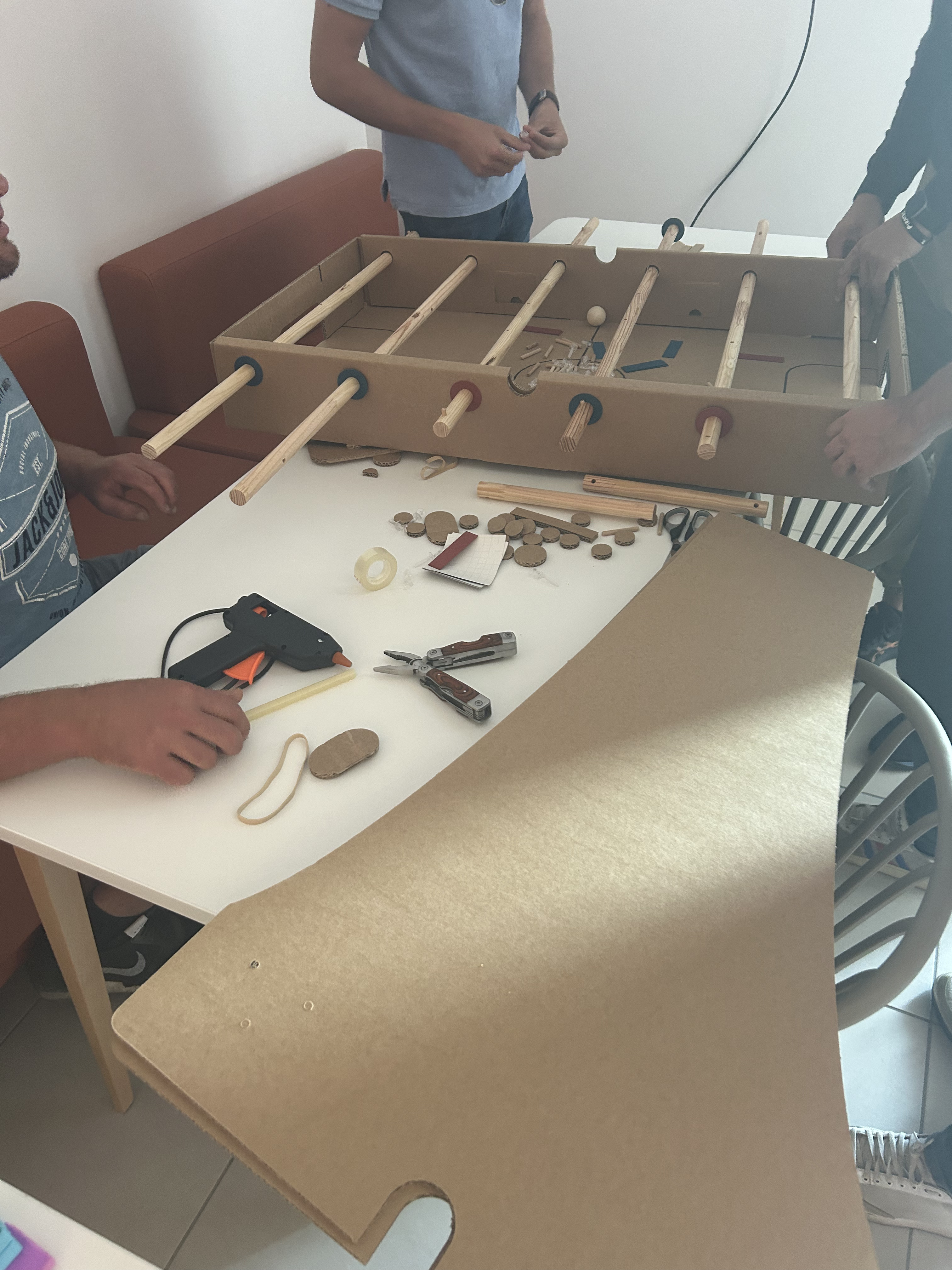
Babyfoot bouwen workshop in Luik for teams that want measurable cohesion
INNOV'events is a Brussels-based corporate event agency delivering Babyfoot bouwen workshop formats on-site in Luik, typically for 10 to 200 attendees. We manage the full operational chain: workshop design, materials, facilitation, venue constraints, safety, and run-of-show so your team can focus on outcomes—not logistics.
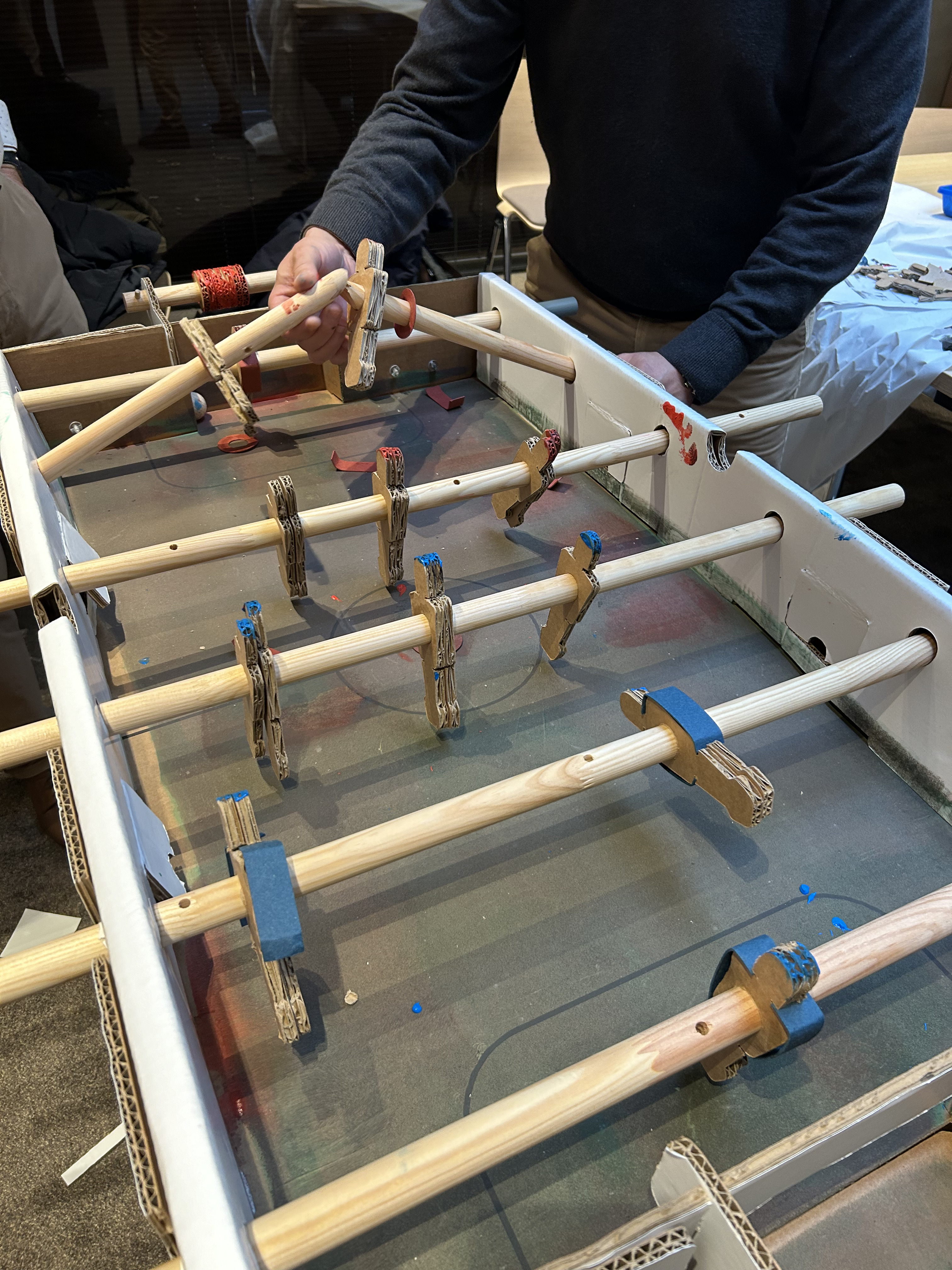
This is a hands-on build workshop where teams assemble functional table football units (or modular mini-tables) under time and quality constraints, then test them in a short tournament. It works equally well for leadership offsites, onboarding waves, and cross-department alignment sessions.
Sommaire
In a corporate agenda, entertainment is only valuable if it supports a business objective: accelerating trust, improving collaboration, and creating shared reference points that last beyond the event day. A Babyfoot bouwen workshop does that by forcing real-time coordination under constraints—exactly what high-performing teams face in projects.
Organizations in Luik typically expect an activity that is concrete, multilingual-ready, and operationally smooth: strict timing, clear facilitation, and a result you can see and touch. They also expect respect for site rules (access, parking, safety) and minimal disruption to production or office operations.
We deliver this workshop regularly in Wallonia and specifically in Luik and its business areas (Guillemins, Outremeuse, Angleur, Herstal corridor). Our team brings professional tooling, risk controls, and a proven event run-sheet approach—so the workshop stays enjoyable and credible at executive level.
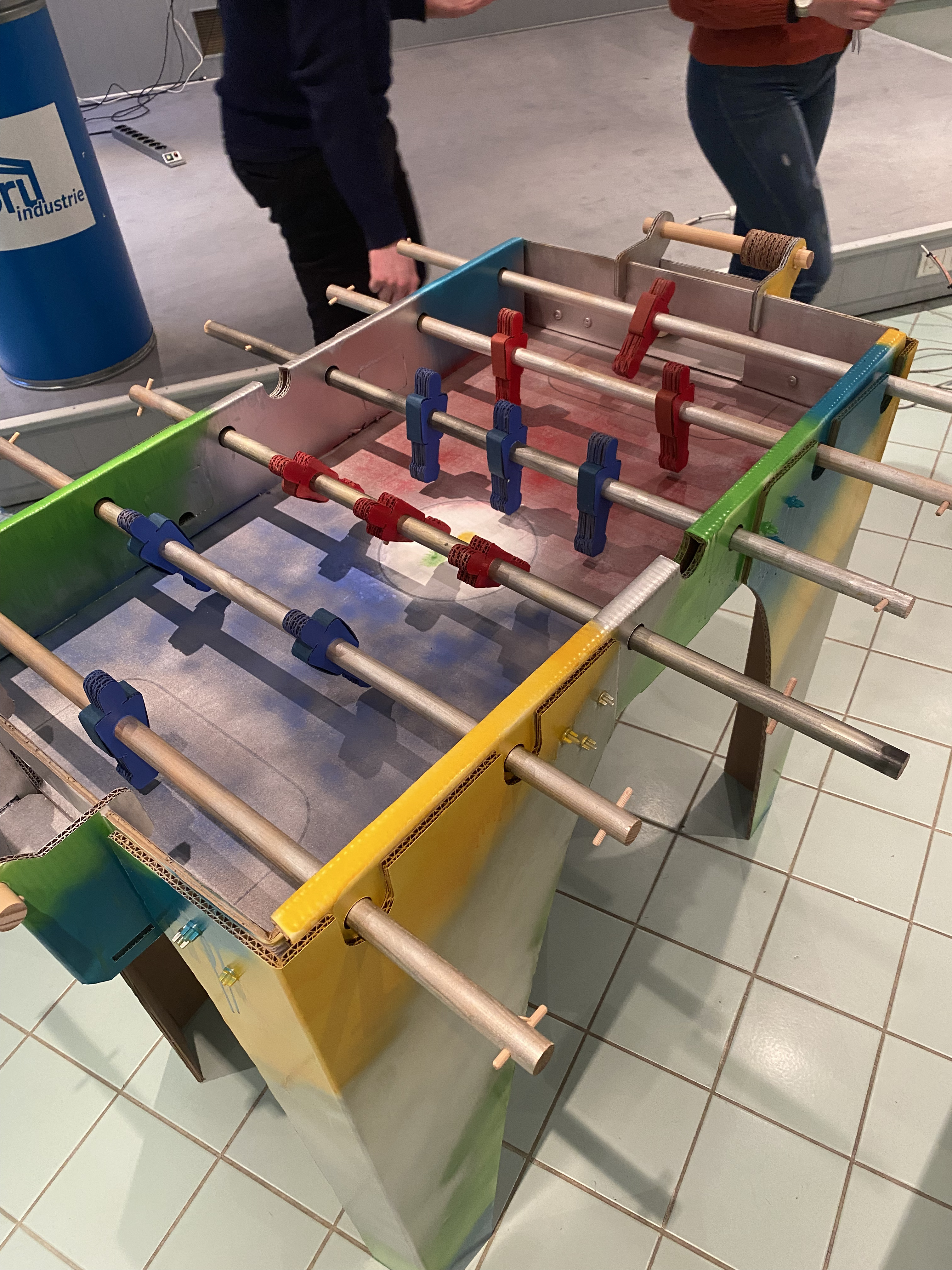
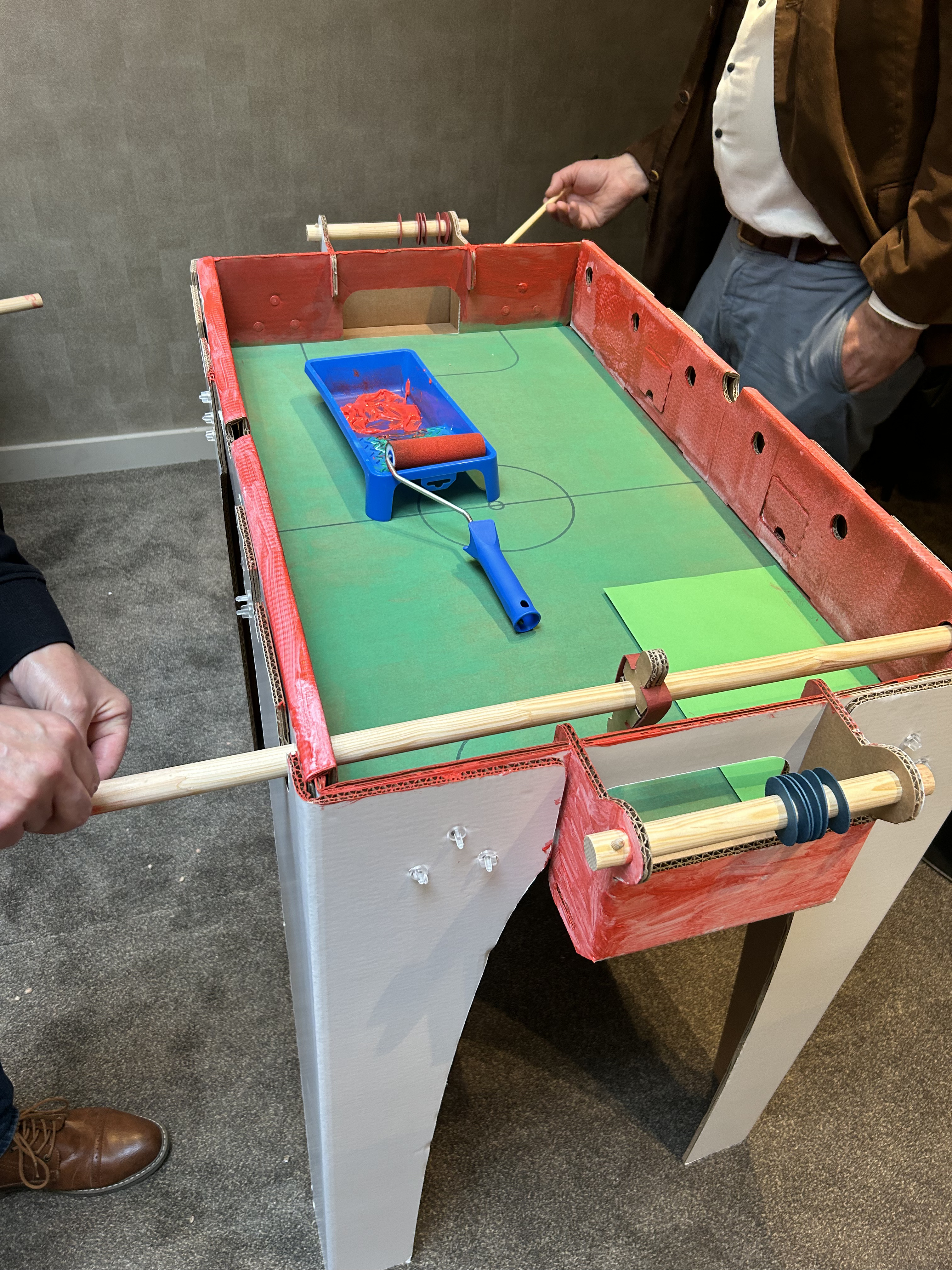
Operational figures that matter in Luik
10+ years producing corporate events across Belgium, with recurring delivery in Wallonia including Luik.
150+ corporate workshops/year coordinated through our facilitator network (logistics, suppliers, and on-site staffing).
48-hour typical lead time to confirm feasibility (venue plan review, access constraints, staffing, materials) for projects in Luik.
0% improvisation approach: every session is run on a documented timeline (set-up, safety briefing, build, testing, tournament, debrief, pack-down).
Local experience with companies around Luik
We regularly support teams that work in and around Luik, from headquarters functions to operational sites. In practice, that means being comfortable with the realities of the territory: tight access windows near the station area, parking and loading constraints, and venues that require strict compliance with safety and noise rules.
Many of our clients repeat the collaboration year after year because the delivery is predictable: one point of contact, clear call sheets, and facilitators who can keep the room engaged without turning the session into a show. If you share the company names you want us to mention as local references, we will integrate them here exactly as approved (including the type of event and the year), to keep it accurate and brand-safe.
In Luik, repeat collaborations are often linked to recurring moments such as annual kick-offs, leadership alignment days, safety milestones, or end-of-project celebrations—contexts where the activity must stay professional and aligned with internal communication standards.
 Besoin d’un devis rapide ?
Nous vous envoyons une première proposition sous 24h.
What a Babyfoot workshop changes for teams in Luik
In many organizations, collaboration issues are not about motivation; they are about coordination under pressure: unclear roles, slow decisions, silo reflexes, and inconsistent quality standards. A Babyfoot bouwen workshop in Luik creates a controlled environment where those patterns become visible and can be addressed without putting people on the spot.
Executives and HR teams typically use this format when they want a tangible result plus a structured debrief—without the complexity of a multi-day offsite.
Faster alignment on roles and decision-making: each build team must allocate tasks (assembly, quality checks, timekeeping) and decide quickly when trade-offs appear. This mirrors project governance in a low-risk setting.
Cross-department collaboration with a shared deliverable: unlike many “team games”, the output is a functional object. Teams naturally negotiate standards (stability, finishing, playability) the same way they would on a product, a service process, or a client deliverable.
Concrete observation points for HR: facilitators can capture behavioral indicators (communication clarity, escalation patterns, inclusion of quieter profiles) and feed them into an optional debrief. This is particularly useful after reorganizations or rapid hiring phases.
Safe pressure testing: the time-boxed build plus a short tournament introduces manageable stress. It allows leaders to see how teams react under deadlines—without exposing operational KPIs.
Visible recognition: teams experience quick wins (a stable table, a first goal) which is effective after intense delivery periods, especially in engineering, operations, and shared services environments common around Luik.
Luik combines industrial pragmatism, strong engineering culture, and dense academic and innovation ecosystems. This workshop fits that mindset: it is hands-on, outcome-driven, and it rewards coordination and quality rather than loudness.
What companies in the Luik area expect from workshop logistics
In Luik, expectations are often shaped by practical constraints: venues inside city limits with limited loading access, corporate sites with security gates, and event schedules that must respect shift changes or operational continuity. That is why we plan each Babyfoot bouwen workshop as an operations project, not as a “fun activity”.
Typical local expectations we address upfront:
- Access and parking clarity: who can unload, where, and at what time window; whether we need badges; whether elevators and corridors can handle rolling cases.
- Noise and neighbor constraints: a short tournament can get loud; we design the room layout and timing accordingly (e.g., tournament after speeches, or in an area with better acoustic tolerance).
- Multilingual facilitation: many teams in Luik are mixed French/Dutch/English, sometimes with German-speaking colleagues. We can deliver bilingual instructions and visual step guides to keep the pace consistent.
- Safety and site rules: PPE policies, toolbox talks, first-aid point location, and what is allowed regarding tools or adhesives. We adapt materials and processes to avoid non-compliant elements.
- Time discipline: when executives have a 90-minute slot between a quarterly update and a client call, we run a tight agenda with buffer time for photos and transition.
The goal is simple: your internal stakeholders should experience a professional flow that reflects well on HR and Communications—no last-minute changes, no unclear responsibilities, and no surprises for the venue.
What to combine with a Babyfoot build in Luik
Engagement comes from rhythm: an activity works best when it fits into a wider event narrative (strategy update, culture focus, onboarding, or a milestone celebration). In Luik, we often combine the Babyfoot bouwen workshop with short, purposeful add-ons that support participation without stretching the schedule.
Animations Interactives à Luik
Team identity sprint: 10 minutes to name the team, define a “quality charter”, and assign roles (lead, QA, timekeeper). It sets the tone and improves coordination immediately.
Mini-briefing from leadership: a 3-minute message on what “good collaboration” means this quarter, linked to operational priorities (customer response time, safety, delivery accuracy).
Photo and internal comms corner: a controlled zone with your branding guidelines respected (no random clutter in the background). Useful for Communications teams that need usable assets the same day.
Animations Artistiques à Luik
Brand finishing station: discreet, professional customization (color accents, team plaques, QR code linking to company values). It keeps the output aligned with brand rules—particularly important for public-facing organizations in Luik.
Sound design rather than “DJ volume”: background playlist at controlled decibels to maintain energy while staying compatible with speech moments and venue constraints.
Animations Innovantes à Luik
Structured coffee and snack timing: we place catering breaks at natural milestones (after build, before tournament) to avoid greasy hands during assembly and to protect materials.
Local tasting option in Luik: a short, clean-format tasting that does not interfere with tooling (served after tool-down). We coordinate with venue/caterer to respect allergens and labeling.
Animations Gourmandes à Luik
Data-driven tournament: simple scoring + fair-play metrics captured live (no complex apps needed). The debrief uses the data to discuss trade-offs: speed vs. quality, risk vs. control.
Operational retro format: a 10-minute retrospective (“Start / Stop / Continue”) directly after the workshop, producing actionable notes HR can reuse for continuous improvement.
Whatever you add, we keep one principle: alignment with your image. In executive settings, the workshop must feel coherent with the company’s standards—clean setup, clear language, respectful facilitation, and a result that can be shown without embarrassment.
Which venues in Luik work best for this workshop?
The venue sets expectations before the first word is spoken. For a Babyfoot bouwen workshop, we look for practical elements: flat flooring, sufficient power if needed, good lighting for assembly, enough storage for cases, and a layout that allows both building and play-testing without crowding.
In Luik, we often adapt the format to the reality of the room: boardroom-to-workshop conversion, industrial hall, hotel meeting space, or a modern event venue. We validate access, loading, and noise tolerance early—because those are the typical failure points.
| Venue type | For which objective? | Main strengths | Possible constraints |
|---|---|---|---|
Corporate meeting rooms (HQ / offices in Luik) | Team cohesion during a workday without travel time | Fast logistics, easy attendance, strong control of brand and messaging | Elevator/corridor limits, noise management, need to protect floors and furniture |
Hotel seminar spaces in Luik | Leadership offsites, multi-session agendas with catering | On-site F&B, staff support, flexible room configurations | Time windows for setup/teardown, restrictions on tools or materials, parking costs |
Event venues / converted industrial spaces in Luik | Large groups, strong “milestone” moment, internal celebration | Space for build + tournament + plenary, easy crowd flow | Higher rental cost, security and technical coordination, potential acoustic echo |
We strongly recommend a short site visit or, at minimum, a technical call with photos and a floor plan. In Luik, access and loading details can change the entire setup plan; validating them early protects your timing and avoids day-of stress.
How to budget a Babyfoot bouwen workshop in Luik
Pricing for a Babyfoot bouwen workshop in Luik depends on operational parameters rather than vague “packages”. To keep budgeting realistic for Finance and procurement, we break costs into drivers you can validate.
As a reference, most corporate workshops fall in the range of €65–€180 per person depending on group size, build complexity, facilitation ratio, and venue constraints. For smaller executive groups, the per-person cost can be higher because the fixed logistics remain similar.
Number of participants and teams: impacts facilitation staffing, number of kits, and room footprint.
Build model: mini-tables vs. full-size units; complexity of assembly; level of finishing/customization.
Duration: common formats are 90 minutes, 2 hours, or 3 hours including briefing and tournament; longer formats allow deeper debrief and quality gates.
Venue constraints in Luik: loading distance, stairs, limited time windows, or strict protection requirements can add setup staffing.
Branding and comms needs: photo corner, branded elements, internal comms deliverables, or executive debrief notes.
Timing: evenings, weekends, or tight turnaround dates may require additional logistics planning.
For executives, the ROI is usually not “fun per euro”; it is reduced friction between teams, faster onboarding integration, and a stronger internal narrative. When the workshop is run professionally, HR and Communications also gain usable content (photos, quotes, learnings) without spending extra time chasing it afterward.
Why choosing a partner familiar with Luik reduces risk
When the event day arrives, what matters is not a beautiful proposal—it is whether the activity runs on time, respects your venue rules, and protects your internal image. A partner used to delivering in Luik is faster at anticipating friction points: city access, parking constraints, venue loading policies, and the operational culture of local corporate sites.
We coordinate the workshop with the same mindset as a production schedule: pre-brief, checklist, roles, contingency. If you are comparing agencies, ask how they handle last-minute room changes, missing components, or a delayed keynote. Our answer is simple: we plan for it and bring redundancies.
For local coordination, you can also consult our dedicated page as an event agency in Luik resource when you need broader support beyond this workshop.
- Faster on-site problem solving: knowing typical venue layouts and constraints in Luik reduces the need for improvisation.
- Supplier consistency: reliable local transport and timing coordination, especially when your agenda has no buffer.
- Better stakeholder management: we are used to working with HR, Comms, and Facilities simultaneously—so approvals do not get stuck.
- Brand risk control: clean setup, controlled visuals, and facilitation tone aligned with executive-level expectations.
For executives, the ROI is usually not “fun per euro”; it is reduced friction between teams, faster onboarding integration, and a stronger internal narrative. When the workshop is run professionally, HR and Communications also gain usable content (photos, quotes, learnings) without spending extra time chasing it afterward.





What we have delivered in the Liège region
Our projects around Luik typically fall into three categories, each with different constraints:
- Leadership days (20–60 people): tight agenda, high expectation of professionalism, and a need for a debrief that links behaviors to leadership principles.
- Department events (60–150 people): mixed seniority, need for inclusive facilitation, and clear logistics so the group does not fragment.
- All-hands / milestone moments (150–300+): strong run-of-show discipline, coordination with AV and catering, and crowd flow management.
We adapt the Babyfoot bouwen workshop accordingly: team sizes, facilitation ratios, build complexity, and the final tournament format. For example, in a multi-site organization, we may design mixed teams to accelerate cross-site familiarity; in a post-merger context, we may structure the debrief around decision-making and shared standards.
What stays constant is operational rigor: kit inventory, safety briefing, timing discipline, and a closing moment that does not feel childish—because the audience is made of professionals with limited time and high expectations.
Common pitfalls we prevent in Luik workshops
Underestimating space needs: a build workshop needs elbow room, parts tables, and a test lane. We calculate the footprint per team and validate it against the floor plan before confirming.
Weak instructions leading to frustration: if teams get stuck early, energy drops fast. We use visual step guides and facilitator checkpoints to keep momentum.
Missing parts or tool mismatch: we kit per team, add spares, and use standardized tools to avoid delays.
Noise conflicts with venue or plenary moments: we schedule tournament energy after speeches and set rules to keep it respectful and controlled.
No executive-ready wrap-up: without a structured close, the activity feels disconnected. We end with a short recap and optional debrief points HR can reuse.
Ignoring access/loading realities in Luik: narrow streets, limited unloading windows, or security desks can derail timing. We plan arrival and load-in like a mini production.
Our role is to take these risks off your plate: we anticipate them, document the plan, and manage the day so your leadership and HR teams are not forced into operational firefighting.
Why teams in Luik rebook INNOV'events
Repeat business is rarely about novelty; it is about reliability. HR and Communications teams come back when delivery is consistent, internal stakeholders feel supported, and the activity reflects well on them.
In Luik, where many organizations run lean event teams, our clients value that we can take ownership of the operational details while staying aligned with internal processes and approvals.
Multi-year planning: many clients book at least 2 moments/year (kick-off + team day) once the format is validated.
High repeat formats: the Babyfoot bouwen workshop is frequently rebooked because it scales from small groups to large groups without losing structure.
Low stakeholder load: we aim to reduce internal coordination time with a single consolidated checklist and a clear run-of-show.

Loyalty is the most practical proof: it means the event did not create hidden costs—no stress, no brand issues, no last-minute chaos—and the outcomes were considered worth repeating.
How we prepare your workshop in Luik from A to Z
👉 Scope the objective and constraints for Luik
We start with a 20–30 minute call to clarify the outcome you want (cohesion, onboarding, cross-silo collaboration, leadership behaviors) and the non-negotiables: timing, language mix, venue type, dress code, brand rules, and safety constraints. If the workshop sits inside a larger agenda, we map dependencies (speeches, catering, AV, photo needs) so the flow stays coherent.
👉 Design the format and facilitation plan
We propose a format with clear parameters: number of teams, build model, facilitation ratio, timing blocks, and the tournament mechanic. We also define what “quality” means for your group (stability, finish, playability) and build the debrief accordingly—so the activity links to workplace behaviors.
👉 Validate the venue setup in Luik
We request a floor plan or photos and confirm access/loading details (time windows, parking, elevator dimensions, security procedures). We then produce a room layout: build stations, parts desk, testing lane, tournament area, and briefing zone. This step prevents day-of surprises and protects your schedule.
👉 Production checklist and pre-brief with stakeholders
You receive a concise production sheet: timings, responsibilities, arrival schedule, and required inputs from your side (contact person, access, power, any internal safety briefing). If you need internal comms outputs, we define what will be delivered (photo list, key messages, short recap notes).
👉 On-site delivery and controlled wrap-up
Our team arrives early for setup and safety checks, runs the workshop with clear facilitation and quality gates, and manages transitions so the agenda stays on time. We close with results, optional awards aligned with your culture (quality, teamwork, fair play), and a short debrief that executives can use as a bridge to their messages.
FAQ sur l'organisation Babyfoot bouwen workshop à Luik
How long is a Babyfoot bouwen workshop in Luik?
Most sessions in Luik run 90 minutes to 3 hours. A common corporate format is 2 hours: 10 min briefing, 60–70 min build, 20 min testing/tournament, 10 min wrap-up.
How many participants can you handle in Luik venues?
We typically deliver from 10 to 200 participants in one session, depending on room size and layout. For larger groups, we propose rotations (two waves) to keep build stations comfortable and maintain quality.
What space do we need in Luik for the workshop?
As a working rule, plan 3–5 m² per team member including circulation and parts tables. We confirm the footprint after you share participant count, team sizes, and whether the tournament happens in the same room.
Is the Babyfoot build safe for corporate settings in Luik?
Yes, when it is managed professionally. We use controlled manual tools, provide a safety briefing, and set clear handling rules. If your site in Luik has EHS requirements, we align with them (PPE rules, first-aid point, permitted materials) before the day.
What is the typical budget in Luik for this workshop?
Most corporate budgets fall between €65–€180 per person, depending on group size, build complexity, facilitation ratio, and venue constraints. We provide a transparent quote with cost drivers so procurement can validate quickly.
Plan your Babyfoot bouwen workshop in Luik with a clear quote
If you want a Babyfoot bouwen workshop in Luik that runs on time, respects your internal standards, and delivers an outcome your leadership can stand behind, we can scope it quickly. Send us your date options, estimated headcount, venue (or shortlist), and your objective (cohesion, onboarding, cross-silo work). We will respond with a clear format recommendation and a transparent budget within 24–48 hours.
Early planning is not bureaucracy—it is what protects the event day. The sooner we validate access, room layout, and timing, the smoother the experience for your teams and the safer the delivery for your brand.
Agence INNOV'events Luik
Justin JACOB est le responsable de l'agence événementielle Luik. Contactez-le directement par mail via l'adresse belgique@innov-events.be ou par formulaire.
Contacter l'agence LuikToutes nos prestations & animations Luik, Belgique
Découvrez nos prestations événementielles
Découvrez nos animations événementielles disponibles au Belgique
- Hôtesse événementielle à Luik
- Escape Game à Luik
- Cours de cuisine type MasterChef à Luik
- Magicien à Luik
- Location de chapiteau à Luik
- Atelier colorimétrie à Luik
- Jeux gonflables à Luik
- Service de voiturier à Luik
- Simulateur de football à Luik
- Location de mobilier lumineux à Luik
- Flocage lumineux à Luik
- Repas insolite à Luik
- Light Painting à Luik
- Murder Party à Luik
- Jeu concours à Luik
- PLV événementielle à Luik
- Réalité virtuelle à Luik
- Cuisine moléculaire à Luik
- Animation Halloween à Luik
- Feu d’artifice à Luik
- Jeux géants à Luik
- Animateur événementiel à Luik
- Animation photo à Luik
- Père Noël à Luik
- Animation enfants à Luik
- Visite guidée à Luik
- Rallye urbain à Luik
- Piscine à balles à Luik
- Simulateur de vol à Luik
- Location de food truck à Luik
- Record du monde à Luik
- Simulateur de surf à Luik
- Casino du vin à Luik
- Atelier relooking à Luik
- Atelier création de parfum à Luik
- Atelier acting à Luik
- Animations RSE à Luik
- Tir à l’arc à Luik
- Agent de sécurité à Luik
- Œnologie à Luik
- Mime à Luik
- Jeu télévisé à Luik
- Fête foraine à Luik
- Atelier gestion de crise à Luik
- Atelier négociation de crise à Luik
- Jeux d’arcade à Luik
- Simulateur de chute libre à Luik
- Simulateur de ski à Luik
- Simulation circuit automobile à Luik
- Baptême de l’air à Luik
- Dégustation à Luik
- Création de baby-foot à Luik
- Rallye 2CV à Luik
- Challenge LEGO à Luik
- Animation casino à Luik
- Interprète / traducteur à Luik
- Goodies à Luik
- Bus / transfert à Luik