
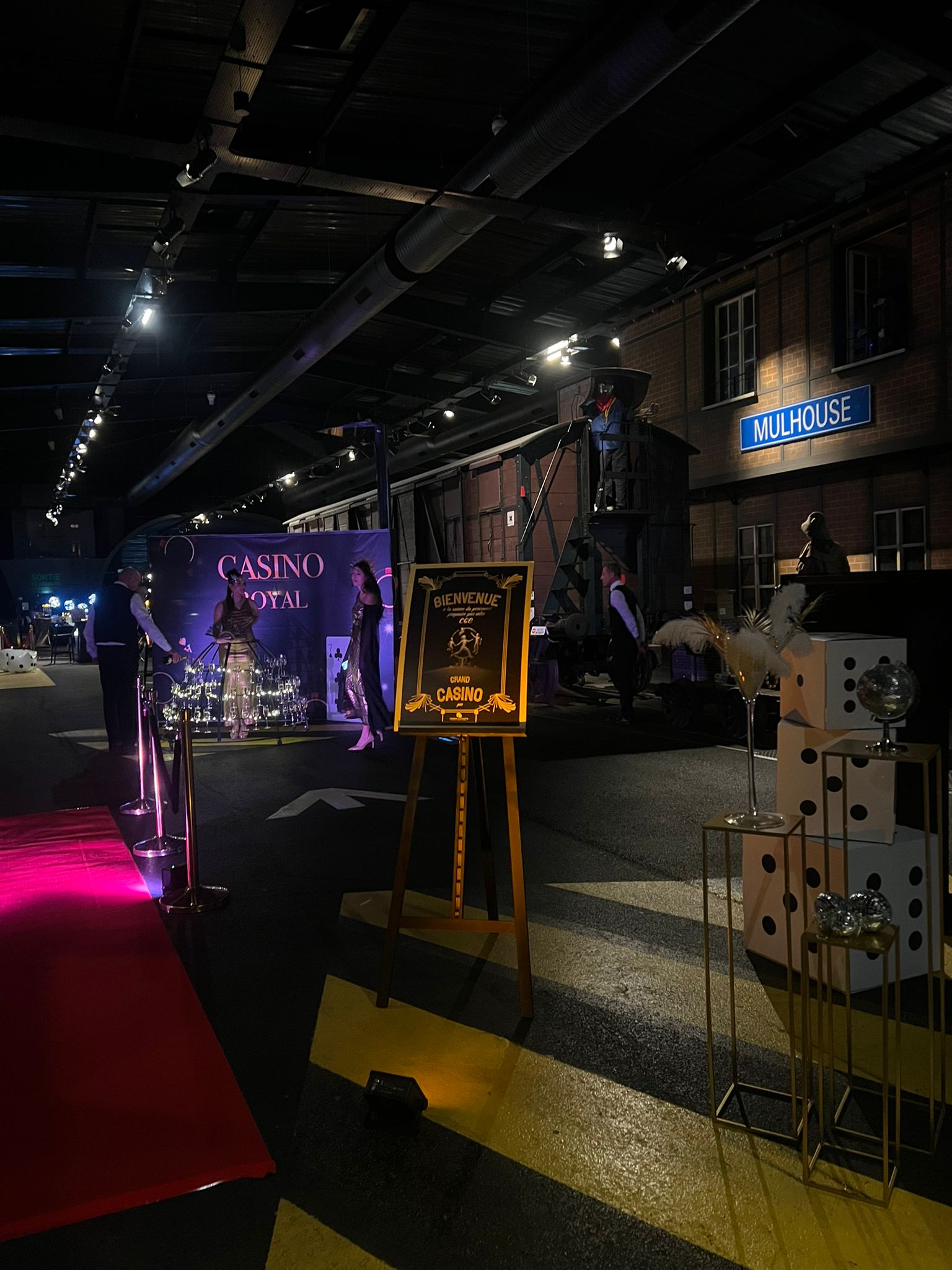
Casino avond in Brussel for corporate events that feel controlled, not chaotic
INNOV'events designs and runs Casino avond formats in Brussel for executive committees, HR and comms teams—typically 30 to 600 attendees. We manage the full delivery: venue fit, game mechanics, staffing (croupiers/MC), guest flow, technical set-up, and on-site coordination.
You get a structured entertainment block that supports your objectives (networking, recognition, fundraising, employer branding) while protecting brand image and keeping timing on track.
Sommaire
Entertainment is not a “nice-to-have” in a corporate agenda: it is a management tool. A well-run Casino avond creates rapid interaction between people who would not naturally speak—across departments, languages, seniority levels—without forcing icebreakers that feel artificial.
In Brussel, organizations expect professionalism and predictability: multilingual hosting, clear guest routing, discreet security where needed, and an experience that matches the level of a headquarters, embassy-related ecosystem, or a European-facing corporate culture.
INNOV'events is based locally and operates weekly across the Brussels venues network. That local presence matters on event day: fast supplier response, familiarity with loading constraints, and the ability to anticipate what can go wrong in a real venue—not only in a PDF plan.
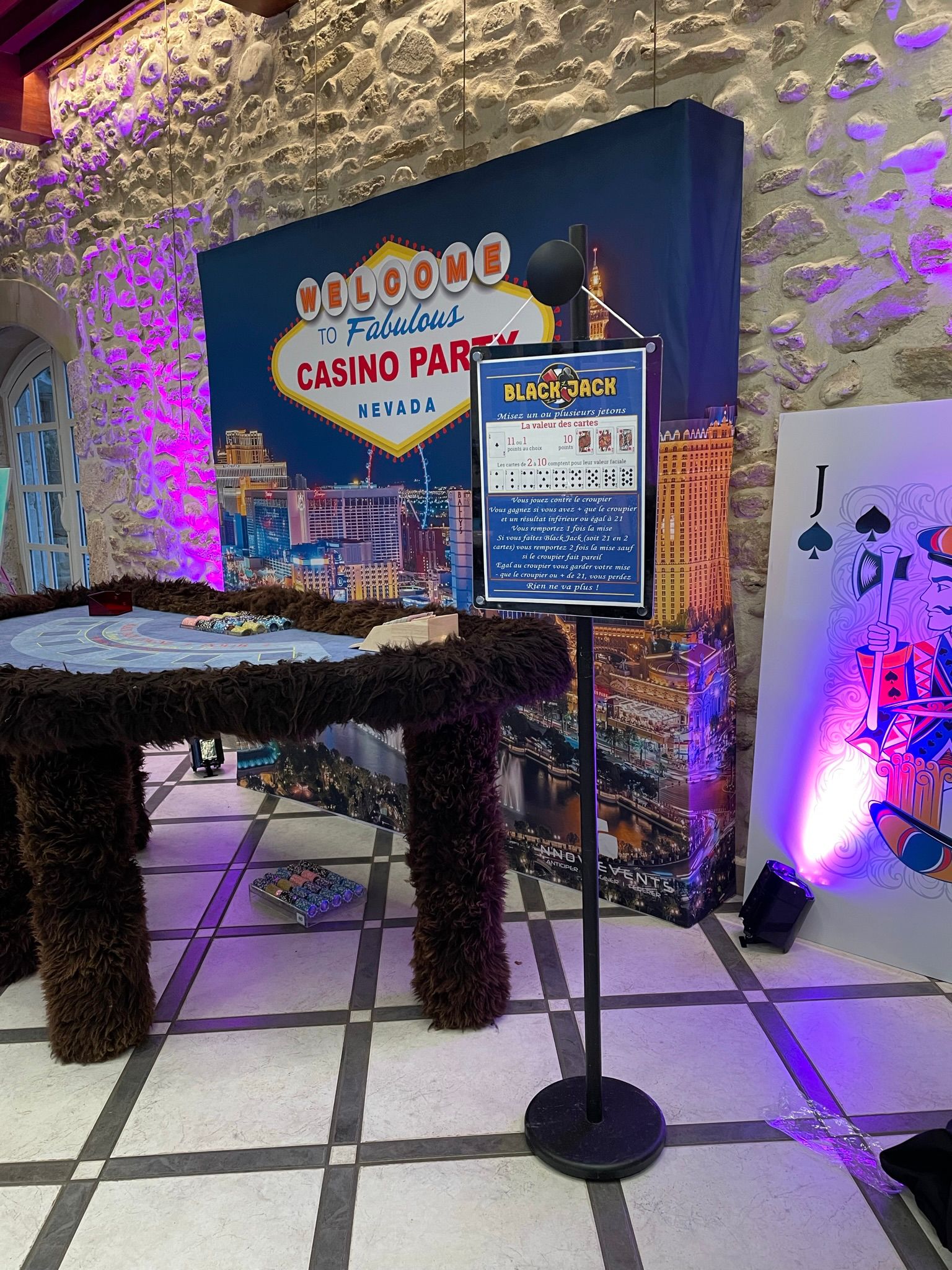
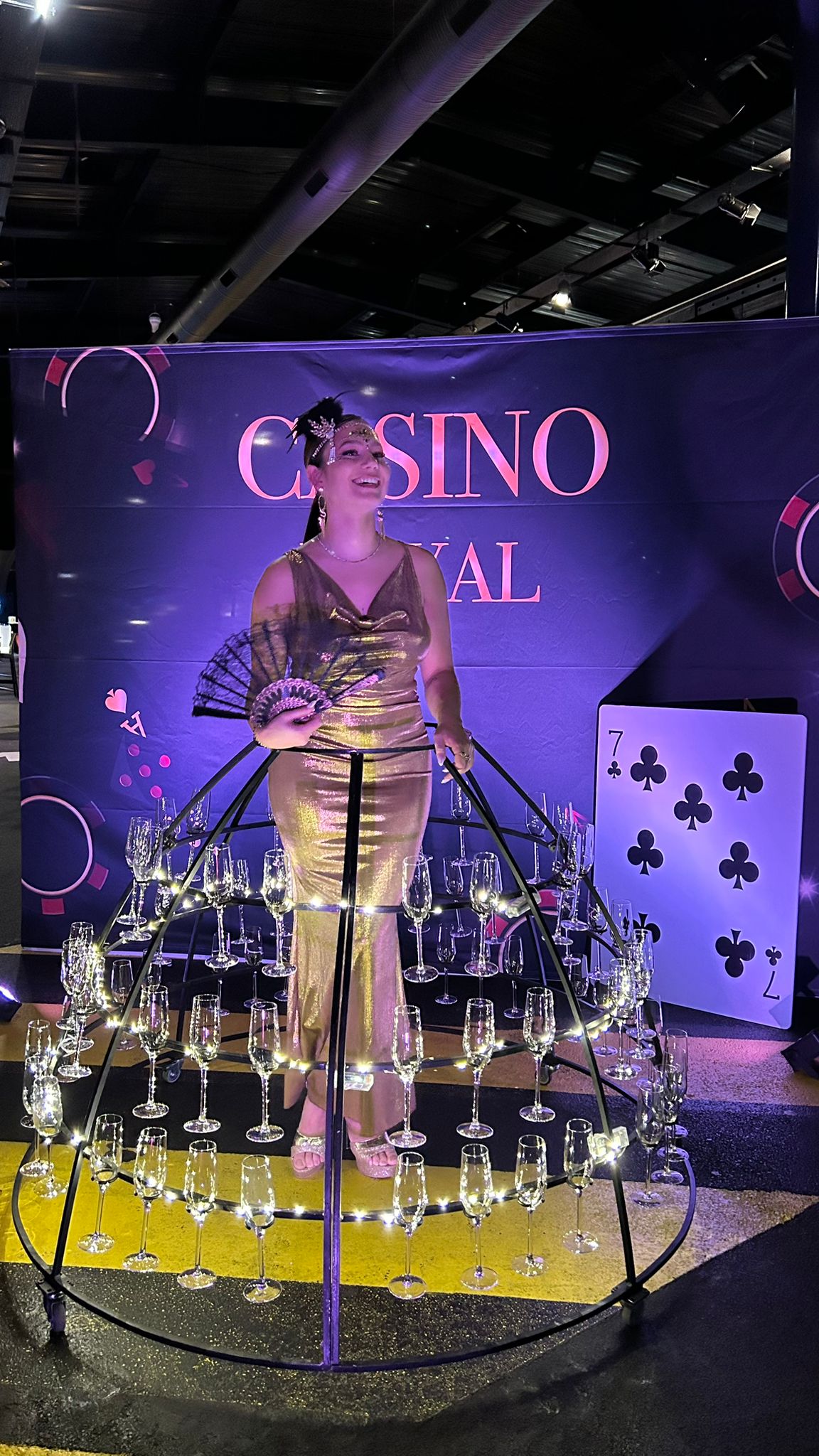
Operational proof points in Brussel you can verify
10+ years delivering corporate entertainment formats in Belgium, with repeat programs for HR and internal communication teams.
30–600 guests is our most frequent range for a Casino avond in Brussel, from leadership dinners to end-of-year celebrations and client hospitality.
2–8 gaming tables typically deployed depending on timing and guest volume, with croupiers trained to keep the pace and include non-players.
60–120 minutes is the sweet spot for the casino block in most Brussels corporate schedules (cocktail + speeches + food), with a clear start/peak/close sequence.
1 single run-of-show owner on site: one accountable point of contact coordinating venue, technique, entertainment and client stakeholders.
Companies in Brussel that book and rebook this format
We support Brussels-based and Brussels-hosted organizations that need reliable delivery: headquarters teams, consulting and legal environments, EU-adjacent stakeholders, and fast-scaling tech companies. Many clients come back year after year because the event is a pressure test: the agenda is tight, VIPs arrive late, and the room must still look and feel intentional.
To stay accurate and fair, we only publish client names when we have explicit approval. In practice, our references include recurring internal events (end-of-year, recognition moments, onboarding waves) as well as client-facing hospitality evenings where brand image, confidentiality and guest experience must be controlled with the same rigor as any executive roadshow.
If you share your sector and constraints (union rules, security level, multilingual needs, sustainability requirements), we can provide relevant case examples from comparable Brussels projects and explain what we did operationally—staffing, floorplan, timing, and risk prevention.
 Besoin d’un devis rapide ?
Nous vous envoyons une première proposition sous 24h.
What a Casino avond in Brussel solves for executives
A Casino avond works when you need networking to happen without forcing it. Executives usually ask for two things: “people actually talk to others outside their silo” and “the evening stays classy and on time.” The casino format is one of the few entertainment blocks that naturally structures interaction while remaining optional—guests can play, watch, or simply use the tables as social anchors.
Faster cross-team connections: tables create micro-groups of 6–8, rotating every few minutes—ideal after reorganizations, mergers, or new leadership appointments.
Controlled energy curve: you can open with light rules and low stakes, build peak engagement, and close cleanly before speeches, awards or dessert—without a noisy “party switch” that alienates some audiences.
Inclusive for mixed profiles: finance or sales may be eager, while R&D or legal may be cautious. With the right facilitation, observers become participants, and participation remains voluntary—important for corporate culture and psychological safety.
Brand-safe entertainment: with the right tokens, messaging and tone, it avoids the “gambling association” concerns that some boards or compliance teams raise. We design mechanics that feel like strategy and social play, not betting.
Useful for CSR or internal fundraising: tokens can be linked to donations, or winnings can convert to a corporate donation pool—transparent, pre-approved, and easy to communicate.
Clear measurement levers: table rotation, participation rates, and time-on-activity can be estimated from staffing and layout, which helps HR/comms teams defend the concept internally.
Brussel is a meeting city with short decision cycles and diverse audiences. A casino evening fits that culture: it is structured, time-efficient, and works across languages and departments when the operational design is done properly.
What Brussel audiences expect from corporate event entertainment
In Brussels, “good entertainment” is rarely about spectacle; it is about fluency. Many rooms mix French, Dutch and English within the same table. That means instructions must be simple, signage must be clear, and croupiers/hosts must be able to handle quick questions without breaking the rhythm.
We also see a higher-than-average share of VIP dynamics: senior leadership, visiting teams from other countries, key clients, public-affairs stakeholders. The practical implication is that you need a floorplan with clear circulation, a quiet zone for conversations, and a pacing that leaves space for late arrivals without penalizing them.
Finally, Brussels venues often come with operational constraints that directly affect a casino set-up: limited loading windows, strict sound levels in certain districts, elevator dimensions, unionized technical teams, and last-minute room reconfigurations because a conference runs over. Our planning includes buffer time, a realistic build schedule, and an on-site decision framework so you are not improvising under pressure at 19:10.
Which Casino avond animations work best in Brussel venues
Engagement is created when guests understand the rules fast, see others playing, and feel they can participate without “looking silly.” For a corporate Casino avond, we prioritize short rounds, clear token mechanics, and table mixes that encourage conversation rather than intense competition.
Animations Interactives à Brussel
Classic tables with corporate pacing: Blackjack and roulette are the most readable; poker can work if you avoid long tournament mechanics. We adapt rules to 3–5 minute rounds so guests can circulate.
Token economy designed for networking: structured token drops (e.g., at 20:30 and 21:15) pull guests back into the game and create natural “regroup moments” without needing to interrupt the room.
Leaderboard without pressure: a screen or flipboard showing top 10 drives participation, but we keep it light to avoid excluding casual players. Useful for mixed seniority groups.
Raffle conversion: chips convert to raffle tickets; prizes remain symbolic and brand-safe (experience vouchers, charity donation in the winner’s name, internal recognition).
Animations Artistiques à Brussel
Casino MC in three languages: a host who can switch between FR/NL/EN is a tangible Brussels advantage. It reduces friction, improves inclusion, and prevents the “only one language on stage” perception.
Close-up magic between tables: works well during cocktail service and prevents dead time when guests wait for a seat at a table. It must be subtle and premium—no intrusive crowding around VIPs.
Live jazz trio with volume discipline: creates a casino lounge atmosphere while keeping conversation possible. We plan placement to avoid competing with dealer voices.
Animations Innovantes à Brussel
Pairing corners (spirits, mocktails, chocolate): a tasting station close to the casino zone increases dwell time without forcing participation in the games. We often see this work well for executive audiences who prefer conversation over play.
Casino-themed service rhythm: rather than gimmicky food names, we design service checkpoints aligned with peaks (first drink as tokens are distributed, finger food during the second peak, dessert after closing moment).
Animations Gourmandes à Brussel
Digital scoring with privacy control: optional QR registration for leaderboard visibility. For corporate and EU-facing audiences, we keep data minimal and provide a clear opt-in/opt-out.
CSR mechanics: chips earned at tables unlock donation tiers visible on a “giving meter.” This makes the activity meaningful without turning it into a lecture.
Brand integration that stays tasteful: discreet table felts or token design aligned with your visual identity, without turning the room into an advertising set.
The deciding factor is alignment with your brand and internal culture. A Casino avond in Brussel should feel like your organization: measured and premium for a legal or finance audience, more playful for a tech scale-up—always with clear boundaries so the entertainment supports your message instead of competing with it.
How to choose a Brussel venue for a Casino avond
The venue determines 50% of how a casino night will be perceived. Ceiling height, acoustics, loading access, and the ability to control lighting matter more than decoration budgets. In Brussel, we also assess practical elements early: truck access, elevator size for tables, storage for coats, and whether the venue imposes preferred technical suppliers.
| Venue type | For which objective? | Main strengths | Possible constraints |
|---|---|---|---|
Hotel ballroom (central Brussel) | Executive dinner + casino block, predictable service level | Built-in catering, staff experience with corporate timing, easy guest access by taxi/public transport | Union/house rules, limited set-up time between functions, fixed lighting rigs |
Industrial/creative event space (canal area / outskirts) | End-of-year party, employer branding, larger capacities | Flexible layout, high ceilings for scenic impact, easier to create a “casino lounge” zone | More technical build needed, sound limitations, transport planning for guests |
Corporate HQ or office atrium (Brussel business districts) | Internal celebration with strong company ownership | Brand immersion, lower venue cost, convenient for after-work attendance | Security protocols, limited loading access, strict building rules on noise/late hours |
We strongly recommend a site visit (or at minimum a technical walk-through) before confirming the casino format. Small physical details—pillar placement, carpet friction for table legs, power distribution, backstage storage—are what decide whether the evening feels seamless or improvised.
What a Casino avond in Brussel typically costs (and why)
Budgeting a Casino avond in Brussel is about understanding what is included: equipment quality, staffing, logistics, timing, and the degree of customization. Two projects with the same guest count can differ significantly based on venue constraints and the level of brand integration expected by your leadership.
Number and type of tables: as a rule of thumb, plan 1 table per 30–50 guests for fluid participation, depending on round duration and whether you add non-gaming activities.
Staffing model: croupiers per table, multilingual MC, floating hosts, and on-site management. Corporate facilitation costs more than “casino props” because it directly determines the guest experience.
Venue logistics in Brussel: loading windows, parking restrictions, elevator access, and whether the venue requires in-house technicians. These factors can add labor hours and change the build schedule.
Technical needs: sound for announcements, lighting to create a lounge feel, screens for scoring, and power distribution. Underestimating tech is a common cause of last-minute stress.
Customization and brand elements: token design, signage, table branding, and prize mechanics aligned with compliance. Useful, but it should be justified by your objectives (client hospitality vs. internal social).
Timing and day of week: mid-week corporate peaks and December calendars in Brussel influence availability and sometimes rates for staff and venues.
From an ROI perspective, the casino format is attractive because it delivers high interaction density per square meter and per minute. When the event goal is relationship-building (internally or with clients), that interaction density is usually the KPI that matters more than “wow factor.”
Why using a local agency in Brussel reduces event risk
A casino night is not complicated on paper; it is unforgiving on site. A local Brussels agency brings practical advantages that directly reduce risk: knowing how venues actually behave during load-in, having backup suppliers within short distance, and understanding the informal constraints that never appear in contracts (freight elevator priorities, noise-sensitive neighbors, traffic patterns at peak hours).
As an event agency in Brussel, INNOV'events works with a stable network of croupiers, technicians, furniture providers and venue teams. That continuity matters when you need a late change—extra table, earlier start, bilingual announcement, different room layout—without compromising quality.
For executive stakeholders, the real value is governance: one accountable partner who can coordinate HR, comms, procurement, venue, catering, and entertainment under a single run-of-show so decisions are made quickly and documented clearly.
- Faster on-site troubleshooting thanks to proximity and real relationships with Brussels suppliers.
- Realistic scheduling based on local venue constraints (load-in, union rules, sound limits).
- Better guest logistics: taxi flows, public transport access, and clear arrival signage adapted to the neighborhood.
- Consistency for recurring events: same standards, same crew, same reporting year after year.
From an ROI perspective, the casino format is attractive because it delivers high interaction density per square meter and per minute. When the event goal is relationship-building (internally or with clients), that interaction density is usually the KPI that matters more than “wow factor.”




What we have delivered in Brussel across different corporate contexts
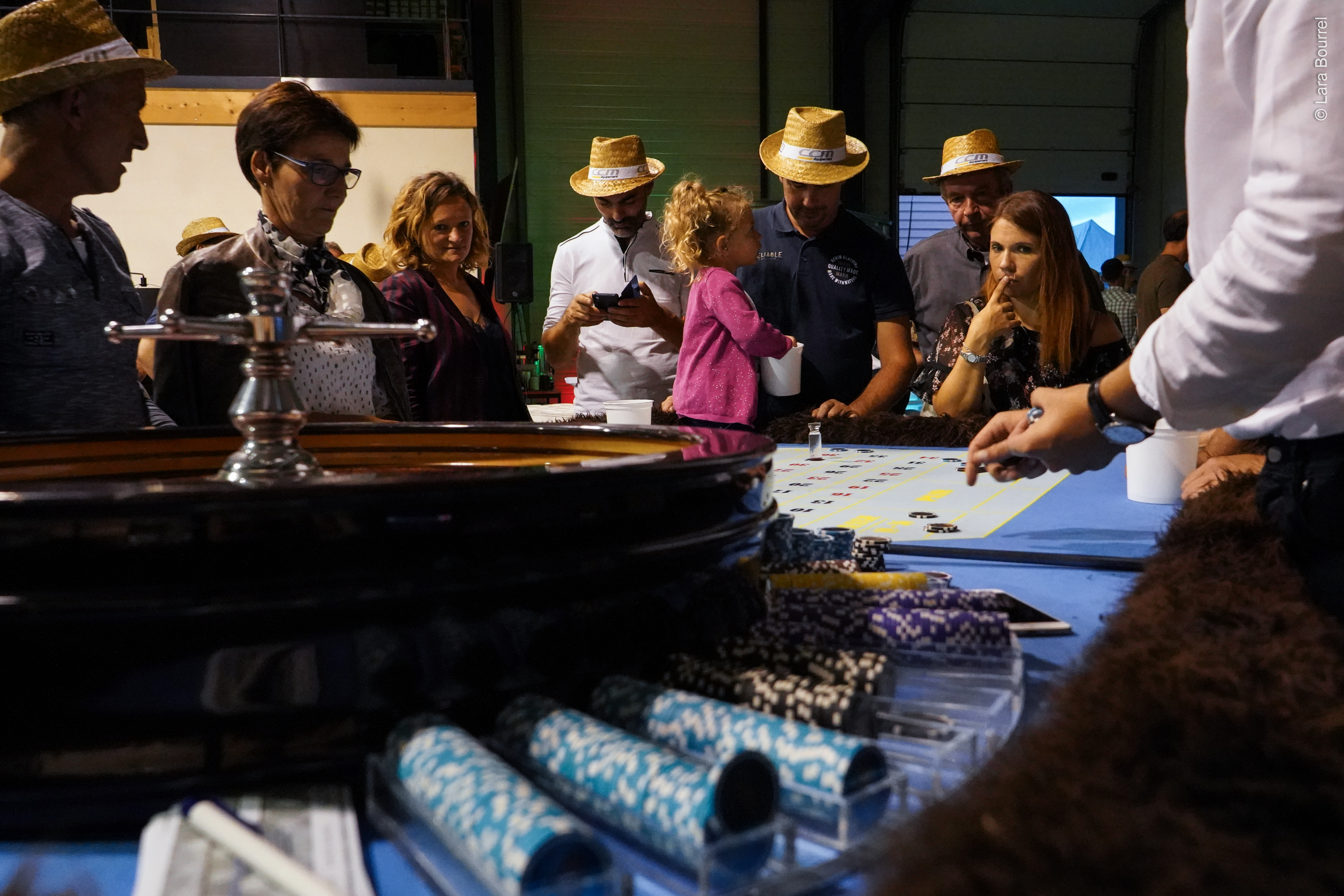
Our Brussels casino evenings range from compact leadership cocktails to large end-of-year events where the casino is one of several programmed zones. The common denominator is operational discipline: a clear run-of-show, staffed welcome, and a design that respects the audience’s profile.
Examples of real-life constraints we handle regularly in Brussel:
Late VIP arrivals: we design a “soft start” so the room is active from minute one, while keeping a second engagement peak once key stakeholders are present.
Multilingual mixed tables: we plan staffing and signage so guests are not excluded by language; short rule cards in FR/NL/EN reduce questions and keep pace.
Space that looks big on plans but small in reality: we map circulation, bar queues and coat check so the casino zone stays comfortable.
High brand sensitivity: we avoid anything that could read as “promoting gambling” by focusing on play money, strategy and social mechanics, with prizes that are compliant and appropriate.
This is why we insist on aligning the casino concept with your broader communication: internal recognition, client hospitality, onboarding, or CSR. The entertainment is the engine; your message remains the destination.
Common pitfalls we prevent on Casino avond projects in Brussel
Too few tables for the guest count, creating queues and disengagement. We size the set-up to your agenda and expected participation, not to a fixed package.
Rules that are too complex (especially with poker). We simplify to short rounds and quick explanations, which is essential for corporate guests who also want to network.
Poor acoustics planning: dealer voices competing with music, speeches inaudible, or a room that becomes “loud” early. We plan sound levels and speaker placement from the start.
Undefined prize logic, creating awkwardness with compliance or internal equity. We propose brand-safe options (raffle conversion, charity conversion, symbolic rewards).
Underestimating load-in and set-up in Brussels venues with restricted access. We plan build time realistically and book the right crew size.
No single owner on event day, leading to micro-decisions being escalated to the client. We run the floor so your team can host, not produce.
Our role is to remove uncertainty: anticipate constraints, document decisions, and deliver a casino evening that stays on time and on brand. That is what protects your leadership team and your internal organizers from “event day pressure.”
Why Brussel clients renew with the same agency
Repeat business in corporate events is rarely about creativity; it is about reliability under real constraints. When HR or comms leads rebook a Casino avond, it is usually because the first edition solved a concrete problem: people mixed, the evening stayed controlled, and leadership felt comfortable inviting clients or partners next time.
Year-on-year formats: many organizations keep the casino block as a dependable networking engine and adjust only the venue or the add-on activities.
Stable crews: recurring croupiers/hosts improve pace and guest experience because they already know corporate behavior and expectations.
Lower internal workload: once the mechanics, branding rules and compliance choices are validated, the next edition becomes easier to approve and faster to execute.

Loyalty is the best operational audit: it means the concept worked with real stakeholders, real timing constraints, and real reputational exposure—especially in a demanding city like Brussel.
Our process to deliver a Casino avond in Brussel with executive-level control
👉 Define objectives and constraints in a 30-minute call (Brussel)
We clarify the business purpose (networking, retention, client hospitality, CSR), attendee profile, languages, risk sensitivity, and the non-negotiables: timing, brand rules, venue constraints, procurement steps, and approval chain. You receive a clear summary to align internal stakeholders fast.
👉 Propose a casino format that fits your agenda in Brussel
We build a practical concept: number of tables, recommended timing, staffing ratio, token mechanics, and closing moment. We also propose options for prizes/raffle/charity conversion that are appropriate for corporate governance.
👉 Lock venue logistics and floorplan for Brussel set-up
We confirm loading access, build schedule, power needs, sound constraints, and storage. We create a floorplan with circulation, bar/buffet queues, and a clear welcome point (tokens + brief rules). If the room has last-minute layout risk, we prepare a Plan B.
👉 Coordinate suppliers and bilingual facilitation in Brussel
We staff croupiers, MC (FR/NL/EN if needed), floating hosts, and technical crew. We brief everyone on tone, brand sensitivity, and guest inclusion. The goal is consistency: same rules, same pace, same quality at every table.
👉 Run-of-show and on-site governance in Brussel
On event day, one INNOV'events lead owns timing and decisions. We manage set-up, sound check, welcome flow, table rotation peaks, and the closing moment—while coordinating with catering and venue management. You remain in hosting mode, not in troubleshooting mode.
👉 Post-event debrief and next-edition optimization for Brussel
We debrief what worked operationally (flow, participation, timing, staffing) and what to adjust next time. This is often where recurring Brussels clients gain efficiency: a refined schedule, better table distribution, and faster internal approvals.
FAQ sur l'organisation Casino avond à Brussel
How many casino tables do we need in Brussel?
Plan 1 table per 30–50 guests for smooth rotation. For 150 guests, a common set-up is 4–5 tables plus one floating host to manage tokens and flow. The exact number depends on whether the casino block lasts 60 or 120 minutes and whether you add other activity zones.
Is a Casino avond compliant for corporate events in Brussel?
Yes, when framed as entertainment with play money and no cash betting. We recommend a clear prize logic (raffle tickets, symbolic rewards, or charity conversion) and written rules shared with stakeholders. In regulated sectors, we validate wording and visuals early to avoid approval delays.
What is the best timing for a Casino avond in Brussel?
For most corporate schedules in Brussel, the casino block works best for 60–90 minutes during the cocktail phase. If you have speeches, we typically place the casino either right after the welcome drink (to energize the room) or after a short first networking period (to avoid guests splitting too early).
Can you run a multilingual Casino avond in Brussel?
Yes. We regularly deliver formats with FR/NL/EN facilitation. Practical tools include short rule cards in three languages, signage at the token desk, and a host who can make bilingual announcements so no group feels sidelined.
How far in advance should we book in Brussel?
For standard periods, 4–8 weeks is workable. For peak season (especially November–December) or large groups, plan 8–12+ weeks to secure venue options and the best crews. Shorter lead times can work, but choices become narrower and logistics tighter.
Request a structured quote for your Casino avond in Brussel
If you want a Casino avond in Brussel that supports your objectives and stays operationally under control, we will propose a clear format with staffing, timing, and logistics—no vague packages.
Send us your date window, estimated guest count, preferred venue area (or your shortlisted venues), and any constraints (languages, compliance, security, sustainability). We will come back with a practical plan and a budget range so you can brief leadership and procurement confidently—early enough to secure the best Brussels options.
Agence INNOV'events Brussel
Justin JACOB est le responsable de l'agence événementielle Brussel. Contactez-le directement par mail via l'adresse belgique@innov-events.be ou par formulaire.
Contacter l'agence BrusselToutes nos prestations & animations Brussel, Belgique
Découvrez nos prestations événementielles
Découvrez nos animations événementielles disponibles au Belgique
- Hôtesse événementielle à Brussel
- Escape Game à Brussel
- Cours de cuisine type MasterChef à Brussel
- Magicien à Brussel
- Location de chapiteau à Brussel
- Atelier colorimétrie à Brussel
- Jeux gonflables à Brussel
- Service de voiturier à Brussel
- Simulateur de football à Brussel
- Location de mobilier lumineux à Brussel
- Flocage lumineux à Brussel
- Repas insolite à Brussel
- Light Painting à Brussel
- Murder Party à Brussel
- Jeu concours à Brussel
- PLV événementielle à Brussel
- Réalité virtuelle à Brussel
- Cuisine moléculaire à Brussel
- Animation Halloween à Brussel
- Feu d’artifice à Brussel
- Jeux géants à Brussel
- Animateur événementiel à Brussel
- Animation photo à Brussel
- Père Noël à Brussel
- Animation enfants à Brussel
- Visite guidée à Brussel
- Rallye urbain à Brussel
- Piscine à balles à Brussel
- Simulateur de vol à Brussel
- Location de food truck à Brussel
- Record du monde à Brussel
- Simulateur de surf à Brussel
- Casino du vin à Brussel
- Atelier relooking à Brussel
- Atelier création de parfum à Brussel
- Atelier acting à Brussel
- Animations RSE à Brussel
- Tir à l’arc à Brussel
- Agent de sécurité à Brussel
- Œnologie à Brussel
- Mime à Brussel
- Jeu télévisé à Brussel
- Fête foraine à Brussel
- Atelier gestion de crise à Brussel
- Atelier négociation de crise à Brussel
- Jeux d’arcade à Brussel
- Simulateur de chute libre à Brussel
- Simulateur de ski à Brussel
- Simulation circuit automobile à Brussel
- Baptême de l’air à Brussel
- Dégustation à Brussel
- Création de baby-foot à Brussel
- Rallye 2CV à Brussel
- Challenge LEGO à Brussel
- Animation casino à Brussel
- Interprète / traducteur à Brussel
- Goodies à Brussel
- Bus / transfert à Brussel