
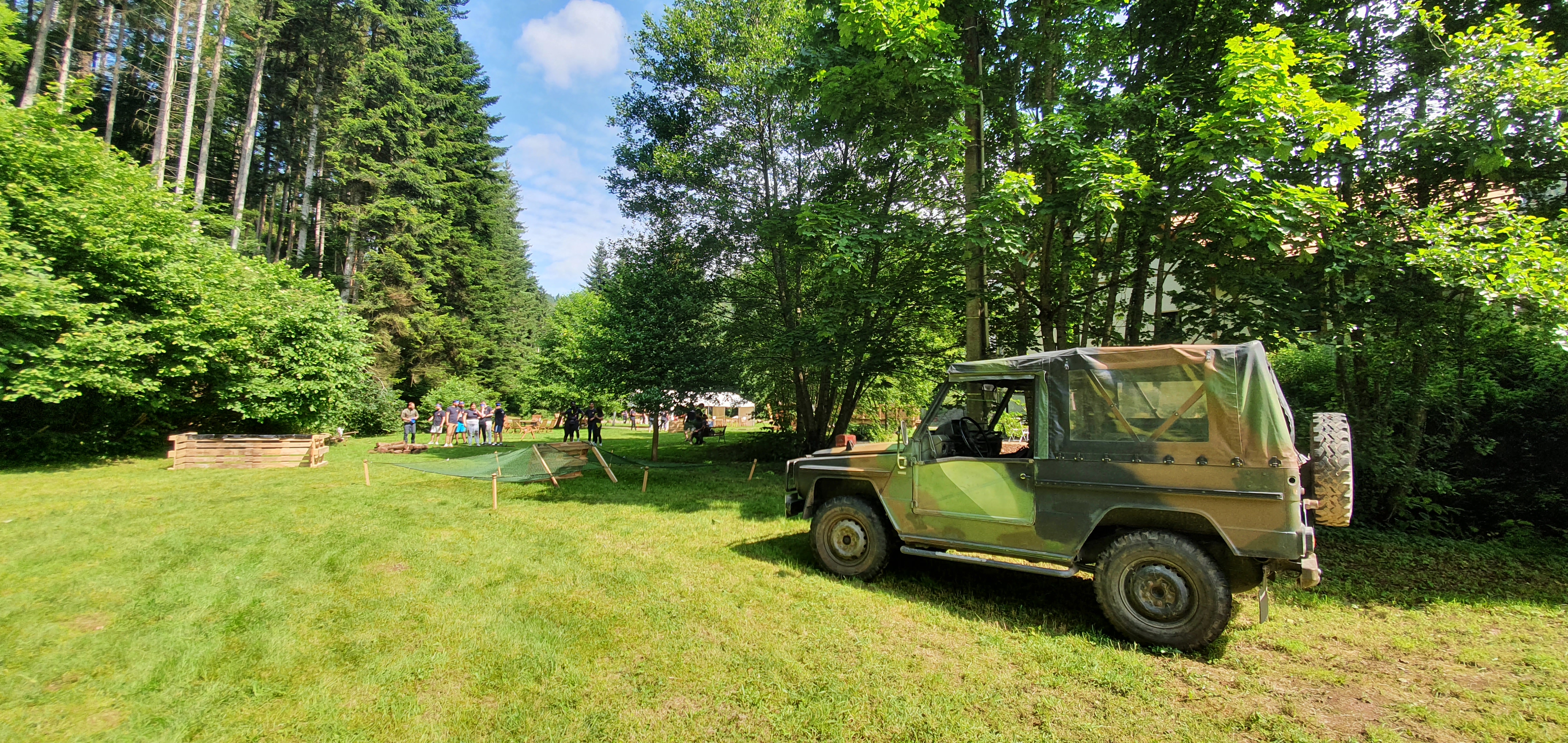
Crisis negotiation training in Brussel that improves decision-making under pressure
INNOV'events designs and delivers a Crisis onderhandeling workshop in Brussel for executives, HR and communication teams—typically 8 to 40 participants per session. We run realistic negotiation scenarios, manage role-players, timing, room set-up, and debriefs. You get a controlled environment to test leadership reflexes, message discipline and coordination—without risking your brand.
Sommaire
In a corporate crisis, the “entertainment” part is not about fun; it is about safe stress exposure. A well-designed scenario forces decision-makers to negotiate with incomplete information, manage internal friction, and keep external messaging coherent—exactly what breaks first when the pressure spikes.
Organizations in Brussel typically expect bilingual facilitation (FR/NL), high confidentiality, and a format that respects tight executive calendars. They also want realism without theatrics: credible role-players, scenarios grounded in their sector, and debriefs that translate into concrete procedures.
We operate from Brussel and coordinate the full delivery: scenario engineering, participant briefing, role-player casting, logistics, and a structured after-action review. The result is a workshop that feels like a real crisis room—yet stays measurable, controlled, and actionable.
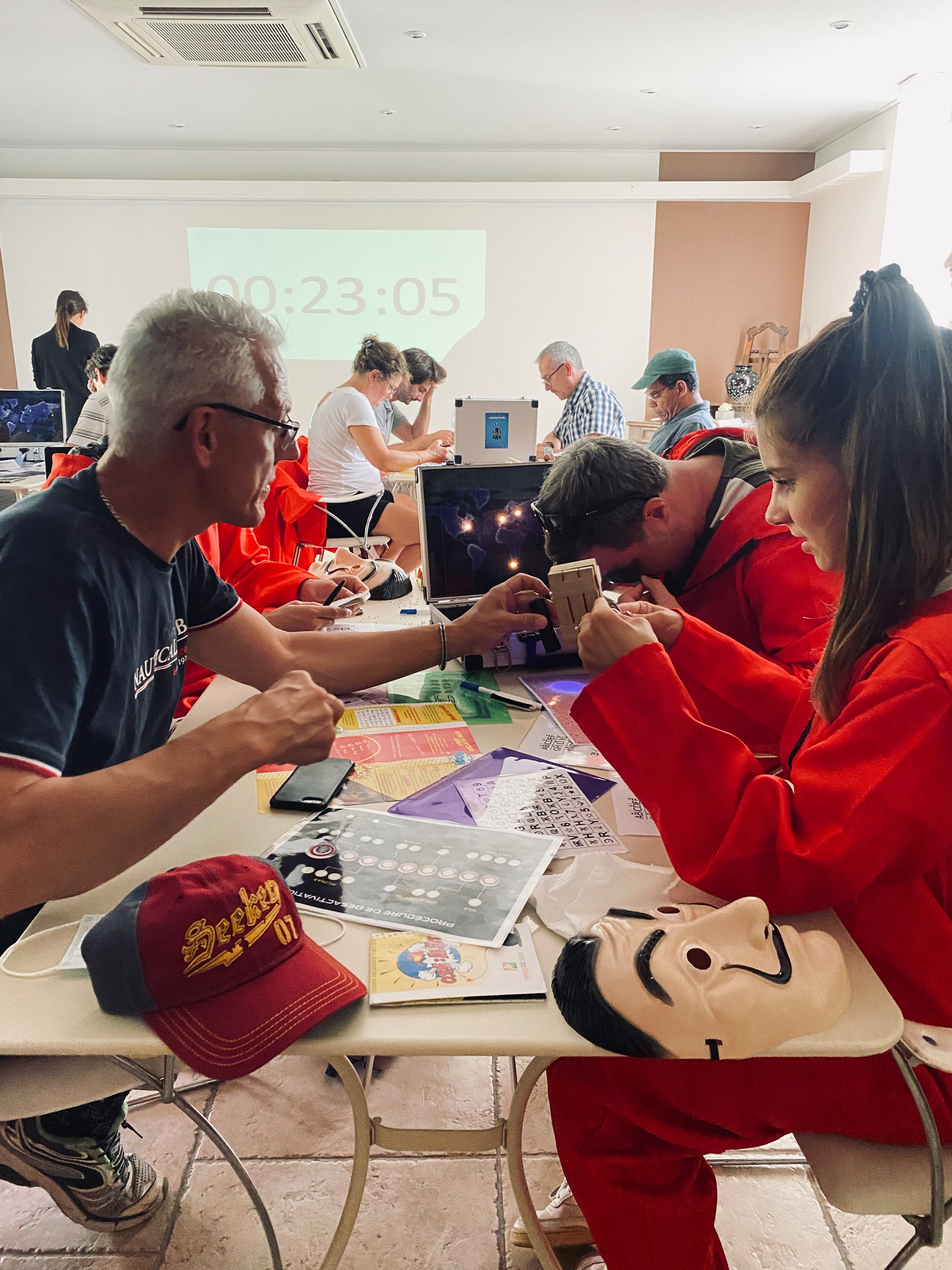
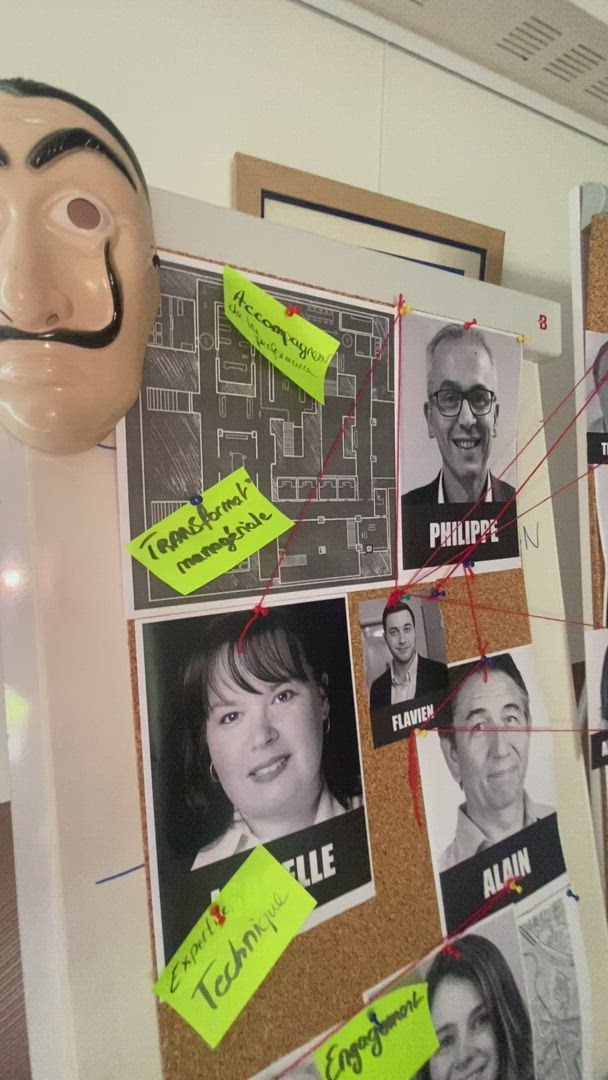
Brussel delivery you can trust: key figures that reduce risk
10+ years supporting corporate events and training formats across Belgium, including high-stakes executive sessions.
200+ facilitated workshops (crisis, communication, leadership, governance) delivered via our network of senior facilitators and professional role-players.
48-hour response window for initial scoping and a first proposal (agenda, options, budget range) for Brussel sessions.
FR/NL/EN capability depending on audience mix, with clear language governance so decisions and messaging do not fragment.
Operational readiness: checklists, timing plans, escalation rules, and on-site production support to keep the scenario under control.
What we deliver for corporate teams based in Brussel
We regularly support organizations operating in Brussel—from headquarters teams to public-affairs units, HR, and internal communications. Many of our clients come back year after year because crisis readiness is not a one-off: teams evolve, executives change, and procedures drift unless they are tested.
In Brussels, stakeholder density is higher: regulators, media, unions, NGOs, European institutions and partner ecosystems can all become “actors” in the same situation. That is why our Crisis onderhandeling workshop in Brussel is built around realistic stakeholder maps and decision gates that mirror how Brussels-based organizations actually operate.
If you want, we can provide relevant local case examples during a call (without naming clients) and explain which scenario mechanics work best in Brussels contexts: coalition building, multilingual communication control, and negotiation under reputational constraints.
 Besoin d’un devis rapide ?
Nous vous envoyons une première proposition sous 24h.
Why run a crisis negotiation workshop in Brussel now
A crisis negotiation workshop is a controlled stress test of your leadership system: who decides, who speaks, who negotiates, and how quickly alignment is reached. In Brussel, where reputational impact can escalate across multiple audiences within hours, the cost of hesitation or mixed messaging is often higher than the cost of preparation.
Executive decision discipline: practice making time-bound decisions with imperfect data, while keeping governance clear (who owns the call, who advises, who executes).
Negotiation under constraints: train on “hard” constraints (legal, safety, regulatory) and “soft” constraints (brand, stakeholder expectations, internal politics) that often collide in real cases.
Alignment between HR and Comms: rehearse situations where people-related decisions (duty of care, layoffs, workplace incidents) must stay consistent with external statements and internal morale.
Message control in a multilingual environment: ensure FR/NL/EN statements do not diverge, and that spokespersons do not improvise beyond agreed facts.
Faster escalation and clearer handovers: practice when to escalate to the CEO, legal counsel, crisis cell, or external authorities—especially relevant to Brussels-based HQ structures.
Reduced event-day risk: identify weak points in procedures (contact lists, approval loops, media handling, union dialogue, supplier dependencies) before a real incident exposes them.
Brussels is a high-visibility ecosystem: stakeholders are close, networks are dense, and narratives travel fast. A Crisis onderhandeling workshop is a pragmatic way to build resilience that matches the city’s economic and institutional reality.
What Brussel stakeholders expect when a crisis hits
In Brussel, crisis negotiation rarely happens in a vacuum. Even when the issue starts internally (workplace incident, cyber event, supplier failure), external stakeholders can enter the room quickly: sector regulators, press, unions, local authorities, landlords, event venues, and sometimes European-level interlocutors depending on your footprint.
That has practical implications for workshop design. We include realistic “stakeholder injection points” where the team must handle competing demands: an urgent media request, a union representative asking for guarantees, a regulator requesting documentation, and an internal executive pushing for speed over accuracy. The goal is not to overwhelm; it is to teach prioritization and structured negotiation.
We also adapt to Brussels’ operational constraints: tight agendas, hybrid participation, and strict confidentiality. For many HQ teams, reputational risk is the primary concern—so we build scenarios where every negotiation move has a communication consequence, and every communication promise has an operational cost.
Which crisis negotiation formats work best for corporate teams in Brussel
Engagement comes from credible stakes and well-paced interaction—not from gimmicks. In a Crisis onderhandeling workshop, participants should feel the consequences of choices while remaining in a safe learning environment. Below are formats we commonly deploy in Brussel, depending on your governance maturity and the seniority of the group.
Animations Interactives à Brussel
Executive crisis cell simulation (90–180 min): participants take real roles (CEO, HR, Comms, Legal, Operations). We inject events, negotiate with external parties, and force decisions at set intervals.
Negotiation clinic (60–120 min): short rounds focused on one negotiation type (union dialogue, regulator call, media ultimatum, supplier renegotiation). Best when you want repetition and technique.
Stakeholder mapping sprint (45–60 min): teams build a Brussels-relevant stakeholder map, define leverage and red lines, then negotiate priorities. Useful for public-affairs heavy environments.
Message discipline drills (30–60 min): spokesperson and internal alignment exercises where every statement is stress-tested for legal, HR and reputational implications.
Animations Artistiques à Brussel
Professional role-players with behavioral realism: not “actors for show”, but trained profiles who can hold a hard negotiation line, apply pressure, and stay credible across multiple rounds.
Audio/visual narrative support: controlled use of email threads, mock screenshots, timeline boards and short video cues to simulate how information arrives in real organizations.
Animations Innovantes à Brussel
Working-lunch format in Brussel: practical for executive calendars—light catering that supports concentration, with structured breaks so the scenario flow is not disrupted.
Debrief coffee corner: a dedicated space where participants can decompress after high-pressure rounds before the after-action review starts.
Animations Gourmandes à Brussel
Hybrid negotiation with remote stakeholders: we simulate remote calls (Teams/Zoom) to mirror real crisis conditions, including lag, missing context, and fragmented attention.
Decision log and action register: live capture of decisions, assumptions, and owners—then exported as a structured output for HR/Comms governance follow-up.
Multi-language scenario governance: controlled bilingual injections so teams practice staying aligned across FR/NL without doubling confusion.
Whatever the format, the key is alignment with your brand and governance. A crisis negotiation workshop should reinforce how your organization leads, speaks, and negotiates—especially in Brussel, where inconsistency is quickly noticed by stakeholders.
Where to host a crisis negotiation workshop in Brussel
The venue shapes behavior. A hotel meeting room pushes formality; an internal boardroom reinforces real governance; a neutral offsite can encourage candor. For a Crisis onderhandeling workshop in Brussel, we choose settings that allow confidential discussion, breakout negotiations, and controlled “information flow”.
| Venue type | For which objective? | Main strengths | Possible constraints |
|---|---|---|---|
Internal HQ meeting rooms in Brussel | Test real governance and escalation routes | Realistic dynamics, easy access to internal documents and SMEs, reduced travel time | Harder to create psychological distance; interruptions from daily operations; confidentiality rules must be strict |
Business hotel conference rooms (Brussels center / EU quarter) | Neutral environment for executive alignment | Professional setting, strong logistics, catering on-site, easy for external participants | Less “real-life” governance cues; room layout can be generic unless adapted |
Dedicated training centers around Brussels (accessible by public transport) | Skill-building and repetition (negotiation clinic) | Optimized rooms, multiple breakouts, controlled environment, good for multiple groups | Needs careful branding and confidentiality handling; may feel less “executive” without proper setup |
We strongly recommend a site visit (or at minimum a detailed venue tech check). Small factors—door positions, breakout distance, sound isolation, and screen visibility—can decide whether your Crisis onderhandeling workshop runs smoothly in Brussel.
Budgeting a crisis negotiation workshop in Brussel
The cost of a Crisis onderhandeling workshop in Brussel depends on the scenario complexity, the number of role-players, the duration, and the level of customization. We avoid flat “per person” pricing because it hides what actually drives quality: preparation time and senior facilitation.
Group size and format: a single group of 8–12 executives is priced differently than parallel sessions for 30–60 participants across departments.
Scenario design depth: off-the-shelf mechanics are cheaper; a scenario aligned to your crisis plan, stakeholder ecosystem, and sector constraints requires more design and validation time.
Role-player staffing: typically 1–3 role-players depending on stakeholder variety (media, union, regulator, customer, supplier). More roles increase realism but also coordination needs.
Language requirements: bilingual delivery (FR/NL) may require additional facilitation capacity to keep timing tight and outputs consistent.
Deliverables: debrief memo, decision log, action plan, and an optional repeat session (to validate improvements) influence the total.
Venue and production: room set-up, A/V, breakout spaces, and confidentiality measures (sign-in process, badge control, document handling) can be managed internally or by us.
From an ROI perspective, leadership missteps during a real incident can cost weeks of recovery and significant reputational damage. A well-run workshop is a relatively contained investment that reduces decision latency, improves negotiation outcomes, and makes your crisis plan executable—not just documented.
Why choose a Brussel-based partner for crisis workshops
In crisis simulation, speed and control matter. Working with a partner established in Brussel reduces friction: venue familiarity, shorter lead times, and access to local profiles for facilitation and role-play. It also makes it easier to run a short preparatory session on-site and to adjust the scenario after quick stakeholder interviews.
As an event agency in Brussel, we also bring event-grade operational discipline to a training context: run-of-show, room flow, technical checks, contingency plans, and on-site coordination. That discipline is often what separates a “good conversation” from a workshop that genuinely changes behaviors.
- Faster iteration: in-person scoping meetings and quick venue checks within days, not weeks.
- Local stakeholder realism: Brussels-specific negotiation dynamics (institutional environment, union presence, multilingual expectations) integrated in scenarios.
- Operational reliability: logistics and timing managed like a corporate production, with clear responsibilities and back-up options.
- Confidentiality culture: tighter control of participant lists, document handling, and discreet on-site delivery.
From an ROI perspective, leadership missteps during a real incident can cost weeks of recovery and significant reputational damage. A well-run workshop is a relatively contained investment that reduces decision latency, improves negotiation outcomes, and makes your crisis plan executable—not just documented.


Examples of crisis formats delivered for Brussel organizations
Our work spans different crisis and negotiation contexts because leadership pressure looks different across sectors. In Brussel, we frequently support headquarters teams that must coordinate operations, legal, HR, and communication under visibility constraints.
Typical projects include:
- Cyber incident negotiation simulation: decision-making around service continuity, regulatory notification timelines, and supplier pressure—plus a negotiation with a critical IT partner.
- Workplace incident and duty-of-care: HR-led crisis with a parallel media narrative, requiring tight coordination between HR, HSE, Legal and Comms.
- Activist and stakeholder pressure: negotiation with an external group while protecting employee safety and brand commitments; often relevant for Brussels-facing public affairs environments.
- Supplier failure affecting customers: renegotiation under time pressure, compensation decisions, and customer communication alignment.
Across these cases, the constant is adaptability: we calibrate pressure to participant seniority, we keep the scenario credible, and we ensure the debrief produces concrete governance improvements.
Common pitfalls we prevent in Brussel crisis workshops
Overacting instead of realism: when role-play becomes theatrical, executives disengage. We keep behaviors credible and aligned with real stakeholder incentives.
No decision gates: teams talk endlessly and learn little. We enforce time-boxed decisions and track consequences.
Confused governance: unclear roles create internal negotiation instead of external negotiation. We assign roles explicitly and test escalation rules.
Too much complexity at once: piling up injects can feel impressive but reduces learning. We stage complexity progressively.
Debrief without outputs: a conversation is not an action plan. We deliver a structured recap: decisions, gaps, owners, and next steps.
Ignoring bilingual realities: in Brussel, language divergence can become a crisis amplifier. We apply language governance so key messages remain consistent.
Our role is to reduce operational and reputational risk: we design the pressure, control the flow, and ensure you leave with decisions you can implement—not just a memorable session.
Why Brussel clients repeat crisis simulations with us
Organizations return because crisis readiness decays if it is not exercised. New leaders arrive, procedures change, and supplier ecosystems evolve. Repetition also allows you to move from basic coordination to advanced negotiation—where most real value sits.
60–70% of our crisis-workshop clients request a follow-up within 6–12 months to validate improvements and onboard new stakeholders.
2 to 3 iterations is the typical cycle to move from “we have a plan” to “we can execute under pressure”, especially for HQ teams in Brussel.
90–120 minutes is often enough for an executive refresh; half-day is preferred when you include negotiation rounds plus a structured after-action review.

Loyalty is not about habit; it is evidence that the workshops create measurable clarity: faster escalation, cleaner decisions, and stronger alignment between HR, Comms, Legal and Operations.
How we build your crisis negotiation workshop in Brussel
👉 Scoping call in Brussel: objectives, constraints, stakeholders
We start with a 30–45 minute scoping call to define what “good” looks like: target audience (ExCo, HRBP, Comms, site leaders), maturity level, and the specific negotiation moments you want to rehearse. We confirm constraints: confidentiality, languages, governance boundaries, and any “no-go” topics.
👉 Scenario design: pressure with control
We build a scenario that mirrors your environment in Brussel: stakeholder map, timeline, injects, and decision gates. We validate realism with your sponsor (often HR Director, Head of Comms, or COO) and ensure the scenario tests behaviors—not trivia. We also design negotiation leverage: what the other party wants, what they can concede, and what triggers escalation.
👉 Operational planning: venue, roles, run-of-show
We lock the venue layout (crisis room + breakout negotiation space), timing plan, and the facilitation setup. Roles are assigned in advance to avoid confusion on the day. If needed, we prepare briefing notes for executives so they arrive ready without being “pre-solved”.
👉 Delivery in Brussel: facilitation, role-play, decision tracking
On the day, we facilitate the rounds, run role-player interactions, and keep the scenario within safe boundaries. We track decisions and assumptions live, including who approved what and why. This is critical for the debrief: it turns feelings into facts.
👉 After-action review: what changes Monday morning
We close with a structured debrief: what worked, what failed, what was missing, and which actions are required. Depending on your needs, we can deliver a concise written summary (decision log + recommendations) within 5–10 business days. The goal is immediate operational improvement, not a theoretical report.
FAQ sur l'organisation Crisis onderhandeling workshop à Brussel
How long should a crisis negotiation workshop in Brussel last?
Most executive groups in Brussel choose 2 to 4 hours. A 90–120 minute format works for a focused drill (one negotiation type). A half-day is best if you want multiple rounds plus a full after-action review.
How many participants per crisis workshop session in Brussel?
For real decision practice, 8–12 participants is ideal (one crisis cell). Up to 20 works with observers and structured roles. For larger populations, we recommend multiple parallel sessions rather than one oversized group.
Can you run the workshop bilingual in Brussel (FR/NL)?
Yes. We can deliver in FR/NL (and add EN if needed). We set language rules upfront (who speaks which language, how decisions are logged) to prevent message drift—a common failure point in Brussels-based teams.
What budget range for a crisis negotiation workshop in Brussel?
As a working range, a professionally facilitated session in Brussel often starts around €3,500–€6,500 for a standard half-day with one facilitator and limited customization. More complex simulations with multiple role-players, bilingual delivery, and detailed deliverables typically fall between €7,500–€15,000+. A precise quote depends on scope and staffing.
What information do you need to quote a workshop in Brussel?
We need: date options, participant profile and count, desired languages, your top 2–4 objectives, any relevant crisis plan constraints, and preferred venue approach (internal vs offsite in Brussel). With that, we can propose a format and budget within 48 hours.
Request a quote for a crisis negotiation workshop in Brussel
If you are comparing agencies, we suggest a short scoping call first. We will challenge the objective, propose a realistic scenario level, and confirm what is feasible within your time and budget constraints in Brussel.
Contact INNOV'events to plan your Crisis onderhandeling workshop in Brussel. The earlier we align on governance, languages and stakeholder realism, the more value you will get from the session—and the easier it will be to turn learnings into changes that hold under real pressure.
Agence INNOV'events Brussel
Justin JACOB est le responsable de l'agence événementielle Brussel. Contactez-le directement par mail via l'adresse belgique@innov-events.be ou par formulaire.
Contacter l'agence BrusselToutes nos prestations & animations Brussel, Belgique
Découvrez nos prestations événementielles
Découvrez nos animations événementielles disponibles au Belgique
- Hôtesse événementielle à Brussel
- Escape Game à Brussel
- Cours de cuisine type MasterChef à Brussel
- Magicien à Brussel
- Location de chapiteau à Brussel
- Atelier colorimétrie à Brussel
- Jeux gonflables à Brussel
- Service de voiturier à Brussel
- Simulateur de football à Brussel
- Location de mobilier lumineux à Brussel
- Flocage lumineux à Brussel
- Repas insolite à Brussel
- Light Painting à Brussel
- Murder Party à Brussel
- Jeu concours à Brussel
- PLV événementielle à Brussel
- Réalité virtuelle à Brussel
- Cuisine moléculaire à Brussel
- Animation Halloween à Brussel
- Feu d’artifice à Brussel
- Jeux géants à Brussel
- Animateur événementiel à Brussel
- Animation photo à Brussel
- Père Noël à Brussel
- Animation enfants à Brussel
- Visite guidée à Brussel
- Rallye urbain à Brussel
- Piscine à balles à Brussel
- Simulateur de vol à Brussel
- Location de food truck à Brussel
- Record du monde à Brussel
- Simulateur de surf à Brussel
- Casino du vin à Brussel
- Atelier relooking à Brussel
- Atelier création de parfum à Brussel
- Atelier acting à Brussel
- Animations RSE à Brussel
- Tir à l’arc à Brussel
- Agent de sécurité à Brussel
- Œnologie à Brussel
- Mime à Brussel
- Jeu télévisé à Brussel
- Fête foraine à Brussel
- Atelier gestion de crise à Brussel
- Atelier négociation de crise à Brussel
- Jeux d’arcade à Brussel
- Simulateur de chute libre à Brussel
- Simulateur de ski à Brussel
- Simulation circuit automobile à Brussel
- Baptême de l’air à Brussel
- Dégustation à Brussel
- Création de baby-foot à Brussel
- Rallye 2CV à Brussel
- Challenge LEGO à Brussel
- Animation casino à Brussel
- Interprète / traducteur à Brussel
- Goodies à Brussel
- Bus / transfert à Brussel