
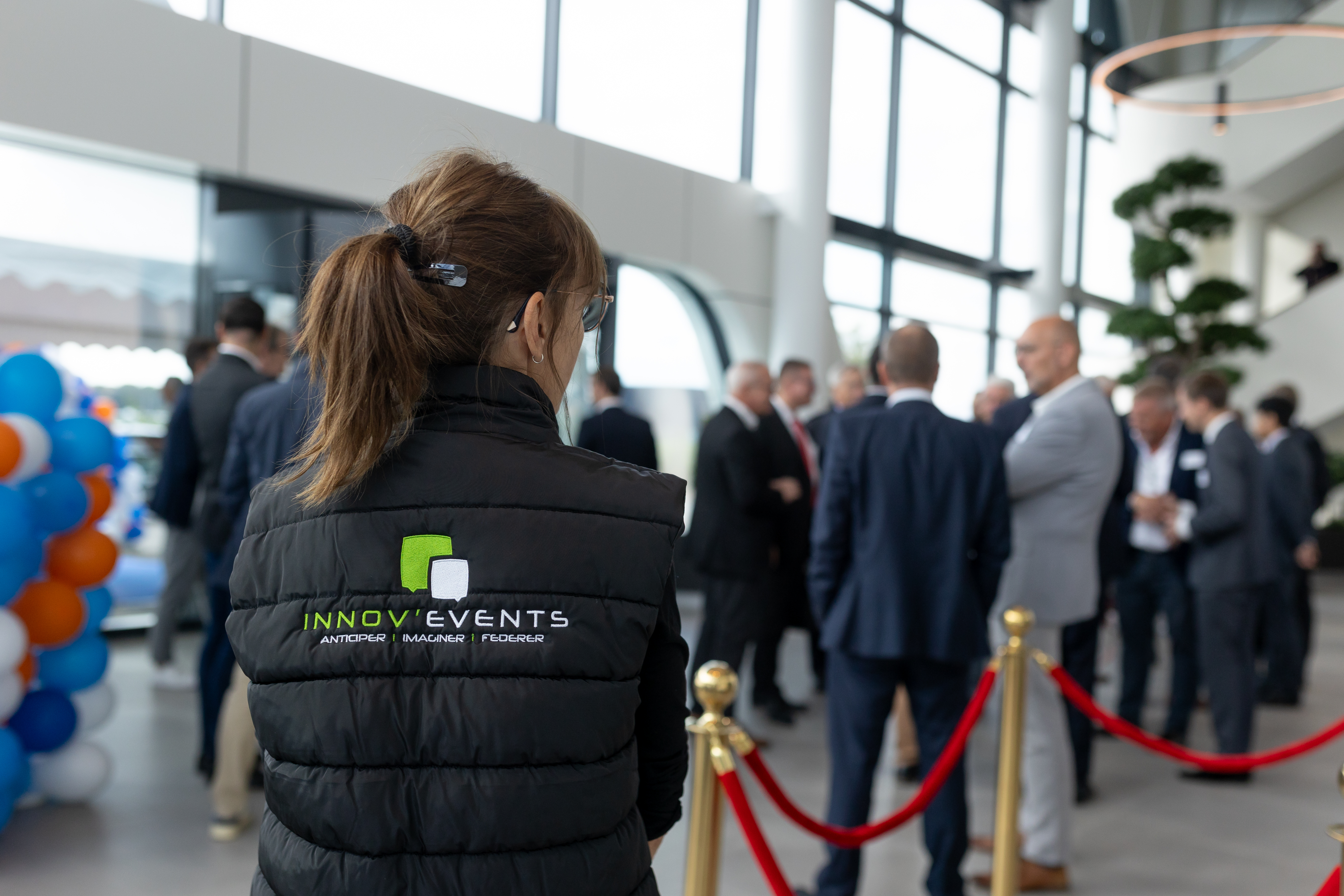
Eventhostess in Antwerpen: flawless guest flow, stronger brand perception
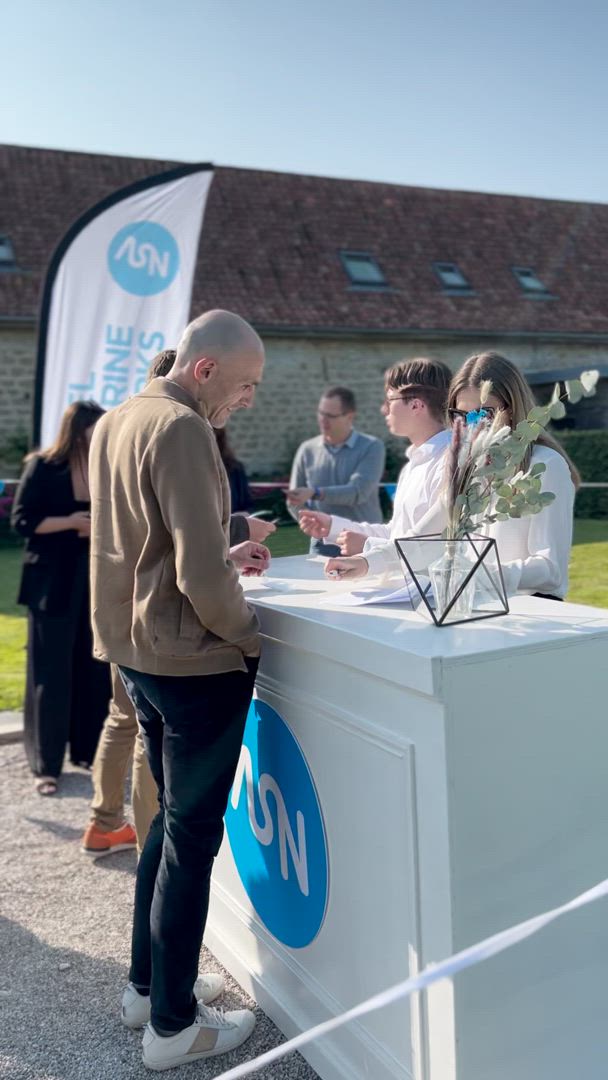
INNOV'events provides Eventhostess teams for corporate events in Antwerpen, typically from 50 to 2,000+ attendees. We cover reception, registration, VIP routing, speaker assistance, and on-floor coordination so your teams can focus on content and stakeholders.
From the first badge printed to the last VIP taxi coordination, we run the front-of-house with measurable standards: queue time, tone of voice, language coverage, and incident handling.
Sommaire
In a corporate event, hospitality is not “nice to have”: it is your first operational KPI. A well-briefed Eventhostess team reduces waiting time, prevents access mistakes, and protects the executive agenda when the pressure peaks at check-in and during stage transitions.
Organizations in Antwerpen expect bilingual or trilingual coverage (NL/FR/EN), calm authority with VIPs, and a precise understanding of security and access levels—especially in venues with multiple entrances, loading docks, and parallel sessions.
INNOV'events is a Brussels-based agency operating across Belgium with frequent deployments in Antwerpen. We work with trained host staff, structured briefings, and a local logistics approach (arrival planning, public transport/taxis, and venue-specific routing) to deliver predictable results.
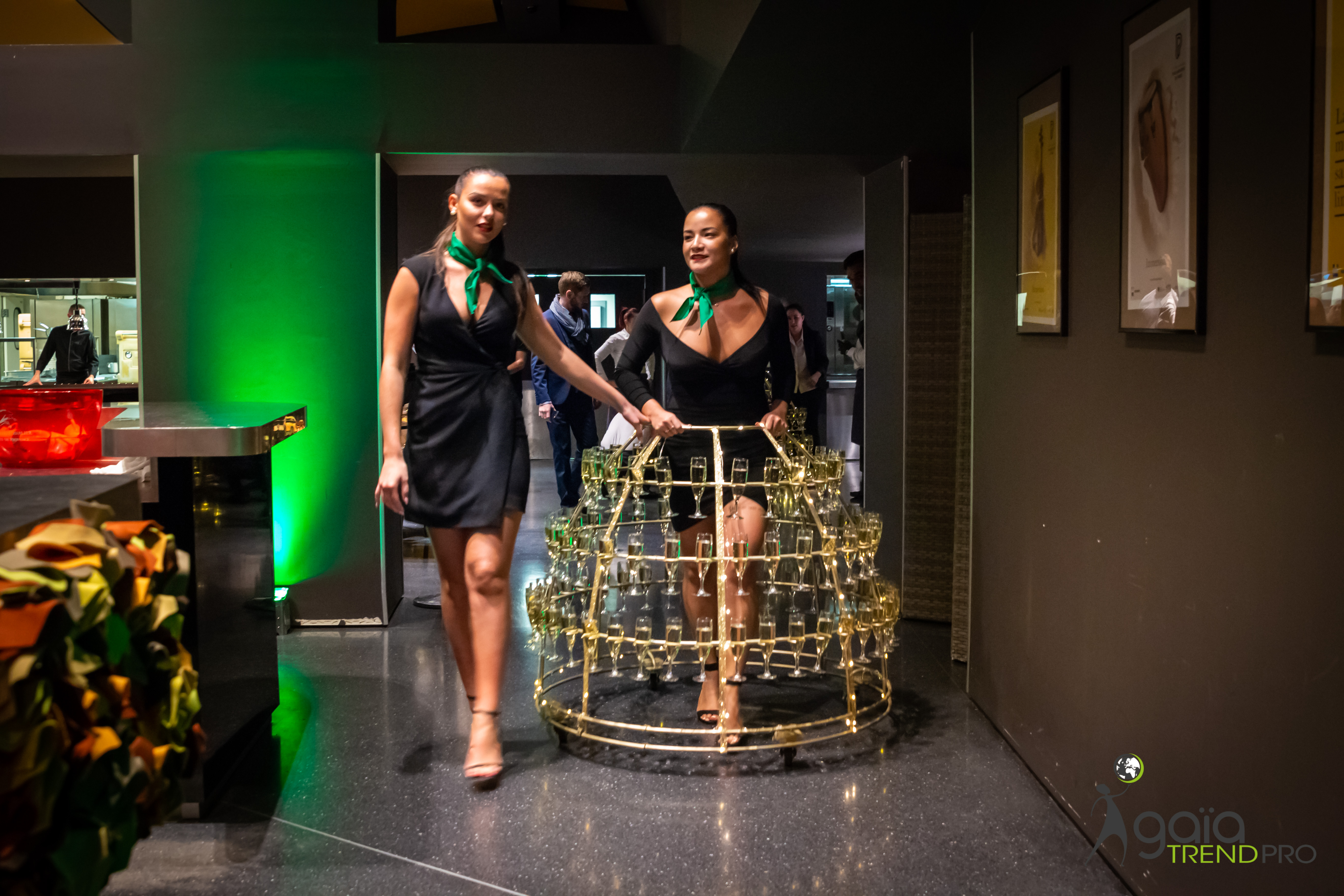
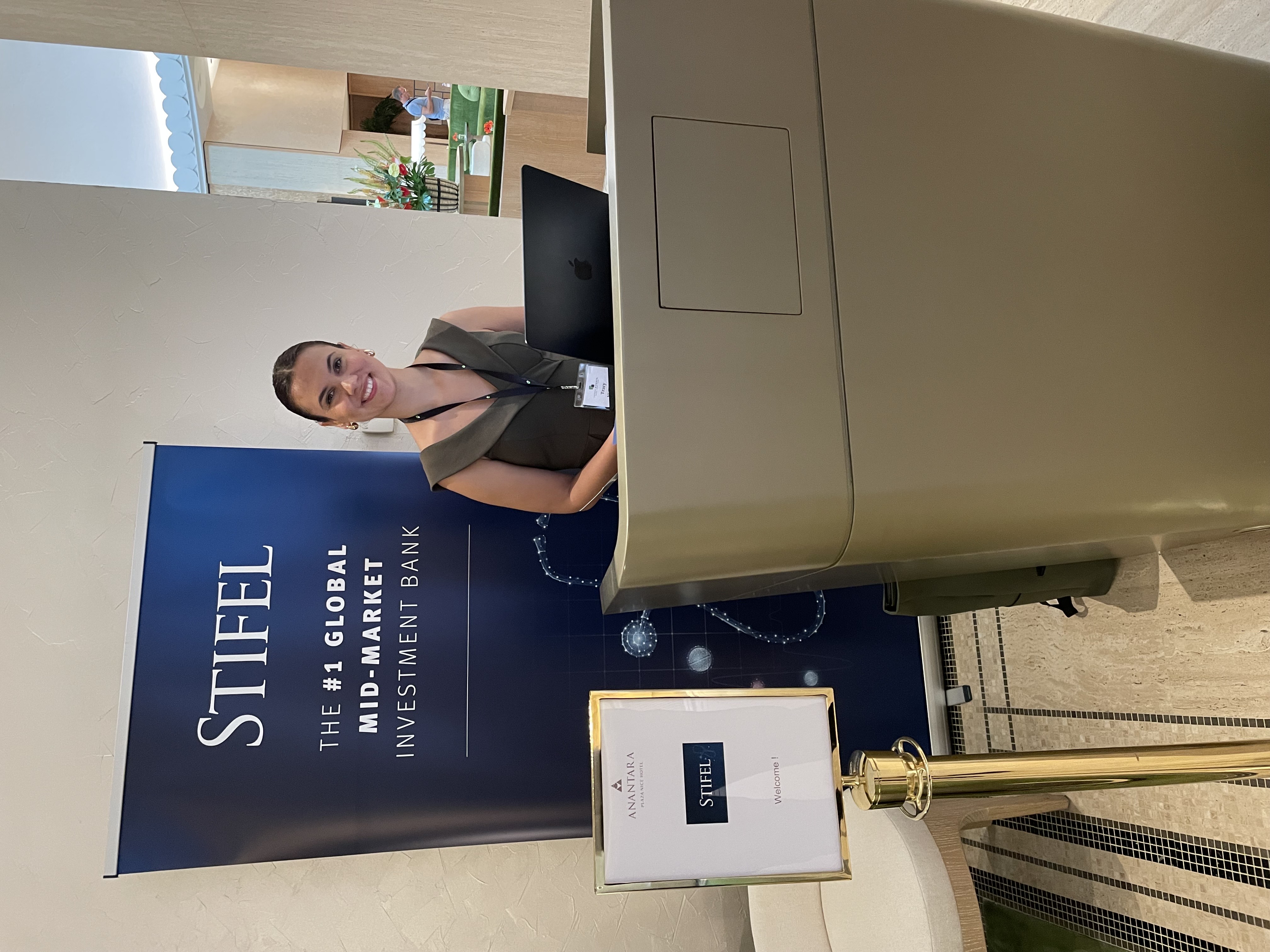
Operational facts we commit to in Antwerpen
24–72 hours: standard timeframe to confirm staffing once scope and schedules are approved (subject to seasonality and venue constraints).
NL/FR/EN coverage: bilingual teams are standard; trilingual profiles are planned when your guest list and speaker lineup require it.
1 team lead on-site for every deployment: a single accountable person coordinating breaks, incident escalation, and last-minute changes.
Queue management targets: we design staffing to keep check-in wait time typically under 5–10 minutes at peak arrivals (depends on badge process, security checks, and guest punctuality).
Contingency-ready: backup profiles and replacement procedures defined upfront for early morning call-times and high-impact roles (VIP desk, speaker support, cloakroom).
Who we support in Antwerpen, and how relationships last
In Antwerpen, many corporate events repeat annually or quarterly: leadership offsites, partner days, product updates, investor communications, recruitment evenings, and industry networking. Our work is often renewed because the risk profile stays the same—tight timing, VIP expectations, and a brand to protect—while the content changes.
INNOV'events supports organizations that want consistent execution: the same tone at reception, the same badge logic, the same access discipline, and the same escalation path when a keynote speaker is late or a VIP arrives unannounced. Some clients keep our teams year after year because we document what happened (peak times, no-show patterns, frequent questions, traffic flows), and we use that operational memory to improve the next edition.
If you share your internal stakeholders (HR, Comms, Facilities, Security) and your guest segments (VIPs, partners, press, employees), we will propose a front-of-house plan that fits how companies actually work in Antwerpen: short decision cycles, high reputation sensitivity, and zero appetite for improvisation at the entrance.
 Besoin d’un devis rapide ?
Nous vous envoyons une première proposition sous 24h.
What executives gain from an Eventhostess team in Antwerpen
For executives, an event is a high-cost hour-by-hour sequence: arrivals, stakeholder conversations, stage moments, and controlled networking. A professional Eventhostess in Antwerpen setup protects that sequence by keeping people where they should be, when they should be there—and by resolving small incidents before they become visible problems.
Protect leadership time: escorting VIPs, aligning them with hosts, and preventing “lost minutes” caused by confusion at entrances, cloakroom, or wayfinding.
Reduce reputational risk: consistent language, tone, and protocol at reception prevents awkward interactions with press, partners, or public officials.
Increase participation: proactive room management (doors timing, session reminders, seat filling) improves attendance in breakout sessions and reduces half-empty rooms.
Improve data quality: correct on-site registration and badge logic (name spelling, company, category, consent/opt-in rules) avoids CRM cleanup after the event.
Streamline HR and employer branding: for recruitment or internal events, a well-run check-in and guided routing ensures candidates/employees feel respected and informed from minute one.
Support compliance and security: access levels, wristbands, and controlled entry points are implemented consistently—especially relevant in venues with shared public areas.
Antwerpen is a city where business relationships rely on trust and efficiency. When your front-of-house runs like a well-managed operation, stakeholders read it as a reflection of your management culture—disciplined, prepared, and respectful of people’s time.
What companies in 2000 Antwerp typically require on event day
Corporate events in the 2000 area often combine international guests with local decision-makers, which makes language and protocol non-negotiable. Many attendees will arrive directly from meetings or from the station, expecting a fast entry process and clear guidance.
We frequently see three practical constraints in and around Antwerpen:
- Arrival clustering: guests tend to arrive in waves (start-of-program, first keynote, or just before dinner). Without staffing built for peaks, queues form immediately and create a poor first impression.
- Multiple access points: loading, VIP entry, general entry, and staff entry can overlap. If access rules are not briefed and signposted, you get security friction or the wrong people in the wrong zones.
- High expectations for bilingual handling: a single-language desk slows down the process and can create tension. We plan desk distribution (NL/FR/EN) and signage so guests self-select correctly.
We also adapt to the local venue reality: cloakroom pressure during rainy months, taxi coordination after evening programs, and the need for discreet guest management when clients host partners and competitors in the same space.
Which corporate event entertainment works best in Antwerpen venues
Entertainment is effective when it serves an operational goal: fill dead time during arrivals, stimulate networking without forcing it, and create shareable moments that are consistent with your brand. In Antwerpen, many corporate audiences respond best to formats that feel polished, time-efficient, and respectful of business context.
Animations Interactives à Antwerpen
Guided networking prompts at welcome drink: hostesses facilitate introductions based on pre-defined criteria (industry, partner tier, language), useful for partner events where ROI is measured in meetings created.
Interactive check-in upgrades: QR scanning plus on-the-spot badge corrections and session allocation. The “animation” is actually speed and control—guests notice professionalism immediately.
Live polling moments before a keynote: managed by host staff in the room (helping less tech-savvy attendees), increasing participation and giving executives usable insights.
Animations Artistiques à Antwerpen
Discrete live music (solo/duo) calibrated to conversation levels: we specify sound limits and set times so it supports networking rather than competing with it.
Brand-safe performers for gala formats: short, timed interventions between courses with clear technical riders to avoid last-minute AV surprises.
Animations Innovantes à Antwerpen
Structured tasting stations: hostesses manage flow and explanation cards (allergens, origin, pairing). This keeps queues moving and reduces repeated questions to catering.
Timed service cues: coordinating with catering on table release or station opening to avoid rushes that disrupt speeches or award moments.
Animations Gourmandes à Antwerpen
Content capture corner: a small, well-lit interview spot where a hostess schedules speaker/partner slots and manages releases. Useful when Comms needs short clips for internal channels within 24–48 hours.
Wayfinding by micro-zoning: color-coded badge backs or discreet wristbands for access levels, reducing questions and keeping premium areas controlled without a heavy security feel.
Whatever the format, we check alignment with your brand image: tone, dress code, scripts, and what guests will actually experience minute-by-minute. In Antwerpen, where many guests know each other professionally, subtle and well-managed entertainment often outperforms loud concepts because it protects conversation quality and business outcomes.
How to choose a venue in Antwerpen for flawless guest hospitality
The venue dictates guest flow, staffing needs, and risk points. For a Eventhostess in Antwerpen setup, we evaluate entrances, desk space, cloakroom capacity, backstage routes, and whether your registration can be physically separated from the networking area. These details determine if your event feels controlled or chaotic.
| Venue type | For which objective? | Main strengths | Possible constraints |
|---|---|---|---|
| Conference center or large auditorium | Keynotes, town halls, high-attendance updates | Clear stage infrastructure, seating capacity, often built-in AV; easier crowd routing | Peak-time queues if foyer is narrow; strict time slots; vendor procedures can be rigid |
| Hotel with meeting rooms + ballroom | Leadership offsites, partner days, mixed program (breakouts + dinner) | All-in-one logistics (rooms, catering, parking); smooth transitions between moments | Simultaneous hotel guests can blur access control; branding limitations in shared areas |
| Industrial or warehouse-style event space | Product launches, brand experiences, networking-heavy formats | Strong visual impact; flexible zoning for registration, demos, and hospitality | More build needed (cloakroom, signage, heating/acoustics); higher front-of-house staffing to guide guests |
We strongly recommend a site visit (or at minimum a technical walk-through) before confirming staffing. In Antwerpen, two venues with the same capacity can behave very differently at the entrance: the difference is often corridor width, door placement, and where taxis and deliveries intersect. We plan the hostess positions based on that reality.
What an Eventhostess in 2000 typically costs and why
Pricing for a Eventhostess team depends on scope, timing, and risk. The main cost driver is not “hours on paper” but operational coverage: peak arrivals, VIP handling, multiple rooms, and the level of autonomy you expect from the team lead.
Duration and call time: early setup and late breakdown require different staffing plans than a simple 3-hour reception.
Language requirements: NL/FR/EN profiles can impact availability and rates, especially during busy trade fair periods.
Complexity of registration: QR scanning, on-site payments, badge printing, consent management, and category-based access levels increase the operational load.
VIP protocol: dedicated VIP desk, escorting, reserved seating control, and coordination with security/driver schedules.
Dress code and branding: uniform requirements, host briefing time, and brand-specific scripts (what can/cannot be said).
Venue constraints: multiple entrances, long walking distances, limited storage, or restricted load-in routes require more floor coverage.
From an ROI perspective, front-of-house is one of the highest-leverage lines in the budget: preventing a 15-minute check-in delay or a VIP misrouting can protect executive time, keep the program on schedule, and preserve stakeholder confidence—often worth far more than the staffing delta versus a minimal setup.
Why work with an event agency in Antwerpen for hostess staffing
For demanding corporate events, local execution matters. A team that understands Antwerpen logistics—arrival patterns, venue procedures, taxi flow, and local vendor coordination—reduces friction on event day. It also speeds up decision-making when something changes at the last minute (speaker delay, room switch, unexpected guest peak).
If you need broader support beyond host staffing (production, suppliers, entertainment, and on-site management), we can also collaborate through our local ecosystem; see our event agency in Antwerpen page for the wider operational scope.
- Faster on-site troubleshooting: local familiarity with venue teams and standard operating procedures accelerates solutions.
- Better staffing realism: we plan based on local peak seasons and talent availability, avoiding last-minute downgrades.
- Logistics discipline: arrival times, break planning, and transport coordination are built to match the city’s practical constraints.
- Consistency across editions: recurring events benefit from documented learnings about guest flow, signage, and desk configuration.
From an ROI perspective, front-of-house is one of the highest-leverage lines in the budget: preventing a 15-minute check-in delay or a VIP misrouting can protect executive time, keep the program on schedule, and preserve stakeholder confidence—often worth far more than the staffing delta versus a minimal setup.










What we have delivered in Antwerpen: real operational scenarios
Our hostess deployments in Antwerpen typically fall into several recurring scenarios—each requiring different staffing architecture.
Scenario 1: Partner day with VIP track. The client needed a fast general check-in plus a separate VIP entry with escorting to reserved seating. We structured two lanes for general guests, one correction desk for name/company issues, and a dedicated VIP hostess with a clear escalation line to the client’s protocol contact. Result: controlled arrivals, no VIP waiting, and speakers reached backstage on time.
Scenario 2: HR recruitment evening with high candidate volume. The pressure point was not VIP protocol but data quality and candidate experience. We set up category-based badges, a “first questions” roaming hostess, and room routing to avoid congestion at the first stand. This reduced repeated questions to recruiters and kept candidates moving through the journey.
Scenario 3: Corporate town hall with tight stage cues. Here, the risk was program drift. We assigned a room captain to coordinate doors timing with AV, while reception staff managed late arrivals without disrupting the keynote. We also handled microphone runners and speaker water placement under the stage manager’s lead, keeping responsibilities clean and preventing overlap.
Across these projects, the common thread is predictability: stakeholders know who owns what, and guests experience calm control rather than visible stress.
Common hostess staffing mistakes we prevent in Antwerpen
Underestimating arrival peaks: planning “average arrivals” instead of the real peak 20 minutes before start time. We staff for the peak, not the spreadsheet.
No clear access logic: guests, suppliers, and staff sharing entrances without wristbands/badges and without a decision tree for exceptions.
Unbriefed scripts: host staff left guessing how to handle lost invitations, media requests, or VIP last-minute additions—leading to inconsistent answers.
Registration tech without fallback: QR scanners, printers, or Wi-Fi failing with no manual plan. We define offline procedures and a paper list protocol.
Breaks not managed: all hostesses taking breaks at the same moment, leaving the entrance exposed. Our team lead staggers breaks and covers critical points.
Cloakroom bottlenecks: insufficient hangers, unclear ticket logic, or poor queue lanes—often the hidden source of “event feels chaotic” feedback.
Our role is to reduce these risks before the event and to absorb pressure on the day itself. In Antwerpen, where guests often have tight schedules and high expectations, prevention is the difference between “it went fine” and “we should never repeat that venue/setup again.”
Why Antwerp clients keep the same hostess team
When a client renews, it is rarely because the event was “fun.” It is because the event was controlled: guests moved smoothly, VIPs were respected, internal stakeholders felt supported, and no one had to solve front-of-house issues while managing content.
Repeatability: once your desk layout and access logic are proven, we document it and redeploy it—saving internal time on each new edition.
Operational memory: we keep notes on peak times, recurring guest issues, and venue-specific constraints, so the next event starts from a better baseline.
Stakeholder comfort: HR, Comms, and Executive Assistants value knowing exactly who to call on site and how fast changes will be executed.

Loyalty is the most pragmatic proof of quality in event operations: it means the client trusts the team under pressure. In Antwerpen, where reputation travels quickly across business networks, that trust is earned through consistent delivery.
How we scope and run hostess staffing for Antwerpen events
👉 Step 1 (Antwerpen): define guest flow and risk points
We start with your agenda, guest list segments, and venue plan. We identify where mistakes are costly: check-in peaks, VIP arrivals, stage transitions, press or partner handling, and any compliance requirements. We also align on the tone of voice expected at reception (formal, warm, strict access control, etc.).
👉 Step 2 (2000): build the staffing plan and desk architecture
We translate the flow into positions and shifts: number of desks, lane design, roaming roles, cloakroom coverage, and a clear on-site hierarchy (team lead, zone captains if needed). We specify language distribution and define scripts for common exceptions (missing registration, badge correction, access upgrade requests).
👉 Step 3 (Antwerpen): briefing, tools, and escalation rules
Before the event, we deliver a concise briefing pack: schedules, dress code, venue map, contact list, and decision trees. On site, the team lead briefs again with a walk-through: entrance, emergency exits, VIP route, backstage, storage, and where issues must be escalated (client representative, venue security, production).
👉 Step 4 (2000): live operations and continuous adjustment
During the event, we manage queue lengths, redeploy staff when peaks shift, and coordinate breaks. If a room change happens or a speaker is late, we update wayfinding and reception scripts immediately to keep information consistent across all touchpoints.
👉 Step 5 (Antwerpen): post-event debrief with actionable notes
We capture what actually happened: peak arrival times, frequent questions, badge correction volume, cloakroom pressure, and any incidents. You receive improvements for the next edition (desk count, signage placement, access logic), not generic feedback.
FAQ sur l'organisation Eventhostess à Antwerpen
How many eventhostesses do I need in Antwerpen?
As a practical baseline in Antwerpen: 1 hostess per 75–120 guests for smooth check-in when arrivals are spread out. If arrivals cluster (typical), plan 1 per 50–80 during the first 30–45 minutes. Add 1 team lead, plus dedicated roles for VIP desk, cloakroom, or multiple breakouts.
Do you provide bilingual NL/FR eventhostess profiles in Antwerpen?
Yes. For Antwerpen, NL/FR is common and NL/EN is frequent for international audiences. When needed, we plan trilingual NL/FR/EN coverage, but availability can be tighter during peak corporate seasons—so earlier booking improves profile choice.
What is the typical booking lead time in 2000?
For events in 2000, we recommend 2–4 weeks for optimal staffing and briefing. We can sometimes staff within 24–72 hours for simpler scopes, but VIP-heavy or multi-room events should be planned earlier to secure the right profiles and a strong team lead.
Can hostesses manage QR check-in and badge printing in Antwerpen?
Yes. Our Eventhostess in Antwerpen teams can handle QR scanning, attendee list troubleshooting, badge printing, and category-based access control. We also define a fallback procedure (manual lists, offline mode) to keep check-in running if Wi-Fi or devices fail.
What are common on-site risks at Antwerpen venues?
The most frequent risks are arrival waves causing queues, unclear separation between VIP/general entrances, cloakroom bottlenecks in bad weather, and inconsistent answers from staff when exceptions arise. We reduce these with lane design, clear access logic, scripted exception handling, and a visible on-site lead coordinating with venue security and AV.
Request a quote for Eventhostess staffing in Antwerpen
If your event in Antwerpen has executive visibility, VIP attendance, or tight program timing, plan hostess staffing early—front-of-house is where operational issues become visible first.
Send us your date, venue (or shortlist), estimated attendance, languages required, and agenda. INNOV'events will reply with a clear staffing plan (roles, shifts, peak coverage), practical assumptions, and a transparent quote so you can compare agencies on execution—not promises.
Agence INNOV'events Antwerpen
Justin JACOB est le responsable de l'agence événementielle Antwerpen. Contactez-le directement par mail via l'adresse belgique@innov-events.be ou par formulaire.
Contacter l'agence AntwerpenToutes nos prestations & animations Antwerpen, Belgique
Découvrez nos prestations événementielles
Découvrez nos animations événementielles disponibles au Belgique
- Hôtesse événementielle à Antwerpen
- Escape Game à Antwerpen
- Cours de cuisine type MasterChef à Antwerpen
- Magicien à Antwerpen
- Location de chapiteau à Antwerpen
- Atelier colorimétrie à Antwerpen
- Jeux gonflables à Antwerpen
- Service de voiturier à Antwerpen
- Simulateur de football à Antwerpen
- Location de mobilier lumineux à Antwerpen
- Flocage lumineux à Antwerpen
- Repas insolite à Antwerpen
- Light Painting à Antwerpen
- Murder Party à Antwerpen
- Jeu concours à Antwerpen
- PLV événementielle à Antwerpen
- Réalité virtuelle à Antwerpen
- Cuisine moléculaire à Antwerpen
- Animation Halloween à Antwerpen
- Feu d’artifice à Antwerpen
- Jeux géants à Antwerpen
- Animateur événementiel à Antwerpen
- Animation photo à Antwerpen
- Père Noël à Antwerpen
- Animation enfants à Antwerpen
- Visite guidée à Antwerpen
- Rallye urbain à Antwerpen
- Piscine à balles à Antwerpen
- Simulateur de vol à Antwerpen
- Location de food truck à Antwerpen
- Record du monde à Antwerpen
- Simulateur de surf à Antwerpen
- Casino du vin à Antwerpen
- Atelier relooking à Antwerpen
- Atelier création de parfum à Antwerpen
- Atelier acting à Antwerpen
- Animations RSE à Antwerpen
- Tir à l’arc à Antwerpen
- Agent de sécurité à Antwerpen
- Œnologie à Antwerpen
- Mime à Antwerpen
- Jeu télévisé à Antwerpen
- Fête foraine à Antwerpen
- Atelier gestion de crise à Antwerpen
- Atelier négociation de crise à Antwerpen
- Jeux d’arcade à Antwerpen
- Simulateur de chute libre à Antwerpen
- Simulateur de ski à Antwerpen
- Simulation circuit automobile à Antwerpen
- Baptême de l’air à Antwerpen
- Dégustation à Antwerpen
- Création de baby-foot à Antwerpen
- Rallye 2CV à Antwerpen
- Challenge LEGO à Antwerpen
- Animation casino à Antwerpen
- Interprète / traducteur à Antwerpen
- Goodies à Antwerpen
- Bus / transfert à Antwerpen