
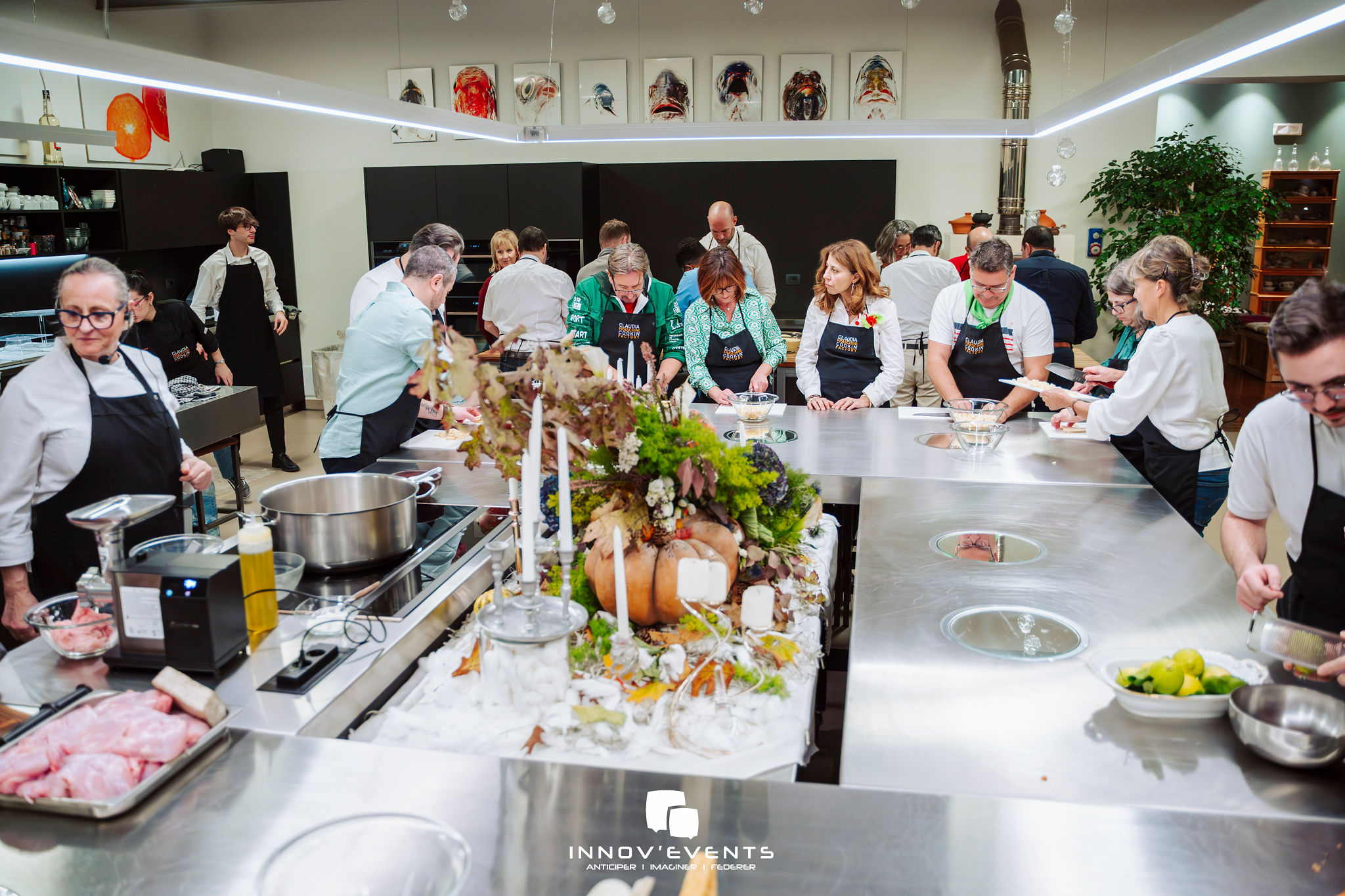
MasterChef kookworkshop in Brussel for stronger team alignment
INNOV'events produces MasterChef kookworkshop in Brussel formats for executive teams, HR and communication departments—typically 10 to 200 participants, in half-day or evening setups. We manage the full chain: venue sourcing, chef staffing, ingredients, run-of-show, safety, and post-event feedback.
The goal is not “fun for fun’s sake”: it is a controlled, high-participation format that supports onboarding, cross-team collaboration and employer branding—without risking service issues, dietary mishaps or budget surprises.
Sommaire
In a corporate event, entertainment is only valuable when it produces a measurable outcome: better collaboration, faster informal networks, or a clearer internal message. A cooking workshop forces real-time coordination (roles, timing, quality control) under light pressure—exactly the dynamics many teams struggle with in projects.
Organizations in Brussel expect operational precision: multilingual facilitation (FR/NL/EN), easy access by public transport, strict allergy management, and a pace compatible with board agendas. They also expect a professional “run-of-show” so leadership can participate without managing logistics.
INNOV'events is based in Brussel and used to working with EU-facing companies, HQ teams and fast-moving scale-ups. We design the workshop like a production: clear roles, service timing, hygiene standards, contingency planning, and a deliverable recap for HR/Comms.
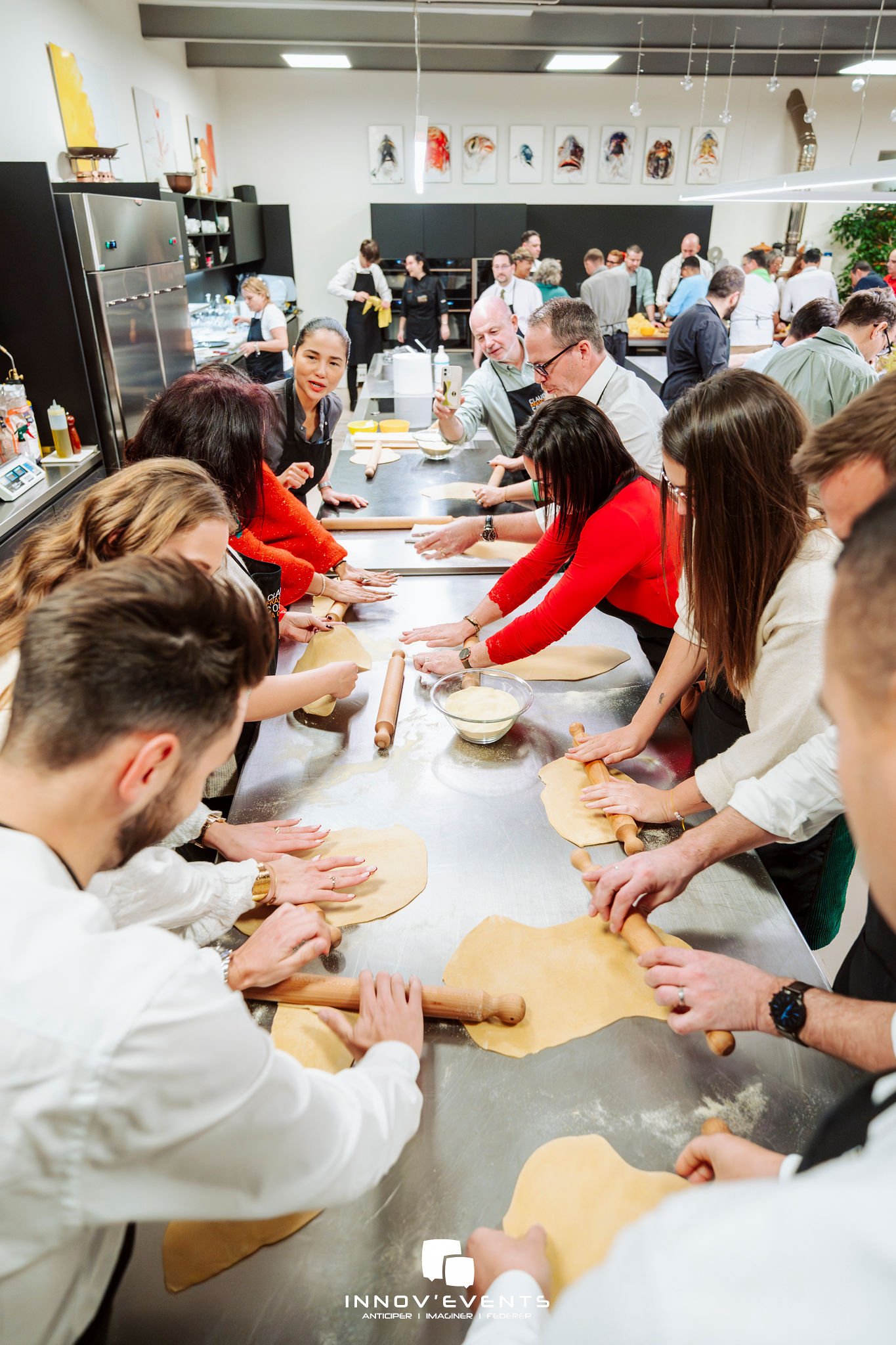
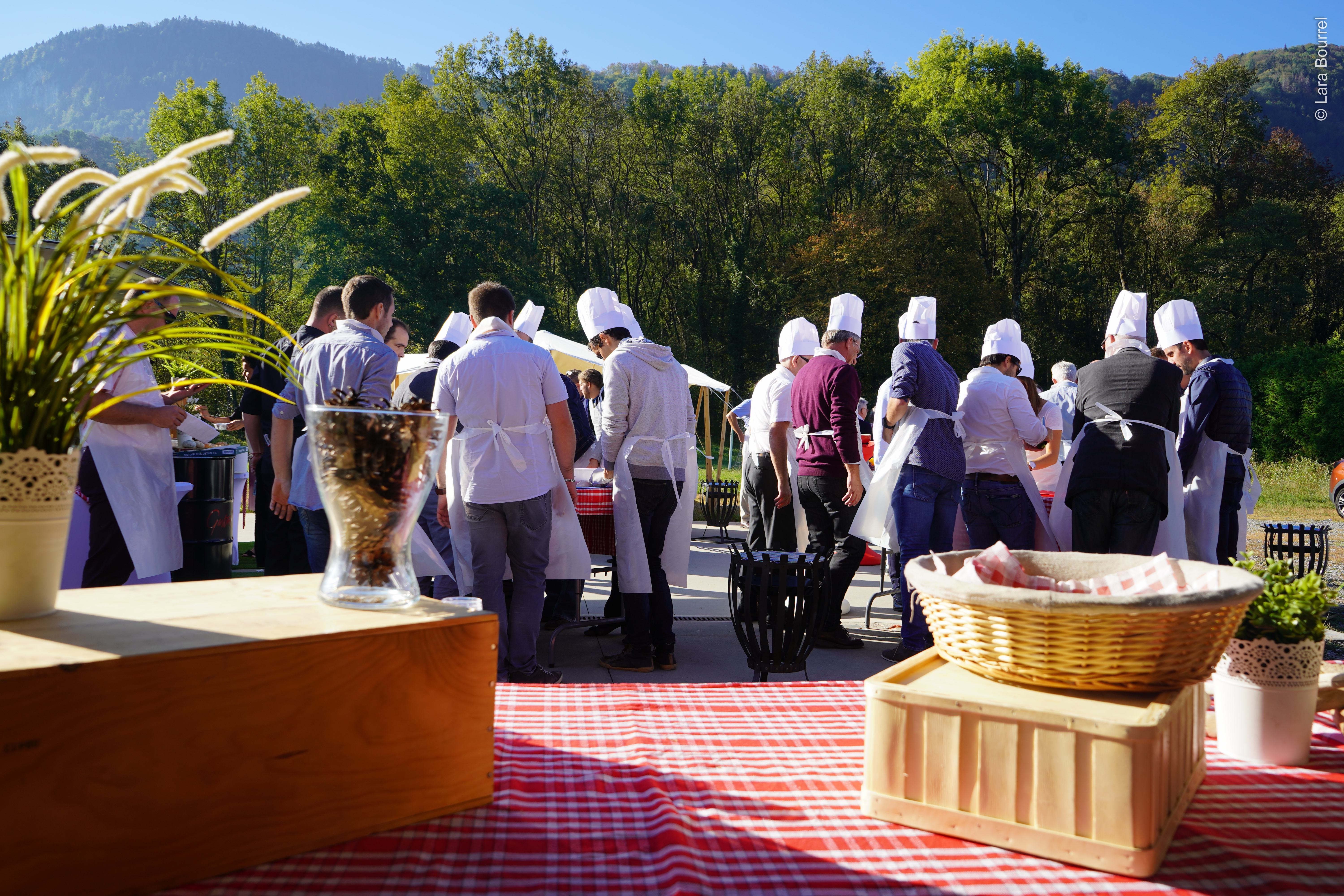
Brussel delivery facts executives typically ask for
48–72 hours: typical time to secure chef availability and a first workable scenario once the date, headcount and constraints are validated.
10–200 participants: formats we routinely run, from leadership offsites to multi-team activations with rotations and parallel kitchen stations.
3 languages (FR/NL/EN): facilitation and briefings available, useful for mixed Brussels teams and international stakeholders.
1 single project lead: one accountable point of contact from scoping to event day, with a documented production plan and supplier confirmations.
What working in Brussel changes on the ground
Delivering a MasterChef kookworkshop in Brussel is not the same as running it “anywhere”. The city’s mobility patterns, building access rules, and multilingual participant mix directly impact timing, staffing and facilitation. In practice, we plan with realistic buffers for EU quarter traffic, we verify loading/unloading options, and we confirm kitchen power/water capacity before committing to menus or station counts.
Many Brussels-based organizations repeat the format year after year because it solves a real internal need: getting people from different departments to work together quickly, without the awkwardness of forced networking. We also see recurring participation from HQ teams that want one reliable partner to deliver consistently across different venues and headcounts—without re-explaining basics each time.
If you already have internal references (a preferred caterer, a compliance checklist, union constraints, or a strict brand guideline), we integrate them early. It avoids last-minute rewrites of the menu, signage, or staff dress code—which is where most “nice concept” ideas fail operationally.
 Besoin d’un devis rapide ?
Nous vous envoyons une première proposition sous 24h.
Why HR teams in Brussel choose a MasterChef workshop
A MasterChef kookworkshop in Brussel is a practical management tool disguised as a social moment. The value is in the mechanics: dividing tasks, managing time, handling quality criteria, and communicating under constraints—exactly what cross-functional teams do in real projects.
For executive sponsors, this format is useful because it creates observable behaviors. You see who naturally coordinates, who clarifies priorities, who anticipates risks (allergens, timing, missing tools), and who brings others in. With the right facilitation, it becomes a structured reflection rather than “just cooking”.
Faster team cohesion for newly merged departments or newly appointed managers: the workshop creates immediate, low-stakes collaboration and provides a shared story that helps onboarding.
Leadership visibility without a stage: executives can participate and be seen in action, without long speeches. We design moments where leadership presence supports the group rather than interrupts it.
Cross-silo collaboration: stations are deliberately mixed (HR/Finance/Sales/Operations) with role rotation (captain, quality, timekeeper, plating). It reduces “department clustering”.
Concrete internal communication content: professional photos (opt-in), recipe cards branded to your guidelines, and a recap message that HR/Comms can reuse—useful for employer branding in Brussels’ competitive talent market.
Inclusion through smart constraints: halal/kosher-compatible options, vegetarian and alcohol-free pairings, and accessible workstation planning so nobody is excluded.
Post-event learning: a short debrief (10–15 minutes) anchored on what happened (time management, coordination, decision-making), not abstract theory.
Brussel is a city of coalitions—between languages, cultures, institutions and industries. A well-produced cooking workshop mirrors that reality: aligning different profiles around a shared objective, with clear rules, respectful communication and a deliverable outcome.
What companies in Brussel expect from the event day
Brussels organizations typically have higher “operational hygiene” expectations than they state in a brief. The most common constraints we see are: strict building access procedures (badges, security lists, limited freight elevators), tight schedules aligned with board calendars, and mixed participant profiles (interns to C-level in the same room).
That is why we plan a MasterChef kookworkshop with a corporate-grade production file: arrival waves, station assignment logic, clear start/stop times, and a service plan that doesn’t rely on “people will figure it out”. In Brussel, guests are often coming from different communes or even from Leuven/Antwerp/Ghent on the same day; late arrivals are predictable, so the run-of-show must absorb them.
Another Brussels reality: dietary requirements are not an exception, they are the norm. We treat allergy data like a participant safety topic, not a catering preference. That means a registration process that captures allergens early, a labeling system on-site, and chef briefings that are documented (not informal).
Finally, Comms teams often need brand control. We integrate your visual identity in recipe cards, chef aprons (when relevant), signage, and photo angles—while respecting GDPR and consent. This is especially important for EU-adjacent organizations where image governance is strict.
Which cooking formats work best in Brussel corporate events
Entertainment creates engagement when participants have a clear objective, immediate feedback, and a reason to collaborate. In a MasterChef kookworkshop in Brussel, engagement comes from deadlines, quality criteria, and the shared outcome of serving a plate to colleagues.
Animations Interactives à Brussel
Team mystery box challenge: each station receives a core ingredient plus two constraints (e.g., vegetarian starter, no added sugar dessert). This is effective for cross-functional teams because it forces alignment and quick decision-making.
Timeboxed service simulation: teams must deliver plates in a fixed window (e.g., 12 minutes). Great for organizations where delivery deadlines are a recurring pain point.
Role-rotation kitchen: every 10–15 minutes roles switch (captain becomes plating, timekeeper becomes hygiene). It prevents one person from taking over and makes the activity fairer.
Animations Artistiques à Brussel
Plating and visual standards module: a short segment on presentation, useful for brand-sensitive teams (luxury, consultancy, public institutions) where “how it looks” matters.
Storytelling through food: teams name their dish and present it in 60 seconds. Works well for communication departments because it mirrors concise messaging under constraints.
Animations Innovantes à Brussel
Belgian classics, executive-friendly: modern takes on local references (e.g., endive, North Sea fish, speculoos) while keeping dietary variants feasible. It anchors the event in Brussel without turning it into a tourist show.
Alcohol-free pairing: structured tasting with non-alcoholic alternatives (botanical infusions, low-sugar mixers). Useful for inclusive corporate policies and daytime events.
Allergen-safe menu design: we can design a menu where the base recipe is naturally free from common allergens, reducing risk and making labeling simpler.
Animations Gourmandes à Brussel
Scorecard judging like a real competition: taste, technique, hygiene, teamwork, and time management—scored transparently. This helps executives justify the activity as a team effectiveness tool.
Hybrid content capture: quick interviews (optional) and recipe cards distributed after the event for internal channels. Practical for Brussels employers competing on culture and retention.
CSR integration: surplus management plan (within food safety limits), and optional donation alignment via partners. We design this carefully to avoid compliance or reputational risks.
The best format is the one aligned with your brand image and internal culture. A regulated institution may prioritize safety, clarity and inclusivity; a scale-up may want speed and friendly competition. We calibrate tone, difficulty, and “show” level so the workshop strengthens your image rather than fighting it.
How to choose a venue in Brussel for a MasterChef workshop
The venue determines your operational risk level: kitchen capacity, ventilation, noise management, and access rules directly affect the guest experience. In Brussel, the venue also impacts punctuality—proximity to metro lines and predictable taxi access matter when participants come from multiple sites.
| Venue type | For which objective? | Main strengths | Possible constraints |
|---|---|---|---|
Professional cooking studio | High-quality culinary execution and competition-style flow | Proper stations, ovens, ventilation, trained staff, reliable hygiene setup | Fixed layout, limited branding options, specific time slots |
Hotel conference venue with kitchen access | Executive offsite + dinner, where logistics must be seamless | One-site solution (meeting rooms + workshop + service), strong accessibility and service standards | Less “hands-on” kitchen space; may require adapted menus and higher staffing |
Corporate HQ or office kitchen (upgraded) | Internal culture event, onboarding, employer branding content | Maximum convenience, strong belonging effect, easier internal comms participation | Power limits, noise rules, building security, strict cleaning and insurance checks |
We strongly recommend a site visit (or a technical walkthrough with photos, floor plans and power specs) before confirming the menu and station count. Most last-minute failures come from underestimating kitchen throughput, storage space, or access constraints—issues that are easy to prevent with a professional pre-check.
What a MasterChef kookworkshop in Brussel costs in practice
Pricing depends on operational parameters more than on “concept”. Two workshops can look similar on paper and be very different in cost once you include chef ratios, venue constraints and dietary compliance. We quote transparently with a line-by-line structure so procurement and finance can validate quickly.
Headcount and station ratio: more stations increase equipment, mise en place, chef supervision and space requirements. Typical planning is 4–6 participants per station.
Duration and format: a 2-hour activation is not the same as a 4-hour workshop with judging, starter-main-dessert and service.
Venue rental and technical conditions: professional studios cost more but reduce operational risk; office venues can be cheaper but may require extra equipment, transport and setup time.
Chef staffing and facilitation: the chef-to-group ratio drives quality and safety. Multilingual facilitation (FR/NL/EN) can require additional senior staff.
Ingredients and menu ambition: premium proteins, seasonal constraints, and complexity (sauces, baking, multiple cook methods) impact cost and timing.
Dietary and allergen management: separate prep flows, labeling, and alternative recipes require extra mise en place and briefing time—worth it to reduce risk.
Production add-ons: photography with consent management, branded recipe cards, trophies, apron personalization, or CSR modules.
From an ROI perspective, clients usually justify this format when it replaces lower-impact activities and delivers visible collaboration outcomes. If the workshop helps a newly structured team align faster—or reduces friction between departments—the cost is often lower than the “hidden cost” of slow execution and repeated alignment meetings.
Why a Brussel-based agency reduces risk on event day
Choosing an agency established in Brussel is not about proximity as a slogan; it is about control. Local production means faster site visits, realistic timing assumptions, and supplier relationships that hold under pressure.
For a cooking workshop, the risk is operational: deliveries, cold chain, last-minute participant changes, and venue constraints. A Brussels team can mobilize backup equipment quickly, adapt transport routes, and speak directly with venue staff and local suppliers—without losing time in escalation loops.
As your event agency in Brussel, INNOV'events also understands local corporate norms: higher compliance sensitivity, multilingual expectations, and the reputational standards typical of EU-facing organizations. That translates into written briefings, documented responsibilities, and clean execution.
- Reliable supplier network for chefs, kitchens, equipment rental, and staffing—validated in real Brussels conditions.
- Faster decision cycles: on-site checks, quick adaptations, and realistic contingency planning.
- Operational credibility with venues: smoother coordination on access rules, noise restrictions, cleaning obligations and waste management.
- Better participant experience: local transport realities integrated into the schedule, reducing late starts and rushed endings.
From an ROI perspective, clients usually justify this format when it replaces lower-impact activities and delivers visible collaboration outcomes. If the workshop helps a newly structured team align faster—or reduces friction between departments—the cost is often lower than the “hidden cost” of slow execution and repeated alignment meetings.




What we have delivered in Brussel across different company realities
We regularly produce culinary team events in Brussel for organizations with very different stakes: leadership offsites where confidentiality matters, HR onboarding waves where inclusivity and facilitation are critical, and communication moments where the output must be “camera-ready” without disrupting the flow.
In practice, this means we have experience with constraints that rarely appear in briefs but always appear on-site: participants arriving in waves after client meetings; strict time windows because of evening trains; last-minute dietary changes; and venues that look perfect until you test oven capacity or discover limited storage.
Our approach is adaptable by design. We can run a high-competition MasterChef kookworkshop with a jury and scoring for teams that enjoy challenge, or a more collaborative “kitchen brigade” structure when psychological safety is the priority. The constant is operational control: safety, timing, and a plan B that is realistic—not theoretical.
Common pitfalls we prevent in Brussel cooking workshops
Overcrowded stations that create spectators instead of participants. We engineer station counts and roles so everyone has a task.
Ignoring access and security rules (loading docks, badge lists, elevator restrictions). In Brussels this is a frequent cause of late setup and cold dishes.
Underestimating allergens: treating them as preferences instead of a safety workflow. We formalize collection, labeling and chef briefings.
Menu complexity without throughput: ambitious recipes that don’t fit the time or equipment, leading to stress and poor outcomes.
No buffer for late arrivals: the workshop starts with a key briefing and late guests miss it, creating confusion. We design arrival-friendly starts.
Weak facilitation: chefs are excellent technically but not structured with corporate groups. We ensure facilitation standards and clear instructions.
Brand and GDPR blind spots: photos taken without consent or content not aligned with internal guidelines. We implement opt-in and shot lists.
Our role is to anticipate these risks and document prevention actions before event day. A smooth workshop is not luck; it is production discipline applied to a high-participation format.
Why Brussel clients rebook INNOV'events for culinary formats
Repeat business in events is rarely about creativity; it is about reliability under pressure. Clients come back when they can delegate with confidence: they know the schedule will hold, dietary topics will be handled correctly, and the experience will reflect their standards.
We also make rebooking easier. We keep a structured record of what worked: station layout, preferred menu difficulty, language mix, timing, and stakeholder feedback. That reduces internal workload for HR and communication teams the next time.
1 documented production file per event, including supplier confirmations, timings, and responsibilities—reusable for future editions.
10–15 minutes debrief option with organizers post-event to capture lessons learned while they are fresh.
2 scenario options proposed in quoting: a “safe operational baseline” and a “higher engagement” variant, to fit budget and risk appetite.

Loyalty is proof of quality because it reflects internal trust: executives and HR do not rebook formats that create risk, overtime or reputational stress.
Our Brussel production process from brief to service
👉 Scoping call in Brussel terms (objectives, constraints, risk)
We start with a short, structured call focused on what matters for decision-makers: purpose (cohesion, onboarding, leadership visibility), non-negotiables (timing, languages, dietary rules, brand guidelines), and risk tolerance. We confirm headcount ranges and identify stakeholders (HR, Comms, Facilities, Procurement) so approvals do not stall.
👉 Concept architecture and operational design for the workshop
We design the workshop mechanics: station count, role rotation, judging method, and menu structure. At this stage we also decide whether the event is better as competition, collaboration, or hybrid—based on your culture and what you want people to remember and repeat at work the next week.
👉 Venue selection and technical validation in Brussel
We shortlist venues based on access, kitchen capacity, ventilation, noise limits and service flow. When needed, we run a technical walkthrough to validate power, water, storage, and waste handling. This is where many agencies rely on assumptions; we rely on checks.
👉 Supplier confirmations and compliance preparation
Chefs, staffing, equipment, ingredients and transport are confirmed in writing. We set the allergy workflow, labeling approach and hygiene briefings. If you have internal compliance requirements, we integrate them (e.g., alcohol policy, photo consent, sustainability constraints).
👉 Event-day execution and controlled guest experience
We run a clear schedule: arrivals, briefing, cooking blocks, plating, judging and service. One lead manages the full production; chefs focus on guidance and safety; a coordinator handles backstage logistics. We maintain buffers and a practical plan B (equipment backup, simplified plating, adjusted timing) to protect outcomes.
👉 Post-event recap for HR and Communication teams
We provide a concise recap: attendance, what was delivered, and any agreed assets (photos with consent, recipe cards, winner announcement text). If requested, we include a short feedback snapshot to help HR evaluate engagement and inform the next edition.
FAQ sur l'organisation MasterChef kookworkshop à Brussel
How many participants can you host in Brussel kitchens?
Most Brussel setups work best from 10 to 80 participants in one room. For 80–200, we typically use parallel stations, rotations, or split groups (e.g., workshop + networking) to keep participation high and avoid congestion.
How long should a MasterChef kookworkshop in Brussel last?
Common durations are 2 to 4 hours. 2 hours fits a tight agenda with one main challenge; 3–4 hours allows starter/main or main/dessert, judging, and a calmer service moment.
Can you manage allergens and dietary needs in Brussel?
Yes. We implement a registration workflow to collect dietary data in advance, use on-site labeling, and brief chefs on separate prep and contamination risks. In practice we recommend locking dietary information 5–7 working days before the event for safe sourcing and mise en place.
Do you run events in Brussel in FR, NL and EN?
Yes. We can facilitate in FR/NL/EN. For mixed groups, we use bilingual briefings, station signage, and a facilitation style that keeps instructions short and repeatable—important when people are moving and cooking.
When should we book a Brussel cooking workshop date?
For the best venue and chef availability in Brussel, plan 4–8 weeks ahead. For peak months (typically end-of-year and late spring), 8–12 weeks is safer—especially for groups over 60.
Request a quote for your MasterChef kookworkshop in Brussel
If you need a MasterChef kookworkshop in Brussel that is professionally produced—clear timings, safe dietary handling, and a format aligned with your culture—share your date options, estimated headcount, preferred language mix, and any non-negotiables (venue type, alcohol policy, branding rules).
We will come back with a structured proposal: recommended format, operational plan, and a transparent budget range. The earlier we lock venue and chef availability, the easier it is to protect both quality and cost.
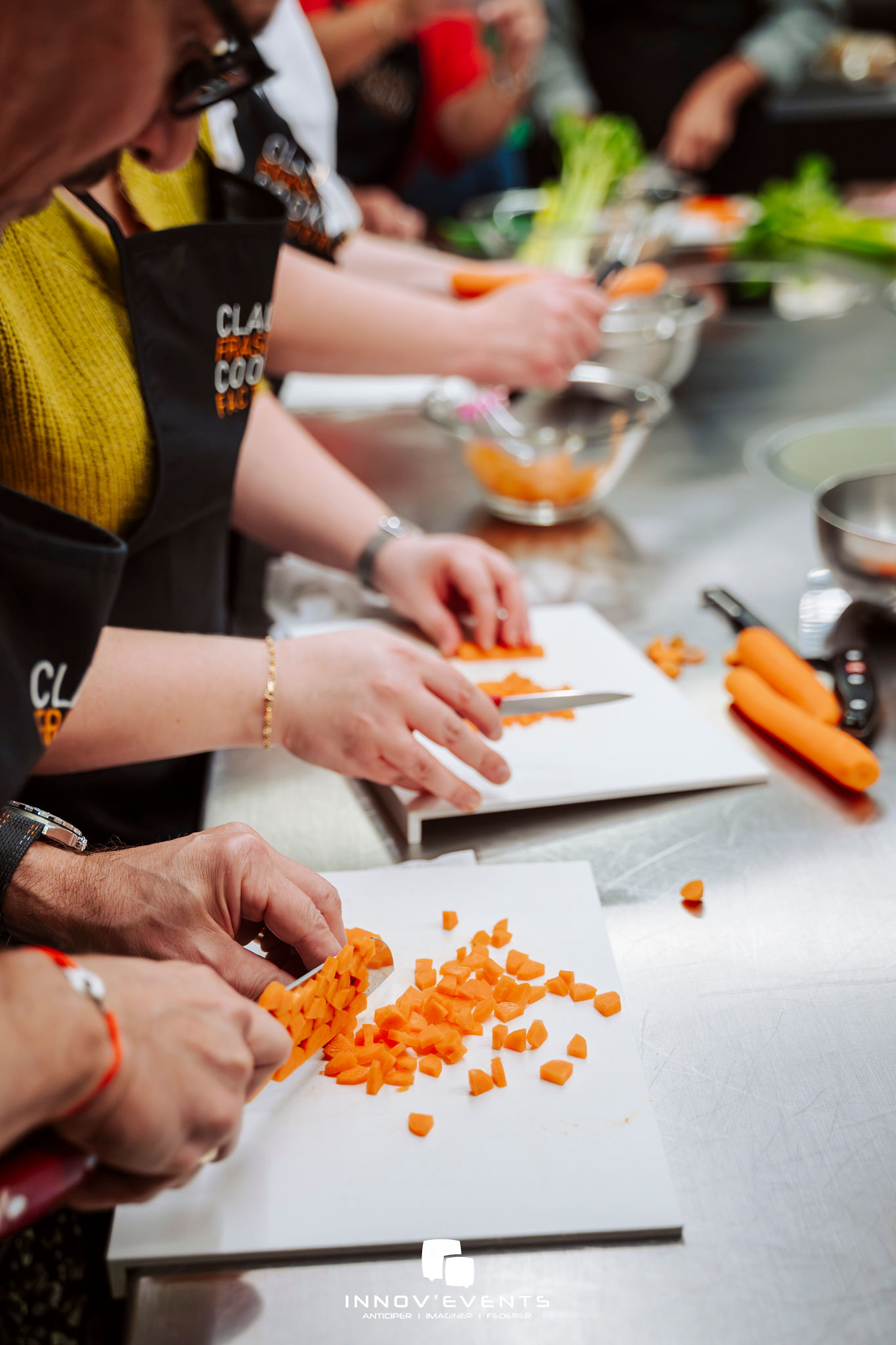
Agence INNOV'events Brussel
Justin JACOB est le responsable de l'agence événementielle Brussel. Contactez-le directement par mail via l'adresse belgique@innov-events.be ou par formulaire.
Contacter l'agence BrusselToutes nos prestations & animations Brussel, Belgique
Découvrez nos prestations événementielles
Découvrez nos animations événementielles disponibles au Belgique
- Hôtesse événementielle à Brussel
- Escape Game à Brussel
- Cours de cuisine type MasterChef à Brussel
- Magicien à Brussel
- Location de chapiteau à Brussel
- Atelier colorimétrie à Brussel
- Jeux gonflables à Brussel
- Service de voiturier à Brussel
- Simulateur de football à Brussel
- Location de mobilier lumineux à Brussel
- Flocage lumineux à Brussel
- Repas insolite à Brussel
- Light Painting à Brussel
- Murder Party à Brussel
- Jeu concours à Brussel
- PLV événementielle à Brussel
- Réalité virtuelle à Brussel
- Cuisine moléculaire à Brussel
- Animation Halloween à Brussel
- Feu d’artifice à Brussel
- Jeux géants à Brussel
- Animateur événementiel à Brussel
- Animation photo à Brussel
- Père Noël à Brussel
- Animation enfants à Brussel
- Visite guidée à Brussel
- Rallye urbain à Brussel
- Piscine à balles à Brussel
- Simulateur de vol à Brussel
- Location de food truck à Brussel
- Record du monde à Brussel
- Simulateur de surf à Brussel
- Casino du vin à Brussel
- Atelier relooking à Brussel
- Atelier création de parfum à Brussel
- Atelier acting à Brussel
- Animations RSE à Brussel
- Tir à l’arc à Brussel
- Agent de sécurité à Brussel
- Œnologie à Brussel
- Mime à Brussel
- Jeu télévisé à Brussel
- Fête foraine à Brussel
- Atelier gestion de crise à Brussel
- Atelier négociation de crise à Brussel
- Jeux d’arcade à Brussel
- Simulateur de chute libre à Brussel
- Simulateur de ski à Brussel
- Simulation circuit automobile à Brussel
- Baptême de l’air à Brussel
- Dégustation à Brussel
- Création de baby-foot à Brussel
- Rallye 2CV à Brussel
- Challenge LEGO à Brussel
- Animation casino à Brussel
- Interprète / traducteur à Brussel
- Goodies à Brussel
- Bus / transfert à Brussel