
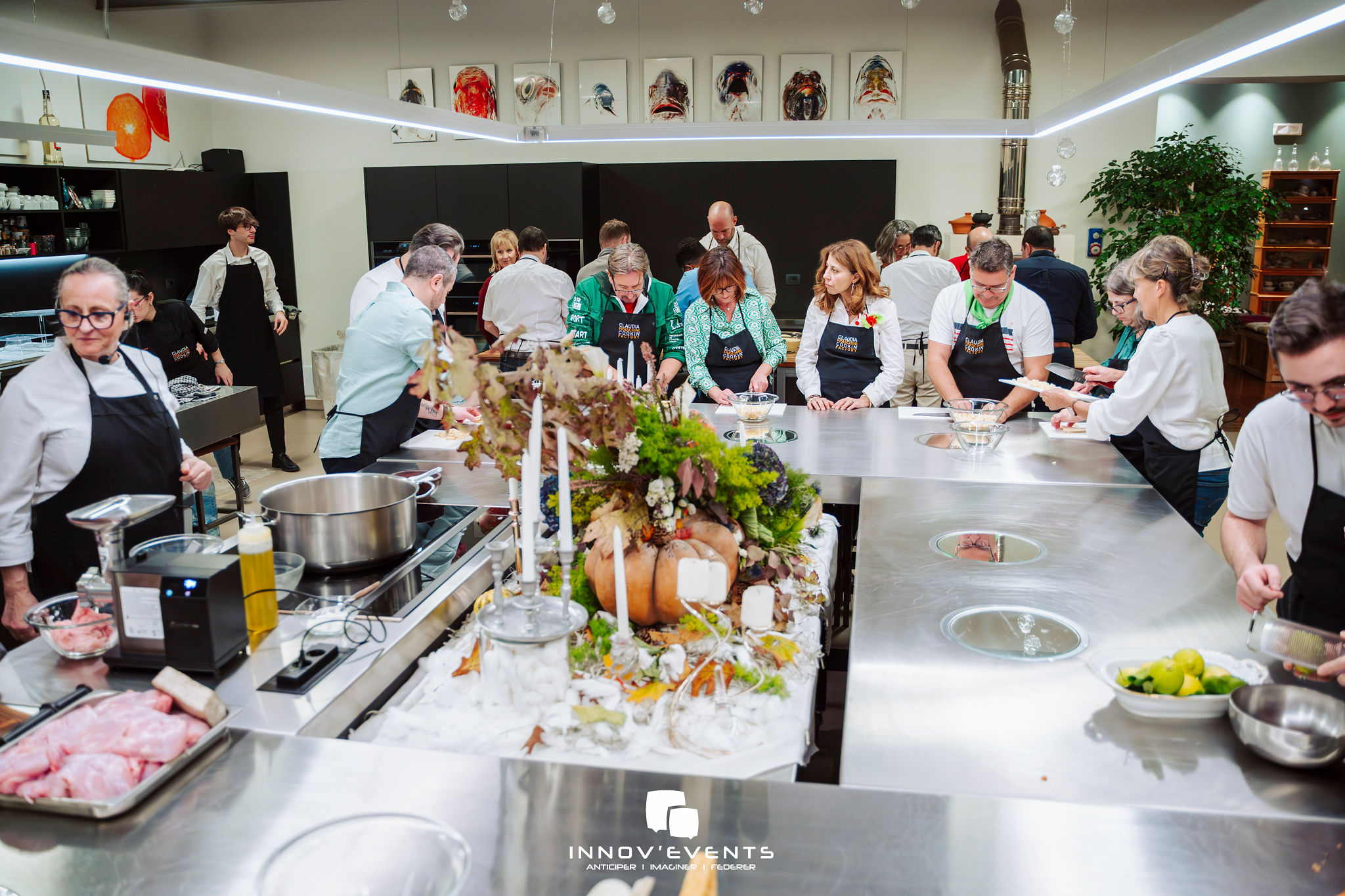
Moleculaire gastronomie workshop in Luik that delivers measurable team alignment
INNOV'events (Brussels) designs and runs Moleculaire gastronomie workshop formats in Luik for 10 to 200 participants. We manage the chef team, ingredients, technical setup, timing, and on-site coordination so your HR and comms teams can focus on people—not logistics.
Typical uses: leadership offsites, onboarding cohorts, client hospitality, or a high-value internal moment where you need interaction without forcing extroversion.
Sommaire
In a corporate event, entertainment is not a “nice add-on”: it is a lever to create structured interaction, reduce hierarchy barriers, and anchor messages (strategy, values, safety culture) in a shared experience. A Moleculaire gastronomie workshop provides a concrete framework where collaboration is visible and can be debriefed.
In Luik, organizations expect practicality: clear timing, bilingual facilitation when needed (FR/NL/EN), and a setup that respects venues’ technical constraints. Decision-makers also expect predictable risk management (allergens, hot/cold chain, alcohol policy) and a format that fits the audience profile.
We operate regularly in the Liège area with a network of chefs, rental partners, and venues. Our role is to translate your objective (team cohesion, recognition, employer branding, client relationship) into a workshop scenario that is realistic on the day, with a production plan and contingency options.
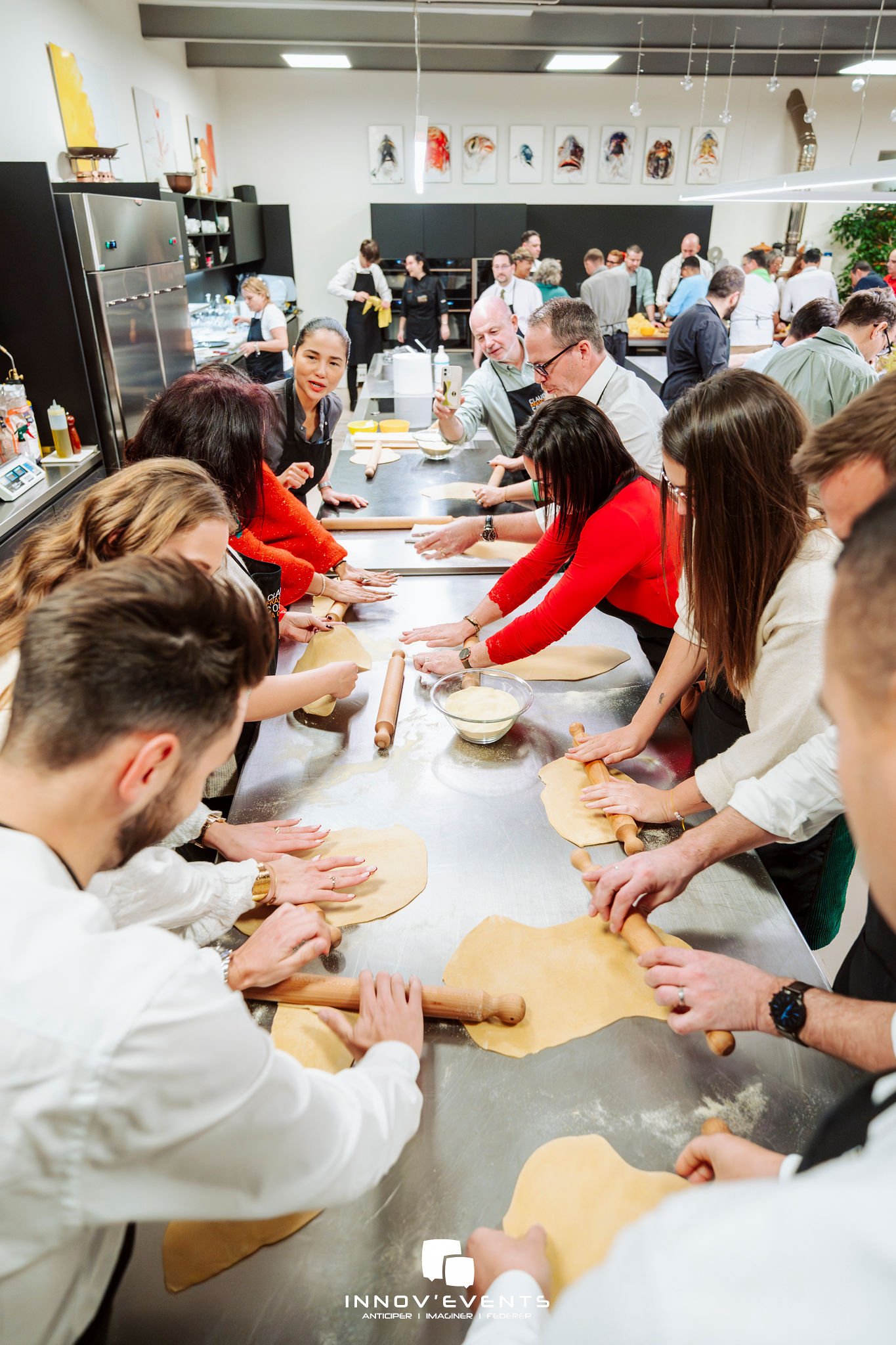
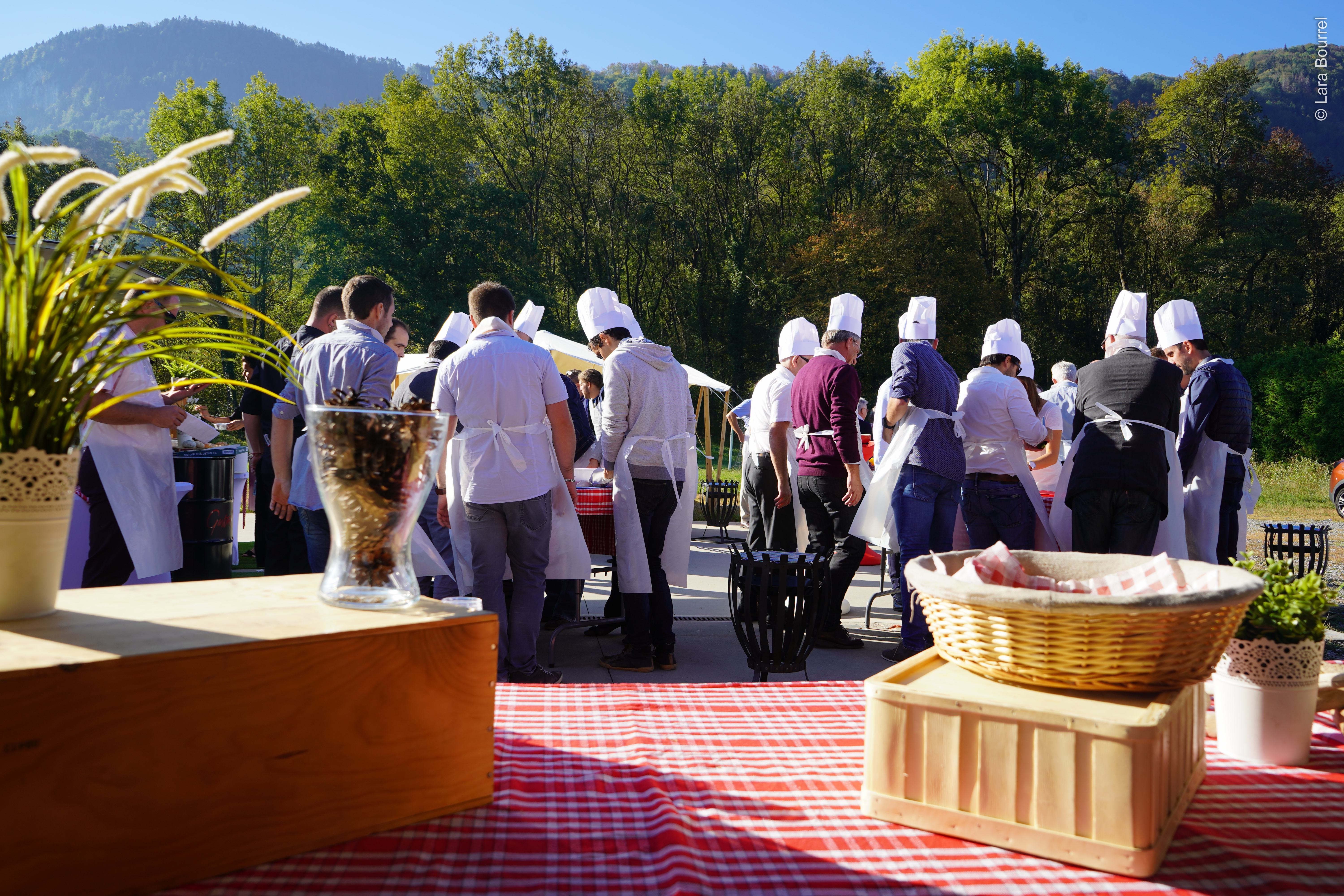
Operational proof points in Luik for decision-makers
10+ years delivering corporate events across Belgium, including recurring programs in Luik and the Meuse valley.
250+ corporate events produced (team-building, leadership moments, client events, internal communication activations), with standardized run-of-show and safety checklists.
48–72 hours typical production response time for a first proposal (scope, options, and budget ranges) once objectives and constraints are confirmed.
1 single point of contact from briefing to post-event debrief, plus an on-site floor manager on the day to protect your internal teams.
Who we support around Luik year after year
In and around Luik, we support organizations with recurring needs: quarterly team moments, annual kick-offs, client hospitality around conferences, and recognition events after intense project cycles. Many partners return because they want predictable delivery: the right people on-site, a clean run-of-show, and no surprises with venues or technical requirements.
You mentioned providing company names as references; please send the list and we will integrate them properly (with your validation on wording and permission). In the meantime, what we typically see in Liège-based groups is a mix of HQ teams and operational sites: you need an activity that works for mixed seniority, different departments, and varied comfort levels with “team-building.” A well-designed Moleculaire gastronomie workshop in Luik solves that by giving everyone a role (prep, measurement, plating, storytelling) and a tangible outcome.
We also coordinate smoothly with your internal stakeholders (HR, HSE, Facilities, Comms) and with external constraints such as venue rules, unionized site access windows, and supplier loading times—elements that often determine whether the day feels controlled or chaotic.
 Besoin d’un devis rapide ?
Nous vous envoyons une première proposition sous 24h.
Why choose a team workshop in Luik instead of a classic dinner?
A dinner rewards people; a workshop builds relationships. For executives, the difference is strategic: a dinner is mainly passive, while a Moleculaire gastronomie workshop creates collaboration you can observe, guide, and debrief—without turning the event into training.
In practice, this is particularly useful when you have cross-functional friction (sales vs. ops, HQ vs. sites, new managers vs. legacy teams) or when you want to integrate new hires quickly into a culture of quality and precision.
Structured interaction: teams collaborate under time constraints, with clear roles—mirroring real project delivery without the usual workplace politics.
Leadership visibility without speeches: executives can participate at the same level, making proximity credible (and not performative).
Communication value: the content is visual and narrative-friendly for internal comms (short video, photo series, “behind the scenes”), while remaining respectful for those who prefer not to be filmed.
Cross-cultural fit: the format works well with mixed groups (FR/NL/EN) because many instructions are demonstrated, and technical vocabulary can be standardized on cue cards.
Quality & compliance mindset: measurement, hygiene, allergen handling and process discipline are naturally embedded—useful when your corporate culture values safety and standards.
Time-boxed, predictable energy: unlike open networking, the workshop creates a rhythm (briefing → production → plating → tasting → debrief) that prevents “dead time.”
The Liège economic culture is pragmatic and results-driven. When you organize an event in Luik, participants respond to experiences that feel concrete, well-produced, and respectful of time—exactly what molecular gastronomy delivers when it is run with operational discipline.
What Luik-based organizations expect from event delivery
Decision-makers in Luik tend to judge an agency on execution details: how suppliers are briefed, whether timing is realistic, how bilingual coordination is handled, and how risks are controlled. In the field, the “pain points” are rarely creative—they are operational.
Typical constraints we integrate from the start include:
- Access and loading in Liège venues: narrow time windows for deliveries, elevator restrictions, and strict rules on waste sorting and kitchen use.
- Hybrid participant profiles: leadership teams, office staff, and operational teams in the same room. The activity must avoid making anyone feel exposed or “tested.”
- Mobility: participants arriving from Brussels, Namur, Maastricht/Aachen corridor; we plan start times and check-in to avoid late-wave disruption.
- Corporate policies: alcohol guidelines, HSE requirements, dietary restrictions, and procurement expectations (PO process, supplier insurance, invoices in correct legal format).
For HR and comms teams, the expectation is also reputational: the event must reflect your standards. A workshop with technical gestures (pipettes, siphons, liquid nitrogen when used) must be impressive without looking risky or uncontrolled. That balance comes from preparation, not from improvisation.
Which molecular workshop formats work best in Luik corporate events?
Engagement comes from doing—not watching. A Moleculaire gastronomie workshop in Luik is effective because it gives immediate feedback: texture, temperature, visual impact, and taste. For corporate groups, we design formats that stay inclusive (no one is “the weak link”) while still feeling premium.
Animations Interactives à Luik
Team challenge with controlled variables: teams receive the same base ingredients and must deliver a consistent result (e.g., spheres, emulsions, foams) within 45–60 minutes. We score on process discipline, presentation, and teamwork—useful for leadership offsites.
Stations rotation: smaller groups rotate through 3–4 techniques (spherification, gelification, aromatics, plating). Ideal for mixed audiences because it reduces pressure and avoids one long learning curve.
Innovation brief: teams translate a company value (customer focus, sustainability, quality) into a dish story and plating. Great when comms teams need a narrative hook for internal channels.
Animations Artistiques à Luik
Plating & visual composition module: guided by a chef on contrast, negative space, and color balance. This is “artistic” but operational: it creates a premium outcome even for non-cooks.
Sound-and-light tasting moment: subtle AV cues (not nightclub effects) to structure attention during tasting and presentations—useful in large rooms where focus can drop.
Animations Innovantes à Luik
Signature cocktail / mocktail lab: foams, clarified juices, flavored airs, and aromatic sprays—with a strict alcohol policy option. Popular for client events where you need sophistication without heavy drinking.
Chocolate and praline textures: temperature work, crunchy layers, and emulsions—relevant in Belgium and reliable for groups because outcomes are consistently satisfying.
Local-inspired ingredients: we can integrate Liège references (seasonal produce, regional notes) while keeping the molecular techniques as the core. The goal is credibility, not folklore.
Animations Gourmandes à Luik
Data-driven tasting: participants capture simple sensory feedback (sweet/sour/bitter balance, texture preference) and we visualize group trends live. This is excellent for teams who like evidence and structured discussion.
CSR-aware production: portion control, waste minimization, and reusable service where venue allows. We define what is realistic so sustainability claims remain credible.
Executive “pressure test” option: a short, high-intensity final challenge with limited instructions—mirrors ambiguity in business environments. Works well for management teams, not for mixed staff unless explicitly requested.
Whatever the format, alignment with brand image matters: a regulated company may prioritize safety and precision; a creative brand may prioritize storytelling and visual impact. Our job is to make the workshop feel coherent with your standards in Luik, not like a disconnected gimmick.
Where to host a molecular gastronomy workshop in Luik (venue types)
The venue determines perceived quality, operational smoothness, and even participation. Molecular gastronomy requires stable surfaces, enough electrical power, water access, and a workflow that keeps preparation and tasting comfortable. In Luik, we pre-check technical specs and access constraints before we confirm the workshop design.
| Venue type | For which objective? | Main strengths | Possible constraints |
|---|---|---|---|
| Hotel meeting space with catering kitchen access | Leadership offsite, client hospitality, formal corporate standards | Reliable infrastructure (power/water), staff on-site, easy AV integration | Rules on external chefs, limited time for setup, stricter menus/allergen processes |
| Industrial/loft event space in Luik area | Innovation culture, internal engagement, brand activation | Strong visual identity, flexible staging, room for stations and rotation | Need to bring more equipment (dishwashing, refrigeration), acoustic management required |
| Company site (cafeteria/training center) | Operational teams, cost control, inclusion across shifts | Easy access for employees, lower venue cost, strong internal symbolism | HSE approvals, limited evening flexibility, strict cleaning and waste handling |
We strongly recommend a site visit (or at least a technical walkthrough) before validation. In molecular formats, small details—power distribution, water points, waste flow, ceiling height for ventilation—directly affect both safety and the perceived professionalism of the event in Luik.
Budget ranges for a Moleculaire gastronomie workshop in 4000
Pricing depends on the workshop’s complexity, the number of participants, the chosen techniques, and the venue’s level of infrastructure. For executives, the relevant question is not “cheap vs expensive,” but “what production level is required to protect brand image and timing.”
As an orientation for Luik corporate events, most projects fall between €90 and €220 per person (excl. VAT) for groups of 20–80, depending on the scenario and what is included. Smaller groups can be higher per person because setup and staffing remain fixed.
Group size and ratio: number of cooking stations, chefs, and facilitators. A common operational ratio is 1 chef/facilitator for 12–20 participants, depending on technique difficulty.
Techniques and equipment: siphons, sous-vide, controlled chilling, and (if applicable) liquid nitrogen require extra safety measures, consumables, and sometimes additional insurance.
Food and beverage level: tasting only vs full dinner replacement; inclusion of premium ingredients; mocktail vs cocktail bar.
Venue constraints: if the venue lacks refrigeration, dishwashing, or sufficient power, we must bring additional infrastructure (and staff time) to keep quality consistent.
Branding and comms assets: custom recipe cards, station signage, bilingual materials, photo/video coverage, and internal comms deliverables.
Timing: daytime workshop, evening program, or split format (workshop + plenary + tasting). Short windows often require more staff to avoid overruns.
From an ROI perspective, the workshop performs when it replaces passive time with structured interaction. If your objective is retention, onboarding, or cross-team alignment, the “return” is reduced friction and faster collaboration—outcomes that typically justify investing in enough facilitation and production to keep the experience controlled in Luik.
Why work with an event partner connected to Luik suppliers?
Even with strong central procurement, local execution wins events. In Luik, the difference comes from knowing which venues truly allow external cooking setups, which loading docks create bottlenecks, and which supplier teams can adapt fast when a timeline shifts.
INNOV'events is based in Brussels, but we operate frequently in Liège and maintain a ready network of local partners. When you need an agency that can coordinate the full chain in the territory, you can also consult our dedicated page: event agency in Luik.
For directors, the benefit is governance: fewer intermediaries, clearer accountability, and faster problem-solving on the day. For HR and comms, it means less internal time spent “chasing suppliers” and more time spent on content, welcome, and stakeholder management.
- Venue realism: we validate what is feasible (power, water, kitchen access, fire rules) before promising a format.
- Supplier responsiveness: local crews can adjust delivery times, replace missing items, and react to last-minute participant changes.
- Cost control: fewer unnecessary transport and rental add-ons when we match the concept to what Liège venues already provide.
- Risk reduction: local knowledge helps avoid friction points that can damage perception (queues, noise, temperature issues, service delays).
From an ROI perspective, the workshop performs when it replaces passive time with structured interaction. If your objective is retention, onboarding, or cross-team alignment, the “return” is reduced friction and faster collaboration—outcomes that typically justify investing in enough facilitation and production to keep the experience controlled in Luik.





What we have delivered in Luik: formats and real constraints
Our experience in Luik includes corporate moments where the agenda is tight and reputational stakes are high: management meetings that must end on time for trains, client events where confidentiality matters, and internal celebrations where inclusivity is non-negotiable.
In practice, this translates into concrete design choices. For example:
- Mixed seniority groups: we avoid formats where culinary skill becomes a social hierarchy. We assign roles that rotate (measurement, plating, storytelling) and we provide visual instruction cards to reduce dependence on “the loudest person.”
- Confidentiality-sensitive clients: we plan photo/video with opt-in zones and clear approvals, and we brief staff on discretion—especially important when clients invite external guests.
- Short program windows: if you only have 90 minutes between plenary sessions, we prioritize techniques that are fast and reliable at scale, and we pre-stage mise en place to protect the schedule.
- Dietary complexity: we build a menu logic that can accommodate common constraints (vegetarian, halal-friendly options, alcohol-free policy, allergens) without splitting the room into “special cases.”
The outcome is not just a fun activity; it is a controlled moment that supports your objective and protects your internal teams from operational stress.
Common pitfalls we prevent in Luik molecular workshops
Overpromising techniques that are fragile at scale: some “wow effects” fail under real venue conditions. We select techniques that remain stable with 30, 80, or 150 participants.
Underestimating allergens and labeling: molecular gastronomy uses concentrated ingredients and foams/emulsions; labeling must be explicit and managed station by station.
Not planning the flow: if tasting is not staged, you get queues, cold plates, and frustration. We design the tasting like a service, not like a self-serve buffet.
Insufficient power/water planning: multiple devices on one circuit can trip breakers. We map electrical loads and plan distribution.
Too little facilitation: one chef for a large group becomes a show, not a workshop. We staff to maintain participation and pace.
Ignoring corporate policy: alcohol rules, sustainability claims, and internal comms permissions must be clarified early to avoid last-minute tension.
Our role is to absorb these risks through planning, checklists, and on-site coordination. That is what protects your brand image and keeps your leadership team focused on people and messages in Luik.
Why teams in 4000 rebook INNOV'events
Recurring clients rarely come back for creativity alone; they come back because delivery is predictable. In corporate reality, the event is one element among many priorities, and internal teams need a partner who reduces workload and protects the day.
We focus on consistency: clear pre-production, transparent options, and disciplined on-site management. That is what makes procurement and leadership comfortable with repeat collaboration.
60–70% of our annual projects come from repeat clients or direct referrals (typical range depending on the year’s cycle).
0 “single point of failure” approach: each event has documented supplier contacts, fallback options for key equipment, and an on-site escalation path.
15-minute on-site micro-briefing standard with your key stakeholders before doors open (timing, roles, risk points, decision rights).

Loyalty is a consequence of operational reliability. For a Moleculaire gastronomie workshop in Luik, that reliability is what ensures the experience feels premium and controlled—without consuming your internal bandwidth.
How we build your Moleculaire gastronomie workshop in Luik from brief to debrief
👉 Scope and success criteria (Luik context included)
We start with a short working session to define what success looks like: audience profile, desired interactions, language needs, schedule, and non-negotiables (HSE, alcohol policy, brand image). We confirm the Luik venue constraints early (access, power, water, kitchen rules) so the concept is feasible, not theoretical.
👉 Concept design and scenario engineering
We propose 2–3 scenarios with clear differences (participation intensity, “wow” level, time required, and budget). Each scenario includes a draft run-of-show, staffing plan, and a practical list of what we need from you (participant count deadline, dietary collection template, branding assets if any).
👉 Technical validation and safety plan
We validate equipment lists, electrical loads, refrigeration needs, and waste flow. We set allergen management rules (labeling, separate utensils if required) and decide whether any higher-risk elements (e.g., liquid nitrogen) are appropriate for your audience and venue. If used, we formalize PPE, safe distances, and responsible operator roles.
👉 Production and supplier coordination in Luik
We confirm suppliers, delivery schedules, and on-site responsibilities. We align with the venue manager and catering team (if any) to avoid conflicts around kitchen access, timing, and service. Your internal stakeholders receive a concise production sheet: timing, contacts, and escalation path.
👉 Event-day delivery and protection of your agenda
We arrive with setup buffers, run a technical check, brief facilitators, and manage participant flow. The floor manager protects your timing, handles last-minute changes discreetly (participant additions, dietary changes, AV tweaks), and ensures the workshop ends cleanly for the next agenda item.
👉 Debrief and measurable takeaways
Within a few days, we debrief what worked, what to adjust, and what you can reuse (photos, internal comms copy blocks if requested, participation insights). For HR, we can also provide a simple feedback snapshot (what participants valued, what created interaction) to inform future moments in Luik or other sites.
FAQ sur l'organisation Moleculaire gastronomie workshop à Luik
How long does a molecular workshop take in Luik?
Most formats in Luik run 60 to 120 minutes. If you want a full dinner replacement, plan 2.5 to 3.5 hours including welcome, workshop, tasting/service, and a short debrief.
What group size works best for Luik corporate teams?
The sweet spot is 20 to 80 participants for strong interaction. We can run up to 150–200 with rotations and additional facilitation, but we will adapt the scenario to protect flow and quality.
Is liquid nitrogen allowed in Luik venues?
Sometimes. It depends on the venue rules, ventilation, and the operator’s safety setup. When allowed, we use a controlled demonstration or a tightly supervised station with PPE and clear distances. If not allowed, we achieve similar effects with safer alternatives (chilling, foams, gels) without compromising professionalism.
What is the budget per person in Luik?
As a realistic range in Luik, expect €90–€220 per person (excl. VAT) for 20–80 participants, depending on techniques, staffing ratio, venue infrastructure, and whether drinks/tasting replace a meal.
Can you manage allergens and dietary needs in Luik?
Yes. We collect dietary data in advance, label allergens per station, and design the menu so special diets are integrated (not isolated). For strict constraints, we recommend a final confirmation list 5–7 days before the event and keep a small buffer of alternative ingredients on-site.
Request a Luik proposal with a clear scenario and budget range
If you are comparing agencies, we recommend starting with a short call focused on constraints: venue, timing, group profile, and your internal objective. Based on that, INNOV'events will propose a Moleculaire gastronomie workshop in Luik with a realistic run-of-show, staffing plan, and budget options.
To protect availability of chefs, venues, and specialized equipment, plan ideally 4 to 8 weeks ahead (shorter is possible depending on period and group size). Share your date, estimated headcount, and preferred location in Luik, and we will revert with concrete scenarios and a quote-ready outline.
Agence INNOV'events Luik
Justin JACOB est le responsable de l'agence événementielle Luik. Contactez-le directement par mail via l'adresse belgique@innov-events.be ou par formulaire.
Contacter l'agence LuikToutes nos prestations & animations Luik, Belgique
Découvrez nos prestations événementielles
Découvrez nos animations événementielles disponibles au Belgique
- Hôtesse événementielle à Luik
- Escape Game à Luik
- Cours de cuisine type MasterChef à Luik
- Magicien à Luik
- Location de chapiteau à Luik
- Atelier colorimétrie à Luik
- Jeux gonflables à Luik
- Service de voiturier à Luik
- Simulateur de football à Luik
- Location de mobilier lumineux à Luik
- Flocage lumineux à Luik
- Repas insolite à Luik
- Light Painting à Luik
- Murder Party à Luik
- Jeu concours à Luik
- PLV événementielle à Luik
- Réalité virtuelle à Luik
- Cuisine moléculaire à Luik
- Animation Halloween à Luik
- Feu d’artifice à Luik
- Jeux géants à Luik
- Animateur événementiel à Luik
- Animation photo à Luik
- Père Noël à Luik
- Animation enfants à Luik
- Visite guidée à Luik
- Rallye urbain à Luik
- Piscine à balles à Luik
- Simulateur de vol à Luik
- Location de food truck à Luik
- Record du monde à Luik
- Simulateur de surf à Luik
- Casino du vin à Luik
- Atelier relooking à Luik
- Atelier création de parfum à Luik
- Atelier acting à Luik
- Animations RSE à Luik
- Tir à l’arc à Luik
- Agent de sécurité à Luik
- Œnologie à Luik
- Mime à Luik
- Jeu télévisé à Luik
- Fête foraine à Luik
- Atelier gestion de crise à Luik
- Atelier négociation de crise à Luik
- Jeux d’arcade à Luik
- Simulateur de chute libre à Luik
- Simulateur de ski à Luik
- Simulation circuit automobile à Luik
- Baptême de l’air à Luik
- Dégustation à Luik
- Création de baby-foot à Luik
- Rallye 2CV à Luik
- Challenge LEGO à Luik
- Animation casino à Luik
- Interprète / traducteur à Luik
- Goodies à Luik
- Bus / transfert à Luik