
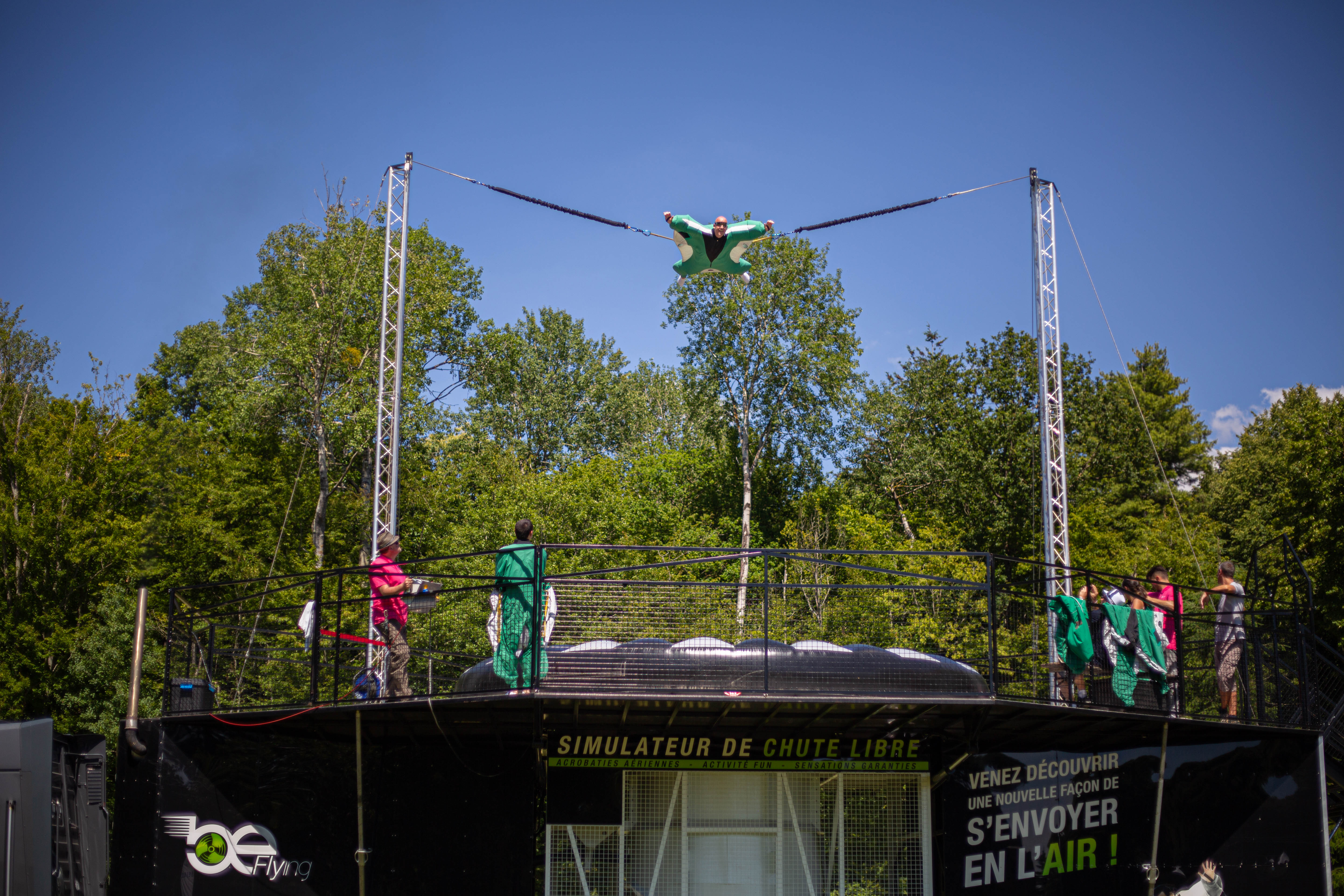
Indoor skydiving simulator in Antwerpen for corporate teams that need impact and control
Sommaire
In a corporate agenda, entertainment is not decoration: it is a tool to mobilize attention, create cross-team interaction, and support managerial messages (culture, safety, agility). A well-run Indoor skydiving simulator gives you an immediate “shared reference” that teams keep using after the event.
Organizations in Antwerpen typically expect precision: clear risk management, punctual run-of-show, and a format that works for both operators and executives. HR and Comms also need content opportunities without turning the event into a social-media stunt.
From Brussels, INNOV'events operates regularly in Antwerpen and the port area. We bring field-proven production methods: site checks, crowd flow, safety briefings, and real-time coordination with venue, facility manager, and your internal stakeholders.
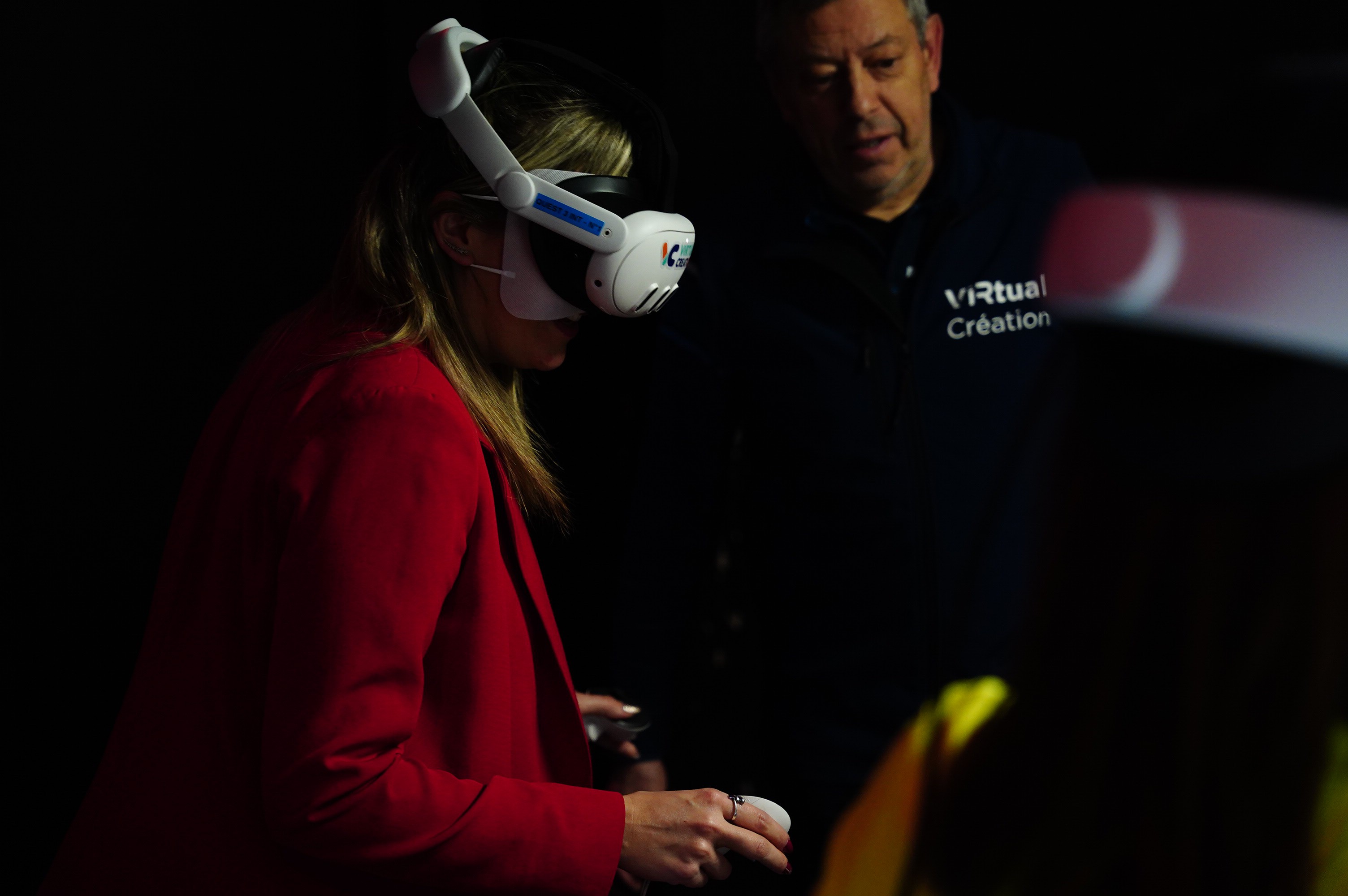
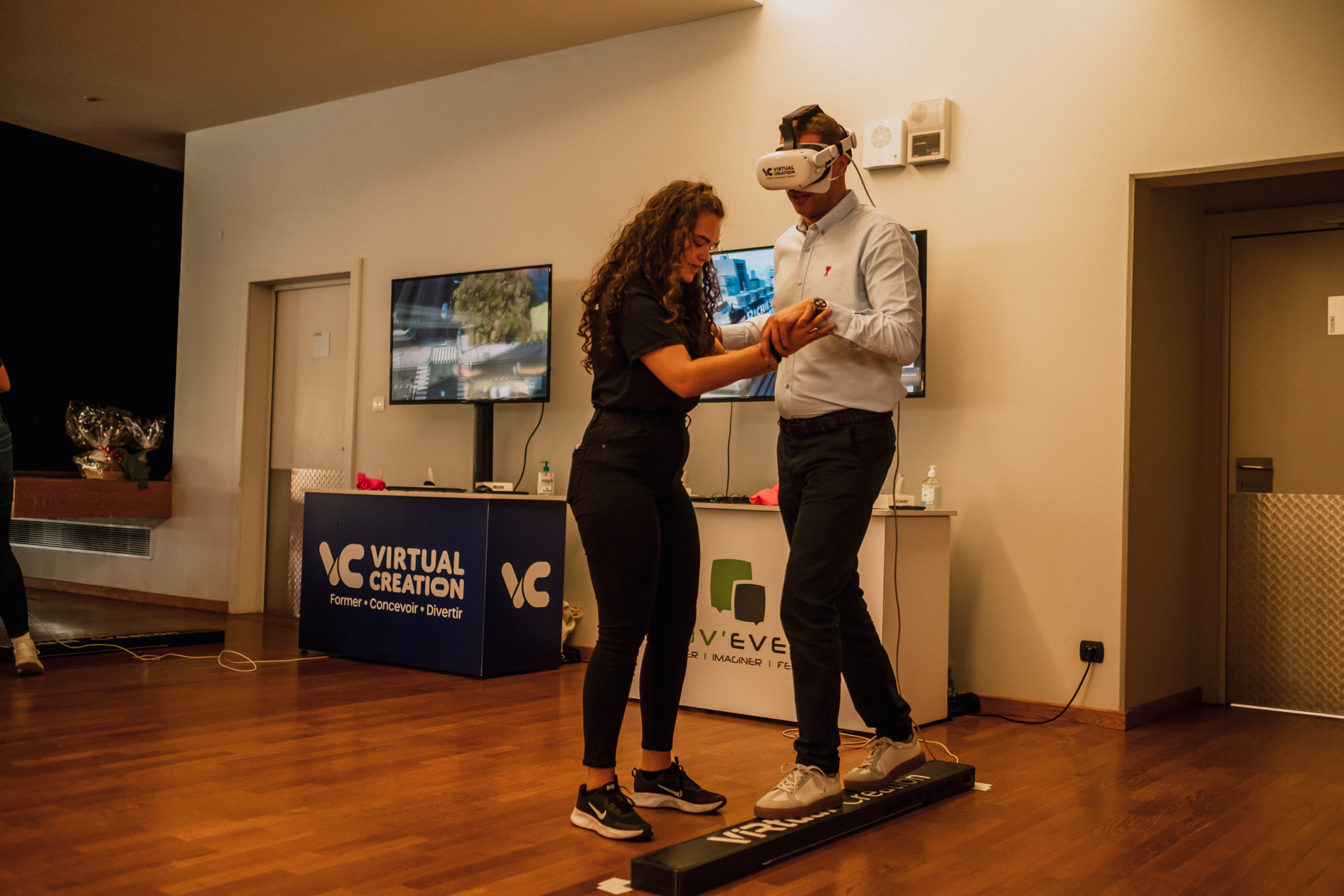
INNOV'events reliability benchmarks in Antwerpen
10+ years producing corporate events across Belgium, including recurring programs in Antwerpen for HR and leadership teams.
150+ corporate projects/year in our network (team-building, product launches, internal communications, client events) with standardized production templates.
24–72h typical turnaround for a first feasibility check and budget bracket once we have your headcount, date window, and venue constraints.
1 single production lead accountable from briefing to event day, so your HR/Comms team is not chasing suppliers.
Who we support in Antwerpen year after year
In Antwerpen, we work with a mix of headquarters teams, port-related industries, professional services, and fast-growth tech. Several clients rebook because the operational reality is demanding: multiple languages on-site, tight schedules between meetings and transport, and venues that cannot afford improvisation on safety or crowd flow.
To stay credible, we operate with a “no-surprises” approach: we confirm feasibility in writing (power, ceiling height, access routes, noise limits, rigging permissions), then we lock the run-of-show with responsible owners per task. This is typically what convinces companies to collaborate again—especially when the same HR or Comms team has to deliver quarterly or annual moments in Antwerpen with consistent quality.
If you share the company names you want us to reference, we will integrate them here with the right tone (without overclaiming) and align the wording to your legal/brand guidelines.
 Besoin d’un devis rapide ?
Nous vous envoyons une première proposition sous 24h.
Why choose an indoor skydiving simulator in Antwerpen for leadership goals?
A corporate event is judged on two dimensions: what people felt and what the organization achieved. An Indoor skydiving simulator in Antwerpen works when it is used as a structured experience, not a queue-based attraction. We design it to support your outcomes: onboarding, transformation, safety culture, or cross-department cooperation.
In practice, executives and HR often come to us with the same tension: “We need a high-energy moment, but we cannot lose control of timing, risk, and messaging.” A simulator format solves this if the production is disciplined: short rotations, consistent briefing, clear eligibility rules, and an MC who keeps the pace.
Faster trust-building than classic team games: in mixed groups (Finance + Operations + Sales), a flight session creates a neutral challenge where hierarchies soften. We often see faster introductions and less “department clustering” during the rest of the evening.
Concrete link to leadership narratives: flight is a perfect metaphor for controlled risk, coaching, and iteration. We help Comms translate this into a 60–90 second opening message and a debrief prompt that managers can reuse.
Operational fairness for HR: with time slots and capacity planning, every attendee has equal access. This matters in Antwerpen events where shift workers and office staff attend together and HR wants perceived equity.
Content capture without chaos: we organize photo/video angles, consent, and a short “hero moment” per participant (e.g., 15–25 seconds highlight) so you get usable internal content without blocking throughput.
High engagement in limited time: a well-managed simulator rotation can activate 60–120 participants in 2–3 hours, which fits common corporate schedules around meetings, dock visits, or client dinners in Antwerpen.
Inclusive alternatives: we plan parallel roles (timekeeper, cheering captain, content corner) and a non-flight experience for those who opt out—important for duty-of-care and employee experience.
Antwerpen has a pragmatic business culture: people value experiences that are well-organized, safe, and purposeful. When the simulator is framed as a structured team activation (not a stunt), it aligns well with that local expectation of professionalism.
What Antwerpen companies expect from corporate event entertainment
In Antwerpen, decision-makers typically benchmark suppliers on reliability and predictability. The city hosts international teams (often NL/FR/EN on the same floor), and many companies operate with strict compliance, visitor management, and safety standards—especially around the port ecosystem and industrial zones.
That translates into concrete expectations for a simulator activation:
- Clear safety governance: written eligibility rules (age, weight ranges, medical contraindications), visible supervision, and an incident-prevention mindset. Even if the activity is very safe when operated correctly, your internal prevention advisor will want clarity.
- Throughput that matches the agenda: “We start at 18:30 and speeches must end at 19:10” is common. We design a rotation plan, staffing, and an MC script so the experience does not derail the program.
- Noise and neighbor constraints: some venues have strict noise windows. We anticipate acoustic needs and coordinate with the venue manager to avoid day-of conflict.
- Accessibility and transport: Antwerp ring traffic, late arrivals from Brussels/Mechelen/Ghent, and parking capacity are real. We plan buffer times and signage, and we can integrate shuttle waves if needed.
- Brand and image consistency: Comms teams often ask: “Will this look like us?” We propose discreet branding options (briefing screen visuals, staff dress code, photo backdrop) that keep a corporate tone.
Our role is to translate these local expectations into a production plan that your internal stakeholders can sign off on—without overcomplicating the event.
Which corporate event entertainment formats pair well with Antwerpen agendas?
Entertainment creates engagement only when it supports the social mechanics of the event: who talks to whom, for how long, and with what shared topic. An Indoor skydiving simulator is a strong centerpiece, but we often combine it with secondary formats to balance energy, inclusivity, and brand tone—especially for mixed audiences in Antwerpen (employees + partners + clients).
Animations Interactives à Antwerpen
Structured networking prompts: we use table cards or a host-led “challenge ladder” connected to the simulator (e.g., coaching tips, teamwork cues). Practical benefit: less awkward small talk, faster cross-team mixing.
Micro-debrief corners: a facilitator captures 2–3 insights per group (“what helped you improve on the second try?”). This is useful for HR when the event theme is onboarding or performance culture.
Real-time scoreboard without pressure: rather than performance ranking, we track participation metrics (teams completed, coaching badges). It encourages involvement without excluding cautious participants.
Animations Artistiques à Antwerpen
Corporate-friendly MC or bilingual host (NL/EN or FR/EN): in Antwerp contexts, bilingual hosting avoids splitting the room and keeps the schedule tight.
Ambient DJ with controlled sound levels: we set decibel targets with the venue to avoid complaints and keep speech intelligible during briefings.
Short visual opener: a 45–60 second brand-safe intro video to frame the simulator as a “team coaching experience” rather than a thrill ride.
Animations Innovantes à Antwerpen
Timed service formats: walking dinner or food stations aligned with rotation waves. Practical effect: no one misses their flight slot because they are stuck in a buffet line.
Non-alcoholic premium bar: helpful when you have safety-sensitive roles or a conservative internal policy. We plan the bar flow so it does not interfere with simulator check-in.
Local Antwerp touchpoints: if relevant, we integrate local suppliers with clear service SLAs (service speed, staffing ratios), because “good food” is not enough—service pace must match the production.
Animations Gourmandes à Antwerpen
Content capture with consent workflow: QR-based opt-in/out, badge markers for camera rules, and a controlled delivery plan (same-night highlights vs. next-day internal recap).
Leadership “coach moment”: executives can join as supportive coaches (not performers) to reinforce culture. We script it to avoid awkwardness and keep it genuine.
Safety culture integration: for industrial groups around Antwerpen, we align the briefing language with internal safety principles (clear instructions, check-backs, stop authority) without turning it into training.
Whatever we add around the simulator, we ensure alignment with your brand image: language, music level, staff attire, and the balance between spectacle and discretion. In many corporate environments in Antwerpen, looking controlled and professional is the priority—excitement must remain managed.
Where to host an indoor skydiving simulator in Antwerpen: what works operationally?
The venue affects everything: feasibility, participant flow, safety perimeter, and perceived quality. For an Indoor skydiving simulator in Antwerpen, we start from technical constraints (space, ceiling, power, loading access) and only then discuss styling. This avoids last-minute compromises that hurt the event day.
| Venue type | For which objective? | Main strengths | Possible constraints |
|---|---|---|---|
| Large conference venue / auditorium with foyer | Leadership day + controlled activation waves | Clear run-of-show, AV infrastructure, easy briefing moments, professional perception | Loading windows, strict safety rules, limited ceiling height in some foyers |
| Industrial event hall near the port | Big headcount engagement (100–400) with robust logistics | Good access, higher tolerance for noise, easier zoning and barriers | Heating/comfort planning, longer setup, requires strong wayfinding |
| Premium hotel ballroom / event floor | Client or partner evening with a “wow” element but corporate tone | Service quality, central accessibility, strong hospitality teams | Space and ceiling constraints, guest flow must not conflict with hotel operations |
We strongly recommend a site visit (or at minimum a technical walk-through with photos and measurements). In Antwerpen, many venues look similar on paper but differ on loading access, permitted rigging, and noise limits. Those details determine whether the simulator runs smoothly or becomes a stress point.
What budget to plan for an indoor skydiving simulator in Antwerpen?
Pricing depends less on the “idea” and more on operational parameters: duration, throughput targets, venue constraints, staffing ratios, and the level of branding and content capture you require. For leadership teams, the real cost driver is often schedule protection (more staff, more structure) rather than the hardware itself.
As a planning bracket in Antwerpen, corporate activations often fall between €6,000 and €25,000+ depending on scale and complexity. We can refine quickly once we know the number of participants who must actually fly (versus watch), the time window, and whether this is in a venue with difficult access.
Headcount and throughput requirement: activating 40 people in 2 hours is a different design than activating 150 people over an afternoon. Throughput impacts the number of instructors, lanes, and flow staff.
Duration on-site: half-day vs. full-day impacts staffing, transport, and production time. Corporate evenings often require tighter, more expensive staffing to hit a fixed program.
Venue access and loading: Antwerp city center vs. port area changes parking, permits, and loading time. Difficult access typically increases labor and buffer time.
Safety perimeter and barriers: depending on the simulator format, you may need extra barriers, signage, and a dedicated check-in and waiting zone.
Branding and content deliverables: briefing screen visuals, branded backdrop, photographer/videographer, and an edited recap are separate cost lines with clear outputs.
Insurance and compliance expectations: some organizations require specific certificates, risk assessments, and documentation. We integrate this early to avoid late changes.
We frame the budget in ROI terms that executives recognize: participation rate, time-on-activity, internal content assets produced, and the impact on networking quality. A simulator is justified when it supports your objective and runs with predictable timing—otherwise it becomes an expensive queue.
Why work with an event agency in Antwerpen for simulator activations?
When you run a high-visibility activation like an Indoor skydiving simulator in Antwerpen, the difference between “it worked” and “it was stressful” is local operational knowledge: access routes, venue habits, supplier reliability, and the ability to intervene quickly if something shifts (traffic delays, last-minute room changes, stricter security checks).
Even when your HQ team is outside the city, a local production footprint reduces risk: faster site checks, easier coordination with venue and municipality constraints, and realistic timing buffers based on Antwerp traffic patterns and loading restrictions.
If you are comparing partners, you can also consult our local page for context as an event agency in Antwerpen and how we structure production governance for corporate stakeholders.
- Local supplier control: we know which partners deliver consistently under corporate pressure (punctuality, documentation, staff behavior).
- Faster problem-solving: when a venue changes a loading window or a room plan, a local team can adapt without losing your schedule.
- More accurate budgeting: realistic transport, staffing, and buffer costs for Antwerpen, avoiding “nice proposal / painful reality.”
- Stakeholder reassurance: easier to align with facility managers, prevention advisors, and security teams who want clear, local points of contact.
We frame the budget in ROI terms that executives recognize: participation rate, time-on-activity, internal content assets produced, and the impact on networking quality. A simulator is justified when it supports your objective and runs with predictable timing—otherwise it becomes an expensive queue.




What we have delivered in Antwerpen: formats that translate to your context
Our projects in Antwerpen range from compact leadership evenings (30–60 pax) to larger employee events and partner moments (100–400 pax). The common denominator is production discipline: fixed run-of-show, clear responsibilities, and an experience that fits the company’s culture.
Typical situations we manage for corporate clients:
- Leadership offsite with strict timing: the CEO finishes at 19:00, a key client arrives at 19:15, and dinner must start at 20:00. We use pre-assigned flight slots, a VIP lane, and an MC script that prevents overruns while keeping the room energized.
- Mixed audience with varying risk appetite: some participants are enthusiastic, others prefer to watch. We create an experience where opting out is still participation (coaching corner, photo moment, team challenges) so HR does not end up with a “two-class” event.
- Comms-driven content needs: internal recap required within 24–48 hours. We set a capture plan, consent rules, and a shot list to avoid unusable footage and to protect your employer brand.
- Safety-sensitive cultures: we align briefing language and on-site behavior with internal standards—clear instructions, check-back, and stop authority—without turning the event into a training session.
This is the difference between renting an activity and producing a corporate moment: the experience is designed around your constraints, not the other way around.
Common mistakes with indoor skydiving simulators in Antwerpen (and how we prevent them)
Underestimating throughput: too many participants for the available time leads to long queues and frustration. We model capacity and propose realistic activation targets.
No clear eligibility and waiver process: day-of confusion creates delays and liability discomfort. We define rules upfront and communicate them clearly to attendees.
Poor zoning and crowd flow: spectators block entry, check-in is chaotic, and the room feels messy. We design zones: check-in, briefing, waiting, flight, exit, and content point.
Over-branding the activity: if it feels like a sales activation, engagement drops. We keep branding discreet and aligned with corporate tone.
Not aligning with venue constraints: ceiling height, power availability, loading routes, and noise windows are often discovered too late. We validate technical feasibility early.
Missing a Plan B: even a short technical pause can derail the agenda if there is no alternate micro-activity. We prepare fallback options that keep energy and flow.
Our role is to absorb these risks for you. In Antwerpen, where corporate audiences are demanding and schedules are tight, prevention is not optional—it is what protects your credibility as an organizer.
Why Antwerpen clients renew with INNOV'events for high-stakes moments
Repeat business usually comes from one thing: the organizer felt supported on the day itself. HR and Comms teams do not want to “perform event management” in front of their leadership; they want a partner who anticipates issues and keeps decisions simple.
Single-point accountability: one producer responsible for suppliers, timing, and stakeholder updates from start to finish.
Documented production: run-of-show, staffing plan, zoning map, risk notes, and contact list shared before the event day.
Post-event debrief within 5 working days: what worked, what to improve, and budget reconciliation—useful for internal reporting.

Loyalty is the most reliable proof in our industry: it means the event delivered without hidden effort for your team and without reputational risk in front of executives.
Our production process for Antwerpen simulator events
👉 Step 1 — Antwerpen feasibility check and objective alignment
We start with your non-negotiables: agenda, audience, culture, and risk posture. Then we verify feasibility for an Indoor skydiving simulator: space/ceiling, power, access, noise limits, and staffing needs. Output: a written feasibility note and a first budget bracket with options (e.g., 2-hour activation vs. 4-hour activation, with throughput estimates).
👉 Step 2 — Experience design and capacity planning
We build the activation logic: participant journey, time slots, briefing format, and how we avoid queues. We propose the right mix of roles (host/MC, flow manager, content runner) and define how VIPs or leadership are integrated without disrupting fairness. Output: rotation grid, zoning plan, and run-of-show draft.
👉 Step 3 — Compliance, safety documentation, and stakeholder validation
We align documentation with your internal requirements (HR, prevention advisor, facility/security, Comms). We clarify eligibility rules, waiver approach, and on-site signage language (NL/EN as needed in Antwerpen). Output: validation pack for internal sign-off and venue approval.
👉 Step 4 — Supplier booking, technical coordination, and rehearsals
We contract the simulator operator and any secondary suppliers (AV, catering timing coordination, photo/video). We conduct a technical walk-through and confirm load-in/load-out, barriers, power distribution, and emergency access. Output: final production sheet, contact list, and cue sheet.
👉 Step 5 — Event-day delivery and real-time steering
On the day, we manage check-in flow, briefings, rotation timing, and stakeholder updates. We track participation and adjust the pacing if arrivals are late (common around Antwerp ring traffic). Output: controlled experience, on-time agenda, and a calm organizer.
👉 Step 6 — Debrief, reporting, and content handover
We close with a short debrief: attendance vs. target, participation rate, operational notes, and budget reconciliation. If content was captured, we deliver assets according to the agreed timeline and usage rules. Output: actionable learnings for your next event in Antwerpen.
FAQ sur l'organisation Indoor skydiving simulator à Antwerpen
How many people can participate per hour in Antwerpen?
As a realistic planning range: 20–50 participants/hour depending on briefing time, number of flight lanes, and how strict eligibility checks are. For corporate agendas in Antwerpen, we usually plan conservatively to protect timing and avoid queues.
Is an indoor skydiving simulator safe for corporate events in Antwerpen?
Yes, when operated by qualified staff with a controlled briefing and eligibility rules. We implement a clear safety perimeter, a consistent briefing, and a documented process (who checks what, when). If your company has strict HSE requirements in Antwerpen, we align the documentation early.
What space and power are needed in Antwerpen venues?
It depends on the simulator model, but you should expect a dedicated zone including check-in, briefing, flight area, and exit flow. Power needs vary by equipment; we validate this during the technical check. In Antwerpen, venue access and ceiling height are often the deciding factors, so we confirm measurements before you commit.
What is the typical budget range in Antwerpen for this activation?
Most corporate setups fall between €6,000 and €25,000+, driven by duration, headcount/throughput, staffing, and venue constraints. We can provide a structured quote with options once we have your date window, target participants, and venue type in Antwerpen.
How far in advance should we book in Antwerpen?
Plan for 4–8 weeks for comfortable preparation (venue feasibility, compliance, and a clean production plan). For peak corporate periods in Antwerpen (spring and year-end), 8–12 weeks is safer—especially if you need branding, content capture, or a complex run-of-show.
Request a quote for Antwerpen and lock the operational plan early
If you are considering an Indoor skydiving simulator in Antwerpen, the fastest way to secure a smooth result is an early feasibility check. Share your date window, venue (if known), total headcount, and how many people you want to actually participate. We will come back with a clear capacity plan, risk/flow assumptions, and a budget bracket you can present internally.
INNOV'events is built for demanding corporate stakeholders: we prioritize timing control, safety clarity, and brand consistency. Contact us to schedule a 20-minute scoping call and get a structured proposal for your next event in Antwerpen.
Agence INNOV'events Antwerpen
Justin JACOB est le responsable de l'agence événementielle Antwerpen. Contactez-le directement par mail via l'adresse belgique@innov-events.be ou par formulaire.
Contacter l'agence AntwerpenToutes nos prestations & animations Antwerpen, Belgique
Découvrez nos prestations événementielles
Découvrez nos animations événementielles disponibles au Belgique
- Hôtesse événementielle à Antwerpen
- Escape Game à Antwerpen
- Cours de cuisine type MasterChef à Antwerpen
- Magicien à Antwerpen
- Location de chapiteau à Antwerpen
- Atelier colorimétrie à Antwerpen
- Jeux gonflables à Antwerpen
- Service de voiturier à Antwerpen
- Simulateur de football à Antwerpen
- Location de mobilier lumineux à Antwerpen
- Flocage lumineux à Antwerpen
- Repas insolite à Antwerpen
- Light Painting à Antwerpen
- Murder Party à Antwerpen
- Jeu concours à Antwerpen
- PLV événementielle à Antwerpen
- Réalité virtuelle à Antwerpen
- Cuisine moléculaire à Antwerpen
- Animation Halloween à Antwerpen
- Feu d’artifice à Antwerpen
- Jeux géants à Antwerpen
- Animateur événementiel à Antwerpen
- Animation photo à Antwerpen
- Père Noël à Antwerpen
- Animation enfants à Antwerpen
- Visite guidée à Antwerpen
- Rallye urbain à Antwerpen
- Piscine à balles à Antwerpen
- Simulateur de vol à Antwerpen
- Location de food truck à Antwerpen
- Record du monde à Antwerpen
- Simulateur de surf à Antwerpen
- Casino du vin à Antwerpen
- Atelier relooking à Antwerpen
- Atelier création de parfum à Antwerpen
- Atelier acting à Antwerpen
- Animations RSE à Antwerpen
- Tir à l’arc à Antwerpen
- Agent de sécurité à Antwerpen
- Œnologie à Antwerpen
- Mime à Antwerpen
- Jeu télévisé à Antwerpen
- Fête foraine à Antwerpen
- Atelier gestion de crise à Antwerpen
- Atelier négociation de crise à Antwerpen
- Jeux d’arcade à Antwerpen
- Simulateur de chute libre à Antwerpen
- Simulateur de ski à Antwerpen
- Simulation circuit automobile à Antwerpen
- Baptême de l’air à Antwerpen
- Dégustation à Antwerpen
- Création de baby-foot à Antwerpen
- Rallye 2CV à Antwerpen
- Challenge LEGO à Antwerpen
- Animation casino à Antwerpen
- Interprète / traducteur à Antwerpen
- Goodies à Antwerpen
- Bus / transfert à Antwerpen