
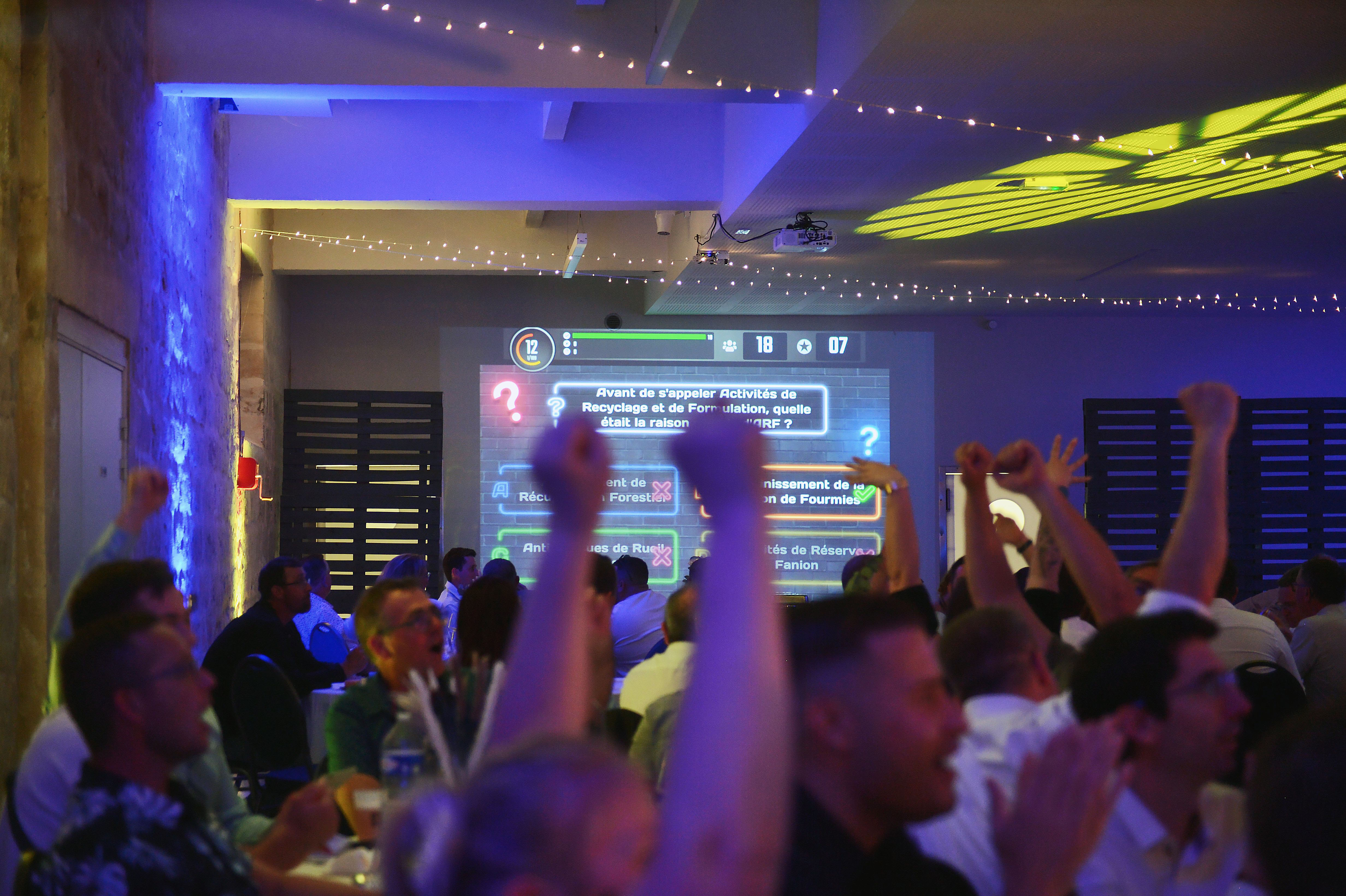
TV spelshow in Luik that turns a company evening into measurable engagement
INNOV'events (Brussels) produces TV spelshow formats in Luik for 20 to 300 participants—team-based, hosted, and technically secure. We handle concept, scripting, casting, AV, run-of-show, and on-site stage management. Your teams get an energizing experience; you get a controlled production with clear responsibilities.
Sommaire
In a corporate event, entertainment is not “nice to have”: it is the fastest lever to create attention, emotional memory and cross-team interaction—especially when the agenda includes strategy, change, or results. A TV spelshow gives you a structured framework where participation can be guided, timed and measured.
In Luik, decision-makers typically expect pragmatic execution: real sound quality, clear sightlines, tight timing, and a host who can handle bilingual rooms (FR/NL) without awkwardness. HR wants inclusion; Communications wants brand-safe content; executives want the room to stay focused and energized.
We bring field-proven production methods from national corporate events and adapt them to the Liège territory: venue constraints, local suppliers, access/loading realities and audience culture. The result is a show that feels effortless for guests and remains operationally controlled for your teams.
Operational proof points for Luik decision-makers
10+ years producing corporate entertainment and stage programs across Belgium, with repeat clients who require consistent delivery.
Typical show capacity: 20–300 participants (with audience mode up to 600 depending on venue layout and AV).
Production staffing on event day: from 4 to 12 professionals (producer, stage manager, host, sound, light, video, technicians) depending on complexity.
Planning lead time: best results from 4–8 weeks; “fast-track” possible in 10–15 business days with clear decision paths.
Who we support around Luik and why they renew
We work with organizations active in and around Luik: industrial groups with shift-based teams, public-sector entities needing strict brand and protocol compliance, and fast-scaling tech and service companies looking to connect people after acquisitions or reorganizations.
Many of these clients renew year after year for a simple reason: they do not want to “relearn” event risk each time. They want an agency that documents what worked (room layout, sound levels, timing, quiz difficulty, multilingual facilitation) and improves it incrementally. That is exactly how we manage production: structured debriefs, technical reports, and clear ownership of next steps.
If you share your internal references, venue shortlist, and attendance profile, we will mirror that rigor: we validate feasibility early, anticipate bottlenecks (parking, loading, stage depth, acoustics), and align content with your executive narrative.
 Besoin d’un devis rapide ?
Nous vous envoyons une première proposition sous 24h.
Why a TV spelshow in Luik works for leadership goals
A well-produced TV spelshow in Luik is not only a fun format; it is a controlled interaction device. It lets you bring people into the same rhythm, break silos, and reinforce messaging—without forcing anyone into uncomfortable “forced participation”.
For executives: a disciplined run-of-show that keeps energy high while protecting key moments (speech, awards, strategic video). We build a timing grid where entertainment supports—not competes with—your narrative.
For HR: inclusion by design. We use team formats (tables or mixed groups), roles that suit introverts and extroverts, and question categories that avoid cultural bias. We can integrate onboarding themes, safety topics, or values without turning it into e-learning.
For Communications: brand-safe scripting and visual consistency. We align intros, bumpers, scoreboards and on-screen graphics with your tone of voice. We also manage moderation rules for UGC or live polls to avoid reputational surprises.
For managers: cross-department collaboration in a low-risk context. In real companies, the first barrier is often “we don’t know each other”. A game show creates immediate, structured interaction—without making networking feel artificial.
For project owners: reliable logistics. The format gives us predictable cues (music stings, question rounds, transitions) which reduces timing drift—one of the main reasons corporate evenings go off-track.
Liège’s economic culture is pragmatic and relationship-driven: people appreciate authenticity, good pacing and competent execution. A TV spelshow respects that: it is dynamic, clear, and can be calibrated to any corporate tone—from serious to playful—without losing control.
What companies in Luik typically require on event day
Organizations in Luik often operate with real operational constraints: production sites with shift changes, teams spread between offices and industrial zones, and guests who may arrive in waves. That affects check-in timing, catering rhythm, and when you can realistically start the show.
We plan around these realities. For example, if you have a factory team finishing at 18:00 and a white-collar audience arriving from Brussels or Maastricht, we design a pre-show buffer: light content on screens, warm-up music, and a flexible “soft start” that does not punish late arrivals while still protecting your main start time.
Liège venues also vary widely in acoustics. Converted industrial spaces and high-ceiling halls can look great but create reflections that kill speech intelligibility—especially in bilingual rooms. We build the audio plan with the room, not against it: microphone choice, speaker placement, delay towers when needed, and a soundcheck protocol that includes spoken voice tests from the back of the room, not only music levels.
Finally, local stakeholders expect clarity: who decides what, by when, and what happens if something changes. We provide that through decision logs, sign-offs on scripts and graphics, and a show caller who runs the room with a single chain of command.
Which TV spelshow formats work best in Luik corporate events
Engagement comes from clarity: people participate when the rules are simple, the pace is controlled, and the reward feels fair. A TV spelshow in Luik works when interaction is engineered—through timing, team dynamics, and reliable tools—not when you rely on random enthusiasm.
Animations Interactives à Luik
Buzzers & podium teams: classic game-show energy with clear turn-taking. Best for awards nights or end-of-year celebrations where you want a “finale” moment.
QR live voting (phone-based): scalable for 80–300 guests, minimal hardware, great for mixed seating. We manage Wi-Fi expectations early; if coverage is uncertain, we bring an offline-capable voting setup.
Table challenges: short timed missions (logic, observation, brand puzzles) that create collaboration without putting individuals on the spot. Useful when HR wants inclusion and psychological safety.
“Who knows the company?” rounds: facts about projects, customers, safety milestones, or internal culture. We keep it respectful: no trick questions about people, no content that embarrasses teams.
Animations Artistiques à Luik
Host + improvisation support: for rooms that need warmth without losing control. We brief the host on corporate context and forbidden zones (sensitive restructurings, labor topics, customer confidentiality).
Short live music stings: a compact band or DJ for transitions. This improves pacing and helps avoid “dead air” during scoring updates or stage resets.
Visual identity package: lower-thirds, scoreboards, and intro videos aligned with your brand. This is often what executives notice most: coherence and professionalism on screen.
Animations Innovantes à Luik
“Taste & guess” round with local products: a controlled tasting challenge (e.g., regional specialties) with allergy-aware variants and clear hygiene handling. Works well in Luik when you want a subtle local anchor without turning it into a tourist cliché.
Speed pairing with catering: we synchronize game rounds with service moments (starter served during a calm round, main during a non-participatory segment) to avoid staff crossing sightlines during key moments.
Prizes that make sense: instead of gadgets, we recommend meaningful options (team charity donation, local experience vouchers, internal recognition). This reduces waste and is easier to justify internally.
Animations Gourmandes à Luik
Hybrid stage + roaming micro: the host stays on stage while a roaming facilitator captures quick answers from the room. This keeps pace and avoids the “long walk to the stage” problem.
Data-driven game design: we can include anonymous pulse questions (engagement, values, priorities) framed as game content. You get aggregated insights without turning it into a survey session.
Camera option for replay content: if you need internal comms assets, we plan filming like a mini-production: shot list, consent approach, and brand-safe editing guidelines. Not every event needs cameras; when it does, we do it properly.
Whatever the format, we align it with your brand image: tone, risk level, inclusivity, and leadership visibility. A TV spelshow should never feel like a “random animation”; it should feel like a coherent extension of how your organization communicates and behaves.
How to choose a venue in Luik for a TV spelshow setup
The venue determines whether your TV spelshow in Luik feels like a real production or like a quiz in a corner. Ceiling height, acoustic treatment, loading access, power distribution, and sightlines directly impact your budget and your risk level. We help you select a space that supports the format instead of forcing expensive technical workarounds.
| Venue type | For which objective? | Main strengths | Possible constraints |
|---|---|---|---|
Hotel ballroom / conference center | Executive-friendly corporate evening, simple logistics, predictable timing | Built-in AV options, staff used to corporate flows, reliable power and backstage areas | Décor can feel standard; acoustic varies; limited rigging options for advanced lighting |
Industrial or heritage venue (renovated hall) | Brand statement, transformation theme, higher “wow” factor with controlled show design | Strong visual identity, space for stage depth and camera angles, flexible layouts | Load-in complexity, acoustic reflections, heating/comfort, extra power distribution |
Company site (warehouse, canteen, showroom) | Culture-building, inclusivity for shift teams, operational pride | Easy access for staff, strong authenticity, cost control on venue rental | Safety rules, noise, limited blackout for video, more responsibility on organizer for permits and flow |
We strongly recommend a site visit in Luik with the producer and lead technician: we validate stage placement, audience sightlines, sound projection, loading route, and emergency exits. A 45-minute visit can prevent hours of on-site improvisation and significant last-minute costs.
What a TV spelshow costs in Luik and what drives the price
Pricing for a TV spelshow in Luik depends on format, technical level, and operational risk. A simple hosted quiz with screen and sound is not the same as a studio-like setup with custom graphics, multiple microphones, voting devices, and camera feeds. We budget transparently so you can choose where to invest for impact and where to simplify without compromising the show.
Audience size and interaction method: phone voting is cost-efficient for larger groups; dedicated buzzers or tablets add hardware logistics but increase “TV realism”.
AV scope: screen size, number of screens, sound reinforcement, stage lighting, and whether you need IMAG (live camera on screens) all change crew size and rental costs.
Content creation: writing, translation (FR/NL/EN), brand graphic package, and rehearsal time. Executive audiences in Luik often notice when content feels generic; good scripting is a real line item.
Venue constraints: difficult load-in, limited power, strict time windows, or unionized technical requirements can increase labor and planning.
Risk management: redundancy (backup laptops, spare microphones, extra technician) is optional but recommended when the show is the centerpiece and leadership is present.
Timing: daytime vs evening, and whether the show must fit between courses, impacts staffing and cue complexity.
From an ROI perspective, the key is not “cheapest show”; it is the cost per engaged participant and the reputational safety of the production. When leadership uses the event to reinforce strategy or culture, reliability and clarity typically outperform flashy extras.
When an event agency in Luik is the safer choice
Even when your headquarters is elsewhere, using a partner who is operationally strong in Luik reduces friction. Local knowledge is not a slogan; it is about access, timing, and problem-solving speed. For a TV spelshow, the biggest risks are last-minute: a delivery stuck, a room layout changed, a power circuit overloaded, a speech added. Proximity and supplier familiarity matter.
In practice, this means faster technical scouting, realistic planning based on local venue habits, and shorter response loops with caterers and venue managers. It also means knowing what tends to go wrong in specific building types (acoustics, loading constraints, blackout limitations) and budgeting accordingly.
If you are comparing agencies, ask who is physically present for the technical recce, who calls the show on the day, and who owns the supplier relationships. This is where execution quality is decided.
- Shorter on-site adaptation time: quicker to solve layout, access, or compliance issues before they become show-stoppers.
- Supplier accountability: local partnerships with clear performance expectations and realistic contingency plans.
- Better cost control: fewer “unknowns” that become last-minute surcharges (extra labor, extra cabling, additional sound reinforcement).
- More precise scheduling: understanding local traffic patterns, loading bay constraints, and venue time windows reduces overtime risk.
- One point of responsibility: a single producer accountable for the full chain—from script to stage cues.
From an ROI perspective, the key is not “cheapest show”; it is the cost per engaged participant and the reputational safety of the production. When leadership uses the event to reinforce strategy or culture, reliability and clarity typically outperform flashy extras.






What we have delivered around Luik across different sectors
Our projects range from intimate leadership dinners with a compact TV spelshow interlude to full-company evenings where the show is the main thread. We adapt to sector constraints: in industry, we manage mixed shift attendance and safety rules; in finance and professional services, we prioritize brand tone, confidentiality and bilingual facilitation; in public and non-profit contexts, we ensure inclusivity and protocol compliance.
A common real-life scenario: a CEO wants a short, high-impact speech, HR wants strong participation, and Communications wants “no risk” content. We resolve this by designing a structure where leadership appears at planned, high-attention moments (opening and finale), while the interactive rounds create energy between courses. We keep questions brand-safe, avoid personal targeting, and set clear moderation rules.
Another scenario we often manage in Luik: the venue looks impressive but the room is acoustically difficult. We allocate budget to speech intelligibility (microphone technique coaching for the host, speaker placement, and soundchecks with real voice), because if guests cannot understand, the show dies—no matter how good the concept is.
Common mistakes seen in Luik TV spelshow events (and how we prevent them)
Underestimating sound and sightlines: a show is mostly spoken content. We validate intelligibility from the back of the room and design screen placement for every seating block.
Overcomplicated rules: if the first round needs long explanations, participation drops. We design “learn-by-doing” intros and keep rounds short and varied.
Generic content that misses the audience: we interview stakeholders and align questions to your organization’s reality (projects, markets, values) while staying respectful and compliant.
No contingency plan for tech: we plan backups proportionate to the show’s importance (spare laptop, offline copy of questions, extra mic, fallback scoring method).
Poor integration with catering and speeches: we coordinate with venue and catering so service does not cut across key moments and leadership interventions land at the right time.
Unclear decision ownership: last-minute changes are normal; chaos is not. We define who approves script, graphics, and timing—and we document it.
Our role is to reduce these risks before event day, not to “manage stress” during the show. A credible production is built upstream: technical recce, script governance, and disciplined cue calling.
Why Luik clients stay with the same event partner
Client loyalty in corporate events is rarely about creativity alone. It is about trust under pressure: the ability to deliver with the same quality when the CFO attends, when the CEO changes the agenda at 16:00, or when the venue modifies the room plan. Repeat clients come back when they feel protected operationally.
70–80% of our annual activity is driven by returning clients and internal referrals (typical range, depending on the year and project mix).
Average client relationship observed on recurring accounts: 3–5 years, with incremental improvements to formats, content, and technical setups.
On recurring formats, preparation time typically decreases by 20–30% after the first edition thanks to documented learnings and reusable assets (graphics templates, question banks, cue structures).

Loyalty is not a claim; it is a practical signal: fewer incidents, fewer last-minute costs, and a smoother internal experience for HR and Comms. That is the standard we aim for in Luik.
How we run a TV spelshow project from Brussels to Luik
👉 Scoping call for Luik objectives and constraints
We clarify the purpose (celebration, culture, kick-off), audience profile, languages, sensitive topics, and success criteria. We also map your internal decision chain—critical for fast approvals. Output: a written brief, a preliminary timing outline, and a first technical hypothesis.
👉 Concept selection and game mechanics design in Luik context
We propose 2–3 show structures with clear pros/cons: buzzer-based, phone-voting, table missions, or mixed. We define number of rounds, scoring, prize logic, and how leadership messages integrate. Output: format sheet + draft run-of-show.
👉 Technical recce and feasibility validation in Luik
We visit the venue (or your site), validate loading, power, acoustics, stage placement, screen visibility, and backstage needs. Output: technical plan, equipment list, staffing plan, and a risk register with mitigations.
👉 Scriptwriting, content approvals, and bilingual readiness
We write questions, transitions, and host cues; we align tone with Communications and validate sensitive areas with HR. If needed, we prepare FR/NL/EN versions and ensure the host has a clear language strategy. Output: approved script + graphics content pack.
👉 Production, rehearsal, and show calling on event day in Luik
We build the set, run technical checks, brief speakers, and execute the cue list with a show caller. We coordinate with catering and venue management for timing. Output: a controlled show with clear responsibilities and a post-event debrief report.
FAQ sur l'organisation TV spelshow à Luik
How many guests can join a TV spelshow in Luik?
Most corporate setups in Luik work best for 20–300 participants. With audience-only seating and strong screens/audio, you can go higher (often 400–600), while keeping active players in teams.
What lead time is realistic for a TV spelshow in Luik?
Plan 4–8 weeks for best results (venue, script approvals, graphics, tech). A fast-track in 10–15 business days is possible if you already have the venue and one decision-maker can approve content quickly.
Can you run a bilingual TV spelshow in Luik (FR/NL)?
Yes. We design bilingual flows with short, clear instructions and avoid double-length explanations. Typical options: bilingual host, or host + co-facilitator. Script and on-screen graphics can be FR/NL, and voting answers can be language-neutral.
What budget range should we expect in Luik?
As a working range: €4,500–€9,000 for a solid hosted quiz with screen/sound in a compliant venue; €9,000–€20,000+ for a studio-like setup (custom graphics, advanced lighting, more interaction tools, optional cameras). Exact pricing depends on venue constraints and interaction method.
Do you handle the venue and suppliers in Luik end-to-end?
Yes. We can manage venue sourcing, technical production, host, content, and on-site coordination. If you already have a venue, we integrate with it and take ownership of the show production. If you need a local partner, see our event agency in Luik page for how we structure local delivery.
Request a quote for a TV spelshow in Luik
If you are planning a corporate evening, kick-off or client event in Luik, involve us early—ideally before you lock the room layout and AV package. We will confirm feasibility, propose 2–3 format options with clear budgets, and give you a realistic timeline for approvals and production.
Send us your date, estimated headcount, venue (or shortlist), languages, and the role the show should play (main act vs interlude). We will come back with a structured proposal and the operational plan behind it—so you can compare agencies on substance, not promises.
Agence INNOV'events Luik
Justin JACOB est le responsable de l'agence événementielle Luik. Contactez-le directement par mail via l'adresse belgique@innov-events.be ou par formulaire.
Contacter l'agence LuikToutes nos prestations & animations Luik, Belgique
Découvrez nos prestations événementielles
Découvrez nos animations événementielles disponibles au Belgique
- Hôtesse événementielle à Luik
- Escape Game à Luik
- Cours de cuisine type MasterChef à Luik
- Magicien à Luik
- Location de chapiteau à Luik
- Atelier colorimétrie à Luik
- Jeux gonflables à Luik
- Service de voiturier à Luik
- Simulateur de football à Luik
- Location de mobilier lumineux à Luik
- Flocage lumineux à Luik
- Repas insolite à Luik
- Light Painting à Luik
- Murder Party à Luik
- Jeu concours à Luik
- PLV événementielle à Luik
- Réalité virtuelle à Luik
- Cuisine moléculaire à Luik
- Animation Halloween à Luik
- Feu d’artifice à Luik
- Jeux géants à Luik
- Animateur événementiel à Luik
- Animation photo à Luik
- Père Noël à Luik
- Animation enfants à Luik
- Visite guidée à Luik
- Rallye urbain à Luik
- Piscine à balles à Luik
- Simulateur de vol à Luik
- Location de food truck à Luik
- Record du monde à Luik
- Simulateur de surf à Luik
- Casino du vin à Luik
- Atelier relooking à Luik
- Atelier création de parfum à Luik
- Atelier acting à Luik
- Animations RSE à Luik
- Tir à l’arc à Luik
- Agent de sécurité à Luik
- Œnologie à Luik
- Mime à Luik
- Jeu télévisé à Luik
- Fête foraine à Luik
- Atelier gestion de crise à Luik
- Atelier négociation de crise à Luik
- Jeux d’arcade à Luik
- Simulateur de chute libre à Luik
- Simulateur de ski à Luik
- Simulation circuit automobile à Luik
- Baptême de l’air à Luik
- Dégustation à Luik
- Création de baby-foot à Luik
- Rallye 2CV à Luik
- Challenge LEGO à Luik
- Animation casino à Luik
- Interprète / traducteur à Luik
- Goodies à Luik
- Bus / transfert à Luik