
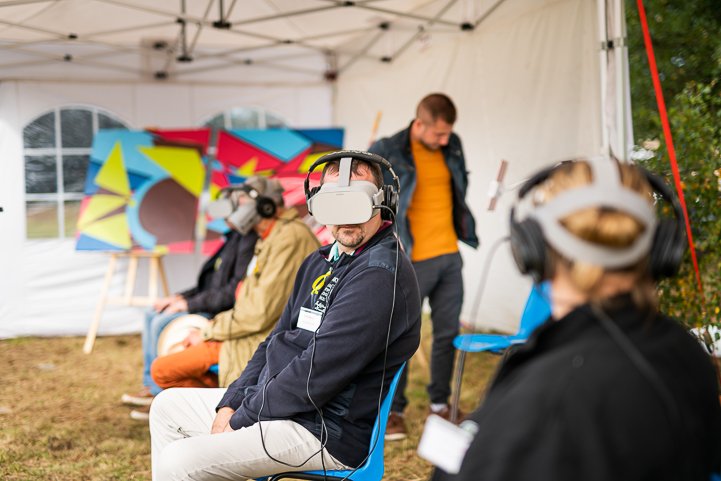
Virtual Reality in Brussel for corporate events that deliver measurable engagement
INNOV'events designs and delivers Virtual Reality activations for corporate events in Brussel, from executive workshops to high-footfall staff gatherings. Typical formats run from 20 to 800 attendees with controlled flow, on-site facilitation, and full technical responsibility. You get a clear run-of-show, risk controls, and post-event reporting your leadership team can actually use.
Sommaire
In a corporate agenda, entertainment is not “extra”; it is a lever to shape attention, retention, and social dynamics. A well-run Virtual Reality moment creates a shared reference point that supports internal communication objectives (culture, change, employer brand) and reduces the usual “people drift” after speeches and presentations.
Organizations in Brussel typically expect multilingual hosting (NL/FR/EN), strict timing, and a premium experience that does not feel like a gadget. HR and Comms teams also ask for safe throughput, discreet branding options, and content that aligns with values (inclusion, sustainability, innovation) while respecting corporate risk policies.
Our team is based in Brussel and works hands-on with venues, technical partners, and building managers across the city. We plan power, network, and crowd flow like an operational project, not a “nice idea”, and we stay on-site to manage the reality of event day: late arrivals, last-minute room changes, and executive schedule pressure.
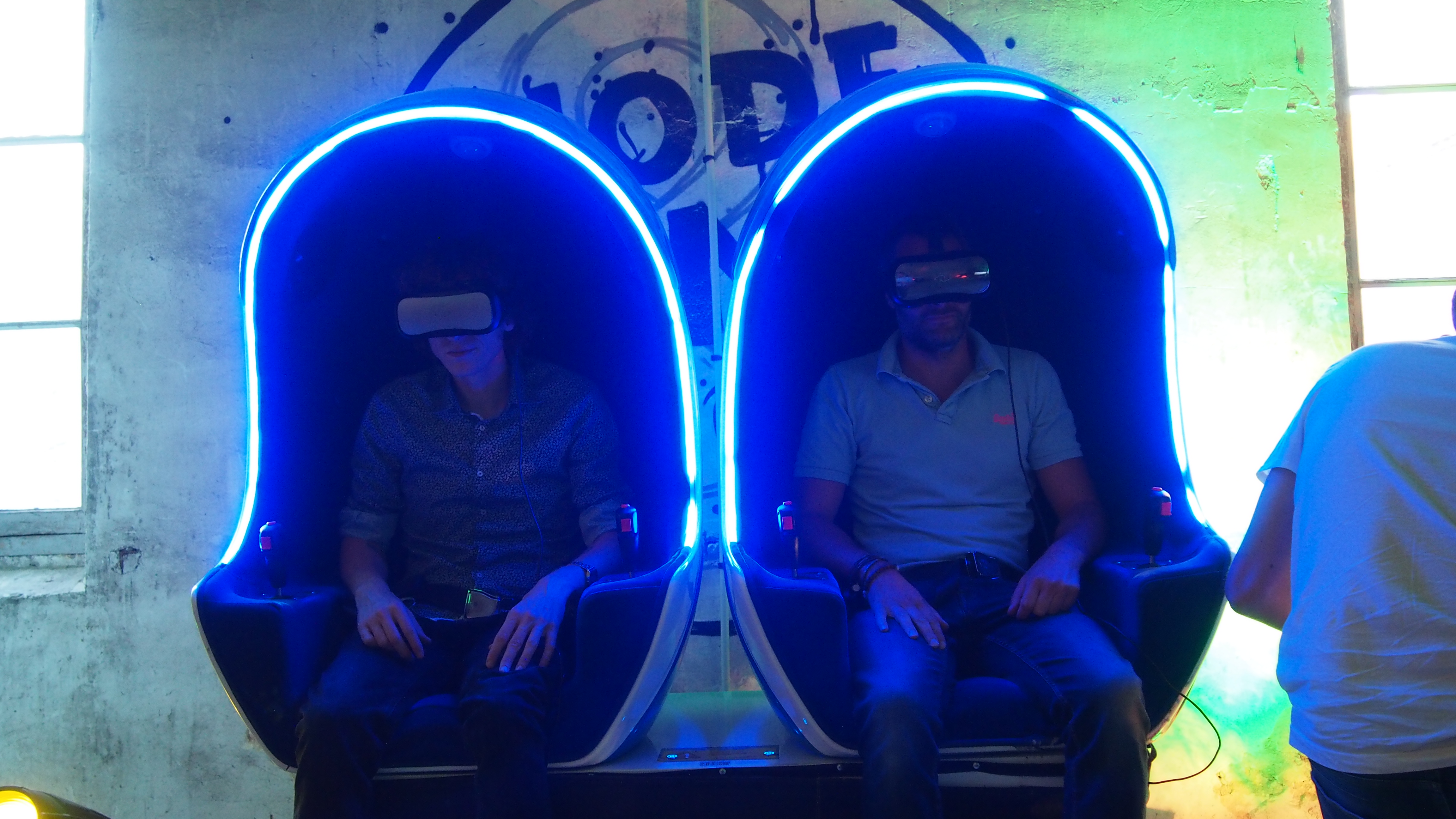
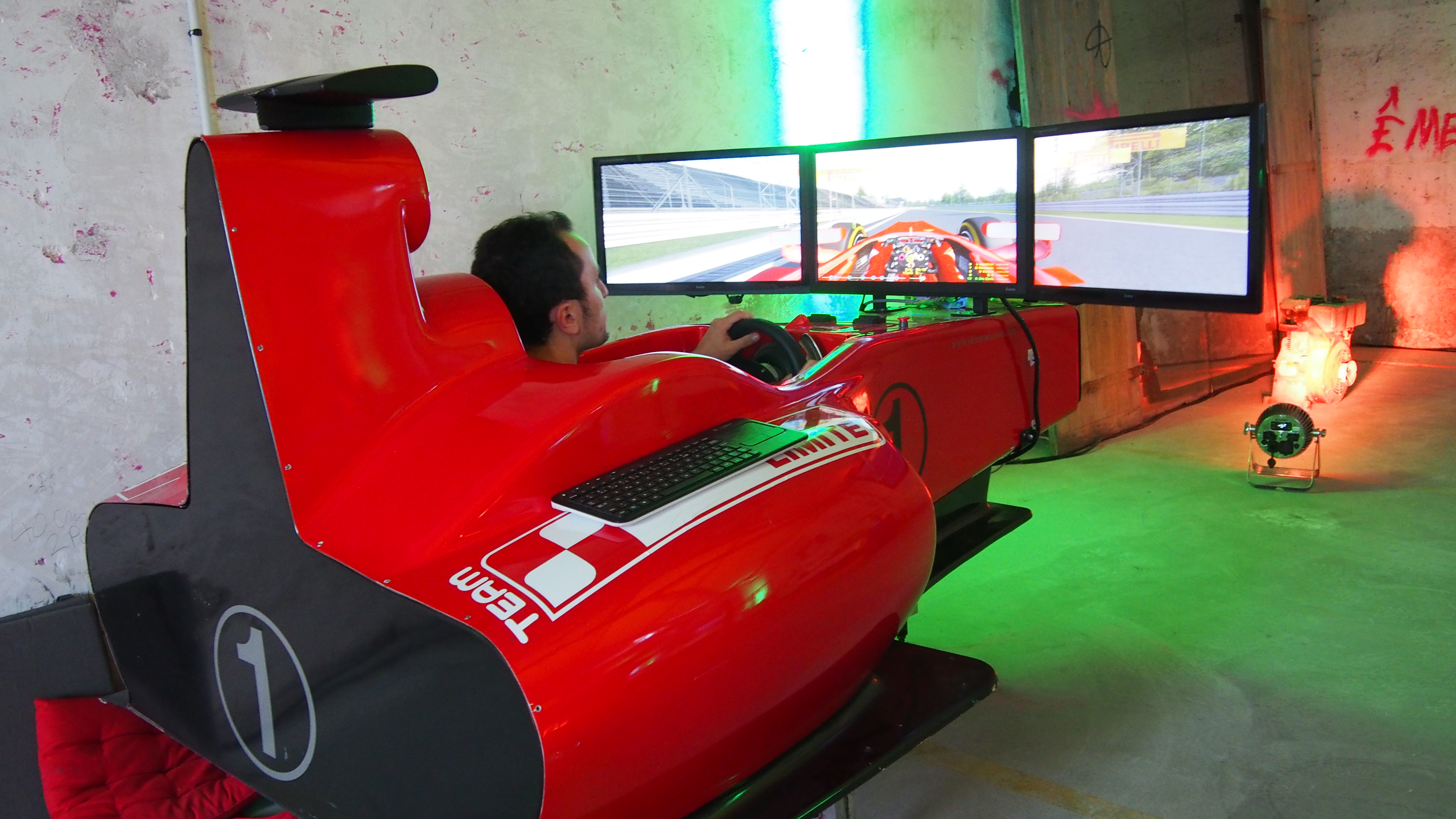
Operational VR delivery in Brussel: numbers that reduce uncertainty
10+ years of corporate event production with a Brussels-based coordination team and a vetted national partner network.
50+ VR activations delivered across Belgium (team-building, product discovery, safety training, recruitment marketing), with consistent facilitation standards.
Standard capacity planning: 25–60 participants/hour per VR station depending on the scenario (seated vs room-scale, tutorial time, hygiene protocol).
Typical on-site staffing: 1 facilitator per 1–2 headsets + 1 floor manager for flow, timing, and stakeholder liaison.
Production readiness: pre-event technical rehearsal + show-caller run sheet + contingency plan (backup headset, spare controllers, offline mode).
Companies in Brussel that trust us year after year
In Brussel, many of our projects are repeat collaborations: internal kick-offs, hybrid town halls, leadership offsites, and end-of-year gatherings where the experience must be consistent, brand-safe, and operationally flawless. We often support the same Communication and HR teams across multiple dates in the year, which only happens when delivery is reliable and stakeholder management is calm under pressure.
We regularly intervene for corporate audiences working around the European Quarter, the city center, and the business hubs near Gare du Nord and along the canal area—environments where access rules, time windows for load-in, and noise constraints are real. Our approach is to integrate Virtual Reality in Brussel into the overall production plan (registration, plenary, catering, lighting, AV) so it never becomes a “parallel world” that disrupts the event’s rhythm.
If you share your sector and internal constraints (works council rules, security requirements, multilingual audience, brand guidelines), we will propose VR content and a delivery model that fits the standards expected in Brussels-based organizations.
 Besoin d’un devis rapide ?
Nous vous envoyons une première proposition sous 24h.
What Virtual Reality changes for leadership teams in Brussel
When executives approve a Virtual Reality activation, they are usually buying one of three things: stronger message retention, higher participation without forcing it, or a concrete demonstration of innovation. The value comes from the operational design: what people do, how many can participate, what they remember, and how the experience supports the event narrative.
Higher participation than classic entertainment: with a well-managed queue and short scenarios (3–6 minutes), people try it “between sessions” without needing a full workshop slot.
Faster cross-team mixing: VR creates immediate conversation starters between departments that usually do not interact (Finance with Sales, HQ with field teams), which supports HR goals for cohesion.
Concrete storytelling for comms: you get usable internal content (photo/video moments, short employee testimonials) while staying within privacy and consent rules.
Brand positioning with control: unlike open-ended entertainment, VR can be framed with clear boundaries (duration, messaging, environment), which reduces reputational risk.
Learning and change management: for transformation topics, VR can illustrate “future state” processes, safety reflexes, or customer journeys in a way slides cannot.
Brussel is a decision-making city: many audiences include stakeholders, partners, or international teams. A VR activation is most effective here when it is designed as a professional interaction point—short, inclusive, well-facilitated—and when the experience matches the organization’s level of rigor.
What Brussels-based organizations expect from Virtual Reality providers
In Brussel, the bar is set by three realities: multicultural audiences, complex venues, and strict stakeholder environments. We frequently see events where attendees arrive in waves from different sites (HQ, agencies, EU institutions, field teams), which means your VR zone must absorb peaks without creating frustration or chaos.
From a production standpoint, Brussels venues often come with constraints that impact Virtual Reality: limited load-in windows in city-center buildings, security checks for external suppliers, freight elevator booking, and shared spaces where your activation must look premium without taking over the entire room. We plan for these with precise technical sheets (power draw, footprint, noise level, storage), and we validate access and timings in writing.
Decision-makers also expect compliance-minded execution: hygiene protocol for headsets, clear participant briefings (motion sickness, accessibility), and a “no surprises” approach for branding. For instance, when a company has strict brand guidelines, we adapt with discreet signage, on-brand UI screens, and staff dress code aligned to the event’s level of formality.
Which Virtual Reality experiences work best for events in Brussel
Engagement comes when the experience matches the audience’s context. In Brussel, we often design for mixed seniority levels and multiple languages, so the best choices are intuitive scenarios with short onboarding and clear spectator value. Below are formats we deploy depending on your objective, venue constraints, and brand posture.
Animations Interactives à Brussel
VR team challenge (4–10 min rotations): participants solve a shared mission while colleagues watch on a mirrored screen. Works well for HR objectives (collaboration, onboarding) when you want energy without alcohol or loud music.
Leadership “decision room” simulation: short scenario where a participant makes choices under time pressure (crisis comms, safety, customer escalation). This is effective during management days because it creates debrief conversations, not just fun.
Product/space exploration: guided visit of a future office, retail concept, or industrial site. Useful when you need to bring multiple sites together in Brussel without moving people physically.
Animations Artistiques à Brussel
Immersive art gallery: calmer VR experience designed for networking moments and premium receptions. We use seated stations and curated visuals so it feels aligned with brand image rather than “gaming”.
Audio-guided VR storytelling: ideal for audiences with varied profiles. The facilitator can brief in NL/FR/EN and the voiceover can be language-selectable, reducing friction.
Animations Innovantes à Brussel
VR + tasting pairing: short VR journey (origin story, terroir, production process) followed by a tasting station. Works for corporate hospitality in Brussel where you want sophistication and a controlled pace.
“Choose your menu” VR prompt: participants explore dishes or sustainability sourcing and then vote. This supports CSR narratives when your catering partner can follow through operationally.
Animations Gourmandes à Brussel
Mixed reality showcase: combine physical objects (a prototype, a packaging sample) with an immersive overlay. Strong for product launches when you want people to understand features fast and avoid long demo lines.
VR safety reflex micro-training: short, repeatable modules (3–5 minutes) suitable for large staff gatherings. It looks like entertainment but delivers a concrete learning objective that leadership can justify.
Data capture for HR/Comms: opt-in satisfaction prompts, throughput stats, and “most chosen scenario” dashboards. This is useful when you need to report internally beyond “people liked it”.
Whatever the format, we align the activation with your brand image: tone of the scenario, look of the set-up, staff posture, and how the experience is introduced on stage. Virtual Reality should feel like it belongs to your organization’s standards, especially in Brussel where many attendees compare your event to high-level institutional and corporate productions.
Where to host Virtual Reality in Brussel without compromising flow
The venue shapes how VR is perceived: as a professional experience or as a corner activity. For Virtual Reality in Brussel, we look first at ceiling height, ambient light control, power distribution, and the ability to create a clean, safe footprint with clear circulation. A good room allows spectators to watch (mirrored screens) without blocking participants.
| Venue type | For which objective? | Main strengths | Possible constraints |
|---|---|---|---|
| Conference hotels in Brussel (city center / EU quarter) | Leadership days, town halls, multi-room agendas with VR in the foyer | Reliable AV infrastructure, predictable logistics, strong reception standards | Limited load-in windows; public areas require clean cabling and discreet branding |
| Industrial or canal-area venues in Brussel | High-impact launches, larger footprints, mixed reality setups | Space for room-scale VR, strong staging possibilities, impressive volume | Heating/acoustics can be challenging; additional production costs (power, drape) |
| Corporate offices in Brussel | Employer branding, internal workshops, onboarding days | Convenient for attendance, easier stakeholder access, strong brand control | Security procedures, elevator booking, limited storage and back-of-house space |
We strongly recommend a site visit (or at minimum a technical walk-through) before confirming the VR format. In Brussel, small details—pillar placement, reflective floors, emergency exits, shared corridors—can make the difference between smooth throughput and a constant stream of micro-issues on event day.
What Virtual Reality costs in Brussel and how to budget correctly
Pricing for Virtual Reality in Brussel depends less on “the headset” and more on production reality: number of stations, staffing, scenario licensing, and the time window you need (half-day vs full-day vs multi-day). A transparent budget prevents the classic situation where the activation looks affordable on paper but becomes expensive when you add facilitators, screens, and safety measures.
Number of VR stations: usually 1–6 headsets depending on audience size and desired throughput. More stations reduce queue time but increase staffing and footprint.
Scenario type: off-the-shelf experiences are cost-efficient; branded or semi-custom scenarios require scripting, QA, and testing time.
Event duration: a 3-hour activation during cocktails is not the same operational load as a 9-hour continuous zone at a staff day.
Staffing and languages: in Brussel, bilingual or trilingual facilitation is often necessary. Staffing is also your main risk-control lever.
Hygiene and accessibility: disposable masks, cleaning protocol, and adapted onboarding for glasses wearers or motion-sensitive participants.
Screen mirroring and staging: external screens, stands, lighting, and drape so the zone looks corporate and is easy to understand for spectators.
Venue constraints: difficult access, long distances from loading bay to room, restricted time slots—these affect crew time and logistics.
For executives, the right ROI question is: “What outcome does this unlock?” If VR helps you increase participation, improve message retention, or create content and internal conversation, it often replaces multiple smaller spend items (extra entertainment, additional content capture, engagement tools) with one coherent activation you can report on.
Why a Brussel-based agency reduces risk on event day
With Virtual Reality, small operational problems escalate quickly: a headset update, a tracking issue due to lighting, an unexpected room change, or a queue that blocks a fire exit. Working with a team established in Brussel means faster site interventions, better venue coordination, and partners who are used to local building rules.
As your event agency in Brussel, we also protect your internal teams. HR and Comms should not be troubleshooting hardware or negotiating last-minute power access with a venue technician. We take ownership of supplier alignment, timing, and stakeholder communication, so your leadership team experiences a controlled, professional delivery.
- Local technical reflexes: we know the typical constraints of Brussels venues (access badges, freight elevators, shared foyers, noise rules) and plan for them early.
- On-site decision-making: we can adjust the format live—switch to seated mode, shorten onboarding, change queue logic—without losing quality.
- Supplier accountability: one coordination point for VR, AV, staging, and venue management, with a clear run-of-show.
- Stakeholder comfort: calm, professional facilitators who can brief participants and executives in NL/FR/EN.
For executives, the right ROI question is: “What outcome does this unlock?” If VR helps you increase participation, improve message retention, or create content and internal conversation, it often replaces multiple smaller spend items (extra entertainment, additional content capture, engagement tools) with one coherent activation you can report on.






Virtual Reality projects delivered in Brussel across different agendas
We deliver Virtual Reality in Brussel in contexts that look very different operationally, and that is where agency experience matters. For a leadership offsite, we often integrate VR as a short, structured module with facilitated debrief: the objective is discussion quality, not volume. For a staff event, the challenge is throughput and consistency—hundreds of participants with varied profiles, where the experience must remain safe, inclusive, and on time.
We also support product and employer branding moments where reputation is the priority: the VR zone must look like part of the brand world, with clean staging, controlled messaging, and staff behavior aligned with corporate standards. In Brussels, audiences can include partners, institutional stakeholders, and international colleagues; we therefore design briefings and signage to be multilingual and culturally neutral.
Across these scenarios, our approach stays the same: choose a VR format that matches the venue and objective, design flow, validate technical prerequisites, rehearse, and deliver with disciplined on-site management.
Common VR mistakes we prevent in Brussel corporate events
Overpromising participation: “everyone will do it” leads to queues, frustration, and negative comments. We plan realistic capacity and make it visible to stakeholders.
Wrong format for the room: room-scale VR in a bright foyer with reflective floors causes tracking issues and safety concerns. We adapt to seated or controlled lighting when needed.
Insufficient facilitation: one staff member for multiple headsets slows everything down and increases risk. We staff for pace and safety, not just presence.
No spectator value: if colleagues cannot see what is happening, VR becomes isolating. We use mirrored screens and short explanations to keep energy high.
Ignoring hygiene and comfort: fogged lenses, poorly cleaned interfaces, and no protocol for glasses wearers quickly damage perception.
Disconnected from the event narrative: VR that is not introduced properly feels random. We align with your stage script, signage, and internal messaging.
Underestimating venue constraints in Brussel: access times, security checks, and limited storage can break a setup plan if not validated early.
Our role is to remove these risks before they appear: capacity planning, technical checks, venue alignment, and disciplined on-site management—so your team can focus on stakeholders rather than troubleshooting.
Why Brussel clients renew their Virtual Reality activations
Repeat business is rarely about “liking the concept”; it is about trust in delivery. When clients renew Virtual Reality with us, it is because the activation ran on time, looked professional, and required minimal internal bandwidth—while still generating visible engagement and usable feedback.
Typical rebooking patterns: quarterly onboarding sessions, annual staff events, or recurring roadshow stops with the same VR kit and facilitation standards.
Operational indicators we track on request: participants/hour, average wait time, top scenarios chosen, and qualitative feedback (opt-in) to support HR/Comms reporting.
Consistency measures: same briefing script, same hygiene protocol, same zone layout principles—so the experience remains predictable across different Brussels venues.

Loyalty is a by-product of quality: when the experience is controlled, brand-safe, and measurable, it becomes a repeatable tool in your internal and external communication plan—not a one-off experiment.
How we produce Virtual Reality in Brussel from brief to delivery
👉 Scoping in Brussel: objective, audience, and constraints
We clarify your objective (engagement, employer brand, product education, leadership debrief), audience profile (languages, seniority mix, accessibility needs), and operational constraints (venue rules, schedule, security). We then recommend the right VR format (seated/room-scale/mixed reality) and a capacity model that fits your attendance curve.
👉 Scenario selection and risk review for Brussel venues
We propose a short list of scenarios with concrete implications: duration per participant, learning curve, motion sensitivity, spectator experience, and branding options. We also review venue factors that impact VR (light, noise, power, Wi‑Fi, floor surface) and define mitigations, including offline mode where appropriate.
👉 Flow design, staffing plan, and run-of-show integration
We design the queue logic (walk-in or slots), the zone footprint, and the staffing ratio. We integrate the activation into the master schedule so it supports key moments (after plenary, during networking, between workshops) and we provide briefing text for MCs or internal hosts in NL/FR/EN if needed.
👉 Production, rehearsal, and on-site delivery in Brussel
We deliver a technical sheet, coordinate with the venue and AV, and run a rehearsal or technical test when the agenda allows. On event day, we manage setup, participant briefings, hygiene protocol, troubleshooting, and stakeholder updates—so the experience remains smooth even if the room plan changes.
👉 Post-event reporting and next-step recommendations
After the event, we can provide throughput numbers, qualitative insights, and recommendations to improve the next edition (scenario mix, station count, or schedule placement). This helps HR and Comms justify budget and demonstrates professional governance around Virtual Reality in Brussel.
FAQ sur l'organisation Virtual Reality à Brussel
How many guests can try VR per hour in Brussel?
Plan 25–60 participants/hour per headset. Seated experiences with short onboarding sit at the higher end; room-scale or complex scenarios reduce throughput. We size stations based on your peak attendance windows, not just total headcount.
What is a typical budget for Virtual Reality in Brussel?
Most corporate setups in Brussel fall between €2,500 and €12,000 depending on the number of headsets (often 1–6), duration (half-day vs full-day), staffing, screens/staging, and whether content is standard or branded.
Can you run VR in Brussel with NL/FR/EN audiences?
Yes. We staff bilingual/trilingual facilitators and use scenarios with language selection when relevant. We also provide multilingual briefing scripts and clear signage so flow stays smooth even with mixed-language groups.
Is Virtual Reality safe for corporate events in Brussel?
Yes, with the right controls: seated options for higher-risk audiences, clear health briefings, supervised participation, taped cable management, and a hygiene protocol between users. We also ensure the VR zone does not obstruct emergency exits or venue circulation.
How much space do you need for VR in Brussel venues?
For seated VR, plan roughly 6–10 m² per station including waiting and reset space. For room-scale VR, plan 16–25 m² per station with strict perimeter control. We confirm the footprint after a venue plan review or site visit in Brussel.
Request a Virtual Reality quote in Brussel with a clear plan
If you are comparing agencies, send us three elements: event date/time window, venue (or shortlist) in Brussel, and estimated attendance peaks. We will reply with a concrete recommendation: format, number of stations, staffing, footprint, and a transparent budget range—so you can make a decision without hidden operational risks.
Because the best VR experiences depend on venue constraints and scheduling, we recommend starting planning 4–8 weeks before the event (earlier for branded content or multi-day programs). Contact INNOV'events to secure availability and get a delivery plan that will hold up on event day.
Agence INNOV'events Brussel
Justin JACOB est le responsable de l'agence événementielle Brussel. Contactez-le directement par mail via l'adresse belgique@innov-events.be ou par formulaire.
Contacter l'agence BrusselToutes nos prestations & animations Brussel, Belgique
Découvrez nos prestations événementielles
Découvrez nos animations événementielles disponibles au Belgique
- Hôtesse événementielle à Brussel
- Escape Game à Brussel
- Cours de cuisine type MasterChef à Brussel
- Magicien à Brussel
- Location de chapiteau à Brussel
- Atelier colorimétrie à Brussel
- Jeux gonflables à Brussel
- Service de voiturier à Brussel
- Simulateur de football à Brussel
- Location de mobilier lumineux à Brussel
- Flocage lumineux à Brussel
- Repas insolite à Brussel
- Light Painting à Brussel
- Murder Party à Brussel
- Jeu concours à Brussel
- PLV événementielle à Brussel
- Réalité virtuelle à Brussel
- Cuisine moléculaire à Brussel
- Animation Halloween à Brussel
- Feu d’artifice à Brussel
- Jeux géants à Brussel
- Animateur événementiel à Brussel
- Animation photo à Brussel
- Père Noël à Brussel
- Animation enfants à Brussel
- Visite guidée à Brussel
- Rallye urbain à Brussel
- Piscine à balles à Brussel
- Simulateur de vol à Brussel
- Location de food truck à Brussel
- Record du monde à Brussel
- Simulateur de surf à Brussel
- Casino du vin à Brussel
- Atelier relooking à Brussel
- Atelier création de parfum à Brussel
- Atelier acting à Brussel
- Animations RSE à Brussel
- Tir à l’arc à Brussel
- Agent de sécurité à Brussel
- Œnologie à Brussel
- Mime à Brussel
- Jeu télévisé à Brussel
- Fête foraine à Brussel
- Atelier gestion de crise à Brussel
- Atelier négociation de crise à Brussel
- Jeux d’arcade à Brussel
- Simulateur de chute libre à Brussel
- Simulateur de ski à Brussel
- Simulation circuit automobile à Brussel
- Baptême de l’air à Brussel
- Dégustation à Brussel
- Création de baby-foot à Brussel
- Rallye 2CV à Brussel
- Challenge LEGO à Brussel
- Animation casino à Brussel
- Interprète / traducteur à Brussel
- Goodies à Brussel
- Bus / transfert à Brussel