
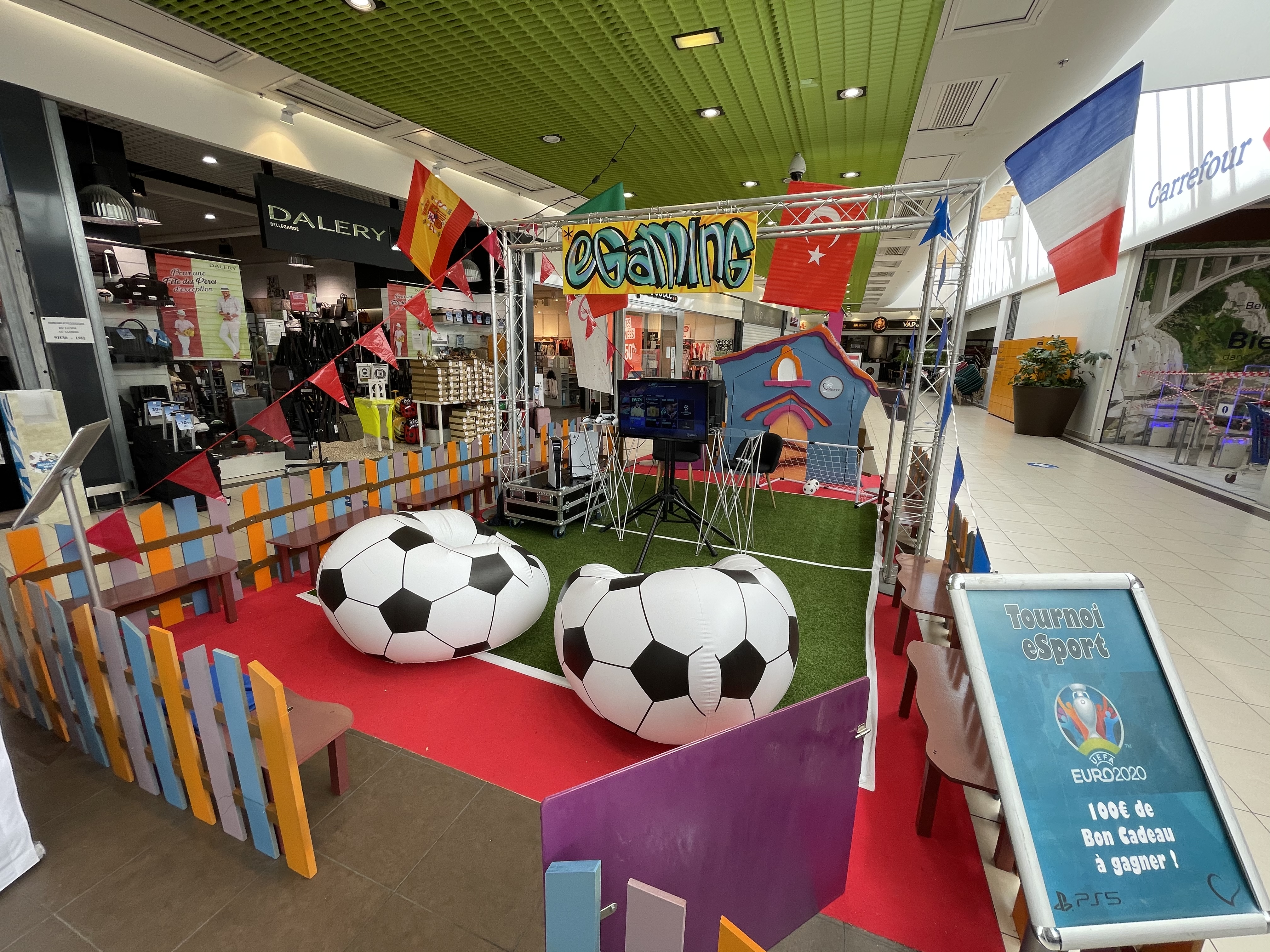
Voetbalsimulator in Antwerpen for corporate events that run on time
INNOV'events delivers a Voetbalsimulator activation in Antwerpen for corporate events from 30 to 800 attendees. We handle logistics, on-site staffing, safety, and the participant flow so your teams can focus on hosting.
Typical use cases: HR onboarding days, client evenings, sales kick-offs, family days, and internal celebrations where you need measurable engagement without disrupting the program.
Sommaire
In a corporate event, entertainment is not a “nice-to-have”: it is a tool to drive participation, create cross-team interaction, and keep energy high between speeches, workshops, or networking blocks. A Voetbalsimulator is particularly effective because it delivers quick, repeatable challenges that work even when guests arrive in waves.
Organizations in Antwerpen typically expect controlled timing, clean brand exposure, and a setup that respects the venue and the neighborhood. They also want participation without queues that block catering, reception, or emergency exits—especially in tighter city-center sites and busy waterfront venues.
From Brussels, INNOV'events operates weekly across Flanders and supports local partners in Antwerpen for transport, load-in coordination, and staffing. We plan like an operational team: access windows, lift use, power distribution, risk assessment, and a clear run-of-show for the animation.
INNOV'events facts that matter for Antwerpen operations
12+ years delivering corporate entertainment across Belgium, with repeat clients who require consistent execution standards.
200+ corporate events/year supported through our national supplier network (AV, staging, venues, hosts, caterers), enabling fast sourcing and back-up options.
1 dedicated on-site lead per project and a written run sheet shared in advance (timings, contacts, access, safety points).
95%+ on-time load-in target on our internal checklists, with buffer planning for Antwerp traffic patterns and venue access constraints.
Corporate teams we support around Antwerpen and 2000
We support companies and institutions active in Antwerpen and the wider province, often on recurring formats (annual staff moments, client hospitality, end-of-year events). Many teams come back because they want the same operational calm every edition: clear preparation, predictable timing, and an animation that guests actually use.
You mentioned “the company names I provided as references”; we can integrate them exactly as official references once you confirm the list and whether you want public or anonymized mentions (some clients prefer “global logistics group in the port area” rather than naming).
What we can already commit to is how we work locally: we coordinate with venue managers on access and noise rules, anticipate parking and unloading permits when needed, and align with Antwerp-based suppliers when it reduces risk on event day.
 Besoin d’un devis rapide ?
Nous vous envoyons une première proposition sous 24h.
What a Voetbalsimulator brings to leadership goals in Antwerpen
A Voetbalsimulator in Antwerpen is not just a fun corner; it can be a structured engagement tool that supports leadership objectives: participation, employer branding, cross-functional connection, and a “reason to stay longer” at networking moments.
Fast engagement, even for mixed audiences: guests can participate in 30–90 seconds, which is ideal for client events where not everyone wants a long activity.
Measurable participation: we can track number of attempts, top scores, and peak times. HR and Comms teams use this to show “activation performance” to management after the event.
Controlled competition without excluding anyone: set difficulty levels (power, target size, distance) so both sports-minded and non-sports guests feel comfortable.
Conversation starter for networking: a simple leaderboard creates immediate micro-interactions between departments or between clients and internal teams.
Brand visibility that stays tasteful: discreet panels, screen overlays, or a branded results email/QR page—without turning the venue into a trade-fair booth.
Program stability: unlike open-mic or stage-heavy formats, the simulator runs continuously and can be paused instantly for speeches, awards, or safety announcements.
In Antwerpen, where many companies balance international profiles with local roots, the format works well: it’s familiar, multilingual-friendly, and easy to integrate into high-standard corporate hospitality—without pushing the event into a “gimmick” territory.
Antwerpen constraints that affect your entertainment plan
Teams in Antwerpen often operate with tighter operational constraints than they expect at first—especially when the venue is in the city center, near the Scheldt, or inside an active business site. We plan around real-life conditions we repeatedly encounter:
- Load-in windows: many venues allow limited access times (sometimes 60–120 minutes) with strict rules for lifts, protective flooring, and noise.
- Traffic and parking: Antwerp ring congestion and event-day roadworks can impact arrival. We schedule buffers and confirm unloading points in writing.
- Venue protection: historic floors, carpets, and high-end finishes require protective mats, clean wheels, and a disciplined crew.
- Multilingual audiences: Dutch/English/French communication must be clear. Our hosts adapt the briefing and the tone to the crowd.
- Safety expectations: corporate HSE teams (especially in industrial and port environments) may require a short risk analysis, cable management standards, and documented responsibilities.
These are not theoretical points: the difference between a smooth activation and a stressful one is often decided by access and flow, not by the equipment itself.
What to combine with a Voetbalsimulator in Antwerpen
A Voetbalsimulator in Antwerpen works best when it supports a broader event logic: welcoming energy, guided networking, and brand storytelling. We often combine it with complementary formats that keep different guest profiles engaged.
Animations Interactives à Antwerpen
Scoreboard challenge with time slots: teams register by department or table; we run short waves so the queue never dominates the room.
QR-based participation: guests scan to log their score and receive a branded recap page; useful for internal comms and post-event reporting.
Host-led mini finals: a 10-minute “final round” before dessert works well for gala formats, as long as the sound level stays venue-friendly.
Animations Artistiques à Antwerpen
DJ with controlled sound: not “club volume”, but a curated ambience that keeps the activation lively without preventing conversation.
Visual performance moments: short, timed interventions (e.g., LED or dance) that do not compete with the simulator area and can punctuate the evening.
Animations Innovantes à Antwerpen
Local tasting corner: pairing the simulator with a concise Antwerp-oriented tasting (beer/soft pairing, pralines, or street-food bites) increases dwell time and supports hospitality goals.
Service flow coordination: we place food stations so guests don’t queue twice (catering + simulator). This is a frequent issue in corporate venues with narrow corridors.
Animations Gourmandes à Antwerpen
Branded content capture: short-form clips of attempts (opt-in) for internal channels; we set clear privacy rules and avoid “forced social posting”.
Data-light gamification: simple metrics (attempt count, top 10 scores, department averages) instead of heavy apps that create IT and GDPR friction.
The key is alignment with your brand image: a premium B2B evening requires different hosting language, signage, and pacing than a family day. We design the activation so it looks like it belongs to your company—not like rented equipment dropped in a corner.
Which Antwerpen venues work best for a Voetbalsimulator setup
The venue impacts everything: participant flow, noise tolerance, ceiling height, and how “corporate” the activation feels. For a Voetbalsimulator, we look for a clear footprint, safe distances, and the ability to manage a queue without blocking operations.
| Venue type | For which objective? | Main strengths | Possible constraints |
|---|---|---|---|
| Corporate HQ / office event space | Internal engagement, onboarding, staff recognition | Easy brand integration, controlled access, simpler security process | Lift and corridor limits; need to protect floors and manage noise near meeting rooms |
| Hotel ballroom or conference center | Client hospitality, kick-off meetings, mixed program (speeches + networking) | Professional infrastructure, predictable power, staff used to event flows | Strict load-in times; signage rules; sound level may be regulated |
| Industrial or logistics site (incl. port area) | Safety culture events, family days, milestone celebrations | Large space potential, strong “company pride” effect, easy throughput | HSE requirements; PPE rules; weather exposure if partly outdoors |
We recommend a site visit or at minimum a technical call with photos and a floor plan. In Antwerpen, small access details (dock height, lift size, protection requirements) regularly decide whether the install is smooth or stressful.
Budgeting a Voetbalsimulator in Antwerpen without surprises
The price of a Voetbalsimulator in Antwerpen depends on operational reality more than on the machine itself. A correct budget anticipates staffing, transport, and the constraints of your venue and schedule.
Duration and schedule: half-day vs. full-day vs. evening peak hours; late-night dismantling can increase staffing needs.
Staffing level: 1–3 staff depending on audience size, desired throughput, and brand-hosting expectations.
Transport and access complexity: city-center restrictions, parking distance, lift usage, and protection materials.
Branding and reporting: panels, screen overlays, custom challenges, and post-event participation recap.
Safety and compliance: extra barriers, floor protection, cable ramps, and any HSE documentation required for corporate sites.
From a return-on-investment perspective, the relevant question is not “the cheapest simulator” but “the cost per engaged participant” and the reputational value of a smooth, professional execution. A controlled activation that processes 200–400 plays during an evening often outperforms more expensive formats that only entertain a small subset of guests.
Why working with an event partner in 2000 reduces risk
When you plan in the Antwerpen area, the biggest risks are operational: access timing, supplier coordination, and last-minute venue constraints. A partner who is used to the territory reduces the probability of “event day improvisation”.
That’s why our approach combines national standards with local execution. If you are comparing agencies, ask who signs off the technical plan, who is on-site as decision-maker, and what the contingency plan is if access is delayed or the layout changes.
For broader formats beyond the simulator, our local capabilities are presented on our event agency in Antwerpen page.
- Faster venue coordination: we speak the language of venue managers (load-in sheets, protection, security, run-of-show).
- Reliable local sourcing: backup staff, transport options, and last-minute rentals without compromising quality.
- Realistic timing: planning that respects Antwerp traffic, parking, and access limitations.
- Single accountable lead: one person owns the deliverable from planning to on-site decisions.
From a return-on-investment perspective, the relevant question is not “the cheapest simulator” but “the cost per engaged participant” and the reputational value of a smooth, professional execution. A controlled activation that processes 200–400 plays during an evening often outperforms more expensive formats that only entertain a small subset of guests.










What we’ve delivered with football-style activations in Antwerpen
Our projects range from compact office activations to large-scale hospitality evenings where the simulator must fit into a strict program. In practice, the challenges are rarely “can you bring the equipment?” but rather: can you integrate it into the event without disturbing the experience?
Examples of real formats we commonly run in Antwerpen:
- HR engagement afternoon in a headquarters: short competition waves per department, a results recap for internal comms, and a quiet setup compatible with ongoing work areas.
- Client networking evening with speeches and dinner: simulator active during arrival + post-dessert; host keeps the line moving and pauses instantly during key moments.
- Safety and culture day on an industrial site: the activation is positioned away from operational zones, with clear safety briefing and compliance with site rules.
The common thread: we treat the simulator as a managed service—briefing, flow, safety, brand alignment—not as an unattended attraction.
Common Voetbalsimulator pitfalls we prevent in Antwerpen
Underestimating space and safety distance: a simulator needs a clean footprint and buffer zone. Too tight = risk and discomfort.
Queue blocking key areas: if the line cuts across bar or reception, it damages the event experience and creates friction with the venue.
Sound and hosting mismatch: overly loud music or “fairground hosting” can hurt brand image in B2B settings.
No plan for mixed footwear and attire: heels, suits, and slippery soles require a different safety approach than a sports day.
Ignoring access constraints: narrow lifts, protection requirements, and limited load-in times are the main causes of last-minute stress.
Lack of ownership on-site: if no one can decide quickly, small issues become program delays.
Our role is to remove these risks before event day, with a documented plan and the right staffing level. For executive stakeholders, the outcome is simple: the activation runs, the venue stays calm, and your team remains available for guests.
Why Antwerpen clients rebook INNOV'events year after year
Recurring clients are usually not chasing novelty; they are buying predictability under pressure. HR and Comms teams come back when the agency protects their credibility internally: accurate timing, responsible supplier management, and no surprises on invoices.
2–5 recurring editions is common for internal formats (yearly celebration, onboarding, summer moment) when the operational baseline is solid.
24–72 hours typical turnaround for a first structured proposal after a clear brief (date, venue, audience, objectives).
1 consolidated budget with line items that match procurement expectations (rental, staffing, transport, branding, contingencies).

Loyalty is proof of quality because the same stakeholders must defend the decision again next year. In Antwerpen, where corporate communities are interconnected, reliability spreads as fast as bad execution—so we prioritize disciplined delivery over flashy promises.
How we deliver a Voetbalsimulator project in 2000
👉 Briefing and success criteria (Antwerpen)
We start with a short call to define the non-negotiables: audience size, venue type, event rhythm, brand constraints, and what “success” means (participation volume, client experience, internal engagement). We also confirm practical points: access times, floor plan availability, and any site rules.
👉 Technical validation and flow plan (2000)
We validate space, power, and safety distances, then propose a layout that protects key areas (registration, bar, catering, emergency routes). You receive a simple plan: footprint, queue line, staffing positions, and timings for setup/tear-down.
👉 Proposal with transparent options (Antwerpen)
You get a structured quote with clear options: half-day vs full-day, standard vs branded, staffing levels, and optional reporting. We avoid “bundles” that hide operational costs—useful for procurement and internal approval.
👉 Pre-event coordination with venue and stakeholders (2000)
We confirm access details with the venue, share contact lists, and align on the run-of-show. If your event has speeches or awards, we schedule activation pauses and define how we restart without chaos.
👉 Event-day execution and accountability (Antwerpen)
Our on-site lead manages load-in, setup checks, and staffing. The host runs the participant experience: briefing, line management, and maintaining a corporate tone. After the event, we provide a short debrief: participation estimate, peak times, and improvement points for the next edition.
FAQ sur l'organisation Voetbalsimulator à Antwerpen
How much space is needed in Antwerpen for a Voetbalsimulator?
Plan typically 4 x 6 m minimum for the setup, plus a queue area. For comfortable flow at corporate events, we recommend 30–50 m² total depending on expected participation.
How many people per hour can play in Antwerpen events?
In most corporate settings: 40–80 plays/hour. Throughput depends on shot time (single shot vs 3 shots), briefing style, and whether you run a leaderboard or time slots.
Can you brand the Voetbalsimulator for Antwerpen corporate events?
Yes. Options include branded side panels, screen overlays, and a QR results page. We keep branding proportional to the venue and audience (client hospitality usually needs more discreet integration than internal family days).
Do you handle staffing and safety on-site in 2000?
Yes. We provide trained operators/hosts and manage cable routing, safe distances, and participant briefing. Staffing is usually 1–2 people, up to 3 for high-volume evenings.
What is the typical cost range in Antwerpen for a simulator?
As a practical range, many projects land between €950 and €2,750 excl. VAT depending on duration, staffing, transport/access complexity, and branding/reporting options. We quote precisely after confirming venue access and audience volume.
Request a Voetbalsimulator quote in Antwerpen with a clear plan
If you want a Voetbalsimulator in Antwerpen that supports your program (not disrupts it), send us your date, venue (or shortlist), audience size, and timing constraints. We will come back with a structured proposal: layout assumptions, staffing, timeline, and transparent options.
For high-traffic dates in 2000 and popular venues, we recommend reserving equipment and crew early—especially when load-in windows are tight or the event has a strict run-of-show.
Agence INNOV'events Antwerpen
Justin JACOB est le responsable de l'agence événementielle Antwerpen. Contactez-le directement par mail via l'adresse belgique@innov-events.be ou par formulaire.
Contacter l'agence AntwerpenToutes nos prestations & animations Antwerpen, Belgique
Découvrez nos prestations événementielles
Découvrez nos animations événementielles disponibles au Belgique
- Hôtesse événementielle à Antwerpen
- Escape Game à Antwerpen
- Cours de cuisine type MasterChef à Antwerpen
- Magicien à Antwerpen
- Location de chapiteau à Antwerpen
- Atelier colorimétrie à Antwerpen
- Jeux gonflables à Antwerpen
- Service de voiturier à Antwerpen
- Simulateur de football à Antwerpen
- Location de mobilier lumineux à Antwerpen
- Flocage lumineux à Antwerpen
- Repas insolite à Antwerpen
- Light Painting à Antwerpen
- Murder Party à Antwerpen
- Jeu concours à Antwerpen
- PLV événementielle à Antwerpen
- Réalité virtuelle à Antwerpen
- Cuisine moléculaire à Antwerpen
- Animation Halloween à Antwerpen
- Feu d’artifice à Antwerpen
- Jeux géants à Antwerpen
- Animateur événementiel à Antwerpen
- Animation photo à Antwerpen
- Père Noël à Antwerpen
- Animation enfants à Antwerpen
- Visite guidée à Antwerpen
- Rallye urbain à Antwerpen
- Piscine à balles à Antwerpen
- Simulateur de vol à Antwerpen
- Location de food truck à Antwerpen
- Record du monde à Antwerpen
- Simulateur de surf à Antwerpen
- Casino du vin à Antwerpen
- Atelier relooking à Antwerpen
- Atelier création de parfum à Antwerpen
- Atelier acting à Antwerpen
- Animations RSE à Antwerpen
- Tir à l’arc à Antwerpen
- Agent de sécurité à Antwerpen
- Œnologie à Antwerpen
- Mime à Antwerpen
- Jeu télévisé à Antwerpen
- Fête foraine à Antwerpen
- Atelier gestion de crise à Antwerpen
- Atelier négociation de crise à Antwerpen
- Jeux d’arcade à Antwerpen
- Simulateur de chute libre à Antwerpen
- Simulateur de ski à Antwerpen
- Simulation circuit automobile à Antwerpen
- Baptême de l’air à Antwerpen
- Dégustation à Antwerpen
- Création de baby-foot à Antwerpen
- Rallye 2CV à Antwerpen
- Challenge LEGO à Antwerpen
- Animation casino à Antwerpen
- Interprète / traducteur à Antwerpen
- Goodies à Antwerpen
- Bus / transfert à Antwerpen