
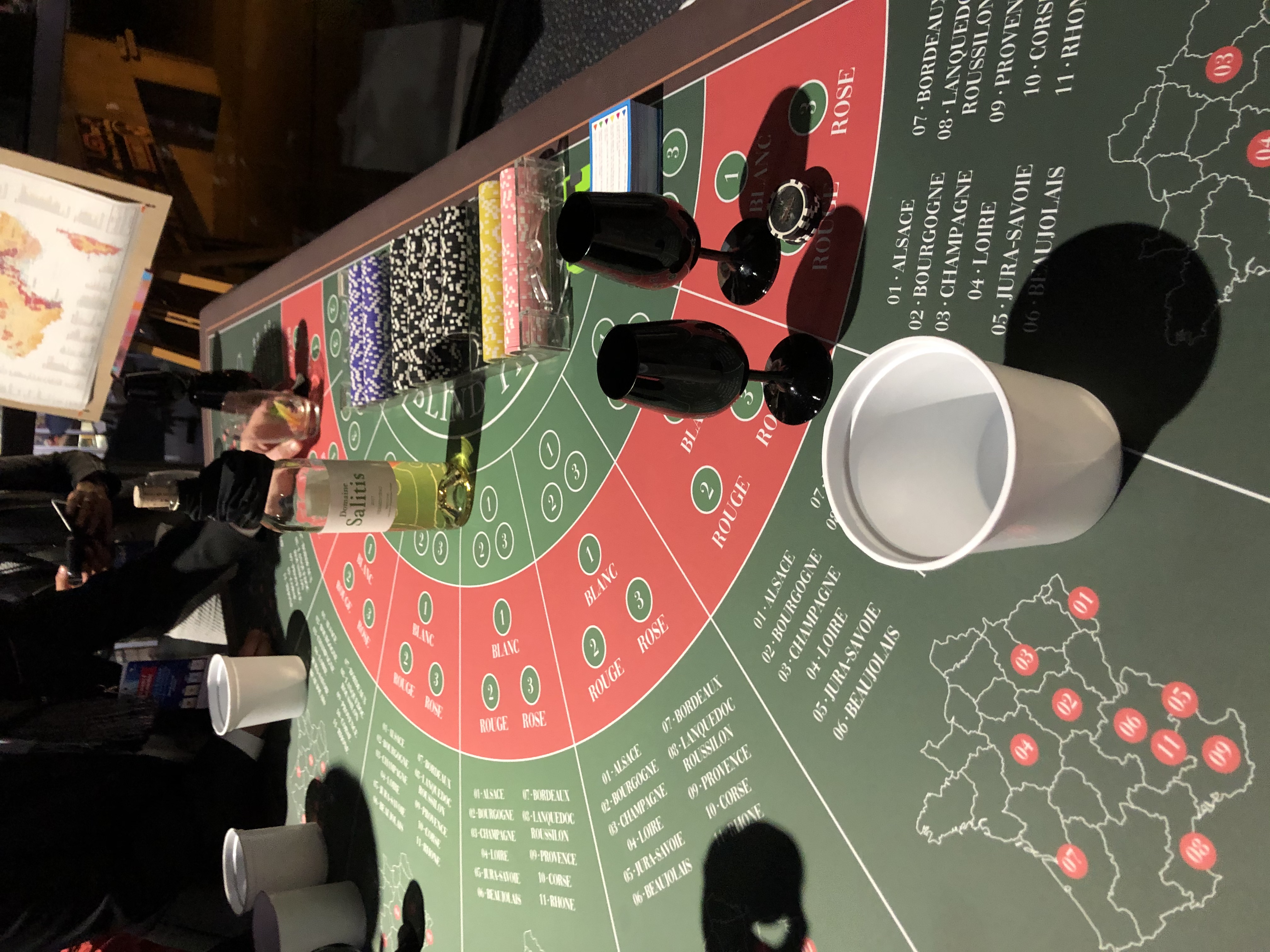
Wijnproeverij in Brussel for corporate teams that need a flawless run-of-show
INNOV'events is a Brussels-based corporate events agency delivering Wijnproeverij formats for 20 to 400 attendees, from executive tastings to all-hands networking moments.
We handle concept, wine sourcing, venue fit, staffing (sommelier + floor team), and on-site operations so your leadership can focus on guests and messaging.
Sommaire
In many Brussels corporate events, entertainment is not “nice to have”: it is a controlled lever to improve networking density, facilitate cross-team conversation, and protect the event’s perceived quality. A Wijnproeverij in Brussel works when it is paced, staffed, and integrated into the program the same way you would manage a product launch or a leadership offsite.
Organizations in Brussel typically expect bilingual guest handling (FR/NL, often EN), precise timing around speeches or awards, and a professional approach to alcohol service. The tasting must respect compliance and brand image: no improvisation, no crowding at one station, no “fun at any cost” that clashes with a corporate setting.
From EU quarter venues to corporate offices in the canal area and hotels around Rogier/Louise, we work locally and know the operational realities: deliveries, access windows, security checks, noise constraints, and last-minute agenda changes. Our role is to de-risk the day and make the tasting feel effortless to your guests.
Operational track record in Brussel you can benchmark quickly
10+ years delivering corporate events and hospitality formats across Belgium, with recurring activity in Brussel.
150+ corporate tastings and food & beverage activations delivered through our network (wine, spirits, beer, pairing formats), including multi-language facilitation.
20–400 guests is our common operating window for a Wijnproeverij, with staffing ratios adjusted to avoid queues and ensure safe service.
48-hour contingency capability for key items (glassware, spittoons, ice, service tables) via Brussels suppliers when a venue changes or attendance shifts.
References in Brussel and recurring corporate partnerships
We support organizations with teams based in Brussel, including headquarters, regional offices, and international groups hosting in the capital. Several clients collaborate with us year after year because they need predictable delivery: stable suppliers, clear run sheets, and a partner who can brief internal stakeholders without friction.
You asked us to use the company names you provided as references; however, no names were included in your brief. If you share 3–8 reference names (even if anonymized by sector), we will integrate them in this section in a compliant way (e.g., “listed European trade association”, “Belgian fintech scale-up”, “global pharma HQ in Brussels”).
What we can state today: our Brussels projects often involve HR and Comms teams coordinating multiple priorities at once (agenda, speeches, guest list, brand guidelines, and budget approvals). Our job is to remove operational load while keeping your internal approvals simple: one proposal, one timeline, one production contact.
 Besoin d’un devis rapide ?
Nous vous envoyons une première proposition sous 24h.
Why book a Wijnproeverij in Brussel for leadership and HR outcomes
A corporate Wijnproeverij is a structured social format: it creates conversation without forcing it. In Brussels, where teams are often multilingual and hybrid, the tasting provides a “shared script” (aromas, regions, pairing choices) that makes it easier for people to connect across departments and seniority.
Better networking per minute: compared with a standing cocktail, a tasting station (or guided flight) concentrates interaction. People naturally exchange impressions and move as a group, which increases cross-team introductions without awkward facilitation.
Executive visibility without stage time: leadership can circulate through tasting moments and have short, high-quality conversations. This is often more valuable than adding another speech, especially at end-of-year or post-merger events.
Comms control: a tasting can be aligned with your narrative (Belgian market presence, international footprint, sustainability). For example, selecting wines from family estates with documented practices supports CSR messaging without turning the event into a lecture.
HR engagement that feels adult and respectful: for many Brussels teams, the priority is not “party vibes” but recognition and social cohesion. A well-paced tasting delivers warmth while remaining compatible with corporate standards.
Program flexibility: tastings can be run as a 45–60 minute guided segment, or as rotating micro-sessions during a 2–3 hour reception. This is useful when speakers run late (a frequent reality) and you need a format that absorbs delays without visible stress.
Brussels is a relationship-driven business city with international codes of conduct. A Wijnproeverij in Brussel works best when it respects that culture: professional hosting, inclusive language, and a service plan that keeps everyone comfortable.
What Brussels teams expect from corporate entertainment in Brussel
Brussels audiences are demanding in a specific way: they read operational quality quickly. If guests queue for ten minutes to get a glass, if signage is unclear in a bilingual environment, or if the room acoustics make the sommelier inaudible, the experience is downgraded immediately—regardless of how good the wine is.
In practice, local expectations often include:
- Multilingual facilitation (EN/FR and, when needed, NL) with vocabulary adapted to mixed levels of wine knowledge.
- Venue constraints typical of Brussels: access windows in office districts, security at EU-adjacent sites, limited freight elevators, and strict rules on red wine near carpets or premium finishes.
- Responsible service: non-alcoholic pairings, water points, and clear portion control. Many companies ask for a policy that feels safe and compliant without feeling moralizing.
- Brand alignment: for Comms, the “look” matters—glassware quality, table dressing, printed tasting cards, and staff dress code must match the company’s tone (corporate, creative, institutional).
We design the tasting with these constraints upfront. That is how you avoid the last-minute trade-off between “nice concept” and “realistic execution”.
Which Wijnproeverij formats work best in Brussel corporate events
Engagement comes from interaction design, not from adding “more activity”. In a corporate context, the tasting should help guests talk to people they do not know yet, while staying compatible with a professional environment and your brand codes. Here are formats we deploy in Brussel depending on your audience and objectives.
Animations Interactives à Brussel
Guided comparative flight (45–60 min): guests taste 3–5 wines with a sommelier, comparing styles (e.g., cool-climate vs warm-climate). Works well for leadership events and client evenings where attention and message retention matter.
Networking stations with themed zones: two to four stations (white, red, sparkling, alcohol-free pairing). We design circulation so no single station becomes a bottleneck, and we brief staff to introduce guests to each other when appropriate.
Blind tasting challenge for teams: small-group scoring with clear rules and timeboxing (20–30 min). Effective for internal team-building when you want light competition without turning it into a loud game.
Animations Artistiques à Brussel
Wine & storytelling corner: a sommelier paired with a moderator-style host to translate technical points into accessible language for mixed international audiences in Brussels. This keeps the tone inclusive and avoids alienating non-experts.
Label and design focus: when Comms wants a brand/creative angle, we build a segment around label semiotics and market positioning (what a bottle communicates). This resonates with marketing teams without becoming academic.
Animations Innovantes à Brussel
Structured food pairing: we plan small bites that can be served reliably (temperature, allergens, replenishment). In Brussels venues, we often favor controlled formats (boards, plated bites, high-quality vegetarian options) to avoid kitchen bottlenecks.
Belgian-local pairing twist: pairing wines with Belgian cheeses or curated chocolate can anchor the event in Brussel while remaining premium and credible. We validate sourcing, portioning, and allergy labeling.
Animations Gourmandes à Brussel
Low & no-alcohol tasting track: a parallel experience with alcohol-free wines/ferments and refined pairings. This is increasingly requested by HR in Brussels, especially for inclusive events with diverse personal choices.
Data-light digital tasting cards: QR access to short tasting notes, allergens, and producer info. Useful for multilingual audiences and reduces printing. We keep it discreet—no app downloads that create friction.
Micro-sessions between agenda blocks: instead of one long tasting, we run 10–12 minute “spotlights” (sparkling welcome, aromatic white, structured red). This supports conferences and town halls where you need guests seated at specific times.
Whatever the format, alignment with brand image is non-negotiable: staff posture, vocabulary, pacing, and visual setup must match your corporate tone. For a listed company, for example, we keep the storytelling factual and the service disciplined; for a creative agency, we can lean into sensory exploration—without losing operational control.
Where to host a Wijnproeverij in Brussel to match your objective
The venue defines the guest experience before the first glass is poured: arrival flow, acoustics, light, and backstage capacity determine whether the tasting feels premium or improvised. In Brussel, we select venues based on access, service constraints, and the type of audience (internal, clients, partners, mixed).
| Venue type | For which objective? | Main strengths | Possible constraints |
|---|---|---|---|
| Hotel meeting suite + adjacent lounge | Client-facing tasting with speeches and predictable timing | Professional service corridors, reliable HVAC, easier glasswash/back-of-house | Higher F&B minimums; less flexibility on external suppliers |
| Corporate office (canteen, atrium, top-floor) | Internal engagement after a town hall or quarterly update | Zero guest travel, strong employer branding, easy integration with leadership agenda | Security access lists, freight elevator limits, strict rules for red wine and carpets |
| Private venue / loft space | Networking-first reception for mixed audiences | Atmosphere and layout flexibility, can build multiple stations and zones | Acoustics can be challenging; limited storage and kitchen infrastructure |
| Wine bar buyout (semi-private) | Small executive group or board-level dinner extension | Existing glassware and expertise; strong “authentic” feel | Capacity constraints; privacy and branding options limited |
We strongly recommend a site visit (or at minimum a technical walkthrough) before confirming: service access, storage for crates and glassware, power points for rinse stations, and noise levels at peak time. In Brussels, these practical details determine whether your event feels controlled or chaotic.
What a corporate Wijnproeverij in Brussel costs in real terms
Budget for a Wijnproeverij in Brussel is driven by format, staffing, wine selection, and venue constraints. A transparent estimate is possible when we fix three inputs: guest count, duration, and service style (guided vs stations). We provide line-by-line visibility so HR and Comms can justify spend internally.
Guest count and flow: 20–50 guests can be handled with a compact setup; 150–400 guests require multiple stations and higher staffing to prevent queues.
Wine level and availability: pricing depends on whether you choose accessible classics, premium allocations, or a sustainability-driven selection. We also factor in Belgian availability and lead times to avoid last-minute substitutions.
Staffing and languages: sommelier fee(s), pourers, floor manager, and potentially bilingual hosts (EN/FR/NL). Staffing is where “cheap” tastings usually fail.
Glassware, spittoons, water points: rental, delivery windows in Brussels, breakage policy, and whether the venue can provide wash facilities.
Food pairing and allergens: the moment you add pairing, you add production complexity (temperature, replenishment, labeling). We budget this realistically.
Technical needs: small PA for guided moments, lighting if the room is dark, and signage for station flow.
Venue rules: corkage, exclusivity, required in-house catering, and security requirements can materially change the total.
From an ROI standpoint, executives usually evaluate success through two lenses: (1) the quality of conversations created (clients, partners, internal alignment) and (2) the absence of operational issues that distract from leadership presence. We build the budget to protect both.
Why choosing an event agency in Brussel reduces risk on event day
When the event is in Brussel, local execution is not a detail—it is risk control. A Brussels-based agency knows which venues are strict on deliveries, which neighborhoods create transport delays at peak hours, and which suppliers can react fast when attendance changes or a room configuration is adjusted by the venue.
As your event agency in Brussel, INNOV'events acts as the operational interface between your internal stakeholders and the external ecosystem (venue, F&B, sommeliers, rentals). That interface is often where events succeed or fail: one misread access condition can delay setup; one unclear instruction can cause under-staffed service and visible queues.
We also understand Brussels’ corporate culture: international guest lists, protocol sensitivity, and the need for discreet professionalism. We design the tasting to be credible for a CFO and comfortable for a junior colleague—without compromising your brand standards.
- Faster on-site reaction thanks to proximity: extra ice, additional staff, glassware replacement, signage updates.
- Supplier accountability: we work with partners who know Brussels delivery realities and we contract clear responsibilities (timing, quantities, breakage, collection).
- Better venue negotiation: we ask the right technical questions early (access, storage, wash) and prevent hidden costs.
- More reliable guest experience: smoother flow, bilingual touchpoints, and consistent service posture.
From an ROI standpoint, executives usually evaluate success through two lenses: (1) the quality of conversations created (clients, partners, internal alignment) and (2) the absence of operational issues that distract from leadership presence. We build the budget to protect both.






Examples of corporate Wijnproeverij projects delivered in Brussel
Our Brussels portfolio covers multiple business contexts because a Wijnproeverij is rarely “just a tasting”. It is often embedded in a broader corporate moment: onboarding, client loyalty, leadership communication, or end-of-year recognition.
Typical scenarios we deliver:
- Post-town hall tasting in a corporate office: we coordinate a strict teardown window, protect sensitive areas (carpets, IT zones), and schedule service to start exactly after leadership Q&A. The challenge is speed and flow, not creativity.
- Client evening with a short keynote: we plan a reception-first flow so late arrivals do not disturb the speech, then transition into guided micro-sessions. The challenge is to keep the atmosphere warm while staying premium and controlled.
- Cross-border team event (EN/FR heavy, mixed cultures): we avoid jargon, provide tasting supports that work in English, and integrate a no-alcohol track so no group feels sidelined.
- Board-level dinner extension: smaller group, higher expectations, discreet staffing. The challenge is flawless timing and zero operational noise.
Across these projects, the constant is operational discipline: clear run sheets, pre-briefed staff, and contingency planning that you do not see—because you should not have to.
Common pitfalls we prevent for Wijnproeverij events in Brussel
Underestimating flow: one station for 200 guests creates queues, frustration, and a drop in perceived quality.
Choosing wines before confirming service constraints: some formats require chilled service, decanting, or specific glass types. If the venue cannot support it, the wine will not show well.
No plan for multilingual groups: in Brussels, a monolingual tasting often excludes part of the room. We brief language and tone.
Ignoring responsible service: no water points, no food, and uncontrolled pour sizes create reputational and safety risk for the company.
Weak backstage logistics: nowhere to store crates, no rinse strategy, unclear collection time—these issues surface visibly and impact guest experience.
Misaligned brand cues: casual staff posture, low-quality table setup, or messy signage can conflict with a corporate image even if the wine is excellent.
Our role is to identify these risks early, lock decisions (format, flow, suppliers, timing), and manage the day with a production mindset. You get a tasting that feels simple—because it is professionally managed.
Why Brussels clients rebook INNOV'events for Wijnproeverij formats
Recurring clients rarely come back for “ideas”. They come back for predictability under pressure: the ability to deliver the same quality when the guest list changes, when a speaker runs late, or when the venue imposes new constraints. That is what we optimize for in Brussel.
70–85% of our annual corporate activity is driven by repeat collaborations and internal referrals within client groups (range varies by year and project mix).
Single point of contact model: one production lead accountable from proposal to on-site wrap-up, reducing internal coordination load for HR and Comms.
Post-event debrief within 5 working days: what worked, what to improve, and updated supplier notes to make the next Brussels event smoother.

Loyalty is a by-product of controlled delivery. When your stakeholders feel protected on event day, rebooking becomes the rational choice.
Our production process for a Wijnproeverij in Brussel
👉 Align on objectives and constraints in Brussel
We start with a 30–45 minute working call with HR/Comms and the internal event owner. We confirm guest profile, success criteria (networking, client loyalty, leadership visibility), language needs, and hard constraints (venue rules, timing, alcohol policy). You receive a short recap with decisions and open points.
👉 Propose 2–3 tasting formats with a clear run-of-show
We provide options that differ in operational complexity: guided flight, stations, or hybrid. Each option includes duration, staffing plan, equipment list, and guest flow notes so you can choose with confidence—not guess.
👉 Wine curation and responsible service plan
We curate 3–6 wines with a coherent theme and reliable Belgian sourcing. We define pour sizes, water and food presence, and a no-alcohol track when requested. We also prepare tasting notes adapted to an executive audience: factual, concise, and multilingual if needed.
👉 Venue technical walkthrough and supplier coordination
We validate access, setup times, storage, wash strategy, acoustics, and station positioning. Then we lock delivery windows and responsibilities with rentals, venue, and staff. This is where we prevent the “it will be fine” assumptions that cause day-of issues in Brussels venues.
👉 On-site execution with a floor manager
On event day, we arrive early for setup, conduct a staff briefing (service posture, language, pacing, safety), and run the timing with your internal host. We manage transitions around speeches and keep the tasting consistent even if the agenda shifts.
👉 Wrap-up and debrief for future events in Brussel
We coordinate teardown and collections, then deliver a short debrief: attendance vs forecast, flow performance, and recommendations. If you plan recurring events, we keep a Brussels-specific file (venue notes, access constraints, supplier performance) to reduce workload next time.
FAQ sur l'organisation Wijnproeverij à Brussel
How many wines are ideal for a Brussels corporate tasting?
Most corporate formats in Brussel work best with 3 to 5 wines over 45–75 minutes. For a longer reception with stations, we can go up to 6 wines, but only if staffing and flow prevent queues.
What attendee count works for a Wijnproeverij in Brussel?
We commonly deliver 20–400 guests in Brussel. The key is format: guided tastings are efficient for 20–80, while roaming stations scale better for 80–400 with the right number of pour points.
Can you run a bilingual Wijnproeverij in Brussel (FR/NL/EN)?
Yes. We staff sommeliers and hosts who can deliver in EN/FR and, when required, add NL touchpoints (briefing, printed cards, station signage). For mixed groups, we keep the language simple and consistent to avoid losing part of the room.
What budget range should we plan in Brussel for a corporate tasting?
As an order of magnitude in Brussel, many corporate tastings land between €1,800 and €9,500 excluding venue, depending on guests, wine level, staffing, and whether food pairing and rentals are included. We provide a line-item quote after confirming guest count and format.
How early should we book a Wijnproeverij in Brussel?
For best venue and sommelier availability in Brussel, plan 4–8 weeks ahead. For peak periods (November–December, end-of-quarter), we recommend 8–12 weeks. We can deliver faster, but options may be narrower.
Request a quote for a Wijnproeverij in Brussel with clear operational planning
If you are comparing agencies, we suggest a practical next step: share your date window, estimated guest count, venue status (booked or not), and whether you want a guided tasting or networking stations. We will respond with 2–3 executable formats, each with staffing, flow notes, and a transparent budget structure.
Brussels calendars fill quickly around peak corporate periods. Contact INNOV'events early so we can secure the right sommelier profile, lock suppliers, and build a run-of-show that protects your leadership agenda and brand standards.
Agence INNOV'events Brussel
Justin JACOB est le responsable de l'agence événementielle Brussel. Contactez-le directement par mail via l'adresse belgique@innov-events.be ou par formulaire.
Contacter l'agence BrusselToutes nos prestations & animations Brussel, Belgique
Découvrez nos prestations événementielles
Découvrez nos animations événementielles disponibles au Belgique
- Hôtesse événementielle à Brussel
- Escape Game à Brussel
- Cours de cuisine type MasterChef à Brussel
- Magicien à Brussel
- Location de chapiteau à Brussel
- Atelier colorimétrie à Brussel
- Jeux gonflables à Brussel
- Service de voiturier à Brussel
- Simulateur de football à Brussel
- Location de mobilier lumineux à Brussel
- Flocage lumineux à Brussel
- Repas insolite à Brussel
- Light Painting à Brussel
- Murder Party à Brussel
- Jeu concours à Brussel
- PLV événementielle à Brussel
- Réalité virtuelle à Brussel
- Cuisine moléculaire à Brussel
- Animation Halloween à Brussel
- Feu d’artifice à Brussel
- Jeux géants à Brussel
- Animateur événementiel à Brussel
- Animation photo à Brussel
- Père Noël à Brussel
- Animation enfants à Brussel
- Visite guidée à Brussel
- Rallye urbain à Brussel
- Piscine à balles à Brussel
- Simulateur de vol à Brussel
- Location de food truck à Brussel
- Record du monde à Brussel
- Simulateur de surf à Brussel
- Casino du vin à Brussel
- Atelier relooking à Brussel
- Atelier création de parfum à Brussel
- Atelier acting à Brussel
- Animations RSE à Brussel
- Tir à l’arc à Brussel
- Agent de sécurité à Brussel
- Œnologie à Brussel
- Mime à Brussel
- Jeu télévisé à Brussel
- Fête foraine à Brussel
- Atelier gestion de crise à Brussel
- Atelier négociation de crise à Brussel
- Jeux d’arcade à Brussel
- Simulateur de chute libre à Brussel
- Simulateur de ski à Brussel
- Simulation circuit automobile à Brussel
- Baptême de l’air à Brussel
- Dégustation à Brussel
- Création de baby-foot à Brussel
- Rallye 2CV à Brussel
- Challenge LEGO à Brussel
- Animation casino à Brussel
- Interprète / traducteur à Brussel
- Goodies à Brussel
- Bus / transfert à Brussel