
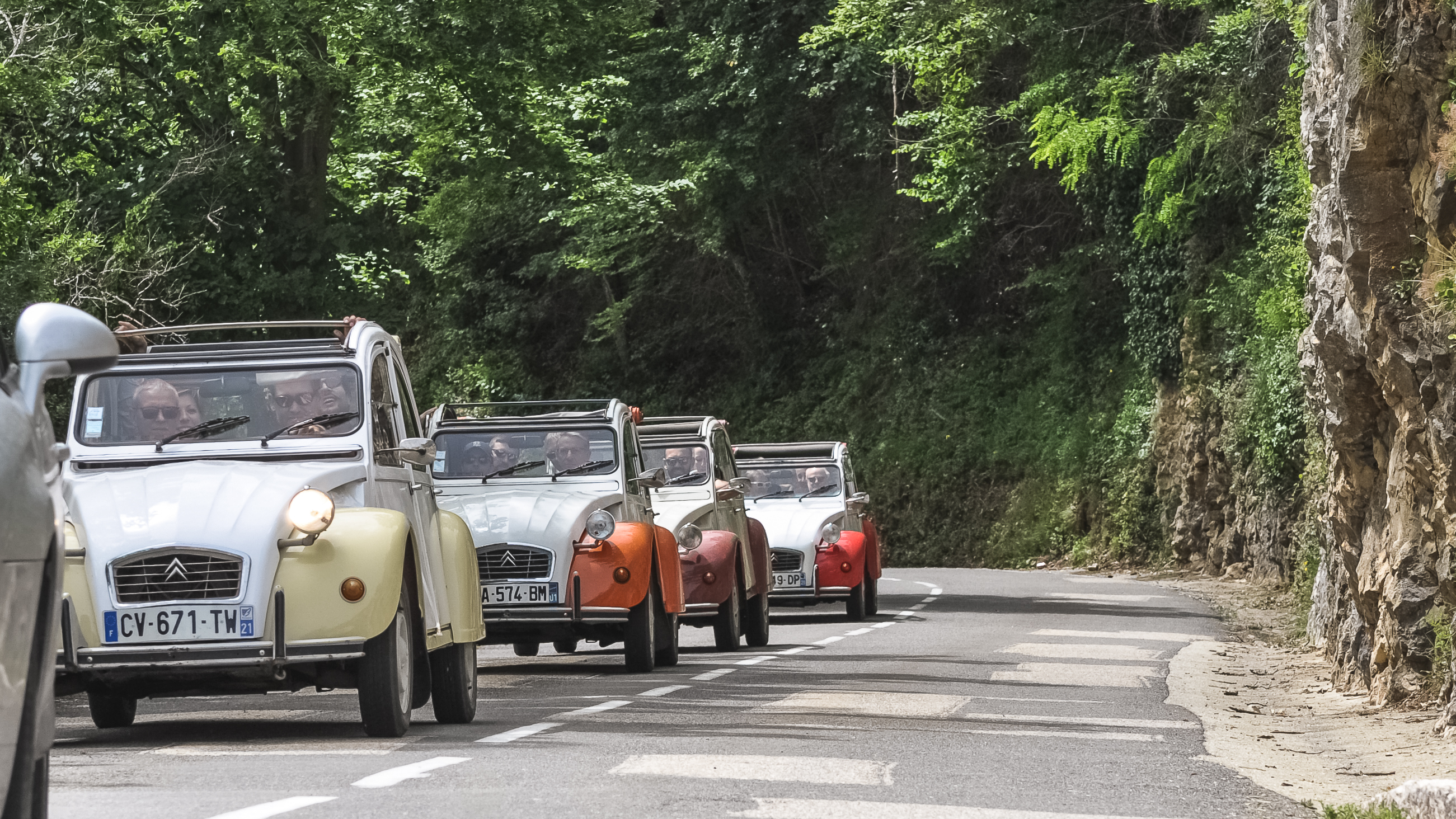
2CV rally in Brussel that aligns teams and protects your brand
INNOV'events designs and runs a 2CV rally for executives, HR and communication teams who need a structured, image-safe experience in Brussel. Typical formats range from 20 to 300 participants, from half-day to full-day, with measurable team objectives.
We handle the operational layer that usually creates stress: vehicle sourcing, route engineering, permissions where required, safety briefings, timing systems, branding, logistics, and on-the-ground supervision.
Sommaire
For corporate events, entertainment is not “nice to have”: it is a management tool. A 2CV rally creates shared constraints (navigation, time pressure, cooperation) that reveal leadership behaviors and reset cross-team dynamics faster than a classic offsite session.
In Brussel, organizations expect impeccable timing, bilingual facilitation when needed, and a plan that respects traffic reality, mobility zones and venue constraints. The rally must feel effortless for guests while remaining fully controlled behind the scenes.
INNOV'events operates from Brussels and works with local partners for fleet, technical staff and venues. That proximity matters on event day: when a road segment is unexpectedly restricted or a vehicle needs a swap, minutes count more than promises.
Operational facts that matter in Brussel
10+ years delivering corporate events in Belgium, with repeat programs for HR and internal comms teams.
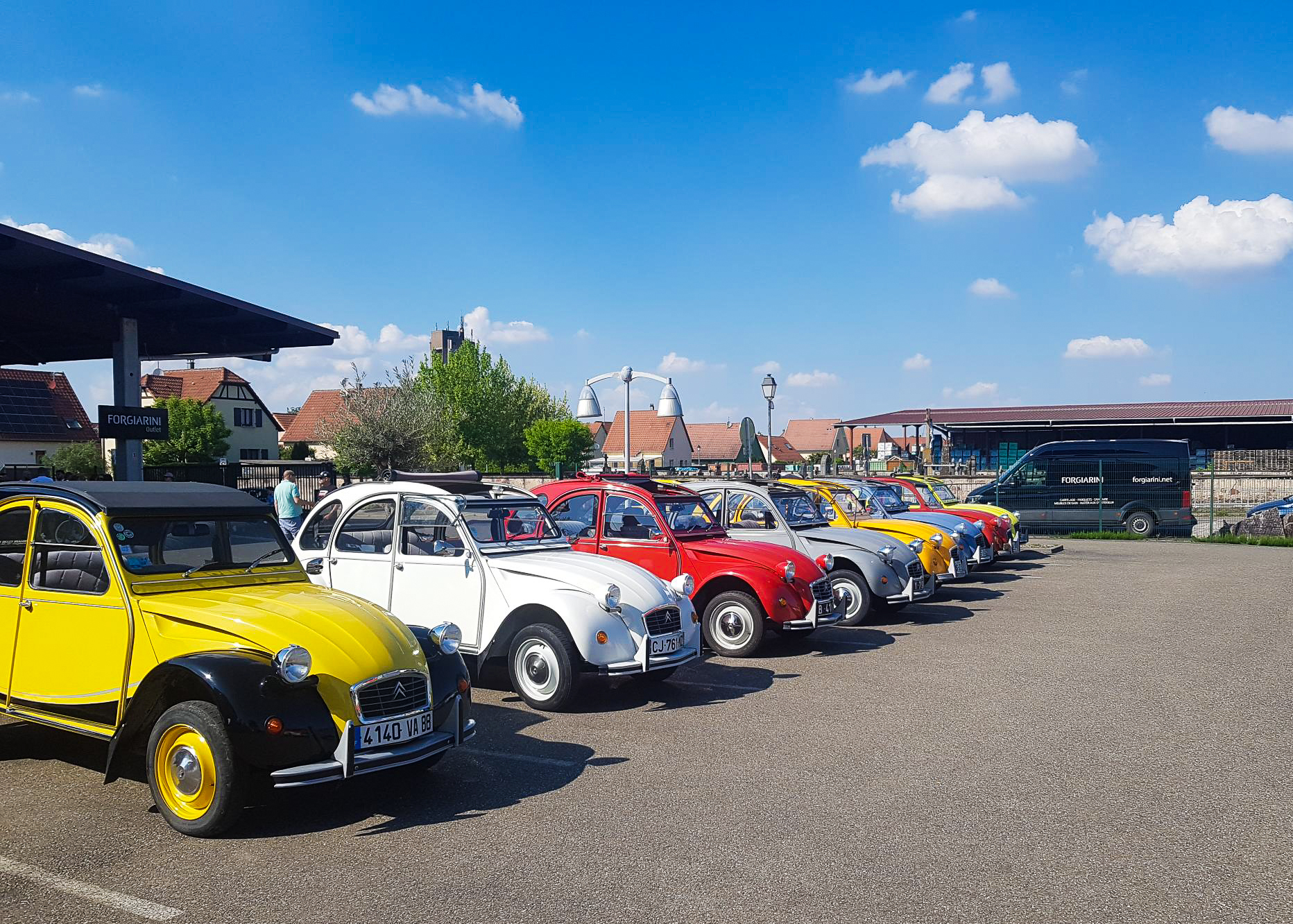
Access to a curated network of vintage vehicle partners enabling fleets from 8 to 40+ 2CVs depending on seasonality and lead time.
On-the-ground staffing ratio typically 1 coordinator per 40–50 guests plus route marshals and mechanical support depending on distance and traffic exposure.
Standard operational documentation: risk assessment, participant brief, route book, timing sheets, emergency contacts, and incident reporting.
Companies in Brussel that trust us year after year
We support organizations active in Brussel that need events to work under real corporate constraints: limited executive time, strict brand guidelines, and zero tolerance for safety or reputational issues. Several clients come back because the value is not the idea—it is the execution discipline and our ability to anticipate what can derail a day.
You mentioned providing company names as references; to keep this page accurate, we will integrate them exactly as approved (legal name + scope of collaboration) once you confirm the list and what can be publicly disclosed. In the meantime, what we can state transparently is the type of recurring programs we run in Brussels: annual leadership kick-offs, post-merger integration days, sales incentives with compliance constraints, and employer-branding moments for recruitment and onboarding.
 Besoin d’un devis rapide ?
Nous vous envoyons une première proposition sous 24h.
Why choose a 2CV rally for teams in Brussel?
A 2CV rally in Brussel is effective when you want a team-building format that is social without being superficial. The rally structure forces decisions: who navigates, who communicates with other teams, who stays calm when plans change. This makes it a practical tool for HR and leadership—provided the framework is professionally designed and de-risked.
Faster alignment across functions: mixed teams (HR–Ops–Sales–Finance) must coordinate under time constraints, which accelerates trust and creates shared language for collaboration back at work.
Visible leadership behaviors: executives and managers can observe decision-making, delegation and conflict resolution in a low-stakes environment—useful input for coaching or leadership programs.
Structured communication moments: the route can include checkpoints designed to trigger specific conversations (values, safety culture, client experience, ESG priorities) without forcing an “icebreaker” tone.
Employer brand with substance: for recruitment or onboarding, the rally demonstrates how the organization works—planning, responsibility, collaboration—rather than offering a generic activity.
Cross-cultural inclusivity: with bilingual facilitation and clear rules, teams with different languages and seniority levels can participate on equal footing.
Memorable without being risky: the vintage appeal is strong, but our approach keeps the focus on safety, pacing and brand protection—critical for communication teams.
Brussel has a pragmatic business culture: time is scarce, stakeholders are demanding, and the city’s mobility reality punishes improvisation. A rally works here when it is engineered like a project—clear objectives, robust routing, and disciplined event-day governance.
What Brussel companies expect from corporate entertainment
Decision-makers in Brussel rarely judge an event on creativity alone. They judge it on whether it protects the organization’s priorities: punctuality, safety, reputation, and internal coherence. A 2CV rally must therefore be designed with local constraints in mind.
Mobility and timing are the first reality check. The city’s traffic patterns, occasional restrictions, and the practicalities of coach drop-offs or parking mean that “simple routes” can become complicated quickly. We build routes with buffers, alternative segments, and realistic checkpoint dwell times, and we avoid creating guest frustration through constant stops or overly tight schedules.
Brand and stakeholder management come next. Many Brussels-based organizations host guests from EU institutions, international HQs, or partner ecosystems. That increases sensitivity around risk, language, inclusivity and overall tone. We plan facilitation so that the activity remains professional: short briefings, clear role allocation, and a pace that supports networking instead of exhausting participants.
Procurement and compliance also shape expectations. We are used to working with corporate purchasing teams who request insurance evidence, supplier vetting, and clear cancellation terms. We provide transparent scopes and line items (fleet, staffing, branding, catering, permits, contingency), because internal approvals in Brussels are often multi-layered.
Which rally challenges work best in Brussel settings?
Engagement comes from purposeful interaction, not from piling up mini-games. In a 2CV rally, we use challenges that reinforce collaboration and keep guests in a positive rhythm. Each checkpoint is designed to take 8–15 minutes so the day remains dynamic and punctual.
Animations Interactives à Brussel
Navigation & decision-making sprint: teams receive a short route puzzle and must agree on the next segment under time pressure. It is a clean way to observe delegation and communication styles.
Photo mission with brand guidelines: participants capture specific scenes while respecting pre-defined do’s/don’ts (no sensitive sites, no unsafe roadside stops). Communication teams appreciate the controlled content creation potential.
Checkpoint negotiation task: two teams must trade resources (clues, time tokens) to optimize total points. This mirrors real cross-department negotiation in companies.
Animations Artistiques à Brussel
Storyboard checkpoint: teams create a 60-second narrative around a company value using provided props and a simple framework. We keep it business-appropriate; the deliverable can feed internal comms if desired.
Soundtrack and memory cue: a short, guided prompt where teams select a theme and explain it in one minute—simple, low-pressure, effective for mixed seniority groups.
Animations Innovantes à Brussel
Brussels tasting checkpoint: a controlled tasting of local products with short, factual storytelling (origin, pairing, allergens). We plan portions and timing to avoid a “heavy lunch slump”.
Zero-waste refresh stop: water and soft drinks managed with reusable systems; practical in corporate contexts where ESG scrutiny is real.
Animations Gourmandes à Brussel
QR-based scoring and live leaderboard: lightweight tech to reduce disputes and keep the pace. Useful when executives want transparency and when groups are large.
Hybrid facilitation: when some stakeholders cannot attend every checkpoint, we can provide a controlled remote view (summary updates, results, selected photos) without turning it into a distracting “social media show”.
In Brussel, alignment with brand image is non-negotiable. We design challenges that fit your tone (institutional, tech, luxury, public-sector adjacent), your risk appetite, and your internal culture—so the activity supports your message rather than competing with it.
Where to start and finish a 2CV rally around Brussel?
The venue choice determines the perceived quality of the whole day: arrival comfort, briefing clarity, and how smoothly teams can depart and return. For a rally, we prioritize sites with safe vehicle staging, clear signage options, and predictable access for suppliers.
| Venue type | For which objective? | Main strengths | Possible constraints |
|---|---|---|---|
Corporate HQ or office site (with parking) | Internal alignment, cost control, minimal transfers | Fast start, easy branding, simple logistics for executives | Parking capacity, neighbor considerations, need for tight traffic management |
Hotel with meeting facilities in Brussel | Leadership offsite, international guests, multi-session day | Professional reception, AV-ready rooms, catering standards | Vehicle staging may be limited; requires precise load-in/load-out planning |
Partner event venue outside the inner city (green belt) | Drive time comfort, more scenic route, relaxed networking | More space for fleet, easier checkpoint departures, less traffic pressure | Transfers to manage; must keep timing realistic for Brussels agendas |
We insist on a site visit (or at minimum a technical recce) because small details decide event-day smoothness: turning radius for staging, signage visibility, restroom capacity at briefing time, and where guests naturally gather. That is how we avoid congestion and delays from the first minute.
What budget to plan for a 2CV rally in Brussel (1000)?
Pricing for a 2CV rally in Brussel depends on format, fleet size, route complexity and the level of service you expect. In corporate reality, the key is to budget for operational reliability: enough staff, proper contingency, and a route that does not break your agenda.
Number of vehicles and participants: typically 2 people per car for comfort; 3 is possible but changes the experience. Fleet availability impacts price, especially in peak months.
Duration and total distance: longer routes increase staffing hours, mechanical exposure, and checkpoint requirements. We generally keep the driving experience pleasant rather than exhausting.
Route design and permissions: depending on the locations and public-space use, additional coordination may be needed. We assess this early to avoid last-minute surprises.
Staffing level: event lead, route marshals, checkpoint hosts, bilingual facilitators, and mechanical support. Understaffing is the most common root cause of perceived “amateurism”.
Branding and content capture: decals, rally books, signage, photo/video with approvals and usage rights. Communication teams often need clear governance here.
Catering and hospitality: coffee reception, water strategy, lunch type (sit-down vs. walking). Food impacts timing and energy level.
Insurance and risk management: clear coverage, incident process, and participant briefing materials.
From an ROI perspective, the budget is justified when the rally supports a business outcome: faster integration after change, improved cross-team coordination, or leadership alignment. We help you define simple success criteria (e.g., post-event pulse survey, cross-team introductions completed, leadership messages delivered) so the spend is defensible internally.
Why work with a Brussel-based agency for your 2CV rally?
A 2CV rally looks simple on paper, but it is a moving operation with real-world variables: traffic, timing, vehicle behavior, guest safety, and stakeholder expectations. Using a local partner in Brussel reduces risk because decisions can be made with local knowledge and executed fast.
As an event agency in Brussel, we can do in-person recces, coordinate with venues and suppliers efficiently, and deploy staff quickly if the plan needs adaptation. That local responsiveness is what protects your schedule and your brand on the day.
- Faster problem resolution: replacement vehicles, staff reinforcement, and last-minute site adjustments are realistic when the production team is nearby.
- Local routing realism: we design with Brussels mobility patterns in mind, not with idealized map assumptions.
- Supplier accountability: when partners know they will see us again in the local market, service quality and reliability improve.
- Stakeholder comfort: executives appreciate concise, locally grounded recommendations rather than long concept decks.
From an ROI perspective, the budget is justified when the rally supports a business outcome: faster integration after change, improved cross-team coordination, or leadership alignment. We help you define simple success criteria (e.g., post-event pulse survey, cross-team introductions completed, leadership messages delivered) so the spend is defensible internally.






Examples of corporate rally formats delivered from Brussel
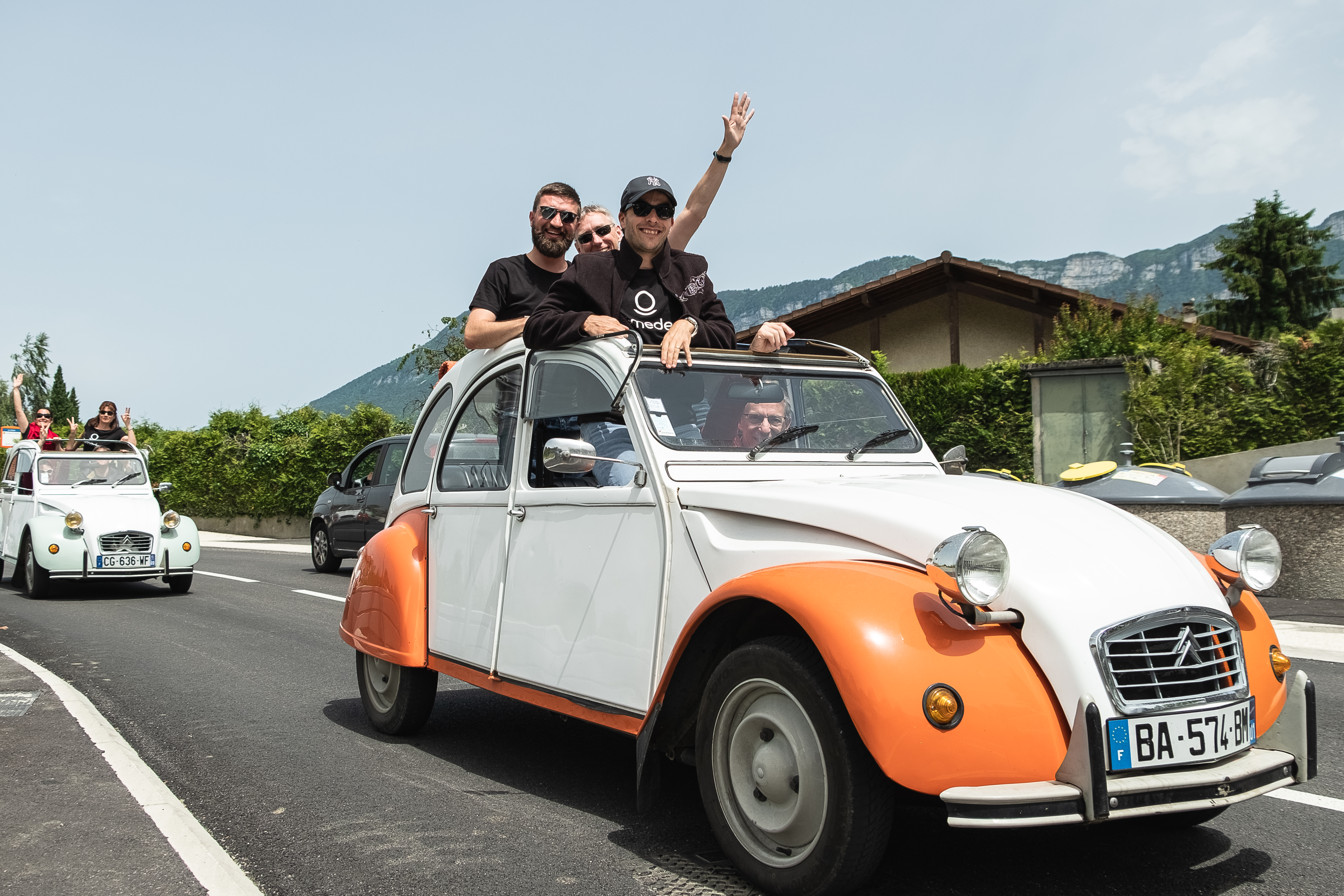
Our projects vary because corporate needs vary. For some clients, the 2CV rally in Brussel is a leadership sequence: a short briefing, a rally with decision-making checkpoints, then a debrief in a meeting room where the facilitator links observed behaviors to leadership principles. For others, it is a communication moment: teams collect controlled photo assets along the route, and the day closes with a curated internal recap aligned with brand guidelines.
We also manage practical realities that matter to directors: mixed seniority groups (avoid making anyone feel exposed), international attendees (clear instructions, bilingual facilitation), strict timing (executives leaving early), and weather uncertainty (indoor alternatives for some checkpoints). The “proof” is not in telling stories—it is in showing you the production plan, staffing map, and contingency logic before you sign off.
Which risks do directors in Brussel want to avoid?
Over-optimistic timing: a route that looks fine on Google Maps but collapses under real traffic, causing stress and reputational damage.
Insufficient vehicle contingency: one breakdown without a replacement plan can derail the schedule and frustrate participants.
Unsafe stopping points: improvised roadside stops create safety exposure and make corporate stakeholders uncomfortable.
Vague responsibilities: when nobody owns check-in, briefings, scoring and incident management, small issues escalate.
Brand-inconsistent moments: challenges that push guests into awkward behaviors or uncontrolled photo contexts; communication teams pay the price afterwards.
Underestimating multilingual needs: unclear instructions multiply mistakes and slow the group, especially in mixed-language teams.
Our role is to remove these risks through engineering (route, staffing, contingency) and governance (clear rules, escalation, and an operational lead who makes decisions in real time).
Why Brussel clients renew their rally program
Renewal is rarely about novelty. It is about confidence: knowing that the agency will deliver on time, keep the experience professional, and protect internal stakeholders from last-minute chaos. That is what makes HR and communication teams comfortable putting their name behind the project again.
Typical planning lead time in Brussels: 6–10 weeks for comfortable fleet availability; 3–5 weeks is possible with reduced options.
Common satisfaction driver reported in debriefs: clarity of instructions and punctual pacing, more than “the concept itself”.
Most requested add-on year two: a structured debrief (30–45 minutes) linking rally behaviors to workplace collaboration.

Loyalty is proof of quality because it means the internal sponsor is willing to take responsibility again. In corporate environments, that only happens when execution has been consistently reliable.
Our delivery process for a 2CV rally in Brussel
👉 Briefing call and stakeholder mapping in Brussel
We clarify your objective, constraints and stakeholders: executive agenda, HR goals, comms guidelines, procurement requirements, and any sensitivities (public visibility, VIPs, alcohol policy, ESG constraints). We confirm participant profile, languages, and the expected tone.
👉 Route concept and feasibility recce around Brussel
We propose 1–2 route options with start/finish logic, checkpoint rhythm and a realistic timing model. We validate practicalities: vehicle staging, safe stopping, restroom access, and a contingency segment. If needed, we schedule a joint site visit with your team.
👉 Fleet booking, staffing plan and risk file (1000)
We secure vehicles, confirm mechanical support, and build the staffing grid (event lead, marshals, checkpoint hosts). We produce operational documents: participant brief, route book, safety rules, emergency contacts, and incident process. This is also where we finalize insurance and any supplier vetting paperwork.
👉 Participant communication and brand integration
We prepare the guest journey: invitations or info email, dress code guidance, arrival instructions, and clear expectations. We integrate your brand where it makes sense (rally book, signage, controlled photo mission) without turning the experience into advertising.
👉 Event-day production and executive protection
We run check-in, briefing, departures, checkpoints, scoring, and closing. The operational lead remains your single point of contact, with escalation rules agreed in advance. If an issue happens (delay, vehicle swap), it is handled discreetly so your leadership team stays focused on hosting and messaging.
👉 Debrief, reporting and next-step recommendations
Within a few days, we provide a clear debrief: what worked, what to adjust, and practical recommendations for the next edition. If you want measurable outputs, we can add a short pulse survey and a structured insight summary for HR.
FAQ sur l'organisation 2CV rally à Brussel
How long does a 2CV rally in Brussel take?
Most corporate formats run 2.5–3.5 hours (half-day) or 4.5–6 hours (full-day including stops). We build the schedule with buffers so executive timing remains protected.
How many people can join a Brussel 2CV rally?
Common sizes are 20–300 participants. Comfort is usually 2 people per car; 3 per car is possible but changes interaction and luggage comfort. Fleet availability is the main limiter.
Do you manage permits for a 2CV rally in Brussel?
Yes—when the route or checkpoints require formal coordination, we handle the preparation and partner follow-up. In practice, many corporate routes can be designed to minimize administrative complexity while keeping a high-quality experience.
What happens if a 2CV breaks down near Brussel?
We plan mechanical support and a replacement strategy. Depending on route design and fleet size, we typically include 1 standby vehicle or rapid swap capability. The goal is to keep the rally timing intact for the rest of the group.
Is a 2CV rally suitable for VIP guests in Brussel?
Yes, if comfort and pacing are designed accordingly: shorter driving segments, premium start/finish venue, clear hosting, and discreet logistics. For VIP-heavy groups, we often recommend 2 per car, a higher staff ratio, and a more hospitality-led checkpoint design.
Get a quote for your 2CV rally in Brussel
If you are comparing agencies, we recommend starting with a concrete working session: your objectives, your attendee profile, and the non-negotiables (timing, brand rules, languages, risk appetite). We will respond with a route logic, a staffing approach and a transparent budget structure—so you can validate feasibility internally.
Contact INNOV'events early if you want the best fleet options in Brussel, especially for spring and early autumn dates. With a clear brief, we can confirm availability and a reliable production plan quickly.
Agence INNOV'events Brussel
Justin JACOB est le responsable de l'agence événementielle Brussel. Contactez-le directement par mail via l'adresse belgique@innov-events.be ou par formulaire.
Contacter l'agence BrusselToutes nos prestations & animations Brussel, Belgique
Découvrez nos prestations événementielles
Découvrez nos animations événementielles disponibles au Belgique
- Hôtesse événementielle à Brussel
- Escape Game à Brussel
- Cours de cuisine type MasterChef à Brussel
- Magicien à Brussel
- Location de chapiteau à Brussel
- Atelier colorimétrie à Brussel
- Jeux gonflables à Brussel
- Service de voiturier à Brussel
- Simulateur de football à Brussel
- Location de mobilier lumineux à Brussel
- Flocage lumineux à Brussel
- Repas insolite à Brussel
- Light Painting à Brussel
- Murder Party à Brussel
- Jeu concours à Brussel
- PLV événementielle à Brussel
- Réalité virtuelle à Brussel
- Cuisine moléculaire à Brussel
- Animation Halloween à Brussel
- Feu d’artifice à Brussel
- Jeux géants à Brussel
- Animateur événementiel à Brussel
- Animation photo à Brussel
- Père Noël à Brussel
- Animation enfants à Brussel
- Visite guidée à Brussel
- Rallye urbain à Brussel
- Piscine à balles à Brussel
- Simulateur de vol à Brussel
- Location de food truck à Brussel
- Record du monde à Brussel
- Simulateur de surf à Brussel
- Casino du vin à Brussel
- Atelier relooking à Brussel
- Atelier création de parfum à Brussel
- Atelier acting à Brussel
- Animations RSE à Brussel
- Tir à l’arc à Brussel
- Agent de sécurité à Brussel
- Œnologie à Brussel
- Mime à Brussel
- Jeu télévisé à Brussel
- Fête foraine à Brussel
- Atelier gestion de crise à Brussel
- Atelier négociation de crise à Brussel
- Jeux d’arcade à Brussel
- Simulateur de chute libre à Brussel
- Simulateur de ski à Brussel
- Simulation circuit automobile à Brussel
- Baptême de l’air à Brussel
- Dégustation à Brussel
- Création de baby-foot à Brussel
- Rallye 2CV à Brussel
- Challenge LEGO à Brussel
- Animation casino à Brussel
- Interprète / traducteur à Brussel
- Goodies à Brussel
- Bus / transfert à Brussel