
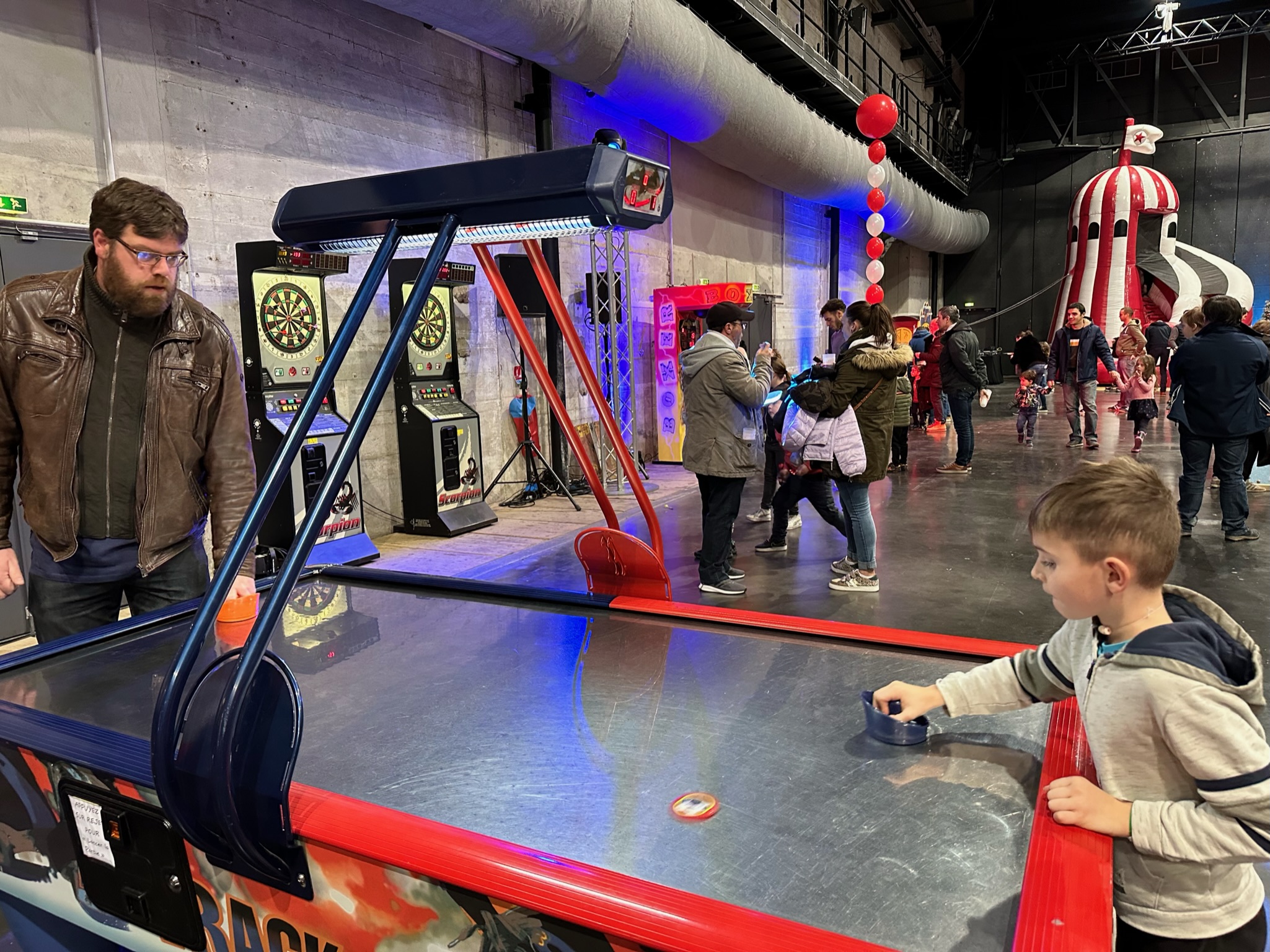
Arcade games in Luik for corporate events that actually deliver engagement
INNOV'events is a Brussels-based event agency delivering Arcade games experiences on-site in Luik, typically for 30 to 800 attendees. We handle curation of machines, transport, set-up, technical supervision, tournament mechanics, and on-brand signage so your teams can focus on hosting—not troubleshooting.
Whether it’s a staff party, client evening, employer-brand activation or a milestone celebration, we build a format that fits your venue constraints, timing, and internal communication objectives.
Sommaire
In a corporate agenda, entertainment is never “just fun”: it’s a tool to increase participation, create cross-team conversations, and keep people on-site longer—especially during moments where leaders need real interaction (mergers, growth phases, reorganisations, or recruitment pressure).
Organisations in Luik typically expect operations that are clean and punctual: strict loading windows, shared venues, multilingual audiences, and a strong safety mindset. Arcade setups must therefore be reliable, supervised, and compatible with corporate image constraints.
We deliver Arcade games in Luik with the discipline of production: a clear floorplan, power and access planning, tested machines, and a staffed animation team. You get one accountable partner from brief to teardown.
INNOV'events numbers that reduce your event risk in Luik
10+ years of corporate event production across Belgium, with recurring clients in HR, internal comms and executive offices.
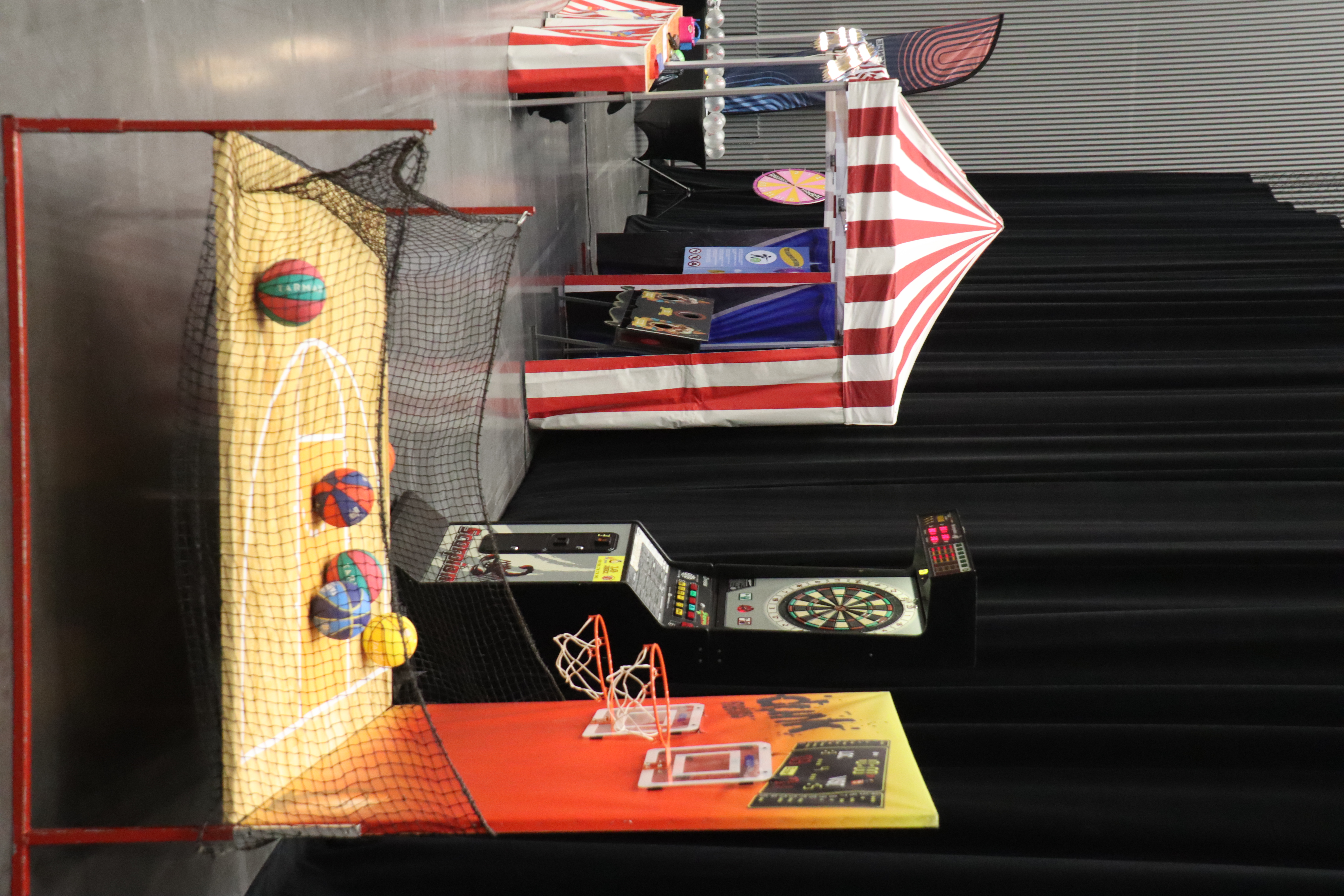
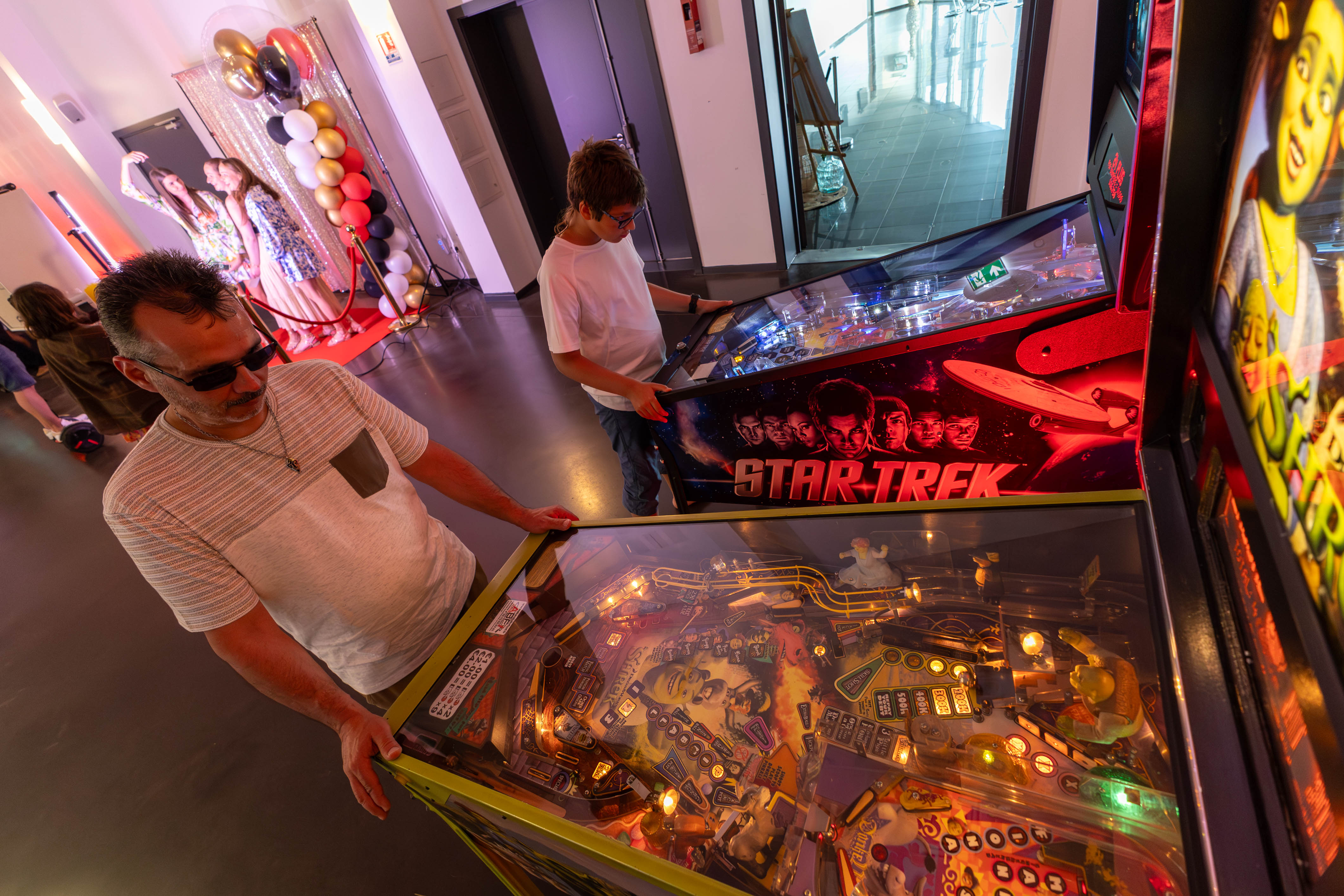
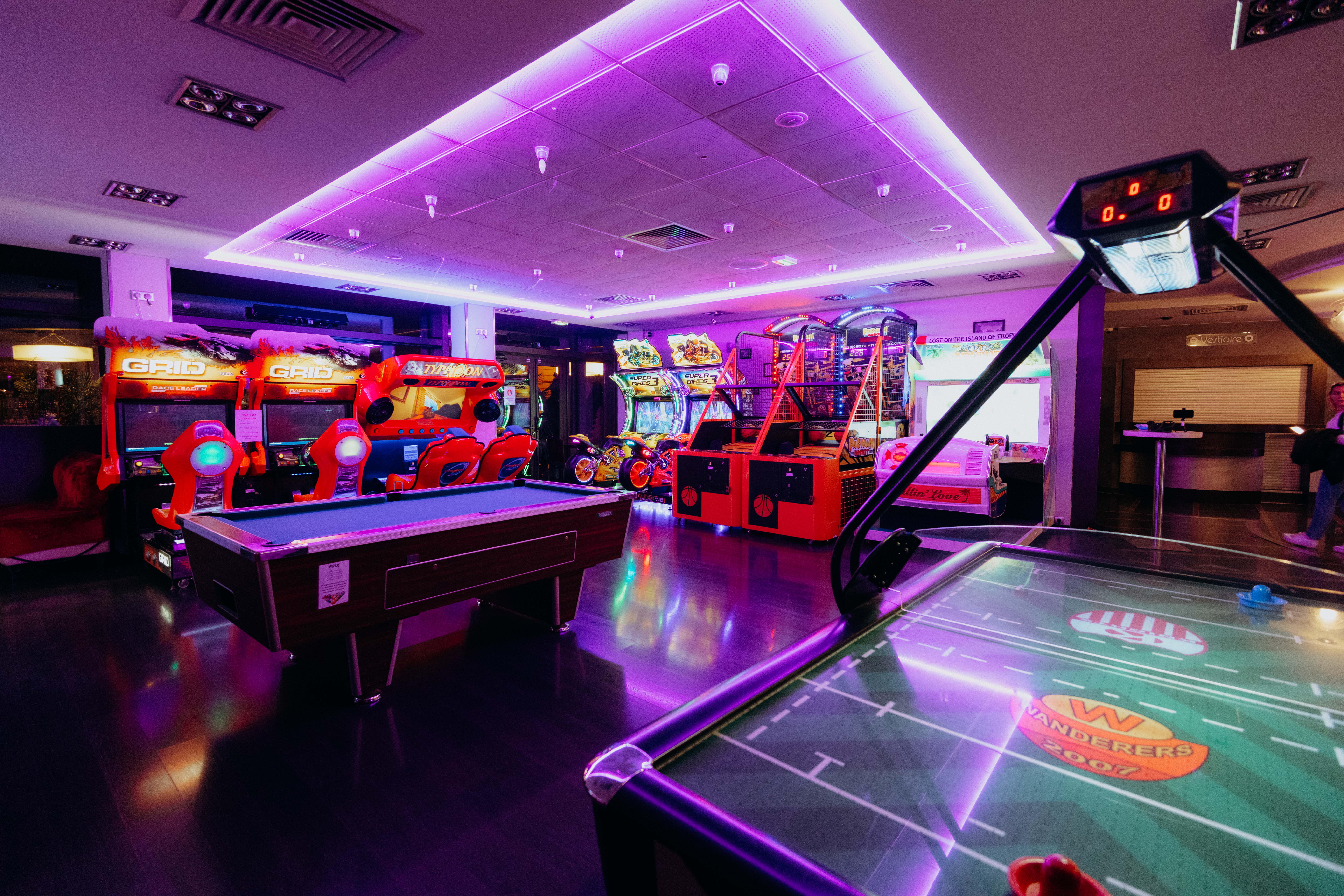
A catalogue of 80+ arcade and interactive units (classic cabinets, pinball, racing, air hockey, retro consoles, digital scoring modules), allowing real capacity planning instead of “one-size-fits-all”.
Production model designed for reliability: 24–72h pre-check on machines (controls, screens, power supplies) and a staffed on-site technician for medium and large formats.
Formats built for scale: from a 3–5 machine corner to a 20+ unit arcade zone with tournament brackets, leaderboards and brand integration.
What we deliver for companies working in Luik year after year
In Luik, we regularly support organisations that run recurring internal events (end-of-year gatherings, safety days, family days, onboarding waves) and need a partner who can replicate quality while adjusting to each edition’s constraints. In practice, what creates loyalty is not the idea—it’s the execution: punctual delivery, a clean set-up, the ability to adapt when a venue changes the loading door at the last minute, and staff who can host with the right tone for a corporate audience.
Our Arcade games projects in the Liège area are often chosen by HR and communication teams because they solve a concrete problem: how to create spontaneous interaction between departments without forcing people into “team building exercises”. Arcade formats do that naturally—provided the flow, queue management and timing are designed professionally.
If you have internal references or preferred suppliers in Luik (caterer, AV, venue contact), we integrate with them rather than competing for control. We work with a clear run-of-show, a single point of contact, and production documentation that procurement and facility teams can validate.
 Besoin d’un devis rapide ?
Nous vous envoyons une première proposition sous 24h.
Why choose arcade games for a corporate event in Luik
Arcade games are one of the few entertainment formats that work across generations, roles, and language profiles—while staying simple to understand in under 10 seconds. For leadership teams, that translates into measurable event outcomes: higher participation, longer dwell time, and more cross-team interactions without heavy facilitation.
In Luik, where many organisations combine operational teams, engineers, back-office functions and field staff, you want an activity that respects different comfort levels: people can play, watch, cheer, or join later without “being put on the spot”.
Higher participation with lower friction: most people can engage immediately (one credit, one game), which is ideal for events with staggered arrivals or shift-based teams.
Natural networking: queues, doubles modes, and spectator moments create conversation starters between departments that usually don’t mix (production vs. sales, HQ vs. site teams).
Timeboxing is easy: you can run 60–120 minute arcade windows, rotate themes, or embed mini-challenges between speeches—useful for award nights, town halls, or client evenings.
Employer brand without forcing a message: leaderboards, branded tokens, and a “challenge wall” can carry your values (safety, innovation, collaboration) without corporate clichés.
Operational predictability: compared to complex performances, arcade zones have clear risk controls (power, access, supervision) and don’t depend on audience mood to “work”.
Done properly, an arcade zone fits the pragmatic economic culture of Luik: it’s concrete, accessible, and performance-oriented—while still giving your teams a real moment of release.
What event stakeholders in Luik typically demand from an agency
When we brief with HR Directors, plant managers, and communication leads in Luik, the expectations are usually specific and non-negotiable. First: operational reliability. Many venues in Liège have strict loading windows, shared corridors, and limited freight elevators. Arcade setups must be planned with exact dimensions, dolly routes, and protection for floors and walls.
Second: audience heterogeneity. Corporate events here often mix French-speaking staff with Dutch-speaking colleagues from other Belgian sites, plus international teams. That means signage must be intuitive, rules must be visual, and staff must be able to host without long explanations.
Third: risk and compliance. Facility and prevention advisors will ask about power distribution, cable management, and crowd flow. We design layouts that keep emergency exits clear, isolate power lines, and reduce queue spillover into catering or registration areas.
Finally: image control. Executives want something lively but still “corporate-appropriate”. That’s why we pay attention to the soundscape (no noisy machines next to speeches), aesthetics (clean cabinets, consistent signage), and the way our hosts interact (supportive, not over-the-top).
Which arcade games formats work best for companies in Luik
Entertainment creates engagement when it is designed around behaviour: how people arrive, how long they stay, and what makes them talk to colleagues they don’t usually meet. With Arcade games, we can create either a relaxed “free-play lounge” or a structured competitive format—with clear rules, short rounds, and visible results.
Animations Interactives à Luik
Retro arcade corner (Pac-Man style, fighting games, platformers): best for fast participation and nostalgia. We recommend adding a simple “3 attempts per person” rule during peak times to keep rotation fair.
Racing simulator pods: strong spectator effect, ideal near a bar area. We plan queue lanes and screen visibility to prevent crowding. Works well for client evenings where you want an easy icebreaker.
Pinball line-up: premium feel, slower rotation. We use pinball as a “quality signal” for leadership events, but we avoid relying on it as the main capacity driver.
Air hockey / table games: high energy, quick rounds, perfect for mixed groups. We position these away from glassware and catering to prevent accidents.
Team leaderboard challenge: QR-based or staffed score capture, with department names and time slots. This is the format we use when HR wants measurable participation and a narrative for internal communications.
Animations Artistiques à Luik
Arcade-style host team (discreet, corporate tone): hosts explain rules in under 20 seconds, manage fair play, and keep the area tidy. In Luik, this matters: many audiences don’t want “hype”; they want smooth facilitation.
Live pixel/retro visual loop on screens: we coordinate with your AV supplier to display leaderboards, tournament brackets, or branded retro graphics. It reinforces the theme without adding noise.
Animations Innovantes à Luik
“Token bar” welcome moment: guests receive branded tokens or a play card at check-in. It’s operationally efficient (one gesture, immediate engagement) and reduces congestion at the arcade zone.
Snack pairing near the arcade area (soft drinks, coffee, finger food): we coordinate placement to avoid sticky fingers on controls—practical details that protect equipment and keep the space presentable.
Animations Gourmandes à Luik
Hybrid arcade + CSR: donate a fixed amount per top score or per tournament round completed to a local initiative in Luik. It turns competition into a positive story without slowing down play.
Brand-safe customisation: cabinet side panels, floor decals, and scoreboard screens aligned with brand guidelines. We often work with communication teams who need strict logo usage and colour compliance.
Micro-tournament programming: instead of a single long tournament, we run 3–6 short heats across the evening. This avoids the “only early arrivals can win” frustration and increases participation.
Whatever the format, we align the arcade zone with your brand image: not by adding slogans, but by controlling hosting style, signage quality, sound levels, and the overall cleanliness of the installation—details that executives and clients notice immediately.
How to choose a venue in Luik for arcade games
The venue influences the perceived professionalism of your entertainment. With Arcade games, the key is not only surface area: it’s access routes, power availability, ceiling height, acoustic behaviour, and whether the venue can support a clean separation between play zones, catering, and speeches.
| Venue type | For which objective? | Main strengths | Possible constraints |
|---|---|---|---|
| Hotel conference space in Luik | Client evening, executive offsite with controlled agenda | Professional reception, built-in AV, easy catering coordination, strong brand perception | Loading restrictions, carpet/floor protection needed, power distribution must be checked early |
| Industrial or heritage venue (renovated halls) | Company anniversary, large staff gathering, “wow” scale with arcade zone | Large volumes, flexible zoning, strong atmosphere for retro visuals and racing rigs | Acoustics can be echo-heavy, heating/comfort, stricter safety rules and longer set-up windows |
| Company site (HQ, cafeteria, warehouse cleared zone) | Engage operational teams, reduce transport time for staff, internal culture moments | High attendance potential, easier access for shift workers, strong authenticity | Need clear HSE validation, must manage flows around work areas, power and floor plans often require deeper prep |
We strongly recommend a site visit (or at least a technical call with photos and measurements) in Luik before confirming the machine list. It is the simplest way to prevent day-of surprises: tight corridors, one small lift, or a power source that is further than expected.
What budget to plan in Luik for arcade games
Pricing for Arcade games in Luik depends on operational parameters more than on the “idea”. A transparent budget comes from clarifying attendance, venue constraints, the duration of play, and the level of supervision required. We quote in a structured way so procurement can understand what drives cost and what can be adjusted.
Number and type of units: classic cabinets and retro consoles differ from racing simulators and pinball in transport weight, set-up time, and rotation speed.
Event duration: a 2–3 hour cocktail activation is not the same as a full-day family day. Longer durations typically require additional staffing and contingency planning.
Staffing level: for small corners, one host may be enough; for larger zones, you need 1 host per 6–10 units plus a technician depending on complexity and crowd intensity.
Logistics in Luik: access floors, distance from truck to room, loading schedules, and whether the venue has a dock can materially change labour time.
Branding and scoring: leaderboards, printed signage, floor decals, or custom panels add production costs but can also increase internal communication value.
Insurance, safety and compliance: cable ramps, barriers, and additional protection for floors/walls are small lines that prevent big issues.
From an ROI perspective, the key metric is not “cost per machine” but cost per engaged guest. A well-designed arcade zone increases participation rates and keeps people in the event space longer—two levers that protect the value of your venue, catering, and leadership time.
When does it make sense to pick an event agency in Luik
For corporate entertainment, proximity is not about convenience; it’s about response time and local operational knowledge. A partner used to Luik understands typical constraints: older buildings with limited access, strict city-centre loading rules, and the practical rhythm of local venues.
Even when you work with a national agency, having a strong local operational layer reduces risk: faster site visits, better relationships with venue teams, and realistic time estimates for set-up and teardown.
When clients ask us to coordinate broader production elements around the arcade zone (timing, supplier alignment, onsite staffing), we can integrate that within a dedicated local approach through our network, including via our page for event agency in Luik services.
- More accurate technical planning: local venue knowledge helps avoid underestimating access and power constraints.
- Faster problem-solving: if a constraint changes (room switch, delayed access), local teams adapt without improvisation.
- Better supplier coordination: smoother collaboration with caterers, AV teams, and facility contacts who already work in Luik.
- Reduced reputational risk: fewer visible mistakes on the day—exactly what executive sponsors care about.
From an ROI perspective, the key metric is not “cost per machine” but cost per engaged guest. A well-designed arcade zone increases participation rates and keeps people in the event space longer—two levers that protect the value of your venue, catering, and leadership time.





What we have delivered around Luik for different corporate contexts
Our projects around Luik range from compact arcade corners during afterwork cocktails to full “arcade zones” integrated into larger productions (stage moments, catering, branded photo areas). The common point is operational discipline: a validated floor plan, realistic timing, and staff who can host while keeping the space clean and safe.
Typical real-life situations we handle:
- Late venue access: when the room becomes available later than planned, we switch to a pre-assembled approach (modules prepared off-site, rapid positioning, parallel cabling) to protect the start time.
- Mixed audience energy: some teams want to compete, others prefer to observe. We structure the zone so spectators can watch without blocking players, and we use short “call-to-play” moments instead of constant announcements.
- Brand and protocol constraints: for client-facing evenings, we select machines with a premium look, control the soundscape, and ensure hosts match the tone expected by leadership and key accounts.
This diversity is exactly why we don’t sell a fixed package. We design a format that fits your event purpose and the realities of your venue in Luik.
Common mistakes with arcade games in Luik and how we prevent them
Under-sizing the arcade area: too few units leads to queues and disengagement. We size based on attendance profiles and game rotation speeds.
Poor power planning: daisy-chained extensions and unknown circuits create trip risks. We plan distribution, protect cables, and test under load.
Placing noisy games near speeches: racing rigs and air hockey can drown out a mic. We zone by acoustic impact and align with your run-of-show.
No supervision: without hosts, machines get misused, queues become tense, and participation drops. We staff according to the real crowd intensity.
Ignoring access routes: a cabinet that fits the room may not fit the corridor or lift. We confirm measurements and loading paths before lock-in.
Over-branding: aggressive signage can feel cheap in corporate contexts. We apply brand guidelines with restraint and focus on clean, consistent visuals.
Our role is to remove these risks early—during scoping and technical preparation—so the event day in Luik is execution, not improvisation.
Why Luik clients keep INNOV'events as their arcade partner
Repeat business is rarely about creativity; it’s about trust under pressure. Clients come back when they know the agency will protect timing, manage stakeholders calmly, and deliver an experience that looks professional in front of leadership.
Single point of accountability: one producer responsible for scope, logistics, staffing and onsite decisions.
Documented preparation: floor plan, power plan, loading schedule, and a run-of-show shared with stakeholders.
Operational feedback loop: after the event, we debrief what worked (queue management, most-played units, peak times) to improve the next edition in Luik.

Loyalty is the most practical proof of quality: it means the format delivered engagement without creating extra work for HR, communication, facility, or the executive sponsor.
Our production process for arcade games in Luik
👉 Scoping call with HR/Comms in Luik
We clarify the objective (staff engagement, client hosting, employer branding), the audience mix, and the non-negotiables (timing, speeches, brand rules, safety). We also identify how success will be evaluated: participation rate, photo content, cross-team mixing, or simply a smooth evening with no incidents.
👉 Technical check and floor plan for Luik venues
We collect venue constraints (access, lifts, doors, parking, loading times, power points, noise restrictions) and produce a practical layout: zoning by sound and rotation speed, safe cable routing, and queue space that doesn’t block catering or emergency exits.
👉 Machine curation and capacity sizing for arcade games
We select units that match your audience and objectives: fast-rotation classics for high throughput, premium units for executive tone, and spectator-friendly machines to create atmosphere. We size the number of units to avoid bottlenecks at peak arrival.
👉 Branding, scoring and facilitation design
If you want more than free-play, we design tournament mechanics: heats, time slots, scoreboard capture, and prize logic that stays corporate-appropriate. Communication teams receive clean assets (signage texts, scoreboard naming) aligned with brand guidelines.
👉 On-site delivery, set-up, supervision and teardown in Luik
We deliver within the agreed loading window, set up according to plan, test each unit, and run the zone with trained staff. On the day, our focus is operational calm: quick troubleshooting, fair queue management, and maintaining a tidy, premium-looking area until teardown.
FAQ sur l'organisation Arcade games à Luik
How many arcade machines do we need in Luik?
For a typical corporate open-play format in Luik, plan 1 unit per 12–18 active players at peak time. Example: for 180 guests with ~60% playing, you usually need 6–10 units, depending on game duration (pinball and racing need more capacity than short retro games).
Can arcade games work for a formal client event in Luik?
Yes, if you control three elements: visual quality (clean premium units), sound zoning (keep noisy games away from networking and speeches), and hosting tone (discreet, service-oriented staff). For client evenings in Luik, we often combine pinball + racing + a small retro selection and a simple leaderboard to spark conversation without making it childish.
What set-up time should we plan in Luik venues?
Rule of thumb: 30–45 minutes for a small 3–5 unit corner in an easy-access venue, and 2–4 hours for a 12–20 unit zone with branding, barriers and scoring. In Luik, access constraints (lifts, corridors, loading windows) can be the main variable, so we validate routes early.
Do you provide staff to supervise arcade games in Luik?
Yes. For corporate events in Luik, we generally recommend 1 host per 6–10 units, plus a technician for larger or simulator-heavy setups. Supervision protects flow (queues, fair play) and reduces visible technical issues, which is critical for executive-sponsored events.
What is the typical budget range for arcade games in Luik?
As a broad working range in Luik, small setups often start around €1,500–€3,000 (few units, short duration), while larger branded zones with staffing and scoring commonly sit between €4,000–€12,000+. The biggest drivers are number/type of units, duration, staffing, and venue logistics.
Get a clear quote for arcade games in Luik
If you’re comparing agencies, we can make the decision easier with a concrete proposal: recommended number of units, layout logic, staffing plan, and a transparent budget tied to your constraints in Luik. Share your date, venue (or shortlist), estimated attendance, and whether you want free-play or a structured tournament.
Contact INNOV'events early—ideally 4–8 weeks before the event—to secure the right machines and plan logistics properly. When the arcade zone is prepared like production (not like a last-minute add-on), it becomes one of the safest ways to generate real participation.
Agence INNOV'events Luik
Justin JACOB est le responsable de l'agence événementielle Luik. Contactez-le directement par mail via l'adresse belgique@innov-events.be ou par formulaire.
Contacter l'agence LuikToutes nos prestations & animations Luik, Belgique
Découvrez nos prestations événementielles
Découvrez nos animations événementielles disponibles au Belgique
- Hôtesse événementielle à Luik
- Escape Game à Luik
- Cours de cuisine type MasterChef à Luik
- Magicien à Luik
- Location de chapiteau à Luik
- Atelier colorimétrie à Luik
- Jeux gonflables à Luik
- Service de voiturier à Luik
- Simulateur de football à Luik
- Location de mobilier lumineux à Luik
- Flocage lumineux à Luik
- Repas insolite à Luik
- Light Painting à Luik
- Murder Party à Luik
- Jeu concours à Luik
- PLV événementielle à Luik
- Réalité virtuelle à Luik
- Cuisine moléculaire à Luik
- Animation Halloween à Luik
- Feu d’artifice à Luik
- Jeux géants à Luik
- Animateur événementiel à Luik
- Animation photo à Luik
- Père Noël à Luik
- Animation enfants à Luik
- Visite guidée à Luik
- Rallye urbain à Luik
- Piscine à balles à Luik
- Simulateur de vol à Luik
- Location de food truck à Luik
- Record du monde à Luik
- Simulateur de surf à Luik
- Casino du vin à Luik
- Atelier relooking à Luik
- Atelier création de parfum à Luik
- Atelier acting à Luik
- Animations RSE à Luik
- Tir à l’arc à Luik
- Agent de sécurité à Luik
- Œnologie à Luik
- Mime à Luik
- Jeu télévisé à Luik
- Fête foraine à Luik
- Atelier gestion de crise à Luik
- Atelier négociation de crise à Luik
- Jeux d’arcade à Luik
- Simulateur de chute libre à Luik
- Simulateur de ski à Luik
- Simulation circuit automobile à Luik
- Baptême de l’air à Luik
- Dégustation à Luik
- Création de baby-foot à Luik
- Rallye 2CV à Luik
- Challenge LEGO à Luik
- Animation casino à Luik
- Interprète / traducteur à Luik
- Goodies à Luik
- Bus / transfert à Luik