
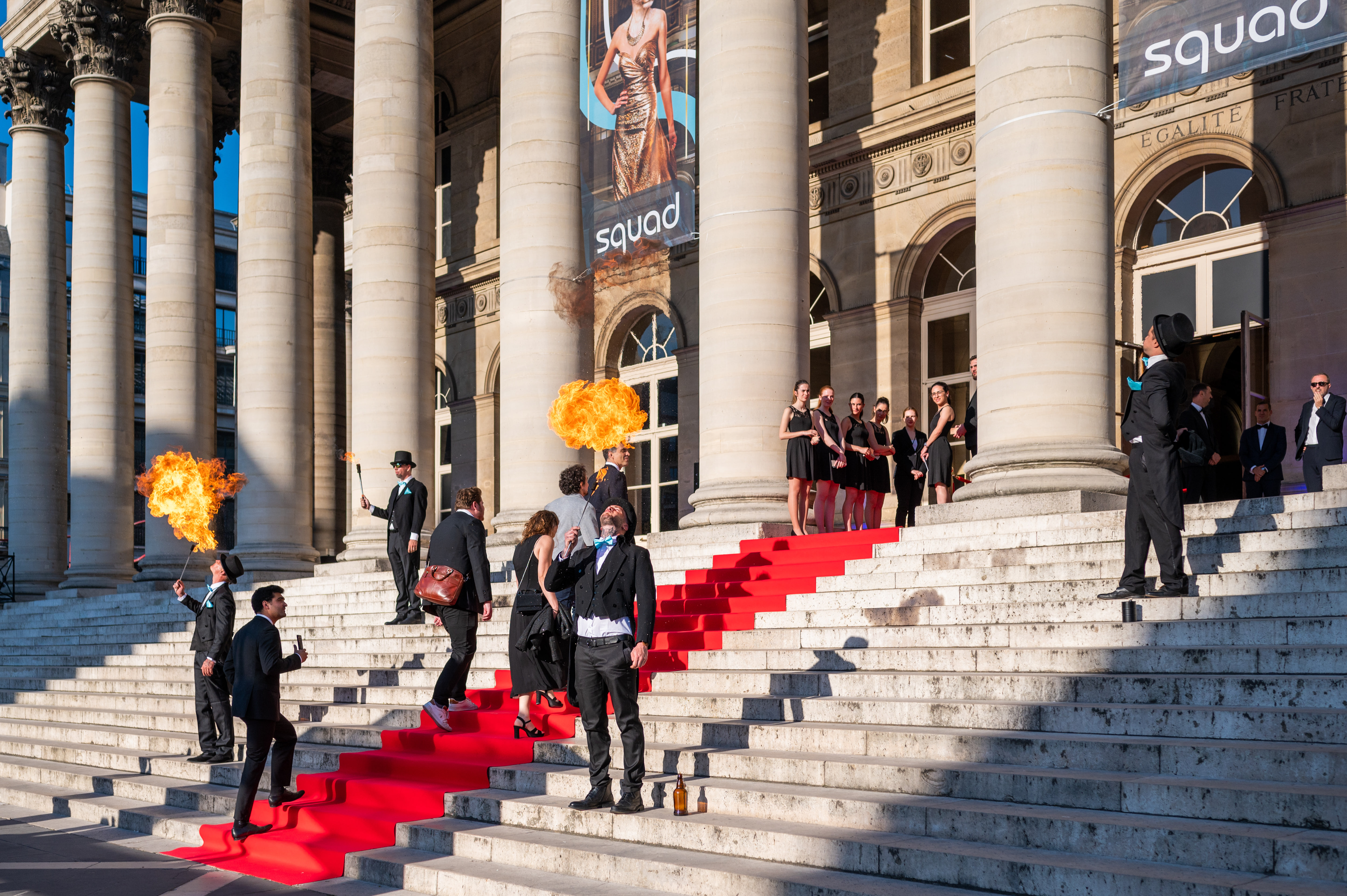
Beveiligingsagent in Luik for corporate events: calm, controlled, compliant
INNOV'events supports executives, HR and communication teams with Beveiligingsagent staffing in Luik for corporate events from 30 to 3,000+ attendees. We cover the full chain: risk assessment, staffing plan, venue coordination, access control, and incident management. You get a documented security setup that protects people, brand image and operations on event day.
Sommaire
Security is not a “nice-to-have” line item: it determines whether your corporate event runs on schedule, whether VIPs and speakers stay protected, and whether your teams can focus on content instead of improvised crowd control. A solid Beveiligingsagent plan reduces operational noise and protects reputational risk in front of partners, press and employees.
Organizations in Luik typically expect clear entry rules, professional presence (no intimidation), and zero surprises: staffing that matches real peak flows, not an optimistic estimate. They also expect coordination with venue staff, caterers and technical crews, because most incidents happen during build-up, changeovers and departures.
Based in Brussels and active weekly in Luik, INNOV'events works with local venues, suppliers and public-space constraints. We deploy trained agents with a clear post order, a chain of command, and escalation procedures aligned with your internal stakeholders.
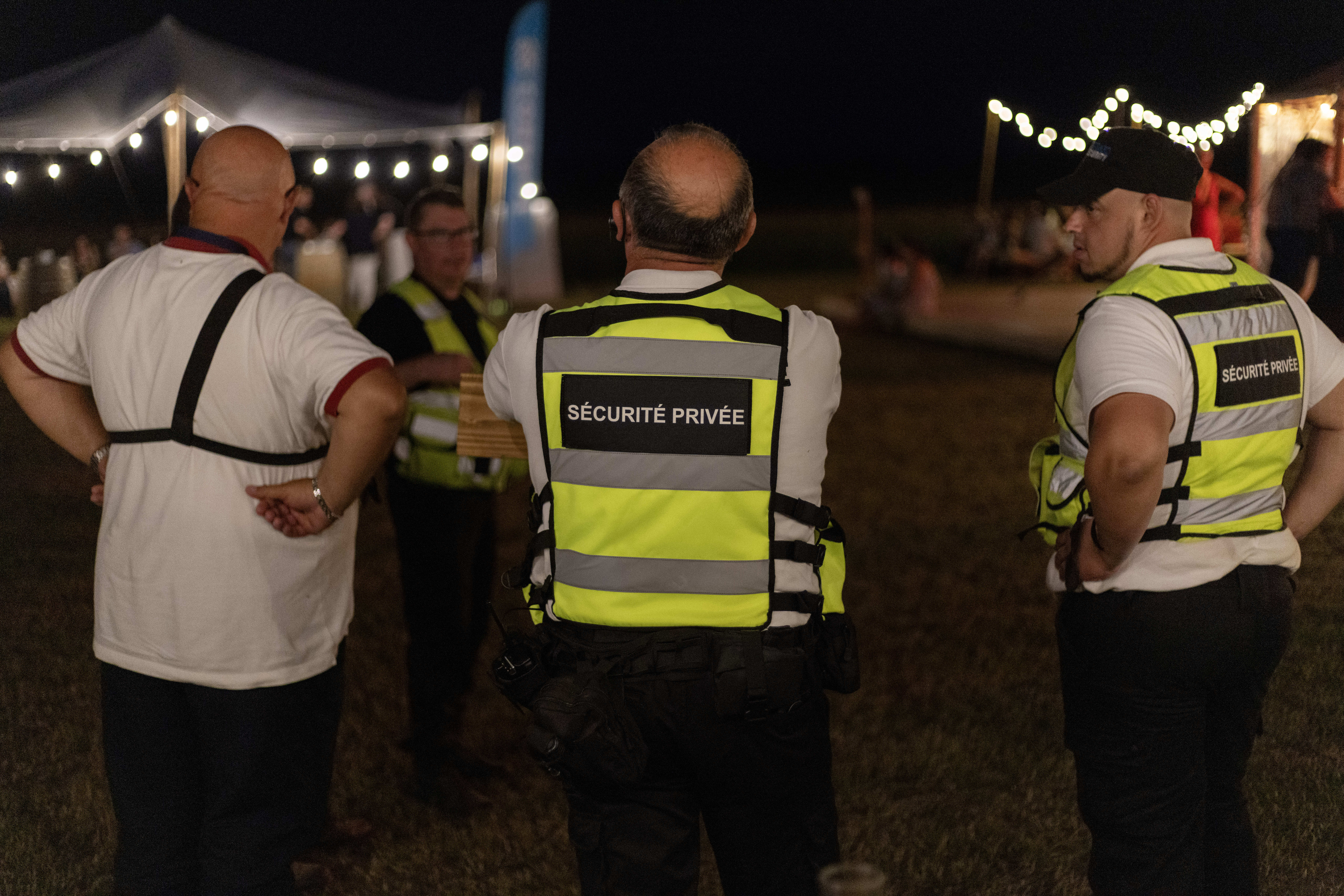
Operational security indicators used by INNOV'events in Luik
10+ years supporting corporate events across Belgium, including recurring deployments in Luik.
30–3,000+ attendees managed with scalable staffing plans (from discreet reception control to multi-zone crowd management).
1 single point of contact for your HR/Comms lead and venue, with a written staffing plan and post orders shared before D‑day.
24/7 reachability during build-up and event hours for last-minute changes (speaker delays, weather, VIP rerouting).
Which organizations we support around Luik
In Luik and the wider Liège area, we regularly support corporate clients, associations, and institutions for conferences, product launches, staff events and public-facing activations. Many of these collaborations renew year after year because security is one of those topics where continuity matters: same standards, same reporting, and the confidence that the team understands your internal constraints (union rules, supplier access windows, VIP protocols).
You did not provide company names to cite as references. If you share 4–8 names (clients, venues, or partner organizations you are allowed to mention), we will integrate them here in a compliant way (e.g., “industrial group in Herstal”, “hospitality venue near Guillemins”, “tech scale-up in central Liège”) while keeping the tone professional and credible.
 Besoin d’un devis rapide ?
Nous vous envoyons une première proposition sous 24h.
Why hire a Beveiligingsagent for a corporate event in Luik?
For executives and HR/Comms teams, event security is primarily about protecting business continuity: keeping schedules intact, preventing incidents that create HR issues, and ensuring your brand is represented by a calm, competent front line. In Luik, where venues can be central and access conditions vary widely (historic buildings, mixed public/private zones, traffic constraints), the security plan is often the difference between “smooth” and “chaotic”.
Predictable guest journey: controlled entry lines, clear signage and routing, reduced frustration at check-in, better first impression for leadership and external guests.
Risk containment for HR: prevention of harassment incidents, de-escalation capability, documented actions when something happens (who did what, when).
Protection of speakers, VIPs and sensitive moments: discreet escorting, backstage control, green room access, and controlled photo/press access when required.
Asset protection: safeguarding technical equipment during build-up and breakdown, controlling supplier access, reducing loss and damage claims.
Operational support to your comms team: security that understands “brand posture” (polite but firm), avoids aggressive behavior, and supports a premium or inclusive tone depending on your message.
Clear accountability: one chain of command and one reporting line, instead of multiple suppliers improvising their own rules at the doors.
Luik has a pragmatic business culture: people value results, clarity and respect. A well-briefed Beveiligingsagent team embodies those expectations—firm on rules, professional in posture, and efficient in execution.
What decision-makers in Luik expect from event security teams
Local event environments in Luik bring recurring patterns we plan for early. First, venue typology is diverse: modern conference infrastructures, industrial spaces converted for events, and historic buildings with narrow access points. Each configuration affects crowd dynamics, emergency routes, and where you can realistically place control points.
Second, traffic and arrival peaks are real operational constraints. When a venue is close to the city center, car drop-off and taxi flows can create bottlenecks that immediately reflect on your brand (“we were stuck outside for 20 minutes”). A professional Beveiligingsagent plan includes external perimeter coordination: where queues form, how guests are guided, and how VIP arrivals are separated without creating tension.
Third, Liège-area events often mix internal audiences (employees) with external ones (clients, partners, candidates, press). That changes the posture required at entry: badge checks must be strict, but the tone must remain welcoming. We brief agents on your guest profile, dress code, and the “what we say / what we don’t say” rules to protect confidentiality (e.g., not confirming a VIP’s presence, not discussing incident details with guests).
Finally, multilingual realities matter. Depending on your audience, you may need French-first reception, with English capability, and occasionally Dutch for national groups. We align staffing accordingly so the first contact at the door is never a friction point.
What security adds to corporate event entertainment in Luik
Entertainment and engagement formats only work when guests feel safe and flows are controlled. In Luik, where venues can involve mixed-access areas or shared public spaces, security is the framework that lets your program run at the right tempo. A Beveiligingsagent team does not “stand by”: it actively protects your guest experience by preventing bottlenecks, managing access to key moments, and keeping performers and technical teams on schedule.
Animations Interactives à Luik
Controlled interactive zones (photo booths, AR demos, recruitment corners): agents manage queue discipline, protect equipment, and prevent overcrowding that damages the experience and the hardware.
Stage Q&A microphones: access control to avoid disruptions, while maintaining a welcoming tone for legitimate participants.
Gamified challenges across multiple rooms: wristband/QR checks keep the flow smooth and prevent unauthorized access to restricted areas.
Animations Artistiques à Luik
Live performers and artists: backstage perimeter, green-room access lists, and controlled “meet & greet” to protect talent and your VIP guests.
Keynote speakers: secure arrival path, holding area privacy, and time-protected transitions so the agenda does not drift.
Animations Innovantes à Luik
Tastings and open bars: prevention of service issues (underage, over-service), de-escalation for intoxication, and safe closure procedures to avoid end-of-night incidents.
Food truck areas: crowd routing and queue separation to keep walkways clear and reduce conflict points.
Animations Gourmandes à Luik
Hybrid and streaming setups: equipment protection, controlled access to AV control desks, and privacy zones for speakers and production teams.
High-value product demos: perimeter design, product handling rules, and discreet loss-prevention without creating a “store security” atmosphere.
Multi-site formats across Luik: timing coordination between locations, arrival management, and consistent credentialing so guests do not “slip through” at the second site.
The key is alignment with your brand image: security must be visible enough to reassure, but never so heavy-handed that it contradicts your corporate culture. We brief teams on tone-of-voice, dress code, and how to handle exceptions (late VIPs, last-minute guest additions) without drama.
Which venue setups in Luik work best for controlled access?
The venue is a security multiplier. In Luik, the same headcount can require very different staffing depending on entry points, room connections, and whether parts of the building remain accessible to the public. Before committing, we look at entrances, emergency exits, load-in routes, and how guests naturally circulate between plenary, catering and restrooms.
| Venue type | For which objective? | Main strengths | Possible constraints |
|---|---|---|---|
Conference center / auditoriums in central Luik | Formal conference, keynote, structured plenary + breakouts | Defined access points, built-in technical control, clear evacuation routes, good for badge checks | Peak arrival congestion; strict technical/supplier rules; limited flexibility for backstage routing |
Hotel meeting floors and banquet rooms | Board-level events, client dinners, HR ceremonies | Onsite staff support, predictable flows, easier VIP discretion | Shared spaces with other guests; need strong credentialing to avoid cross-traffic |
Industrial or converted venues around the Liège area | Product launch, brand activation, larger staff events | High capacity, staging flexibility, strong “wow” potential when well designed | Multiple access points to secure; temporary infrastructure (lighting, barriers); more build-up risk |
Site visits are not optional when you care about control. A 45-minute walkthrough in Luik often reveals the real issues: hidden doors used by suppliers, choke points near cloakrooms, or evacuation routes that would be blocked by décor. We validate these details early to avoid last-minute compromises.
What a Beveiligingsagent costs in Luik for corporate events
Pricing for a Beveiligingsagent in Luik depends on risk level and operational complexity, not only on headcount. A well-priced security plan is one that is justified: each post has a purpose (access, perimeter, backstage, roaming, parking) and each hour is mapped to the program’s real peaks.
In practice, corporate event security is typically budgeted per agent per hour, with possible supplements for late hours, Sundays/holidays, specific profiles, or special constraints (multi-entrance venues, public-facing formats). If you need ballpark guidance during early planning, we can provide a range after a 15-minute scoping call.
Duration and schedule: build-up coverage, event hours, breakdown coverage; late-night endings increase cost and staffing needs.
Number of access points: every additional door that must remain controlled changes the staffing model.
Audience profile: internal-only vs. public or mixed; presence of alcohol; VIPs; press; sensitive topics.
Credentialing method: simple guest list vs. QR scanning vs. wristbands with color logic; complexity impacts entry staffing.
Venue constraints in Luik: shared spaces, public sidewalks, loading docks, parking flows, nearby nightlife areas.
Required competencies: bilingual front-of-house, de-escalation experience, or a security lead coordinating multiple posts.
We position security as a risk-and-reputation investment. One avoided incident (speaker disruption, equipment loss, HR complaint, unsafe crowding) often offsets the entire security line. Our job is to size it correctly—neither excessive nor underpowered.
Why coordinate security with an agency active in Luik
For corporate teams, the risk is rarely “no security”; it is fragmented security: venue staff saying one thing, caterers doing another, and your internal team improvising at the doors. When INNOV'events coordinates Beveiligingsagent deployments in Luik, we integrate security into the entire event operating model—guest experience, logistics, and program timing.
We also work as your interface: one conversation with your stakeholders, then operational alignment with the venue, production, and suppliers. If you are still selecting partners for the broader event, our local coordination can be integrated with our event agency in Luik services so you avoid contradictory plans between entertainment, production and security.
- Faster venue alignment: we know what to ask during site visits (doors, keys, fire routes, supplier access) and we document it.
- Supplier discipline: technicians, caterers and hosts receive consistent rules (badges, timing, routes).
- Onsite decision clarity: one security lead, one escalation path, and a plan that matches your governance.
- Local realism: traffic, parking, and neighborhood context considered in the access strategy for Luik.
We position security as a risk-and-reputation investment. One avoided incident (speaker disruption, equipment loss, HR complaint, unsafe crowding) often offsets the entire security line. Our job is to size it correctly—neither excessive nor underpowered.




What we typically deliver in Luik: from board dinners to large staff events
Our Luik deployments range from discreet executive dinners (where security is mostly about access control and VIP privacy) to larger staff events and partner conferences (where the challenge is multi-zone crowd flow and supplier access management).
A few real-world situations we handle regularly:
Last-minute VIP addition: we adapt access lists and arrival routing without exposing the change to the crowd or delaying the program.
Unexpected peak at check-in: we reallocate posts temporarily, open a second control line, and switch to a simplified verification logic while maintaining traceability.
Speaker delayed by traffic: we secure the backstage area, adjust holding patterns for guests, and keep corridors clear so the new timing does not cascade into chaos.
Equipment vulnerability during breakdown: we maintain coverage until trucks are loaded and the venue is handed back, reducing loss/damage disputes.
Across these formats, the constant is documentation and coordination: staffing plan, post orders, and a calm command structure.
Common security mistakes we prevent in Luik venues
Underestimating peak flows at doors and cloakrooms, leading to long queues and immediate reputational damage.
Too many uncontrolled entrances (including supplier doors) where guests, staff and the public mix.
No clear authority onsite: everyone gives instructions, nobody owns decisions, and agents are left guessing.
Inconsistent credentialing: multiple lists, last-minute badge printing, or “just let them in” exceptions that create conflict at the entrance.
Late briefing of agents: without a clear post order, agents either over-enforce (bad guest experience) or under-enforce (risk exposure).
Ignoring build-up/breakdown: focusing only on event hours while most theft and accidents happen when crews circulate.
Our role is to eliminate these risks before D‑day: we translate your event program into a security operating plan that your stakeholders can approve and your agents can execute.
Why Luik clients keep the same security partner year after year
Recurring clients do not come back for “more agents”; they come back for fewer surprises. In corporate environments, your reputation is built on reliability: doors open on time, VIPs are handled discreetly, and incidents are managed without becoming the event’s story.
Recurring governance: the same planning rhythm (briefing, site visit, final run-through) so your internal teams can anticipate workloads.
Reusable templates: staffing plans, post orders, incident logs—adapted each time, but never started from zero.
Post-event feedback loop: what worked, what didn’t, and what changes next time (e.g., one extra agent for the first 30 minutes instead of all evening).

Loyalty is a practical KPI: when clients rebook in Luik, it is because execution matched expectations under pressure.
How we build a security plan in Luik that executives can sign off
👉 Step 1 — Scoping call focused on real risks in Luik
We clarify your objective, guest profile, program timing, and what would be unacceptable (queue times, VIP exposure, press leakage, equipment loss). We confirm whether the event is internal, external or mixed, and whether alcohol is served. Outcome: a first sizing hypothesis for Beveiligingsagent staffing and the key posts to cover.
👉 Step 2 — Venue review and access-point mapping
We map entrances, emergency exits, supplier routes, parking and drop-off zones in Luik. We identify choke points and propose where control should happen (and where it should not). Outcome: an access strategy that supports guest experience while staying enforceable.
👉 Step 3 — Staffing plan, roles, and chain of command
We define how many agents are needed, for how long, and with which roles (front-of-house, roaming, backstage, loading dock, VIP escort, security lead). We set escalation rules: what agents can decide, what requires client approval, and who communicates with venue management.
👉 Step 4 — Briefing, credentials, and supplier alignment
We align credentialing (lists, QR, badges, wristbands), supplier access windows, and radio/communication protocols. Agents receive post orders and brand posture guidance. Outcome: fewer “exceptions” at the doors and less burden on your internal team.
👉 Step 5 — Onsite execution and incident documentation
We supervise deployment, adjust posts during peaks, and document incidents factually (time, persons involved, actions taken). After the event, we debrief and recommend concrete improvements for the next edition in Luik.
FAQ sur l'organisation Beveiligingsagent à Luik
How many security agents do I need in Luik?
It depends on entrances, audience profile and program peaks. For a controlled corporate reception, a common starting point is 2–4 agents (entry + roaming). For a conference with multiple rooms and supplier access, often 4–10. For large staff events, it can be 10+ with a security lead. We confirm after venue mapping in Luik.
What is the typical hourly rate in Luik?
Corporate event security is usually priced per agent per hour. In Belgium, you often see ranges around €35–€65/hour per agent depending on schedule (night/weekend), complexity, and required profiles (lead, bilingual front-of-house). A precise quote requires the program and access-point count in Luik.
Do you cover access control with QR scanning in Luik?
Yes. We can integrate QR scanning or list-based verification and define fallback rules if connectivity or printing fails. The key is staffing entry lines correctly and keeping exception handling consistent so the welcome experience in Luik stays smooth.
Can security stay discreet for VIPs in Luik?
Yes. We use discreet routing, controlled holding areas and low-profile positioning. Typically this means 1 dedicated VIP point plus 1 roaming agent, depending on venue layout and media exposure. We brief teams to protect privacy without creating tension with other guests in Luik.
How early should we book security in Luik?
For standard corporate formats, aim for 3–6 weeks ahead. For large events, public-facing formats or high season, 8–12 weeks is safer to secure the right profiles and align with venue constraints in Luik.
Request a security staffing plan for Luik before dates fill up
If you are comparing agencies, we can provide a clear proposal: recommended number of Beveiligingsagent profiles, post map, schedule coverage (build-up/event/breakdown), and the operational rules your internal stakeholders need. Share your date, venue (or shortlist), estimated headcount and program timing in Luik, and we will revert with a concrete plan and quote.
Agence INNOV'events Luik
Justin JACOB est le responsable de l'agence événementielle Luik. Contactez-le directement par mail via l'adresse belgique@innov-events.be ou par formulaire.
Contacter l'agence LuikToutes nos prestations & animations Luik, Belgique
Découvrez nos prestations événementielles
Découvrez nos animations événementielles disponibles au Belgique
- Hôtesse événementielle à Luik
- Escape Game à Luik
- Cours de cuisine type MasterChef à Luik
- Magicien à Luik
- Location de chapiteau à Luik
- Atelier colorimétrie à Luik
- Jeux gonflables à Luik
- Service de voiturier à Luik
- Simulateur de football à Luik
- Location de mobilier lumineux à Luik
- Flocage lumineux à Luik
- Repas insolite à Luik
- Light Painting à Luik
- Murder Party à Luik
- Jeu concours à Luik
- PLV événementielle à Luik
- Réalité virtuelle à Luik
- Cuisine moléculaire à Luik
- Animation Halloween à Luik
- Feu d’artifice à Luik
- Jeux géants à Luik
- Animateur événementiel à Luik
- Animation photo à Luik
- Père Noël à Luik
- Animation enfants à Luik
- Visite guidée à Luik
- Rallye urbain à Luik
- Piscine à balles à Luik
- Simulateur de vol à Luik
- Location de food truck à Luik
- Record du monde à Luik
- Simulateur de surf à Luik
- Casino du vin à Luik
- Atelier relooking à Luik
- Atelier création de parfum à Luik
- Atelier acting à Luik
- Animations RSE à Luik
- Tir à l’arc à Luik
- Agent de sécurité à Luik
- Œnologie à Luik
- Mime à Luik
- Jeu télévisé à Luik
- Fête foraine à Luik
- Atelier gestion de crise à Luik
- Atelier négociation de crise à Luik
- Jeux d’arcade à Luik
- Simulateur de chute libre à Luik
- Simulateur de ski à Luik
- Simulation circuit automobile à Luik
- Baptême de l’air à Luik
- Dégustation à Luik
- Création de baby-foot à Luik
- Rallye 2CV à Luik
- Challenge LEGO à Luik
- Animation casino à Luik
- Interprète / traducteur à Luik
- Goodies à Luik
- Bus / transfert à Luik