
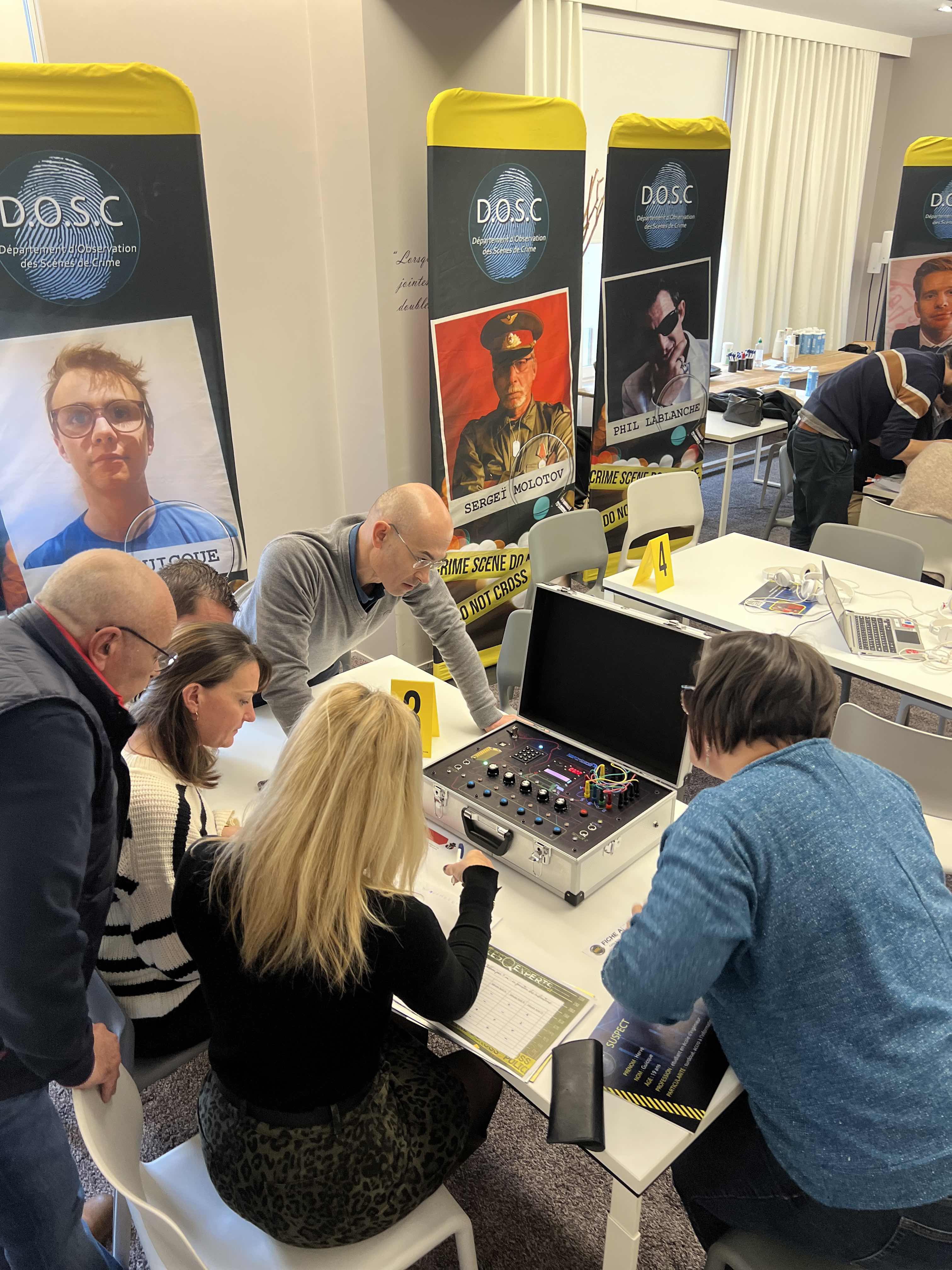
Escape Game in Luik that builds team reflexes, not just fun
INNOV'events designs and runs Escape Game formats in Luik for executive committees, HR teams and internal communications—typically from 10 to 300 participants, in one or multiple waves. We handle scenario selection, logistics, facilitation, timing, safety, and a structured debrief that connects the game to your real operational challenges.
Whether you want a compact 90-minute activation during a seminar or a full half-day team-building program, we make sure the entertainment supports your objectives: collaboration, decision-making under time pressure, cross-team communication and accountability.
Sommaire
In a corporate event, entertainment is not a “nice-to-have”: it is the moment where people stop performing roles and start showing real coordination patterns. A well-run Escape Game gives leaders observable behaviors (communication, prioritization, leadership rotation) you can actually use after the event.
Organizations in Luik typically expect efficiency: clear timing, bilingual facilitation when required, and a format that respects operational constraints (shift work, production schedules, travel time). They also expect solid contingency planning—because your credibility is on the line on event day.
Based in Brussels, INNOV'events works regularly across Wallonia and supports teams in Luik with local partners and vetted venues. We operate with agency-grade run-of-show documents, clear responsibilities, and senior-level coordination so your HR/Comms team is not firefighting.
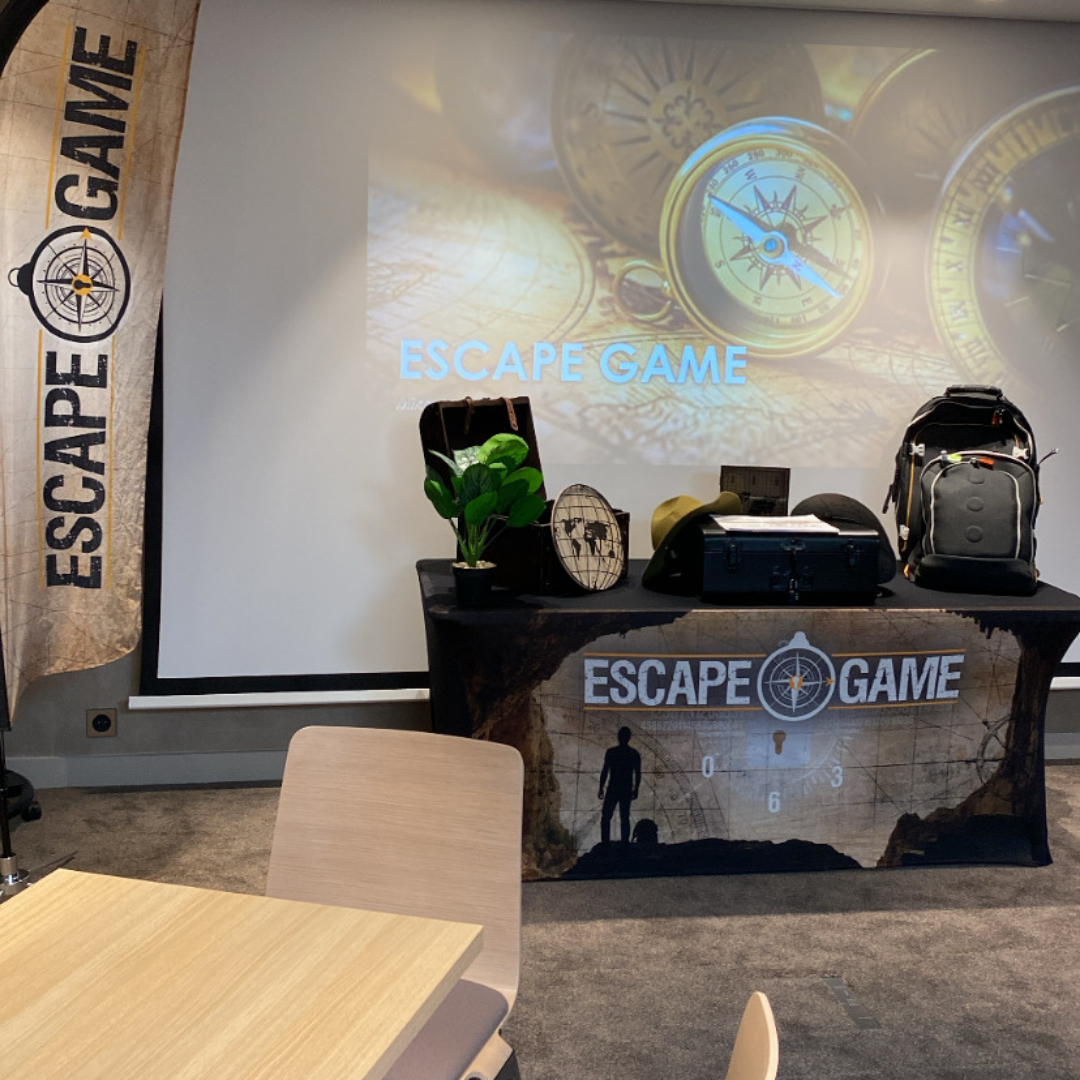
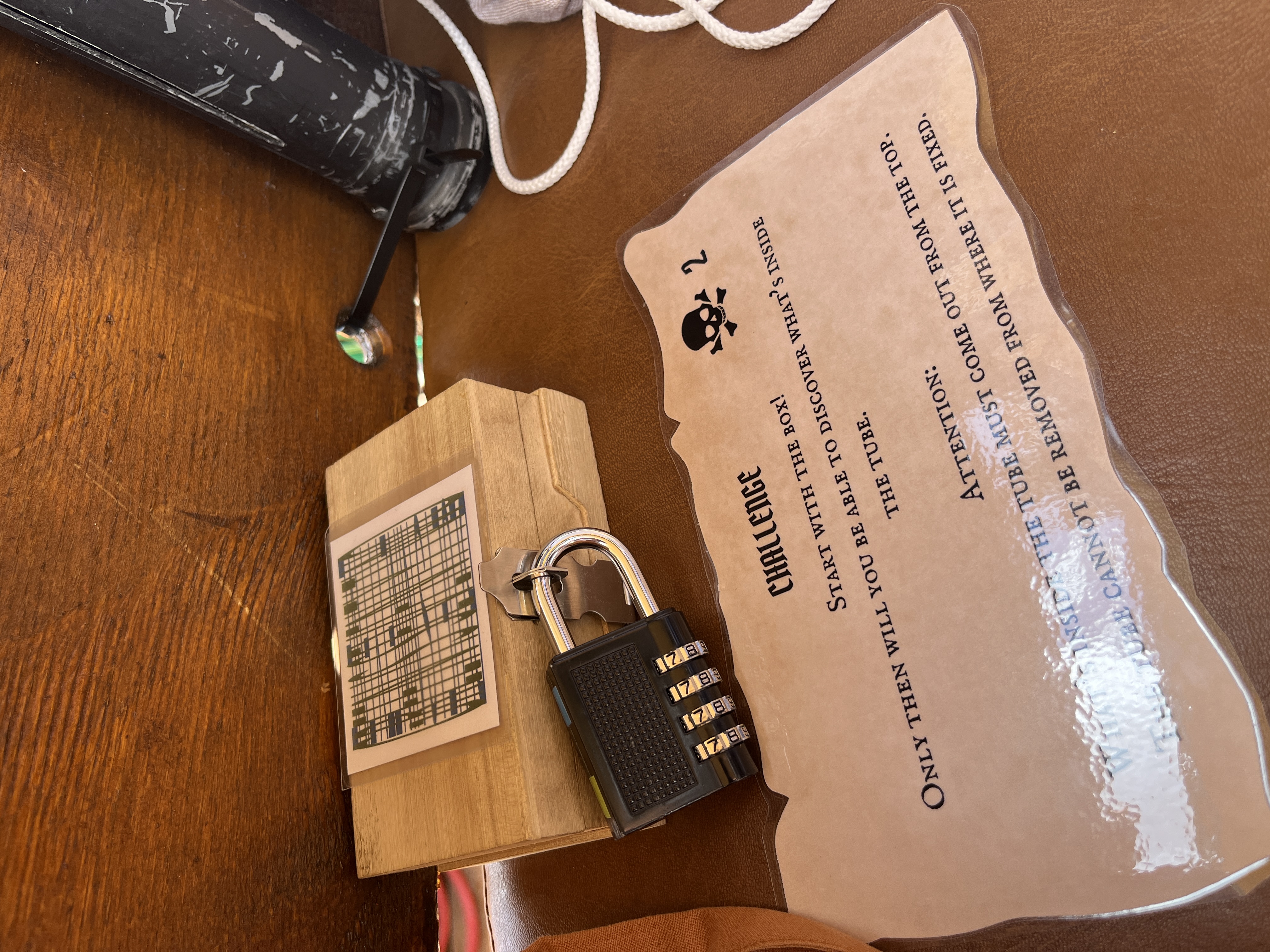
Operational track record for Luik decision-makers
10–300 participants handled in a single program via waves, parallel rooms or mobile kits, without bottlenecks at check-in.
24–48h to deliver a first structured proposal (format, timings, requirements, budget range) once objectives and constraints are clear.
2 facilitation levels: standard host team or senior facilitators able to run an executive debrief (team dynamics, decision-making, accountability).
3 deployment modes: venue-based rooms, mobile escape kits at your offices, or hybrid (plenary + breakout + escape waves).
Corporate Escape Game projects around Luik with repeat clients
We regularly support organizations that operate in and around Luik, including headquarters teams, plant-based teams and multi-site groups that need a consistent experience. Several clients collaborate with us year after year because they need reliability more than surprises: the same level of delivery whether it is a 25-person management offsite or a 180-person end-of-year gathering.
You mentioned you would provide company names as references; we can integrate them here exactly as agreed (including the right legal entity names) and, when appropriate, the context: leadership seminar, onboarding wave, cross-functional alignment, or safety culture activation. We are careful with confidentiality, but we can always describe comparable situations we handled in Luik—for example, merging two teams after a reorganization, or aligning sales and operations around shared KPIs.
What matters for decision-makers is not the logo list: it is the ability to deliver under real constraints (late attendee changes, tight venue schedules, bilingual groups, last-minute AV limitations). That is the type of operational reliability we bring.
 Besoin d’un devis rapide ?
Nous vous envoyons une première proposition sous 24h.
Why run a corporate Escape Game in Luik this year
When executives, HR and communications invest in a team moment, they are buying outcomes: faster alignment, better collaboration across silos, and a visible cultural signal. A corporate Escape Game in Luik works when it is designed as a structured exercise, not as a distraction.
In practice, we see companies use this format at three critical moments: after organizational change, during onboarding/graduate programs, and before a strategic rollout where execution depends on cross-team coordination.
Expose coordination gaps safely: the game reveals how teams handle incomplete information, conflicting priorities, and time pressure—without blaming individuals.
Create shared language: debriefing turns “we had trouble” into specific insights like “we didn’t validate assumptions” or “we split tasks without a coordinator”.
Support leadership development: managers can observe leadership rotation, delegation, and escalation behaviors in real time.
Strengthen internal communication: the event becomes a concrete story and a set of takeaways, not just photos; Comms teams can reuse insights in follow-up content.
Integrate multi-site and shift teams: wave-based formats allow equitable participation even when production or customer service cannot stop.
Accelerate trust across functions: pairing people who rarely work together (e.g., engineering + sales, HQ + site) forces faster collaboration and reduces “us vs them”.
Luik is a pragmatic, industrious economic area where credibility is earned through execution. A well-run Escape Game fits that culture when it is timed precisely, facilitated with authority, and connected to operational reality—not when it is treated as pure entertainment.
What teams in Luik expect from a corporate Escape Game partner
In Luik, many organizations operate with tight schedules and operational constraints: production shifts, client commitments, or project milestones that do not pause for an event. This has direct consequences for event design. We plan wave timings that match shift handovers, keep check-in friction low, and avoid formats that require long idle time between sequences.
Another local reality is audience diversity: a single group can include long-tenured staff and newly hired profiles, engineers and frontline supervisors, Dutch/French/English speakers, and different comfort levels with “games”. The solution is not to “make it simpler”; it is to frame the activity professionally, with clear instructions, strong facilitation and a debrief that shows why the exercise matters for the business.
Finally, companies here care about discretion and seriousness. If you invite clients, partners or VIPs, the experience must be coherent with your brand: punctual starts, clean staging, controlled sound levels, and hosts who can manage senior audiences. That is why we insist on a real run-of-show, a technical check when needed, and an identified decision-maker on the agency side on event day.
Which Escape Game formats work best for corporate events in Luik
Engagement comes from a simple equation: clear objective, visible progress, and shared pressure. A corporate Escape Game is effective because it produces immediate feedback loops—teams see the impact of their collaboration choices within minutes. In Luik, we recommend formats that are operationally robust and easy to integrate into seminars, town halls or offsites.
Animations Interactives à Luik
Room-based Escape Game for 6–10 people per room: ideal for management teams or client-facing groups where immersion matters and timing must be tight.
Mobile escape kits (tabletop) for 30–200 people: perfect for company premises or venues without dedicated escape rooms; scalable via multiple identical kits and a facilitation team.
Competitive multi-team tournament: waves with a consistent scoring grid (time, hints used, bonus puzzles). Works well for sales kick-offs or cross-functional challenges, with careful framing to keep it healthy.
Investigation-style format: teams analyze evidence, build hypotheses and present conclusions. Strong fit for compliance, quality, audit, or safety culture themes.
Animations Artistiques à Luik
Role-play facilitation (light acting): one or two characters guide the mission, improving immersion without turning it into theatre. Useful when you want energy without losing corporate tone.
Story-driven staging with controlled scenography: branded briefing screens, mission files, and consistent visual identity—especially relevant when Comms needs content for internal channels.
Animations Innovantes à Luik
Escape + tasting checkpoint: teams unlock a small local tasting step (non-alcoholic options included). Works well in Luik when you want to integrate local hospitality without extending the schedule.
Debrief around a standing coffee: keeps time under control while allowing informal exchanges; effective for half-day seminars with tight agendas.
Animations Gourmandes à Luik
Digital clues with device control: QR-based clues or tablets can streamline hint delivery and scoring; we set clear rules on phone use to avoid distraction and ensure fairness.
Hybrid plenary + escape waves: a short executive kick-off (purpose, expected behaviors), then waves, then a consolidated debrief with key observations. This is often the most “board-friendly” structure.
On-site “process escape” (non-sensitive): puzzles inspired by real operational steps (handover, prioritization, escalation). Done carefully, it resonates strongly with industrial and service organizations around Luik.
Whatever the format, we align the experience with brand image. A premium employer brand calls for clean staging, confident hosting and a debrief that respects participant maturity. A transformation program calls for explicit links to behaviors and next steps. The entertainment should never contradict the message you are trying to send.
Where to host an Escape Game in Luik without logistical surprises
The venue shapes perception immediately: whether people feel “this is serious and well organized” or “this is a side activity”. For Luik corporate groups, we select settings that make timing predictable, reduce noise conflicts, and allow smooth group circulation—especially when you run multiple waves.
| Venue type | For which objective? | Main strengths | Possible constraints |
|---|---|---|---|
Dedicated escape room venues in Luik | Small to mid-size groups (10–60) seeking maximum immersion and strong “wow” factor without complex build |
|
|
Hotel meeting rooms (city center or near business parks) | Seminar + team-building in one place (30–200), with professional breaks and AV |
|
|
Your offices or site-adjacent spaces around Luik | Minimize travel; integrate shift teams; strong “we invest on-site” signal |
|
|
We strongly recommend a site visit or at least a technical walk-through (photos + plan + access rules). Most event-day issues come from small operational details: where teams wait, where resets happen, where briefings are delivered, and how sound carries. Fixing that upstream is what keeps your internal stakeholders confident.
How to budget an Escape Game in Luik realistically
Pricing for a corporate Escape Game in Luik depends less on “the game” and more on deployment conditions: group size, number of waves, venue constraints, facilitation level, and whether you require a debrief connected to managerial objectives. We prefer to provide a clear range quickly, then refine once logistics are locked.
As a practical reference, corporate formats often fall between €45 and €160 per participant depending on immersion level, staffing and scalability. For smaller executive groups, pricing is frequently package-based rather than per-head.
Participant volume and wave design: 120 people in 6 waves is a different production than 120 people in parallel rooms; staffing and reset time drive costs.
Venue and travel constraints in Luik: city-center access, parking, load-in rules, elevator availability and setup windows can add significant time on the crew side.
Facilitation and language: bilingual hosting (FR/NL or FR/EN) and senior debrief facilitation require experienced profiles.
Customization level: light branding (mission brief, visuals) is often enough; deep scenario customization requires more lead time and budget.
Risk management: backup kits, buffer staff, and contingency planning are invisible when everything goes right—but that is exactly what corporate teams pay for.
Integration with a wider program: if the Escape Game is part of a half-day event, we align with catering, plenary timing, AV and internal speakers to avoid overtime and delays.
From an ROI perspective, the value is in what changes after the event: clearer collaboration rules, better meeting discipline, faster escalation, and improved cross-team trust. When we structure the debrief properly, HR can translate observations into follow-up actions (team agreements, onboarding modules, leadership coaching topics) rather than letting the experience evaporate.
When choosing an event partner in Luik makes the difference
For corporate clients, “local” is not a slogan; it is operational advantage. A partner who understands Luik realities anticipates access constraints, knows reliable local suppliers, and can solve last-minute issues without escalating everything to your internal team.
When we deliver in the area, we plan with local lead times in mind (venue response cycles, staffing availability, traffic patterns, and typical corporate schedules). We also know what tends to go wrong: tight setup windows, mixed-language groups, and wave management when leadership arrives late from meetings. Our job is to absorb that complexity.
For broader support beyond this activity, we can also coordinate the full event perimeter via our dedicated page: event agency in Luik.
- Faster on-site resolution: issues are solved locally (room change, extra signage, timing adjustments) without disrupting your executive agenda.
- Vetted ecosystem: tested venues, catering and technical partners reduce quality variability.
- Compliance and safety mindset: clear briefing, safe circulation, and professional hosting—especially important with large groups and VIP attendance.
- Accurate scheduling: realistic buffers for arrivals, parking, badge control and wave transitions in Luik.
From an ROI perspective, the value is in what changes after the event: clearer collaboration rules, better meeting discipline, faster escalation, and improved cross-team trust. When we structure the debrief properly, HR can translate observations into follow-up actions (team agreements, onboarding modules, leadership coaching topics) rather than letting the experience evaporate.










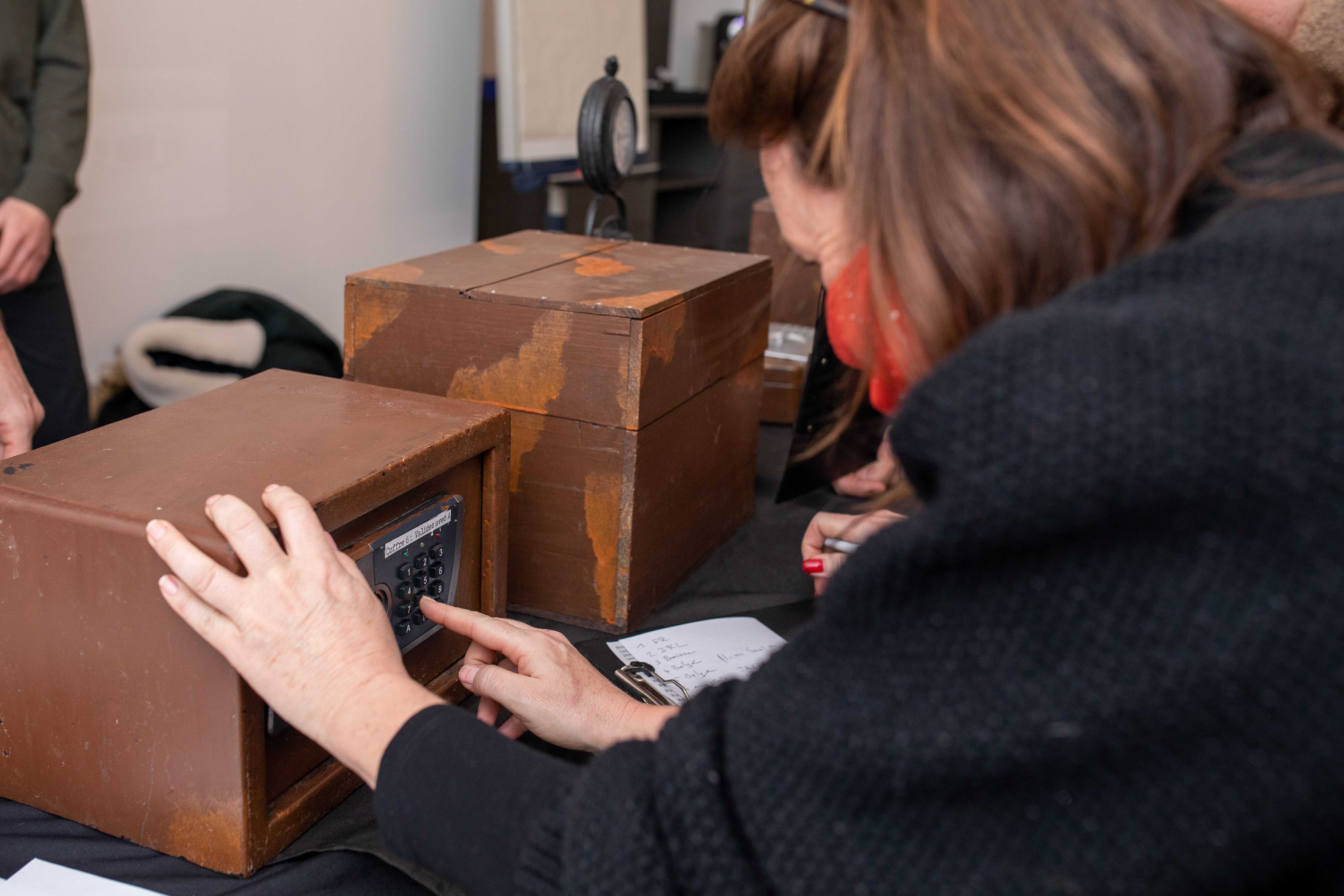
Examples of corporate Escape Game setups delivered around Luik
Our projects vary because corporate objectives vary. For a 30-person leadership seminar, we may run a single high-immersion sequence, then a facilitated debrief focused on decision-making, delegation and escalation. The value there is depth: leaders leave with a shared diagnosis of how they work under pressure.
For a 120–200-person company gathering, the challenge is production quality: multiple waves, consistent facilitation, tight transitions, and a controlled noise level so the rest of your program (speeches, awards, client moments) remains professional. In these cases, we build a clear operational map: check-in, team allocation, game zones, waiting zones, reset zones and debrief zones, with timekeeping that does not drift.
For onboarding or employer branding initiatives, we often recommend investigation-style formats that encourage information sharing and give new hires a structured way to meet colleagues. In Luik, where companies often recruit across different profiles, the activity becomes a practical integration tool—if the debrief is framed around “how we work here” rather than “who won”.
Across these situations, our focus stays the same: predictable timing, facilitation that respects a corporate audience, and outcomes you can reuse internally (key observations, debrief notes, and recommended follow-up actions).
Common Escape Game pitfalls we prevent in Luik
Underestimating wave logistics: groups waiting too long, teams starting late, and the schedule slipping into dinner/speeches. We design wave capacity and buffers upfront.
Choosing puzzles that reward one “hero”: teams disengage when one person solves everything. We select collaborative mechanics and structure roles.
Not planning for mixed languages: unclear instructions create frustration. We ensure bilingual materials and facilitators where required.
Weak briefing: if rules and objectives are vague, participants waste 10 minutes “figuring out the game”. We use a standard corporate briefing script and visual support.
No credible debrief: without debrief, executives see it as entertainment only. We connect behaviors to leadership and operational realities.
Ignoring venue constraints in Luik: load-in restrictions, noise bleed, limited breakout rooms. We validate feasibility early and adapt the format.
Our role is to remove risk from your event day: anticipate bottlenecks, set realistic timings, align stakeholders (venue, catering, AV, internal speakers), and keep the participant experience consistent from first briefing to final debrief.
Why corporate clients in Luik keep INNOV'events on their shortlist
Repeat business is not about novelty; it is about reliability under pressure. HR and Comms teams return when an agency makes their life easier: clear documentation, proactive coordination, and a delivery that does not depend on luck.
We often become the “safe pair of hands” for internal stakeholders who cannot afford last-minute surprises—especially when executives attend or when the event is tied to a strategic communication.
1 accountable project lead from briefing to event day, so decisions and changes do not get lost.
2 levels of documentation shared: participant-facing (timings, dress code, access) and production-facing (run-of-show, staffing, setup plan).
30–45 minutes typical debrief duration that remains practical and executive-friendly, with clear takeaways.

Loyalty is proof of quality because it means the client has tested the agency in real conditions: last-minute attendee changes, tight venue windows, senior stakeholder expectations, and the pressure of delivering on time. That is the environment we are built for in Luik and beyond.
Our delivery process for an Escape Game in Luik
👉 Clarify objectives and constraints in Luik
We run a short scoping call with HR/Comms and, if relevant, a sponsor from leadership. We confirm: participant profiles, desired outcomes, languages, location constraints, schedule immovables (speeches, trains, shift times), and risk tolerance (competition vs. collaboration). We also identify what would make the event a failure in your context—late start, noise, lack of seriousness, poor debrief—and design around it.
👉 Propose the right Escape Game format and wave plan
We propose 1–2 formats maximum, with a clear rationale. You receive a practical plan: group sizes, number of waves, estimated durations, staffing, space needs, and what your internal team must provide (room access, tables, power, badge rules). We also include options: senior debrief facilitation, light branding, or integration into a half-day agenda.
👉 Lock the venue and technical feasibility
We validate the venue conditions in Luik: setup time, access routes, parking/loading, acoustics, breakout availability, and security rules. If needed, we run a technical walk-through. This is where we prevent event-day friction—especially for multi-wave deployments.
👉 Prepare participant journey and internal communications
We deliver clear participant information you can reuse internally: timings, dress code, arrival instructions, and expectations. This reduces no-shows and late arrivals. For internal communications, we can provide short “purpose wording” that frames the activity as a professional exercise, which is important for audiences that are skeptical of games.
👉 Deliver, timekeep and manage contingencies
On event day, we manage check-in flow, briefing, wave transitions, hint management, scoring (if relevant) and room resets. A designated agency lead monitors timing and acts as the single point of contact so your HR/Comms team stays available for executives and participants. We carry contingency plans: buffer time, backup material, and fallback flow if a room becomes unavailable.
👉 Debrief and translate insights into actions
We facilitate a structured debrief (team-level or plenary). The output is practical: 3–5 observed behaviors, what helped, what slowed teams down, and suggested team agreements you can apply immediately (meeting rules, escalation paths, role clarity). If requested, we provide a short written recap for HR/Comms to support follow-up.
FAQ sur l'organisation Escape Game à Luik
How many participants can join an Escape Game in Luik?
Typically 10–300 participants. For room-based games, we plan 6–10 people per room and use waves. For mobile kits at a venue or your offices, we can run 30–200 in parallel depending on space and staffing.
How long should we plan for a corporate Escape Game in Luik?
Plan 90 minutes to 3 hours depending on scope: 10–15 minutes briefing, 45–75 minutes game, and 20–45 minutes debrief. Multi-wave programs require additional buffer for transitions and resets.
What budget range is realistic for an Escape Game in Luik?
Most corporate projects fall between €45 and €160 per participant. The main cost drivers are staffing, number of waves, venue constraints, and whether you require a senior debrief linked to leadership objectives.
Can you run an Escape Game at our offices in Luik?
Yes. We deploy mobile escape kits and facilitation on-site. We typically need meeting rooms or open areas with tables, controlled access, and enough separation to manage noise. We confirm feasibility via a walk-through or detailed floor plan.
Do you offer bilingual facilitation for teams in Luik?
Yes. We can facilitate in FR/EN and, depending on the audience and lead time, integrate FR/NL. We confirm languages early to ensure all materials (briefing, clues, debrief prompts) remain clear and consistent.
Request a quote for an Escape Game in Luik
If you are comparing agencies, we suggest a simple starting point: send us your participant count, preferred date, venue idea (or “to be defined”), language needs and the business objective behind the event. We will answer with a concrete recommendation (format + wave plan) and a clear budget range.
For Luik corporate calendars, the best slots and venues move quickly—especially for Q4 and peak seminar periods. Contact INNOV'events early so we can secure the right setup, plan the run-of-show properly, and deliver a Escape Game that supports your leadership and HR objectives.
Agence INNOV'events Luik
Justin JACOB est le responsable de l'agence événementielle Luik. Contactez-le directement par mail via l'adresse belgique@innov-events.be ou par formulaire.
Contacter l'agence LuikToutes nos prestations & animations Luik, Belgique
Découvrez nos prestations événementielles
Découvrez nos animations événementielles disponibles au Belgique
- Hôtesse événementielle à Luik
- Escape Game à Luik
- Cours de cuisine type MasterChef à Luik
- Magicien à Luik
- Location de chapiteau à Luik
- Atelier colorimétrie à Luik
- Jeux gonflables à Luik
- Service de voiturier à Luik
- Simulateur de football à Luik
- Location de mobilier lumineux à Luik
- Flocage lumineux à Luik
- Repas insolite à Luik
- Light Painting à Luik
- Murder Party à Luik
- Jeu concours à Luik
- PLV événementielle à Luik
- Réalité virtuelle à Luik
- Cuisine moléculaire à Luik
- Animation Halloween à Luik
- Feu d’artifice à Luik
- Jeux géants à Luik
- Animateur événementiel à Luik
- Animation photo à Luik
- Père Noël à Luik
- Animation enfants à Luik
- Visite guidée à Luik
- Rallye urbain à Luik
- Piscine à balles à Luik
- Simulateur de vol à Luik
- Location de food truck à Luik
- Record du monde à Luik
- Simulateur de surf à Luik
- Casino du vin à Luik
- Atelier relooking à Luik
- Atelier création de parfum à Luik
- Atelier acting à Luik
- Animations RSE à Luik
- Tir à l’arc à Luik
- Agent de sécurité à Luik
- Œnologie à Luik
- Mime à Luik
- Jeu télévisé à Luik
- Fête foraine à Luik
- Atelier gestion de crise à Luik
- Atelier négociation de crise à Luik
- Jeux d’arcade à Luik
- Simulateur de chute libre à Luik
- Simulateur de ski à Luik
- Simulation circuit automobile à Luik
- Baptême de l’air à Luik
- Dégustation à Luik
- Création de baby-foot à Luik
- Rallye 2CV à Luik
- Challenge LEGO à Luik
- Animation casino à Luik
- Interprète / traducteur à Luik
- Goodies à Luik
- Bus / transfert à Luik