
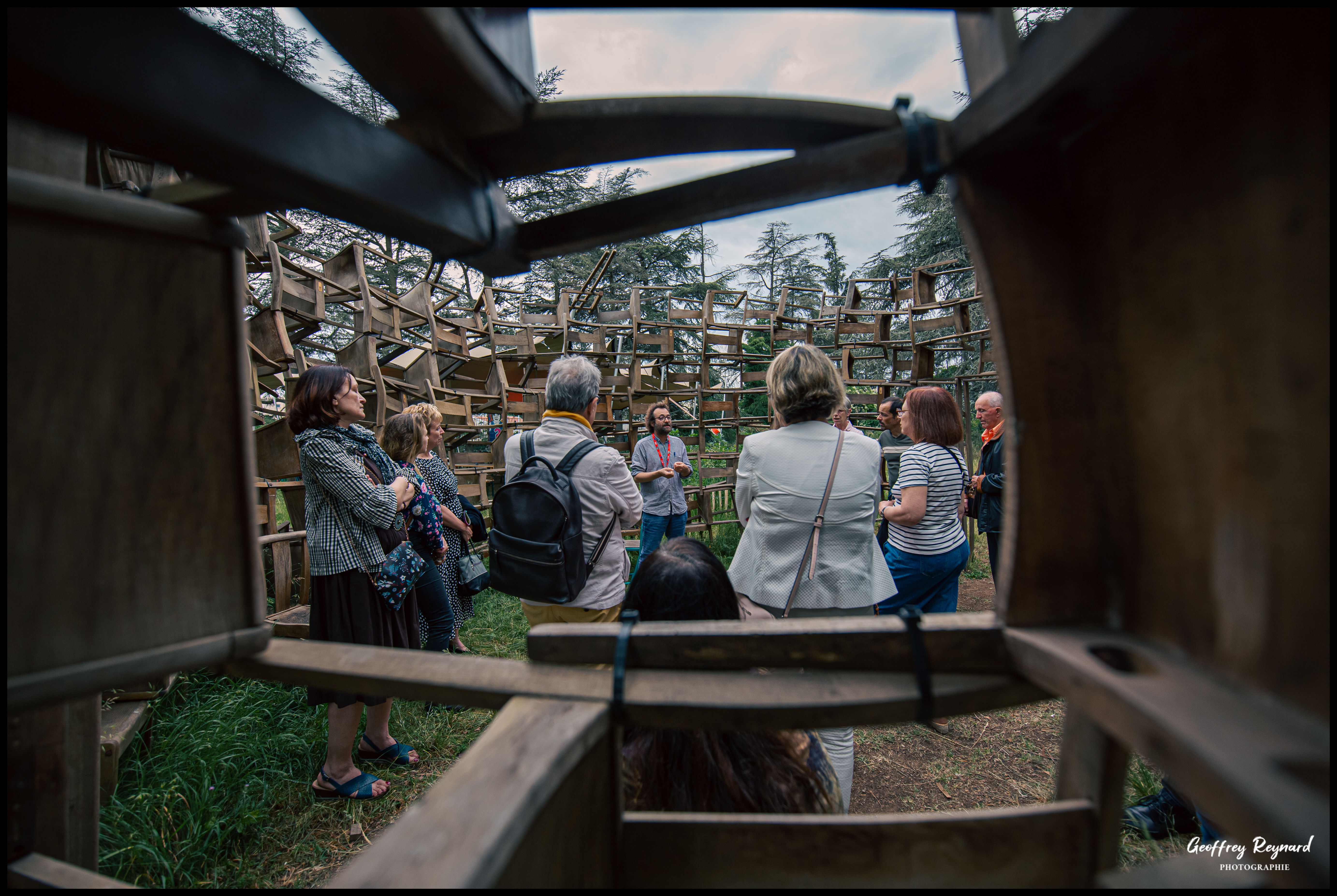
Geleide rondleiding in Antwerpen that keeps your agenda on track
INNOV'events (Brussels) designs and runs Geleide rondleiding formats for corporate groups in Antwerpen, typically 15 to 250 attendees. We secure the guide team, permits, route design, group flow, safety briefings and timing—so your executives can focus on people, not logistics.
Whether you’re aligning leadership after a reorg, onboarding a new cohort, or hosting clients before a board dinner, we structure the visit with clear objectives, scripted touchpoints and controlled transitions.
Sommaire
In a corporate event, a guided visit is not “just culture”: it is a controlled way to create shared context, informal conversation and alignment—without the noise and uncertainty of unstructured networking. Done well, corporate event entertainment in Antwerpen becomes a management tool: it sets a tone, regulates energy, and supports your messaging.
Organisations in Antwerpen usually expect three things: strict timing (because schedules are tight), professionalism with mixed audiences (execs, international guests, union reps, new hires), and discreet operational delivery (no chaos at meeting points, no wandering groups, no last-minute “surprises”).
We deliver with local operational reflexes: realistic walking times, contingency options for weather, and a guide roster used to corporate briefings. INNOV'events coordinates the full chain—from pre-reads and group allocations to on-site marshals—so your Geleide rondleiding in Antwerpen remains predictable, safe and brand-consistent.
INNOV'events track record you can verify in Antwerpen
10+ years delivering corporate experiences across Belgium, with repeat programmes in Flanders and the Brussels-Capital Region.
150+ corporate events/year coordinated through our internal production method (run-of-show, supplier SLAs, and day-of control points).
24/7 event-day coverage for key roles: one accountable producer + one local on-site lead for group flow and incident handling.
Multilingual delivery: EN/NL/FR guide staffing and briefing documents for international leadership teams visiting Antwerpen.
Corporate guided visits in Antwerpen with recurring clients
In and around Antwerpen, we support organisations that return year after year because they value operational consistency: the right guide profiles, a route that matches the audience, and a day-of setup that does not require their internal teams to “babysit” the experience.
Typical recurring scenarios include: HR teams running quarterly onboarding walks for new hires; communication departments pairing a city narrative with brand storytelling for client hospitality; and executive assistants needing a reliable format before a dinner, a plant visit, or a strategy offsite in the province.
We work with Belgian and international companies with a presence in the region and coordinate with their internal stakeholders (HR, Comms, Facilities, Security, and C-level EAs) to ensure the Geleide rondleiding fits the exact constraints of the day: meeting windows, dress code, walking pace, and accessibility requirements.
 Besoin d’un devis rapide ?
Nous vous envoyons une première proposition sous 24h.
Why plan a Geleide rondleiding in Antwerpen for executives?
A guided tour can be one of the highest “signal-to-noise” formats in a corporate programme: it creates a shared experience while keeping the group moving, on time, and available for targeted conversation. The strategic value comes from structure—clear objectives, curated stops, and a narrative that supports your business context.
Executive-level networking without awkwardness: walking side-by-side lowers social friction; we design “natural pairings” and rotation moments so leaders meet the right people without forcing icebreakers.
Message reinforcement for Comms teams: we translate your themes (innovation, heritage, sustainability, talent, transformation) into a route and a script, avoiding generic facts that don’t serve your narrative.
HR-friendly inclusion: we adapt pace, provide shorter loops, and plan accessibility alternatives so the experience works for mixed mobility, mixed age groups, and international hires.
Time-boxed energy management: a 90–120 minute route is long enough to connect people, short enough to protect dinner or meeting agendas; we also provide 45–60 minute options when calendars are tight.
Risk control in public space: professional group handling reduces reputational risk (late arrivals, complaints, safety issues). We implement meeting-point discipline, headcounts, and clear regroup rules.
Antwerpen is a city where business hospitality is judged on details: timing, discretion, and substance. A well-run guided tour aligns with that economic culture—pragmatic, international, and quality-driven.
What corporate groups expect in Antwerpen (2000–2060)
Corporate groups in Antwerpen rarely want a “tourist” experience. They expect a format that respects corporate realities: tight schedules, high-profile guests, and the need to keep the group coherent in a dense urban environment.
Operationally, the city brings specific constraints we plan for upfront: peak moments around the historic centre, variable noise levels that affect audibility, and the need to avoid bottlenecks when guiding groups through narrow streets. We also plan realistic transfers when your programme includes a hotel, a meeting venue, and a dinner location—because the gap between “Google walking time” and “group walking time” becomes very real with 40+ people.
From a stakeholder perspective, we often see three internal expectations that must be reconciled: HR wants inclusion and psychological safety; Comms wants message discipline and brand consistency; executives want the experience to feel effortless. Our job is to turn those expectations into a runnable plan with clear responsibilities and a credible route.
Which guided tour formats work best in Antwerpen for companies?
Engagement in a Geleide rondleiding in Antwerpen comes from participation and relevance. We modernise the format by adding light interaction that respects corporate audiences: short prompts, optional challenges, and curated discussion moments—without turning it into a noisy game that distracts from your goals.
Animations Interactives à Antwerpen
Leadership prompt stops: 3–4 planned “pause points” where the guide asks one business-relevant question (e.g., what does ‘heritage’ mean in our brand?) to trigger short, meaningful dialogue.
Small-group routing (2–5 groups): separate narratives tailored by audience (clients vs internal teams, technical profiles vs commercial), with a synchronized finish for a unified moment.
Audio support when needed: discreet whisper systems for 40+ attendees to keep speech intelligible and reduce disturbance in busy streets.
Animations Artistiques à Antwerpen
Storytelling guides with corporate briefing: guides trained to stay on-script and avoid controversial detours; useful when you host clients or senior leadership.
Short live intervention (10–15 min): a musician or spoken-word performer at a fixed stop to create a memorable transition without compromising timing.
Animations Innovantes à Antwerpen
Tasting checkpoint: a controlled tasting with pre-ordered quantities and dietary tracking—effective as a “reset” moment before dinner.
Market-focused segment: a curated stop with a vendor who can handle invoicing, allergens, and corporate payment terms (often overlooked until the last week).
Animations Gourmandes à Antwerpen
Digital layer (QR micro-content): optional, lightweight content your guests can consult without slowing the group; helpful for international visitors.
Photo protocol for Comms: planned photo angles and timing windows so your team gets usable content without interrupting the visit.
Whatever the format, we align it with your brand image: tone of voice, inclusivity standards, sustainability expectations, and confidentiality constraints. A guided tour should feel like an extension of your company—competent, respectful, and structured.
Where to start a corporate guided visit in Antwerpen (and why it matters)
The starting point is not a detail: it sets punctuality, guest comfort, and first impressions. In Antwerpen, we select meeting points that reduce late arrivals, allow clean group briefing, and connect logically to your venue or transport. We also consider crowd density and noise—because if guests can’t hear the first two minutes, you lose attention for the rest of the route.
| Venue type | For which objective? | Main strengths | Possible constraints |
|---|---|---|---|
Central historic area meeting point (walkable loop) | Client hospitality, leadership social bonding, brand storytelling | High perceived value; strong narrative density; easy to connect to dinner venues | Crowds at peak times; narrow streets affect group flow; needs strict timekeeping |
Riverfront / port-facing segment | Innovation, logistics, industry identity, international guest programmes | Clear “business relevance” for many sectors; good for structured discussion stops | Wind/weather exposure; longer distances; requires careful accessibility planning |
Museum or indoor cultural anchor + short outdoor walk | When schedule reliability and comfort are priority (winter, VIP groups) | More controlled acoustics; easier regrouping; predictable pacing | Ticketing/time slots; group size limits; requires early reservation |
We strongly recommend a site check (or at least a producer walk-through) before confirming the final route. It is the most efficient way to validate timing, regroup points, audibility, and Plan B options—especially when your programme includes transfers, VIP arrivals, or a hard stop for dinner seating.
What does a Geleide rondleiding in Antwerpen cost for a company?
Pricing depends less on “the tour” and more on production parameters: group size, languages, the level of route engineering, and the operational support needed on the day. For corporate groups, the cost is driven by how much risk and coordination you want to remove from your internal team.
Group size and guide ratio: one guide may be fine for 15–25; above 30–35, multiple guides and group splitting improves experience and time control.
Duration and complexity: 60 minutes with one meeting point is not the same as 2 hours with tastings, indoor slots, or multiple regroup points.
Languages: EN/NL/FR combinations often require additional guide staffing or parallel tours.
Audio equipment: whisper systems add cost but significantly improve perceived quality for larger groups.
Permits / reservations / ticketing: certain indoor anchors require advance booking, deposits, and strict entry times.
On-site staffing: adding marshals for check-in, group allocation, and timekeeping reduces the burden on your internal hosts.
Security and VIP protocol: for high-profile guests, we can integrate discreet security coordination and controlled movement.
We frame budget with an ROI lens: fewer lost minutes, fewer complaints, better guest attention, and less internal stress on event day. For executive programmes, the “hidden” cost is reputational—our production approach is designed to protect it.
When an Antwerpen partner matters more than the concept
For a guided programme, local execution is where quality is won or lost: knowing which streets become bottlenecks, which meeting points work with coaches, and which indoor anchors require strict time slots. A locally anchored delivery also makes last-minute adjustments realistic—weather, city activity, late VIP arrivals.
INNOV'events is based in Brussels and operates nationally, but for Antwerpen we activate proven local suppliers and guide teams, with an on-site lead who knows the territory. If you want a single point of accountability with genuine local execution, this is where we bring value. When relevant to your broader event scope, you can also rely on our local network via our event agency in Antwerpen partners for venue coordination and city-specific logistics.
- Faster problem-solving: alternative routes and regroup points are prepared and executable, not theoretical.
- Supplier reliability: guides and vendors used to corporate standards (punctuality, invoicing, confidentiality, dress code).
- Better guest experience: less waiting, clearer instructions, and smoother transitions to the next agenda item.
- Lower internal workload: your HR/Comms teams are not forced into operational roles on the day.
We frame budget with an ROI lens: fewer lost minutes, fewer complaints, better guest attention, and less internal stress on event day. For executive programmes, the “hidden” cost is reputational—our production approach is designed to protect it.








Examples of corporate guided visits delivered in Antwerpen
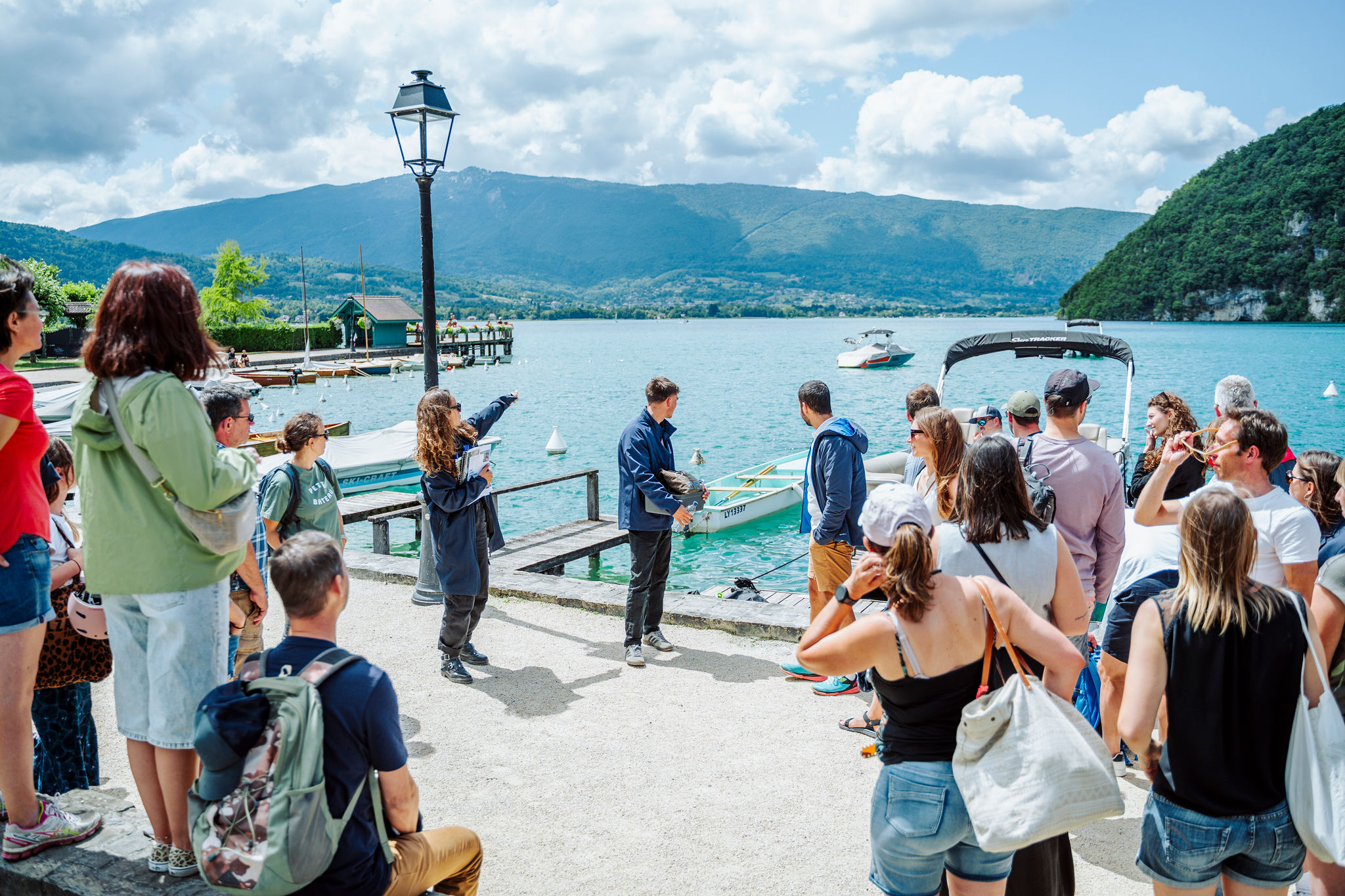
We regularly deliver guided formats with very different stakeholder expectations. For a leadership team visiting Antwerpen ahead of a strategy dinner, we built a 75-minute route with two “quiet” discussion stops and a hard stop aligned with restaurant seating time—supported by an on-site marshal managing late arrivals and discreet headcounts.
For an HR onboarding cohort, we structured a 90-minute walk with short micro-stories tied to company values, followed by a controlled debrief moment (10 minutes) that fed directly into the internal onboarding workshop. The practical win was inclusion: two pace options and a clear regroup protocol meant nobody was left behind, and the HR team could focus on new hires instead of logistics.
For client hospitality, we delivered parallel EN/NL tours for mixed international guests, with consistent brand framing across both groups. We planned photo windows for the communication team and ensured that the route ended in a clean transition to a cocktail—no guests “lost” in the city, no uncertainty about the next step.
Common mistakes we prevent on guided tours in Antwerpen
Underestimating group movement time: what looks like 12 minutes on a map becomes 20+ minutes with 50 people, traffic lights, and regrouping.
One guide for an oversized group: guests can’t hear, the group stretches, and the perceived quality drops immediately.
No clear check-in discipline: missing people, late starts, and internal hosts forced into calling and searching.
Ignoring accessibility and comfort: too many stairs, too long standing moments, no alternative loop for reduced mobility.
Weather denial: no Plan B for wind/rain/cold leads to short attention spans and dissatisfaction.
Content not aligned with corporate context: an interesting story can still be irrelevant—or risky—if it conflicts with your brand positioning or audience sensitivity.
Our role is to remove these risks through planning, route engineering, guide briefing, and on-site control. This is what makes a Geleide rondleiding in Antwerpen feel effortless for your guests and safe for your organisation.
Why companies repeat guided programmes in Antwerpen with us
Clients come back when the experience is predictable: timing is respected, the tone is right for corporate audiences, and there is a single accountable partner who prevents small issues from becoming visible problems.
High repeat rate on HR onboarding and client hospitality formats because the operational template is reusable while the content remains refreshed.
Programme continuity: the same production standards (briefings, checklists, run-of-show) across cities, including Antwerpen, which matters for national organisations.
Stakeholder comfort: executive assistants and comms leads appreciate that we anticipate decision points and approval needs (scripts, photo moments, timings).

Loyalty is not about novelty—it’s about reliability under pressure. When your leadership or clients are present, that reliability is the real quality marker.
Our production process for Antwerpen corporate tours
👉 Step 1 — Define the business objective and constraints (Antwerpen)
We start with a 20–30 minute scoping call with HR/Comms/EA stakeholders: audience profile, languages, schedule locks, dress code, accessibility needs, and what “success” looks like (networking, client impression, cohesion, onboarding). We also identify non-negotiables: hard stop time, VIP handling, confidentiality, brand sensitivities.
👉 Step 2 — Route engineering and guide selection in Antwerpen
We propose 1–2 route options with realistic walking times, regroup points, and a content outline. We select guides based on audience: corporate tone, multilingual capability, and comfort with briefing and timeboxing. If group size requires splitting, we design synchronized start/finish logic to keep the programme coherent.
👉 Step 3 — Operational plan: run-of-show, roles, Plan B
We deliver a practical run sheet: meeting point map, timing per segment, guide allocations, contact list, and escalation protocol. We build a weather Plan B (shorter loop, more indoor time where possible) and define decision gates (e.g., “switch to Plan B if rain probability is > 60% at T-4h”).
👉 Step 4 — Corporate briefing and approvals (Antwerpen)
For sensitive audiences (clients, VIPs, press exposure), we validate the narrative: what to emphasize, what to avoid, and how to integrate your message without sounding scripted. Comms can approve key speaking points; HR can validate inclusion elements; EAs can validate timing and VIP movement.
👉 Step 5 — On-site delivery and control
We run check-in, group allocation, and timekeeping. The on-site lead manages late arrivals, headcounts, and transitions so the guide can focus on delivery. We close with a controlled handover to the next programme element (coach, cocktail, dinner), avoiding the classic “everyone disperses” problem.
👉 Step 6 — Debrief and reuse
Within 48–72 hours, we debrief what worked and what to refine: pacing, audibility, stops, group split logic, and stakeholder feedback. For recurring programmes in Antwerpen, we turn this into a reusable template that saves time and reduces risk for the next edition.
FAQ sur l'organisation Geleide rondleiding à Antwerpen
How long should a corporate guided tour in Antwerpen be?
Most corporate groups choose 60–120 minutes. For a pre-dinner format, 75–90 minutes is the safest to protect seating time. For tight agendas, we can run a 45–60 minute highlight loop with one strong narrative thread.
What group size works best for Antwerpen guided visits?
The sweet spot is 15–25 people per guide. Above 30–35, we recommend splitting into multiple groups to keep audibility and pace. For 80–200, we run parallel tours with synchronized start/finish and on-site marshals.
Do we need audio systems for a tour in Antwerpen?
For groups above 35–40 or in busy areas, yes—audio improves comprehension and reduces the “crowd effect.” For smaller groups, good guide positioning and smart stop selection can be enough.
Can a Geleide rondleiding in Antwerpen fit a dinner schedule?
Yes, if timing is engineered backward from your dinner seating time. We build a buffer (typically 10–15 minutes) for regrouping and transfers, and we set a hard stop with a controlled handover to the restaurant or coach.
How early should we book a corporate tour in Antwerpen?
For standard outdoor routes, 3–4 weeks is comfortable. If you need indoor anchors, multiple languages, or a peak-date programme, plan 6–10 weeks ahead to secure time slots and the right guide profiles.
Request a quote for your guided tour in Antwerpen (2000)
If you are comparing agencies, we can provide a clear proposal with route options, guide ratio, timing plan, and operational roles—so you can validate feasibility before committing budget. Share your date window, group size, languages, and the next agenda item (cocktail/dinner/meeting), and we’ll come back with a structured recommendation for a Geleide rondleiding in Antwerpen.
For corporate programmes, earlier planning reduces cost and risk: it secures the right guides, allows site validation, and avoids rushed compromises. Contact INNOV'events to schedule a short scoping call and receive a practical, decision-ready quote.
Agence INNOV'events Antwerpen
Justin JACOB est le responsable de l'agence événementielle Antwerpen. Contactez-le directement par mail via l'adresse belgique@innov-events.be ou par formulaire.
Contacter l'agence AntwerpenToutes nos prestations & animations Antwerpen, Belgique
Découvrez nos prestations événementielles
Découvrez nos animations événementielles disponibles au Belgique
- Hôtesse événementielle à Antwerpen
- Escape Game à Antwerpen
- Cours de cuisine type MasterChef à Antwerpen
- Magicien à Antwerpen
- Location de chapiteau à Antwerpen
- Atelier colorimétrie à Antwerpen
- Jeux gonflables à Antwerpen
- Service de voiturier à Antwerpen
- Simulateur de football à Antwerpen
- Location de mobilier lumineux à Antwerpen
- Flocage lumineux à Antwerpen
- Repas insolite à Antwerpen
- Light Painting à Antwerpen
- Murder Party à Antwerpen
- Jeu concours à Antwerpen
- PLV événementielle à Antwerpen
- Réalité virtuelle à Antwerpen
- Cuisine moléculaire à Antwerpen
- Animation Halloween à Antwerpen
- Feu d’artifice à Antwerpen
- Jeux géants à Antwerpen
- Animateur événementiel à Antwerpen
- Animation photo à Antwerpen
- Père Noël à Antwerpen
- Animation enfants à Antwerpen
- Visite guidée à Antwerpen
- Rallye urbain à Antwerpen
- Piscine à balles à Antwerpen
- Simulateur de vol à Antwerpen
- Location de food truck à Antwerpen
- Record du monde à Antwerpen
- Simulateur de surf à Antwerpen
- Casino du vin à Antwerpen
- Atelier relooking à Antwerpen
- Atelier création de parfum à Antwerpen
- Atelier acting à Antwerpen
- Animations RSE à Antwerpen
- Tir à l’arc à Antwerpen
- Agent de sécurité à Antwerpen
- Œnologie à Antwerpen
- Mime à Antwerpen
- Jeu télévisé à Antwerpen
- Fête foraine à Antwerpen
- Atelier gestion de crise à Antwerpen
- Atelier négociation de crise à Antwerpen
- Jeux d’arcade à Antwerpen
- Simulateur de chute libre à Antwerpen
- Simulateur de ski à Antwerpen
- Simulation circuit automobile à Antwerpen
- Baptême de l’air à Antwerpen
- Dégustation à Antwerpen
- Création de baby-foot à Antwerpen
- Rallye 2CV à Antwerpen
- Challenge LEGO à Antwerpen
- Animation casino à Antwerpen
- Interprète / traducteur à Antwerpen
- Goodies à Antwerpen
- Bus / transfert à Antwerpen