
Goochelaar in Brussel for corporate events that stay on schedule
INNOV'events supports executives, HR and communication teams with the right Goochelaar format for Brussel corporate events, from 30 to 1,500+ attendees. We secure the artist, adapt the act to your audience, and coordinate timing, technical needs, and on-site logistics. You keep the agenda and the brand message; we handle the operational reality.
Sommaire
In a corporate setting, entertainment is not “just a show”: it is a tool to manage energy, create structured interactions between departments, and protect attention during long agendas. A well-briefed Goochelaar can unlock networking, reduce social friction, and support key moments such as awards, leadership messages, or client hospitality—without disrupting the flow.
Organizations in Brussel typically expect multilingual comfort (FR/NL/EN), strict timekeeping, and discretion in VIP environments. They also want a format that works with mixed profiles: executives, operational teams, international guests, and sometimes public-sector stakeholders—each with different codes and tolerance for “on-stage” participation.
As an event agency in Brussel, INNOV'events works with local venues, technical crews, and artists who know Brussels constraints (load-in windows, security procedures, parking/access, and multilingual audiences). We design entertainment that fits your risk level, your brand image, and your event’s operational constraints.
INNOV'events figures for Brussels decision-makers
10+ years coordinating corporate events and artistic programming across Belgium, with recurring projects in Brussel and the EU district.
A vetted network of 50+ performers and specialist suppliers (artists, sound/lighting, AV, stage management), with reference checks and clear contracting.
Operational capacity from 30 to 1,500+ attendees, including multi-room networking formats where close-up magic must be scheduled and paced.
On-site production approach: a named project lead + a run-of-show + cue management, so entertainment supports the agenda rather than competing with it.
Local references in Brussel and recurring collaborations
We operate weekly in Brussel with companies that care about detail: punctuality, clear technical coordination, and an entertainment style aligned with corporate culture. Several clients collaborate with us year after year because they know we protect the essentials on event day: timing, guest comfort, and brand reputation.
To keep this page truthful and compliant, we only publish client names when we have written authorization. In practice, we regularly support Brussels-based headquarters, international firms hosting visitors near the European quarter, and local scale-ups organizing team moments around Louise, Delta, and Tour & Taxis. If you want, we can share relevant case examples (sector, audience size, venue type, objective) during a call, under NDA when needed.
What matters for you as a director: our references are not “nice stories”, they are repeatable operating patterns—clear briefing documents, predictable cueing, and vendor discipline—so your internal stakeholders (HR, Comms, Facilities, Security) are not forced to improvise.
 Besoin d’un devis rapide ?
Nous vous envoyons une première proposition sous 24h.
Why book a Goochelaar in Brussel for a corporate event?
In Brussels, corporate events often have a dual role: internal cohesion (in a hybrid, multilingual workplace) and external representation (clients, partners, institutions). A Goochelaar in Brussel can be a practical lever to create structured micro-interactions and to relieve the pressure on hosts and senior leaders, provided the format is chosen with operational discipline.
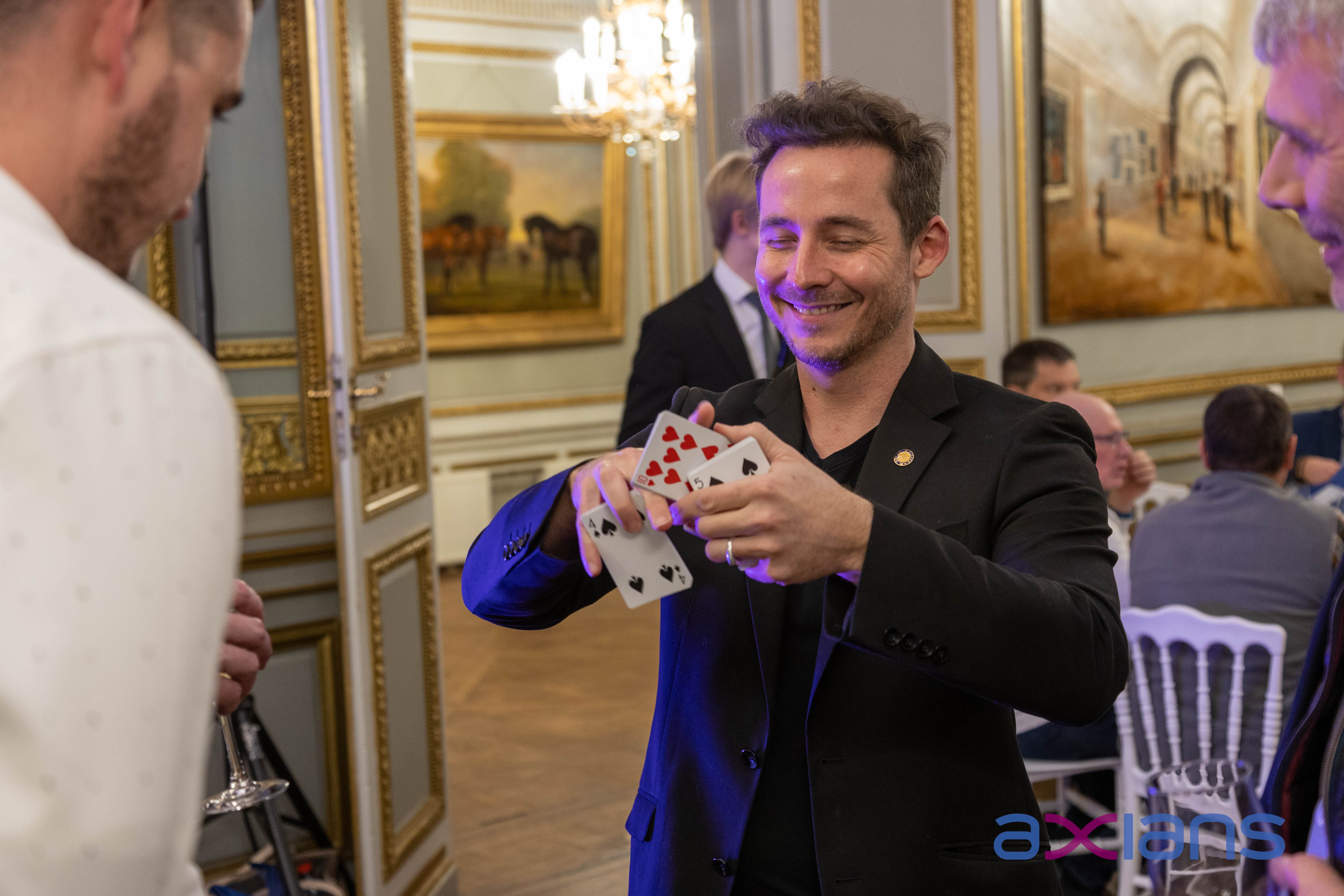
Networking that actually starts: close-up magic in cocktail zones helps guests who do not know each other to break the first barrier. In practice, it reduces the “people on their phones” effect in the first 20 minutes, especially with mixed departments or newly integrated teams after a reorg.
Controlled energy management: after a long plenary or KPI-heavy segment, a short stage piece (or a roaming set) resets attention without forcing a party atmosphere. This is useful when you must keep a professional tone for senior stakeholders.
Employer brand with low operational cost: HR teams use it as a high-perceived-value moment without increasing complexity like a full show production. The key is to avoid “random participation” and to keep the act inclusive for introverts and international guests.
Message reinforcement: with a proper brief, certain effects can support a theme (innovation, trust, cybersecurity awareness, onboarding). We avoid gimmicks; we translate your message into a safe narrative device that does not expose leadership to awkwardness.
Better guest flow: in venues with multiple spaces (plenary + cocktail + dinner), the magician can be positioned at transition points to pull guests toward the next zone, which reduces delays and avoids repeated announcements from the MC.
Brussels’ economic culture is international and time-sensitive: guests often arrive from meetings, trains, or airports. The best entertainment here is efficient, multilingual, and respectful of formal business codes—while still creating genuine connection.
What Brussels audiences expect from corporate entertainment
In Brussel, you frequently host a mixed audience: local teams, international visitors, and sometimes stakeholders linked to EU institutions, federations, or regulated sectors. That changes what “works”. The entertainment must be engaging without being intrusive, and it must not create reputational risk.
Operationally, Brussels events come with concrete constraints we plan for:
- Language reality: many guests switch between FR/NL/EN in the same conversation. We prioritize performers who can handle transitions naturally and do not rely on complex wordplay that fails in multilingual settings.
- Security and access: venues near the European quarter often have stricter badge rules, limited load-in slots, and controlled backstage areas. We anticipate ID lists, arrival times, and the minimum technical footprint required for the chosen format.
- Time discipline: Brussels corporate dinners and conferences tend to run on tight schedules (train departures, early flights). We design acts in modular blocks (e.g., 3 x 12 minutes or 60–90 minutes roaming) so we can adapt without “cutting badly”.
- Brand sensitivity: some sectors (finance, pharma, public affairs) avoid humor that could be interpreted as political or personal. We brief content boundaries explicitly—what is allowed, what is excluded, and how audience interaction is managed.
These are not theoretical points: they are typical friction areas on event day. Our role is to remove them before they hit your internal teams.
Which Goochelaar formats work best for events in Brussel?
Engagement is not created by “more noise”; it is created by giving guests a reason to interact without forcing them. A well-selected Goochelaar in Brussel can deliver that in a very controlled way—especially valuable for executives who want a premium feel without a risky stage dynamic.
Animations Interactives à Brussel
Close-up during welcome cocktail (60–120 minutes): ideal for client receptions, onboarding cohorts, or post-plenary networking. The magician rotates in micro-groups of 4–8, creating short peaks of attention and conversation starters.
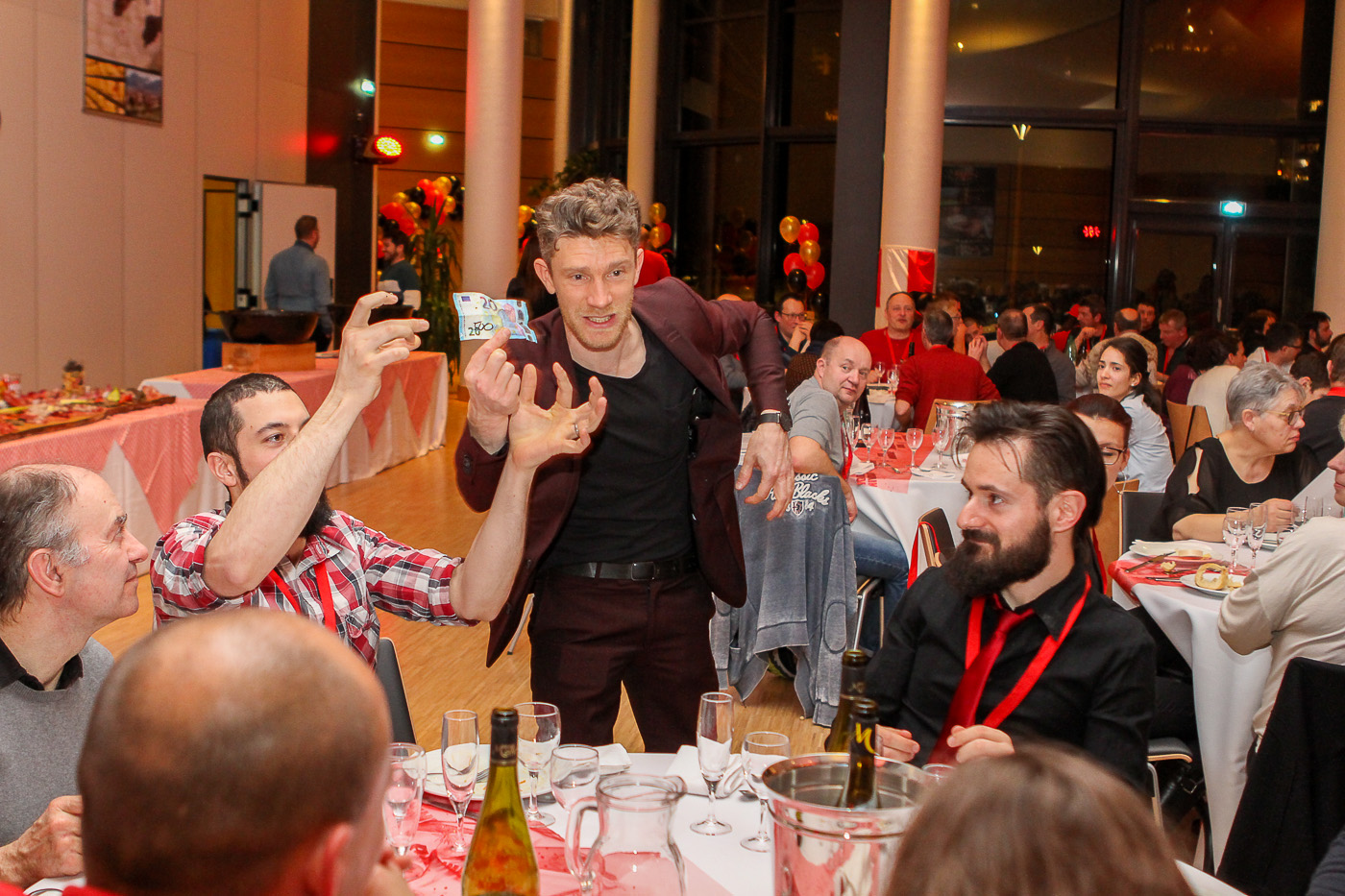
Table-to-table during dinner: effective when you have seated service and want to keep energy up between courses. We coordinate with catering so the artist never interrupts service or speeches.
“Ice-breaker” sets for multi-team gatherings: short interventions placed at the start of a workshop day to encourage cross-department exchanges—useful after mergers, reorganizations, or when teams rarely meet in person.
Animations Artistiques à Brussel
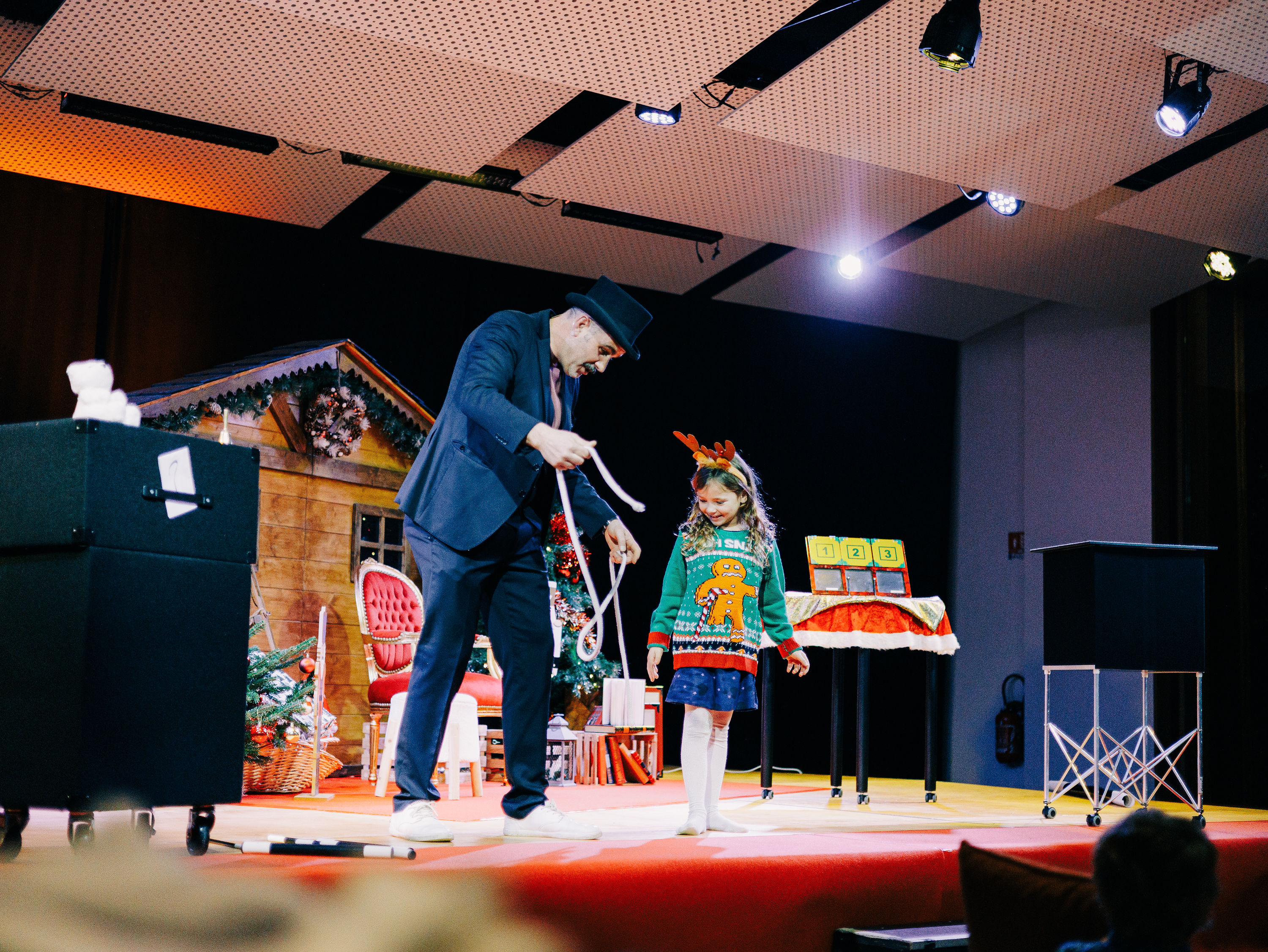
Stage magic set (10–20 minutes): works well as a controlled highlight before a leadership message or as a clean opener to an awards moment. We ensure visibility for the full room and avoid participation that could embarrass a VIP.
Mentalism with corporate framing: when the audience is senior and you want a “smart” tone. We brief boundaries carefully (no personal questions, no sensitive topics) and ensure multilingual delivery is coherent.
Visual magic for international audiences: effects designed to land even when language levels vary. Particularly relevant in Brussels when guests include expats, visiting teams, or partner delegations.
Animations Innovantes à Brussel
Magic + tasting stations: the magician works around a chocolate, beer, or mocktail bar to activate guest flow. In Brussels venues with multiple zones, this prevents crowding and distributes energy across the space.
Pairing with dessert service: a short roaming segment timed with coffee helps keep people in the room for the closing message or informal networking, instead of dispersing too early.
Animations Gourmandes à Brussel
Digital-assisted close-up: effects using a phone in a controlled way (no data collection, no intrusive filming). Useful for tech companies or innovation themes, but always aligned with your privacy culture.
Trade-show style magic at product corners: for internal expos or partner days, magic can drive traffic to key stations. We schedule rotations so each corner gets exposure, rather than random clustering.
Hybrid-friendly micro-acts: when part of your audience is remote, we can integrate a short camera-friendly segment during a broadcast moment, provided AV is planned in advance.
Whatever the format, we align it with your brand image: tone, level of humor, interaction style, and technical footprint. For regulated or high-stakes environments in Brussel, “safe elegance” usually performs better than loud spectacle—and it reflects well on the host organization.
Which Brussels venues fit a Goochelaar setup best?
The venue impacts what kind of Goochelaar performance will actually work. Ceiling height, room acoustics, service flow, and guest density can either elevate the experience or make it feel awkward. In Brussel, we often see strong results when the venue layout supports smooth circulation and clear sightlines.
| Venue type | For which objective? | Main strengths | Possible constraints |
|---|---|---|---|
| Hotel conference venue (plenary + breakout) | Conference days, awards, client seminars needing tight timing | Built-in AV, predictable logistics, easy cueing for a 10–20 min stage set | Ballroom acoustics can be echoey; stage sightlines must be checked; strict load-in windows |
| Industrial/event halls (large open spaces) | Company parties, end-of-year events, high attendance formats | Great for roaming close-up across zones; flexible staging; strong visual impact | Requires more technical production; noise management is critical for close-up quality |
| Corporate HQ / office atrium | Internal celebrations, leadership visits, onboarding or milestone moments | Low travel time for staff; strong employer-brand signal; easy to integrate with internal content | Security protocols, limited backstage, and non-event lighting/sound can reduce stage quality |
We strongly recommend a site visit (or at minimum a technical walk-through with photos and room plan). It is the most reliable way to confirm circulation, sound pressure, and where the artist can operate without fighting catering, security, or guest flow.
What does a Goochelaar in Brussel cost for a corporate event?
Pricing for a Goochelaar in Brussel depends on format, duration, seniority, and technical requirements. For corporate events, the “cheap vs expensive” difference is usually not the tricks—it is professionalism: multilingual delivery, reliability, the ability to work inside a run-of-show, and the discipline to protect your brand.
Format: close-up roaming typically prices differently from a staged set. A stage performance often requires additional rehearsals, microphones, and cueing.
Duration and pacing: 60–90 minutes of close-up is a different workload than 3 hours of roaming across multiple rooms; longer durations require careful energy management and sometimes a second performer.
Audience size and density: for 200+ guests, one magician may not reach enough people to create perceived impact; adding a second artist can raise satisfaction more than increasing stage production.
Language requirements: FR/NL/EN capability may influence availability and fee level, especially during peak corporate periods (end-of-year, September–November).
Technical footprint: stage set with sound reinforcement, lighting adjustments, or camera feed increases production needs. We budget transparently to avoid last-minute AV invoices.
Brand and content briefing: if you want message integration (innovation theme, values, product narrative), we plan extra preparation time and validation steps to keep it safe and coherent.
We frame budget as return on objective: faster networking, better attention during key messages, and a smoother guest journey. In Brussels, where events are often time-compressed and stakeholder-heavy, reliability and timing discipline usually deliver the highest ROI.
Why use a Brussels agency to book a Goochelaar?
Booking a performer is easy; delivering a flawless corporate experience in Brussel is harder. A local agency adds value by reducing operational risk and protecting your internal resources. Executives and HR teams typically do not have time to manage artist contracts, technical riders, cueing, and venue coordination—especially when the event also includes speeches, awards, catering, and VIP handling.
INNOV'events operates locally, which matters in practical terms: we know how Brussels venues run, how traffic and access can affect call times, and how multilingual audiences respond to different interaction styles. On event day, that local familiarity prevents small issues from becoming schedule-impacting problems.
- One accountable partner: contract, invoicing, insurance checks, and artist management in one place—no grey zones when something changes.
- Access to reliable talent: we prioritize artists with proven corporate behavior (punctuality, discretion, language ability), not just stage charisma.
- Run-of-show integration: we coordinate with your MC, AV team, venue manager, and catering so the entertainment supports service flow and speeches.
- Contingency planning: backup options, timing alternatives, and clear decision points if the agenda shifts or attendance changes.
- Brand risk control: defined boundaries for humor, participation, filming, and content, validated with HR/Comms when needed.
We frame budget as return on objective: faster networking, better attention during key messages, and a smoother guest journey. In Brussels, where events are often time-compressed and stakeholder-heavy, reliability and timing discipline usually deliver the highest ROI.







Examples of corporate magic use-cases in Brussel
Our projects in Brussel cover different objectives and constraints, which is exactly what you need when comparing agencies: evidence that the method works across formats, not just in one “perfect” scenario.
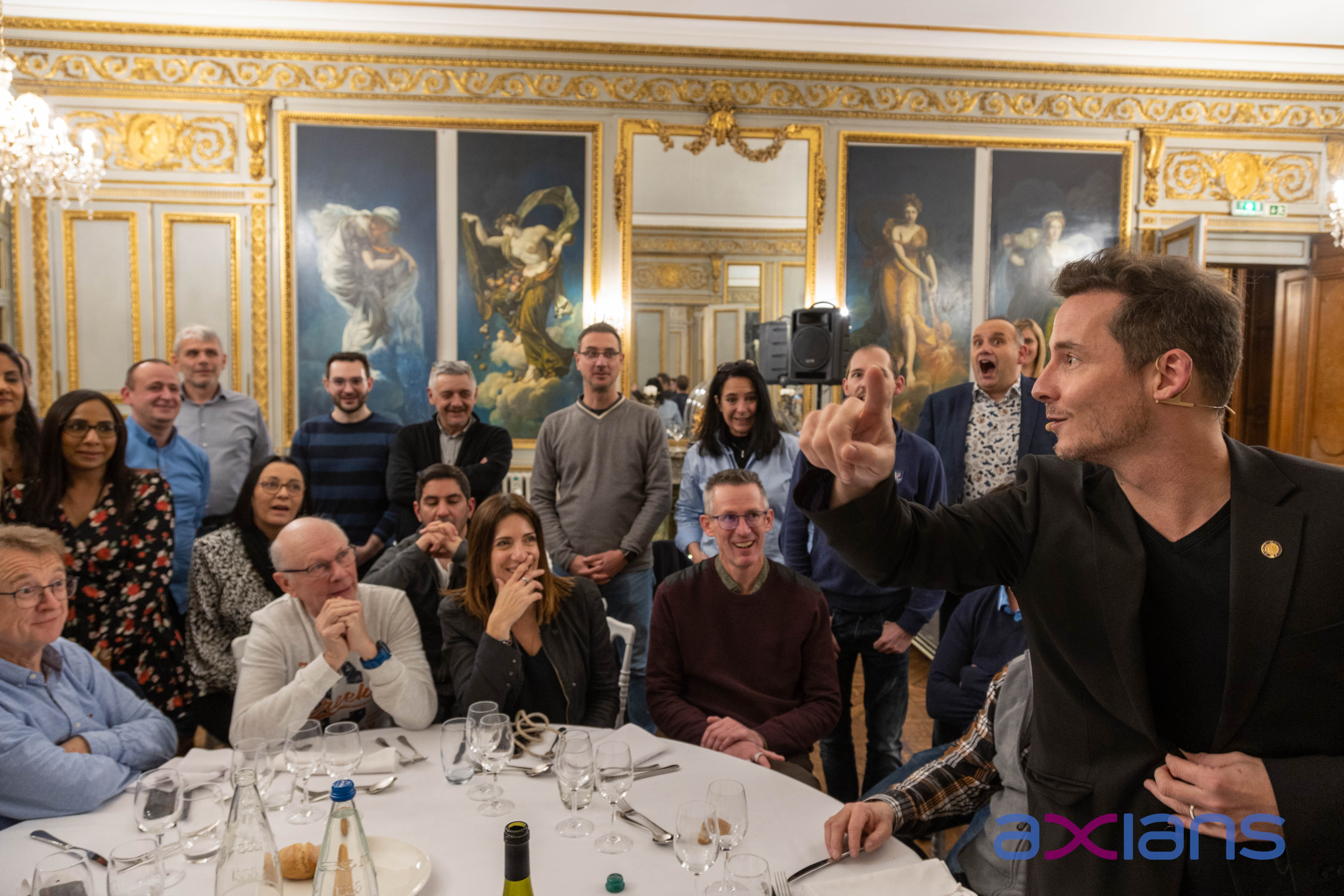
- Client hospitality cocktail (120 guests, multilingual): close-up magic positioned at the welcome zone and near key sponsor corners to accelerate conversations. Outcome: guests stopped clustering with colleagues and mixed faster; leadership could circulate without constantly “introducing” people.
- Awards dinner (300+ guests): a short stage set used as a clean transition between main course and awards segment, keeping the room together while AV reset. We worked on tight cues with the venue to avoid speeches being delayed by service.
- HR onboarding event (60 guests): interactive, low-pressure close-up in small groups with clear “opt-in” interaction, designed for introverts and international hires. The goal was not volume, but comfort and social ease.
- Partner day with multiple spaces: roaming act scheduled by zones (not random), combined with a clear map and timing so each space received attention. This prevented the typical issue where entertainment stays where the crowd is already dense.
In each case, the difference was not the “idea”; it was the production discipline: briefing, positioning, timing, and coordination with on-site realities.
Common mistakes when hiring a Goochelaar in Brussel
Choosing the wrong format for the room: close-up in a very loud cocktail with no acoustic planning leads to frustration; stage magic in a wide room without screens leads to low engagement for guests at the back.
No clarity on interaction boundaries: executives and VIPs should never be pressured. Without rules, the act can create discomfort and reputational risk.
Ignoring service flow: table-to-table magic without coordination with catering can slow service, annoy staff, and compress the schedule for speeches.
Underestimating multilingual delivery: a performer who is excellent in one language can lose the room in Brussels if transitions are clumsy or humor is too language-dependent.
Last-minute technical assumptions: “We’ll just use the venue mic” often fails. A proper sound check and cue plan prevents feedback, dead batteries, and on-stage delays.
No plan B: traffic, access restrictions, or agenda changes happen. Without contingency options, internal teams are forced into stress-driven decisions.
Our role is to prevent these risks upstream: we qualify the venue, brief the artist, coordinate technical details, and protect your timing. That is what executives pay for—predictability and brand safety on event day.
Why Brussels clients rebook INNOV'events for corporate entertainment
Recurring collaboration is rarely about creativity alone. It is about trust that the agency will behave like an extension of the client team: clear communication, reliable suppliers, and no surprises on-site. In Brussel, where many events involve senior stakeholders and strict schedules, that reliability is often the deciding factor.
1 project lead assigned per event, responsible for briefing, supplier coordination, and on-site decisions.
Operational documents shared in advance: a run-of-show with cues, contact list, and technical checkpoints (especially important when multiple departments are involved).
Preference for long-term supplier relationships in Brussels to reduce variability in delivery quality.

Loyalty is proof of quality because it means the event delivered under real conditions: time pressure, stakeholder constraints, and the non-negotiable need to protect the company’s image.
How we deliver Goochelaar bookings in Brussel without surprises
👉 Brussels needs assessment and objective framing
We start with a short qualification call to understand your objective (networking, employer brand, client hospitality, awards pacing), the audience profile (languages, seniority, mix), and non-negotiables (timing, tone, participation boundaries). You get a clear recommendation: close-up, stage, or a hybrid approach, with operational implications spelled out.
👉 Artist selection and risk screening
We propose a small shortlist of performers suited to Brussel corporate audiences, with notes on style, language comfort, and what the act requires. We validate availability, contract terms, and professional requirements (call times, dress code, content boundaries). If your event is sensitive, we can propose a “safe” option with minimal audience exposure.
👉 Run-of-show integration and technical alignment
We integrate the entertainment into your agenda: where it starts, where it stops, and how it supports transitions. For stage formats, we confirm mic type, music cues if any, lighting basics, and sightlines. For close-up, we plan circulation and coordinate with catering so the performer does not interfere with service or speeches.
👉 On-site coordination in Brussel
On event day, we coordinate arrival, briefing refresh, and cues with the venue and AV team. We manage micro-delays, adjust pacing if speeches run long, and keep the entertainment aligned with guest flow. Your internal team stays focused on hosting and stakeholder management rather than production firefighting.
👉 Post-event feedback and optimization
After the event, we debrief what worked (format, timing, audience response) and what to adjust next time (more roaming time, additional performer, different placement). This is how recurring clients in Brussel improve consistency across events and reduce planning time year after year.
FAQ sur l'organisation Goochelaar à Brussel
How far in advance should I book a Goochelaar in Brussel?
For peak periods in Brussel (September–December and May–June), plan 4–8 weeks ahead for strong corporate performers. For large-scale dinners or dates with VIP constraints, 8–12 weeks is safer. Last-minute is possible, but choice and language options shrink fast.
What duration works best for close-up magic in Brussel?
Most corporate cocktails in Brussel perform best with 60–120 minutes of roaming close-up. Under 45 minutes the perceived impact can be uneven; beyond 2 hours, consider breaks or a second performer for consistent energy and coverage.
Can the performance be multilingual for Brussels audiences?
Yes—when we select the right Goochelaar. We typically recommend artists comfortable in FR/EN as a baseline, and NL when required by audience mix. We also prioritize visual routines that land regardless of language level, which is often the safest approach in Brussel.
Do we need a stage and AV for a Goochelaar in Brussel?
For close-up: usually no stage, and AV is optional. For a stage set: a small stage area, a working microphone, and basic front lighting are strongly recommended. In Brussels venues, we confirm this in advance to avoid on-the-spot compromises that reduce visibility and professionalism.
What are typical price ranges for a corporate Goochelaar in Brussel?
As a practical range in Brussel, corporate close-up often starts around €700–€1,500 for standard durations, while premium profiles, longer coverage, or stage formats can run €1,500–€3,500+, excluding technical production when needed. The exact quote depends on duration, language requirements, audience size, and technical footprint.
Request a Brussels quote for a corporate Goochelaar
If you are comparing agencies, we recommend a quick alignment call early: date, venue short-list, audience size, languages, and your agenda constraints. Based on that, INNOV'events will propose the most operationally safe Goochelaar in Brussel format, with clear timing, technical needs, and a transparent budget structure.
Share your event context (objective, attendance range, venue area in Brussel, and any stakeholder sensitivities). We will come back with concrete options and a quote that you can validate internally—without surprises on event day.
Agence INNOV'events Brussel
Justin JACOB est le responsable de l'agence événementielle Brussel. Contactez-le directement par mail via l'adresse belgique@innov-events.be ou par formulaire.
Contacter l'agence BrusselToutes nos prestations & animations Brussel, Belgique
Découvrez nos prestations événementielles
Découvrez nos animations événementielles disponibles au Belgique
- Hôtesse événementielle à Brussel
- Escape Game à Brussel
- Cours de cuisine type MasterChef à Brussel
- Magicien à Brussel
- Location de chapiteau à Brussel
- Atelier colorimétrie à Brussel
- Jeux gonflables à Brussel
- Service de voiturier à Brussel
- Simulateur de football à Brussel
- Location de mobilier lumineux à Brussel
- Flocage lumineux à Brussel
- Repas insolite à Brussel
- Light Painting à Brussel
- Murder Party à Brussel
- Jeu concours à Brussel
- PLV événementielle à Brussel
- Réalité virtuelle à Brussel
- Cuisine moléculaire à Brussel
- Animation Halloween à Brussel
- Feu d’artifice à Brussel
- Jeux géants à Brussel
- Animateur événementiel à Brussel
- Animation photo à Brussel
- Père Noël à Brussel
- Animation enfants à Brussel
- Visite guidée à Brussel
- Rallye urbain à Brussel
- Piscine à balles à Brussel
- Simulateur de vol à Brussel
- Location de food truck à Brussel
- Record du monde à Brussel
- Simulateur de surf à Brussel
- Casino du vin à Brussel
- Atelier relooking à Brussel
- Atelier création de parfum à Brussel
- Atelier acting à Brussel
- Animations RSE à Brussel
- Tir à l’arc à Brussel
- Agent de sécurité à Brussel
- Œnologie à Brussel
- Mime à Brussel
- Jeu télévisé à Brussel
- Fête foraine à Brussel
- Atelier gestion de crise à Brussel
- Atelier négociation de crise à Brussel
- Jeux d’arcade à Brussel
- Simulateur de chute libre à Brussel
- Simulateur de ski à Brussel
- Simulation circuit automobile à Brussel
- Baptême de l’air à Brussel
- Dégustation à Brussel
- Création de baby-foot à Brussel
- Rallye 2CV à Brussel
- Challenge LEGO à Brussel
- Animation casino à Brussel
- Interprète / traducteur à Brussel
- Goodies à Brussel
- Bus / transfert à Brussel