
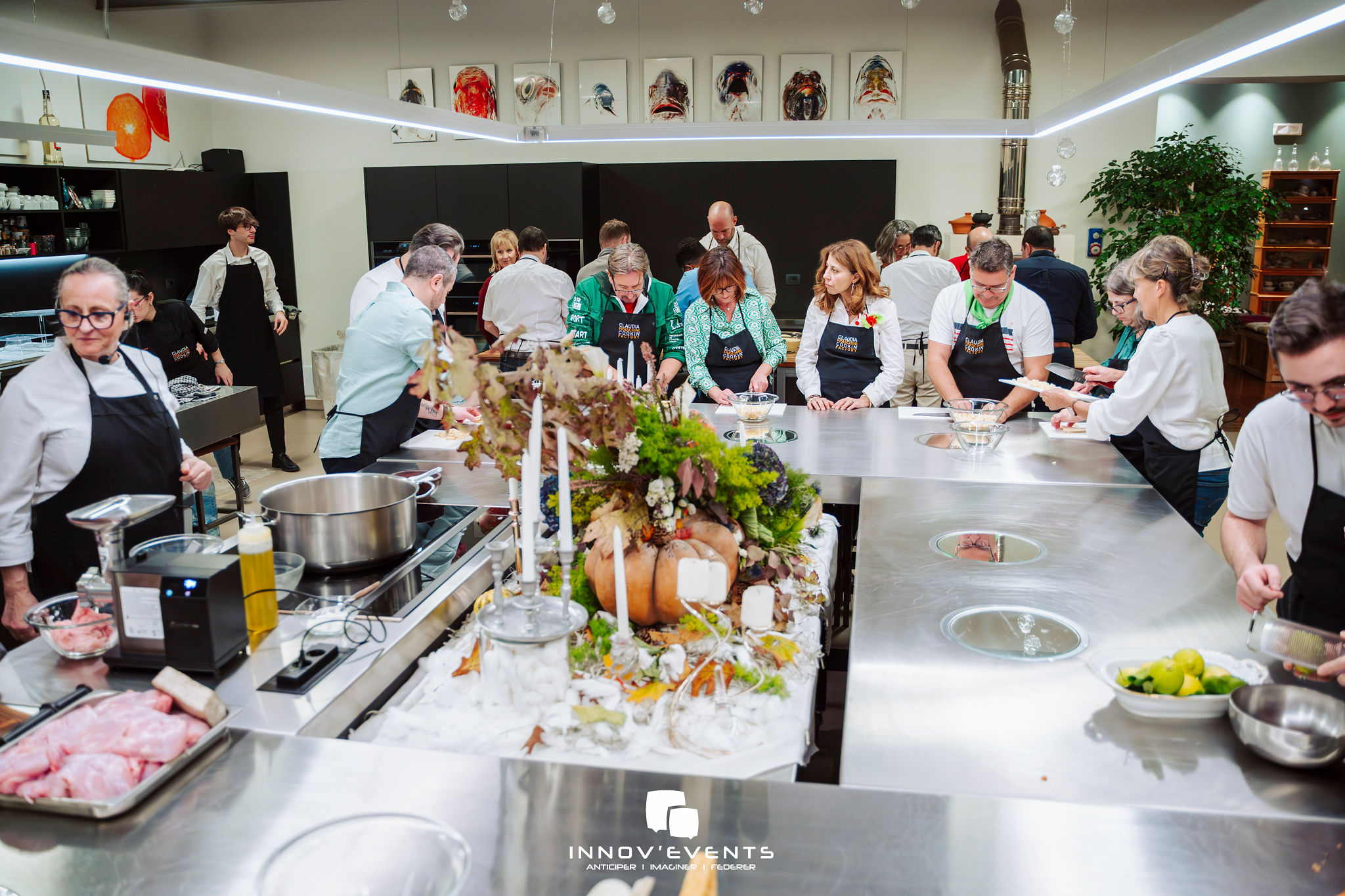
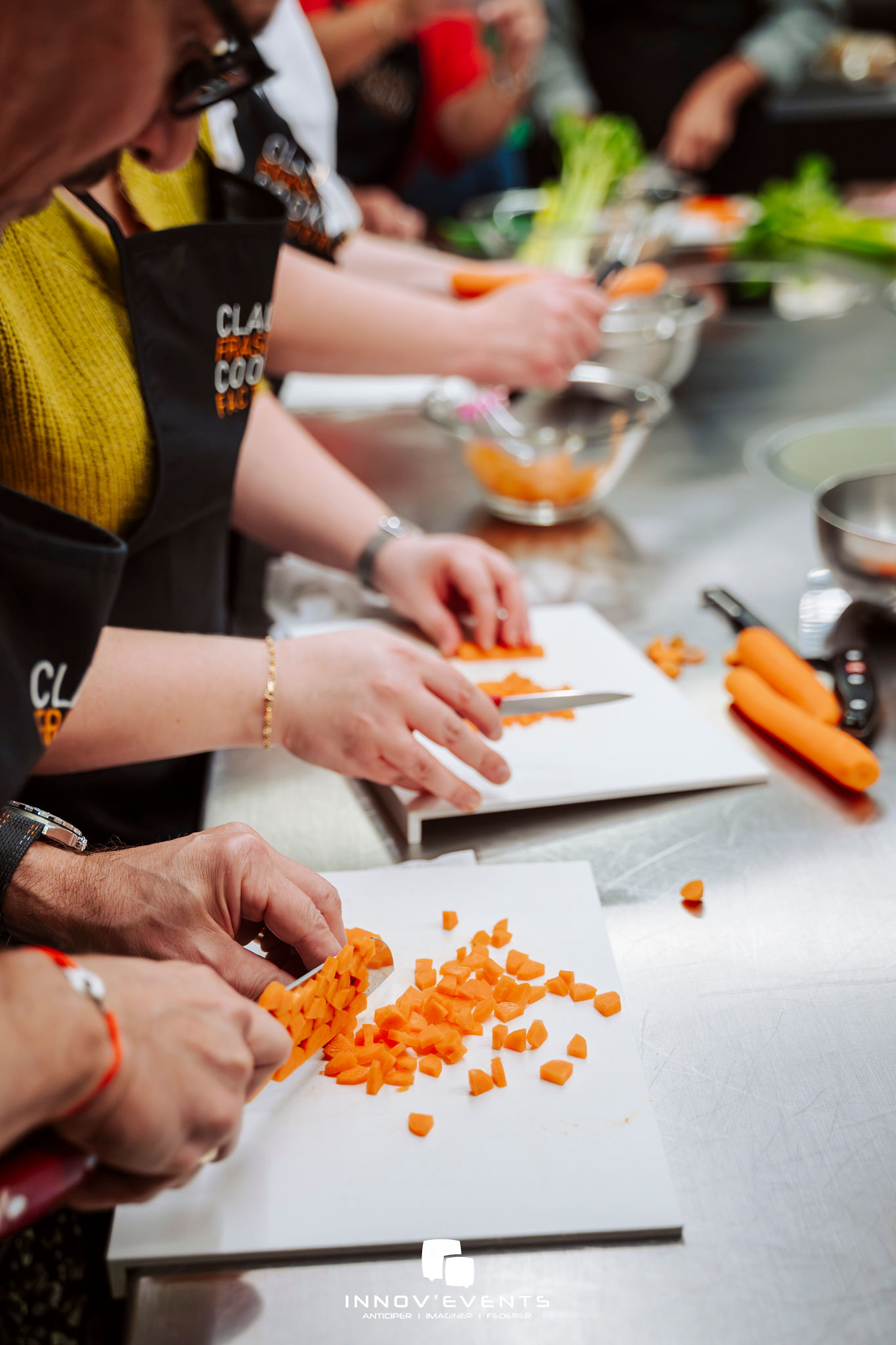
MasterChef kookworkshop in Luik that actually works for your teams
INNOV'events is a Brussels-based corporate event agency delivering MasterChef kookworkshop in Luik formats for 12 to 120 participants. We run the full operation: venue coordination, chef staffing, ingredients, timing, facilitation, and a clean handover that respects your workplace constraints.
You get a structured team experience with clear roles, measurable outputs (dishes, scoring, feedback) and a controlled risk profile (food safety, allergies, logistics), suitable for executive offsites, HR engagement days and client moments.
Sommaire
In a corporate agenda, entertainment is rarely “extra”: it’s a tool to accelerate alignment, rebuild trust after a reorg, or create informal decision time between executives. A well-designed culinary challenge translates directly into collaboration behaviours you can observe and debrief.
Organizations in Luik typically expect realism: punctual starts, clear bilingual briefings when needed, and a format that does not waste leadership time. They also expect operational discipline: controlled alcohol policy, allergy management, and a venue that fits access and parking constraints.
We bring field-tested facilitation and production standards, with local supplier coordination in Luik and a Brussels agency backbone for logistics and contingency planning. That combination is what keeps the event smooth when the day gets busy.
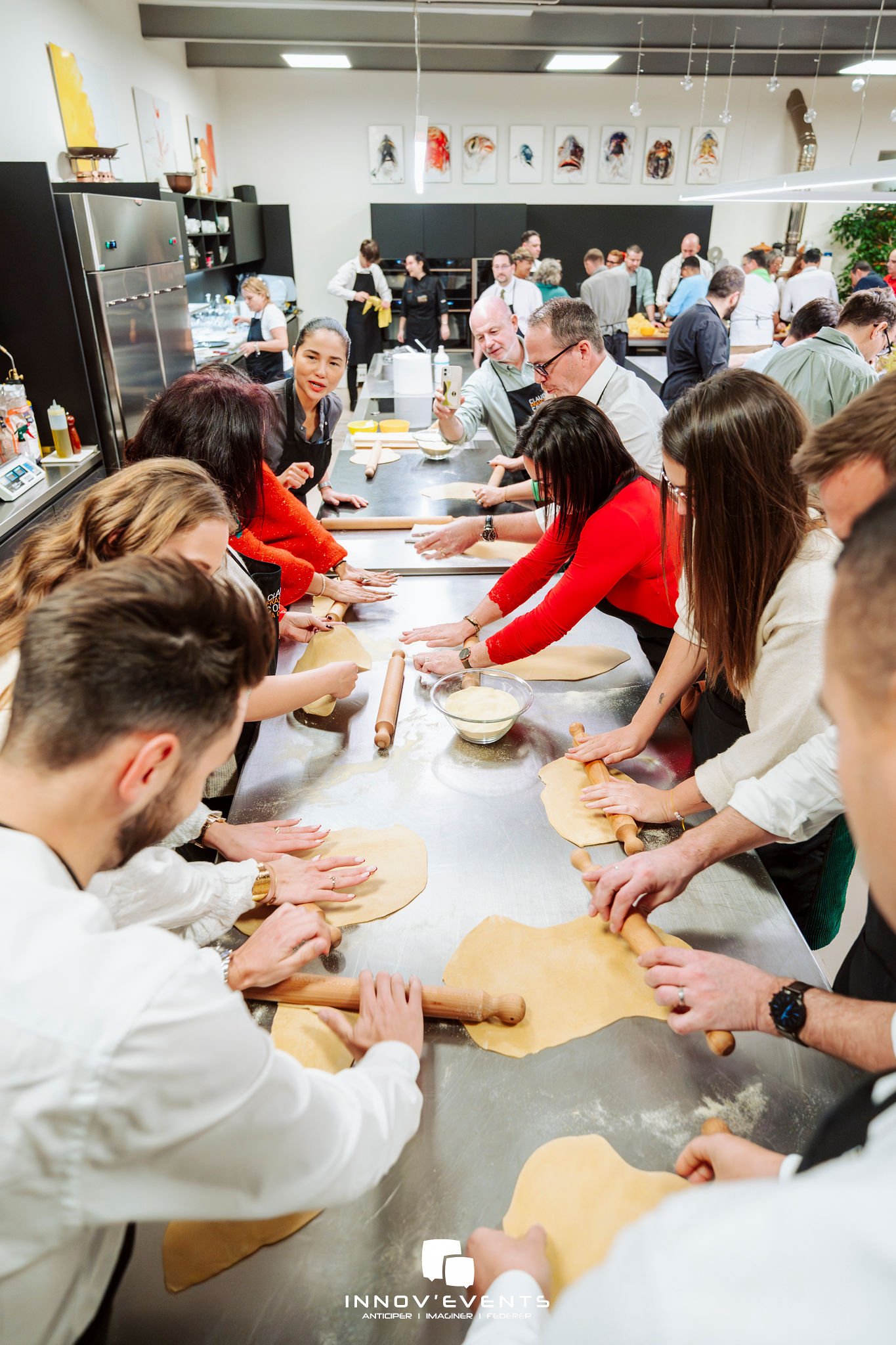
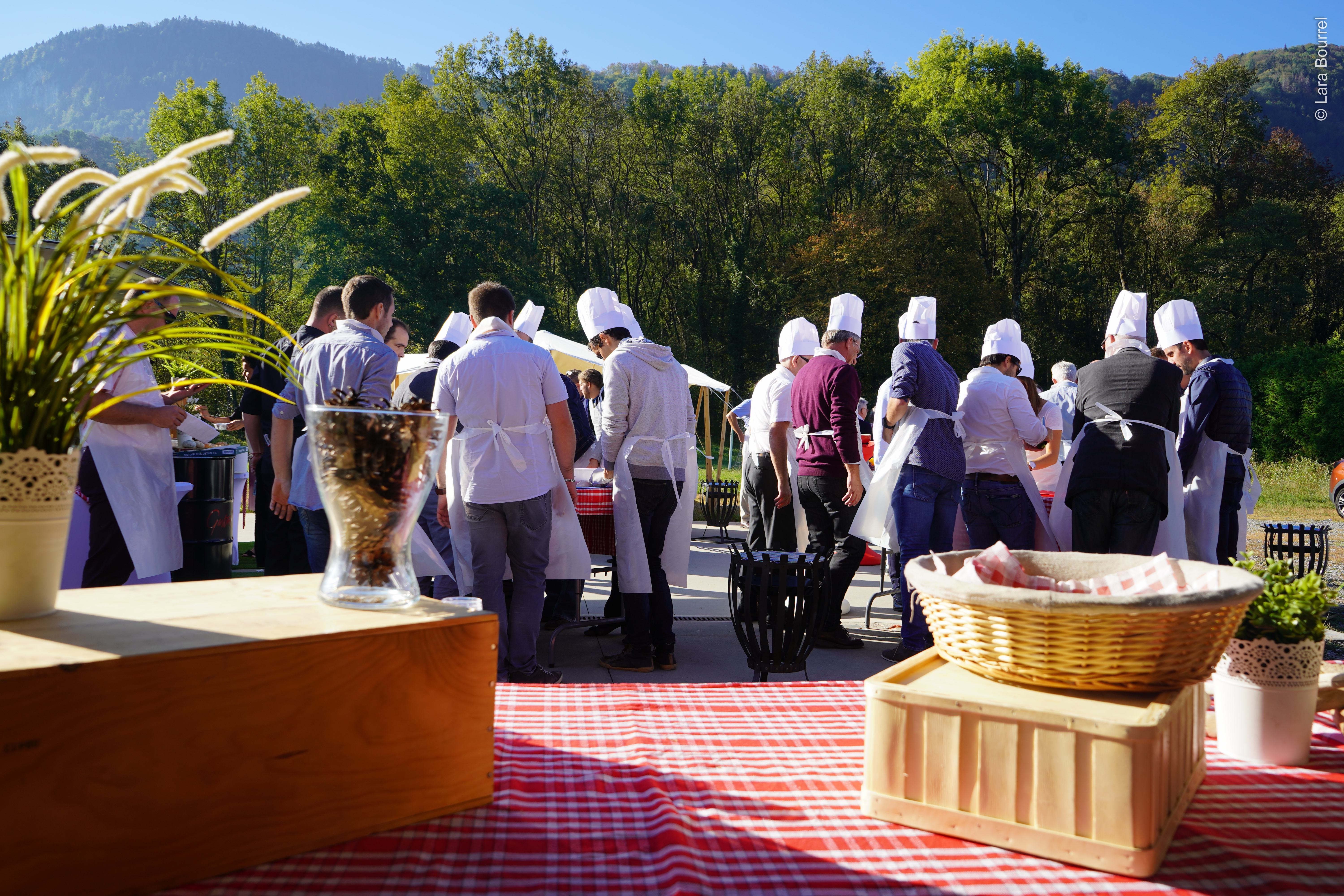
Operational proof points for Luik projects
10+ years in corporate event production across Belgium, with repeat programmes for HR and leadership teams.
Chef & facilitator pool sized for parallel kitchen stations: typical ratio 1 chef per 12–18 participants depending on complexity and venue equipment.
Risk management embedded: allergen collection workflows, HACCP-aligned kitchen practices, and a documented run-of-show shared before the event.
Formats delivered from compact groups (12–20) to multi-team challenges (80–120) with synchronized service and scoring.
Local references and recurring clients in Luik
We regularly support organisations active in Luik and the broader Liège economic area (industry, logistics, healthcare, public utilities, services). Some teams come back year after year because the operational burden stays on our side: one point of contact, predictable preparation, and a format that scales without losing control.
You mentioned you have specific company names to be used as references. Share those names and we will integrate them here in a compliant way (with the right wording and approval level), including the type of setup delivered (group size, objective, timing constraints) while respecting confidentiality.
What we can already say from experience on the territory: many decision-makers in Liège value pragmatic design—less show, more structure—and a supplier who can handle last-minute agenda changes without compromising safety, timing or brand image.
 Besoin d’un devis rapide ?
Nous vous envoyons une première proposition sous 24h.
Why choose a MasterChef workshop in Luik for your leadership goals
A MasterChef kookworkshop is one of the few corporate formats where collaboration is visible in real time: role allocation, pressure management, decision speed, and quality control happen in the open. In Luik, we often see companies use it to reconnect operational teams with head-office functions, or to integrate new managers into an established culture.
Observable teamwork under time pressure: you see who clarifies priorities, who asks for help, who manages dependencies (plating, timing, oven access). This is useful for HR and leadership because it creates concrete examples for a short debrief.
Cross-silo collaboration without forced networking: production lines in a kitchen naturally mix finance, operations, sales, and technical roles. The activity “requires” interaction, which is often more effective than icebreakers.
Leadership behaviours become tangible: in real corporate situations we’ve seen, a reorg created hesitation in decision-making. In the kitchen, the same patterns show up (waiting for approval, over-control, unclear delegation), and can be addressed constructively.
Inclusive participation: with the right menu design, non-cooks can contribute meaningfully (mise en place, timing, plating, tasting notes). That matters when you have mixed seniority levels or diverse profiles.
Reinforced employer brand and internal comms content: a structured cooking challenge produces high-quality visuals and narratives (team names, recipes, scoring). Communication teams appreciate content that is easy to caption and aligned with values (safety, quality, collaboration) rather than staged “fun”.
Client-facing credibility: for customer days in Luik, a well-run culinary challenge signals professionalism—especially when transitions (welcome, briefing, service, awards) are tight and the venue is handled discreetly.
Liège’s economic culture is hands-on and results-driven. When the activity is framed with clear rules, a fair scoring model, and a short debrief, it resonates strongly with local teams who prefer substance and competence over spectacle.
What companies in Luik expect from corporate entertainment
In Luik, we frequently work with organisations where operational reality dictates the event design: shift schedules, safety culture, union considerations, and pragmatic time windows (for example, a workshop that must start exactly after a plant tour, or that must end early to catch trains back to Brussels or Aachen).
Three expectations come up consistently:
- Timing discipline: executives do not tolerate “waiting for the activity to start”. We build a run-of-show with buffer minutes for arrivals, apron distribution, briefing, and station assignment. If your CEO joins only for the final tasting, we design a clean VIP entry point.
- Operational safety and food compliance: allergy collection, clear labeling, temperature control, and a responsible alcohol policy. Many Liège organisations have strict internal HSE rules; we align with them rather than treating them as “constraints”.
- Logistics that respect the city: traffic patterns, parking availability, and accessibility for participants coming from the outskirts (Herstal, Seraing, Ans, Awans). We plan load-in/out to avoid blocking streets and to keep the venue calm for guests.
Finally, the format needs to feel credible. That means chefs who can teach and manage groups, not only cook; equipment that matches the menu; and a facilitation style that is professional, not theatrical.
Which MasterChef-style formats work best in Luik today?
Entertainment creates engagement when it is structured, relevant, and fair. In Luik, we favor formats that respect time, keep the kitchen under control, and generate tangible outputs you can use for internal communication or client relationship building.
Animations Interactives à Luik
Timed brigade challenge (classic MasterChef): teams run entrée–main–dessert with assigned roles (chef de partie, timekeeper, plating lead). Best for leadership and cross-functional cohorts. Works well for 24–80 participants.
Market basket challenge with controlled constraints: we provide a curated “mystery box” including local ingredients (seasonal products, regional flavours) and set constraints aligned with corporate topics (waste reduction, cost cap). Strong for innovation and problem-solving sessions.
Executive tasting panel: a C-level jury scores dishes using a clear rubric. This is effective when you want executives visible but not blocking production time. It also creates a natural awards moment for internal comms.
Animations Artistiques à Luik
Plating and visual storytelling module: a short segment on presentation, colours, and textures—useful for marketing and communication teams because it mirrors brand consistency work. It adds depth beyond “cooking for fun”.
Food photography corner: controlled lighting and a quick coaching session so teams produce usable content. We keep it optional and time-boxed to avoid slowing down service.
Animations Innovantes à Luik
Belgian classics revisited: modernised local recipes (e.g., sauce work, seasonal vegetables, structured desserts) with professional techniques. It works well with mixed skill levels and keeps the workshop anchored in the region.
Pairing options (with policy): non-alcoholic pairings (infusions, low-sugar mixers) or a limited wine pairing managed responsibly. Many corporate policies in Luik require clear limits; we design accordingly.
Allergen-safe parallel menu: a second production track for gluten-free or dairy-free variants, planned at station level to avoid cross-contamination and last-minute improvisation.
Animations Gourmandes à Luik
Lean-kitchen challenge: teams get a “budget” and must manage waste, re-use trims, and plan steps like a production line. This speaks strongly to operational excellence cultures common in Liège industry.
CSR ingredient sourcing story: short brief on responsible sourcing, with traceability cards per ingredient. Works when your company reports on ESG and you want the event to align with real commitments.
Hybrid debrief (15 minutes): we close with a facilitated feedback loop: “what we did well”, “what we’d improve”, “how this maps to our daily work”. It turns the activity into a managerial tool rather than pure entertainment.
Whatever the format, we align it with your brand image and internal rules. A serious employer brand in Luik is protected by details: language, safety posture, quality of staff, and the professionalism of transitions between moments.
Where to host a MasterChef workshop in Luik without logistics pain
The venue influences perception more than most teams anticipate: acoustics affect briefing quality, layout affects collaboration, and equipment affects timing and safety. In Luik, we shortlist venues based on kitchen infrastructure first, then guest experience and accessibility.
| Venue type | For which objective? | Main strengths | Possible constraints |
|---|---|---|---|
| Professional cooking studio in Luik | High-impact team building with reliable outcomes | Purpose-built stations, consistent equipment, easy scoring flow, staff used to corporate groups | Fixed capacity and time slots; limited branding options depending on the studio |
| Hotel with training kitchen / banquet back-of-house | Combine workshop + meeting + overnight for leadership | One-site logistics, meeting rooms for briefing/debrief, catering support, predictable service standards | Kitchen access must be contractually confirmed; sometimes less “hands-on” space per participant |
| Converted industrial venue with pop-up kitchen build | Brand activation or large group format with a strong setting | Strong atmosphere aligned with Liège industrial heritage; flexible branding; can scale with modular stations | Requires extra production (power, water, cold chain); higher technical risk if site survey is skipped |
We insist on a site visit (or a detailed technical recce) before confirming the menu and group size. In practice, this is what prevents the classic day-of issues: insufficient refrigeration, missing handwashing points, or a room layout that makes facilitation impossible.
What a MasterChef kookworkshop in Luik costs (real drivers)
Pricing for a MasterChef kookworkshop in Luik is primarily driven by production reality: staffing ratios, venue infrastructure, ingredient quality, and the amount of facilitation you need. We prefer to quote transparently, with line items that procurement and finance can validate.
Group size and chef ratio: most corporate groups run best at 1 chef per 12–18 participants. Adding stations without adding supervision often leads to safety and timing issues.
Venue and equipment: a fully equipped studio reduces risk and cost compared to building a pop-up kitchen (power distribution, refrigeration, additional worktops, dishwashing, extraction).
Menu complexity and ingredient level: premium proteins, pastry work, or multi-course menus increase prep time, supervision and cold-chain requirements.
Dietary constraints: multiple parallel menus (gluten-free, halal, vegan) are feasible but require dedicated utensils, labeling and process discipline.
Timing and agenda constraints: a workshop squeezed into 2 hours needs more pre-prep and a tighter facilitation team; longer formats (3.5–4 hours) allow deeper coaching.
Branding and communication: printed scorecards, branded aprons, photo reporting, and an internal recap deliverables pack add cost but also reduce internal workload for Comms.
Transport and access in Luik: load-in restrictions, parking arrangements, and service elevator access can affect staffing time and logistics complexity.
ROI is not about “having fun”; it’s about measurable outcomes: faster integration of new managers, improved cross-team cooperation, better attendance at your HR initiatives, or stronger client relationships. We help you define what success looks like before we design the format.
Why use an event agency in Luik for a MasterChef format
When the event includes food production, the margin for error is small: late deliveries, missing equipment, or a venue misunderstanding can derail the schedule. Working with a partner that knows Luik and can be on-site quickly is a practical advantage, not a marketing claim.
For companies comparing agencies, the real difference is operational: local supplier reliability, familiarity with venue rules, and the ability to do a fast technical recce without turning it into a separate project.
If you want to compare options, you can also consult our local overview page for event agency in Luik and come back with concrete questions (group size, location constraints, agenda timing).
- Faster recce and decision cycles: we can validate kitchen infrastructure, parking, and room flow early, which reduces last-minute changes.
- Local staffing continuity: chefs and facilitators who are used to Liège corporate audiences keep the tone professional and pragmatic.
- Supplier redundancy: we plan backups for key items (ingredients, equipment, transport) to protect your event day.
- Better control of brand risk: fewer unknowns means fewer moments that can look “amateur” in front of executives or clients.
ROI is not about “having fun”; it’s about measurable outcomes: faster integration of new managers, improved cross-team cooperation, better attendance at your HR initiatives, or stronger client relationships. We help you define what success looks like before we design the format.





Examples of Luik-ready delivery scenarios we handle
Our projects vary because corporate realities vary. Here are scenarios we commonly deliver and how we adapt the MasterChef kookworkshop structure.
- Leadership offsite with strict agenda: a board meeting ends at 17:30, the workshop must start at 18:00, and awards at 20:15. We pre-assign teams, keep briefing to 8–10 minutes, and use a menu engineered for predictable timing (no long reductions, controlled oven use).
- HR engagement day with mixed profiles: participants include office staff and field teams. We build stations where contribution is not tied to cooking skill and include a short debrief to translate behaviours back to the workplace.
- Client evening in Luik: hospitality must be premium but not slow. We include a chef demonstration segment while teams cook simplified components, then deliver a polished tasting moment with tight service flow.
- Post-merger team integration: we set teams intentionally (cross-entity mix), add a scoring axis on “collaboration” with observable behaviours, and end with a structured reflection rather than a vague “how did you feel?”.
In all cases, the goal is the same: protect your reputation by ensuring the experience looks and feels professionally managed from arrival to clean-up.
Common mistakes we prevent in Luik cooking workshops
Underestimating venue infrastructure: insufficient refrigeration, no proper handwashing points, or weak electrical capacity. We verify these items before locking the menu.
Collecting allergies too late: last-minute dietary changes create safety risks and stress. We provide a participant intake template and enforce deadlines.
No clear roles per team: when everyone “helps”, nothing progresses. We structure roles (timekeeper, hygiene lead, plating lead) so collaboration is efficient.
Over-complex menu for the time window: it’s tempting to impress; it often backfires. We design for success under corporate timing constraints.
Weak facilitation: a chef can be excellent technically but not skilled at guiding groups. We staff for teaching and crowd management, not only cooking talent.
Uncontrolled alcohol moment: many companies in Luik have strict policies. We align pairings with your rules and keep service responsible.
No contingency plan: a delayed arrival, missing ingredient, or equipment failure should not become a leadership distraction. We plan redundancies and on-site fixes.
Our role is to remove these risks from your agenda. You should be able to focus on your people and your message, while we handle the operational realities that make or break the day.
Why Luik clients renew with INNOV'events
Repeat business happens when the event is easy to buy, easy to run, and defensible internally. HR and communication teams need partners who document decisions, anticipate constraints, and deliver consistent quality under pressure.
Single point of contact from scoping to on-site: fewer handovers, fewer misunderstandings.
Documented run-of-show shared in advance, including responsibilities (agency/venue/client) and timing checkpoints.
Procurement-friendly quoting: transparent options (venue, menu level, facilitation, reporting) so you can adjust without losing control.
Continuous improvement loop: post-event feedback captured and applied to the next edition (menu pacing, station layout, briefing clarity).

Loyalty is not about promises; it’s a consequence of reliable delivery. When stakeholders in Luik know the event day will be under control, they come back with confidence.
Our delivery process for Luik corporate cooking events
👉 Scoping call focused on business objectives in Luik
We start with constraints and success criteria: participant profile, languages, timing, dietary needs, internal policies, and what executives want to achieve (integration, recognition, client bonding, culture). You receive a first recommendation on format and an initial capacity check for Luik.
👉 Venue and technical validation in Luik
We validate kitchen infrastructure (stations, ovens, refrigeration, handwashing), access (load-in, parking, elevators), and room flow (briefing area, tasting, awards). If the venue is not yet chosen, we propose options based on your agenda and group size.
👉 Menu engineering and safety planning
We lock the menu based on time window and equipment, then build a safety plan: allergen matrix, labeling, utensil separation for special diets, and hygiene rules. This is where we protect both participant wellbeing and your company’s reputation.
👉 Facilitation design and scoring model
We define roles per team, scoring criteria, and the cadence of chef interventions. For executive groups, we keep the tone concise and business-like. If desired, we integrate company values into the scoring with observable criteria.
👉 Event-day production and controlled close-out
On-site, we manage setup, participant flow, briefing, timekeeping, tasting service, awards, and clean handover. You get a controlled experience where timing and safety are not left to chance—especially important for corporate event entertainment in Luik with senior stakeholders present.
👉 Post-event recap for HR and Comms
We deliver a short debrief summary (what worked, what to adjust), and if included, a photo/content pack with a clear usage framework. This helps HR and communication teams capitalize on the moment without additional internal workload.
FAQ sur l'organisation MasterChef kookworkshop à Luik
How many people can join a MasterChef workshop in Luik?
Most venues and formats work best for 12–80 participants. With a studio setup and parallel stations, we can reach 120 if the venue supports enough worktops, refrigeration, and staffing (typically 1 chef per 12–18 participants).
How long should we plan for a corporate workshop in Luik?
Plan 2.5 to 4 hours from briefing to awards. A tight version can be 2 hours with more pre-prep. If you want a debrief and comfortable tasting, 3.5 hours is a practical benchmark.
Can you handle allergies and special diets in Luik events?
Yes. We collect dietary data in advance, build an allergen matrix, and organize dedicated utensils and labeled ingredients. Multiple diets are manageable, but we need confirmed participant data ideally 7–10 days before the event to avoid last-minute risk.
Do we need a professional kitchen venue in Luik?
Not always, but it reduces risk. A professional studio is the safest option for timing and equipment reliability. Hotels can work if kitchen access is contractually confirmed. Pop-up kitchens are possible in atypical venues but require a technical recce and higher production budget.
What budget range is typical for a Luik MasterChef workshop?
As a practical range, companies often invest from €120 to €280 per person depending on venue, menu level, staffing ratio, and whether you add branding/photo reporting. We provide a transparent quote with options so you can adjust scope without losing control.
Plan your MasterChef kookworkshop in Luik with controlled delivery
If you’re comparing agencies, we suggest starting with three inputs: expected headcount, timing window, and any non-negotiables (dietary constraints, language, alcohol policy, executive presence). With that, we can propose a concrete format and confirm feasibility in Luik.
Contact INNOV'events to request a quote and a short operational proposal (menu concept, staffing ratio, venue requirements, and a draft run-of-show). Early planning matters: the best venues and chefs are typically secured 4–8 weeks in advance, and sooner for peak periods.
Agence INNOV'events Luik
Justin JACOB est le responsable de l'agence événementielle Luik. Contactez-le directement par mail via l'adresse belgique@innov-events.be ou par formulaire.
Contacter l'agence LuikToutes nos prestations & animations Luik, Belgique
Découvrez nos prestations événementielles
Découvrez nos animations événementielles disponibles au Belgique
- Hôtesse événementielle à Luik
- Escape Game à Luik
- Cours de cuisine type MasterChef à Luik
- Magicien à Luik
- Location de chapiteau à Luik
- Atelier colorimétrie à Luik
- Jeux gonflables à Luik
- Service de voiturier à Luik
- Simulateur de football à Luik
- Location de mobilier lumineux à Luik
- Flocage lumineux à Luik
- Repas insolite à Luik
- Light Painting à Luik
- Murder Party à Luik
- Jeu concours à Luik
- PLV événementielle à Luik
- Réalité virtuelle à Luik
- Cuisine moléculaire à Luik
- Animation Halloween à Luik
- Feu d’artifice à Luik
- Jeux géants à Luik
- Animateur événementiel à Luik
- Animation photo à Luik
- Père Noël à Luik
- Animation enfants à Luik
- Visite guidée à Luik
- Rallye urbain à Luik
- Piscine à balles à Luik
- Simulateur de vol à Luik
- Location de food truck à Luik
- Record du monde à Luik
- Simulateur de surf à Luik
- Casino du vin à Luik
- Atelier relooking à Luik
- Atelier création de parfum à Luik
- Atelier acting à Luik
- Animations RSE à Luik
- Tir à l’arc à Luik
- Agent de sécurité à Luik
- Œnologie à Luik
- Mime à Luik
- Jeu télévisé à Luik
- Fête foraine à Luik
- Atelier gestion de crise à Luik
- Atelier négociation de crise à Luik
- Jeux d’arcade à Luik
- Simulateur de chute libre à Luik
- Simulateur de ski à Luik
- Simulation circuit automobile à Luik
- Baptême de l’air à Luik
- Dégustation à Luik
- Création de baby-foot à Luik
- Rallye 2CV à Luik
- Challenge LEGO à Luik
- Animation casino à Luik
- Interprète / traducteur à Luik
- Goodies à Luik
- Bus / transfert à Luik