
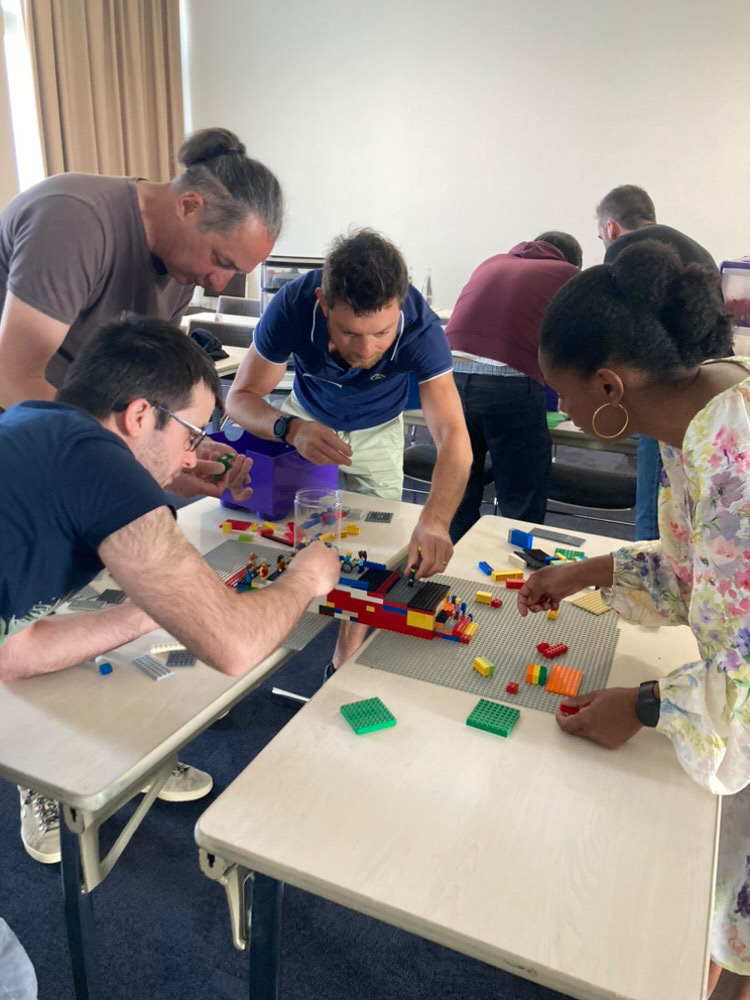
LEGO challenge in Antwerpen that improves teamwork under real constraints
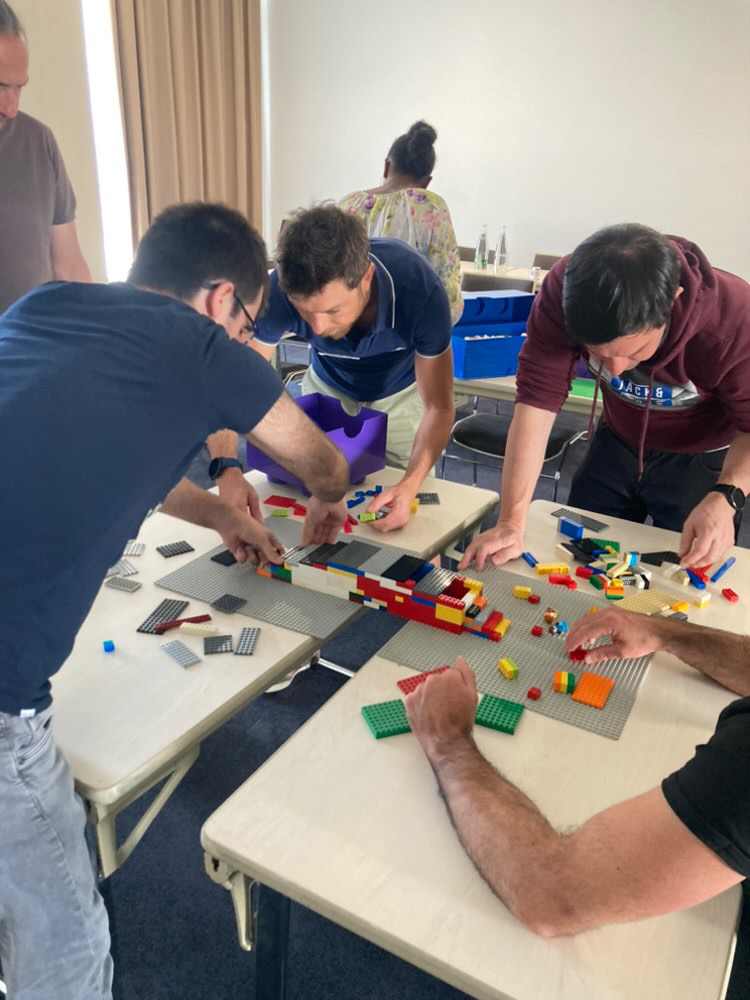
INNOV'events (Brussels) designs and delivers a LEGO challenge for companies in Antwerpen, typically from 20 to 500+ participants. We handle concept, facilitation, materials, timing, safety, and venue coordination—so your teams stay focused and your leadership keeps control of the agenda.
This format is used for management offsites, onboarding waves, post-merger integration, and annual kick-offs where you need measurable collaboration, not just a “fun break”.
Sommaire
Entertainment in a corporate event is not a decoration item—it is one of the most reliable levers to influence energy, cross-team interaction, and the way people behave in front of peers and leadership. A well-run LEGO challenge in Antwerpen creates a controlled environment where decision-making, prioritisation and communication become visible within minutes.
Organisations around Antwerpen typically ask for formats that fit tight schedules, multilingual teams (NL/FR/EN), and strict venue rules—while still delivering something concrete executives can debrief. They also expect professional facilitation: clear rules, fair scoring, and a cadence that respects the event’s run-of-show.
INNOV'events operates across Belgium and frequently deploys teams in Antwerpen for corporate events. We work with a production mindset: pre-brief, risk control, timeboxing, and on-site coordination with your venue, AV partner and catering—because the difference between “nice activity” and “credible corporate moment” is operational discipline.
What you can expect from INNOV'events in Antwerpen
10+ years delivering corporate event formats in Belgium, including complex multi-stakeholder set-ups (HR, Comms, Facilities, Procurement).
Operational capacity for 20 to 500+ participants with scalable material kits, facilitators, and a proven rotation system for large groups.
NL/FR/EN facilitation options to match international HQ expectations common in the Antwerpen area.
Event-day governance: one accountable producer, one lead facilitator, and a documented run-of-show with decision points and fallback options.
Local delivery in Antwerpen for recurring corporate teams
We regularly support companies active in and around Antwerpen—from HQ teams to plant-based operations and logistics-driven organisations where timing and clarity matter. Many of our clients renew year after year because the need remains the same: bring people together without losing control of the message, the agenda, or the brand image.
In practice, repeat collaborations are rarely about “the same activity again”. They are about reliability and continuous improvement: we adjust scoring systems, change the build constraints, integrate a product story, or align the debrief with your yearly leadership themes (customer centricity, safety culture, cost discipline, quality, or post-change adoption).
If you share the company names you want us to reference, we can integrate them precisely (with your preferred wording and any compliance constraints). For decision-makers in Antwerpen, clarity on references is often a procurement requirement, and we respect that level of formality.
 Besoin d’un devis rapide ?
Nous vous envoyons une première proposition sous 24h.
Why run a LEGO challenge in Antwerpen for leadership and HR goals
A LEGO challenge is effective when you want teams to practice collaboration under constraints—time, resources, rules, and changing priorities—without the political risk of “real work” discussions. Executives like it because the outcomes are visible: what gets built, how people organise, and how they respond to ambiguity.
In Antwerpen, where many organisations operate with strong operational rhythms (port, logistics, chemicals, manufacturing, retail HQ functions), we often see a demand for activities that feel concrete and structured, not abstract or overly “workshop-like”.
Expose collaboration patterns quickly: who takes ownership, who waits for instructions, and how information flows when deadlines are real.
Strengthen cross-functional trust without forcing personal disclosure: teams learn to rely on each other through tangible tasks and clear roles.
Practice leadership behaviours in a low-risk setting: delegation, decision speed, and conflict handling become observable and debriefable.
Create a shared language for follow-up: “scope creep”, “handover failures”, “quality gates”, “single point of failure”—the same issues your teams face daily.
Support change communication: we can encode key messages as constraints (e.g., compliance checks, customer requirements, sustainability targets) so the learning aligns with what Comms needs to reinforce.
Generate usable content for internal communications: structured photo moments, team names, build showcases and short testimonials—captured without disrupting the flow.
Antwerpen has a pragmatic business culture: results, delivery, and credibility matter. A well-facilitated LEGO challenge in Antwerpen fits that mindset because it produces observable behaviours and a clean debrief—useful for managers, not just enjoyable for participants.
What companies in Antwerpen typically require from corporate entertainment
When we design corporate event entertainment in Antwerpen, we start from constraints rather than concepts. Many venues have strict load-in windows, noise limitations, and security procedures. Many companies also have internal policies: no alcohol during daytime sessions, GDPR constraints on filming, and accessibility requirements.
On the people side, Antwerpen events frequently bring together mixed populations: HQ functions, sales teams, operations and shift-based staff, sometimes external partners. The activity must respect different comfort levels and avoid anything that could be perceived as childish or culturally biased. With LEGO, the key is framing: we position it as a rapid prototyping and coordination exercise, with clear performance criteria and a structured debrief.
Finally, there is a strong expectation for time discipline. Executives want a format that starts on time, ends on time, and does not jeopardise keynote slots, awards moments, or dinner service. We therefore design the LEGO challenge with predictable timing blocks (briefing, build sprints, quality checks, presentation, debrief) and a facilitation style that keeps momentum without creating stress.
Which LEGO challenge formats work best in Antwerpen venues
Engagement comes from structured autonomy: teams are given freedom to build, but within constraints that mirror business reality (limited resources, shifting priorities, quality gates, stakeholder requests). That combination creates energy while keeping the activity aligned with corporate standards.
Animations Interactives à Antwerpen
Multi-sprint build with changing requirements: teams build a structure in 3 sprints, receiving new “client requests” mid-way. Good for illustrating change management and scope control.
Process relay challenge: roles are separated (design, build, quality, procurement). Teams must manage handovers and documentation. Strong fit for operational cultures common in Antwerpen.
Marketplace negotiation: bricks function as budget; teams trade resources with other teams under time pressure. Useful for procurement, sales enablement, and stakeholder management themes.
Animations Artistiques à Antwerpen
Brand skyline build: teams create modules inspired by your brand values, then connect them into a collective “company skyline”. Works well for anniversaries or new strategy launches where you need a visual closing moment.
Storyboard build + 60-second pitch: teams build and present a short narrative. Strong for communication departments who want message discipline and clarity.
Animations Innovantes à Antwerpen
Build & break networking rotations: short build rounds combined with catered tasting stations. In Antwerpen, this works well for events where dinner service is a key moment but you still want structured interaction before seating.
Non-disruptive coffee break integration: a compact micro-challenge (10–15 minutes) that fits into a coffee break without compromising catering flow or venue staffing.
Animations Gourmandes à Antwerpen
Executive KPI overlay: we add business KPIs to the scoring (quality defects, rework cost, time-to-market). Participants feel the trade-offs rather than hearing them in a speech.
Photo-ready review board: each team documents decisions on a simple board (assumptions, risks, what changed). This supports a credible debrief and provides structured internal comms assets.
Hybrid-friendly reporting: if some stakeholders are remote, we set a camera point for final showcases and keep a clear script so remote viewers can follow the logic.
The best results come when the format is aligned with your brand image and internal culture. A compliance-driven organisation in Antwerpen will benefit from quality gates and audit steps; a high-growth scale-up will benefit from experimentation and iteration. We advise on the framing so the activity feels legitimate to your audience.
How to choose a venue in Antwerpen for a LEGO challenge
The venue affects perception and performance. LEGO challenges require stable tables, good lighting, and enough space for circulation, briefing, and showcases. A room that is “beautiful” but impractical will generate friction: noise, delays, and poor visibility during presentations.
| Venue type | For which objective? | Main strengths | Possible constraints |
|---|---|---|---|
| Hotel conference room (city centre) | Leadership offsite, strategy day with tight agenda | AV-ready, predictable service levels, easy integration with lunch/dinner | Load-in windows, limited storage for materials, strict timing on room resets |
| Industrial/loft event space (docklands/creative districts) | Kick-off, culture reset, post-merger integration | Strong atmosphere, flexible layouts for large group builds, good for showcases | Acoustics can be challenging; may require extra AV and heating/cooling planning |
| Corporate site (HQ or plant meeting areas) | Operational teams, safety/quality themes, cost-efficient set-up | Easy access for staff, no travel time, direct link to real processes | Security procedures, limited catering flexibility, stricter internal logistics |
| Congress or multi-room venue | 200–500+ participants with plenary + breakouts | Scalable spaces, crowd management, professional staffing | Higher rental costs; coordination needed to avoid bottlenecks during transitions |
We strongly recommend a site visit or at least a technical call with photos and a floor plan. In Antwerpen, small details—service elevators, truck access, noise limits, and storage—are often what decide whether the activity feels premium or improvised.
What a LEGO challenge costs in Antwerpen and what drives price
Pricing for a LEGO challenge in Antwerpen depends on participant volume, facilitation intensity, and production complexity. A well-priced offer is not the cheapest line; it is the one that secures flow, fairness, and event-day reliability.
Group size and team structure: 20–60 people is typically one facilitation team; 100–300 people requires multiple facilitators, zone management, and additional material buffers.
Format length: 45–60 minutes (energiser) vs 90–120 minutes (full learning loop with debrief) changes staffing and prep.
Customisation level: branding of boards, tailored scoring aligned to your KPIs, integration of leadership themes, or multi-language content.
Venue constraints: complex load-in, limited access times, additional security requirements, or strict waste/sorting policies can increase production time.
AV and content capture: microphones, projection, camera set-ups for large rooms, or internal comms deliverables (structured photo moments).
We frame budget in ROI terms: fewer “dead moments”, better cross-team connections, and a debrief that management can reuse in follow-up meetings. When done properly, the activity becomes a leadership tool—not a cost line that gets questioned after the event.
When you need an event agency in Antwerpen for LEGO challenge delivery
For decision-makers, “local” is not a slogan; it is operational risk management. An event agency in Antwerpen (or a partner who is on the ground frequently) reduces uncertainty: faster site checks, realistic timing for load-in, and better anticipation of local supplier habits.
At INNOV'events, we work nationally while delivering regularly in Antwerpen. When you are comparing agencies, focus on who can document the run-of-show, manage stakeholder approvals, and keep the room under control when plans shift—because they always do. If you want a broader view of our local delivery capabilities, see our event agency in Antwerpen page.
- Faster on-site troubleshooting: room layout issues, missing tables, last-minute capacity changes—solved without derailing the agenda.
- Supplier coordination in local rhythm: venues, AV and catering in Antwerpen have their own operating tempo; experience helps prevent bottlenecks.
- Compliance-friendly delivery: clear safety rules, clean set-up/tear-down, and respect for corporate site access procedures.
- More credible experience for executives: no improvisation in front of leadership; the activity feels like part of the event, not an add-on.
We frame budget in ROI terms: fewer “dead moments”, better cross-team connections, and a debrief that management can reuse in follow-up meetings. When done properly, the activity becomes a leadership tool—not a cost line that gets questioned after the event.





Examples of LEGO challenge outcomes delivered around Antwerpen
We have delivered LEGO challenge formats for leadership days, sales kick-offs, operations workshops and onboarding cohorts—each requiring a different balance between energy and control.
Typical real-world scenarios we handle in Antwerpen include: a leadership committee wanting a short, high-impact segment between two strategic keynotes; HR needing a format that works for mixed seniority levels without making anyone lose face; or a communication team requiring consistent visual moments for internal channels while respecting GDPR and approval workflows.
Operationally, we are used to constraints such as late room handover, shared venue spaces, and tight transitions to dinner. We design buffers, run parallel set-up where possible, and protect the executive agenda. The result is a challenge that looks simple from the outside but is tightly produced behind the scenes.
Common pitfalls we prevent for LEGO challenge events in Antwerpen
Underestimating room flow: too little space between tables leads to noise, congestion, and facilitator fatigue. We map circulation and set clear zones.
Rules that are too complex: participants disengage when instructions feel like a board game manual. We use simple rules and visible scoring.
No credible debrief: without structured observation points, the activity stays “fun” but not useful. We plan the debrief as carefully as the build.
One facilitator for a large crowd: beyond ~60–80 people, facilitation becomes crowd management. We scale staff to keep quality consistent.
Misalignment with brand image: if the tone is childish, senior audiences will resist. We frame it as prototyping, coordination and execution excellence.
Ignoring venue constraints: load-in times, storage, and waste rules in Antwerpen venues can break the schedule if not addressed early.
Our role is to remove these risks before event day through a rigorous pre-brief, production planning, and clear accountability on-site—so your stakeholders experience a controlled, professional moment.
Why Antwerpen clients rebook INNOV'events for team challenges
Client loyalty in corporate events usually comes from one thing: predictable delivery under pressure. When an agenda is tight and leadership is in the room, you need a partner who can keep the experience smooth and still deliver learning value.
Many corporate teams in Belgium rebook after a first successful delivery because the format can evolve: new constraints, new messaging, new group composition, same reliable production.
Repeat clients often expand scope from one activity to full run-of-show support (timing, stage management, speaker transitions), especially for larger events in Antwerpen.

Loyalty is not an emotional metric; it is proof that procurement, HR and leadership consider the delivery dependable. That is the standard we aim for on every LEGO challenge in Antwerpen.
Our delivery process for Antwerpen corporate events
👉 Step 1 (Antwerpen): Scoping call with HR/Comms/Exec sponsor
We clarify objectives (team alignment, onboarding, culture, change adoption), audience profile, languages, and success criteria. We also identify constraints early: venue rules, timing, brand sensitivities, filming permissions, and internal approval flows.
👉 Step 2 (2000): Format design and scoring system
We design the mechanics: team size, roles, sprint structure, scoring (speed vs quality vs compliance), and how “change requests” will be introduced. For executive audiences we keep it sharp: visible KPIs, limited randomness, and a debrief that links to management priorities.
👉 Step 3 (Antwerpen): Production planning and venue coordination
We confirm room layout, table counts, access times, storage, power needs, AV, and signage. We prepare material kits with buffers, define staff roles (producer, lead facilitator, floor facilitators), and lock a run-of-show with timing tolerances.
👉 Step 4 (2000): Event-day delivery and governance
We arrive early for set-up, run a technical check, brief venue/AV/catering interfaces, and deliver the activity with strict timeboxing. We manage transitions and keep leadership informed if the agenda shifts, using pre-agreed compression options.
👉 Step 5 (Antwerpen): Debrief and post-event wrap-up
We run a structured debrief (what happened, why, what to change in real work), then deliver a concise recap: key observations, photo moments if agreed, and recommendations for follow-up sessions or leadership talking points.
FAQ sur l'organisation LEGO challenge à Antwerpen
How long does a LEGO challenge in Antwerpen take?
Most corporate formats run 60 to 120 minutes. For a tight agenda, we can deliver a 45-minute energiser version; for leadership learning and a real debrief, plan 90–120 minutes.
How many participants can you handle in Antwerpen?
We typically deliver from 20 to 500+ participants. Above ~80 people, we use multiple facilitators and zone management to keep rules, scoring and pacing consistent.
Is a LEGO challenge suitable for executive teams in Antwerpen?
Yes—when framed and facilitated as a rapid prototyping and execution exercise. We use business-like constraints (quality gates, budget, change requests) and a structured debrief so it remains credible for senior leadership.
What space do we need for a LEGO challenge in Antwerpen?
As a rule: classroom-style tables for teams plus circulation. For 50 people, expect roughly 80–120 m² depending on layout; for 200 people, plan 300–500 m² and clear access for set-up and showcases.
Can you run the LEGO challenge in Antwerpen in three languages?
Yes. We can facilitate in NL/FR/EN depending on your audience mix. We also provide bilingual/tri-lingual written rules and scoring boards when needed, which helps avoid briefing confusion in larger rooms.
Plan your LEGO challenge in Antwerpen with a controlled run-of-show
If you are comparing agencies, we recommend booking a 20-minute scoping call with your HR/Comms lead and the executive sponsor. We will confirm feasibility, propose a format (timing, staffing, scoring), and flag venue or agenda risks early—before they become event-day problems.
Send us your date, estimated headcount, venue short-list (if any), and the objective you want leadership to reinforce. We will reply with a clear proposal and an operational plan for delivering a LEGO challenge in Antwerpen that fits your standards.
Agence INNOV'events Antwerpen
Justin JACOB est le responsable de l'agence événementielle Antwerpen. Contactez-le directement par mail via l'adresse belgique@innov-events.be ou par formulaire.
Contacter l'agence AntwerpenToutes nos prestations & animations Antwerpen, Belgique
Découvrez nos prestations événementielles
Découvrez nos animations événementielles disponibles au Belgique
- Hôtesse événementielle à Antwerpen
- Escape Game à Antwerpen
- Cours de cuisine type MasterChef à Antwerpen
- Magicien à Antwerpen
- Location de chapiteau à Antwerpen
- Atelier colorimétrie à Antwerpen
- Jeux gonflables à Antwerpen
- Service de voiturier à Antwerpen
- Simulateur de football à Antwerpen
- Location de mobilier lumineux à Antwerpen
- Flocage lumineux à Antwerpen
- Repas insolite à Antwerpen
- Light Painting à Antwerpen
- Murder Party à Antwerpen
- Jeu concours à Antwerpen
- PLV événementielle à Antwerpen
- Réalité virtuelle à Antwerpen
- Cuisine moléculaire à Antwerpen
- Animation Halloween à Antwerpen
- Feu d’artifice à Antwerpen
- Jeux géants à Antwerpen
- Animateur événementiel à Antwerpen
- Animation photo à Antwerpen
- Père Noël à Antwerpen
- Animation enfants à Antwerpen
- Visite guidée à Antwerpen
- Rallye urbain à Antwerpen
- Piscine à balles à Antwerpen
- Simulateur de vol à Antwerpen
- Location de food truck à Antwerpen
- Record du monde à Antwerpen
- Simulateur de surf à Antwerpen
- Casino du vin à Antwerpen
- Atelier relooking à Antwerpen
- Atelier création de parfum à Antwerpen
- Atelier acting à Antwerpen
- Animations RSE à Antwerpen
- Tir à l’arc à Antwerpen
- Agent de sécurité à Antwerpen
- Œnologie à Antwerpen
- Mime à Antwerpen
- Jeu télévisé à Antwerpen
- Fête foraine à Antwerpen
- Atelier gestion de crise à Antwerpen
- Atelier négociation de crise à Antwerpen
- Jeux d’arcade à Antwerpen
- Simulateur de chute libre à Antwerpen
- Simulateur de ski à Antwerpen
- Simulation circuit automobile à Antwerpen
- Baptême de l’air à Antwerpen
- Dégustation à Antwerpen
- Création de baby-foot à Antwerpen
- Rallye 2CV à Antwerpen
- Challenge LEGO à Antwerpen
- Animation casino à Antwerpen
- Interprète / traducteur à Antwerpen
- Goodies à Antwerpen
- Bus / transfert à Antwerpen