
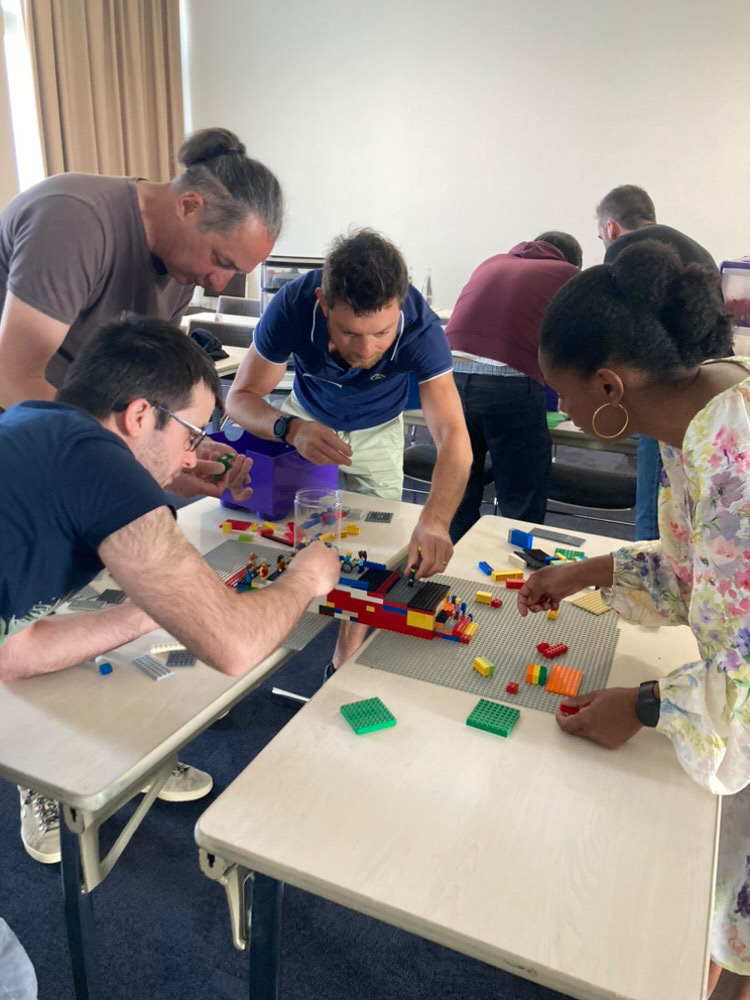
LEGO challenge in Brussel to align teams and decisions fast
INNOV'events designs and runs a LEGO challenge for corporate teams in Brussel, from 10 to 300 participants. You get a structured program, professional facilitation, and full on-site coordination (timing, materials, room flow, safety, and debrief).
Typical use cases: leadership offsites, post-merger alignment, cross-department collaboration, and internal communication moments where you need more than a keynote.
Sommaire
In a corporate agenda, entertainment only matters if it serves a business intention: collaboration under pressure, clearer decision-making, and a shared language that managers can reuse after the event. A well-run LEGO challenge gives you that—visible behaviours, not just “good vibes”.
Organizations in Brussel expect punctuality, multilingual facilitation, and formats that respect mixed seniority (executives, middle management, operational teams) without infantilising anyone. They also expect a tight run-of-show: no dead time, no “let’s see on the day”.
INNOV'events is based in Brussel. We handle the operational reality: access and loading constraints, venue coordination, last-minute participant changes, and a debrief that translates what happened in the room into actionable next steps for HR and leadership.
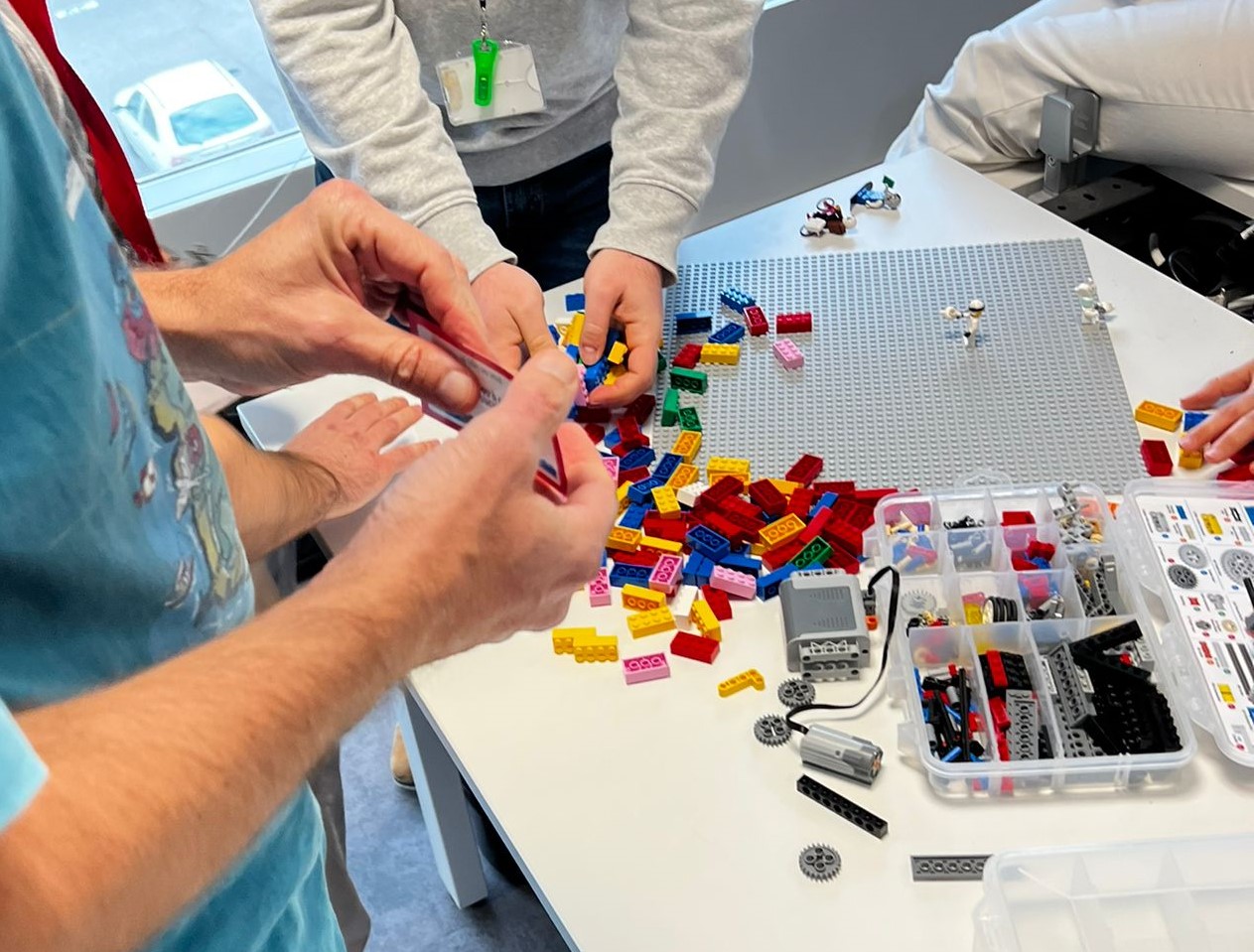
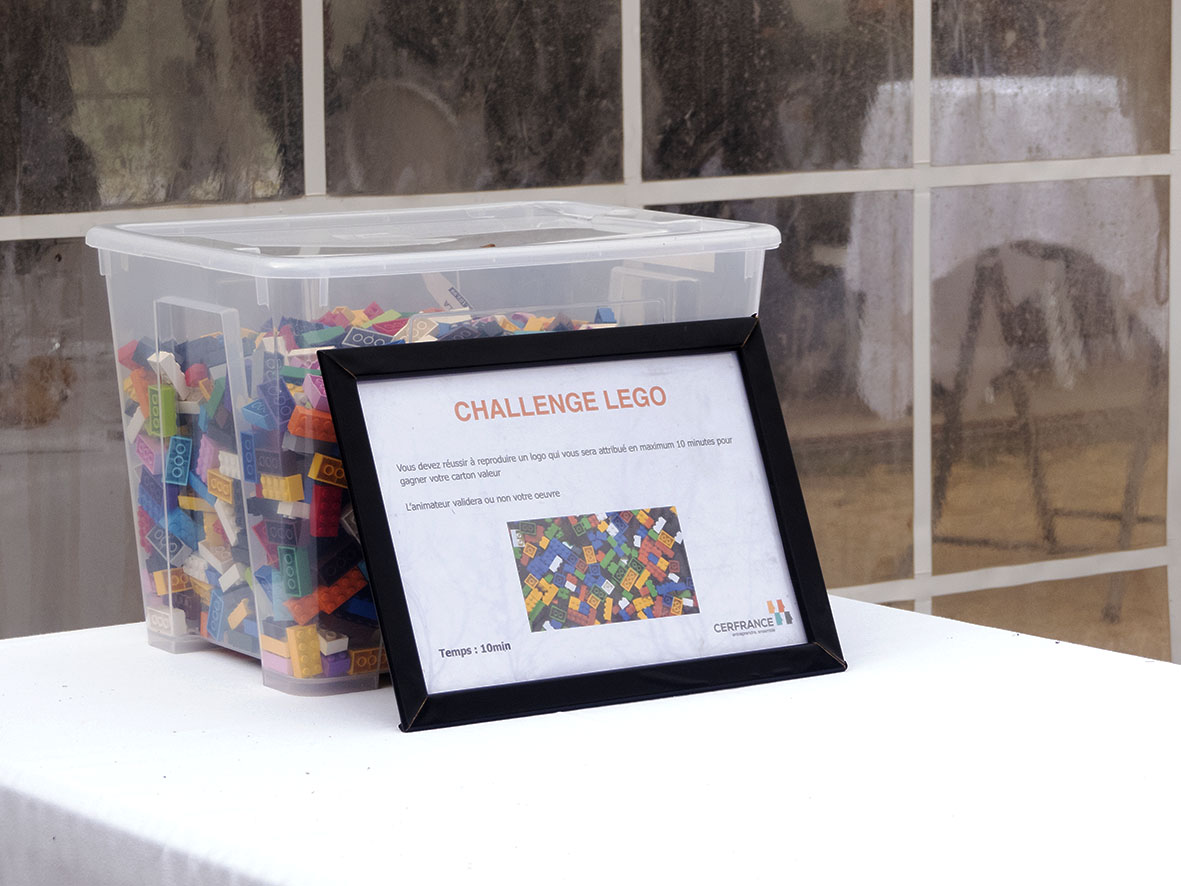
Operational facts clients check in Brussel before signing
10–300 participants per LEGO challenge in Brussel, in one plenary room or split into parallel rooms.
60–180 minutes typical duration; most corporate agendas choose 90–120 minutes for a meaningful debrief without compressing the schedule.
1 facilitator per 25–35 participants to keep pace, ensure equal voice, and prevent the “two loudest people build everything” effect.
Multilingual delivery (EN/FR/NL) for mixed Brussels teams; briefings and debrief slides can be provided in the corporate language.
On-site readiness time: 60–120 minutes depending on room layout and number of teams; we plan load-in windows and protect the plenary schedule.
Who we support year after year in Brussel
In Brussel, we work with head offices, EU-adjacent organizations, and fast-scaling Belgian teams that need reliable execution. Some clients return yearly for a leadership day or a company-wide moment because they want a consistent partner who understands internal politics, timing pressure, and brand standards.
To keep confidentiality and procurement rules clear, we share sector-relevant examples during the briefing and can provide references on request when allowed. What matters most in practice is repeatability: the same quality whether it’s a 25-person management offsite in the European Quarter or a 200-person internal conference near the canal area.
Our local network (venues, AV partners, caterers, transport solutions) allows us to prevent typical last-minute Brussels issues: access badges, tight loading docks, and strict noise/time constraints in certain districts.
 Besoin d’un devis rapide ?
Nous vous envoyons une première proposition sous 24h.
What a LEGO challenge changes for leadership in Brussel
A LEGO challenge is not a “game slot” added to an agenda. In Brussel, it is often used as a controlled, time-boxed simulation where leadership can observe how teams communicate, prioritise, and handle constraints—without exposing real projects or sensitive data.
When designed correctly, it becomes a practical management tool: it reveals how decisions are made, who is listened to, where information breaks down, and how teams react to changing requirements (a very Brussels reality in matrix organizations and multi-stakeholder environments).
Faster alignment on priorities: teams must agree on scope, roles, and a definition of “done” in minutes—exactly what many organizations struggle to do in meetings.
Concrete observation of collaboration patterns: you see whether people ask clarifying questions, whether feedback is welcomed, and how conflicts are handled when time is running out.
Leadership visibility without “calling people out”: executives can observe behaviours in a safe context and then address patterns (decision bottlenecks, unclear ownership) during the debrief.
Onboarding and cross-functional bonding: for newly formed Brussels teams (post-reorg, post-merger, new country lead), the format accelerates trust because it forces rapid cooperation with a shared constraint.
Communication value for internal teams: HR and Comms get authentic content (photos, key messages, quotes) that illustrates company values like collaboration and accountability—without staging.
Measurable outcomes: we capture simple indicators (time-to-plan, iteration cycles, number of role changes, quality criteria met) and link them to the behaviours discussed in the debrief.
Brussel has a pragmatic economic culture: multi-lingual, multi-stakeholder, often matrix-managed. A well-framed LEGO challenge fits that reality because it tests coordination under real constraints, not theoretical teamwork.
What companies in 1000 expect from a LEGO challenge format
In the 1000 area and across the Brussels-Capital Region, corporate events are rarely “just internal”. Participants often represent multiple nationalities, different levels of hierarchy, and departments with divergent incentives. That creates three expectations you must plan for.
First: multilingual clarity. If you let instructions drift, the experience becomes unequal: one table dominates because they understood the rules better. We design briefings with short sentences, visual cues, and a facilitation rhythm that gives every team the same starting conditions.
Second: time discipline. Brussels agendas are tight: board meetings, train schedules, and evening commitments. We structure the LEGO challenge in Brussel with explicit time boxes, visible timers, and a run-of-show that AV and venue teams can follow. That discipline is what makes the final debrief meaningful rather than rushed.
Third: executive comfort. Directors will engage if the activity is framed as a leadership simulation, not a children’s workshop. That means: clear objectives, constraints that mimic business trade-offs, and a debrief that links observed behaviours to decision quality, stakeholder management, and accountability.
Finally, there is the local operational reality: limited parking, strict loading windows, and venues with fixed furniture. We plan room flow accordingly—how teams move, where materials are stored, how presentations happen—so the activity stays professional from minute one.
Which LEGO challenge options work best in Brussel corporate events
Engagement comes from meaningful constraints and a clear “why”. We modernize the LEGO challenge by matching mechanics to your business context in Brussel: decision trade-offs, stakeholder expectations, resource limitations, and rapid iteration.
Animations Interactives à Brussel
Leadership & roles simulation: teams must assign roles (lead, architect, quality, timekeeper) and rotate them mid-way. Useful when you see recurring issues around ownership, “shadow leadership”, or unclear accountability.
Client brief under ambiguity: we provide a partial brief and release clarifications progressively, mirroring real project environments. Great for consulting, IT, and public-affairs-adjacent teams in Brussel where requirements evolve.
Cross-team dependency build: each team builds a section that must connect to others. This quickly exposes interface management issues (handoffs, assumptions, communication cadence).
Quality vs speed trade-off: scoring rewards both aesthetics and compliance to specifications; changing a requirement late forces reprioritisation. Perfect for operations and product teams.
Animations Artistiques à Brussel
Brand values build: teams translate values into physical metaphors and present them. Works well for internal comms moments when leadership wants employees to “own” the narrative, not just receive it.
Storytelling pitch: short, structured presentations (60–90 seconds) with a clear rubric. Helps teams practice concise messaging—useful in Brussels organizations with complex stakeholder landscapes.
Animations Innovantes à Brussel
“Build & break” coffee format: a compact 45–60 minute version between sessions, designed for conference days in Brussel where catering and agenda are fixed. We keep it clean and compatible with standing coffee setups.
Table-service compatible setup: if lunch is served at tables, we adapt material distribution so catering can operate smoothly (no brick spillover into service lanes).
Animations Gourmandes à Brussel
Data capture for HR: we can collect simple team indicators (iteration cycles, compliance rate, role changes) and summarise them in a one-page insight note to support post-event actions.
Hybrid-friendly debrief: if leadership is partly remote, we design the debrief so remote executives can still observe outcomes and participate in the learning conversation (camera framing, short presentation protocol, clear facilitation cues).
The best format is the one that protects your brand image: professional pacing, respectful framing, and outcomes linked to your operating model. In Brussel, where many teams are international and senior, that alignment is what turns an activity into a credible leadership moment.
Where to host a LEGO challenge in Brussel for maximum impact
The venue signals seriousness. For a LEGO challenge in Brussel, you need more than a nice room: you need acoustics that allow facilitation, enough surface per team, and logistics that won’t eat your schedule (loading, access, breakouts, AV reliability).
| Venue type | For which objective? | Main strengths | Possible constraints |
|---|---|---|---|
Conference hotel near EU district | Leadership offsite, internal conference, multi-language teams | Reliable AV, professional service standards, easy plenary-to-breakout flow | Higher day rates; strict timing for room turns and catering service |
Corporate HQ / office event space in Brussel | Cost control, strong internal branding, quick attendance | Low travel time, easy to bring leadership on stage, good for culture moments | Furniture constraints; security access; noise management if open-plan areas |
Industrial/creative venue (canal area style) | Innovation theme, cross-team collaboration, employer branding content | Strong atmosphere, flexible layouts, good for staged reveals and photos | Requires stricter production planning: heating, acoustics, load-in, permits |
We strongly recommend a site visit in Brussel (or a technical recce with floor plan validation) to confirm table sizes, power access, and participant flow. Small constraints—like a narrow freight elevator or a fixed stage—can change the setup and the facilitation ratio.
What budgets look like for a LEGO challenge in 1000
The price of a LEGO challenge in Brussel depends on format complexity, facilitation ratio, and production constraints. A simple “activity” can be inexpensive—but it will not deliver executive-grade outcomes if the debrief and on-site control are under-resourced.
In practice, decision-makers compare offers that may look similar on paper. We recommend you assess what is included: number of facilitators, timing ownership, room setup, debrief structure, and what happens when participant numbers shift the day before.
Participants and facilitation ratio: plan roughly 1 facilitator per 25–35 participants for quality control and equal engagement.
Duration: 60 minutes is possible for a light energizer; 90–120 minutes is the usual range when you want real behavioural insights and a structured debrief.
Complexity of mechanics: dependencies between teams, changing requirements, scoring rubrics, and leadership observation tools increase design and facilitation needs.
Venue constraints in Brussel: access windows, parking, elevators, and room changes affect staffing and setup time.
Language requirements: bilingual or trilingual delivery can require additional facilitators or adapted materials to keep instructions equally clear.
Branding and deliverables: branded briefing slides, evaluation sheets, photo coordination, and a post-event insight note for HR/Comms impact the scope.
ROI is best measured against what you are trying to fix or accelerate: fewer alignment meetings, cleaner handoffs, faster decision cycles, and a shared collaboration vocabulary. If the activity helps a leadership team adjust two or three operating habits, the cost is often negligible compared to the time saved across a Brussels-based organization.
Why choose an event agency in Brussel for this format
For a LEGO challenge, the difference between “nice” and “effective” is execution. A local Brussels partner reduces operational risk because they understand the constraints that affect timing and participant experience: venue access, last-minute room changes, local AV standards, and the practicalities of moving people through a busy city.
As an event agency in Brussel, INNOV'events can also coordinate faster with local venues and suppliers. When a venue changes table layouts, when the catering service shifts timing, or when security requests updated name lists, those details are handled without draining your internal teams.
Most importantly, local presence supports continuity: we can do a quick recce, validate the run-of-show with the venue team, and be on-site early. That is what protects your leadership image when the room fills and the agenda cannot slip.
- Faster decision loops with venues and suppliers in Brussel (layout, AV, access, timing).
- Better risk control: realistic setup plans, staffing levels, and contingency options for common Brussels constraints.
- More credible facilitation in multilingual rooms, with a tone adapted to executive audiences.
- Lower internal load for HR/Comms: we take ownership of run-of-show, on-site coordination, and participant guidance.
ROI is best measured against what you are trying to fix or accelerate: fewer alignment meetings, cleaner handoffs, faster decision cycles, and a shared collaboration vocabulary. If the activity helps a leadership team adjust two or three operating habits, the cost is often negligible compared to the time saved across a Brussels-based organization.




What we have delivered in Brussel beyond the standard workshop
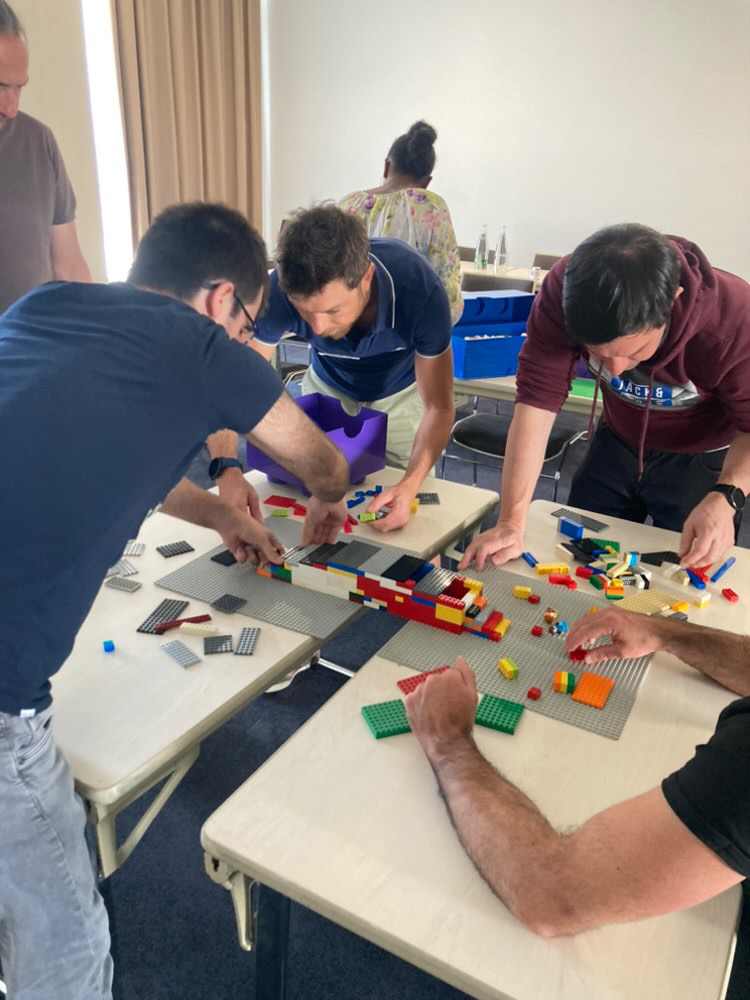
In Brussel, we often intervene when leadership wants a format that creates real dialogue—without forcing people into personal disclosure or vague “team spirit” exercises. The LEGO challenge works well because it externalises tension: teams negotiate about bricks and constraints, then recognise the same dynamics in their day-to-day work.
Examples of how companies typically use it:
Post-merger integration: mixed tables combining legacy teams. The build mechanics highlight where language, process habits, and decision rights differ. The debrief becomes a concrete transition discussion.
Leadership alignment: the executive group participates as a team, then repeats the format with their managers. This makes leadership behaviours visible and consistent across layers.
Cross-functional project kickoff: teams practice handoffs and interface management before a real project starts. This reduces friction when deadlines and stakeholders hit.
Employer branding and internal comms: when Comms needs authentic content, the challenge produces strong visuals and real quotes—useful for internal channels without “staged” messaging.
Our role is to ensure the format remains business-like: clear objectives, controlled facilitation, and a debrief that results in commitments (meeting habits, decision rules, escalation paths) rather than generic intentions.
Common failure points we prevent in 1000 events
Under-scoping the debrief: without a structured debrief, executives leave with “it was fun” but no behavioural takeaway. We build the debrief as a deliverable, not an afterthought.
Too few facilitators: one facilitator for a large room leads to uneven participation and confusion. We staff based on participant volume and language needs.
Room not adapted to team work: high rounds, narrow tables, poor acoustics, or fixed theatre seating can kill the experience. We validate layout and flow beforehand.
No rule clarity: if scoring and constraints are ambiguous, the activity rewards loudness rather than collaboration. We use clear rubrics and timed instruction checkpoints.
Ignoring hierarchy dynamics: when a senior leader dominates a table, others disengage. We design role rotations and facilitation cues to balance voice safely.
Misaligned positioning: presenting it as “kids’ LEGO” undermines credibility. We frame it as a collaboration and decision simulation appropriate for executive audiences.
INNOV'events’ job is to protect your event day: anticipate these risks, plan realistic timing, and deliver a LEGO challenge in Brussel that meets the standards of leadership teams and corporate communications.
Why Brussels clients rebook INNOV'events
Repeat business in Brussel is usually earned on two criteria: reliability under pressure and the ability to adapt to internal realities (stakeholders, sensitivities, procurement, and brand standards). Clients come back when they feel the agency actively reduces risk rather than adding coordination load.
With the LEGO challenge, loyalty is also driven by reusability: after the first session, leadership often wants a second version for another department, a management layer, or a regional team—because the learning framework works across contexts.
Most returning clients rebook within 6–18 months for another internal milestone (offsite, kickoff, or leadership day) when the first collaboration reduced internal workload.
Typical repeat scope: same core mechanics, adapted constraints and debrief questions to match the next business objective (e.g., from “alignment” to “stakeholder management”).
Operational continuity: we keep a run-of-show template, venue notes, and facilitation learnings so the next Brussels edition is faster to plan and smoother to run.

Loyalty is not about “liking an activity”; it is proof that the agency delivered on what matters to executives: timing control, a professional tone, and outcomes that can be converted into leadership actions.
How we deliver a LEGO challenge in Brussel from brief to debrief
👉 Briefing and objective validation in Brussel
We confirm your business objective (alignment, decision-making, collaboration, culture) and the constraints: participant count, languages, venue, agenda, and stakeholder expectations. Output: a clear scope, recommended duration (90–120 minutes in most cases), and a facilitation ratio.
👉 Program design and scenario building for 1000
We design the mechanics: team sizes, role assignment, scoring rubric, and constraint progression. We also define what leadership should observe. Output: run-of-show, briefing slides, team instruction cards, and debrief guide adapted to your management vocabulary.
👉 Logistics and venue coordination in Brussel
We validate room layout, table plan, AV needs (timers, microphones, screens), access/load-in, and storage for materials. Output: technical note, setup schedule, and coordination points with venue/AV/catering so timing remains protected.
👉 On-site delivery and facilitation
We arrive early, set up, brief stakeholders, and run the activity with tight time boxes. Facilitators actively manage participation, clarity, and energy while keeping a corporate tone. Output: smooth transitions and consistent experience across teams.
👉 Debrief, capture, and next-step recommendations
We lead a structured debrief linking behaviours to operational realities (roles, decision rules, handoffs, communication cadence). If requested, we provide a short insight recap for HR/Comms with key observations and recommended follow-ups to embed the learning.
FAQ sur l'organisation LEGO challenge à Brussel
How long should a LEGO challenge last in Brussel?
Plan 90–120 minutes for a solid business impact (briefing, build, presentations, debrief). For a lighter energizer, 45–60 minutes works, but debrief time will be limited.
How many people can join a LEGO challenge in 1000?
Most venues in 1000 support 10–300 participants. Above 120–150, we typically run parallel facilitation zones or multiple rooms to keep instructions clear and the debrief productive.
Can you run a bilingual LEGO challenge in Brussel?
Yes. We deliver in EN/FR/NL depending on your audience. For mixed-language rooms, we use short visual instructions and adjust staffing so each team receives equal support and no language group is disadvantaged.
What space is needed for a LEGO challenge in Brussel venues?
As a rule of thumb: 1 table per team of 6–8, with enough surface for materials and clear paths for facilitators. We validate layout, acoustics, and presentation area during planning to avoid congestion and noise issues.
How early should we book a LEGO challenge in Brussel?
For standard dates, plan 3–6 weeks. For peak periods (Sept–Dec) or large groups, 6–10 weeks is safer, especially if the venue has strict access windows or you require multilingual facilitation.
Request a quote for a LEGO challenge in Brussel
If you are comparing agencies, we recommend starting with three inputs: participant count, your event objective, and your venue (or shortlist). Based on that, we can confirm the right duration, facilitation ratio, and a realistic run-of-show for Brussel.
Contact INNOV'events to receive a clear proposal for your LEGO challenge in Brussel: scope, staffing, timings, and what is included on-site. The earlier we lock venue constraints and language needs, the more we can protect your agenda and ensure the debrief delivers actionable outcomes for leadership and HR.
Agence INNOV'events Brussel
Justin JACOB est le responsable de l'agence événementielle Brussel. Contactez-le directement par mail via l'adresse belgique@innov-events.be ou par formulaire.
Contacter l'agence BrusselToutes nos prestations & animations Brussel, Belgique
Découvrez nos prestations événementielles
Découvrez nos animations événementielles disponibles au Belgique
- Hôtesse événementielle à Brussel
- Escape Game à Brussel
- Cours de cuisine type MasterChef à Brussel
- Magicien à Brussel
- Location de chapiteau à Brussel
- Atelier colorimétrie à Brussel
- Jeux gonflables à Brussel
- Service de voiturier à Brussel
- Simulateur de football à Brussel
- Location de mobilier lumineux à Brussel
- Flocage lumineux à Brussel
- Repas insolite à Brussel
- Light Painting à Brussel
- Murder Party à Brussel
- Jeu concours à Brussel
- PLV événementielle à Brussel
- Réalité virtuelle à Brussel
- Cuisine moléculaire à Brussel
- Animation Halloween à Brussel
- Feu d’artifice à Brussel
- Jeux géants à Brussel
- Animateur événementiel à Brussel
- Animation photo à Brussel
- Père Noël à Brussel
- Animation enfants à Brussel
- Visite guidée à Brussel
- Rallye urbain à Brussel
- Piscine à balles à Brussel
- Simulateur de vol à Brussel
- Location de food truck à Brussel
- Record du monde à Brussel
- Simulateur de surf à Brussel
- Casino du vin à Brussel
- Atelier relooking à Brussel
- Atelier création de parfum à Brussel
- Atelier acting à Brussel
- Animations RSE à Brussel
- Tir à l’arc à Brussel
- Agent de sécurité à Brussel
- Œnologie à Brussel
- Mime à Brussel
- Jeu télévisé à Brussel
- Fête foraine à Brussel
- Atelier gestion de crise à Brussel
- Atelier négociation de crise à Brussel
- Jeux d’arcade à Brussel
- Simulateur de chute libre à Brussel
- Simulateur de ski à Brussel
- Simulation circuit automobile à Brussel
- Baptême de l’air à Brussel
- Dégustation à Brussel
- Création de baby-foot à Brussel
- Rallye 2CV à Brussel
- Challenge LEGO à Brussel
- Animation casino à Brussel
- Interprète / traducteur à Brussel
- Goodies à Brussel
- Bus / transfert à Brussel