
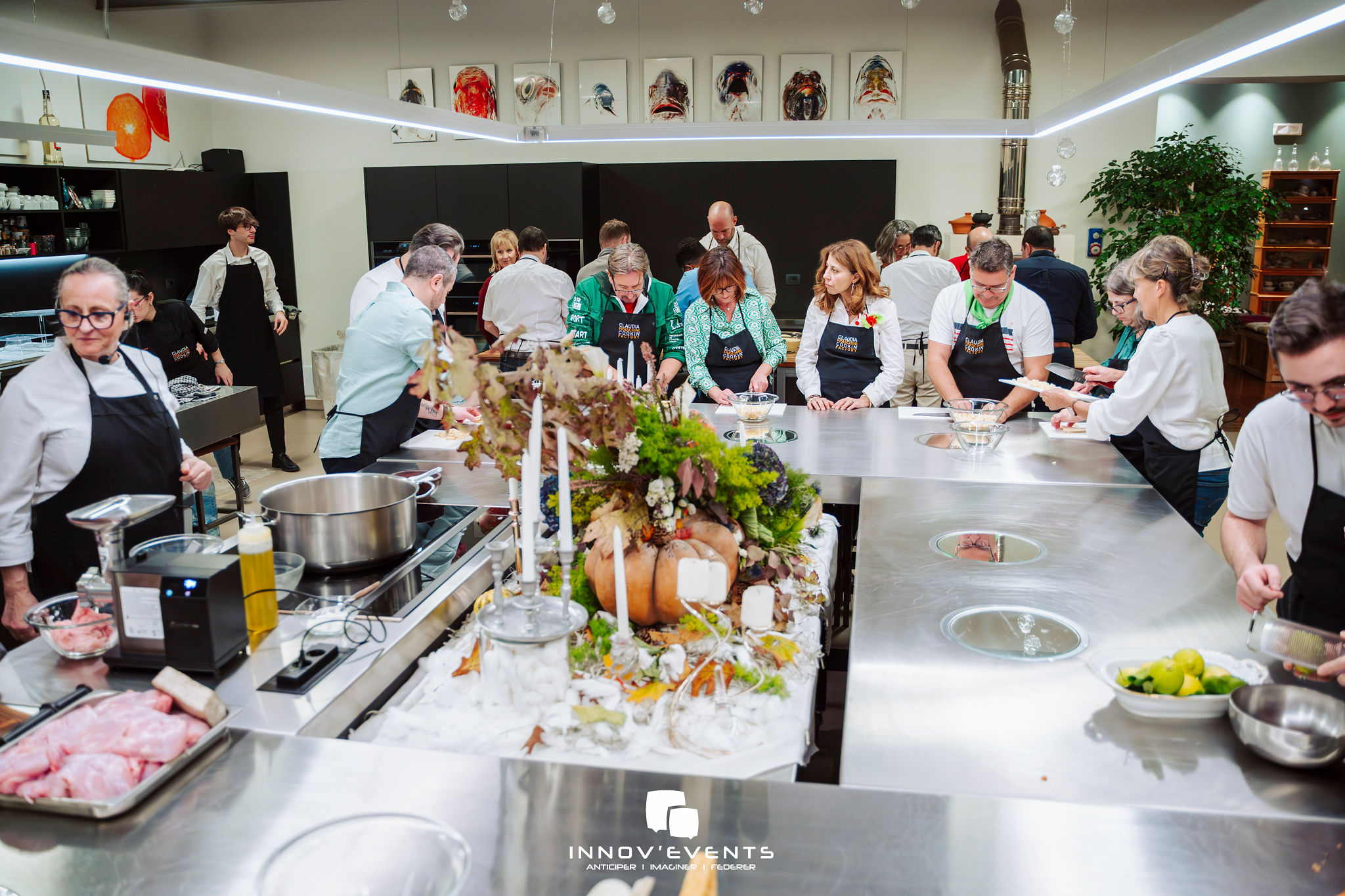
Moleculaire gastronomie workshop in Antwerpen for teams that need real alignment
INNOV'events designs and runs Moleculaire gastronomie workshop in Antwerpen formats for executive offsites, HR team days and client events, typically for 12–120 participants. We manage chef briefings, venue constraints, food safety, staffing, timing and on-the-day coordination so your agenda stays on track.
You get a workshop that is engaging without being chaotic: clear roles, measurable team outcomes, and a culinary storyline that fits your brand and audience.
Sommaire
In Antwerp-based companies, entertainment at a corporate event is not a “nice-to-have”; it is a lever to change the energy in the room, accelerate informal conversations and make strategic messages land. A well-run Moleculaire gastronomie workshop creates a shared experience that supports leadership communication instead of competing with it.
Local organisations expect operational reliability: punctual start times, strict venue rules, clear dietary handling and a format that works with mixed seniority (operators, managers, executives) and often mixed languages. In Antwerpen, teams also expect a high standard on taste and service; anything “gimmicky” is noticed immediately.
From Brussels, INNOV'events delivers frequently in Antwerpen and knows the practical realities: access windows in the city, supplier lead times, venue power limits, and how to run a workshop that respects a tight corporate agenda. We plan like an agency that will be judged on results at 18:00, not on promises at 09:00.
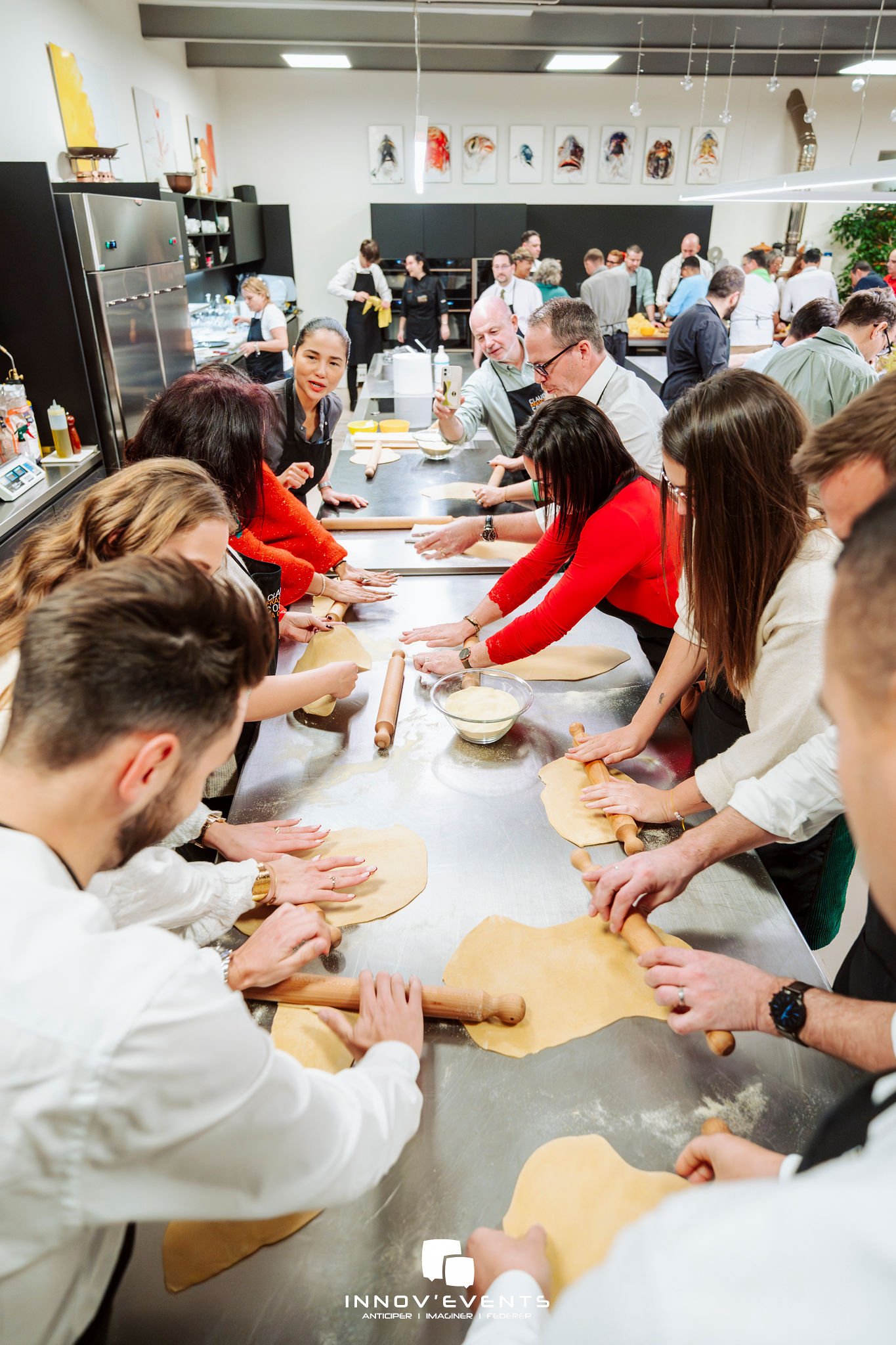
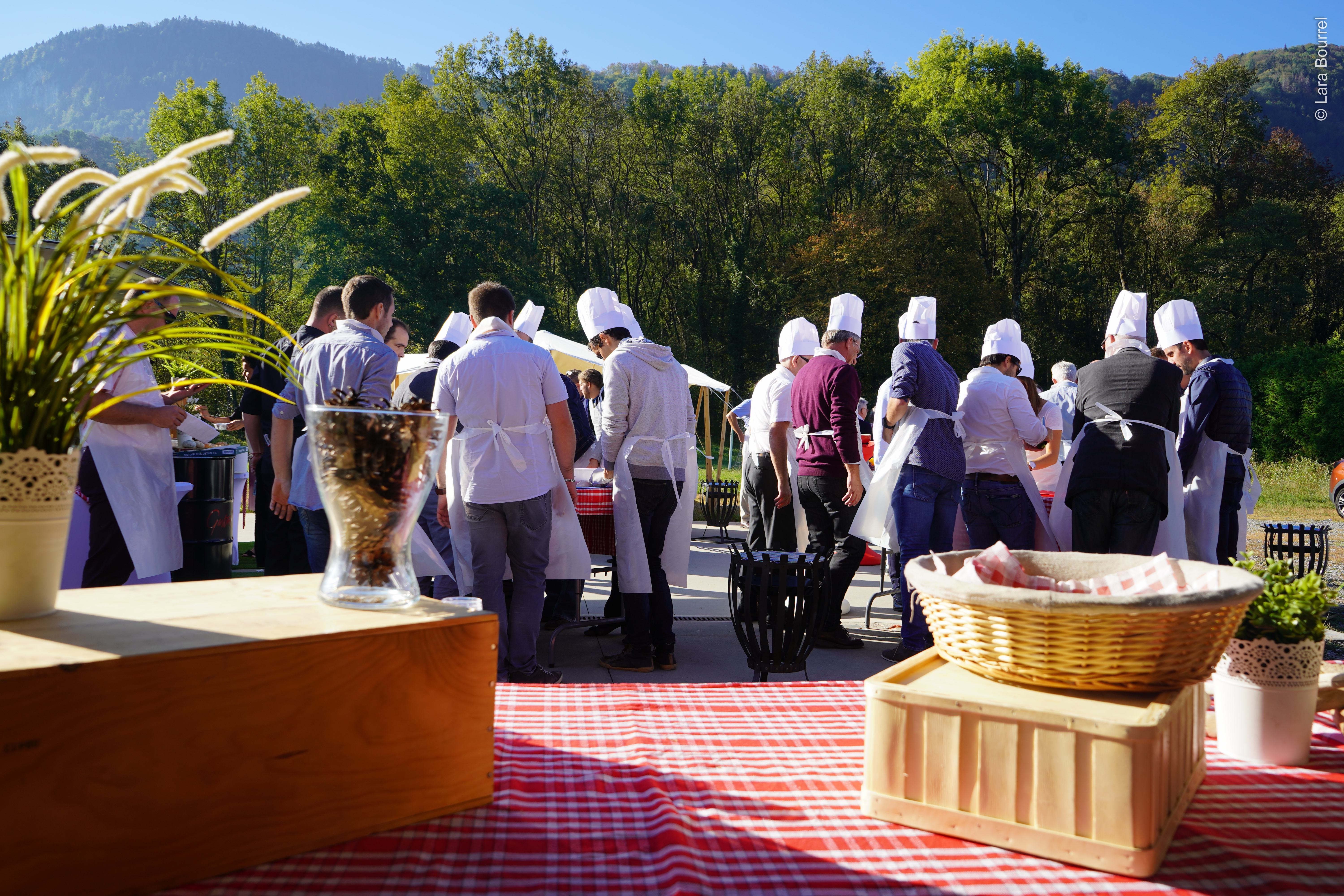
Antwerpen-ready delivery, backed by measurable event operations
10+ years of corporate event production across Belgium, with repeat clients in HR, internal comms and executive offices.
200+ corporate activations delivered (workshops, dinners, plenaries and client events), with documented run-of-show, risk lists and supplier checklists.
Operational capacity for 12–500 attendees depending on venue and format; workshops are typically most effective in subgroups of 12–24.
Standard planning includes HACCP-aligned food handling coordination with venue/chef partners, plus allergy mapping and labelling process.
Which Antwerp organisations we support year after year
We regularly support organisations active in and around Antwerpen, including port-related industries, life sciences, professional services and scale-ups. Many of these teams come back because the operational pressure is real: event day is often connected to a management meeting, a board visit, a client dinner or a recruitment moment.
When a team repeats an event annually, the expectations shift from “do something fun” to “be predictably solid”: same quality every time, better timing, fewer surprises, cleaner stakeholder reporting. That is the reality we plan for at INNOV'events, with clear pre-reads, structured approvals and a production approach that stays calm under last-minute changes.
Note: you mentioned providing company names as references; we can integrate your exact reference list in this section as soon as you share it, to keep the page aligned with your internal validation rules.
 Besoin d’un devis rapide ?
Nous vous envoyons une première proposition sous 24h.
What a molecular gastronomy workshop changes for teams in Antwerpen
A Moleculaire gastronomie workshop in Antwerpen is a practical way to make collaboration visible. Under time pressure, teams have to coordinate, manage quality, and communicate clearly—exactly what executives and HR leaders want to observe and reinforce.
Unlike passive entertainment, a molecular format creates a controlled “production environment”: tools, recipes, hygiene constraints and deliverables. That structure makes it easy to connect the activity to leadership themes (quality culture, customer experience, safety mindset, ownership).
Faster cross-team connection: people who do not normally work together have a legitimate reason to collaborate and negotiate priorities (speed vs. precision vs. creativity).
Observable behaviours for managers: who takes the lead, who clarifies, who checks assumptions, who manages stress—without forcing a classroom training vibe.
Message reinforcement for internal communications: you can anchor a theme (e.g., “quality is everyone’s job”) with a short executive opening and a debrief tied to the workshop outcomes.
Client-facing credibility for B2B moments: molecular gastronomy can be premium without being extravagant, if the service flow is managed and the culinary story is coherent.
Inclusive engagement: with the right facilitation and task design, introverts and non-cooks contribute through measurement, plating, timing, documentation and quality control.
Risk-managed fun: the experience feels creative, yet remains controlled with clear hygiene rules, equipment supervision and allergen labelling.
Antwerpen has a strong culture of craft, trade and high standards—from hospitality to industry. A molecular workshop resonates because it combines precision and creativity: a language that fits the local economic fabric.
What Antwerp-based decision-makers expect on event day in 2000
In Antwerpen, corporate events often run alongside real business constraints: shift patterns, port logistics, client schedules, and short availability windows for senior leaders. This changes how we design a Moleculaire gastronomie workshop.
What we see in practice:
- Tight timeboxing: many teams want a crisp format (e.g., 90 minutes workshop + 30 minutes tasting) that fits between plenary sessions or site visits.
- Mixed seniority and mixed profiles: a workshop must avoid “cheesy games” while still being accessible. We design roles (precision, plating, timing, hygiene lead, narrator) to let everyone contribute without awkwardness.
- Language reality: Dutch is often the default, but many Antwerp companies operate internationally. We plan bilingual facilitation (Dutch/English) and clear visual instruction cards so nobody is left behind.
- Venue restrictions: in city locations, access and load-in are often constrained; in certain premium venues, open flames or strong odours are restricted. Molecular formats can be adapted to low-heat setups, but it must be engineered in advance.
- Food expectations: Antwerp audiences are discerning. You cannot hide behind theatrics; taste and pacing must be right, and service must look professional.
Our role is to translate those realities into a workshop plan that is easy to approve internally and safe to execute on-site.
Which culinary experiences work best for corporate events in Antwerpen
Engagement comes from participation with a clear purpose. In Antwerpen, we see the strongest impact when entertainment supports one of three goals: strengthening relationships, demonstrating culture (quality, safety, innovation), or creating time for informal leadership access.
Animations Interactives à Antwerpen
Team challenge with quality checkpoints: groups create two molecular bites; one is “creative”, one must follow a strict spec (weight, texture, plating). This mirrors real business trade-offs between innovation and compliance.
Blind sensory calibration: a short tasting protocol where teams align on vocabulary (acidity, umami, texture). Excellent for sales/marketing teams who need shared language about customer perception.
Leadership table rotation: executives rotate between teams for 8 minutes each, asking one consistent question (e.g., “What would you change in our ways of working?”). The workshop becomes a structured listening moment.
Animations Artistiques à Antwerpen
Plating and visual identity: a guided module on composition and colour, connected to brand identity (minimalist vs. bold). Useful when comms teams want the content to be photogenic without feeling staged.
Sound-and-service rhythm: coordinating a reveal moment (lighting, short music cue, plating line) that still respects venue sound limits and corporate tone.
Animations Innovantes à Antwerpen
Spherification bar: participants create “caviar” pearls (non-alcoholic fruit, cocktail-style, or savoury). We plan stable recipes so output remains consistent across teams.
Foam & aroma station: safe, controlled use of siphons and aromatics, with clear handling rules and supervised pressure checks.
Chocolate textures module: emulsions, brittle, gels—popular for evening events in Antwerpen where you want comfort plus technique.
Animations Gourmandes à Antwerpen
Data-driven judging: simple scoring sheets (texture, balance, plating, storytelling) to create structure without turning it into a childish contest. Results can be shared internally as a light “team snapshot”.
Hybrid format for dispersed teams: Antwerp hub with live streaming to another Belgian site, with identical ingredient kits. Works when HR needs one moment across multiple locations.
Non-alcoholic pairing lab: molecular mocktail pairing designed for inclusive policies and daytime events; avoids the “alcohol as social glue” dependency.
We always validate alignment with your brand image: level of premium, degree of humour, sustainability stance (waste, sourcing), and whether you want the focus to be on innovation, craft, or hospitality. In Antwerpen, that alignment is what differentiates a credible corporate event from a random activity.
Where to host a molecular gastronomy workshop in Antwerpen
The venue influences what is feasible (power, ventilation, water points, waste flow) and how your event is perceived (premium, creative, corporate, industrial). For a Moleculaire gastronomie workshop in Antwerpen, we prioritise technical suitability first, then atmosphere.
| Venue type | For which objective? | Main strengths | Possible constraints |
|---|---|---|---|
| Hotel meeting space with adjacent kitchen access | Executive offsite with strict agenda and comfort expectations | Reliable infrastructure, staff on-site, predictable service standards, easy AV integration | Rules on equipment, limited flexibility on set-up times, higher F&B costs |
| Industrial/chic event loft in the city | Culture and employer branding moments for mixed teams | Strong atmosphere, good for photography, flexible layout for workshop islands | Load-in restrictions, noise limits, variable power/water availability |
| Company site (canteen, innovation lab, showroom) | Internal culture activation linked to operations and leadership visibility | High authenticity, easier attendance, strong connection to company story | Requires stricter safety perimeter, additional cleaning plan, sometimes limited ventilation |
We strongly recommend a site visit (or at minimum a technical recce call with photos and floor plan). In Antwerpen, the difference between a smooth workshop and a delayed start is often a practical detail: freight elevator access, floor protection, water points, or a venue’s policy on nitrogen and pressurised equipment.
What a molecular gastronomy workshop costs in Antwerpen (real ranges)
Pricing depends on the number of participants, the culinary complexity, the venue constraints and the staffing ratio. For corporate events in Antwerpen, budgets are typically built to reduce operational risk: enough chefs/coaches, enough material redundancy, and a set-up that prevents delays.
Group size and subgroup design: workshops run best in teams of 4–6. More teams means more coaches, more equipment and more set-up time.
Staffing ratio: for consistent results we often plan 1 chef/coach per 12–18 participants, plus a production lead for timing and venue coordination.
Menu and techniques: spherification and foams are scalable; more advanced techniques (multiple textures, hot/cold contrast, complex plating) require additional prep and quality control.
Venue technical constraints: limited water points, power limitations, or strict access windows increase labour time and transport needs.
Dietary requirements: higher rates of vegetarian/vegan/gluten-free requests may require parallel recipes and extra labelling.
Timing in the event day: early morning set-up, evening teardown, or tight turnover between plenary and workshop impacts staffing and logistics.
Branding and communication assets: recipe cards in your visual identity, signage, photography coordination, or a short aftermovie add production layers.
For decision-makers, the relevant view is ROI: not “cheapest activity”, but the cost of disruption. A workshop that starts 20 minutes late can derail a keynote, frustrate executives and reduce participation. We build budgets in Antwerpen to protect timing, quality and stakeholder confidence.
Why work with an event partner that knows Antwerpen logistics
When you run a culinary workshop, execution details matter more than creative concepts. Working with a partner used to producing in Antwerpen reduces friction: realistic load-in plans, knowledge of venue rules, and faster troubleshooting when something changes last minute.
If you are comparing options, here is the operational difference: a local-capable partner plans with the venue first (power, water, access, waste), then finalises the experience design. That sequence prevents costly “nice idea, wrong room” situations.
For broader support beyond this workshop, you can also rely on our network as an event agency in Antwerpen mindset: one point of contact, controlled supplier chain, and clear accountability.
- Faster on-site decisions: local familiarity with city access and venue constraints reduces day-of uncertainty.
- Supplier consistency: predictable quality on ingredients, equipment and staffing—critical for workshops where every table needs identical conditions.
- Risk prevention: realistic contingency planning (extra siphons, backup ingredients, replacement utensils) because we know what typically fails in real rooms.
- Stakeholder comfort: HR and comms teams get a structured plan they can circulate internally, including safety notes and timing.
For decision-makers, the relevant view is ROI: not “cheapest activity”, but the cost of disruption. A workshop that starts 20 minutes late can derail a keynote, frustrate executives and reduce participation. We build budgets in Antwerpen to protect timing, quality and stakeholder confidence.





Examples of corporate workshop scenarios delivered around Antwerpen
Our projects vary by audience and business objective, but the common thread is operational control. Examples of scenarios we regularly deliver in and around Antwerpen:
- Post-merger team day: two departments with different ways of working. We used a workshop structure where each team had to “handover” a component to the next team, mirroring interdepartmental dependencies. The debrief focused on clarity of interfaces and quality gates.
- Client hospitality for a B2B services firm: a short molecular module followed by a seated tasting. The workshop was engineered so guests could participate without getting messy; service flow was designed to protect business conversation.
- Leadership offsite: executive agenda first, workshop second. We built a format with 60–75 minutes of making and a tight tasting window, with a structured debrief connected to decision-making under constraint.
- Employer branding: a scale-up wanted content for recruitment. We integrated a visual plating segment and coordinated photography slots without disrupting participant flow.
What matters for you as a director: we do not treat workshops as “activities”; we treat them as a production unit within your event, with timing, roles, safety, and stakeholder reporting.
Common mistakes we prevent on molecular workshops in Antwerpen
Underestimating venue constraints: insufficient power/water points or restrictive access windows leading to delayed start and rushed instructions.
Choosing fragile recipes: techniques that look good online but fail at scale, creating uneven participant experience across tables.
Allergen handling as an afterthought: missing matrix, unclear labelling, or cross-contamination risk—unacceptable in a corporate setting.
Too much explanation, too little doing: long chef demos reduce engagement; corporate groups disengage quickly if the rhythm is wrong.
No debrief linkage: the workshop ends as “fun” only, with no connection to leadership themes or the internal comms narrative.
Insufficient staffing: one coach trying to cover too many tables; quality drops and time overruns accumulate.
INNOV'events is there to remove these risks before they reach your participants or your leadership team. In Antwerpen, where expectations are high and word travels fast internally, prevention is the only sensible strategy.
Why Antwerp clients renew with INNOV'events across multiple cycles
Repeat business is rarely about novelty; it is about predictability and internal trust. HR and communication teams come back when an agency makes them look organised, protects executives from surprises, and delivers consistent quality even when the brief changes.
High repeat rate on corporate accounts: many clients rebook within 12–18 months for another format (team day, client dinner, end-of-year moment).
Planning discipline: standard deliverables include run-of-show, staffing plan, technical needs list, and a venue coordination checklist.
Controlled scalability: ability to run parallel workshop stations for 60–120 participants without losing the coaching quality.

Loyalty is the clearest proof point in event production: teams do not return to partners who create internal stress. In Antwerpen, our goal is to be the agency you can confidently put in front of your leadership and your venue.
How we scope and deliver a molecular gastronomy workshop in Antwerpen
👉 Step 1 (Antwerpen): define objective, audience, constraints
We start with a structured call (typically 30–45 minutes) to clarify: why this workshop, what success looks like, participant profile, languages, dietary constraints, and the non-negotiables (timing, executive presence, brand tone). We also identify who signs off internally: HR, comms, procurement, facility, HSE.
👉 Step 2 (2000): venue and technical feasibility check
We confirm venue layout, access windows, power/water points, ventilation, waste flow, and any restrictions on equipment. If needed, we propose layout adjustments (number of islands, tasting zone, briefing area) to protect flow and safety.
👉 Step 3 (Antwerpen): menu design and staffing plan
We select techniques that match your audience and risk tolerance, then build a staffing ratio and equipment list. We plan redundancies (critical tools and ingredients) and define who owns what on-site: chefs, coaches, venue staff, INNOV'events production lead.
👉 Step 4 (2000): production documents and approvals
You receive a clear proposal: run-of-show, participant journey, responsibilities matrix, dietary/allergen approach, and optional add-ons (branding, photography, debrief structure). This is built for internal circulation so you can secure approvals efficiently.
👉 Step 5 (Antwerpen): on-site delivery and executive comfort
On the day, we manage set-up, briefing rhythm, coaching coverage and timekeeping. We protect key moments (welcome, executive message, tasting reveal) and handle issues quietly (missing utensil, delayed delivery, room temperature) without involving your internal team unless a decision is required.
👉 Step 6 (2000): debrief and next-step recommendations
After the event, we can provide a short debrief: what worked, what to improve, and concrete recommendations for the next cycle (venue choice, subgroup sizing, agenda timing). This helps HR and comms build continuity rather than restarting from zero each year.
FAQ sur l'organisation Moleculaire gastronomie workshop à Antwerpen
How long should a workshop in Antwerpen last?
For corporate agendas in Antwerpen, the most common format is 90–120 minutes including briefing and tasting. If you want a stronger debrief linked to leadership themes, plan 120–150 minutes.
How many participants per group works best in Antwerpen?
We recommend teams of 4–6. This keeps everyone busy (roles like hygiene lead, measurer, plating lead, timekeeper) and reduces idle time. At scale, we create multiple islands so each group has identical conditions.
Can you run this in our Antwerp office building?
Yes, if we have sufficient power, water access, ventilation and a workable waste/cleaning plan. We validate feasibility via a technical checklist and, when needed, a short site visit to avoid surprises on event day.
What budget range for Antwerpen corporate groups of 30–60?
For 30–60 participants in Antwerpen, budgets typically fall in the €3,500–€9,500 range depending on staffing ratio, venue constraints, menu complexity, and whether tasting/service elements are included. A precise quote requires venue details and dietary complexity.
Is molecular gastronomy safe with allergens in Antwerpen?
It can be safe when designed correctly. We work with an allergen matrix, clear labelling at tasting, and separation rules for critical allergens. We also choose recipes that remain controllable at scale and brief participants on hygiene and cross-contamination prevention.
Request a quote for a molecular gastronomy workshop in Antwerpen
If you are planning a corporate moment in Antwerpen and need an activity that supports your agenda (not distracts from it), we can propose a clear, executable workshop plan within a few days.
Send us your date, estimated headcount, venue (if known), timing constraints, languages, and dietary complexity. We will come back with a structured proposal: format options, staffing plan, technical needs and a transparent budget range—so you can decide quickly and brief your stakeholders with confidence.
Agence INNOV'events Antwerpen
Justin JACOB est le responsable de l'agence événementielle Antwerpen. Contactez-le directement par mail via l'adresse belgique@innov-events.be ou par formulaire.
Contacter l'agence AntwerpenToutes nos prestations & animations Antwerpen, Belgique
Découvrez nos prestations événementielles
Découvrez nos animations événementielles disponibles au Belgique
- Hôtesse événementielle à Antwerpen
- Escape Game à Antwerpen
- Cours de cuisine type MasterChef à Antwerpen
- Magicien à Antwerpen
- Location de chapiteau à Antwerpen
- Atelier colorimétrie à Antwerpen
- Jeux gonflables à Antwerpen
- Service de voiturier à Antwerpen
- Simulateur de football à Antwerpen
- Location de mobilier lumineux à Antwerpen
- Flocage lumineux à Antwerpen
- Repas insolite à Antwerpen
- Light Painting à Antwerpen
- Murder Party à Antwerpen
- Jeu concours à Antwerpen
- PLV événementielle à Antwerpen
- Réalité virtuelle à Antwerpen
- Cuisine moléculaire à Antwerpen
- Animation Halloween à Antwerpen
- Feu d’artifice à Antwerpen
- Jeux géants à Antwerpen
- Animateur événementiel à Antwerpen
- Animation photo à Antwerpen
- Père Noël à Antwerpen
- Animation enfants à Antwerpen
- Visite guidée à Antwerpen
- Rallye urbain à Antwerpen
- Piscine à balles à Antwerpen
- Simulateur de vol à Antwerpen
- Location de food truck à Antwerpen
- Record du monde à Antwerpen
- Simulateur de surf à Antwerpen
- Casino du vin à Antwerpen
- Atelier relooking à Antwerpen
- Atelier création de parfum à Antwerpen
- Atelier acting à Antwerpen
- Animations RSE à Antwerpen
- Tir à l’arc à Antwerpen
- Agent de sécurité à Antwerpen
- Œnologie à Antwerpen
- Mime à Antwerpen
- Jeu télévisé à Antwerpen
- Fête foraine à Antwerpen
- Atelier gestion de crise à Antwerpen
- Atelier négociation de crise à Antwerpen
- Jeux d’arcade à Antwerpen
- Simulateur de chute libre à Antwerpen
- Simulateur de ski à Antwerpen
- Simulation circuit automobile à Antwerpen
- Baptême de l’air à Antwerpen
- Dégustation à Antwerpen
- Création de baby-foot à Antwerpen
- Rallye 2CV à Antwerpen
- Challenge LEGO à Antwerpen
- Animation casino à Antwerpen
- Interprète / traducteur à Antwerpen
- Goodies à Antwerpen
- Bus / transfert à Antwerpen