
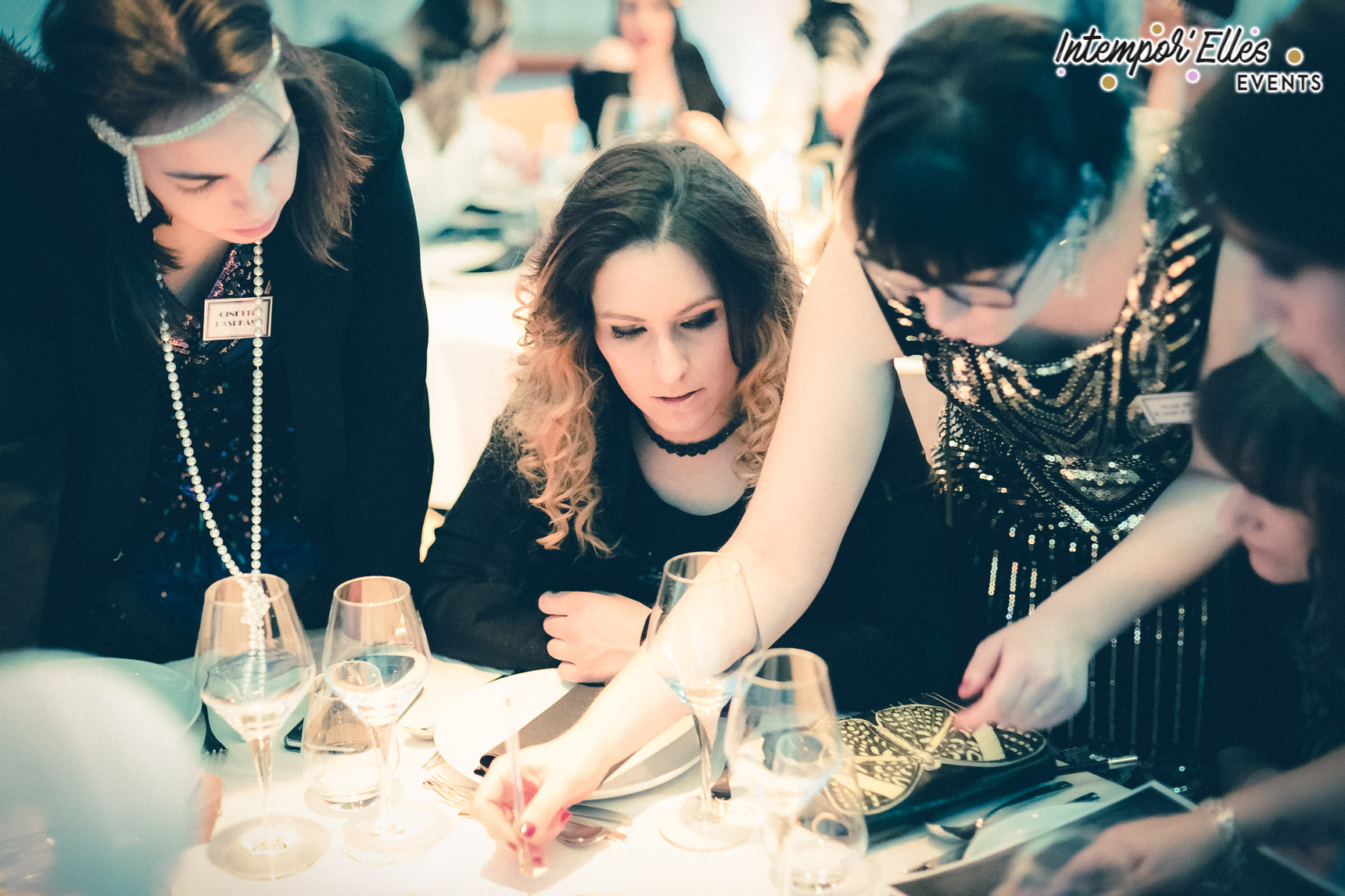
Murder Mystery Party in Luik to align teams and leadership
INNOV'events is a Brussels-based corporate events agency delivering Murder Mystery Party formats in Luik for 20 to 300 attendees. We run the scenario, casting, timing, room management, and on-site coordination so your internal teams stay focused on hosting, not troubleshooting.
Typical use cases: leadership offsites, end-of-year parties, onboarding waves, and cross-site integration between Liège and Brussels teams.
Sommaire
In a corporate agenda, entertainment is not a “nice add-on”: it is a lever to move people from passive attendance to active participation. A Murder Mystery Party in Luik creates structured interactions that help executives observe collaboration, decision-making speed, and informal leadership without turning the evening into a workshop.
Organizations around Luik usually expect three things: a format that respects timing (end of plenary means end of plenary), bilingual facilitation when needed (FR/NL or FR/EN), and production standards aligned with brand image—especially when clients, candidates, or board members are present.
We bring field-tested scripts, professional facilitation, and a local operating plan: pre-event site check, venue constraints mapping, and a run-of-show designed for the realities of Liège traffic, loading access, and venue sound limitations.
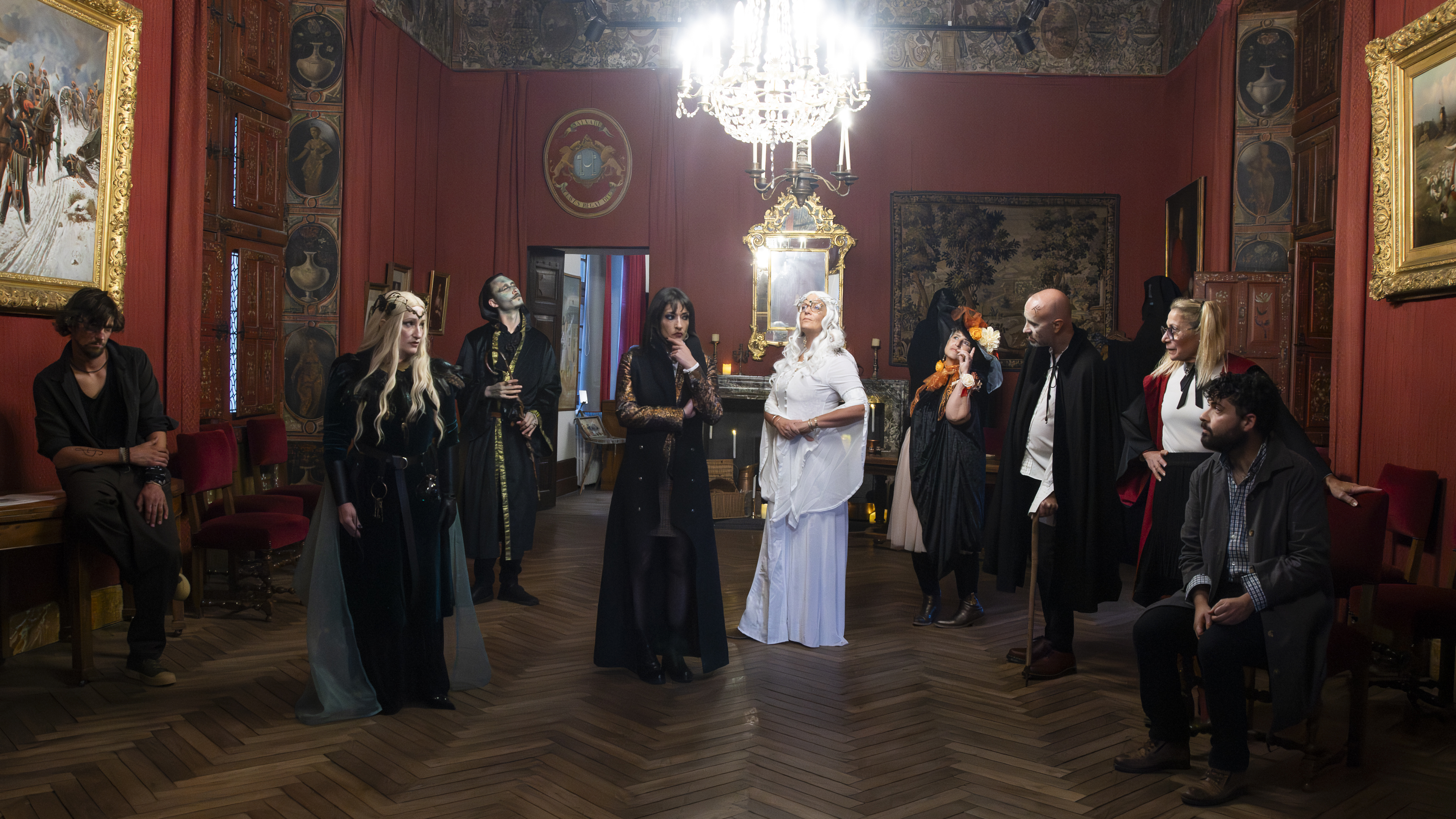
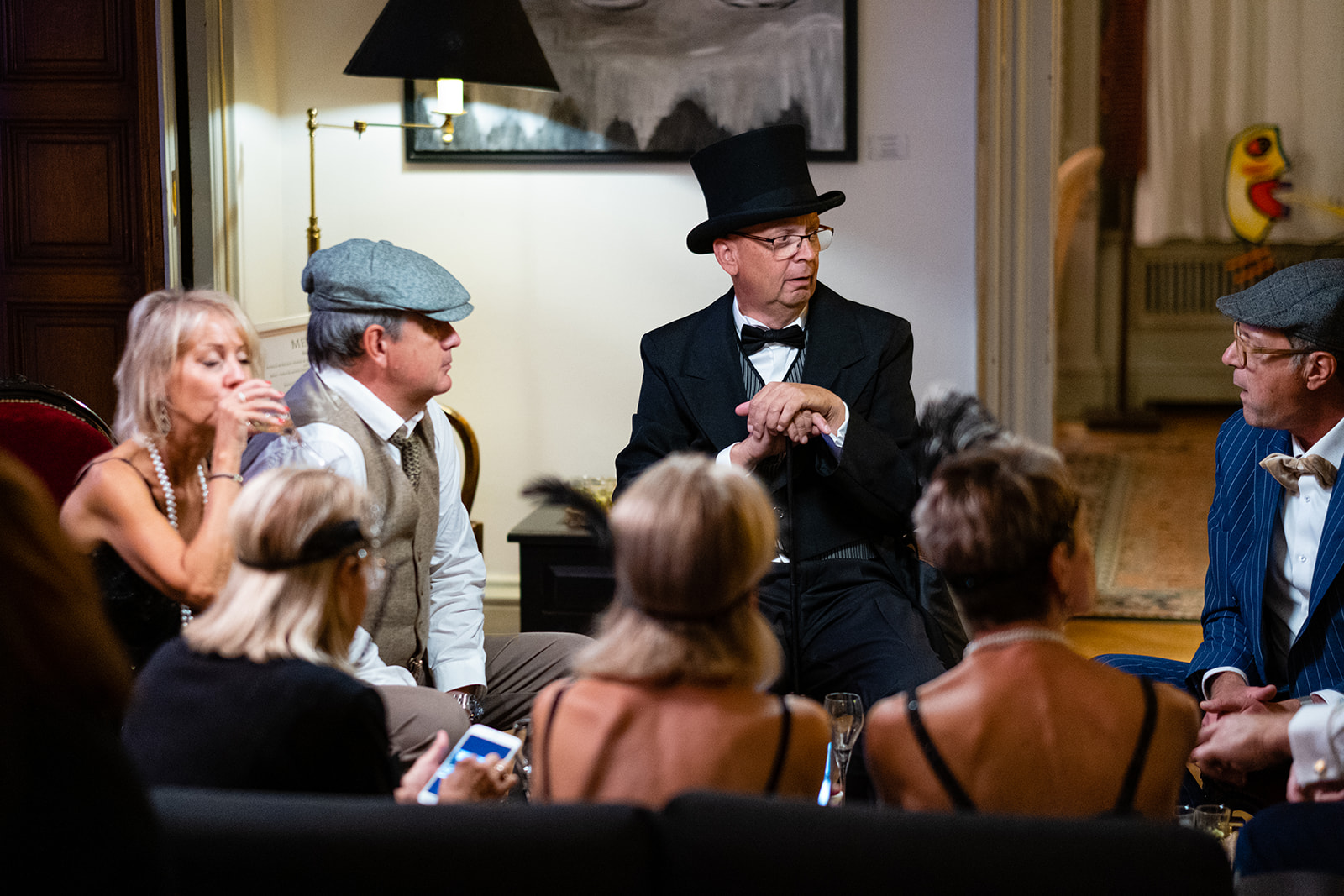
Operational credentials for Luik corporate events
10+ years delivering corporate events in Belgium, including complex multi-stakeholder productions.
100+ events/year coordinated across Belgium through our Brussels operations and partner network.
20–300 participants is the range where our Murder Mystery Party formats remain smooth (multiple rooms and rotating teams beyond 120).
48h for a first structured proposal (scenario options, staffing plan, and budget ranges) after a qualification call.
Who we support year after year in Luik
We regularly support organizations with recurring needs in and around Luik: year-end moments, integration after mergers, leadership meetings, and employer-brand events where the “feel” in the room matters as much as the content on stage.
You mentioned that you would provide company names as references; once you share them, we will integrate them here in a compliant way (e.g., “regional industrial group”, “healthcare operator”, “logistics HQ”) and specify the type of event and objective, without disclosing sensitive details. In practice, this is how our Liège clients work with us: one first project to test our operational rigor, then a yearly cycle where we standardize run-of-show, supplier lists, and risk management so internal teams stop reinventing the wheel.
Our role is often to protect executive time: you get a format that lands, while HR and Comms avoid last-minute firefighting (audio, room flow, staffing gaps, or scenario confusion).
 Besoin d’un devis rapide ?
Nous vous envoyons une première proposition sous 24h.
Why schedule a Murder Mystery Party in Luik for leadership goals
A Murder Mystery Party is a narrative-driven team dynamic with clear rules, time pressure, and information asymmetry—exactly the ingredients that reveal how teams behave when priorities compete. In Luik, we see it used less as “theme entertainment” and more as a controlled social architecture to connect silos without forcing networking.
Accelerate cross-team trust: teams share clues and negotiate roles naturally (who interviews witnesses, who records evidence, who challenges assumptions). This reduces the awkwardness HR often reports in classic cocktail networking.
Observe leadership without evaluating people publicly: executives can watch how managers handle ambiguity and consensus-building. It’s an effective alternative when you want insights but do not want a “assessment center” vibe.
Create a common story for internal communication: Comms teams get usable content (photos, short recap, awards moment) without over-staging. The story is already built into the format: suspects, twists, and a final reveal.
Integrate new hires: in fast-growing units around Liège, onboarding waves often feel fragmented. The investigation structure gives newcomers a legitimate reason to speak and contribute in the first 10 minutes.
Protect event timing: unlike open-ended entertainment, the format is built around a run-of-show (briefing, investigation rounds, reveal, awards) which helps you finish on time—important when guests have trains, childcare, or early shifts.
Liège has a pragmatic business culture: people appreciate formats that are engaging yet “useful”. When positioned correctly, a Murder Mystery Party in Luik becomes a credible corporate tool—light enough for an evening, structured enough to deliver measurable team outcomes.
What companies in Luik expect from corporate entertainment
In Luik, many corporate events mix audiences: HQ teams, operational managers, technical profiles, and sometimes external guests (partners, suppliers, candidates). The entertainment must therefore work on different comfort levels—some love improvisation, others prefer clear rules. We design the experience with explicit instructions, visible time markers, and facilitation that keeps energy high without forcing anyone to “perform”.
Three local constraints come back in our Liège projects:
- Venue acoustics and room layout: many characterful spaces (historic buildings, industrial venues) have reverberation or limited breakout rooms. We plan audio support, team zoning, and clue distribution accordingly.
- Mobility and access: for evening events, we plan around peaks and parking capacity. For central Luik locations, we build in arrival buffers and use signage/hosts to prevent late arrivals from breaking the briefing.
- Bilingual and multicultural teams: even when the company language is French, internal groups often include Dutch- or English-speaking colleagues. We propose bilingual materials and facilitation, and we avoid wordplay that only works in one language.
Finally, HR and Comms in Liège often ask for a “professional fun” line: something that feels premium and safe for image, especially when there is alcohol service. We address that by defining tone (comic vs. noir), dress code expectations, and a moderation plan for facilitators.
Which entertainment options fit corporate events in Luik today
Entertainment drives engagement when it gives people a reason to talk beyond their usual circle and a structure that prevents “standing clusters”. In Luik, we often combine one flagship format (like a Murder Mystery Party) with lighter touchpoints before or after, depending on your audience’s attention span and the venue constraints.
Animations Interactives à Luik
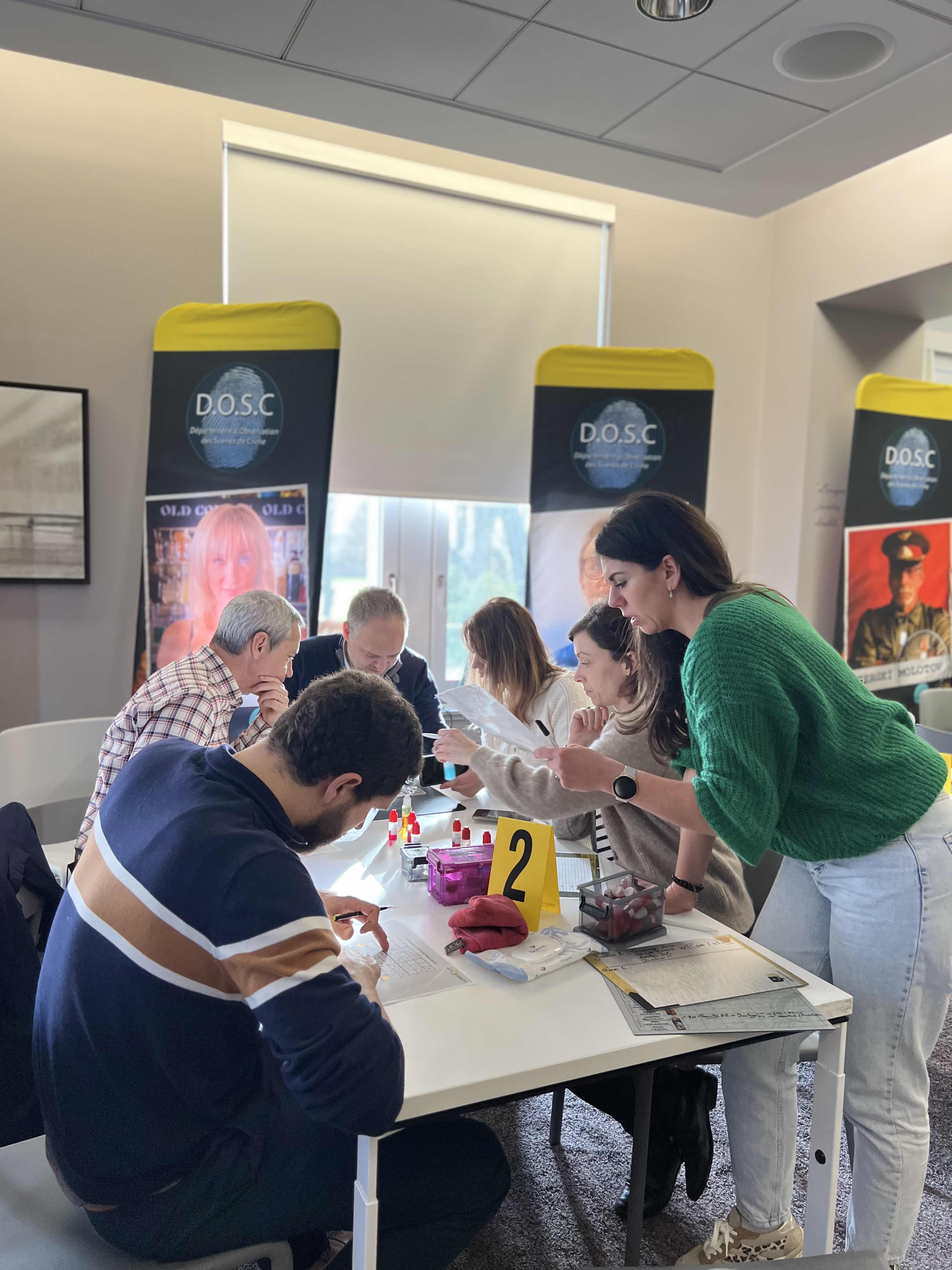
Murder Mystery Party in Luik (flagship): teams investigate, interview characters, and defend a final accusation. Best for 20–180 in one large space or 80–300 with multiple zones and extra facilitators.
Table-based micro-mysteries: short cases (10–15 minutes) between courses, ideal when you want dinner to remain the center and keep noise controlled.
Live polling + “evidence board” reveal: participants vote via QR code; results feed a final reveal. Useful for mixed seniority groups where not everyone wants to speak publicly.
Animations Artistiques à Luik
Actor-led characters: professional performers embody suspects and witnesses, with a tone calibrated to corporate audiences (no slapstick unless requested). Works well in Liège venues with strong ambiance.
Sound design and light staging: subtle cues (intro track, reveal cue, spotlight) to make the story land without turning the event into a theater night.
Animations Innovantes à Luik
Clue-driven tasting stations: each station delivers a piece of evidence. This reduces queue frustration because “waiting” becomes part of the game.
Chef collaboration on the narrative: for seated dinners, we align the reveal timing with service constraints (clearing plates, coffee service) so the climax is not interrupted.
Animations Gourmandes à Luik
Hybrid physical + digital evidence: QR-coded exhibits with short videos or voice notes. We keep an offline fallback for venues with weak mobile coverage.
Compliance-friendly scoring: if your culture dislikes “winners/losers”, we score on collaboration metrics (number of interviews conducted, evidence completeness) and offer inclusive awards.
Optional executive cameo: a CEO message or short briefing as “Commissioner” can reinforce leadership presence—kept to 2–3 minutes to avoid awkwardness.
Whatever the mix, we align tone and mechanics with brand image: a regulated environment (finance, healthcare) needs controlled humor and clear boundaries; a creative or tech environment may accept more improvisation. In Luik, where audiences are often pragmatic, clarity beats spectacle: people engage when they understand what to do and feel safe doing it.
How to choose a venue in Luik for a Murder Mystery Party
The venue shapes the entire experience: acoustics determine whether people can interview suspects; room geometry determines whether teams can spread without stepping on each other; staff access determines whether we can stage props discreetly. For a Murder Mystery Party in Luik, we prioritize readability (light), circulation (zones), and operational access (load-in, storage, staff routes).
| Venue type | For which objective? | Main strengths | Possible constraints |
|---|---|---|---|
Hotel meeting + banquet rooms (city or outskirts) | Leadership offsite + evening investigation | Reliable staff, predictable timing, easy AV integration, cloakroom and logistics | Less character; may require extra staging to create “story atmosphere” |
Industrial/heritage venues around Luik | Employer brand, large internal celebrations | Strong ambiance for a noir scenario, photo-friendly, can host large groups with zoning | Acoustics, heating, limited back-of-house, stricter load-in times |
Restaurant with private rooms | Client hospitality or small management team dinner | High comfort, controlled sound, smooth service pacing for table-based mysteries | Space limits for roaming actors; needs careful scripting to avoid disturbing other guests |
We strongly recommend a site visit in Luik (or at minimum a technical call with the venue manager) before locking the scenario. Small details—door locations, lighting controls, music volume limits, storage corners—are what separate a clean corporate production from a “messy but fun” evening.
What a Murder Mystery Party budget looks like in Luik
Pricing for a Murder Mystery Party in Luik depends on staffing, scenario complexity, language needs, and venue constraints. We prefer transparent ranges and clear line items because procurement and finance teams need comparability, not a single opaque number.
Number of participants: more guests usually means more facilitators, more zones, more clue sets, and more rehearsal time. A 30-person dinner mystery is not the same operation as a 180-person roaming investigation.
Format and duration: typical runtime is 60–120 minutes for the game, plus briefing and awards. Longer formats require more story beats and more control points.
Actor casting vs. facilitator-led: professional actors raise impact and realism but also add rehearsal, costuming, and backstage needs.
Language versions: bilingual (FR/NL) or FR/EN materials and facilitation add preparation and on-site complexity. We avoid live translation because it kills rhythm; we design bilingual mechanics instead.
Venue constraints: limited access times, strict noise rules, or multiple floors can increase staffing and setup time.
Branding and comms deliverables: custom evidence with your values/messages, photo coverage, or a short recap video can be added when Comms needs internal reach.
From an ROI perspective, the right benchmark is not “cost per guest” only, but the value of reduced friction between teams and the quality of executive-hosting time. When the format is controlled, you avoid the hidden costs of a flat evening: disengagement, early departures, or internal reputation damage for future HR initiatives.
Why choosing an event agency in Luik reduces risk
For a Murder Mystery Party, the visible part is the story; the invisible part is logistics, staffing, and contingency planning. Working with an agency that operates routinely in Luik means fewer assumptions and faster problem-solving on the day.
As part of our local delivery, we coordinate with venues, caterers, and technical suppliers in the region and we plan with real constraints (load-in routes, neighborhood noise rules, timing of service, and mobility). If you are comparing providers, ask who is physically present on-site as production lead and how escalations are handled when the CEO wants to shift the schedule by 20 minutes.
For readers who want a broader view of our local operations beyond this format, see our page for event agency in Luik and how we structure production across the region.
- Faster venue decisions thanks to realistic space and flow assessment (not only photos).
- Supplier coordination with known standards and backup options in the Liège area.
- On-site authority: a single production lead empowered to arbitrate timing, guest flow, and technical changes.
- Risk management adapted to local conditions (access, parking, late arrivals, noise constraints).
From an ROI perspective, the right benchmark is not “cost per guest” only, but the value of reduced friction between teams and the quality of executive-hosting time. When the format is controlled, you avoid the hidden costs of a flat evening: disengagement, early departures, or internal reputation damage for future HR initiatives.






Examples of Murder Mystery Party use cases around Luik
In the Liège region, we deliver Murder Mystery Party formats in different corporate contexts because the mechanics are flexible when engineered properly.
- Post-merger integration evening: two entities with different cultures. We used mixed teams and a collaborative scoring model to avoid “us vs. them” dynamics. The reveal was structured to reward evidence-sharing, not individual dominance.
- Leadership + high potentials: a scenario with limited comic acting, more negotiation and logic, and a short debrief led by the client’s leadership team. The objective was to create informal access without turning it into a training session.
- Operational workforce celebration: clear rules, short rounds, strong facilitation to keep pace, and a finale timed with transport constraints. The success factor was simplicity and crowd control, not complexity.
- Client hospitality dinner: a discreet, table-based mystery between courses, where the story never interfered with business conversations. The actors’ role was to “ignite” the table, then step away.
Across these situations, the common thread is operational: making the experience land for the intended audience while protecting the host’s reputation and the event’s timing.
Common pitfalls we avoid for corporate events in Luik
Underestimating sound and readability: clues no one can read in dim light, or witness dialogues lost in reverberant rooms. We plan lighting and audio as core components, not afterthoughts.
One-size-fits-all humor: jokes that work in a private party can be risky in a corporate environment. We calibrate tone and validate red lines with HR/Comms.
No plan for late arrivals: in Luik, if arrival is staggered (parking, traffic, trains), a single briefing can break the experience. We design a “latecomer onboarding” without restarting the story.
Too many rules: complexity kills engagement. We keep mechanics simple and use facilitators to create depth through interaction, not through paperwork.
Weak finale: if the reveal is rushed or unclear, the whole evening feels mediocre. We protect the last 10 minutes with a hard timing gate and a scripted reveal sequence.
Missing ownership on-site: without a production lead empowered to decide, small issues escalate. We assign clear roles (stage manager, facilitators, client liaison).
Our role is to anticipate these risks early—during venue selection, scenario choice, and run-of-show design—so you do not discover them in front of your guests.
Why Luik clients renew with INNOV'events
Renewal happens when an agency reduces internal workload and makes outcomes predictable. HR and Comms teams in Luik do not need more ideas; they need fewer surprises and clearer accountability.
1 single point of contact from scoping to on-site production lead, to avoid message dilution between sales and operations.
Shared run-of-show with timing gates, roles, and escalation paths validated in advance.
Post-event debrief within 5 working days (what worked, what to adjust, supplier notes) to standardize the next edition.

Loyalty is a consequence of delivery discipline: when your stakeholders know the evening will run on time and reflect your brand standards, repeating the format becomes an easy decision.
Our delivery process for a Murder Mystery Party in Luik
👉 Luik scoping call and stakeholder alignment
We run a structured call with the sponsor (executive), HR, and Comms to clarify objective, audience makeup, languages, sensitivities, and success criteria. Output: a one-page brief that prevents scope drift and helps you compare options internally.
👉 Scenario selection and event architecture
We propose 2–3 scenario directions with clear implications: actor-heavy vs. facilitator-led, competitive vs. collaborative, seated vs. roaming. We define group sizes, room zoning, and how the story integrates with dinner or speeches.
👉 Venue and logistics validation in Luik
We confirm access, setup windows, storage, acoustics, lighting, and power. We map the guest journey from arrival to cloakroom to briefing zones. If needed, we adapt the scenario to the space rather than forcing the space to fit the script.
👉 Production plan, staffing, and materials
We staff facilitators/actors with clear roles, prepare bilingual materials where relevant, and build redundancy (spare props, printed backups for QR content). You receive a run-of-show with timing gates, plus a contact sheet and on-site responsibilities matrix.
👉 On-site delivery and executive comfort
On the day, our production lead protects timing and handles supplier coordination. Facilitators manage energy and participation across groups. We keep the host side simple: one short briefing note for executives, and a single escalation channel.
👉 Post-event debrief and next-step recommendations
We provide a debrief with operational learnings, participant feedback signals, and recommendations for future editions (what to tighten, what to scale, what to change in venue or pacing). This is typically what makes the second event easier and more efficient.
FAQ sur l'organisation Murder Mystery Party à Luik
How long should a Murder Mystery Party in Luik last?
Plan 60–120 minutes for the game itself, plus 10–15 minutes briefing and 10 minutes for the final reveal/awards. If it’s integrated with dinner, we use shorter rounds between courses to avoid service disruption.
What group size works best for corporate events in Luik?
The sweet spot is 30–120 participants in one main space. For 120–300, we split into zones with additional facilitators and a coordinated finale so the reveal remains clear.
Can you run bilingual facilitation for teams in Luik?
Yes. We can deliver FR/NL or FR/EN versions. Best practice is bilingual written materials + facilitators assigned by zone, rather than live translation, which slows rhythm and reduces engagement.
Which venues in Luik are suitable for a Murder Mystery Party?
Hotels with meeting rooms, private event spaces with multiple zones, and restaurants with private rooms work well. The key criteria are: controllable sound, adequate lighting to read evidence, and a layout that allows teams to circulate without bottlenecks.
What is the typical budget range in Luik for this format?
As a planning reference, corporate Murder Mystery Party deliveries often start around €2,500–€4,500 for small groups with facilitator-led formats, and can reach €8,000–€18,000+ for larger groups, actor casting, bilingual delivery, and heavier production. Final pricing depends on participants, duration, staffing, and venue constraints.
Request a quote in Luik with a clear production plan
If you are comparing agencies, we recommend starting with a 20-minute qualification call: objective, audience mix, venue status, and timing constraints. Within 48 hours, we can provide a structured proposal for your Murder Mystery Party in Luik with scenario options, staffing plan, and budget ranges.
Contact INNOV'events to secure your date early—Liège venues and premium facilitators/actors book quickly for Q4 and peak internal event periods.
Agence INNOV'events Luik
Justin JACOB est le responsable de l'agence événementielle Luik. Contactez-le directement par mail via l'adresse belgique@innov-events.be ou par formulaire.
Contacter l'agence LuikToutes nos prestations & animations Luik, Belgique
Découvrez nos prestations événementielles
Découvrez nos animations événementielles disponibles au Belgique
- Hôtesse événementielle à Luik
- Escape Game à Luik
- Cours de cuisine type MasterChef à Luik
- Magicien à Luik
- Location de chapiteau à Luik
- Atelier colorimétrie à Luik
- Jeux gonflables à Luik
- Service de voiturier à Luik
- Simulateur de football à Luik
- Location de mobilier lumineux à Luik
- Flocage lumineux à Luik
- Repas insolite à Luik
- Light Painting à Luik
- Murder Party à Luik
- Jeu concours à Luik
- PLV événementielle à Luik
- Réalité virtuelle à Luik
- Cuisine moléculaire à Luik
- Animation Halloween à Luik
- Feu d’artifice à Luik
- Jeux géants à Luik
- Animateur événementiel à Luik
- Animation photo à Luik
- Père Noël à Luik
- Animation enfants à Luik
- Visite guidée à Luik
- Rallye urbain à Luik
- Piscine à balles à Luik
- Simulateur de vol à Luik
- Location de food truck à Luik
- Record du monde à Luik
- Simulateur de surf à Luik
- Casino du vin à Luik
- Atelier relooking à Luik
- Atelier création de parfum à Luik
- Atelier acting à Luik
- Animations RSE à Luik
- Tir à l’arc à Luik
- Agent de sécurité à Luik
- Œnologie à Luik
- Mime à Luik
- Jeu télévisé à Luik
- Fête foraine à Luik
- Atelier gestion de crise à Luik
- Atelier négociation de crise à Luik
- Jeux d’arcade à Luik
- Simulateur de chute libre à Luik
- Simulateur de ski à Luik
- Simulation circuit automobile à Luik
- Baptême de l’air à Luik
- Dégustation à Luik
- Création de baby-foot à Luik
- Rallye 2CV à Luik
- Challenge LEGO à Luik
- Animation casino à Luik
- Interprète / traducteur à Luik
- Goodies à Luik
- Bus / transfert à Luik