
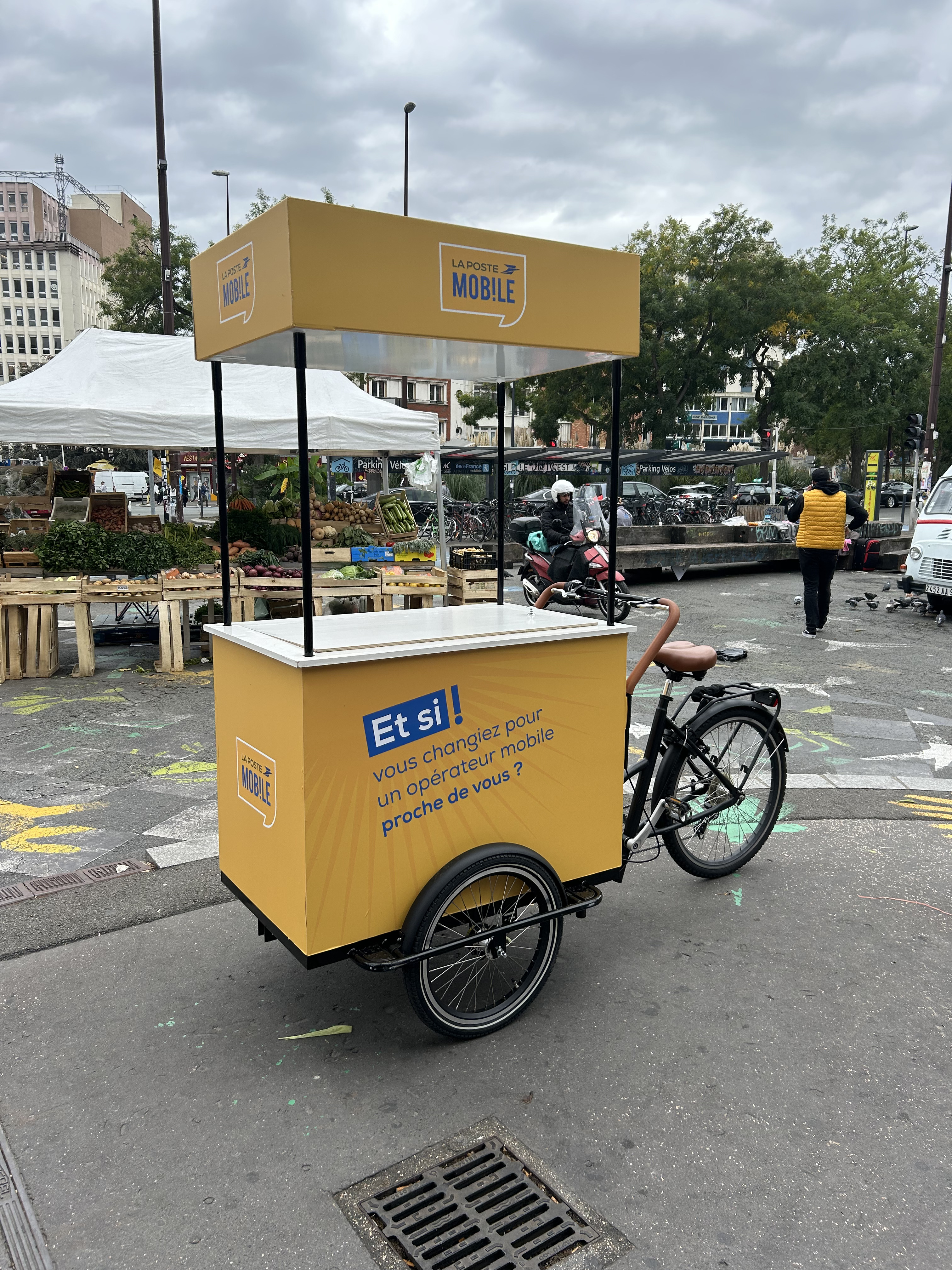
Promotiemateriaal (POS) in Brussel that ships on time and lands right
INNOV'events is a Brussels-based team managing Promotiemateriaal (POS) for corporate launches, trade marketing campaigns, internal activations and roadshows—typically 50 to 3,000+ attendees depending on the format.
We handle the full chain: POS design translation into print-ready files, production, kitting, transport, on-site installation, and post-event reverse logistics—so your teams keep control without spending nights chasing suppliers.
Sommaire
In a corporate context, Promotiemateriaal (POS) is not decoration: it is the operational layer that makes your message visible, credible and consistent across touchpoints (welcome, product discovery, call-to-action, and follow-up). When it is missing or late, even a strong program looks improvised—something executives and brand teams cannot afford.
Organizations in Brussel typically expect fast lead times, multilingual accuracy (NL/FR/EN), and compliance with strict venue rules (fire safety, load-in schedules, protected floors). They also need measurable outputs: what was displayed, where, for how long, and what it delivered for sales, hiring, or internal adoption.
From our office in Brussel, we coordinate local printers, installers and logistics partners we use weekly. The benefit for you: one accountable project lead, controlled quality checks, and real-time decisions on event day when something changes (which it always does).
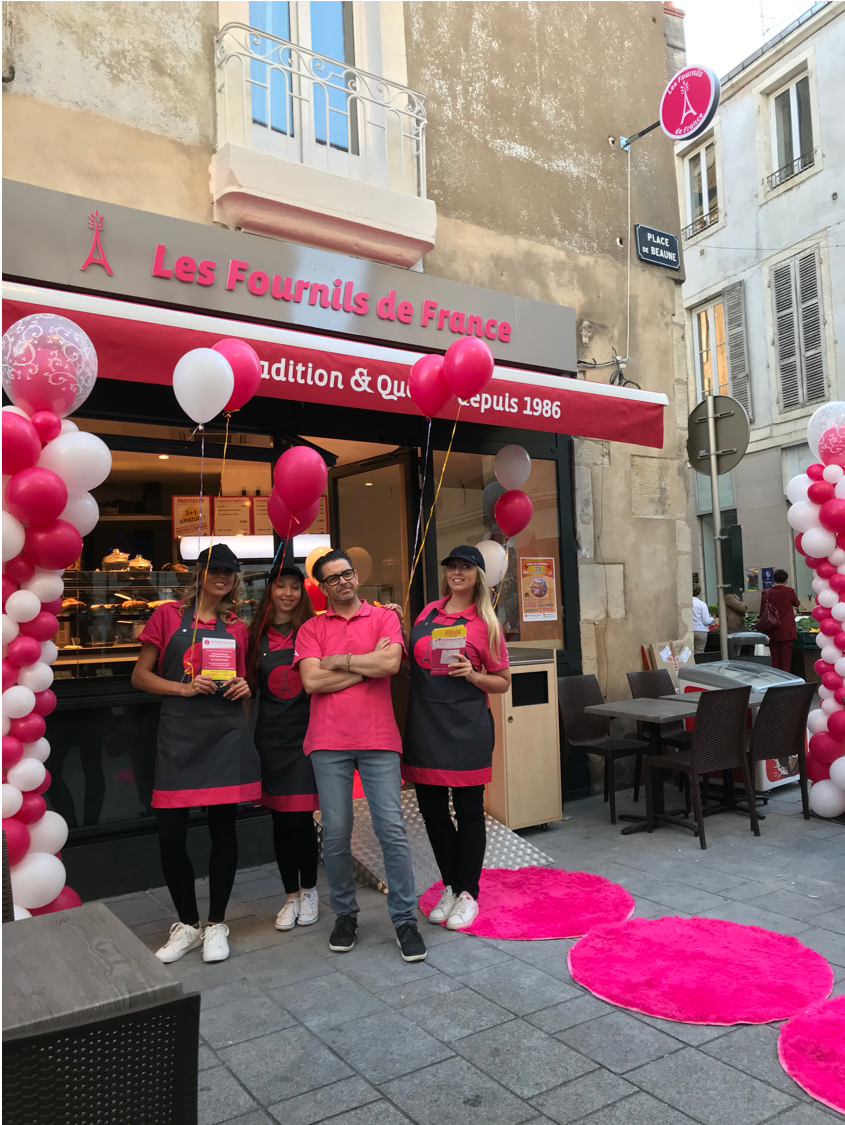
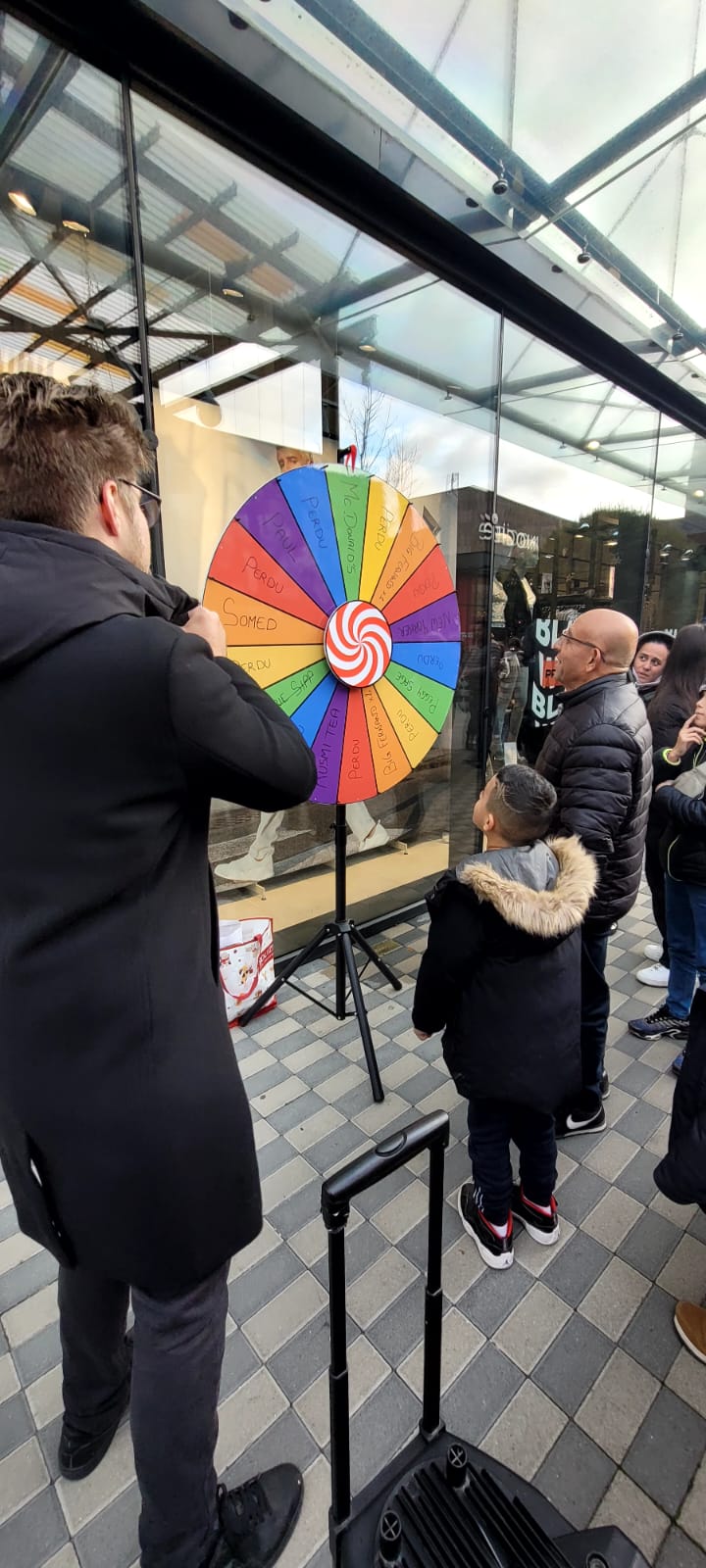
Brussel delivery you can benchmark: a few hard numbers
10+ years supporting corporate events and brand activations across Belgium, with recurring programs in Brussel.
200+ corporate projects per year in our network, including roadshows and multi-site POS deployments (kitting, labeling, and route planning).
48–72h is our typical turnaround for urgent reprints in Brussel once artwork is validated (depending on finishes and quantities).
1 single project owner per assignment: one person responsible for suppliers, deadlines, and on-site readiness—no “handover gaps”.
Who we support in Brussel year after year
In Brussel, we work with headquarters teams, EU-facing departments, and Belgian country teams that need reliable execution rather than big speeches. Many of our clients re-engage us because their internal stakeholders remember what matters on the ground: the delivery slot that must be booked, the venue’s technical sheet that must be respected, the bilingual proof that must be validated, and the last-minute change from management that still needs to look like it was planned.
You mentioned “use the company names I provided as references”, but no names were included in your message. If you share the list (even 4–6 names), we can integrate them here in a compliant way (e.g., “Brussels-based FMCG HQ”, “European public affairs team”, “FinTech scale-up in Ixelles”) or explicitly with approvals. Until then, we keep this section intentionally accurate without inventing logos.
Typical recurring collaborations include: quarterly internal town halls requiring consistent stage branding, yearly partner summits requiring multi-language directional signage, and product training days where POS must support learning objectives (clear labeling, product comparison boards, and takeaway packs) while remaining aligned with brand guidelines.
 Besoin d’un devis rapide ?
Nous vous envoyons une première proposition sous 24h.
Why invest in POS for a corporate event in Brussel
For executives, HR and communication leads, Promotiemateriaal (POS) in Brussel is a lever to reduce friction and increase conversion during a high-stakes moment. The program may be excellent, but without clear visual cues and consistent messaging, participants lose time, hesitate, and remember less—exactly the opposite of what a leadership team expects from an event budget.
Executive clarity on message: POS forces prioritization. We translate “strategic themes” into 3–5 on-site messages people actually see (welcome zones, keynotes, product areas, networking points).
Faster participant flow: directional signage, zoning and visual hierarchy reduce queues and confusion. In Brussels venues with tight load-in/out and shared spaces, this directly reduces operational risk.
Brand compliance without slowing down: we manage brand book constraints (logo clear space, fonts, color profiles, image rights) while keeping production feasible with local lead times.
HR impact: for recruitment days or internal mobility fairs, clear POS improves conversations (job family maps, benefits summaries, QR-coded application links). It also protects employer brand: no “printed-at-home” look.
Commercial lift: for launches and partner events, POS supports decision-making (feature comparison, pricing logic, proof points, case snippets) and makes sales teams more effective in short interactions.
Measurable outcomes: with tracked QR codes, counted handouts, and display maps, you can report back to leadership with concrete indicators instead of impressions.
Brussel is a dense, international business environment where stakeholders compare quickly. Professional POS is a quiet signal of seriousness—especially when you host in premium venues or welcome external partners who have seen strong execution before.
What corporate teams in Brussel expect from Promotiemateriaal (POS)
Brussels is not “one market”; it is a mix of EU institutions, federations, Belgian HQs, consultancies, scale-ups and NGOs—often within the same participant list. That creates specific expectations for Promotiemateriaal (POS) and on-site branding:
- Multilingual accuracy: NL/FR is often mandatory; EN is frequently expected. We plan translations early, build bilingual layouts, and organize proofing so legal/brand reviewers can sign off without delaying print.
- Venue constraints are stricter than teams anticipate: loading dock schedules, access badges, lift sizes, noise restrictions, wall-fixing rules, and fire-retardant requirements for hanging elements. We request technical sheets and validate materials (including certificates when needed).
- Short lead times: decision cycles can be long, but production windows remain short. We structure “freeze dates” (artwork lock, quantities lock, install plan lock) to avoid last-minute chaos.
- High expectation of finish: Brussels audiences notice details. A roll-up with curling edges or color drift from brand Pantone is immediately visible in photos and in partner perception.
- Photo and video readiness: leadership teams want assets for intranet, LinkedIn and press. POS must be camera-friendly (no moiré patterns, consistent lighting zones, correct logo placement).
- Data protection and security: in some Brussels contexts (public sector, regulated industries), we avoid exposing sensitive project names or internal org charts on open-access signage.
Our role is to anticipate these local realities before they become “event-day problems”. That is where the value sits: fewer escalations, faster decisions, and a controlled brand footprint.
Which POS ideas work best for corporate audiences in Brussel
Even when the core deliverable is Promotiemateriaal (POS), the best results come when POS supports interaction: it guides people to do something (scan, vote, compare, book, meet). In Brussel, where audiences are time-poor and often attending between meetings, engagement must be frictionless and professional.
Animations Interactives à Brussel
QR-coded “smart signage” with tracking: one QR per zone, with UTM tags and language routing (NL/FR/EN). You can report: scans per zone, peak moments, and content consumption—useful for leadership reporting.
Instant feedback walls (structured): rather than a generic post-it wall, we deploy pre-printed cards with 3–5 prompts aligned to your objectives (e.g., “biggest obstacle”, “next-step commitment”). Cards are later digitized for HR/Comms.
Badge-based personalization: color codes or icons on badges that map to interests (departments, partner tiers). POS then becomes a navigation tool (“If you see this icon, go to this table”), improving networking ROI.
Animations Artistiques à Brussel
Premium stage backdrop systems: modular frames with tension fabric for crisp visuals on camera. Useful for leadership keynotes, awards, or investor-style updates where photography matters.
Gallery-style brand storytelling: a corridor of framed panels with short, evidence-based messages (metrics, milestones, client cases). Works well in Brussels venues with long circulation areas.
Live calligraphy or illustration—used as content production: artists create executive quotes or team commitments in real time, later reused as internal comms visuals. The “deliverable” is the content, not the performance alone.
Animations Innovantes à Brussel
Branded tasting stations with compliant labeling: menu cards, allergen signage, and bilingual labels (NL/FR) designed to match your identity. This reduces operational risk and looks professional in photos.
Takeaway packs that support your message: instead of random goodies, we create kits tied to the event goal (e.g., onboarding pack for new hires, partner enablement pack, sustainability charter summary with QR to full report).
Animations Gourmandes à Brussel
Modular POS for multi-site Brussels programs: standardized components that can be redeployed across offices or partner locations (consistent dimensions, replacement skins, easy transport cases).
Low-waste production choices: recyclable boards, reusable frames, and limited-run digital printing. We quantify where it saves money (storage + reuse) versus where it increases cost (premium substrates).
Digital + physical hybrid points: discreet screens or tablets integrated into counters for product configurators or HR job matching—supported by clear physical signage so people understand what to do in under 5 seconds.
In every scenario, POS must serve your brand governance: tone of voice, visual consistency, and the “level of finish” expected from your organization. We will push back when an idea creates noise, dilutes your message, or introduces operational risk on a Brussels site.
Where to deploy Promotiemateriaal (POS) in Brussel for maximum impact
The venue changes how your POS is perceived. A strong visual system can elevate a functional room; weak POS can downgrade a premium venue. In Brussel, access rules and load-in logistics vary significantly, so we select formats that respect constraints (lifts, corridors, ceiling heights, and fixing permissions).
| Venue type | For which objective? | Main strengths | Possible constraints |
|---|---|---|---|
| Conference center / large auditorium | Leadership keynote, large internal town hall, multi-track program | Strong technical infrastructure; clear stage focal point; easier camera setup | Strict timing for load-in/out; mandatory fire-rated materials; branding rules in shared spaces |
| Hotel meeting spaces (central Brussel) | Partner day, client briefing, recruitment session with breakouts | Turnkey service; predictable flow; good for discreet premium branding | Limited ceiling rigging; restrictions on wall fixing; storage space can be tight |
| Corporate office / HQ floors | Internal activation, change communication, onboarding days | High relevance; easier stakeholder attendance; POS can remain longer | Security and access badges; protecting floors/walls; installations must not disrupt daily operations |
For Brussels projects, we strongly recommend at least one site visit (or a detailed technical walk-through with photos and measurements). It prevents typical issues like roll-ups blocking emergency exits, counters not fitting lifts, or signage being placed where it is invisible because of column lines or lighting.
What a POS budget looks like in Brussel (and what drives it)
The cost of Promotiemateriaal (POS) in Brussel depends less on “how many items” and more on specifications, deadlines, and on-site constraints. We budget in a way executives can defend internally: clear lines, options, and trade-offs.
Scope and quantity: a simple package (directional signage + roll-ups + a branded desk) is not the same as a full environment (stage, zoning, product walls, counters, window branding).
Production quality and finishes: lamination, fabric tension systems, lightboxes, cut shapes, and premium substrates increase cost but also durability and camera readiness.
Design adaptation and multilingual copy: translating is not “just changing text”; it affects layout, hierarchy, legal lines and readability.
Installation complexity in Brussel: night load-ins, restricted docks, additional manpower, permits, and protection materials (floor coverings, wall protections) can be significant.
Logistics and storage: kitting, labeling by zone, transport windows, and post-event storage for reuse. Storage often pays back when you run recurring events.
Urgency: rush production and last-minute changes increase cost. We mitigate this with freeze dates and option sets (Plan A/Plan B visuals prepared in advance).
From an ROI perspective, POS is one of the few event lines that directly improves conversion and clarity: fewer missed conversations, better traffic flow, more scans/leads, and stronger post-event content. We can structure your quote with “must-have” vs “nice-to-have” so you can protect impact even under budget pressure.
Why use a Brussel team for POS instead of coordinating remotely
Remote coordination can work for simple print jobs. It typically fails when you need reliable on-site execution under Brussels constraints: tight access windows, venue compliance, multilingual approvals, and “decision changes” on the eve of the event. A local agency reduces risk because we can physically check, adapt, and intervene quickly.
As your event agency in Brussel, we do not just order print: we manage the operational chain that protects your brand and your leadership team’s time. That means anticipating what procurement, legal, and the venue will ask for—and having answers ready.
- Faster problem solving: reprints, missing parts, incorrect language version—local access shortens recovery time.
- Supplier accountability: we work with Brussels-area production and installation teams we can brief properly and control with on-site checks.
- Realistic schedules: we build timelines around actual venue access and city logistics, not optimistic assumptions.
- Cost control through reuse: local storage and maintenance of reusable structures reduces re-buying and avoids “lost assets”.
From an ROI perspective, POS is one of the few event lines that directly improves conversion and clarity: fewer missed conversations, better traffic flow, more scans/leads, and stronger post-event content. We can structure your quote with “must-have” vs “nice-to-have” so you can protect impact even under budget pressure.




Examples of POS deliverables we produce in Brussel
We adapt our deliverables to the event’s objective and the internal reality of the client (approval layers, brand governance, budget controls). Typical Brussels assignments include:
- Leadership town hall POS: stage backdrop, lectern branding, side screens masking, directional signage, and photo-zone panels designed to be camera-clean for internal comms.
- Product launch in a partner venue: modular demo counters, feature comparison boards, price/pack architecture panels, and QR-based content access in three languages.
- HR and recruitment activations: job family maps, benefits summaries, interview flow signage, discreet privacy messaging, and take-home packs with QR links to application portals.
- Multi-site roadshow kits: standardized crates, zone labels, replacement “skins”, and an installation guide so each stop reproduces the same brand footprint.
- Compliance-sensitive environments: neutral naming conventions on signage, controlled visibility of internal project names, and careful placement to avoid open-access exposure.
Across these projects, the common denominator is operational discipline: the right item in the right place, installed at the right time, with the right language version—no improvisation in front of your stakeholders.
Common POS mistakes we prevent in Brussel projects
Printing before venue constraints are validated: panels that cannot enter the lift, or structures forbidden by fire/safety rules.
Late multilingual proofing: last-minute translation changes that break layouts and force rush reprints.
No install map: boxes arrive but nobody knows what goes where; the team loses hours during the only available access window.
Inconsistent brand finishes: mixed substrates and color profiles that look like multiple vendors were involved (often true, and visible).
Overproduction of handouts: thousands printed “just in case” with no distribution plan, creating waste and storage costs.
Missing contingency: no spare roll-up, no backup vinyl, no extra fixings—small failures that become visible in key photos.
Our job is to turn these known risks into a controlled plan: clear specs, approvals, quality checks, installation sequencing, and contingency. That is what protects your event day in Brussel.
Why Brussels clients keep the same POS partner over time
Recurring clients rarely come back because of “creativity” alone. They return because the process reduces internal load and because event day becomes predictable. For executive sponsors, predictability is value: fewer escalations, fewer surprises, and better reporting.
3-year+ recurring cycles are common for internal programs (town halls, partner updates, recruitment calendars) when we implement reusable POS systems.
20–40% savings is often achievable over time by switching from single-use items to reusable frames with replaceable skins, plus storage and maintenance.
Zero-minute delays at doors opening is a KPI many teams adopt after one event where signage was missing; our installation sequencing is built to protect opening time.

Loyalty is the most pragmatic proof: it means the agency delivered under pressure, respected brand governance, and made life easier for HR and communication teams in Brussel.
Our POS production process in Brussel from brief to dismantle
👉 Step 1 — Brussels brief and constraints audit
We start with a 30–60 minute working session (not a “creative meeting”): objectives, audience, languages, venue, access times, brand constraints, and success metrics. We also identify internal validators (Comms, Brand, Legal, Procurement) and their deadlines.
👉 Step 2 — POS plan: journey map, item list, and placement zones
We build a practical plan: what each POS element does, where it sits, and how it will be installed. You receive an itemized list (dimensions, substrates, finishes), plus a placement map aligned to the venue layout.
👉 Step 3 — Design adaptation, copywriting support, and multilingual proofing
We adapt your existing brand assets or create layouts within your guidelines. We manage readability (distance, lighting), QR performance, and versioning for NL/FR/EN. Proofing is organized so decision-makers validate once, with no looping.
👉 Step 4 — Production management and quality control
We place orders with vetted production partners, control print specs (color profiles, bleed, resolution), and check samples or first prints when critical. Items are labeled by zone and packed in install order to avoid on-site confusion.
👉 Step 5 — Transport, installation, and event-day readiness in Brussel
We coordinate delivery slots, access badges, and on-site manpower. The install team follows a timed plan with priorities for opening. We keep contingency materials available for quick fixes (extra fixings, backup prints when needed).
👉 Step 6 — Dismantle, reverse logistics, storage, and reuse
After the event, we dismantle and pack to protect assets. Reusable elements are stored and inventoried. For recurring programs, we propose a reuse calendar and replacement-skin strategy so you avoid re-buying from scratch.
FAQ sur l'organisation Promotiemateriaal (POS) à Brussel
How fast can you deliver POS in Brussel?
If artwork is approved, simple reprints can often be turned around in 48–72h in Brussel. For complex builds (counters, tension fabric walls, cut shapes), plan 7–15 working days. For high-volume multi-language deployments, we recommend 3–6 weeks including approvals and contingency.
What budget range for Promotiemateriaal (POS) in Brussel?
As a realistic order of magnitude in Brussel: a basic corporate package often starts around €1,500–€4,000 (directional signage + a few roll-ups). A mid-size branded environment is typically €6,000–€20,000. Large-scale environments with stage branding, modular structures and installation teams can reach €25,000–€80,000+. Final cost depends on finishes, quantities, install complexity, and urgency.
Do you manage bilingual NL/FR POS for Brussel events?
Yes. We plan NL/FR (and often EN) versions with a controlled proofing workflow: translation input, layout adaptation, stakeholder approval, then print specs. We also manage on-site placement so the right language is in the right zone, avoiding reputational issues.
Can you install POS in Brussel venues with strict rules?
Yes—provided we receive the venue technical sheet and access conditions early. We regularly work with restrictions such as no drilling, limited load-in windows, protected floors, and fire-safety requirements. We propose compliant solutions (self-standing frames, removable adhesives tested on surfaces, weighted bases) and schedule installation to match permitted access times.
How do you make POS measurable for Brussel leadership reporting?
We add measurement where it matters: tracked QR codes by zone (UTMs), counted handouts per area, and a placement map that documents what was visible where. For multi-site programs around Brussel, we also standardize kit contents so results can be compared site to site.
Request a POS plan in Brussel with clear specs and timelines
If you are comparing agencies, the fastest way to decide is to compare operational clarity: item list, materials, deadlines, install plan, and what happens if something changes 24 hours before doors open.
Send us your date, venue (or shortlist), estimated audience, languages (NL/FR/EN), and any existing brand guidelines. INNOV'events will come back with a structured proposal for Promotiemateriaal (POS) in Brussel: options by impact level, realistic lead times, and an execution plan your internal stakeholders can sign off with confidence.
Agence INNOV'events Brussel
Justin JACOB est le responsable de l'agence événementielle Brussel. Contactez-le directement par mail via l'adresse belgique@innov-events.be ou par formulaire.
Contacter l'agence BrusselToutes nos prestations & animations Brussel, Belgique
Découvrez nos prestations événementielles
Découvrez nos animations événementielles disponibles au Belgique
- Hôtesse événementielle à Brussel
- Escape Game à Brussel
- Cours de cuisine type MasterChef à Brussel
- Magicien à Brussel
- Location de chapiteau à Brussel
- Atelier colorimétrie à Brussel
- Jeux gonflables à Brussel
- Service de voiturier à Brussel
- Simulateur de football à Brussel
- Location de mobilier lumineux à Brussel
- Flocage lumineux à Brussel
- Repas insolite à Brussel
- Light Painting à Brussel
- Murder Party à Brussel
- Jeu concours à Brussel
- PLV événementielle à Brussel
- Réalité virtuelle à Brussel
- Cuisine moléculaire à Brussel
- Animation Halloween à Brussel
- Feu d’artifice à Brussel
- Jeux géants à Brussel
- Animateur événementiel à Brussel
- Animation photo à Brussel
- Père Noël à Brussel
- Animation enfants à Brussel
- Visite guidée à Brussel
- Rallye urbain à Brussel
- Piscine à balles à Brussel
- Simulateur de vol à Brussel
- Location de food truck à Brussel
- Record du monde à Brussel
- Simulateur de surf à Brussel
- Casino du vin à Brussel
- Atelier relooking à Brussel
- Atelier création de parfum à Brussel
- Atelier acting à Brussel
- Animations RSE à Brussel
- Tir à l’arc à Brussel
- Agent de sécurité à Brussel
- Œnologie à Brussel
- Mime à Brussel
- Jeu télévisé à Brussel
- Fête foraine à Brussel
- Atelier gestion de crise à Brussel
- Atelier négociation de crise à Brussel
- Jeux d’arcade à Brussel
- Simulateur de chute libre à Brussel
- Simulateur de ski à Brussel
- Simulation circuit automobile à Brussel
- Baptême de l’air à Brussel
- Dégustation à Brussel
- Création de baby-foot à Brussel
- Rallye 2CV à Brussel
- Challenge LEGO à Brussel
- Animation casino à Brussel
- Interprète / traducteur à Brussel
- Goodies à Brussel
- Bus / transfert à Brussel