
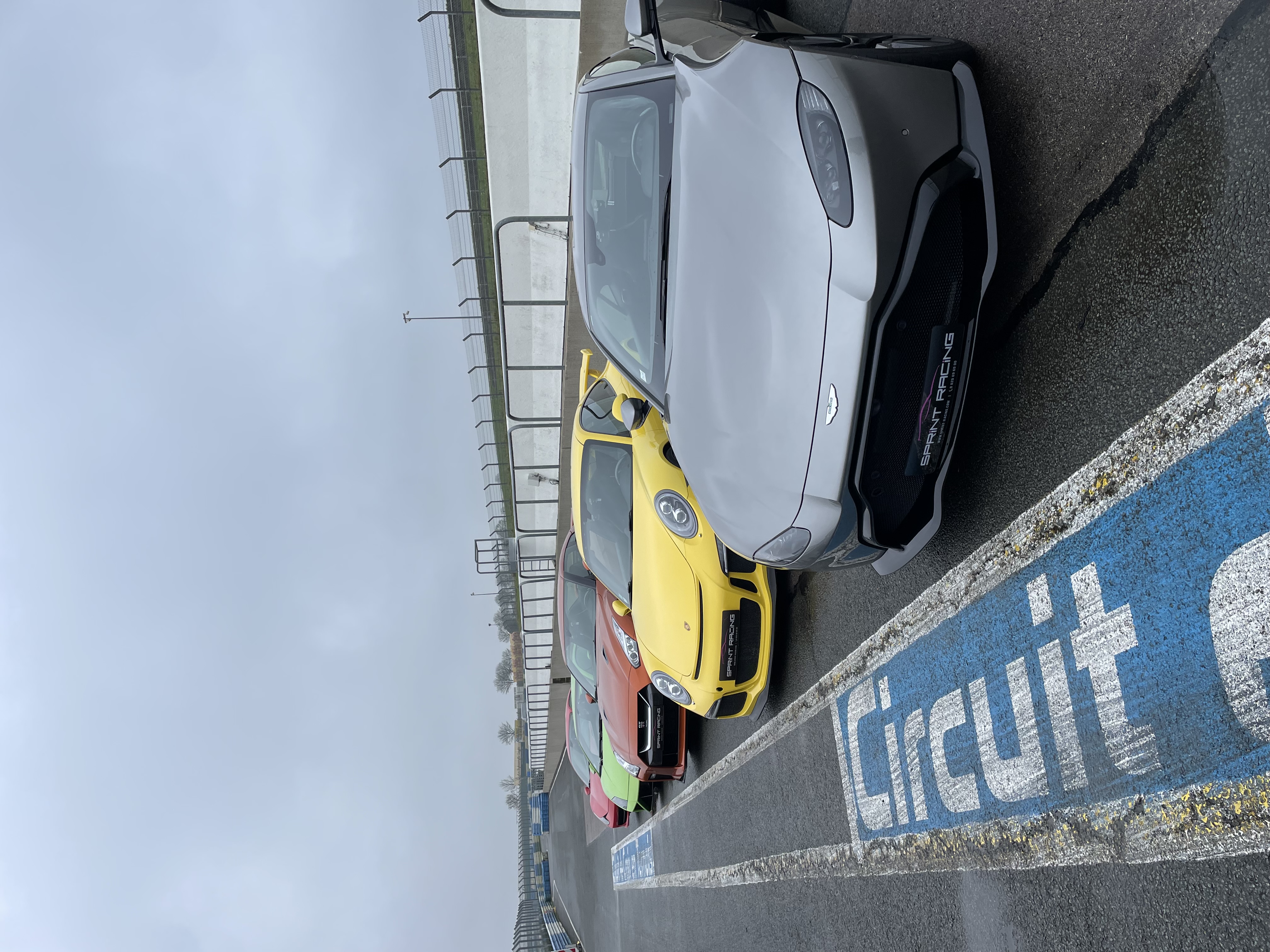
Racecircuit ervaring in Brussel that delivers measurable engagement
INNOV'events designs and produces Racecircuit ervaring programs for executives, HR and comms teams in Brussel, typically for 20 to 250 attendees. We handle track partner sourcing, safety & insurance coordination, run-of-show, on-site operations, and post-event reporting.
Whether your goal is leadership alignment, client hospitality, or a reward moment with governance built in, we structure the experience so it works on event day and stands up to internal scrutiny.
Sommaire
In a corporate setting, entertainment is not a “nice-to-have”: it is a lever to accelerate relationship-building, reinforce culture, and create talking points that live beyond the day. A well-produced Racecircuit ervaring gives teams a shared reference point while keeping risk, safety and brand exposure under control.
Organizations in Brussel typically expect bilingual coordination, predictable timings (for busy calendars), and a strong compliance posture for insurance, alcohol, and duty of care. They also expect the event to feel premium without looking wasteful—especially when stakeholders or social partners may be watching.
Based in Brussel, INNOV'events works with local venues, transport providers, and track partners across Belgium to secure availability and reduce operational friction. We plan like producers: clear responsibilities, realistic buffers, and a single accountable lead on site.
INNOV'events in numbers for Brussel decision-makers
10+ years delivering corporate events across Belgium, with recurring programs in Brussel for HR, Sales and Executive teams.
150+ corporate events/year across our network (internal and partner-led productions), with standardized safety checklists and on-site reporting.
20–1,200 attendees managed depending on format; for Racecircuit ervaring we commonly operate in groups of 20–250 to keep track flow safe and premium.
1 single project lead accountable from briefing to post-event debrief, with escalation lines defined before the event day.
Racecircuit programs trusted by teams around Brussel
We regularly support organizations active in Brussel and the wider Belgian market—headquarters teams, European offices, and local subsidiaries. Many clients rebook because they need the same thing each year: a high-energy reward or client moment that still respects governance, timing, and brand positioning.
To keep this page accurate, we only publish client names when we have explicit approval. If you share your sector and objectives, we can provide relevant case examples (format, scale, constraints, outcomes) from comparable projects delivered in and around Brussel.
 Besoin d’un devis rapide ?
Nous vous envoyons une première proposition sous 24h.
Why plan a Racecircuit ervaring for leadership in Brussel?
A Racecircuit ervaring in Brussel is rarely “just fun.” Executives use it to unlock a specific managerial outcome: make a strategy tangible, create a non-hierarchical moment, or reward without diluting standards. When designed properly, the track becomes a structured environment where decision-making, focus and feedback are visible—without forcing artificial team-building.
Executive alignment without meeting fatigue: a tight briefing, shared safety rules, and a clear sequence (briefing → track sessions → debrief) creates a rhythm where key messages land naturally.
Client hospitality with controlled brand exposure: you can host VIPs with a premium feel while keeping signage, content, and photo/video usage compliant with internal comms rules.
Employer branding that does not feel staged: participants generate authentic stories; HR can capture content (with consent) that shows culture and high standards.
High-perceived value with measurable structure: timed laps, coaching modules, and progression give a concrete narrative (“improvement”) instead of vague “memories.”
Cross-functional mixing: track rotations naturally blend departments (Sales/Tech/Finance) without forcing awkward icebreakers—useful for post-merger integration or matrix organizations.
Risk governance you can defend internally: when safety, insurance, alcohol management, and transport are designed up front, you reduce the “what if” concerns that often block approval.
Brussel is an environment where reputations travel fast—across sectors, institutions, and international offices. A track experience works when it reflects that culture: high standards, respect for stakeholders, and execution that feels serious even in an adrenaline context.
What Brussel companies expect from a racecircuit partner
Delivering a Racecircuit ervaring for corporate audiences in Brussel requires a different mindset than public track days. The typical constraints we plan for are operational, not creative.
Bilingual production (EN/FR, sometimes NL): safety briefings, signage, run-of-show and on-site announcements must be understood immediately. We avoid last-minute translations by preparing bilingual participant packs and cue sheets.
Time compression: many Brussels teams operate on tight calendars (EU/institutional rhythms, consulting travel, quarter-end pressure). That means realistic check-in flows, short “dead times,” and precise group rotations so the last session does not collapse.
Duty of care and compliance: corporate legal and HR will ask about liability, medical coverage, alcohol policy, and participant eligibility. We anticipate these questions with track partner documentation, pre-event waivers, and a clear escalation plan (incident workflow).
Mobility reality: traffic, limited parking near certain venues, and public transport reliance require practical solutions: staggered arrivals, coach shuttles from Brussel pick-up points, and clear wayfinding. We also plan for late arrivals without disrupting the track schedule.
Image and stakeholder sensitivity: some organizations (public sector, regulated industries, NGOs) need a balanced approach: premium but not extravagant, and always safe. We can design the day so it reads as “performance and learning,” not “excess.”
Which racecircuit experiences work best for Brussel teams?
Engagement comes from progression, not noise. In a Racecircuit ervaring in Brussel, we build moments where participants feel coached, safe, and able to improve—while observers still have a compelling experience through viewing zones, live timing, and hospitality.
Animations Interactives à Brussel
Lead-follow driving sessions: ideal for mixed experience levels. A professional driver sets the pace, reducing risky behaviour while keeping adrenaline high.
Timed lap challenge with coaching: participants run two timed sessions with a coaching module in between (braking points, racing line, vision). Improvement is the story; winners can be by category (rookie/pro, employee/client) to keep it inclusive.
Pit wall strategy workshop: small groups work on scenario decisions (tyre choice, weather, safety car). It gives non-drivers a meaningful role and creates executive-level conversation about risk and trade-offs.
Sim racing tournament with live leaderboard: a reliable alternative when weather turns, and a strong add-on for guests who prefer not to drive. We can mirror the real track layout to keep the narrative consistent.
Animations Artistiques à Brussel
Professional host (bilingual): keeps the day structured and premium, manages transitions, and reinforces safety without killing energy.
Photo/video storytelling team: focused on candid moments plus controlled brand shots (briefing, team moments, trophies). Deliverables can be cut for LinkedIn or internal townhalls with proper consent.
Awards moment with clear criteria: fastest lap is not always the right metric; we often add “most improved” and “team spirit” to align with HR values.
Animations Innovantes à Brussel
Hospitality designed for timing: breakfast on arrival, a lunch window that does not block track rotations, and an end-of-day networking moment. For Brussel audiences, we often include a quality non-alcoholic pairing to support duty of care.
Local Belgian touchpoints: when relevant to your brand: curated chocolate/coffee corner, or a structured tasting moment kept separate from driving sessions to avoid any ambiguity.
Animations Gourmandes à Brussel
Telemetry-lite feedback: without overcomplicating, we can provide simple performance insights (consistency, braking points) so participants feel they learned something concrete.
Digital check-in and waiver workflow: reduces queues and last-minute paperwork. Useful for corporate groups arriving from multiple sites around Brussel.
Hybrid audience design: for teams that cannot all travel, we can stream key moments (briefing, leaderboard, awards) and build a parallel sim challenge at the office.
The best format is the one that matches your brand and risk posture. A regulated company may prefer coaching-heavy lead-follow and structured debriefs; a sales-driven team may emphasize VIP hospitality and timed challenges. We align the entertainment layer to your image so it supports—never undermines—your corporate narrative.
How to choose a race venue from Brussel without surprises
The venue choice defines perceived level, safety comfort, and logistics. From Brussel, you also need to consider travel time, arrival predictability, and whether the site can handle corporate hospitality at the standard your stakeholders expect.
| Venue type | For which objective? | Main strengths | Possible constraints |
|---|---|---|---|
Permanent race circuit (Belgium) | Premium client hospitality, executive reward, clear “wow” factor with controlled structure | Professional marshaling, proven safety processes, multiple activity zones (track, briefing rooms, hospitality) | Travel time from Brussel, noise/time slot rules, higher base costs, availability constraints |
Driving center / handling track | Training-oriented experience, risk-sensitive audiences, mixed driving confidence | Lower speeds, strong coaching formats, easier scheduling, often closer to urban areas | Less “grand prix” feel, limited spectator impact, capacity constraints for large groups |
Private venue with temporary driving modules | Brand activation combined with driving sensations, product showcases, multi-activity corporate day | Flexible branding, can integrate other modules (sim, workshops, catering), closer to Brussel in some cases | Requires strong safety engineering, permits, and weather contingencies; not suitable for high-speed laps |
We strongly recommend a site visit (or a technical recce with photos, access maps, and measurement notes). It is the fastest way to validate parking flow, briefing room acoustics, hospitality quality, and where brand elements can be placed without violating safety zones.
What a Racecircuit ervaring costs in Brussel (and why)
Pricing depends on track format, vehicle type, instructor ratio, hospitality level, and the operational standards required by your organization. For Brussel corporates, the budget discussion is usually about governance: what safety and service level is necessary to make the event defensible internally.
Group size and rotation design: 20–60 attendees can be premium with high driving time; 100–250 requires stricter rotation engineering and often parallel activities to keep everyone engaged.
Vehicle choice: hot hatches vs sports cars vs GT-level vehicles changes insurance, fuel, wear, and instructor requirements. It also affects the brand message: performance learning vs luxury.
Instructor-to-driver ratio: higher coaching density improves safety and satisfaction but increases cost. Corporate audiences benefit from coaching because it reduces “ego driving.”
Track time and exclusivity: partial-day shared access is more efficient; private track hire provides stronger control and privacy (useful for VIPs and comms) but increases base costs.
Hospitality and production layer: venue hospitality, staffing, host, photo/video, branding, signage, radios, and on-site management. This is where many “cheap” quotes become risky.
Transport from Brussel: coach shuttles, staggered pickups, and contingency planning for traffic can be essential to protect the schedule.
Insurance and compliance documentation: depending on your sector, you may need specific coverage confirmations and documentation packages.
We position budget as ROI: not only the day itself, but the outcomes you can defend—client retention moments, internal engagement, and content value—while keeping reputational and safety risk low. If you share your attendee profile and constraints, we can provide a realistic range and options to trade up/down without breaking the experience.
Why work with an event agency in Brussel for track events?
For a track experience, the risk is rarely “the idea.” The risk is coordination: who is responsible for what, what happens when weather changes, and how the day remains on time when executives arrive late. Choosing a local partner in Brussel improves control because we can mobilize fast, validate venues in person, and coordinate suppliers who are used to corporate standards.
As your event agency in Brussel, we also understand the internal dynamics typical of Brussels-based organizations: multiple approvers, multilingual communications, and heightened sensitivity around image and duty of care.
- Faster issue resolution: on-the-ground access for site recces, supplier alignment, and last-minute adjustments.
- Local supplier network: transport, staffing, AV, catering and photographers who know corporate etiquette and reporting lines.
- Compliance-ready planning: we package safety and insurance elements in a way that HR/Legal can validate without endless back-and-forth.
- Production discipline: clear run-of-show, radio comms, contingency plans and a single accountable lead—key for executive-level audiences.
We position budget as ROI: not only the day itself, but the outcomes you can defend—client retention moments, internal engagement, and content value—while keeping reputational and safety risk low. If you share your attendee profile and constraints, we can provide a realistic range and options to trade up/down without breaking the experience.





Examples of Racecircuit ervaring formats used by Brussel organizations
Across Brussel corporate audiences, we deliver different track formats depending on the message, risk posture, and stakeholder mix. Here are typical structures we implement (illustrative, adjusted per client constraints and approvals).
1) Executive + key client half-day: morning arrival, concise bilingual safety briefing, lead-follow track sessions, and a structured networking lunch. We keep the group small (often 20–40) to maintain premium pacing and protect conversation time.
2) Sales kick-off reward module: integrated into a broader meeting day. We build a rotation with driving, sim racing, and a short debrief that ties back to KPIs (focus, consistency, decision-making). This format works for 60–120 with tight time windows.
3) HR recognition day with inclusion built in: not everyone wants to drive fast. We include coached low-speed modules, pit wall strategy, and sim tournaments so participation is not limited to confident drivers. This reduces internal friction and increases perceived fairness.
4) Communication-led content capture: for employers who want usable assets, we design the day around light, sound, and participant flow. We set consent collection up front and deliver a content package that Comms can publish quickly.
What these have in common is production control: timing, safety, hospitality quality, and clear responsibilities. That is what prevents a premium concept from becoming a stressful day.
Common pitfalls we prevent in Brussel track events
Underestimating briefing and check-in time: corporate audiences arrive in waves. Without structured check-in, the track schedule becomes chaotic and safety briefings get rushed.
Mixing driving levels without a plan: putting first-time drivers and enthusiasts in the same session increases risk and frustration. We segment groups and adapt coaching intensity.
Choosing “cheap” quotes that exclude essentials: marshal coverage, medical presence, radio comms, and insurance confirmations are sometimes missing. These are not optional in corporate environments.
Alcohol ambiguity: even a perception issue can damage trust. We separate any tasting moments from driving sessions and implement a clear policy.
No weather/incident contingency: a single red flag or rain can break the day if there is no alternative activity plan and no buffer.
Ignoring internal comms governance: filming without consent, unclear brand placement, or unmanaged social posting can create reputational risk—especially for Brussels headquarters teams.
Our role is to design the experience so these risks are handled before they become problems. On event day, that translates into calm on-site leadership, clear participant guidance, and a schedule that holds.
Why Brussel clients rebook INNOV'events for racecircuit days
Repeat business is earned through operational reliability. When HR and executives rebook a Racecircuit ervaring, it is usually because the previous edition was easy to approve, easy to attend, and easy to justify afterwards.
High rebooking rate on corporate programs where governance and timing are critical (tracked internally across recurring accounts).
Post-event debrief within 5 working days including incident notes (if any), supplier feedback, and improvement plan for the next edition.
Standardized production templates (run-of-show, safety checklist, staffing plan) adapted to each client’s approvals and brand constraints.

Loyalty is the strongest proof in events: it means the event delivered value without creating internal problems. That is the benchmark we work toward for Brussel clients.
Our production process for Brussel corporate track experiences
👉 Step 1 (Brussel) — Executive briefing and success criteria
We start with a short, decision-oriented workshop: objectives (client retention, leadership alignment, reward), attendee mix, risk posture, timing constraints, and brand rules. Output: a one-page concept with measurable success criteria and a preliminary run-of-show.
👉 Step 2 (1000) — Track format design and supplier locking
We propose 2–3 viable formats with trade-offs: driving time per person, coaching density, hospitality level, and contingency options. Once approved, we lock the track partner, instructors, hospitality, and transport, and we reserve critical slots (briefing room, viewing areas, catering windows).
👉 Step 3 (Brussel) — Safety, insurance and compliance package
We coordinate waivers, eligibility rules, medical presence, marshal coverage, and insurance confirmations. We translate the operational reality into a document package that HR/Legal can validate quickly, reducing approval cycles.
👉 Step 4 (1000) — Participant journey and communication
We build the participant pack: schedule, transport options from Brussel, dress code, arrival instructions, safety expectations, and consent forms for photo/video. We also prepare on-site signage and bilingual scripts to keep the day smooth.
👉 Step 5 (Brussel) — On-site production and real-time control
On event day we operate with a clear command structure: project lead, track liaison, hospitality lead, and registration lead. We run radio comms, manage timing, handle late arrivals, and execute the contingency plan if weather or incidents impact the schedule.
👉 Step 6 (Brussel) — Debrief, reporting and next-edition options
We deliver a debrief with what worked, what to improve, and recommended adjustments (group sizing, coaching ratio, content capture, transport). If your comms team needs it, we provide a publish-ready selection of visuals and a short narrative aligned with your internal messaging.
FAQ sur l'organisation Racecircuit ervaring à Brussel
How far in advance should we book in Brussel?
For prime dates (May–September), plan 8–16 weeks ahead. For smaller weekday groups outside peak season, 4–8 weeks can work, but earlier is safer for track availability and executive calendars.
What group size works best for a Brussel racecircuit day?
For a premium feel with meaningful driving time, 20–60 attendees is ideal. For 80–250, we recommend parallel activities (sim racing, workshops, hospitality zones) and stricter rotations to avoid long waiting times.
Is a Racecircuit ervaring in Brussel safe for corporate groups?
Yes, when the format is coached and governed. We use structured briefings, instructor-led sessions (often lead-follow), segmented groups by experience, and confirmed marshal/medical coverage. Safety rules and eligibility are defined before invitations go out.
Can we include clients and employees together in Brussel?
Yes. The key is group design: separate VIP windows, balanced coaching attention, and a hospitality plan that protects networking time. We also clarify photo/video consent and branding so client confidentiality is respected.
What budget range should we expect from Brussel?
As a working range, corporate track experiences often land between €350–€1,200 per attendee depending on vehicle level, track exclusivity, coaching ratio, hospitality, and transport. We can structure options at different levels without compromising safety.
Request a quote for Racecircuit ervaring in Brussel
If you are comparing agencies, we suggest starting with a 20-minute call focused on constraints: group size, stakeholder mix, preferred dates, governance requirements, and the message you want leaders to take away. We will come back with 2–3 realistic formats, a clear budget structure, and the operational implications (timings, safety, transport) so you can decide quickly.
Racecircuit ervaring in Brussel works best when planned early—especially for peak-season dates and executive availability. Contact INNOV'events to secure a feasible slot and a production plan you can defend internally.
Agence INNOV'events Brussel
Justin JACOB est le responsable de l'agence événementielle Brussel. Contactez-le directement par mail via l'adresse belgique@innov-events.be ou par formulaire.
Contacter l'agence BrusselToutes nos prestations & animations Brussel, Belgique
Découvrez nos prestations événementielles
Découvrez nos animations événementielles disponibles au Belgique
- Hôtesse événementielle à Brussel
- Escape Game à Brussel
- Cours de cuisine type MasterChef à Brussel
- Magicien à Brussel
- Location de chapiteau à Brussel
- Atelier colorimétrie à Brussel
- Jeux gonflables à Brussel
- Service de voiturier à Brussel
- Simulateur de football à Brussel
- Location de mobilier lumineux à Brussel
- Flocage lumineux à Brussel
- Repas insolite à Brussel
- Light Painting à Brussel
- Murder Party à Brussel
- Jeu concours à Brussel
- PLV événementielle à Brussel
- Réalité virtuelle à Brussel
- Cuisine moléculaire à Brussel
- Animation Halloween à Brussel
- Feu d’artifice à Brussel
- Jeux géants à Brussel
- Animateur événementiel à Brussel
- Animation photo à Brussel
- Père Noël à Brussel
- Animation enfants à Brussel
- Visite guidée à Brussel
- Rallye urbain à Brussel
- Piscine à balles à Brussel
- Simulateur de vol à Brussel
- Location de food truck à Brussel
- Record du monde à Brussel
- Simulateur de surf à Brussel
- Casino du vin à Brussel
- Atelier relooking à Brussel
- Atelier création de parfum à Brussel
- Atelier acting à Brussel
- Animations RSE à Brussel
- Tir à l’arc à Brussel
- Agent de sécurité à Brussel
- Œnologie à Brussel
- Mime à Brussel
- Jeu télévisé à Brussel
- Fête foraine à Brussel
- Atelier gestion de crise à Brussel
- Atelier négociation de crise à Brussel
- Jeux d’arcade à Brussel
- Simulateur de chute libre à Brussel
- Simulateur de ski à Brussel
- Simulation circuit automobile à Brussel
- Baptême de l’air à Brussel
- Dégustation à Brussel
- Création de baby-foot à Brussel
- Rallye 2CV à Brussel
- Challenge LEGO à Brussel
- Animation casino à Brussel
- Interprète / traducteur à Brussel
- Goodies à Brussel
- Bus / transfert à Brussel