
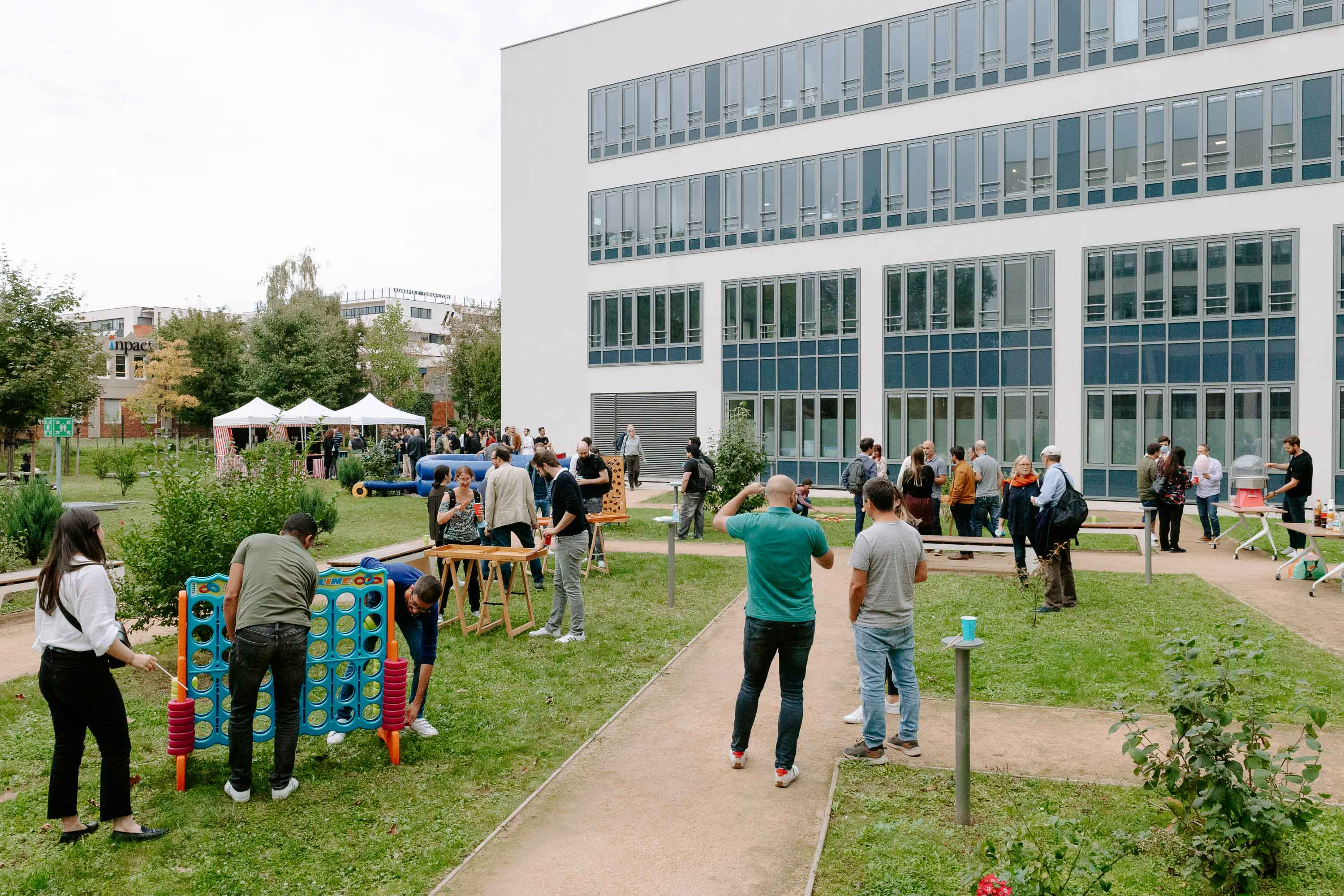
Reuzenspellen challenge in Brussel for teams that need real coordination
INNOV'events delivers the Reuzenspellen challenge for corporate teams in Brussel, typically from 20 to 300 participants. We handle the full operational chain: venue fit, permits where needed, game set-up, facilitation in multiple languages, timing/scoring, and event-day safety. You get a robust format that works for HR, leadership offsites, and client-facing moments—without improvisation on the day.
Sommaire
In a corporate agenda, entertainment is not “extra”; it is a managerial tool. A well-run Reuzenspellen challenge in Brussel creates observable collaboration under time pressure, which is exactly what executives want to see (and what HR wants to reinforce) during a strategic gathering.
Organizations in Brussel expect tight timing, clear risk management, and a format that is inclusive for mixed seniority and multilingual groups. The challenge must run smoothly alongside speeches, catering constraints, and sometimes high-profile guests—no vague “fun activity” can survive that reality.
As a Brussels-based team, INNOV'events plans these games with local logistics in mind: access rules, loading windows, indoor back-up options, and facilitation that fits Belgian corporate culture. We build a clear run-of-show and deliver it like a production, not like a hobby.
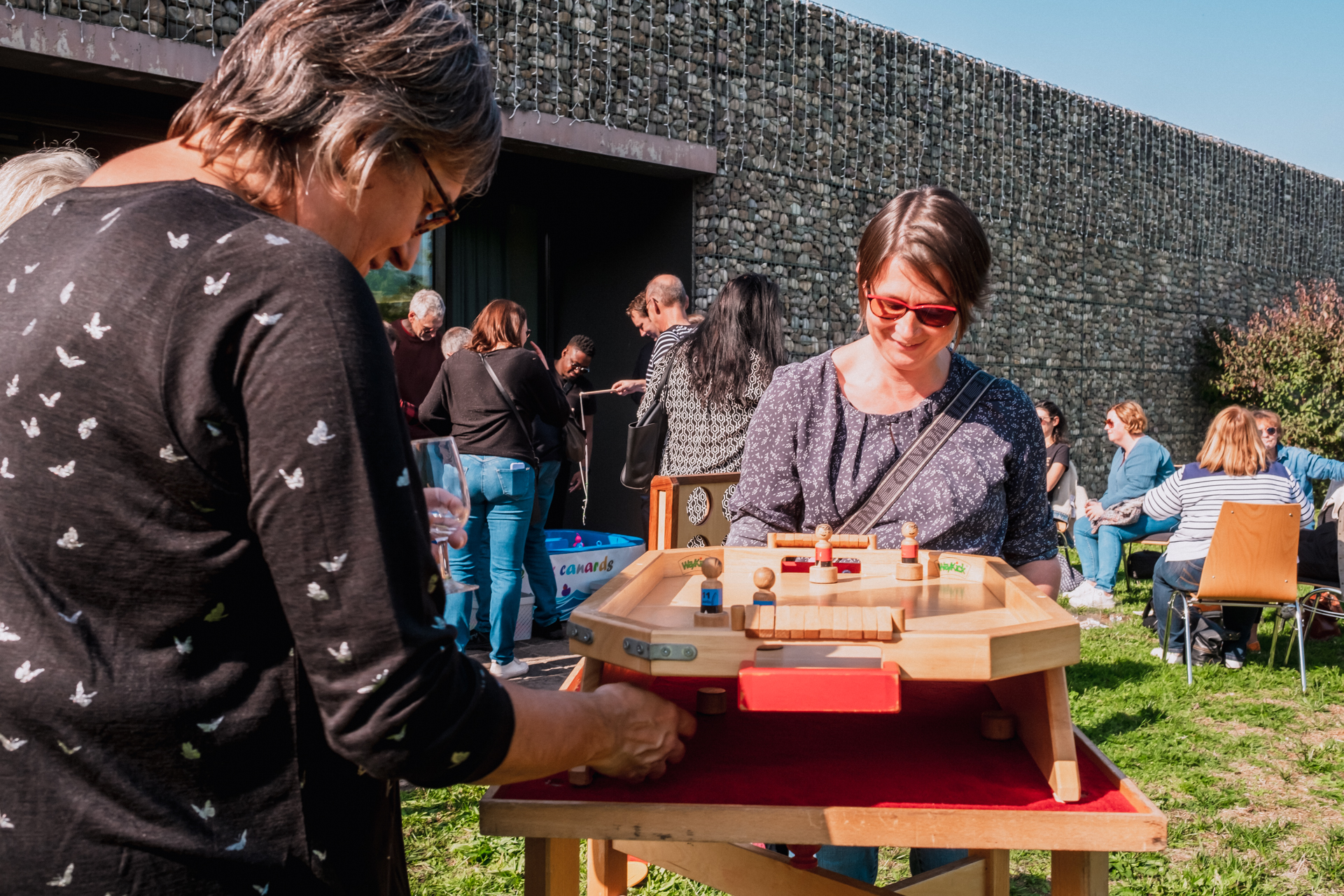
Operational facts you can rely on in Brussel
10+ years delivering corporate entertainment and team challenges across Belgium, with recurring programs in Brussel.
20–300 participants per session as a standard comfort zone; above that we split into waves with synchronized scoring.
2–8 facilitators on-site depending on group size, plus a dedicated event lead responsible for timing, safety, and client liaison.
60–120 minutes of game time (excluding briefing and awards), designed to fit a half-day seminar or an evening reception format.
FR/NL/EN facilitation available to match the linguistic reality of corporate Brussel.
Corporate teams we support year after year in Brussel
INNOV'events works with Brussels-based headquarters, public institutions, and international companies that operate from the capital. Many teams return annually because they need a partner who understands internal realities: decision cycles, brand constraints, procurement expectations, and the pressure of an event day where leadership is present.
We often support HR and internal communication teams who want a format that is easy to explain internally (“what will people actually do?”), measurable (“how do we make winners fair?”), and safe (“what are the risks and mitigations?”). In Brussel, this also means anticipating venue access rules, strict time slots, and mixed audiences (office, field teams, and management in the same room).
If you share the company names you want us to mention as references, we will integrate them here in a compliant and professional way (including the context: group size, objective, and venue type), while respecting confidentiality constraints when required.
 Besoin d’un devis rapide ?
Nous vous envoyons une première proposition sous 24h.
Why choose a Reuzenspellen challenge for a Brussel leadership day?
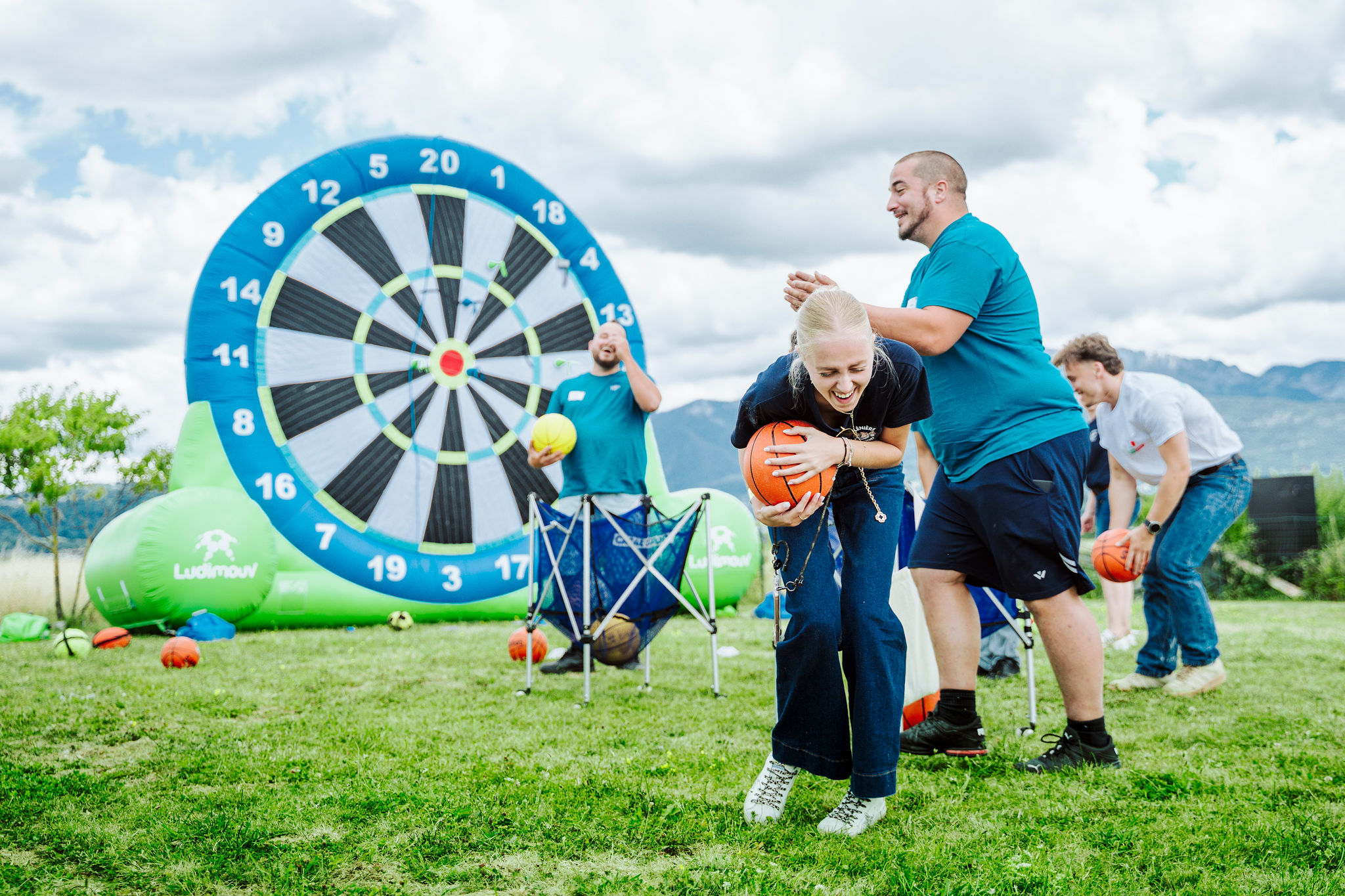
A Reuzenspellen challenge uses oversized, physical games to create immediate coordination challenges: teams must distribute roles, communicate clearly, and recover from mistakes under time constraints. For executives, that is useful because it translates quickly into organizational language: ownership, decision speed, and collaboration across silos.
In Brussel, we see this format used strategically before a townhall, during a strategy offsite, or as an energizer between plenary sessions—because it resets attention and creates shared reference points that internal communication can reuse for months.
Observable teamwork: you see how people allocate roles (leader, analyst, executor) and how quickly they switch when a plan fails.
Cross-department connection: games mix profiles naturally; it reduces “HQ vs. operations” tension without forcing awkward networking.
Inclusive competition: oversized mechanics allow non-sporty participants to contribute (strategy, timing, coordination), which is critical for mixed corporate populations.
Energy management for long agendas: a 75-minute challenge often improves attention and participation for the next plenary segment.
Employer brand content: with clear consent management, the format generates visuals that look authentic (teams solving a problem) rather than staged group photos.
Managerial debrief hooks: we can provide simple debrief prompts aligned with your leadership framework (accountability, collaboration, customer focus).
The economic culture of Brussel mixes international standards with Belgian pragmatism: people appreciate activities that are well organized, respectful of time, and genuinely useful for the group. A properly produced challenge fits that expectation.
What Brussel companies expect from corporate entertainment
In Brussel, event stakeholders often include multiple layers: an executive sponsor, HR, internal communications, and sometimes procurement or compliance. Each group has different success criteria, and the entertainment must satisfy all of them simultaneously.
From the executive side, the expectation is clear: no “nice-to-have” activity that eats agenda time without a purpose. We therefore define, upfront, what success looks like: break silos between two merged teams, create a shared experience before a difficult business update, or activate a new leadership narrative.
From HR, we frequently receive concrete constraints: accessibility for all (including participants with limited mobility), a psychologically safe environment, and a structure that prevents dominant personalities from taking over. The Reuzenspellen challenge is built with role rotation, short rounds, and facilitation scripts that keep the playing field fair.
From communications, the requirement is consistency with brand image. A financial institution will want clean visuals, controlled messaging, and a disciplined flow; a creative company may prefer bolder staging. In both cases, we control signage, briefing tone, and award moment so it aligns with your brand rather than looking like a generic fair.
Finally, Brussels logistics matter: loading and parking constraints, venue noise rules, multilingual instructions, and tight scheduling around public transport. We treat these as planning inputs from day one, not as last-minute surprises.
Which Reuzenspellen variants work best for corporate teams in Brussel?
Engagement comes from progression: teams understand quickly, play immediately, and see improvement round after round. That is why we mix oversized games that reward different strengths—strategy, dexterity, communication—so everyone can contribute and the competition remains credible.
Animations Interactives à Brussel
Giant Jenga decision rounds: teams must agree on risk thresholds; useful when your event theme is governance, prioritization, or “doing more with less.”
Oversized puzzle relay: combines speed and coordination; ideal for mixed seniority groups because it rewards planning as much as execution.
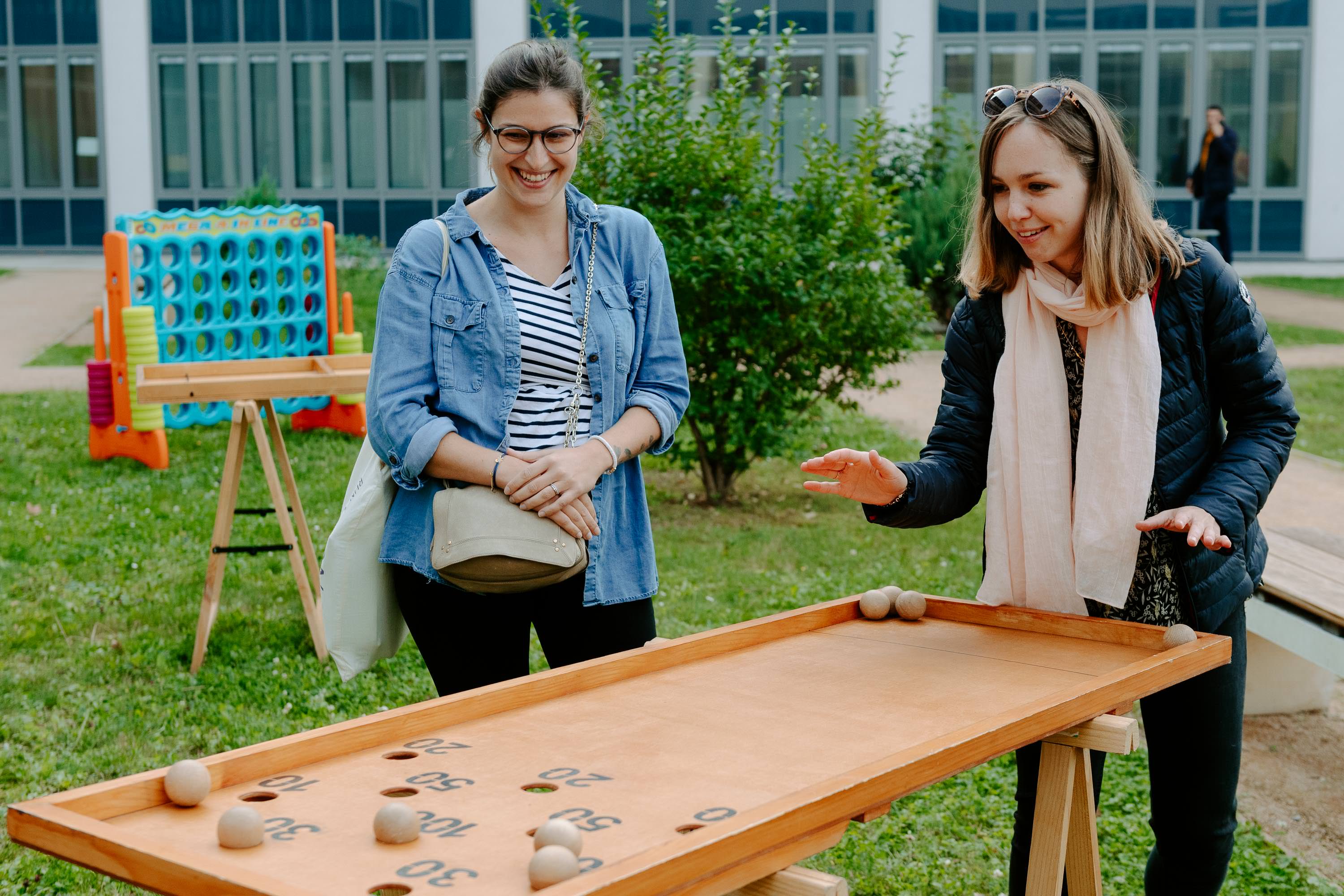
Giant connect-style strategy board: quick learning curve; works well during receptions because it creates spectator energy without loud music.
Timed collaboration circuit: several small stations with synchronized timing; very effective for groups of 120+ because it avoids bottlenecks.
Animations Artistiques à Brussel
Branded award moment: short, disciplined, and photogenic; we keep it under 10 minutes to respect executive schedules.
MC-style facilitation: energetic but controlled; particularly useful in Brussel when audiences are international and you need clear bilingual/English transitions.
Animations Innovantes à Brussel
Belgian tasting checkpoint: optional “bonus station” with small portions (e.g., chocolate pairing, local soft drinks). It works when you want hospitality without turning the activity into catering management.
After-game networking layout: we coordinate the end position of the circuit near the bar or coffee area to convert game energy into conversation.
Animations Gourmandes à Brussel
Live scoring dashboard: displayed on a screen for larger groups; creates transparency and reduces disputes about rankings.
Team identity kit: quick visual identifiers (colors, armbands, table flags) to speed up rotations and help photographers capture clear team moments.
Structured debrief prompts: 3–5 questions delivered to team leads right after the game, so learning transfers into your next workshop session.
Whatever the variant, we align the tone and visuals with your brand image. In Brussel, where audiences can include clients, partners, or internal stakeholders from multiple countries, that alignment is what keeps the entertainment credible and “on brand.”
Where to host a Reuzenspellen challenge in Brussel without logistics issues?
The venue shapes perception and operational risk. Oversized games require clear circulation, safe flooring, predictable acoustics for briefings, and access for load-in. In Brussel, you also need to think about parking, loading windows, and whether the space can provide an indoor back-up if weather changes.
| Venue type | For which objective? | Main strengths | Possible constraints |
|---|---|---|---|
| Conference venues with large plenary + breakout spaces | Leadership offsite, townhall day, structured agenda | Clear run-of-show integration, AV ready for live scoring, easy transition from plenary to challenge | Loading schedules, noise limits during parallel sessions, strict timing between room turnovers |
| Industrial-style event halls / renovated warehouses | High-energy team bonding, brand activation, client-facing evenings | Large open areas for circuits, strong visual impact, flexible staging | Acoustics can be challenging; needs professional sound management for bilingual briefings |
| Corporate offices (large atrium, cafeteria, or terrace) | Internal engagement close to operations, cost control, minimal travel | Convenient for staff, strong employer-brand authenticity, easier attendance | Security protocols, elevator dimensions for oversized elements, limited storage and set-up windows |
We strongly recommend a site visit (or at minimum a detailed technical check) before confirming the format. A 30-minute walk-through in Brussel often prevents the classic issues: bottlenecks, poor acoustics for instructions, or access constraints that compress set-up time.
What budget to plan for a Reuzenspellen challenge in Brussel?
Pricing depends on scale, duration, and production requirements. A Reuzenspellen challenge in Brussel is not priced like “renting games” because the value (and risk) sits in operations: facilitation, timing, safety, and flow management. We quote based on what it takes to deliver a controlled experience for your audience and venue conditions.
Participant volume: typical formats run 20–300 people; larger groups require more facilitators and often wave rotations.
Duration: 60 vs. 120 minutes changes the number of rounds, the staffing, and the scoring complexity.
Space configuration: one large open space is efficient; split rooms or long corridors increase set-up and supervision needs.
Language requirements: FR/NL/EN facilitation impacts staffing and briefing design (especially for large plenaries).
Branding and AV: live scoring screen, branded signage, award staging, and photographer coordination add production layers.
Access constraints in Brussel: limited loading times, parking restrictions, and security checks can require earlier crew calls.
Risk management: depending on venue rules, we may need additional safety perimeter planning, floor protection, or enhanced supervision.
We discuss budget in ROI terms: reduced organizational friction (teams that actually talk after the session), higher participation in your internal messages, and smoother agenda execution because energy and attention are managed. If you share your headcount, venue type, and time slot, we can provide a clear range and options within 48 hours.
Why work with a Brussel-based agency for this challenge?
Choosing a partner established in Brussel reduces operational uncertainty. Local delivery is not about “being nearby”; it is about knowing how Brussels venues operate, how traffic and access affect schedules, and how to keep the day on track when stakeholders are under pressure.
We coordinate directly with local venues and suppliers, and we plan realistically: set-up windows, security procedures, and contingency options for weather or last-minute agenda changes. For your internal teams, that means fewer moving parts to manage and fewer surprises to explain upward.
If you are comparing providers, ask who owns the event-day production: who is the single point of contact, who handles scoring disputes, and who can decide on-the-spot adjustments without calling a third party. That is where local operational maturity makes a difference.
Learn more about our on-the-ground approach as your event agency in Brussel and how we structure delivery for demanding corporate contexts.
- Faster site checks and more accurate feasibility validation before you commit internally.
- Realistic scheduling based on Brussels access/parking/loading constraints.
- Supplier continuity (AV, staging, transport) with tested Brussels partners.
- Language and protocol sensitivity for mixed audiences and executive presence.
- Reduced operational risk through local contingency planning (indoor alternatives, timing buffers).
We discuss budget in ROI terms: reduced organizational friction (teams that actually talk after the session), higher participation in your internal messages, and smoother agenda execution because energy and attention are managed. If you share your headcount, venue type, and time slot, we can provide a clear range and options within 48 hours.








What we have delivered in Brussel: formats and real constraints
Our Brussels projects range from compact after-work challenges for 25–40 people to multi-wave formats for 200+ participants during annual meetings. The constant is the same: the activity must serve the agenda, not compete with it.
Common real-world constraints we handle include: a plenary running late and compressing playtime; executives needing a clean “VIP entry” without disrupting the flow; venues requiring silent set-up during concurrent meetings; and mixed groups where some participants are remote colleagues joining only for the awards moment.
We adapt the game mix and facilitation intensity accordingly. In a high-compliance environment (finance, public sector), we keep the format disciplined, with clear rules, controlled humor, and minimal physical contact. In more informal cultures (creative, tech), we can push tempo and spectator engagement while still keeping safety and fairness non-negotiable.
When appropriate, we also integrate simple learning touchpoints: quick team huddles after each round, a short debrief led by your managers, or a structured award script connected to your values. This keeps the entertainment defensible as a business decision.
Common pitfalls we prevent on event day in Brussel
Underestimating space: oversized games look simple, but circulation and spectator zones matter; we plan layouts and safety distances.
Weak briefing: unclear rules create frustration and slow rotations; we use short, repeatable instructions and live demos.
No scoring governance: disputes damage credibility; we define scoring rules, tie-breaks, and referee positioning upfront.
Ignoring multilingual reality: in Brussel, you cannot assume one language; we prepare bilingual/English flows that keep pace.
Set-up time too optimistic: loading restrictions and security checks are common; we build realistic buffers.
Not planning an indoor back-up: weather can break an outdoor plan; we always validate a viable plan B.
Misalignment with brand image: visuals and tone can look “generic fair”; we align signage, award moment, and staff presentation.
Our role is to prevent these risks before they reach your stakeholders. In practice, that means a clear production plan, disciplined event-day leadership, and a format that remains credible even when the agenda shifts—as it often does in Brussel corporate events.
Why teams rebook our Brussel challenge formats
Repeat business happens when delivery is predictable. HR and communication teams come back when they can brief leadership with confidence, knowing the activity will start on time, respect the venue, and land well with mixed audiences.
In long-term client relationships, we document what worked and what to improve: the ideal number of stations for your typical headcount, the briefing style that fits your culture, and the best time slot in your agenda. Over time, that reduces preparation time internally and improves the participant experience.
Recurring annual programs in Brussel for teams that rotate cohorts (new hires, leadership tracks, departmental regroupings).
Standardized operational checklists refined after each delivery (access, timing, safety, scoring, language flow).
Post-event feedback loops with HR/Comms to adjust game mix and energy level to your culture.

Loyalty is not about novelty; it is proof that the operational basics are mastered and that internal stakeholders are protected from event-day uncertainty.
Our delivery process for Brussel corporate events
👉 Scope and constraints mapping in Brussel
We confirm objectives, audience profile, language mix, agenda constraints, and venue realities (access, noise limits, indoor back-up). You receive a clear recommendation: duration, number of stations, staffing, and the type of scoring that fits your group size.
👉 Game selection and flow design for Brussel venues
We build a game circuit that balances skills (strategy, dexterity, communication) and avoids bottlenecks. We define rotations, timing signals, and how teams are formed (random, department mix, leadership-led). If you have sensitive internal dynamics, we plan team composition accordingly.
👉 Production plan and stakeholder alignment in Brussel
We provide a run-of-show with set-up schedule, briefing moment, play phases, scoring consolidation, and awards. We align with your internal comms plan (what to announce, when, and in which language) and confirm what can be filmed/photographed.
👉 Event-day execution and safety in Brussel
Our event lead coordinates crew arrival, set-up, safety checks, and real-time adjustments. Facilitators run stations with consistent rule enforcement and timing. We manage scoring centrally and keep your agenda on time, including a controlled awards moment.
👉 Wrap-up and learnings for future Brussel sessions
We close with a clean pack-down respecting venue rules and provide a short debrief: what worked, what to optimize, and recommended adjustments if you plan to repeat the format for another cohort in Brussel.
FAQ sur l'organisation Reuzenspellen challenge à Brussel
How many participants can play in Brussel at once?
Typically 20–300. For 120+, we usually run a circuit with multiple stations or split into waves to keep waiting time low and scoring fair.
How long does a Reuzenspellen challenge in Brussel last?
Plan 60–120 minutes of play time, plus 10–15 minutes for briefing and 5–10 minutes for awards. We adjust to fit your plenary schedule.
Do you provide bilingual facilitation in Brussel (FR/NL/EN)?
Yes. We can deliver in FR/NL/EN and structure briefings so instructions stay short and consistent across languages, which is critical for timing and fairness.
Can the challenge run indoors in Brussel if it rains?
Yes, provided the venue has sufficient open space and safe flooring. We validate an indoor layout (or a true plan B) during the technical check before confirming the final game mix.
What budget range is typical in Brussel for this activity?
It depends on headcount, staffing, duration, and venue constraints. For most corporate groups, budgets typically start from €1,800–€3,500 for smaller formats and can reach €6,000–€12,000+ for large, multi-station productions with AV/live scoring and expanded facilitation.
Request a quote for Brussel and secure your date
If you want a Reuzenspellen challenge in Brussel that runs on time, respects your brand, and remains credible in front of leadership, send us three details: your date window, estimated headcount, and venue type (or shortlist). We will reply with a structured proposal: recommended format, staffing plan, timing, and a clear budget range—so you can validate internally without back-and-forth.
Brussels calendars fill quickly around quarterly meetings and end-of-year periods. Early planning is the simplest way to protect your agenda and avoid venue or access surprises.
Agence INNOV'events Brussel
Justin JACOB est le responsable de l'agence événementielle Brussel. Contactez-le directement par mail via l'adresse belgique@innov-events.be ou par formulaire.
Contacter l'agence BrusselToutes nos prestations & animations Brussel, Belgique
Découvrez nos prestations événementielles
Découvrez nos animations événementielles disponibles au Belgique
- Hôtesse événementielle à Brussel
- Escape Game à Brussel
- Cours de cuisine type MasterChef à Brussel
- Magicien à Brussel
- Location de chapiteau à Brussel
- Atelier colorimétrie à Brussel
- Jeux gonflables à Brussel
- Service de voiturier à Brussel
- Simulateur de football à Brussel
- Location de mobilier lumineux à Brussel
- Flocage lumineux à Brussel
- Repas insolite à Brussel
- Light Painting à Brussel
- Murder Party à Brussel
- Jeu concours à Brussel
- PLV événementielle à Brussel
- Réalité virtuelle à Brussel
- Cuisine moléculaire à Brussel
- Animation Halloween à Brussel
- Feu d’artifice à Brussel
- Jeux géants à Brussel
- Animateur événementiel à Brussel
- Animation photo à Brussel
- Père Noël à Brussel
- Animation enfants à Brussel
- Visite guidée à Brussel
- Rallye urbain à Brussel
- Piscine à balles à Brussel
- Simulateur de vol à Brussel
- Location de food truck à Brussel
- Record du monde à Brussel
- Simulateur de surf à Brussel
- Casino du vin à Brussel
- Atelier relooking à Brussel
- Atelier création de parfum à Brussel
- Atelier acting à Brussel
- Animations RSE à Brussel
- Tir à l’arc à Brussel
- Agent de sécurité à Brussel
- Œnologie à Brussel
- Mime à Brussel
- Jeu télévisé à Brussel
- Fête foraine à Brussel
- Atelier gestion de crise à Brussel
- Atelier négociation de crise à Brussel
- Jeux d’arcade à Brussel
- Simulateur de chute libre à Brussel
- Simulateur de ski à Brussel
- Simulation circuit automobile à Brussel
- Baptême de l’air à Brussel
- Dégustation à Brussel
- Création de baby-foot à Brussel
- Rallye 2CV à Brussel
- Challenge LEGO à Brussel
- Animation casino à Brussel
- Interprète / traducteur à Brussel
- Goodies à Brussel
- Bus / transfert à Brussel