
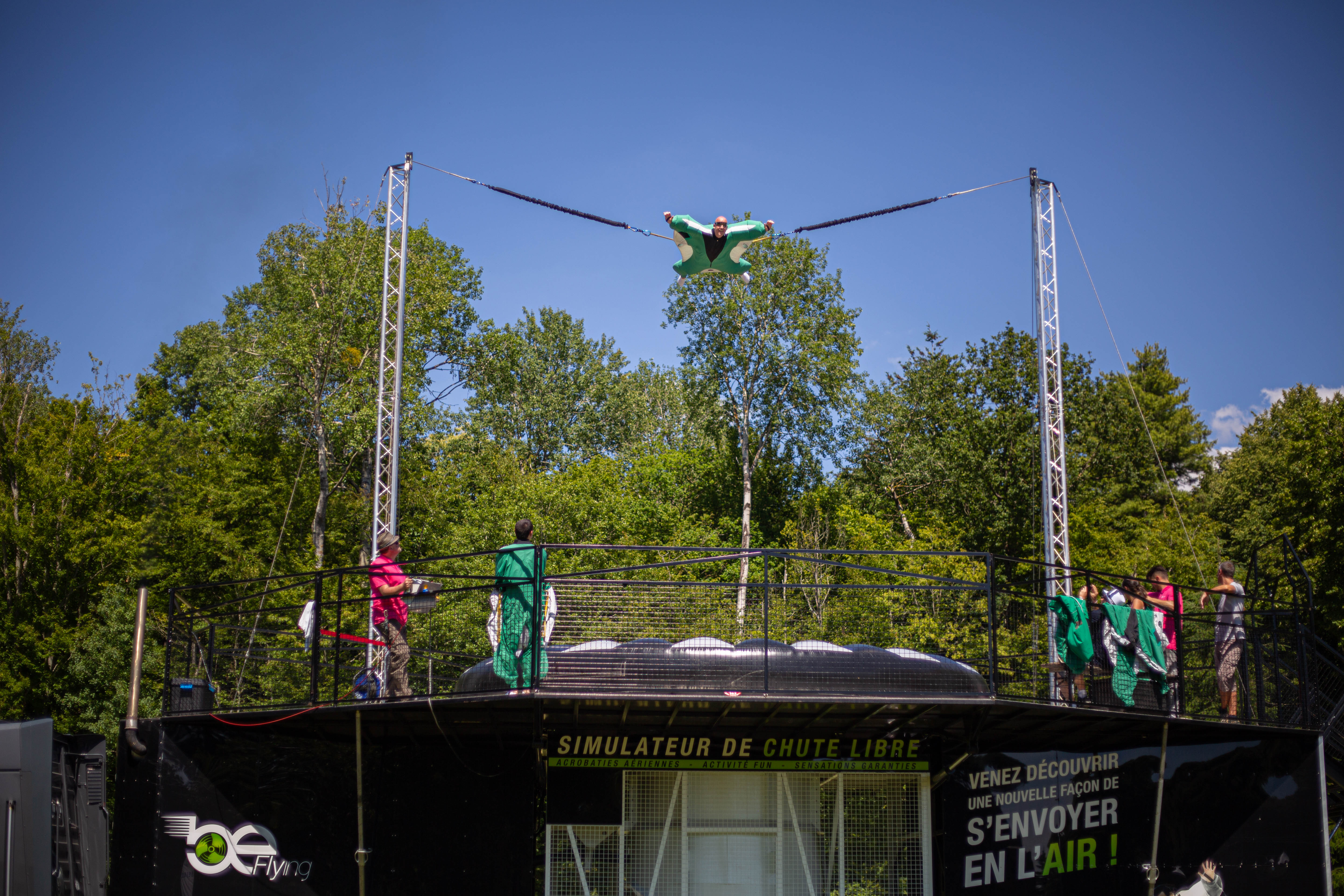
Indoor skydiving simulator in Luik for corporate teams that need impact without disruption
INNOV'events is a Brussels-based corporate event agency delivering Indoor skydiving simulator activations across Luik for 30 to 400 attendees. We handle safety, staffing, guest flow, venue fit, and day-of operations so your HR and communication teams stay focused on people and message.
Typical formats: afterwork, quarterly town hall, client evening, employer branding roadshow, or a team-building block integrated into a larger event.
Sommaire
Entertainment is not a “nice-to-have” in a corporate event: it is a lever to create shared experience, raise participation rates, and give managers a neutral moment to connect with teams outside the usual hierarchy—without sacrificing control, safety, or timing.
Organizations in Luik usually expect three things from an activation: predictable logistics (no schedule drift), measurable engagement (not just people watching), and zero reputational risk (safety, inclusivity, and a professional look on camera).
We bring field-tested event operations: structured rotations, clear safety briefing, signage, trained facilitators, and a production mindset. In Luik, we adapt to the realities of access, loading constraints, and the local supplier ecosystem to keep the event day smooth.
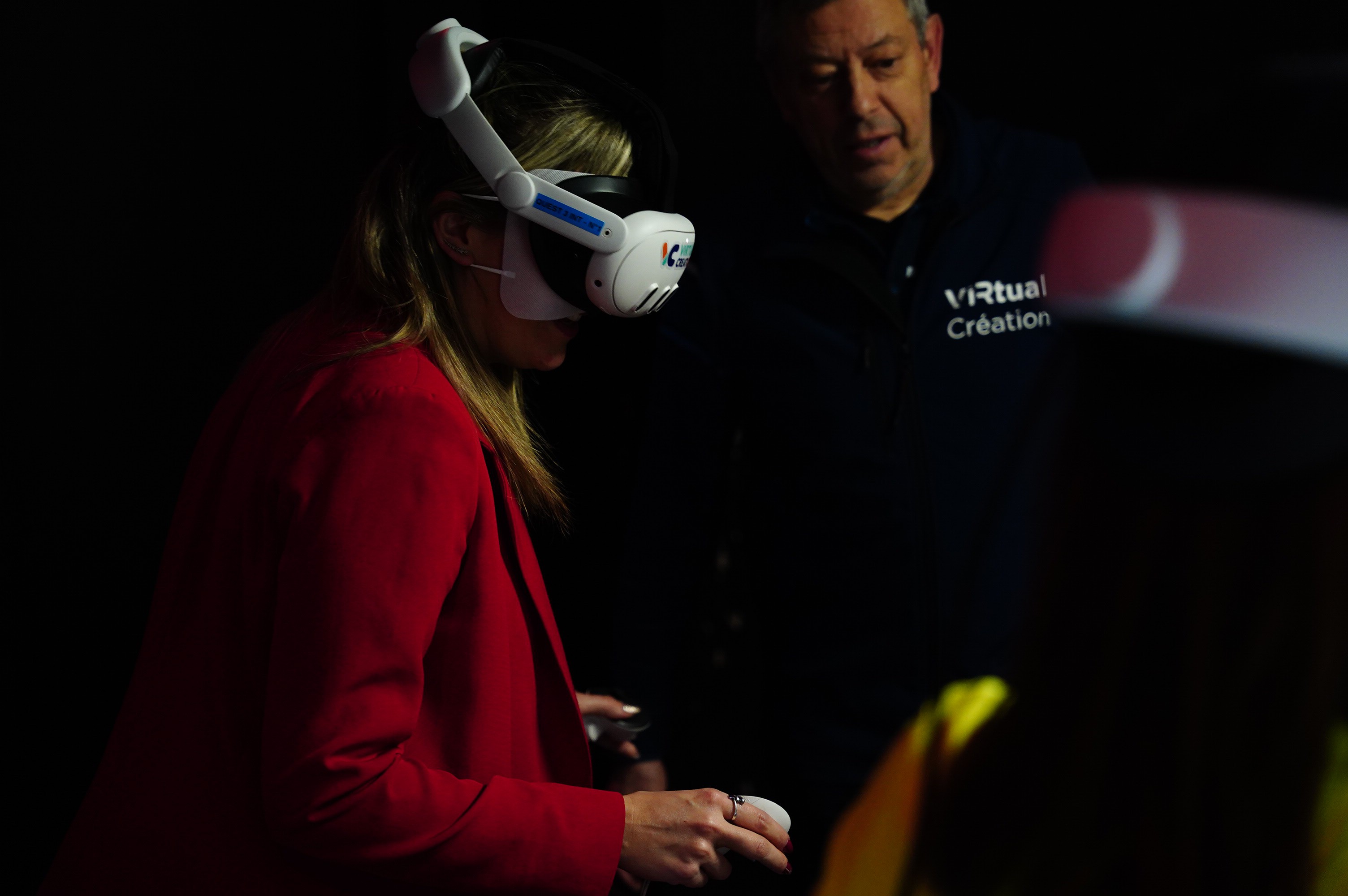
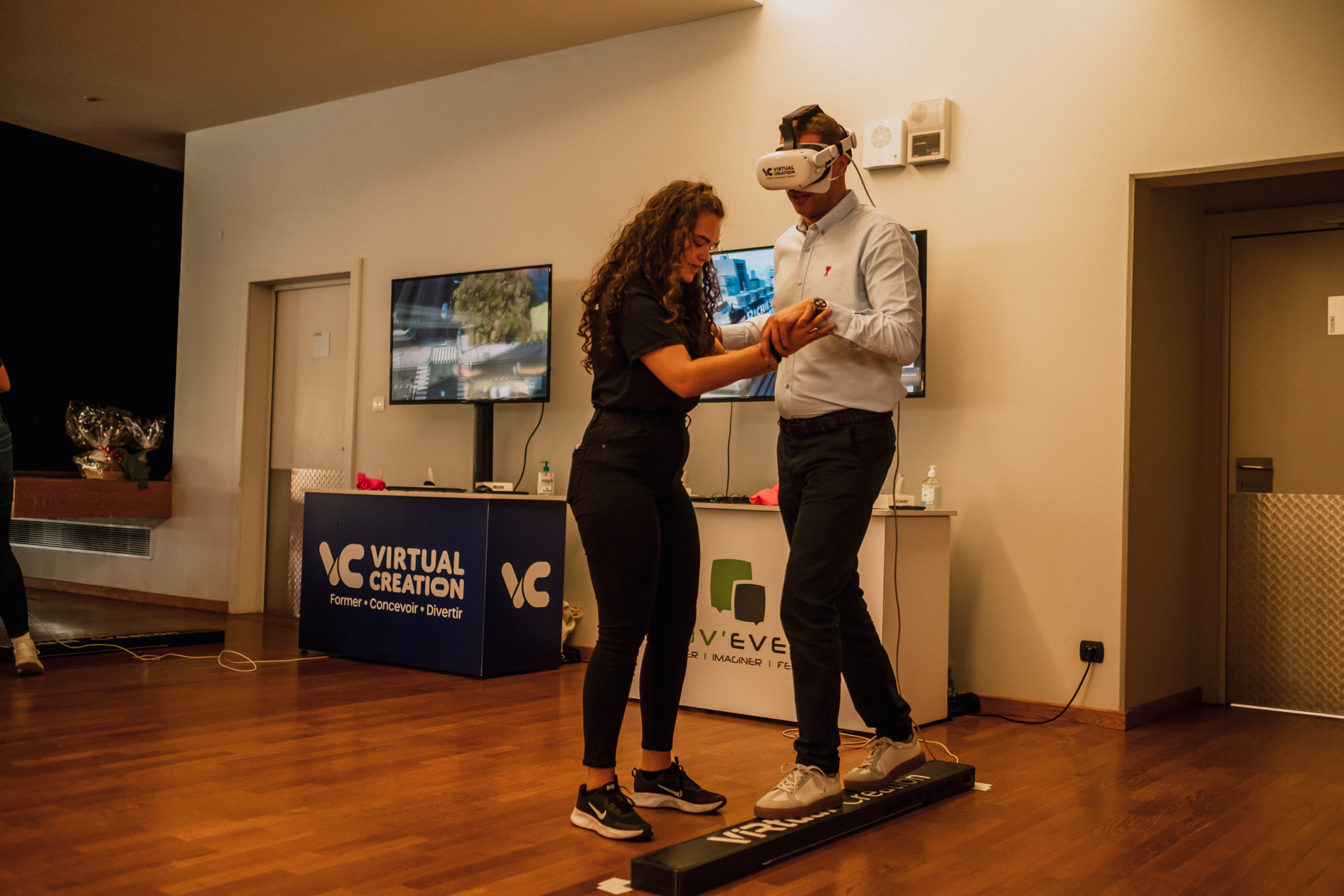
What decision-makers ask for in Luik: proof, not promises
10+ years of corporate event production in Belgium, with repeat programs for multi-site companies and HQ-led events.
Operational capacity for 30–400 participants on one activation, using rotation planning and staff ratios aligned with safety and throughput.
Delivery standards built for executive audiences: run-of-show, responsibilities matrix, vendor call sheet, and day-of incident protocols.
Network coverage across Belgium (Brussels + Wallonia), enabling consistent quality when your teams are spread between Brussels, Luik, and other sites.
Companies we support around Luik and in the 4000 area
We regularly work with organizations active in and around Luik—from industrial groups and engineering environments to service companies with client-facing obligations. In practice, several clients come back year after year because they need an agency that remembers internal constraints: security rules, approval cycles, brand guidelines, and the reality of making an event work on a weekday evening.
To keep this page accurate and compliant, we only publish company names when we have explicit authorization. If you share the references you want us to mention, we will integrate them in a factual way (format, audience size, objective, and operational scope) rather than as a logo list.
What we can already commit to for Luik: local supplier coordination, French/Dutch/English facilitation when needed, and a production approach that respects both safety and corporate image.
 Besoin d’un devis rapide ?
Nous vous envoyons une première proposition sous 24h.
What an indoor skydiving simulator changes for teams in Luik
A controlled “high-sensation” activity like an Indoor skydiving simulator works particularly well in corporate settings because it creates immediate curiosity and a clear participation mechanic. The business value is not adrenaline; it is participation, social bonding, and message retention—delivered in a structured, safe environment.
Higher participation rate than passive entertainment: with clear rotations and short time slots, people commit to “just one run” and end up engaging.
Cross-department mixing without forcing it: queues and briefing moments create natural conversation between teams that rarely collaborate (operations, sales, engineering, support).
Managerial observation in a positive context: leaders see who encourages others, who steps up, and who needs reassurance—useful signals without formal assessment.
Employer brand content that looks professional on video: a simulator provides a clean visual frame for internal comms, LinkedIn snippets, or recruitment pages—if lighting, backdrop, and permissions are handled correctly.
Client relationship value with controlled risk: for B2B evenings in Luik, it creates a talking point that is still compatible with business conversation, unlike activities that monopolize attention.
Inclusive design when planned properly: we build alternatives (observer roles, coaching, photo moment, branded “flight cards”) so nobody feels excluded due to health, mobility, or personal preference.
Luik has a pragmatic economic culture: people expect things to work, be safe, and respect time. A simulator activation fits that mindset when it is executed with clear rules, efficient flow, and a professional setup—not as a fairground attraction.
What organizations in the Luik area typically require
In the Luik territory, we often see decision-makers balancing three pressures: operational continuity (teams still have shifts and deadlines), stakeholder representation (HQ, unions, site management, or client guests), and brand risk (everything can be filmed and shared instantly).
Concretely, that translates into requirements we bake into the plan:
- Strict timing: a simulator must not create a bottleneck that delays speeches, award moments, or catering service. We build a rotation model with buffer time and a visible “last call”.
- Safety and compliance readiness: clear participant eligibility, waivers where appropriate, and an incident response path that is known by the event lead and the venue.
- Noise and space constraints: some venues in Luik have sound limits or restricted loading access; we anticipate this in the technical recce and select equipment accordingly.
- Bilingual/tri-lingual communication: depending on your audience, we prepare briefing scripts and signage in FR/NL/EN, avoiding ambiguous safety instructions.
- Image control: branded backdrops, tidy queuing, staff dress code, and a clean visual environment for photography—especially important for communication teams.
These are not “options”; they are the difference between a smooth activation and a day where HR ends up firefighting.
Which corporate event entertainment in Luik pairs well with a simulator
An Indoor skydiving simulator creates a strong participation anchor, but it works best when the rest of the program supports flow: arrivals, waiting time, and post-activity socialization. In Luik, we often combine the simulator with complementary formats that reinforce your message and keep energy consistent.
Animations Interactives à Luik
Timed challenge format: short heats with a simple scoring mechanic (stability, posture, precision). Works well for department vs. department dynamics, but must remain inclusive (alternative ways to score for non-participants).
Executive “first flight” + Q&A: leadership participates early, then hosts a short open Q&A. This reduces the psychological barrier for teams and creates a strong internal comms moment.
Photo + micro-interviews: a small content corner where participants record a 15-second reaction linked to your theme (safety culture, customer focus, innovation). Communication teams appreciate the structured output.
Animations Artistiques à Luik
Live percussion or DJ with controlled SPL: improves energy in the queue and keeps the room coherent. In venues with restrictions in Luik, we plan sound levels and directionality to avoid complaints and maintain speech intelligibility.
Visual branding performance: light design or projection mapping that frames the simulator zone as a “stage”, making the activation look intentional rather than rented equipment.
Animations Innovantes à Luik
Service strategy aligned to rotations: fast, clean finger food during peak participation, then a more social food moment after the last rotation. This prevents people from skipping the activity because they fear missing food.
Local pairing in Luik: a curated drinks corner highlighting regional options (including non-alcoholic premium choices). It supports hospitality without turning the event into a bar-centric evening.
Animations Gourmandes à Luik
Wearable data angle (light-touch): participation tracking via tokens or QR check-ins, producing a simple dashboard for HR (participation by team, peak times). No intrusive tracking; just operational insight.
Safety culture micro-module: a short, well-designed safety briefing can be linked to your internal safety standards—particularly relevant for industrial environments common around Luik.
Whatever you add, alignment with brand image is non-negotiable: staff behavior, signage tone, visual cleanliness, and how the activity is presented. A simulator can look premium and corporate—or improvised—depending on these details.
How to choose a venue in Luik for a simulator setup
The venue is not just a backdrop; it determines whether you can load in safely, manage power needs, control sound, and create a participant flow that feels organized. In Luik, we typically start with access and ceiling height, then work backwards to guest experience and brand framing.
| Venue type | For which objective? | Main strengths | Possible constraints |
|---|---|---|---|
| Large event hall / exhibition space in Luik | High throughput team-building or mixed audience (staff + clients) | Good access for load-in, flexible layout for queue + briefing + viewing area, easier to separate noise zones | May require additional branding to avoid a “blank hall” feel; power distribution and safety perimeter must be engineered |
| Corporate site (auditorium + adjacent open area) around 4000 | Internal event with strong leadership messaging and controlled guest list | Strong brand control, easier security coordination, minimal travel for employees | Loading constraints, limited ceiling height, internal safety rules, need for clear separation from operational areas |
| Hotel conference center in Luik | Client evening or management offsite with comfort and catering integration | On-site catering, parking solutions, professional reception flow | Noise constraints, limited load-in windows, space may be fragmented which complicates queue management |
We strongly recommend a site visit (or at least a technical recce) before confirming. It prevents last-minute compromises on safety perimeter, guest flow, and visual quality—three points that executives notice immediately.
What budgets look like for a simulator activation in Luik
Pricing for an Indoor skydiving simulator in Luik depends less on “the machine” and more on operational design: how many people you want to rotate, how long you run it, the venue constraints, and the level of staffing needed to keep it safe and on time.
To help you benchmark internally, most corporate activations fall into a planning logic of half-day or full-evening with a clear throughput target (e.g., “we want 120 people to participate”). We build the quote around that operational reality.
Duration and service window: setup, briefing cycles, operating time, and dismantling—especially if the venue in Luik has strict access hours.
Participant volume: more people means more staff, a stronger queue system, and sometimes multiple stations to keep waiting time acceptable.
Staffing ratios: facilitator(s), safety lead, host/queue manager, and sometimes a dedicated content person for comms.
Technical requirements: power, anchoring, safety perimeter, flooring protection, and any additional AV for briefing screens or sound.
Branding and content: backdrops, signage, photo/video, and usage rights management (important for HR and external comms).
Venue constraints: difficult loading access, long carry distances, or restricted elevators can add time and crew requirements in dense areas of Luik.
From an ROI perspective, the relevant question is not “cost per activity” but cost per engaged participant and the value of the content produced for internal and employer branding. We can model a realistic participation capacity so you can compare options on a like-for-like basis.
Why work with an event partner familiar with Luik logistics
For demanding corporate events, “local” is not a slogan; it is operational advantage. In Luik, access rules, venue load-in procedures, and supplier lead times can change the entire risk profile of the day. When you rely on a partner who knows how events actually move in the city, you reduce uncertainty for your internal stakeholders.
At INNOV'events, we coordinate with local venues and technicians, and we document decisions so your executive sponsors and communication teams have a clear line of sight. If you are comparing partners, review their ability to provide a run-of-show, staffing plan, and contingency options—not just a creative concept.
For broader support beyond the simulator, you can also consult our page as event agency in Luik to understand how we structure full productions.
- Faster problem-solving on site: when access changes or a space constraint appears, we adapt the layout and flow without improvising.
- Supplier accountability: clear call times, delivery windows, and escalation paths with local partners reduce day-of friction.
- Venue-fit realism: we challenge unrealistic plans early (ceiling height, noise, queue length), avoiding last-minute downgrades in front of guests.
- Reputation protection: professional signage, staff behavior standards, and a clean setup matter more than the “wow” factor when executives and clients attend.
From an ROI perspective, the relevant question is not “cost per activity” but cost per engaged participant and the value of the content produced for internal and employer branding. We can model a realistic participation capacity so you can compare options on a like-for-like basis.




What we have delivered in Luik: formats, constraints, solutions
In Luik, corporate events often combine operational realities (shift schedules, security rules, technical constraints) with high expectations for professionalism. We have delivered activations where the core challenge was not creativity but reliability: making sure the plan survives real conditions.
Examples of situations we regularly manage:
- Afterwork with mixed audiences: employees arrive in waves, clients arrive on time. We design the simulator rotations so employees do not feel penalized while the client program remains punctual.
- Town hall with tight run-of-show: leadership messaging cannot drift. We schedule demo moments and participation windows around the speech blocks and ensure sound and crowd flow do not interfere.
- Industrial culture constraints: safety language must be consistent with company standards. We align briefing and eligibility rules with the client’s internal policies so management is comfortable endorsing participation.
- Communication-heavy events: when content capture is a priority, we build a “clean frame” around the simulator (lighting, backdrop, staff positions) so photos look like corporate communication, not a trade fair snapshot.
Our role is to make the activation predictable for you and effortless for participants—especially when senior stakeholders are present.
Common mistakes we prevent on simulator events in Luik
Underestimating throughput: promising that “everyone will fly” without a rotation model leads to long queues and frustration. We quantify capacity and set expectations upfront.
Weak briefing and eligibility rules: unclear instructions increase safety risk and slow down operations. We standardize the briefing and keep it short, repeated, and visible.
Poor space planning: no dedicated briefing zone or no viewing area creates crowding and reputational risk. We design zones and signage to keep flow clean.
Ignoring sound and AV conflicts: speeches become inaudible, or the room becomes chaotic. We plan acoustic separation and timing.
Not planning inclusivity: people who cannot participate feel sidelined. We add roles and moments so everyone belongs.
No contingency plan: power issues, access delays, or staff no-shows happen. We build fallback options and clear escalation paths.
Our job is to remove these risks before they reach your guests—and before they become a problem your executives or HR team must manage in public.
Why Luik clients renew with INNOV'events
Repeat business is usually earned through operational consistency. Clients return when they know the agency can protect the run-of-show, represent the brand correctly, and handle suppliers without constant client intervention.
Many corporate clients move from a single activation to a yearly rhythm (town hall, summer event, end-of-year moment) once the first delivery proves reliable.
Most improvements between editions are operational: faster guest onboarding, tighter timing, better content capture, clearer internal stakeholder alignment.

Loyalty is not about discounts; it is the result of predictable delivery under pressure—exactly what matters on event day in Luik.
Our operational process for Luik corporate events
👉 Clarify objectives and constraints in Luik
We start with a short, decision-oriented intake: audience size, executive presence, comms goals, schedule immovables, venue shortlist, and risk constraints. We also confirm the practical context in Luik (access times, loading route, parking, security protocols) to avoid planning on assumptions.
👉 Design the simulator flow and staffing plan
We build the rotation model (time slots, maximum participants per hour, buffer), define roles (safety, host, queue, client liaison), and produce a first run-of-show. This is where most event stress is removed: by making flow visible and measurable.
👉 Venue recce, technical validation, and safety perimeter
We validate ceiling height/space, power distribution, emergency routes, and where the queue will physically sit. We define the safety perimeter and briefing zone, and we confirm any venue-specific rules in Luik that could affect sound, access, or timing.
👉 Production documents and stakeholder alignment
You receive practical documents your teams can rely on: call sheet, responsibilities matrix, signage wording, and a consolidated schedule. Communication teams get a content plan (what to capture, where, and when) and a simple approval path.
👉 Event day management and post-event debrief
On site in Luik, we run the timeline, coordinate suppliers, and maintain participant flow. After the event, we debrief with facts: participation numbers, bottlenecks observed, content delivered, and improvements for the next edition.
FAQ sur l'organisation Indoor skydiving simulator à Luik
How many participants can rotate per hour in Luik?
In realistic corporate conditions (briefing + turnover), plan around 20–40 participants per hour per simulator station. The exact number depends on flight time per person, how strict eligibility checks are, and whether you use pre-booked slots or a queue host.
What is the minimum lead time to book in Luik?
For a smooth corporate setup in Luik, plan 3–6 weeks. You can do faster if the venue is confirmed and access is simple, but lead time is mainly driven by venue approvals, logistics, and staffing availability.
Is an indoor skydiving simulator safe for corporate guests in Luik?
Yes, when eligibility rules and supervision are enforced. We implement a short standardized briefing, clear signage, and trained facilitation. We also plan an alternative engagement path for guests who should not participate (medical constraints, mobility, or personal choice).
What space is needed for a simulator setup in Luik venues?
Space needs vary by equipment, but you should typically plan a dedicated zone for the simulator + a safety perimeter + a briefing area + a queue. In practice, the queue and viewing area often require as much space as the device itself. A venue recce in Luik is the reliable way to validate feasibility.
Can we brand the simulator experience for a Luik event?
Yes. Common options include branded backdrops, staff dress code, signage tone aligned with your brand, and a photo/video corner with approved messaging. Communication teams usually appreciate a simple content plan (2–3 key shots + short interview prompts) to keep output consistent.
Request a quote for an indoor skydiving simulator in Luik
If you want an Indoor skydiving simulator in Luik that runs on time, looks professional on camera, and stays safe under real guest pressure, we should align early on venue feasibility and throughput.
Send us your date options, estimated headcount, venue (confirmed or shortlisted), and whether the goal is HR engagement, client hospitality, or communication content. We will come back with a concrete rotation plan, staffing model, and a budget range you can defend internally.
Agence INNOV'events Luik
Justin JACOB est le responsable de l'agence événementielle Luik. Contactez-le directement par mail via l'adresse belgique@innov-events.be ou par formulaire.
Contacter l'agence LuikToutes nos prestations & animations Luik, Belgique
Découvrez nos prestations événementielles
Découvrez nos animations événementielles disponibles au Belgique
- Hôtesse événementielle à Luik
- Escape Game à Luik
- Cours de cuisine type MasterChef à Luik
- Magicien à Luik
- Location de chapiteau à Luik
- Atelier colorimétrie à Luik
- Jeux gonflables à Luik
- Service de voiturier à Luik
- Simulateur de football à Luik
- Location de mobilier lumineux à Luik
- Flocage lumineux à Luik
- Repas insolite à Luik
- Light Painting à Luik
- Murder Party à Luik
- Jeu concours à Luik
- PLV événementielle à Luik
- Réalité virtuelle à Luik
- Cuisine moléculaire à Luik
- Animation Halloween à Luik
- Feu d’artifice à Luik
- Jeux géants à Luik
- Animateur événementiel à Luik
- Animation photo à Luik
- Père Noël à Luik
- Animation enfants à Luik
- Visite guidée à Luik
- Rallye urbain à Luik
- Piscine à balles à Luik
- Simulateur de vol à Luik
- Location de food truck à Luik
- Record du monde à Luik
- Simulateur de surf à Luik
- Casino du vin à Luik
- Atelier relooking à Luik
- Atelier création de parfum à Luik
- Atelier acting à Luik
- Animations RSE à Luik
- Tir à l’arc à Luik
- Agent de sécurité à Luik
- Œnologie à Luik
- Mime à Luik
- Jeu télévisé à Luik
- Fête foraine à Luik
- Atelier gestion de crise à Luik
- Atelier négociation de crise à Luik
- Jeux d’arcade à Luik
- Simulateur de chute libre à Luik
- Simulateur de ski à Luik
- Simulation circuit automobile à Luik
- Baptême de l’air à Luik
- Dégustation à Luik
- Création de baby-foot à Luik
- Rallye 2CV à Luik
- Challenge LEGO à Luik
- Animation casino à Luik
- Interprète / traducteur à Luik
- Goodies à Luik
- Bus / transfert à Luik