
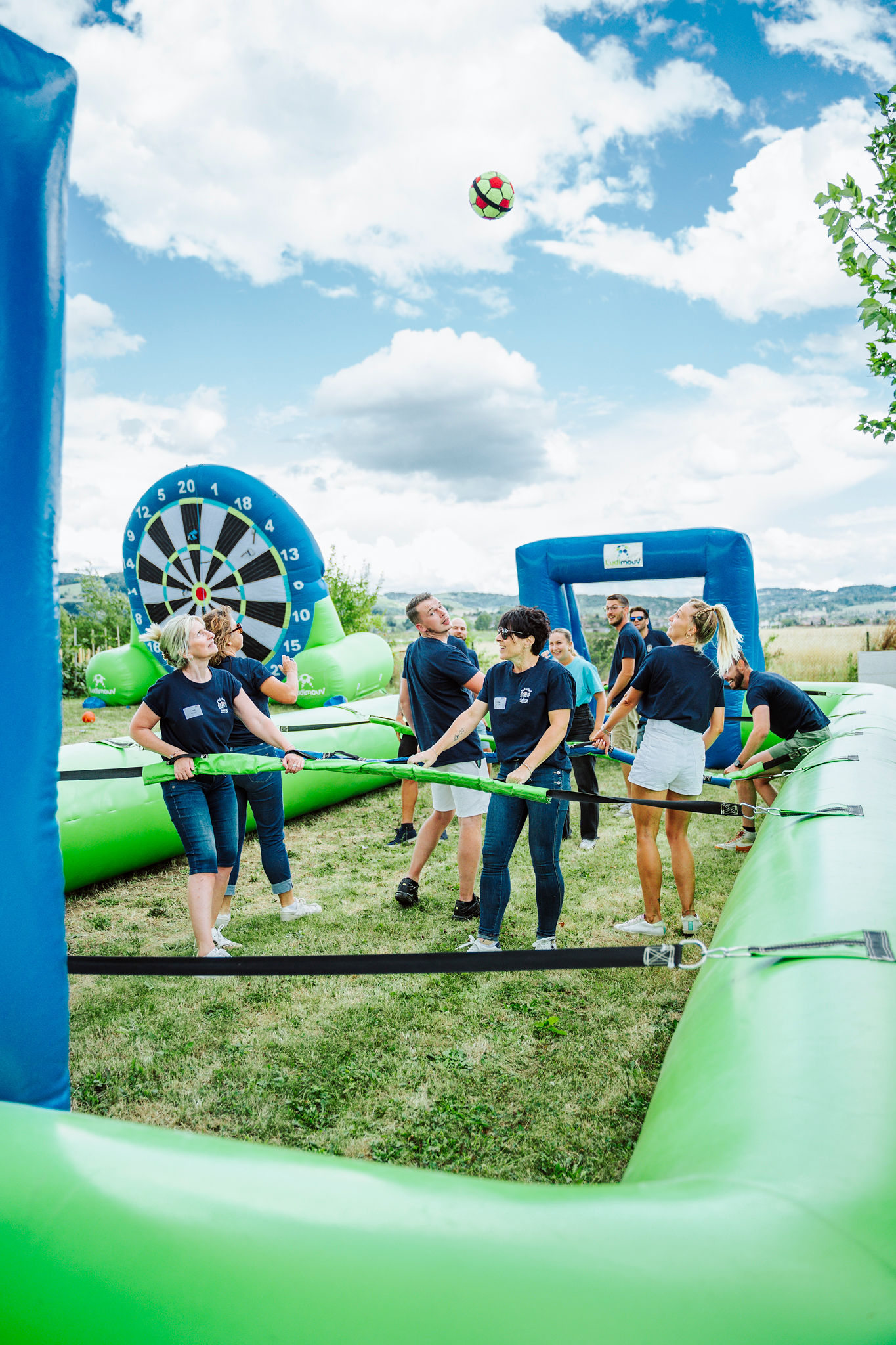
Springkastelen in Luik for corporate events that run on time
INNOV'events is a Brussels-based event agency delivering Springkastelen for corporate events across Luik—from 30 to 2,000+ attendees. We handle the full operational chain: delivery, anchoring, supervision, safety briefings, and dismantling, aligned with your venue and internal policies.
Whether it’s a family day, site celebration, or employer-branding activation, we keep entertainment professional: predictable schedules, controlled risks, and clear responsibilities.
Sommaire
In a corporate event, entertainment is not “nice to have”: it’s a tool to manage flow, reduce idle time, and protect the perceived quality of your program. A well-run Springkastelen zone keeps families occupied while leaders meet stakeholders or while teams rotate through activities without bottlenecks.
Organizations in Luik typically expect tight coordination with site access rules, local venue constraints, and realistic timing (especially on weekdays). They also need visible safety measures: controlled capacity, anchoring adapted to surfaces, and an operator who can enforce rules without creating friction.
We work with corporate standards: method statements, insurance documentation, time-slot planning, and on-site supervision. Our teams know the venues and suppliers ecosystem in Luik, and we plan for the details that decide whether the day feels “under control” or improvised.
Operational facts that matter in Luik delivery
10+ years producing corporate entertainment in Belgium, with repeat programs for HR and internal comms teams.
48–72h typical turnaround for a first quote when the venue and date are confirmed (faster for standard formats).
€5M+ third-party liability coverage via our event insurance partners (exact certificate issued per project/venue requirements).
1 single point of contact from scoping to event day, plus an on-site lead if multiple zones run in parallel.
Companies we support around Luik on repeat
In Luik, we are regularly asked to deliver family-day entertainment, site anniversaries, and community-facing activations where the audience mix is complex: employees, partners, children of different ages, and sometimes local authorities. Many teams come back year after year because they want the same thing: a controlled experience with no surprises on safety, timing, and staffing.
We coordinate with venue managers, prevention advisors, and internal communication leads to align on access, noise thresholds, set-up windows, and emergency procedures. When clients renew, it’s usually because the operational side was clean: punctual arrival, proper anchoring, clear signage, and an operator who can handle peak moments without escalating situations.
If you share the company names you want us to reference, we will integrate them here in a compliant way (with your approval and the right wording for confidentiality).
 Besoin d’un devis rapide ?
Nous vous envoyons une première proposition sous 24h.
What spring castles bring to a Luik corporate family day
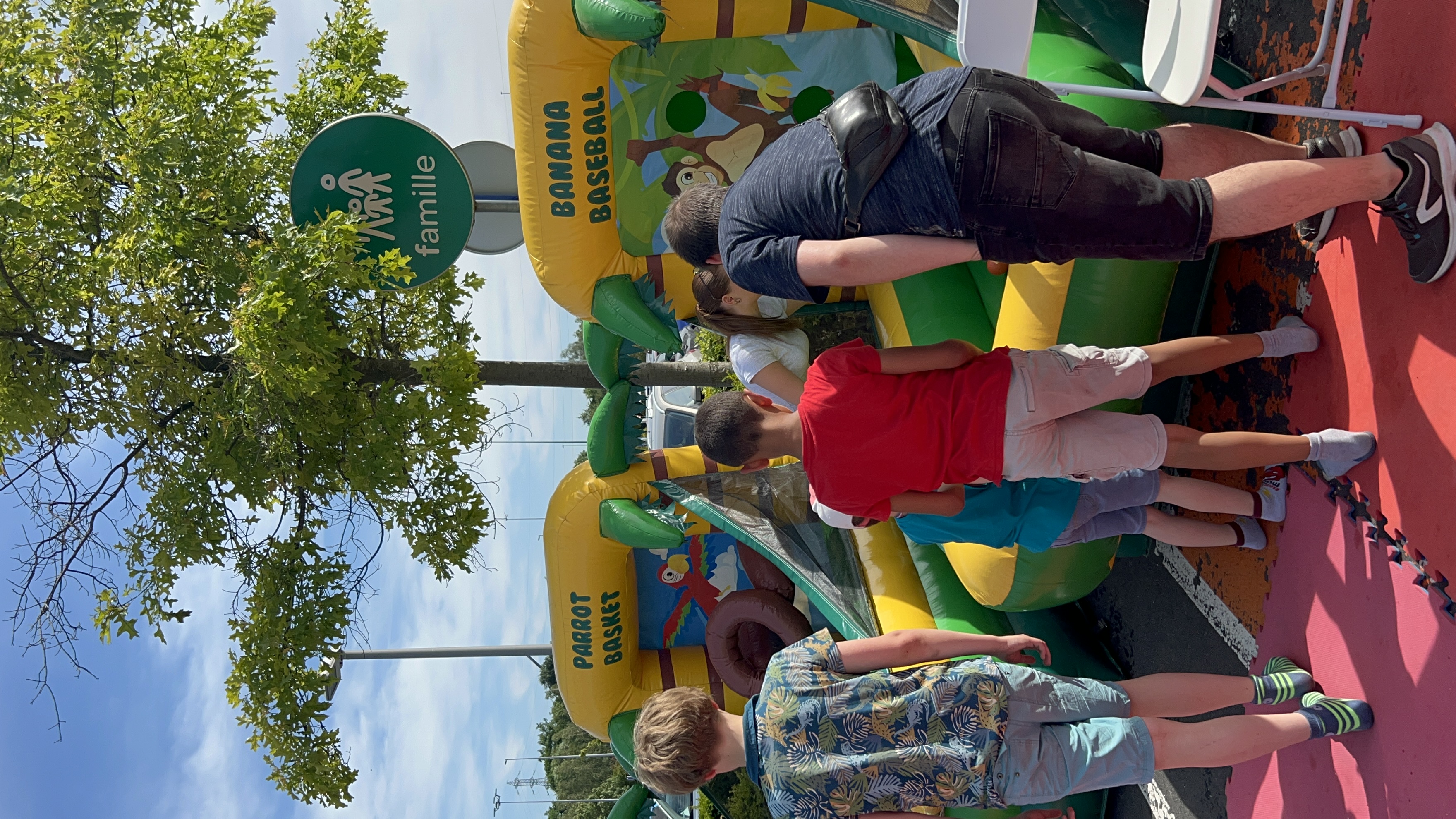
Springkastelen in Luik work when your goal is not just “fun” but a predictable, family-friendly structure that supports your program. For executives, the value is operational: you create a dedicated children zone that reduces wandering, improves the perceived organization level, and gives parents psychological comfort—so they actually stay longer and engage with your company.
Higher attendance and longer dwell time: family-friendly entertainment increases participation in company open days and summer gatherings, especially for mixed shifts or multi-site organizations.
Flow management: a well-placed Springkastelen zone absorbs peak moments (arrivals, lunch queues, speech segments) and reduces congestion in sensitive areas (reception, catering lines, exhibition stands).
Employer branding with concrete proof: employees notice when their children are safe, supervised, and welcomed—this is a tangible signal that the company invests in people, not just in speeches.
Controlled risk vs. uncontrolled play: without a dedicated area, children play in parking zones, near loading docks, or around technical installations. A properly managed inflatable zone is often the safer option.
Inclusivity across age groups: with the right selection (toddler module + standard bouncy + challenge course), you avoid the common frustration where older kids “take over” and younger children stop participating.
Luik has a pragmatic business culture: stakeholders value events that feel well-run, respectful of safety, and aligned with operational realities. The right entertainment format supports that expectation—quietly, but decisively.
How Luik venues and companies shape the requirements
Planning Springkastelen in Luik is rarely “plug and play” because the local event ecosystem often combines older buildings, mixed indoor/outdoor spaces, and strict access constraints. We regularly see venues with limited loading access, narrow gates, or time-restricted deliveries—especially when your event happens near city traffic peaks or in active business zones.
Local organizations also tend to involve prevention and facilities teams early. That is positive, but it means you need answers that go beyond a pretty brochure: anchoring method (stakes vs. ballast), minimum clearances, electrical requirements, and capacity rules per module. On corporate sites, we often coordinate with security for badge-controlled access and vehicle movement, and we plan for a safe delivery path that doesn’t cross guest routes.
Weather in the Province of Liège can turn quickly. For outdoor inflatables, credible planning includes a wind threshold policy, a defined decision-maker, and a Plan B that is not “we’ll see on the day.” When we propose a solution in Luik, we always discuss the fallback: alternative placement, reduced footprint, or indoor modules when ceiling height allows.
Which Springkastelen formats work best in Luik corporate settings
Entertainment creates engagement when it is operationally compatible with your venue, audience mix, and internal risk tolerance. In Luik, the strongest results come from combining a visible “anchor” activity (inflatable) with good flow design (queues, supervision, age split) and one or two complementary stations to prevent saturation.
Animations Interactives à Luik
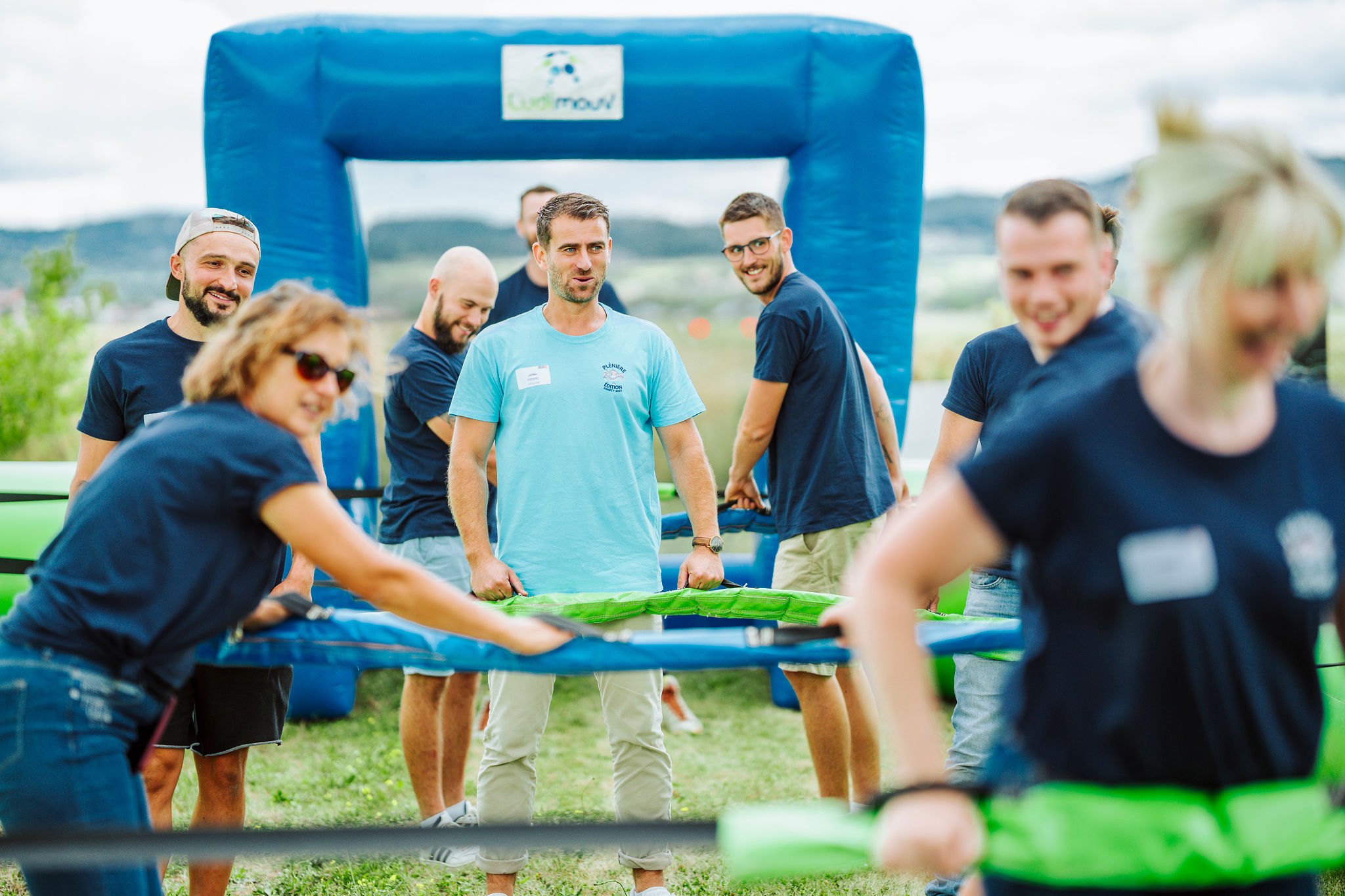
Timed inflatable challenges (relay format): ideal when you want employees to participate too, not only children. Works well for team spirit, but needs strict time slots and a referee to avoid disputes.
Wristband or ticketing system: for high attendance, we can implement simple capacity control (e.g., 10–15 minutes sessions). This reduces friction with parents and keeps waiting time predictable.
Mixed zone with seating + visibility: a parent-friendly layout (benches, shade tent, clear sight lines) increases perceived safety and reduces roaming across the venue.
Animations Artistiques à Luik
Balloon artist near the inflatable entrance: not as “showy” as a stage act, but extremely effective to calm queues and keep the area structured. Also useful for brand colors or simple themed shapes aligned with your internal campaign.
Face painting with hygiene protocol: works well for family days in Luik, provided you plan cleaning intervals and a defined queue lane (otherwise it blocks the inflatable flow).
Animations Innovantes à Luik
Waffle or popcorn station positioned away from the inflatable exit: reduces sugar-fueled rush inside the module. We advise a “no food in the zone” rule with clear signage to avoid accidents and cleaning disputes with the venue.
Water point (especially in summer): simple, but it reduces fatigue and incidents. For corporate sites, we often coordinate this with facilities to use existing water access and waste management.
Animations Gourmandes à Luik
Indoor inflatable modules for halls: when weather risk is high, smaller “indoor-safe” inflatables can be installed in sports halls or large meeting spaces (ceiling height and emergency exits must be validated).
Branding options: from discreet signage at the entrance to branded barriers around the queue. In corporate contexts, we generally recommend “wayfinding branding” over aggressive logos on the inflatable itself, to keep a clean employer-brand feel.
Whatever the mix, the decision criterion is alignment with your brand image and internal standards: if your company positions itself on safety, engineering, or reliability, the entertainment must look and run the same way—clean layout, clear rules, professional staff, and documented compliance.
Where to install Springkastelen in Luik without compromising flow
The venue choice (and the exact placement on-site) changes everything: safety perimeter, noise, queueing, and the perceived control of your event. In Luik, we often advise clients to think in “zones” rather than attractions: entry/check-in, catering, speeches, and the family area should not compete for the same circulation paths.
| Venue type | For which objective? | Main strengths | Possible constraints |
|---|---|---|---|
| Corporate site parking area (secured section) | Family day or site open day with high attendance | Large flat surface, easy logistics, close to facilities and power | Requires strict perimeter, vehicle movement plan, and clear pedestrian routes |
| Outdoor green space / park adjacent to venue | Relaxed summer gathering with longer dwell time | More comfortable ambiance, better heat management, natural seating areas | Anchoring limitations, ground protection, permits depending on location and municipality |
| Indoor sports hall / large event hall | Weather-proof family event or winter gathering | Stable conditions, predictable schedule, easier safety control | Ceiling height, emergency exits, noise reverberation, floor protection requirements |
We strongly recommend a site visit or at minimum a technical walk-through (photos + measurements + access route). In Luik, the “last 30 meters” of access—gates, stairs, curbs, narrow corridors—often determines the real feasibility and the final staffing plan.
How to budget Springkastelen in Luik with fewer surprises
Pricing for Springkastelen in Luik depends less on the inflatable itself and more on the operational context: access, duration, supervision level, and compliance requirements. For decision-makers, the right approach is to budget the total risk-controlled solution, not only the rental line.
Format and capacity: toddler module vs. standard castle vs. obstacle course. Larger modules require more space, higher power, and stricter crowd management.
Duration: half-day, full-day, or multi-day (e.g., two-day community event). Multi-day can be cost-efficient but requires overnight security/monitoring decisions.
Supervision model: self-supervised is rarely appropriate for corporate duty-of-care; staffed supervision reduces incident risk and protects your team from being “pulled” into operational problems.
Installation surface and anchoring: grass with stakes is straightforward; hard surfaces may require ballast solutions and additional handling time.
Access constraints in Luik: limited loading windows, long carry distances, or restrictions on vehicles can add labor and planning time.
Power and cable management: long distances require certified extensions, protection ramps, and clear routing to avoid trip hazards.
Documentation and compliance: when your prevention advisor requests certificates, method statements, and insurance proof, we prepare and align them with the venue’s rules.
From an ROI perspective, the goal is to reduce hidden costs: overtime because set-up started late, internal staff diverted to manage queues, or reputational damage from avoidable incidents. A slightly higher controlled solution typically pays back in smoother operations and stronger employer-brand perception.
Why a Luik partner reduces day-of-event pressure
When entertainment is installed on a tight schedule, proximity is not a slogan—it’s a risk-control mechanism. A partner used to operating in Luik is more likely to anticipate access realities, municipal constraints, and venue-specific habits (delivery points, power distribution, caretaker expectations). It also improves reactivity if the plan changes: weather shifts, last-minute layout adjustments, or a delayed supplier.
As INNOV'events, we combine Brussels project management with on-the-ground execution in Luik. For clients, that means you get structured scoping and documentation, plus practical field coordination. If you are comparing agencies, ask who will physically manage the inflatable zone and who signs off on safety decisions on the day.
For broader event support beyond inflatables, our local coordination is integrated with our event agency in Luik operations, so your entertainment is not handled in isolation from catering, AV, or venue logistics.
- Faster technical validation thanks to local venue familiarity and realistic access planning.
- Better supplier coordination (delivery sequencing, shared loading zones, on-site timelines).
- Clear accountability: one agency coordinating safety, signage, staffing, and schedule impacts.
- Pragmatic Plan B when weather or space constraints hit (repositioning, reducing footprint, or switching to indoor modules).
From an ROI perspective, the goal is to reduce hidden costs: overtime because set-up started late, internal staff diverted to manage queues, or reputational damage from avoidable incidents. A slightly higher controlled solution typically pays back in smoother operations and stronger employer-brand perception.




What we have delivered in Luik: realistic corporate scenarios
Our projects in Luik are rarely “one inflatable on a lawn.” They often involve mixed audiences and operational constraints. Typical scenarios include:
- Industrial site family day: strict access control, delivery through security gates, and a mandatory separation between guest paths and operational zones. We implement perimeter barriers, signage, and dedicated operators so the client’s HSE team is not forced into crowd control.
- Head office summer event: inflatables placed to protect speech moments and networking areas. We schedule opening times around leadership communication so the program remains audible and the brand message is not diluted.
- Community-facing open day: higher unpredictability in attendance. We recommend capacity control (sessions) and a queue design that does not block emergency exits or catering operations.
Across these cases, the key deliverable is reliability: documented preparation, clean installation, proactive supervision, and the ability to make quick, defensible decisions when conditions change.
Common mistakes with Springkastelen in Luik (and how we prevent them)
Underestimating space: clients book a module based on the “inflatable size” and forget the safety perimeter and queue area. We validate footprint with a simple layout plan.
No age separation: toddlers and older kids in one unit leads to complaints and higher incident risk. We propose a toddler zone plus a second module when attendance is mixed.
Unclear responsibility on supervision: when no operator is assigned, parents expect the organizer to intervene, and staff gets pulled from other priorities. We define staffing, rules, and escalation clearly.
Poor cable routing: trip hazards happen in high-traffic areas. We plan cable paths, use protection ramps, and avoid crossing catering routes.
No wind and weather policy: “we’ll decide on the day” creates conflict and delays. We agree thresholds and a decision chain in advance.
Late set-up window: loading constraints in Luik can compress timelines. We plan arrival times, reserve access, and sequence with other suppliers.
Our role is to remove these risks before they become visible to your guests. On event day, your executives and HR team should focus on people and messaging—not on managing queues, disputes, or safety decisions.
Why Luik clients renew their inflatable zones year after year
Renewals usually happen for one reason: the entertainment ran like a professional service, not like a “rental drop-off.” For HR and internal comms, consistency matters—especially if the family day becomes a recurring ritual.
3 recurring drivers of loyalty we hear most: predictable timing, clear safety management, and minimal workload for internal teams.
2 critical documents that often trigger renewal in corporate contexts: clean insurance certificates and a practical risk approach (anchoring + supervision + weather policy).
1 measurable outcome clients mention after a well-run setup: fewer on-site issues escalated to HR/facilities during the event.

Loyalty is a strong indicator in this category: clients come back when the day ran without operational stress and when stakeholder confidence (HSE, facilities, leadership) was protected.
How we run Springkastelen projects in Luik from brief to teardown
👉 Scope in Luik: audience, site constraints, internal rules
We start with your basics (date, location in Luik, hours, estimated attendance, age mix) and your internal constraints: prevention guidelines, access control, noise expectations, and whether the event is employee-only or public-facing. We identify the operational risk level and confirm if staffed supervision is required (in most corporate contexts, it is).
👉 Technical validation: footprint, access route, power, anchoring
We validate where the Springkastelen will sit: surface type, available clearances, queue lanes, and emergency access. We confirm power needs and cable routing, and we choose anchoring method adapted to the site (stakes, ballast, or alternative solutions). If needed, we request photos, measurements, or perform a site check.
👉 Proposal: clear line items and supervision plan
You receive a proposal that separates what matters: module(s), delivery/set-up, staffing, safety accessories (barriers, ramps), and timing. We also include the practical operating rules (capacity, age split, socks/shoes policy) so your HR/comms team can communicate transparently.
👉 Pre-event coordination with venue and your internal teams
We confirm loading times, contact persons, and sequencing with other suppliers (catering, AV). For corporate sites in Luik, we align with security on vehicle access and define a safe delivery path. We provide insurance documentation and any required certificates per venue request.
👉 Event day delivery: punctual installation and controlled operations
We arrive within the agreed window, install and secure the unit(s), set signage, and brief operators. During operations, we actively manage capacity and rules, handle minor incidents, and coordinate any pauses (e.g., weather). Your internal team should not need to arbitrate on-site unless a strategic decision is required.
👉 Teardown and site handback
We close the activity at the agreed time, dismantle, and leave the area clean. If the venue requires a handback check, we do it with the venue manager. For multi-day installs, we define the overnight approach (security, monitoring, weather policy) in advance.
FAQ sur l'organisation Springkastelen à Luik
How much space do I need in Luik for spring castles?
Plan the inflatable footprint plus a 1–2 m safety perimeter on all sides and a queue lane. As a working rule, many corporate setups need around 40–80 m² per unit once you include circulation and supervision space.
Do you provide supervision for Springkastelen in Luik?
Yes. For corporate duty-of-care, we recommend staffed supervision. Depending on attendance and number of modules, we plan 1 operator per unit at peak times, with an on-site lead when several zones run in parallel.
What are typical prices for Springkastelen in Luik?
For corporate events, budgets usually range from €450–€1,200 for a basic delivered unit, and €900–€2,500+ when you add staffed supervision, barriers, cable protection, and longer operating hours. Final pricing depends on access, duration, and compliance needs.
Can Springkastelen in Luik run indoors during bad weather?
Often yes, if the hall has adequate ceiling height, clear emergency exits, and a suitable floor. We validate dimensions and surface protection before confirming. Indoor modules are typically smaller and require careful noise and flow management.
How early should we book spring castles in Luik?
For peak periods (May–September), book 4–8 weeks ahead for best choice and staffing. For mid-week corporate events outside peak season, 2–4 weeks is often sufficient, provided the venue is confirmed.
Request a Luik quote with a technical check
If you want Springkastelen in Luik that fit your schedule, safety standards, and venue constraints, send us your date, location, estimated attendance, age mix, and set-up window. We’ll come back with a clear proposal, including supervision options, footprint requirements, and a practical Plan B for weather.
For corporate calendars, earlier planning reduces cost and stress: it secures the right module sizes, avoids last-minute access issues, and gives your HR/communication team time to communicate rules transparently to families.
Agence INNOV'events Luik
Justin JACOB est le responsable de l'agence événementielle Luik. Contactez-le directement par mail via l'adresse belgique@innov-events.be ou par formulaire.
Contacter l'agence LuikToutes nos prestations & animations Luik, Belgique
Découvrez nos prestations événementielles
Découvrez nos animations événementielles disponibles au Belgique
- Hôtesse événementielle à Luik
- Escape Game à Luik
- Cours de cuisine type MasterChef à Luik
- Magicien à Luik
- Location de chapiteau à Luik
- Atelier colorimétrie à Luik
- Jeux gonflables à Luik
- Service de voiturier à Luik
- Simulateur de football à Luik
- Location de mobilier lumineux à Luik
- Flocage lumineux à Luik
- Repas insolite à Luik
- Light Painting à Luik
- Murder Party à Luik
- Jeu concours à Luik
- PLV événementielle à Luik
- Réalité virtuelle à Luik
- Cuisine moléculaire à Luik
- Animation Halloween à Luik
- Feu d’artifice à Luik
- Jeux géants à Luik
- Animateur événementiel à Luik
- Animation photo à Luik
- Père Noël à Luik
- Animation enfants à Luik
- Visite guidée à Luik
- Rallye urbain à Luik
- Piscine à balles à Luik
- Simulateur de vol à Luik
- Location de food truck à Luik
- Record du monde à Luik
- Simulateur de surf à Luik
- Casino du vin à Luik
- Atelier relooking à Luik
- Atelier création de parfum à Luik
- Atelier acting à Luik
- Animations RSE à Luik
- Tir à l’arc à Luik
- Agent de sécurité à Luik
- Œnologie à Luik
- Mime à Luik
- Jeu télévisé à Luik
- Fête foraine à Luik
- Atelier gestion de crise à Luik
- Atelier négociation de crise à Luik
- Jeux d’arcade à Luik
- Simulateur de chute libre à Luik
- Simulateur de ski à Luik
- Simulation circuit automobile à Luik
- Baptême de l’air à Luik
- Dégustation à Luik
- Création de baby-foot à Luik
- Rallye 2CV à Luik
- Challenge LEGO à Luik
- Animation casino à Luik
- Interprète / traducteur à Luik
- Goodies à Luik
- Bus / transfert à Luik