
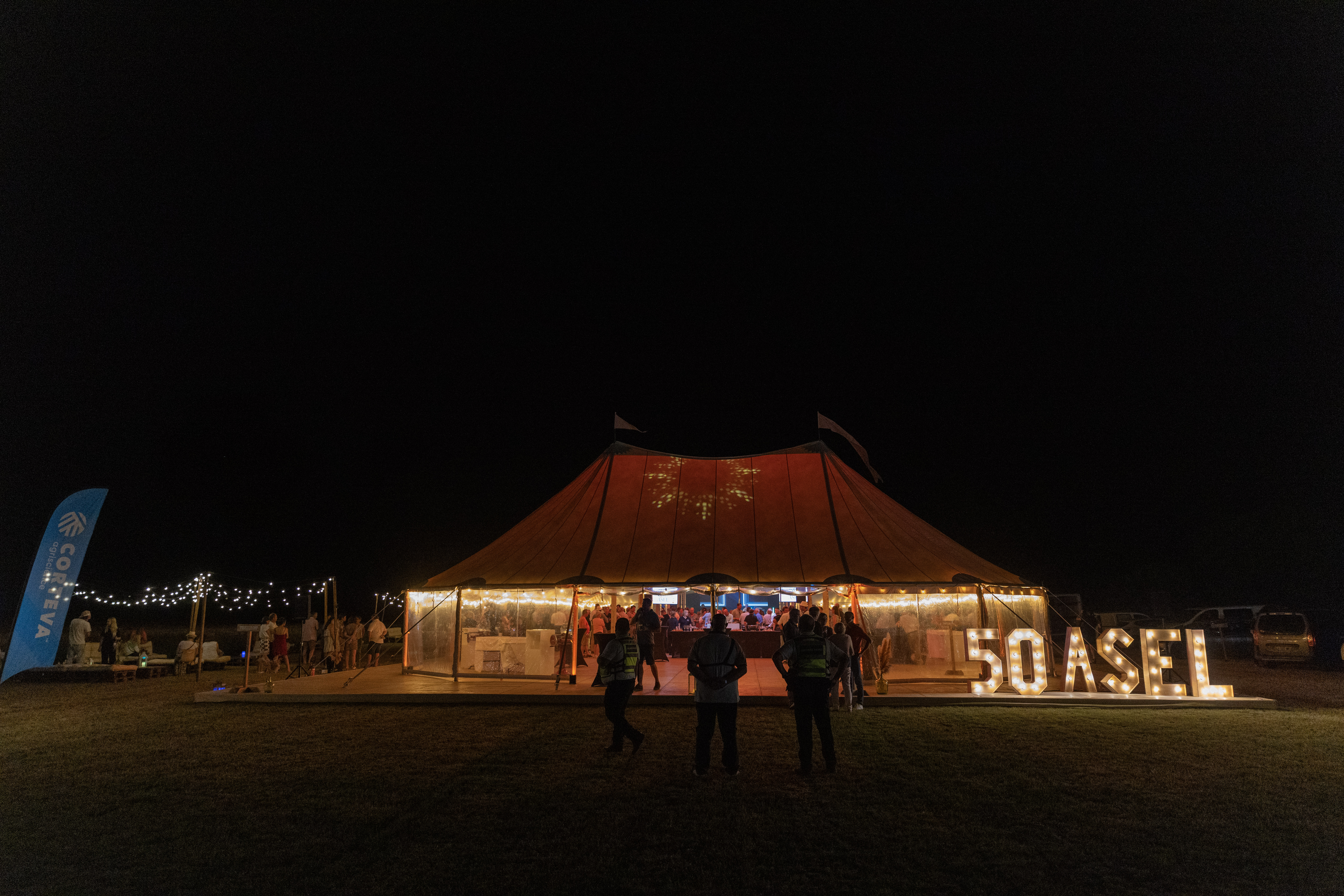
Tentverhuur in Brussel for corporate events without operational surprises
INNOV'events supports executives, HR and communication teams with Tentverhuur for corporate events in Brussel, typically from 50 to 1,500 attendees. We handle technical checks, access logistics, safety requirements and day-of coordination so your teams stay focused on stakeholders, not on setup issues.
Whether you need a quick weather-proof solution for a courtyard reception or a multi-day structure for a product launch, we translate your constraints into a workable plan, a clear quote, and a controlled execution.
Sommaire
In Brussel, the tent is not “just a cover”: it protects your agenda. A late keynote, a VIP arrival, a press moment or a team celebration only works if acoustics, lighting, temperature and circulation stay stable whatever the weather.
Local organizations expect predictable timing, minimal disruption for neighbors, and compliance with safety rules. The stakes are reputational: one blocked delivery or a non-compliant exit plan can turn into a visible failure in front of leadership and invited partners.
As a Brussels-based team, we plan Tentverhuur in Brussel with real site constraints in mind: tight access streets, limited loading windows, multilingual coordination, and the realities of venues between the EU quarter, the canal zone and the business parks.
What you can verify quickly in Brussel before requesting a quote
10+ years coordinating corporate event operations across Belgium, with recurring tent-based formats (summer receptions, year-end gatherings, roadshow stops).
50–1,500 guests is our usual tent planning range; beyond that we assess crowd management, emergency exits, and local power distribution as a full project.
24–72 hours typical turnaround to produce an initial scoped proposal after a site visit in Brussel (faster for urgent weather-contingency needs).
Network of vetted partners for structures, flooring, generators, HVAC, and sanitary blocks—chosen for reliability and compliance, not for “cheapest day rate”.
Corporate tent projects in Brussel: long-term relationships matter
We support companies and institutions operating in Brussel and the wider capital region, where the same operational problems come back every year: unpredictable weather, strict venue rules, complicated deliveries, and the need to keep internal teams fully available for guests.
You mentioned sharing reference names, but none were provided in your brief. If you send the list (even 5–10 names), we will integrate them in a compliant way (e.g., “recurrent projects for X, Y, Z” or anonymised “EU-affiliated body / financial services HQ / pharma site”) depending on what you are allowed to publish.
In practice, many clients re-engage us year after year because the tent is only one component: they want the same partner to remember the access routes, the contact points at the venue, the preferred seating layout, and the internal approval logic. That institutional memory is what keeps schedules stable on event day.
 Besoin d’un devis rapide ?
Nous vous envoyons une première proposition sous 24h.
Why tent-based events in Brussel solve real management problems
For executive teams, a tent is often the fastest way to create capacity, control flow, and protect brand experience without changing the venue. In Brussel, where meeting rooms can be scarce and outdoor spaces are underused, the right structure turns “nice idea” into a workable corporate format.
Business continuity under weather risk: a properly specified structure (roof load, sidewalls, drainage, ballast) avoids last-minute cancellations and protects the credibility of internal communication.
Controlled guest journey for stakeholders: separate entrances for VIPs, staff and suppliers; clear circulation; check-in zone; and signage reduce friction when you host partners, media or international teams.
More capacity without venue relocation: extend a headquarters courtyard, a museum terrace or a venue parking area while keeping your preferred location and avoiding additional venue rental costs.
Better compliance and risk posture: documented plans for emergency exits, fire safety equipment, crowd density and electrical distribution support internal HSE requirements and insurer expectations.
Employer brand impact for HR: a comfortable, well-lit, warm and acoustically controlled space increases participation and reduces negative feedback, especially for after-work events with mixed demographics.
Operational simplicity for communication teams: one central space with predictable light and sound supports speeches, filming, photo calls and press moments without improvisation.
Brussel is a compact, high-visibility market where partners and employees compare experiences across many events. A tent-based setup that looks professional, respects neighbors and runs on time is not a luxury—it’s a management decision aligned with the city’s competitive corporate culture.
What companies in 1000 Brussel expect from tent logistics
Decision-makers in Brussel rarely judge a tent on appearance alone. They evaluate the full operational chain: access, safety, noise, timing and comfort. We plan accordingly, starting from real constraints instead of catalogue options.
Access and loading constraints are often the first blocker. In the city center (1000), deliveries can be limited by narrow streets, pedestrian zones, and strict time windows. In the EU quarter, you may have additional security layers and badge-controlled access. We therefore build a loading plan: vehicle sizes, turning radius, temporary holding zone, and a realistic installation schedule that does not depend on “everyone arriving at 6:00”.
Neighbor and venue rules are also decisive: sound limits, evening cut-off times, and protection requirements for paving, lawns or heritage surfaces. A tent on ballast may be mandatory when anchoring is prohibited; flooring might need a protective underlayer; and cable routing must avoid public walkways. These are small details until the venue blocks your setup on the morning of the event.
Comfort expectations in Brussels corporate audiences are high: guests may come from international offices, embassies, consultancies, and institutions. That means you must anticipate temperature swings, rain-driven humidity, and wind chill. Heating, ventilation, and door solutions (double doors, air curtains) are not “nice-to-haves” when you want people to stay for speeches or networking.
Which corporate formats work best in Brussel under a tent
Entertainment is effective when it supports a business objective: participation, retention of key messages, stakeholder hosting, or internal cohesion. Under a tent, we focus on formats that are operationally stable (sound, timing, crowd flow) and compatible with corporate brand standards in Brussel.
Animations Interactives à Brussel
CEO / leadership talk with structured Q&A: we design a stage area with controlled lighting and clear sound coverage so questions are audible without pushing volume beyond venue limits.
Product demo lanes: modular zones with power distribution and cable management for 4–12 demo stations; ideal for tech, mobility and B2B services teams hosting partners.
Corporate awards with live voting: stable Wi‑Fi planning (or dedicated network option) and screen placement to avoid crowd clustering at entrances.
Recruitment or employer branding open evening: branded check-in, presentation corner, and “conversation islands” with acoustic treatment (curtains, layout) to keep discussions comfortable.
Animations Artistiques à Brussel
Small-format live music (jazz trio, acoustic set): appropriate for Brussels receptions where guests network in multiple languages; we spec stage size and power to keep volume controlled.
Host/MC in bilingual mode (FR/NL, optionally EN): keeps timing tight and prevents the “dead air” moments that make corporate events feel disorganized.
Visual performance corner (illustrator, live sketching): works well for conferences and institutional events where the tone must remain professional and not intrusive.
Animations Innovantes à Brussel
Chef stations with throughput planning: we calculate service capacity (e.g., 1 station per 80–120 guests for smooth flow) and position them to avoid queues blocking exits.
Local tasting bar (Belgian beers, alcohol-free pairings): we plan bar back storage, waste flow, glass logistics and staffing ratios to keep service time under control.
Warm winter reception setup: heating strategy, hot drinks station placement, and insulation choices so guests stay comfortably for 90–150 minutes without “coat-on networking”.
Animations Gourmandes à Brussel
Hybrid streaming corner: controlled background, lighting and audio capture for remote teams; requires a dedicated power line and a quiet zone separated from the bar.
Branded immersive lighting: gobo projection, color temperature control, and safe rigging points—effective for product launches in Brussel where photos circulate internally and externally.
Data-capture experiences: badge scan at demo points or sessions; must be GDPR-safe with clear signage and a responsible data plan.
Whatever the format, we align entertainment with your brand constraints: audience profile, tone of voice, photography requirements, and executive schedule. A tent amplifies both professionalism and mistakes—so we design the flow, not just the program.
Where to install a corporate tent in Brussel without wasting time
The venue determines what is feasible: anchoring, noise limits, delivery access, and power availability. In Brussel, selecting the right setting is often the difference between a controlled installation and a fragile setup that depends on last-minute exceptions.
| Venue type | For which objective? | Main strengths | Possible constraints |
|---|---|---|---|
Company HQ courtyard or terrace (Brussel) | Employee reception, client cocktail, leadership address without venue rental | Close to teams, easy branding, minimal guest travel, direct access to building facilities | Limited truck access, noise restrictions after work hours, anchoring often forbidden on paving |
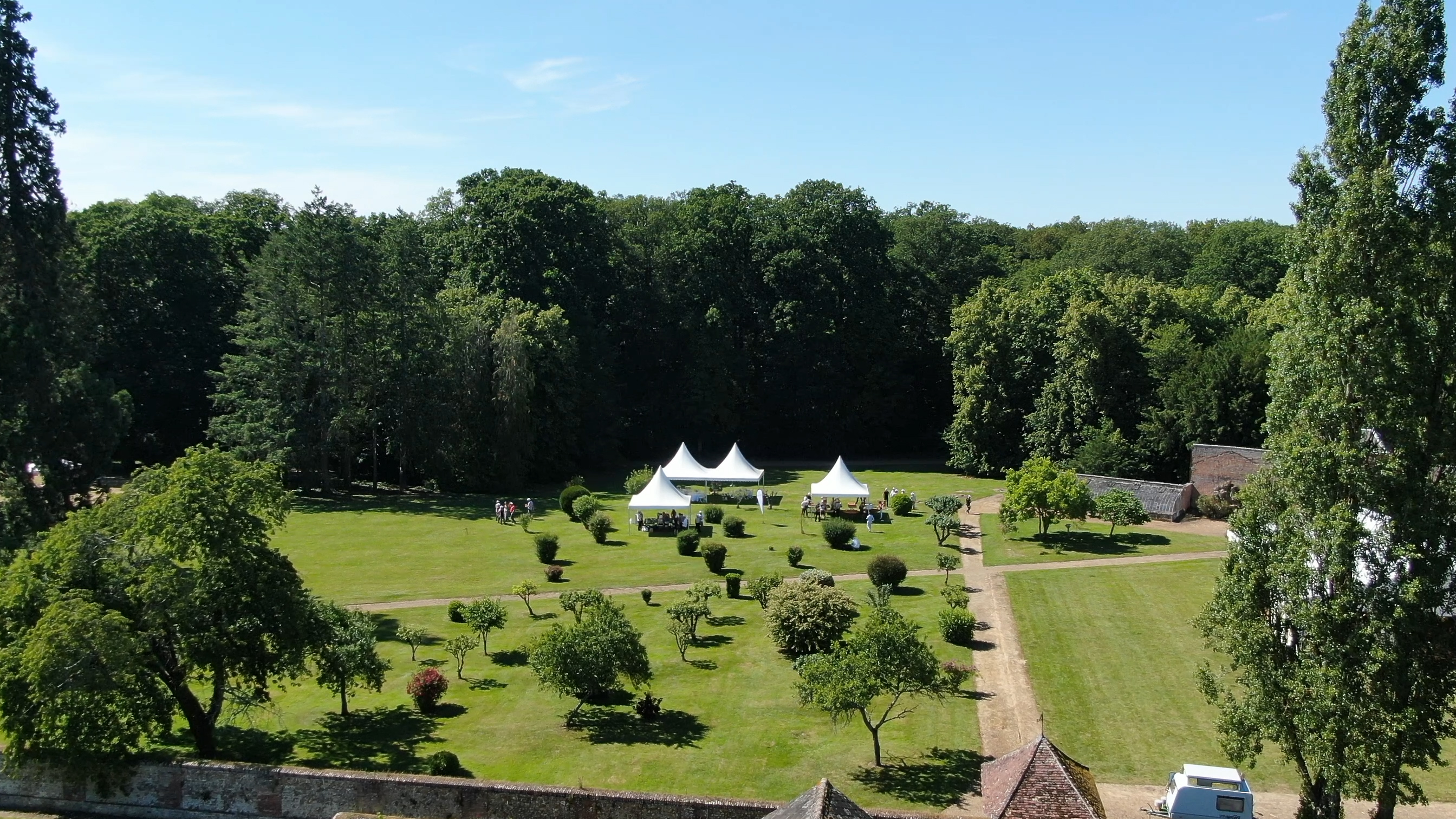
Urban venue garden / park-adjacent space (1000) | Summer party, partner hosting, “outdoor feel” with weather control | Premium perception, natural light, flexible layout for zones (bar, stage, lounge) | Ground protection requirements, drainage risk, strict dismantling windows, neighbor sensitivity |
Industrial or canal-area site (Brussels region) | Product launch, brand activation, large capacity with technical build | More space, easier logistics, allows larger structures and backstage areas | Power may require generators, permitting complexity, guest transport planning needed |
We strongly recommend a site visit before locking the tent specification. In Brussel, two locations with the same square meters can differ completely in access, permitted hours, and anchoring rules—details that directly impact cost, safety, and your event timeline.
What a Tentverhuur budget looks like in 1000 Brussel
Tentverhuur pricing is driven by engineering and operations, not by decoration. In Brussel, costs often move because access is complex, anchoring is restricted, and comfort expectations require heating, flooring and power management.
Structure size and category: span width, eave height, and whether you need clear-span (no internal poles) for sightlines and circulation.
Flooring and ground protection: from basic walkway solutions to full flooring with levelling; essential on grass or uneven paving.
Anchoring method: stakes vs. ballast. Ballast is common in city settings and can increase logistics and truck movements.
Weather-proofing level: sidewalls, insulated elements, gutters, door solutions, and wind-rated configurations.
HVAC and power: heating capacity planning, ventilation for dense crowds, generator sizing, distribution boards, and cable routing with safety covers.
Access complexity in Brussel: restricted loading windows, distance from truck drop-off to installation area, and the need for smaller vehicles or extra handling.
Safety and compliance: emergency exits, fire equipment, signage, and venue-specific documentation.
Timing: multi-day rentals, overnight security needs, and whether install/dismantle must happen outside business hours.
From an ROI perspective, tent investments pay back when they protect attendance and agenda reliability. A structure that keeps guests comfortable, preserves sound quality for leadership messaging, and prevents operational incidents typically costs less than the reputational damage of a disrupted flagship event in Brussel.
Why choosing a Brussel agency reduces event-day risk
In tent projects, the weak point is rarely the tent itself; it’s coordination across suppliers, venue stakeholders and tight schedules. Working with an event agency in Brussel means shorter response times for site checks, realistic scheduling based on city access, and a partner who knows how local venues and suppliers actually operate.
We are used to the practical realities: delivery constraints in central districts, multilingual stakeholder alignment, and the need to keep your internal teams out of technical arbitration. For executive events, that is a measurable benefit: fewer open questions, fewer last-minute changes, and clearer accountability.
- Faster feasibility decisions thanks to local site knowledge and the ability to visit quickly.
- Supplier coordination you don’t have to manage: one operational lead, one schedule, one escalation path.
- Reduced friction with venues because documentation, safety expectations and working methods are anticipated.
- More reliable budgeting because access constraints and local labor realities are priced upfront.
From an ROI perspective, tent investments pay back when they protect attendance and agenda reliability. A structure that keeps guests comfortable, preserves sound quality for leadership messaging, and prevents operational incidents typically costs less than the reputational damage of a disrupted flagship event in Brussel.






What we have delivered across Brussel in tent-based formats
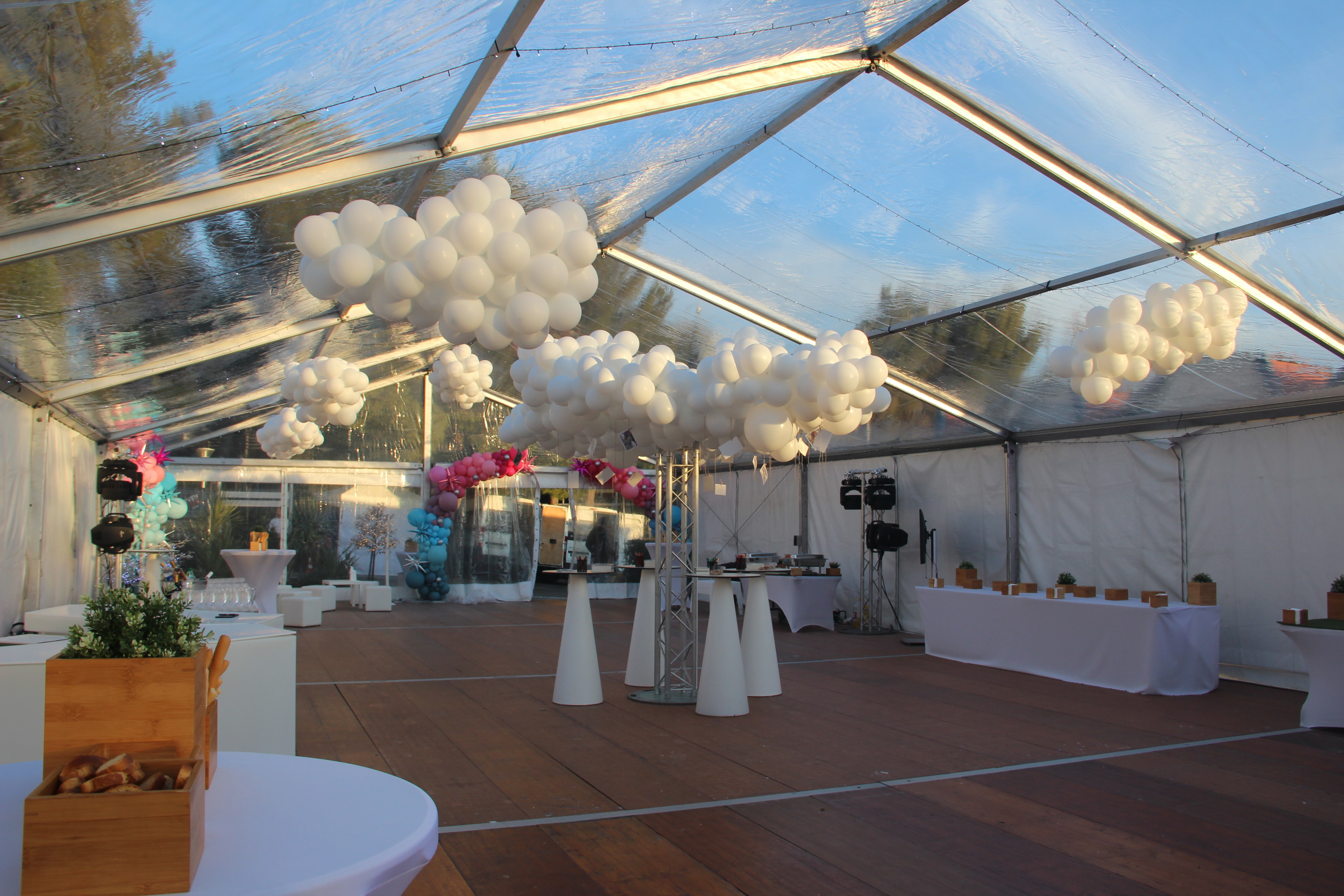
Our tent projects in Brussel range from pragmatic weather-contingency structures to fully equipped corporate environments with stage, AV, catering back-of-house and controlled guest flow.
Examples of situations we manage in the field:
Leadership reception at HQ: tent installed on paving with ballast, full flooring to protect surfaces, heating sized for evening temperature drop, and a dedicated technical lane for AV and catering to avoid guest cross-traffic.
Partner event with demo zones: clear-span structure to preserve sightlines, segmented layout for demo stations, check-in, stage, and networking; power distribution planned to avoid tripping risk and to keep equipment stable.
Multi-day corporate program: phased installation to respect business continuity on site (access maintained for staff during work hours), plus dismantling plan aligned with venue and neighborhood constraints.
What these projects have in common is not “creativity”; it is disciplined operational planning: realistic timing, documented safety, and on-site decision-making so executives experience a smooth program.
Common tent mistakes we prevent in Brussel corporate events
Underestimating access and handling time: in central Brussel, a 30-meter carry from truck to site can add hours if not planned with the right crew and equipment.
Choosing a tent size based on guest count only: bars, catering, stage, and circulation require surface. A “100-person tent” can become uncomfortable at 70 if layout is not engineered.
Ignoring anchoring restrictions: many sites forbid ground penetration; discovering this after ordering the structure creates redesign costs and delays.
HVAC treated as optional: a packed tent can overheat even in mild weather; a winter event without correct heating capacity leads to short dwell time and negative feedback.
Power planned too late: generators, distribution and cable routing must be designed early to avoid visible cables, overloads, or safety non-compliance.
No clear on-site responsibility: when suppliers take instructions from multiple client stakeholders, timing slips and accountability disappears.
Our role is to remove these risks before they reach your leadership team on event day: we specify correctly, schedule realistically, and coordinate execution with one operational owner.
Why Brussels clients renew their Tentverhuur projects with us
Long-term collaboration is common in Brussel because once a tent format works—access plan, supplier team, safety documentation, and brand setup—organizations prefer to keep it stable and improve it incrementally rather than restart from scratch each year.
Year-on-year continuity: recurring clients typically keep the same core layout and adjust only capacity, program timing, and branding elements.
Operational memory: we keep records of access routes, loading constraints, and venue requirements to shorten planning cycles on repeat editions.
Fewer stakeholders to brief: HR and Comms teams value not having to re-explain internal approval rules, VIP protocols, and on-site expectations.

Loyalty is not about convenience; it is proof that the event ran predictably under pressure. For executive teams in Brussel, repeatability is a quality criterion.
Our Tentverhuur process in Brussel from brief to dismantling
👉 Step 1 — Define the operational brief in Brussel
We start with a working session (30–60 minutes) to confirm guest count range, agenda (speeches, networking, dinner), stakeholder profile, and constraints (noise cut-off, VIP flow, filming needs). We also identify internal owners: HR, Comms, Facilities, HSE, and who signs off budget.
👉 Step 2 — Site visit and feasibility check in 1000
We inspect access routes, truck stop position, carrying distances, ground type/slope, anchoring constraints, drainage risk, and existing power. We clarify venue rules and identify where emergency exits and service lanes can realistically be placed.
👉 Step 3 — Technical specification and layout plan for Brussel
We propose structure type, dimensions, wall/door configuration, flooring, ballast/anchoring, HVAC, power distribution, lighting needs, and service areas. You receive a layout that explains why each zone is positioned where it is (guest comfort, queues, safety, supplier flow).
👉 Step 4 — Quote and scenario options for Brussel decision-makers
We provide a clear quote with options (e.g., comfort level, flooring grade, heating strategy, facade/branding). When needed, we include a weather contingency option so you can make a decision without waiting for the forecast.
👉 Step 5 — Coordination, scheduling and compliance in Brussel
We lock supplier schedules, confirm installation/dismantling windows, and prepare the on-site run sheet. We coordinate with the venue and your internal HSE/facilities contacts on safety requirements, signage, exits, and electrical protections.
👉 Step 6 — On-site build, handover, and event-day operations in 1000
We supervise build milestones, test power and HVAC, validate lighting and sound checks, and ensure the space is guest-ready at handover time. During the event, we manage operational adjustments (temperature, doors, flow) so your teams focus on hosting.
👉 Step 7 — Dismantling and post-event feedback in Brussel
We manage dismantling within the agreed windows, protect surfaces, and ensure the site is returned in proper condition. We close with a short debrief: what worked, what can be improved, and what to standardize for the next edition.
FAQ sur l'organisation Tentverhuur à Brussel
How early should we book tent rental in Brussel?
For spring/summer peak dates in Brussel, aim for 6–10 weeks. For simpler structures outside peak, 2–4 weeks can work. For urgent weather-contingency needs, we can sometimes deploy within 3–7 days depending on size, access, and supplier availability.
What guest capacity is realistic under a tent in 1000 Brussel?
As a planning rule: a standing cocktail often needs 0.8–1.2 m² per person; seated dinner with service typically 1.4–1.8 m² per person, plus stage/AV/catering zones. We validate capacity on a layout so circulation and emergency exits remain compliant in Brussel.
Do we need permits for a tent in Brussel?
Sometimes yes, depending on location, duration, tent size, and whether the space is public or private. In Brussel, venue rules and local authority requirements can differ by site. We flag permit risks early during the site visit and align documentation with venue management and your internal compliance.
Can a tent in Brussel be installed without ground anchoring?
Yes. When ground penetration is forbidden (common on paving, heritage surfaces, or some corporate courtyards in Brussel), we use ballast solutions. This increases logistics (weight, transport, space), so it must be planned upfront in the quote and access plan.
What is the typical cost range for Tentverhuur in Brussel?
Budgets vary widely by size and comfort level. For corporate setups in Brussel, a practical working range is often €3,000–€12,000 for smaller structures and €15,000–€60,000+ for larger, fully equipped builds (flooring, HVAC, power distribution, lighting, multiple days). A site visit is the fastest way to avoid under- or over-specifying.
Request a Tentverhuur quote in Brussel with a clear operational plan
If you are comparing agencies, we suggest starting with a short call and a site visit in Brussel. You will quickly see whether the supplier understands access constraints, safety requirements, and the realities of corporate timing.
Share your date(s), approximate guest count, location, and program outline. We will respond with a scoped proposal for Tentverhuur in Brussel, including the technical assumptions (anchoring, flooring, power, HVAC) and a realistic installation schedule. The earlier we align on constraints, the more stable your budget—and your event day.
Agence INNOV'events Brussel
Justin JACOB est le responsable de l'agence événementielle Brussel. Contactez-le directement par mail via l'adresse belgique@innov-events.be ou par formulaire.
Contacter l'agence BrusselToutes nos prestations & animations Brussel, Belgique
Découvrez nos prestations événementielles
Découvrez nos animations événementielles disponibles au Belgique
- Hôtesse événementielle à Brussel
- Escape Game à Brussel
- Cours de cuisine type MasterChef à Brussel
- Magicien à Brussel
- Location de chapiteau à Brussel
- Atelier colorimétrie à Brussel
- Jeux gonflables à Brussel
- Service de voiturier à Brussel
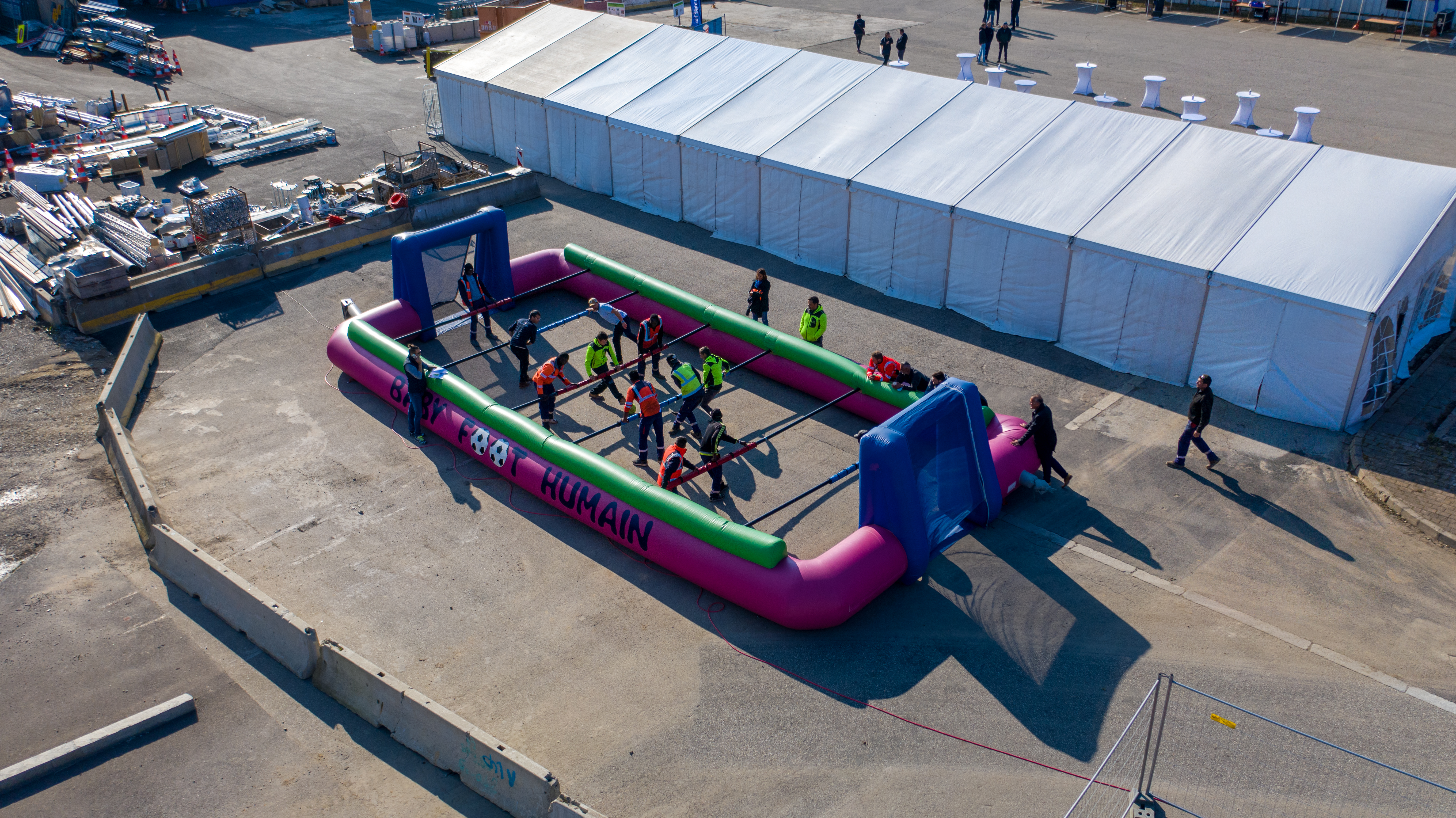
- Simulateur de football à Brussel
- Location de mobilier lumineux à Brussel
- Flocage lumineux à Brussel
- Repas insolite à Brussel
- Light Painting à Brussel
- Murder Party à Brussel
- Jeu concours à Brussel
- PLV événementielle à Brussel
- Réalité virtuelle à Brussel
- Cuisine moléculaire à Brussel
- Animation Halloween à Brussel
- Feu d’artifice à Brussel
- Jeux géants à Brussel
- Animateur événementiel à Brussel
- Animation photo à Brussel
- Père Noël à Brussel
- Animation enfants à Brussel
- Visite guidée à Brussel
- Rallye urbain à Brussel
- Piscine à balles à Brussel
- Simulateur de vol à Brussel
- Location de food truck à Brussel
- Record du monde à Brussel
- Simulateur de surf à Brussel
- Casino du vin à Brussel
- Atelier relooking à Brussel
- Atelier création de parfum à Brussel
- Atelier acting à Brussel
- Animations RSE à Brussel
- Tir à l’arc à Brussel
- Agent de sécurité à Brussel
- Œnologie à Brussel
- Mime à Brussel
- Jeu télévisé à Brussel
- Fête foraine à Brussel
- Atelier gestion de crise à Brussel
- Atelier négociation de crise à Brussel
- Jeux d’arcade à Brussel
- Simulateur de chute libre à Brussel
- Simulateur de ski à Brussel
- Simulation circuit automobile à Brussel
- Baptême de l’air à Brussel
- Dégustation à Brussel
- Création de baby-foot à Brussel
- Rallye 2CV à Brussel
- Challenge LEGO à Brussel
- Animation casino à Brussel
- Interprète / traducteur à Brussel
- Goodies à Brussel
- Bus / transfert à Brussel