
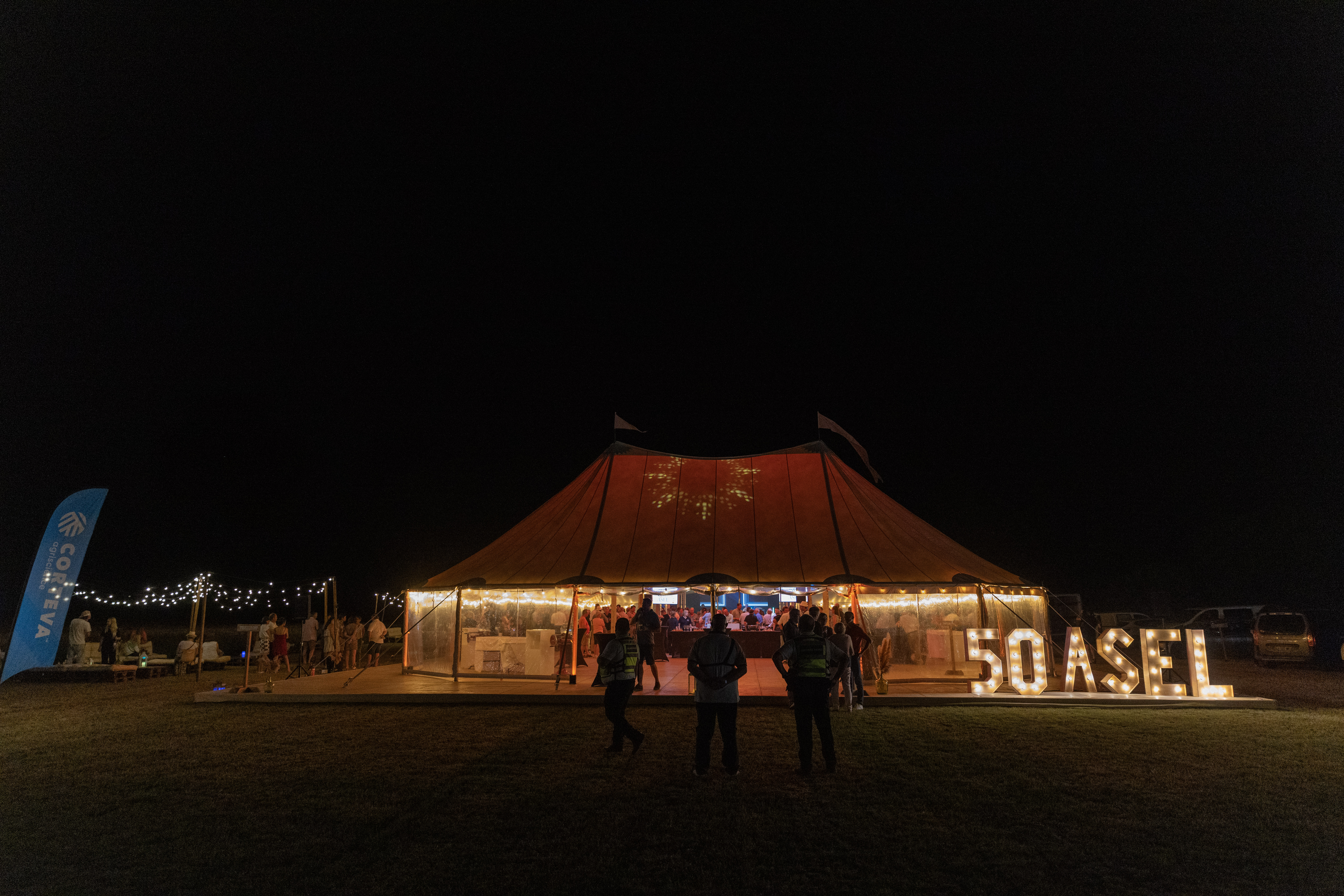
Tentverhuur in Luik for corporate events with zero operational surprises
INNOV'events is a Brussels-based corporate event agency managing Tentverhuur projects in Luik for 80 to 2,500+ attendees. We handle site survey, sizing, flooring, power distribution, safety files, installation schedules and supplier coordination so your teams can focus on guests and messaging.
Whether you need a reception tent for a VIP moment, a covered production zone for a product reveal, or a multi-bay structure for a staff event, we run the project with the same discipline as a temporary venue build.
Sommaire
For a corporate event, entertainment and guest experience are never “nice-to-have”: they protect your employer brand, executive credibility and internal engagement—especially when leadership attendance is expected and time on site is limited.
Organizations around Luik typically expect strict timing, bilingual communication, safe crowd flow, and a supplier ecosystem that understands industrial and urban constraints (access, loading, noise, neighbor rules).
Our role is to deliver a tented environment that feels like a real venue: controlled acoustics, correct power, weather-proof guest comfort, and an installation plan compatible with your operational calendar in Luik.
INNOV'events in numbers for tent projects in Luik
15+ years delivering corporate events across Belgium, with recurring tented builds in Wallonia and the Liège area.
150+ supplier relationships (structures, flooring, power, AV, catering, security) enabling fast sourcing and backup options when lead times tighten.
24–72 hours typical window to produce a first technical pre-scope (tent size hypothesis, loading plan, power estimate) after a qualified briefing.
Up to 2,500+ guests managed under temporary structures, including multi-zone layouts (welcome, plenary, dining, backstage).
Working with companies in Luik year after year
We support corporate clients active in Luik and across the province: industrial sites, logistics actors, tech scale-ups, public-facing organizations and headquarters with multi-site teams. In practice, what brings clients back is not a “nice tent”—it is a predictable process: clear responsibilities, stable suppliers, and a build schedule that does not disrupt normal operations.
Many of our collaborations in the Liège area are recurring because tent projects evolve: one year a staff celebration, the next a product launch, then a recruitment open day. The tent becomes a modular asset for communication objectives. We document learnings (access constraints, best power tie-in points, preferred layouts, noise limits) so each edition is smoother and less risky for your internal stakeholders.
If you want, we can share anonymized case patterns from the Liège territory (industrial courtyard builds, campus-style layouts near offices, hybrid configurations with existing halls) to help you benchmark scope and budget realistically.
 Besoin d’un devis rapide ?
Nous vous envoyons une première proposition sous 24h.
What tent-based events change for leadership teams in Luik
A tent is not just a cover; it is a way to create a controlled environment exactly where your audience already is—on your site, near your offices, or close to a strategic location in Luik. For executives, that means less travel friction, higher attendance, and more control over the narrative.
Operational continuity: you can host 300–1,000 people without blocking critical indoor spaces (meeting rooms, production halls). We plan guest flow, staff routes, and loading so your site keeps running.
Message control: a tented venue allows disciplined zoning (VIP, plenary, demo, recruitment) and signage. For communication teams, this reduces improvisation and protects brand consistency.
Weather risk mitigation: in Liège, rapid changes in rain and wind are common. Proper structure selection, anchoring method and flooring avoid the “mud + umbrellas” scenario that damages perception.
Time efficiency for HR: for staff moments, a tent on-site in Luik can raise participation because teams can attend in shifts. This matters when you run multiple schedules or production constraints.
Security and compliance: you can manage access control, emergency exits, fire safety and capacity with temporary infrastructure designed to meet Belgian requirements—rather than “making do” with unsuitable indoor spaces.
Liège has a pragmatic economic culture: people value execution and clarity. A tented event works when it is treated like a temporary venue build—planned, permitted and operated with discipline. That is the standard we apply for Tentverhuur in Luik.
Local constraints to anticipate in Luik before renting a tent
In Luik, the feasibility of a tent build often depends less on the tent itself than on the site realities. A courtyard that “looks big enough” may hide constraints: underground networks, limited turning radius for trucks, restricted delivery hours, or shared access with tenants. We address these early because they drive both cost and risk.
Typical constraints we plan for in the Liège area:
- Access and loading: narrow streets in parts of Liège, bridge/roadworks, and urban delivery windows. We plan delivery sequencing and provide a loading diagram to avoid blocking traffic or your own operations.
- Ground conditions: mixed surfaces (asphalt + paving + green areas). Anchoring options differ: stakes, ballast, or engineered solutions. Wrong assumptions here create last-minute rework.
- Weather exposure: wind corridors along open areas, rain run-off, temperature drops in evenings. This impacts structure category, heating needs, and flooring specification.
- Power availability: on-site power may be insufficient for AV, catering, heating, and lighting. We model loads and define a distribution plan (or generators) so you don’t learn on event day that circuits trip.
- Noise and neighbors: urban sites or near residences require realistic sound management: stage orientation, dB limits, end times, and communication with stakeholders.
- Bilingual expectations: many events in Liège involve mixed audiences (FR/NL/EN). We align signage and staff briefing so the experience remains fluid.
This is why our first steps are always: site survey, risk map, and a technical pre-scope. It prevents leadership from being surprised by “hidden” costs or feasibility issues when decisions are already made.
Which corporate entertainment works best in Luik under a tent?
Entertainment under a tent is effective when it respects three realities: acoustics (reverberation), circulation (people move differently in a temporary venue), and timing (executives want clear sequences). We design entertainment as part of the run-of-show, not as an add-on.
Animations Interactives à Luik
Structured networking formats: timed rotations (6–8 minutes) with topic cards aligned to your strategic themes (innovation, safety, customer success). Works well for mixed departments during staff events in Luik.
Brand demo stations: product or service “micro-demos” with queue management and a clear script. We often place these on the perimeter to keep the central area fluid.
Recruitment corner for HR: short interviews, culture pitch, and CV intake. Requires a quieter zone with proper lighting and privacy screens.
Animations Artistiques à Luik
Acoustic sets or small ensembles: better control in a tent than full amplified bands when speeches and networking must remain intelligible. We plan stage orientation and speaker coverage.
MC moderation for bilingual audiences: a professional host can manage transitions and keep timing tight—critical when leadership has limited availability.
Visual performances: LED or light-based acts work well under controlled tent lighting, especially for evening segments without needing excessive sound levels.
Animations Innovantes à Luik
Live cooking stations: effective for engagement but require ventilation planning, power allocation, and fire safety. We coordinate with caterers so queues do not block emergency paths.
Local tasting formats: curated pairings with clear service timing. In Luik, local identity can be a strength if presented with professional pacing and signage.
Seated dinner vs. walking dinner: we help you choose based on leadership objectives: seated supports speeches and awards; walking supports mixing and shorter attendance windows.
Animations Gourmandes à Luik
Silent conference headsets: ideal when the tent is close to neighbors or when you need two language channels. Also improves speech clarity in acoustically challenging setups.
RFID/QR attendance and zoning: helps HR and comms measure participation by segment (plenary, demo, recruitment), with GDPR-aware data handling.
Hybrid-ready AV backbone: when remote stakeholders must join, we plan connectivity, camera positions, and backup network solutions so streaming does not collapse under peak use.
Whatever the format, we align entertainment choices with your brand image and internal culture: the goal is not “more animation”, but the right intensity, sound level, and rhythm for your audience in Luik.
Where to install a tent in Luik without compromising perception
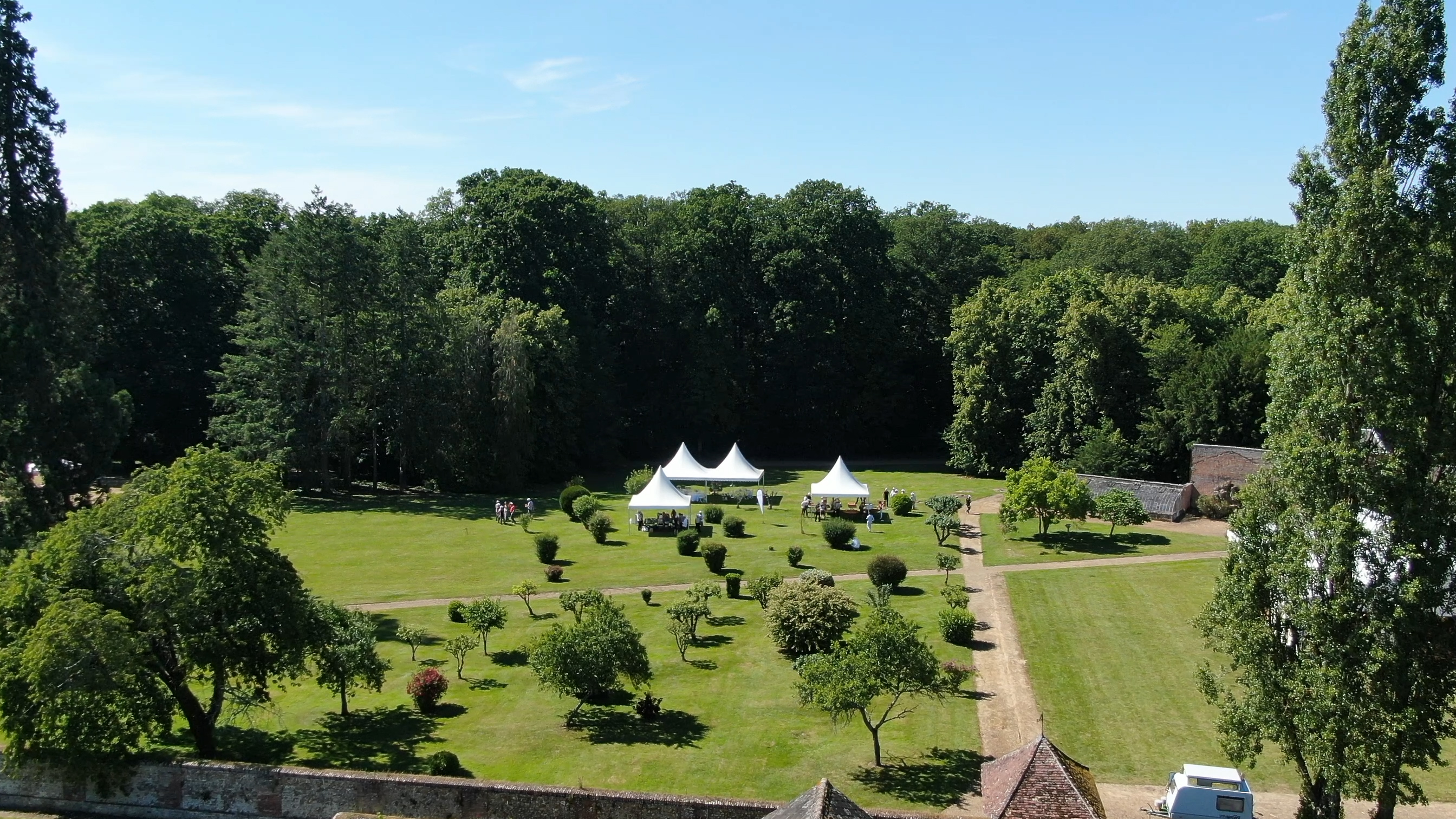
The location of the tent is part of the message. A tent placed at the wrong spot can create friction (long walk, bottlenecks, muddy access) and immediately lowers perceived quality. A tent placed strategically can feel like an intentional extension of your site or venue.
| Venue type | For which objective? | Main strengths | Possible constraints |
|---|---|---|---|
| Corporate site courtyard / parking area (Luik) | Staff event, open day, milestone celebration on-site | High attendance (no travel), strong employer branding, easy logistics for internal teams | Needs traffic plan, potential underground networks, HSE constraints, noise management |
| Green area or landscaped zone near offices (province 4000) | Summer reception, family day, relaxed networking | Strong comfort perception, good photo rendering, flexible zoning for food & activities | Ground protection, anchoring limits, rain contingency, longer build time due to flooring |
| Adjacent to an existing venue/hall in Luik | Extend capacity for plenary, dining, backstage or catering | Access to toilets, kitchens, fixed power; hybrid indoor/outdoor guest flow | Interface risk (fire exits, evacuation routes), sound bleed, tight loading windows |
We strongly recommend a site visit (or at minimum a technical video call with measurements) before finalizing tent size and configuration. In Luik, a 30-minute survey often saves a day of last-minute adjustments and unplanned rental costs.
What does tent rental cost in Luik for corporate use?
The price of Tentverhuur in Luik depends on structure type, comfort level, access complexity, and the degree of “temporary venue” finish you expect. A tent for a standing reception is not the same project as a tented gala with heating, flooring, AV and backstage.
Surface and configuration: size (m²), number of bays, height, clear-span needs (pillars vs. no pillars), and zoning (VIP, stage, dining, catering).
Flooring and finishes: cassette floor, carpet, ramps for accessibility, skirting, and protection layers when installed on sensitive ground.
Weather comfort: sidewalls, doors, heating output, ventilation strategy, and sometimes airlocks to prevent draft at entrances.
Power and technical production: distribution boards, cabling, generators if needed, and integration with lighting/AV. Under-budgeting power is one of the most common hidden costs.
Access and build constraints in Luik: limited truck access, phased installation, night/weekend work, permits, and security requirements.
Safety and compliance: anchoring method (stakes vs. ballast), fire safety equipment, signage, emergency lighting, and documentation required by the site or authorities.
We build budgets with an ROI perspective: the objective is to spend where it protects participation, safety, and brand perception (flooring, heating, power reliability) and to avoid spending on elements that do not move the needle for your stakeholders. If you share your guest count, site type, and timing, we can provide a scoped range and options (good/better/best) within your financial boundaries.
Why work with a local partner for tent rental in Luik
With tent projects, locality is not a slogan; it is a risk-control mechanism. A partner that knows the Liège territory can anticipate access constraints, supplier availability, and typical permitting timelines. When a client calls at 17:30 because weather has shifted and the CEO insists on keeping an outdoor segment, you need an agency that can react with the right network and decision discipline.
As INNOV'events, we operate nationally from Brussels and deploy teams in Luik with local suppliers and on-the-ground production management. When you also need broader event support beyond the tent itself, we integrate it within the same production logic via our event agency in Luik coordination.
- Faster site feasibility validation: we can arrange quick surveys and align with property/site stakeholders.
- Supplier redundancy: if a structure, heater, or floor component becomes unavailable, local sourcing options reduce the chance of compromise.
- Realistic scheduling: knowledge of peak periods (summer corporate season, end-of-year events) helps secure installation slots.
- Better incident response: on-site technical presence and nearby resources matter when conditions change (wind, rain, power issues).
We build budgets with an ROI perspective: the objective is to spend where it protects participation, safety, and brand perception (flooring, heating, power reliability) and to avoid spending on elements that do not move the needle for your stakeholders. If you share your guest count, site type, and timing, we can provide a scoped range and options (good/better/best) within your financial boundaries.






Examples of tent setups delivered around Luik
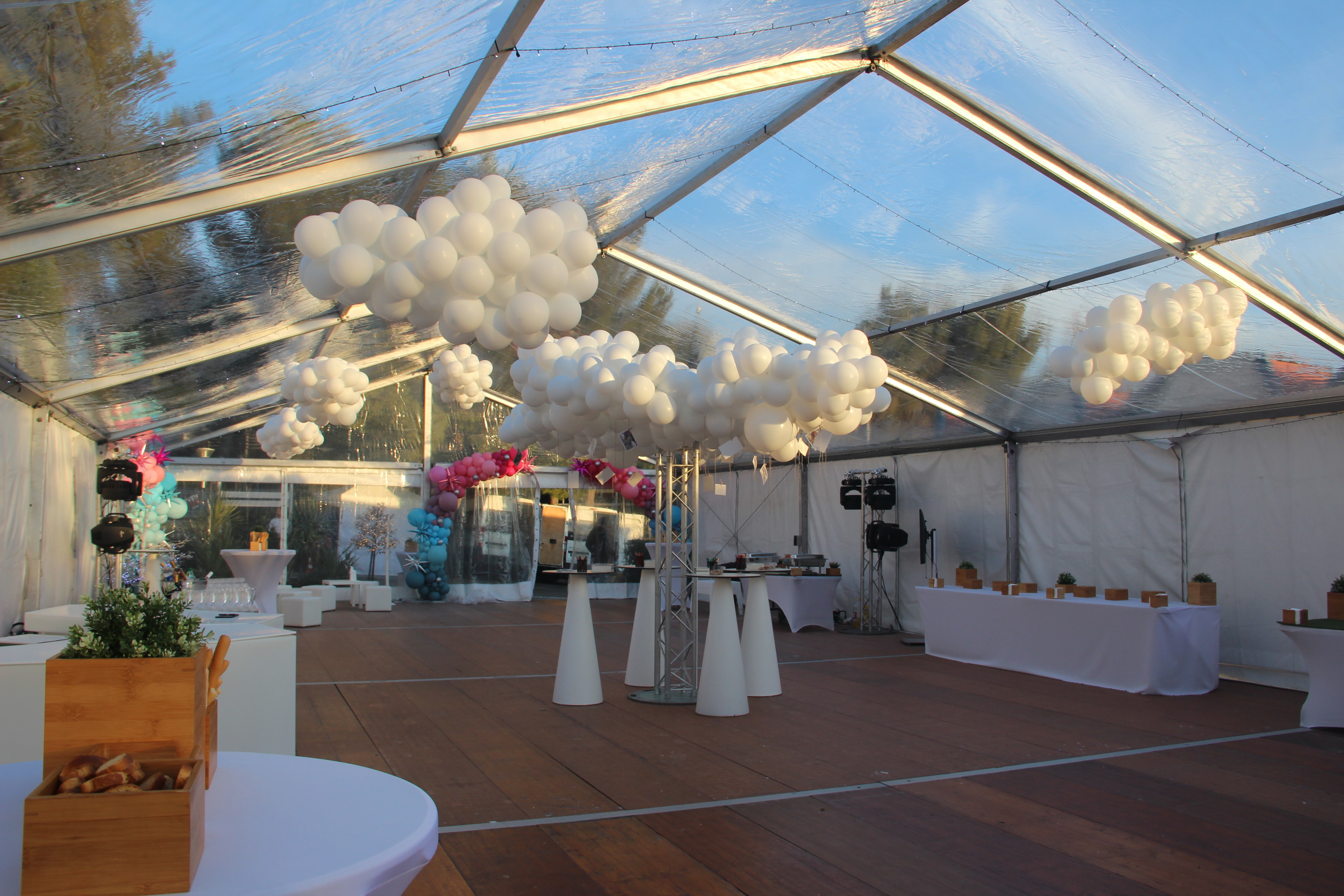
Our projects in and around Luik range from compact, high-finish receptions to large staff builds that function as temporary venues for a full day. A typical pattern: an industrial company wants to host 600 employees on-site without interfering with shift changes. The solution is rarely “one big tent”. We design a flow: covered welcome + cloakroom, a plenary structure with controlled sound, a dining zone with queue-managed stations, and a discreet technical corridor for catering logistics. This keeps guest experience clean while protecting operational areas.
Another frequent case: a leadership event requiring privacy and premium finish, installed next to an existing building to leverage toilets and fixed power. Here, the success factor is integration—matching flooring heights, creating a proper entrance, aligning lighting temperatures, and ensuring that the AV setup is tuned for a tent environment (speaker placement, headset mics, backup power for critical moments).
We also support communication teams who need a tent as a “content factory”: controlled light for filming, quiet zones for interviews, reliable connectivity, and a brand-consistent backdrop. In those cases, we treat the tent as a production studio, not only as a guest shelter.
Common mistakes companies make with tent rental in province 4000
Choosing size based only on headcount: forgetting space for buffets, stage, aisles, and backstage leads to congestion and safety issues.
Skipping flooring to save money: a wet ground turns into reputational damage in one hour; flooring is also about accessibility and slip risk.
Underestimating power needs: heating + catering + AV can exceed available circuits quickly; tripping power during a speech is avoidable with proper load planning.
No weather plan: not defining wind thresholds, rain routing, entrance protection, and heater capacity creates panic decisions on the day.
Late decisions on permits and neighbors: especially in urban parts of Luik, noise/end times and delivery windows should be validated early.
Unclear responsibilities: when tent supplier, AV, caterer and security each operate separately, issues fall between cracks. A single production owner prevents this.
Our role is to prevent these risks through early technical scoping, documented plans (site, power, safety), and a disciplined build and handover process. That is how Tentverhuur becomes a controlled corporate asset rather than a last-minute gamble.
Why Luik clients renew their tent rental projects with us
Repeat business happens when the experience is predictable for directors and comfortable for internal teams. In tent projects, predictability comes from documentation, supplier stability, and honest trade-offs presented early—before commitments are made.
Recurring formats: staff celebrations, safety days, recruitment open days, customer moments—often repeated annually with incremental improvements.
Standardized deliverables: site plan, power plan, run-of-show, supplier contact matrix, risk register—so internal stakeholders know what to expect.
Decision-ready options: we typically propose 2–3 scope scenarios (essential / comfort / premium) with clear impacts on guest experience and risk.

Loyalty is a concrete indicator: it means the event did not create operational stress, the executive message landed, and the build felt professional on site in Luik.
Our tent rental delivery process for Luik corporate events
👉 Step 1 — Executive briefing and constraints capture (Luik)
We start with a structured call: objectives (HR, client, brand), guest profile, timing constraints, site type, leadership expectations, and non-negotiables (speech quality, VIP privacy, catering standard). We also capture internal constraints such as production schedules, union rules, or building access policies.
👉 Step 2 — Site survey and feasibility pre-check in province 4000
We validate dimensions, ground type, access routes, truck turning, loading zones, underground networks (where available), and potential tie-in points for power/water. Output: a feasibility note with early risks and the information we still need.
👉 Step 3 — Concept, zoning and sizing proposal for the tent
We translate objectives into zones (welcome, plenary, dining, demo, backstage), define circulation widths, and propose tent types (clear-span, pagoda modules, connected structures). We provide a first layout and comfort level assumptions (flooring, walls, heating, doors).
👉 Step 4 — Budget framing and option scenarios (Luik)
We present line items transparently (structure, floor, power, climate, lighting, safety). We also propose alternatives that reduce cost without degrading core experience—for example optimizing tent geometry or reusing existing venue assets (toilets, fixed power) where possible.
👉 Step 5 — Technical production: power plan, safety file, scheduling
We consolidate all suppliers and produce the technical backbone: electrical load calculations, distribution and cabling plan, emergency exits and signage, fire safety equipment list, anchoring method, and a build schedule with milestones and responsibilities.
👉 Step 6 — Installation supervision and handover checks in Luik
Our production lead supervises installation sequencing, coordinates deliveries, and runs checklists: structure integrity, flooring finish, lighting tests, heating start-up, AV soundcheck, and backstage readiness. We schedule a client walk-through before guests arrive.
👉 Step 7 — Event-day operations and dismantle
We manage timing, supplier interventions, and rapid issue resolution. After the event, we coordinate dismantle respecting site constraints (noise hours, traffic, cleaning) and ensure the site is returned in the agreed condition.
FAQ sur l'organisation Tentverhuur à Luik
How far in advance should we book tent rental in Luik?
For peak months (May–September), plan 8–16 weeks ahead for best availability and pricing. For smaller setups outside peak, 3–6 weeks can work. If your event requires flooring, heating, AV and permits, aim for 12+ weeks.
What tent size do we need for 300 guests in Luik?
As a working range: standing reception with light furniture often needs 250–400 m²; seated dinner can require 450–650 m² depending on stage, buffet format and circulation. A quick layout based on your program is more reliable than a single m²-per-person rule.
Do we need permits for a corporate tent in Luik?
It depends on location and duration. On private sites, you may still need approvals related to safety, anchoring, and sometimes neighborhood impact. In public or sensitive areas, authorization can be required. We recommend validating this 6–10 weeks before the event to avoid schedule constraints.
Can a tent in province 4000 be heated in winter?
Yes, with the right structure, closed sidewalls, and correctly sized heaters. In practice, comfort depends on tent volume, door management, insulation level, and outside temperature. We typically plan heating with redundancy and a distribution strategy to avoid cold zones.
What are the biggest risks on tent event day in Luik?
The top risks are wind/rain (entry mud, draft, condensation), power overload (heating + catering + AV), and crowd flow (queues blocking exits). All three are manageable with early site checks, power modeling, and a clear circulation plan.
Request a Tentverhuur quote for Luik with a technical pre-scope
If you are comparing agencies, we suggest starting with a technical pre-scope: guest count, event format, preferred dates, and site type in Luik. We will respond with a realistic tent size hypothesis, key constraints to validate, and budget options that reflect real installation conditions—not ideal assumptions.
Contact INNOV'events to plan early and secure availability (structures, flooring, power, heating and crew). The earlier we lock the critical parameters, the more you control risk, cost and executive expectations.
Agence INNOV'events Luik
Justin JACOB est le responsable de l'agence événementielle Luik. Contactez-le directement par mail via l'adresse belgique@innov-events.be ou par formulaire.
Contacter l'agence LuikToutes nos prestations & animations Luik, Belgique
Découvrez nos prestations événementielles
Découvrez nos animations événementielles disponibles au Belgique
- Hôtesse événementielle à Luik
- Escape Game à Luik
- Cours de cuisine type MasterChef à Luik
- Magicien à Luik
- Location de chapiteau à Luik
- Atelier colorimétrie à Luik
- Jeux gonflables à Luik
- Service de voiturier à Luik
- Simulateur de football à Luik
- Location de mobilier lumineux à Luik
- Flocage lumineux à Luik
- Repas insolite à Luik
- Light Painting à Luik
- Murder Party à Luik
- Jeu concours à Luik
- PLV événementielle à Luik
- Réalité virtuelle à Luik
- Cuisine moléculaire à Luik
- Animation Halloween à Luik
- Feu d’artifice à Luik
- Jeux géants à Luik
- Animateur événementiel à Luik
- Animation photo à Luik
- Père Noël à Luik
- Animation enfants à Luik
- Visite guidée à Luik
- Rallye urbain à Luik
- Piscine à balles à Luik
- Simulateur de vol à Luik
- Location de food truck à Luik
- Record du monde à Luik
- Simulateur de surf à Luik
- Casino du vin à Luik
- Atelier relooking à Luik
- Atelier création de parfum à Luik
- Atelier acting à Luik
- Animations RSE à Luik
- Tir à l’arc à Luik
- Agent de sécurité à Luik
- Œnologie à Luik
- Mime à Luik
- Jeu télévisé à Luik
- Fête foraine à Luik
- Atelier gestion de crise à Luik
- Atelier négociation de crise à Luik
- Jeux d’arcade à Luik
- Simulateur de chute libre à Luik
- Simulateur de ski à Luik
- Simulation circuit automobile à Luik
- Baptême de l’air à Luik
- Dégustation à Luik
- Création de baby-foot à Luik
- Rallye 2CV à Luik
- Challenge LEGO à Luik
- Animation casino à Luik
- Interprète / traducteur à Luik
- Goodies à Luik
- Bus / transfert à Luik