
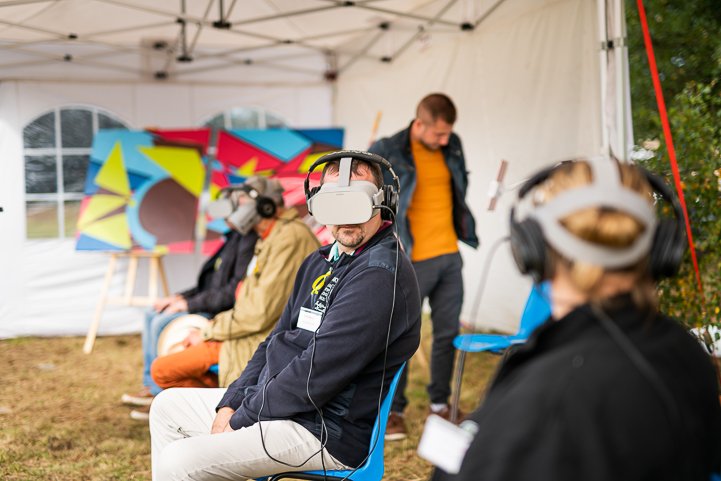
Virtual Reality in Luik for corporate events that need measurable engagement
INNOV'events designs and operates Virtual Reality activations for corporate events in Luik, typically from 30 to 600 attendees. We handle the full chain: scenario selection, venue fit, staffing, set-up, guest flow, hygiene/safety, and post-event reporting so your team stays focused on the message and the stakeholders.
Whether you need a high-throughput VR corner during a conference, a guided team challenge, or a branded product simulation, we build a format that is operationally reliable on event day and defensible for executives who expect clear outcomes.
Sommaire
Entertainment is not a u0000nice-to-haveu0000: in corporate events it is a tool to drive attention, participation and recall. A well-run Virtual Reality module gives you a controlled moment where participants stop scrolling, engage, and talku0014which directly supports employer branding, internal communication and client relations.
Organizations in Luik typically expect efficiency: fast onboarding, predictable throughput, bilingual facilitation (FR/NL when needed), and a set-up that does not disrupt plenary timing or catering. They also expect your agency to manage risk (motion sickness, cables, crowding) with the same rigor as audiovisual or security.
We operate from Brussels with frequent delivery in Luik and the Meuse valley economic corridor. Our strength is field execution: realistic time plans, tested equipment, trained hosts, and a production mindset that anticipates the pressure points of event day (access, power, Wi-Fi, noise, and last-minute schedule changes).
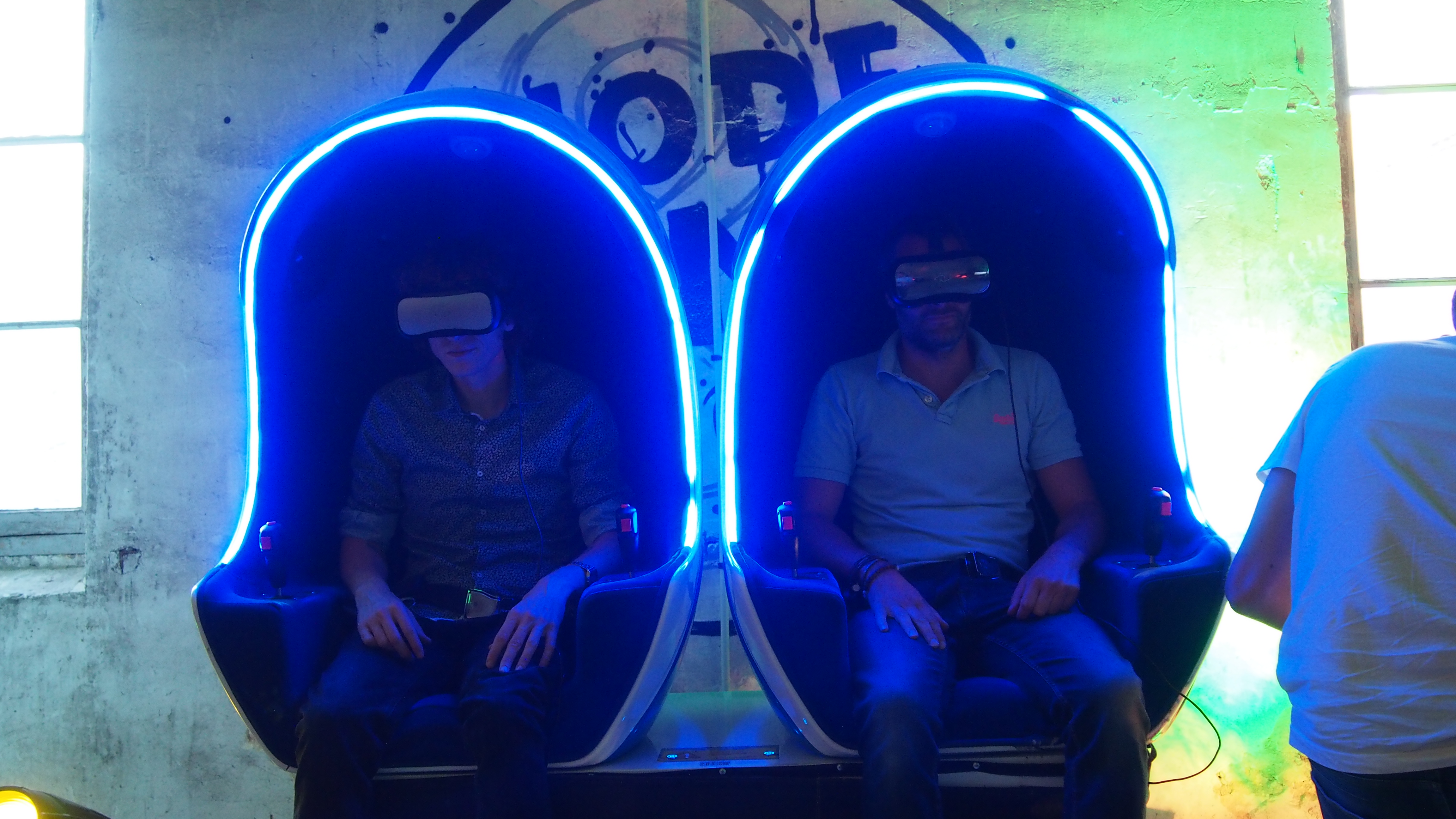
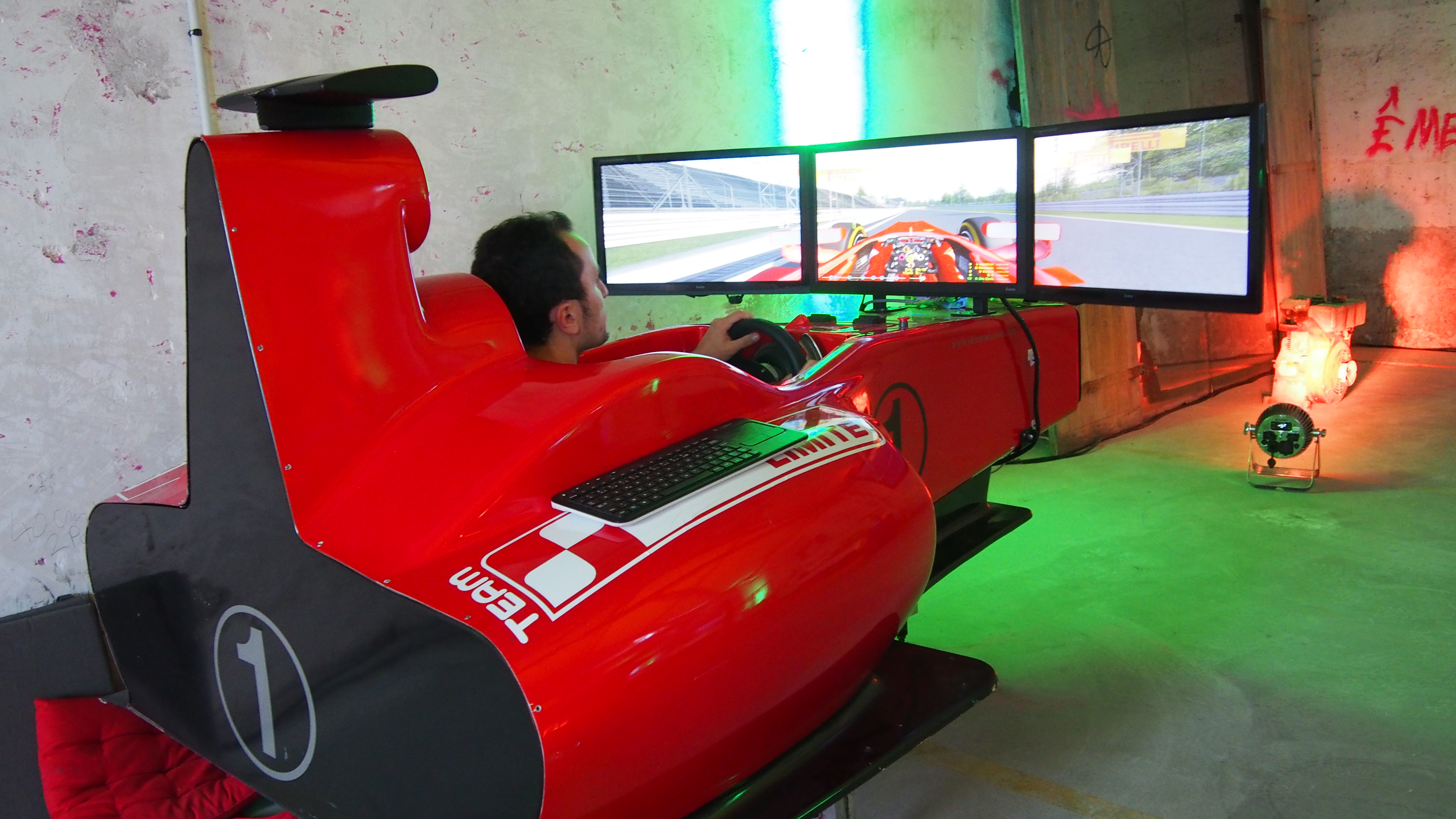
INNOV'events numbers that matter for Luik deliveries
10+ years producing corporate events across Belgium, with repeat clients in industry, services and public organizations.
150+ events/year within our network production capacity (including partner teams), allowing quick mobilization in Luik even on tight timelines.
30u0012600 attendees is the standard operating range for our Virtual Reality in Luik formats, with throughput planning per minute, not just per hour.
2u00126 VR stations per activation as a typical baseline, expandable with mirrored screens and queue design to avoid dead time.
Local references in Luik and recurring collaborations
We regularly support organizations active in Luik and the wider Liu0000ge areau0014including groups who run recurring moments (annual kick-offs, safety days, open days, internal roadshows) and want continuity from one edition to the next. In practice, this means we keep operational notes: which loading bay is usable, what time security opens, where power is stable, and what room layout actually works when the venue is full.
You mentioned providing company names as references; once you confirm the exact list, we will integrate them here in a compliant way (e.g., u0000delivered VR engagement zone for [Company], 180 staff, Palais des Congru0000s areau0000). We do not invent logos or client namesu0014we only publish references you validate.
This local anchoring is not a slogan: it is the ability to arrive in Luik with a plan that already anticipates traffic peaks, venue access restrictions, and the real pace of corporate events where the agenda is rarely perfectly on time.
 Besoin d’un devis rapide ?
Nous vous envoyons une première proposition sous 24h.
Why run Virtual Reality in Luik for management objectives
Executives and HR leaders rarely ask for u0000VRu0000. They ask for outcomes: alignment, retention, culture, safety behavior, or client intimacy. Virtual Reality in Luik becomes strategic when it is used as a deliberate touchpoint inside your agendau0014with clear entry conditions, a facilitated experience, and a debrief that converts a u0000wowu0000 into something you can act on.
Higher message retention during dense programs: on conference days with multiple talks, a VR module creates a cognitive break while keeping guests within your narrative (brand, product, values). We typically position VR right after a key plenary to reinforce the message with a concrete experience.
Faster informal networking: VR naturally creates small groups around a station (players + observers). For communication teams, this is valuable because it generates spontaneous conversations between departments that otherwise do not mix.
Employer branding with proof, not claims: for recruitment or onboarding, a VR simulation of a work environment, safety routine or customer interaction gives candidates and newcomers a realistic preview without operational disruption on site.
Behavioral training without operational risk: for industrial or logistics contexts around Luik, VR is effective for safety awareness, hazard spotting or process trainingu0014especially when real-life training is costly, time-constrained or risky.
Executive-level control: VR activations can be instrumented with simple metrics (number of participants, average cycle time, completion rate, top scores for challenges). This helps management justify budget beyond u0000people liked itu0000.
Luik has a pragmatic economic culture: industry, logistics, engineering, healthcare, higher education and public institutions coexist and expect professionalism. When VR is framed as a tool to support performance, safety or communicationu0014and executed with tight operationsu0014it fits this culture naturally.
What organizations in Luik expect from a VR activation
In Luik, decision-makers tend to validate projects that are operationally solid and respectful of constraints on the ground. We often see three recurring expectations.
1) Throughput that matches the agenda. If you have 250 participants and only a 90-minute networking slot, you cannot run a u000010-minuteu0000 VR experience with one headset and hope everyone participates. We calculate capacity: onboarding time, average play time, reset time, and the reality that some guests will hesitate. Then we propose the right mix: multiple stations, short modules (2u00124 minutes), mirrored screens, or a tournament format that makes u0000watchingu0000 part of the experience.
2) Integration with bilingual and multi-stakeholder audiences. Many events in Luik host mixed profiles: operational teams, management, partners, public actors, and sometimes international guests. We plan facilitation scripts in FR and EN (and NL if required), clear signage, and a welcome flow that avoids embarrassment for guests who are less comfortable with technology.
3) Risk management and professionalism. HR and prevention advisors are increasingly strict about hygiene, cable management, and participant safety. We build a clean footprint: taped runs or cable covers, disinfectable face interfaces, queue management, and a u0000stop rulesu0000 brief to hosts (motion discomfort, glasses compatibility, age limits where relevant). This is especially important in venues where space is premium or where foot traffic crosses the activation zone.
Finally, local stakeholders expect transparency: what content is used, what data is collected (ideally none beyond simple participation counts), what the contingency plan is if a headset fails, and how fast we can recover without killing the ambiance. These are operational questionsu0014and they are the difference between a VR corner that works and one that creates stress for your team.
Which corporate event entertainment in Luik pairs well with VR
Entertainment works when it supports the social mechanics of your event: participation, conversation, and shared reference points. In Luik, we often combine Virtual Reality with formats that keep non-players engaged, protect schedule discipline, and maintain a professional tone aligned with your brand.
Animations Interactives à Luik
VR team challenge with live leaderboard: short missions (2u00123 minutes) where teams accumulate points. We project the scoreboard on a screen so observers stay involved. This works well for kick-offs and department gatherings where friendly competition is acceptable.
Mixed reality product demo (VR + physical touchpoints): participants explore a product in VR, then immediately handle a real component or sample. This is effective for B2B launches because it bridges u0000immersiveu0000 with u0000credibleu0000.
Safety or compliance micro-scenarios: rapid VR sequences focusing on hazard identification. We add a short facilitated debrief so the experience results in a clear takeaway rather than u0000a gameu0000.
Animations Artistiques à Luik
Visual performer + VR corner: a discreet roaming visual act (e.g., LED or light-based performance) can maintain atmosphere while VR stations run at their own pace. We keep sound levels controlled so facilitators remain audible.
Live illustration of VR moments: an illustrator captures key scenes (participants, brand elements, venue) for internal comms. This helps communication teams produce post-event assets without relying only on photos of headsets.
Animations Innovantes à Luik
Structured tasting aligned with VR timing: a guided tasting station positioned near VR can absorb queues and keep guests comfortable. The key is controlling flow so food service does not create congestion around equipment.
Local Liu0000ge-inspired touches: where appropriate, we integrate regional products (e.g., a pairing corner) as a cultural anchor, especially for international guests. We position it as hospitality, not a distraction.
Animations Gourmandes à Luik
Branded VR capture for internal communication: we mirror the VR view to a screen and capture short clips for your recap video. This solves a common frustration: u0000VR is hard to show afterwardsu0000.
Two-speed VR programming: a u0000discoveryu0000 mode (90 seconds) for high throughput and a u0000deep diveu0000 mode (5u00127 minutes) scheduled for VIPs or smaller groups. This keeps both scale and quality.
Hybrid keynote + VR station: speakers introduce a concept, then attendees test it in VR immediately after. This structure is effective for change programs because it links narrative and experience.
The key is coherence: the VR format, facilitation tone, and complementary entertainment must match your brand image and the event purpose. A leadership summit in Luik needs a different rhythm than a family day or a recruitment eventu0014and we plan the activation accordingly.
Where to host Virtual Reality in Luik for the right perception
The venue determines how your Virtual Reality activation will be perceived: premium innovation lab, practical training tool, or casual entertainment. In Luik, we pay particular attention to access logistics (loading, lifts, time windows), power availability, and acoustic conditionsu0014because VR needs calm facilitation and stable technical basics.
| Venue type | For which objective? | Main strengths | Possible constraints |
|---|---|---|---|
Conference centers / auditoriums (with foyers) | Executive conferences, client events, plenary-heavy agendas | Professional infrastructure, predictable power, good crowd flow options in foyers for VR stations | Foyer space can be tight during coffee breaks; noise peaks require careful placement and signage |
Industrial sites or company premises in the Liu0000ge area | Safety days, onboarding, operational communication | High relevance, easier storytelling, strong authenticity for HR and prevention topics | Access/security procedures, PPE requirements, limited guest comfort zones; power and network sometimes constrained |
Hotels with modular meeting rooms | Management offsites, training days, smaller mixed audiences | Controlled environment, easier scheduling, good for seated simulators and structured debriefs | Room sizes vary; low ceilings or pillars can limit free movement; need to protect guest flow during check-in |
We recommend a short site visit (or a technical call with photos and a floor plan if time is short). In Luik, small detailsu0014like where coffee service is placed or how guests enter the roomu0014can make or break throughput and the perceived professionalism of the activation.
What does Virtual Reality in Luik cost for a corporate event
Budget for Virtual Reality in Luik depends less on the headset brand and more on operational parameters: number of stations, event duration, staffing, content type, and the level of branding or reporting you need. We quote transparently so procurement and management can compare like-for-like.
Number of VR stations and expected throughput: 1 station can handle roughly 8u001218 participants/hour depending on onboarding and scenario length. High-attendance events often require 2u00126 stations plus queue design and a mirrored screen.
Content type: off-the-shelf experiences are cost-effective for engagement; bespoke scenarios (e.g., product simulation, safety training reflecting your environment) require additional production and validation time.
Duration and schedule constraints: a 2-hour cocktail activation is different from a full-day conference with multiple peaks. Longer events increase staffing and contingency needs.
Branding and integration: custom intro screens, branded environment elements, or a full narrative aligned with a communication campaign requires creative and technical work, plus approvals.
Venue constraints in Luik: difficult access, long carry distances, strict time windows, or limited power can increase production time and crew requirements.
Compliance and comfort: hygiene consumables, disposable face interfaces when requested, and extra hosts for crowd management are often worth the cost to protect reputation.
From an ROI perspective, we encourage clients to define one measurable objective (e.g., participation rate, number of qualified conversations at a launch, safety quiz score uplift) and build the VR format around it. This keeps the investment defensible for executives and makes the debrief actionable, not subjective.
Why choose an event agency in Luik for VR execution
VR is an operational service: it is sensitive to room layout, guest flow, access timing and on-site coordination. Working with a team that is used to delivering in Luik reduces friction across the whole chainu0014from scouting to event-day decisions.
At INNOV'events, we combine Brussels-based production discipline with frequent on-the-ground delivery in Luik. When clients need broader support beyond VR (AV coordination, registration flow, speaker timing, catering synchronization), we can integrate the activation into a full event plan through our local ecosystem and our dedicated page for event agency in Luik.
The practical advantage: faster site checks, better anticipation of local venue rules, and shorter reaction time if something changes (a room switch, a delayed plenary, a stricter security perimeter). For HR and communication teams, this translates into less internal stress and fewer last-minute escalations.
- Local logistics mastery: access routes, loading constraints, realistic set-up/tear-down windows in Luik venues.
- Reliable staffing: hosts and technicians who understand corporate codes (discretion, timing discipline, bilingual facilitation when needed).
- Stronger vendor coordination: smoother alignment with AV, venue managers, caterers and security teamsu0014critical when the agenda is tight.
- Better contingency response: if a station must be relocated or a queue becomes disruptive, decisions are made quickly and implemented cleanly.
From an ROI perspective, we encourage clients to define one measurable objective (e.g., participation rate, number of qualified conversations at a launch, safety quiz score uplift) and build the VR format around it. This keeps the investment defensible for executives and makes the debrief actionable, not subjective.







Examples of Virtual Reality projects delivered around Luik realities
Our VR projects vary because corporate needs vary. In practice, we deliver formats that balance engagement, throughput and brand control.
Conference VR corner with high guest flow. Typical context: a plenary day where guests have two networking peaks (morning and late afternoon). We deploy 2u00124 stations with a 2u00123 minute experience, mirrored display, and a host dedicated to queue and onboarding. The key operational choice is not the u0000coolestu0000 scenario; it is the scenario with the shortest learning curve and the most consistent completion rate.
HR onboarding experience for mixed profiles. When audiences include both office staff and field teams, we avoid anything that feels childish or overly game-like. We run guided VR modules with a short debrief and we ensure accessibility: glasses-friendly, seated option, and a respectful facilitation script that does not pressure reluctant participants.
Safety awareness activation. In industrial and logistics environments common near Luik, we focus on clarity: what behavior should change after this experience? We integrate simple pre/post questions or a short quiz, and we make sure prevention stakeholders validate the messaging. The success metric is participation and understanding, not adrenaline.
Client-facing product storytelling. For B2B launches, we build a controlled narrative: intro, VR immersion, and a physical demo or expert conversation immediately after. This structure helps sales teams because it creates a natural u0000handover momentu0000 from experience to discussion.
Common VR mistakes we prevent in Luik corporate events
Underestimating throughput: one headset for 300 guests leads to frustration and a perception of poor organization. We model capacity and propose the right station count and experience length.
Placing VR in a high-noise bottleneck: foyers near coffee bars can become too loud for proper briefing. We pick locations where facilitators can be heard and guests can move safely.
No clear participant journey: without welcome, briefing and exit flow, queues block catering and irritate venue teams. We design the flow like a mini-process.
Ignoring comfort and motion sensitivity: some experiences create discomfort and quietly damage your event perception. We select scenarios with stable comfort profiles and provide opt-out alternatives.
Weak ownership on-site: when no one is responsible for VR coordination, it becomes the first thing to be cut when the agenda slips. We assign a lead who adapts in real time without escalating to your executives.
Unclear data and privacy handling: corporate audiences do not want surprise data capture. We keep data minimal and transparent, aligned with your internal policies.
Our role is to remove these risks before they show up in front of your CEO, your HR director, or your clients. In Luik, the standard is professionalismu0014and we treat VR with the same rigor as any technical production.
Why Luik clients renew VR activations year after year
Renewal is rarely about novelty alone. Clients come back when an activation is predictable, safe, and easy to integrate into internal processesu0014especially when different stakeholders (HR, Comms, Prevention, Procurement, IT, Venue) all have a say.
1 single operational contact from briefing to event day, reducing internal coordination cost for your team.
30u001260 minutes typical on-site staff briefing time for hosts and technicians, ensuring consistent tone and safety rules.
0 critical-path dependency on Wi-Fi when required: offline builds and pre-tested devices to avoid last-minute network issues.

Loyalty is proof of quality because it means the activation survived real-world pressure: changing agendas, late speakers, crowded foyers, and executive scrutiny. That is the environment we plan for in Luik.
Our production process for Virtual Reality in Luik
👉 Step 1 u0014 Operational briefing aligned to Luik constraints
We start with your event objectives and constraints: audience size, agenda, venue, language mix, brand tone, and success criteria. We ask specific questions executives care about: what should participants do differently after the event, what reputational risks are unacceptable, and what the internal approval chain looks like. For Luik deliveries, we also validate access windows, parking/loading, and any union/security rules that can affect timing.
👉 Step 2 u0014 Scenario selection and throughput model
We propose a short list of VR scenarios based on learning curve, comfort profile, and relevance. Then we model throughput with real timing assumptions: briefing, fit, play, reset. The output is a capacity plan (participants/hour) and a recommended number of stations. This prevents the most common failure: a u0000great demou0000 that only 20 people can actually do.
👉 Step 3 u0014 Layout, flow and safety plan
We design the footprint: station placement, queue direction, screen positioning for observers, cable management, and hygiene procedure. We coordinate with the venue on power circuits and avoid high-traffic conflict zones (catering exits, emergency routes). For corporate environments, we also align on accessibility and opt-out alternatives.
👉 Step 4 u0014 Staffing and tone of facilitation
We assign trained hosts and a technical lead. We write a facilitation script consistent with your brand (executive summit vs. informal staff event). On the day, hosts manage onboarding, comfort checks, and rhythm so the activation supports the agenda rather than competing with it.
👉 Step 5 u0014 Event-day operations and contingency
We deliver, test and run the activation with spares and fallback options. If a schedule slips, we adapt: shorten cycles, switch to discovery mode, or reallocate stations to protect throughput. The goal is that your internal team does not have to firefight technology in front of guests in Luik.
👉 Step 6 u0014 Debrief and reporting
Within a defined timeframe after the event, we share participation metrics and operational feedback: what worked, what to improve, and recommendations for the next edition. For HR/Comms, we can also suggest how to reuse content (captured mirrored footage, key messages) for internal communications while respecting privacy.
FAQ sur l'organisation Virtual Reality à Luik
How many VR stations do we need in Luik?
As a rule, plan 1 station per 60u0012120 guests for a cocktail-style slot, depending on scenario length. A typical station delivers 8u001218 participants/hour. For 250 attendees with a 90-minute peak, we usually recommend 3u00125 stations plus a mirrored screen to keep observers engaged.
What is a realistic budget for Virtual Reality in Luik?
For corporate events in Luik, many projects fall between u00002,500 and u000012,000, depending on stations (1u00126), duration (2 hours to full day), staffing, and branding. Bespoke VR content can add a separate production budget, typically starting around u00008,000u0000+ depending on complexity and validation cycles.
How do you manage safety and hygiene in Luik venues?
We implement a fixed flow: briefing, comfort check, supervised play, and controlled exit. We use cable covers/taping, define a safe play zone, and disinfect contact points between users. We also plan opt-out alternatives and stop rules for motion discomfort. This is handled by trained hosts so your team does not need to police the activation.
Can VR support HR onboarding or safety days in Luik?
Yes. VR is effective for onboarding previews and safety awareness because it standardizes the experience across groups. For safety days around Luik, we typically use short hazard-spotting scenarios with a facilitated debrief and simple metrics (participation, completion, top errors) to make outcomes concrete.
How early should we book Virtual Reality in Luik?
For a standard activation with existing content, booking 3u00126 weeks ahead is usually workable. For peak dates (end-of-year, major internal kick-offs) or multi-station set-ups, plan 6u001210 weeks. If you want custom content or strong branding integration, plan 8u001216 weeks to allow approvals and testing.
Request a VR proposal for Luik with a clear operating plan
If you are comparing agencies, we suggest starting with three inputs: attendee count, agenda structure (time slots), and venue shortlist in Luik. With that, we can propose the right VR format, the number of stations, staffing, a timing model, and a transparent budgetu0014including contingencies.
Contact INNOV'events to schedule a short scoping call. Early planning is the simplest way to secure the right equipment, the right hosts, and a delivery plan that protects your brand on event day.
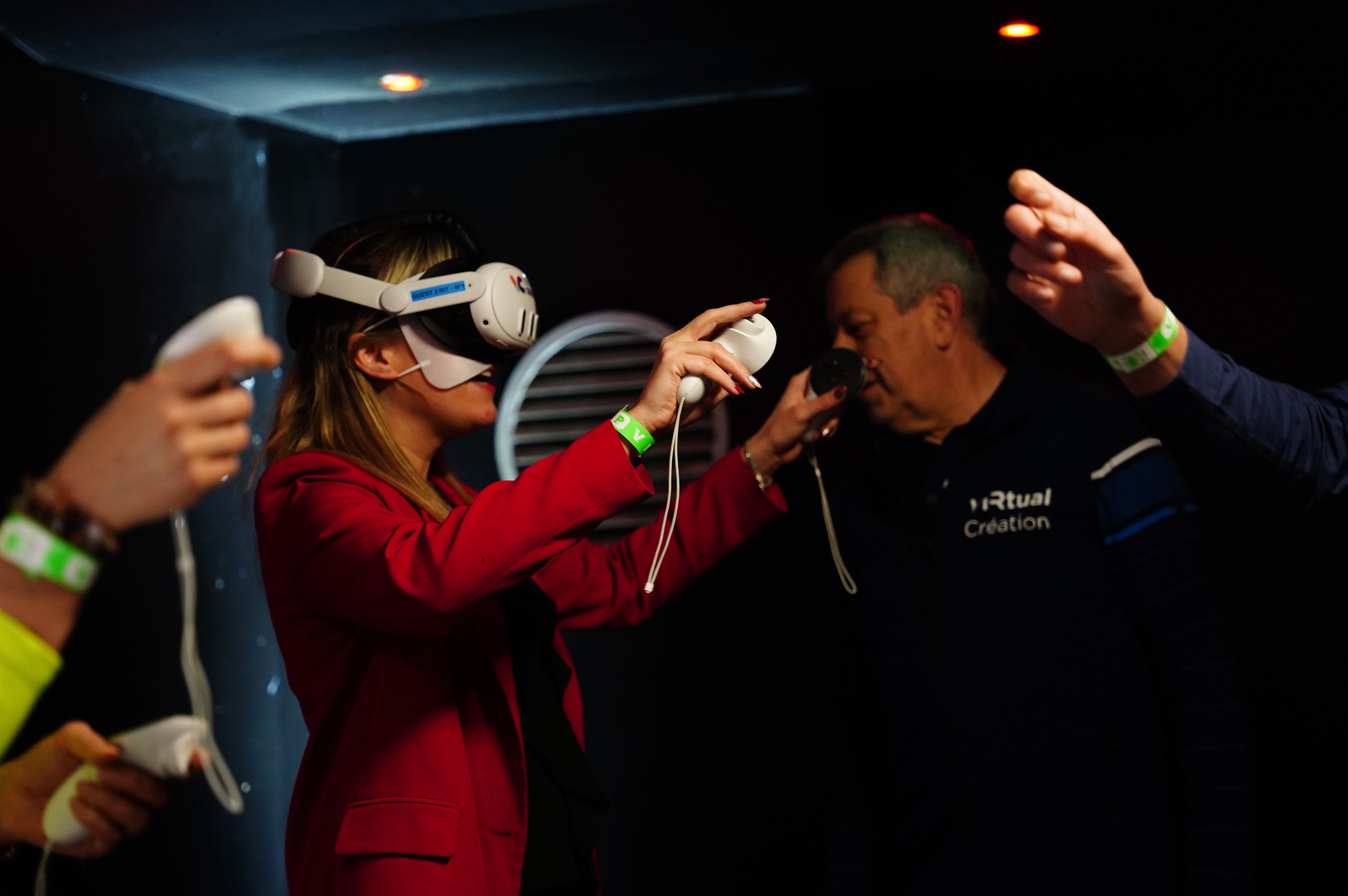
Agence INNOV'events Luik
Justin JACOB est le responsable de l'agence événementielle Luik. Contactez-le directement par mail via l'adresse belgique@innov-events.be ou par formulaire.
Contacter l'agence LuikToutes nos prestations & animations Luik, Belgique
Découvrez nos prestations événementielles
Découvrez nos animations événementielles disponibles au Belgique
- Hôtesse événementielle à Luik
- Escape Game à Luik
- Cours de cuisine type MasterChef à Luik
- Magicien à Luik
- Location de chapiteau à Luik
- Atelier colorimétrie à Luik
- Jeux gonflables à Luik
- Service de voiturier à Luik
- Simulateur de football à Luik
- Location de mobilier lumineux à Luik
- Flocage lumineux à Luik
- Repas insolite à Luik
- Light Painting à Luik
- Murder Party à Luik
- Jeu concours à Luik
- PLV événementielle à Luik
- Réalité virtuelle à Luik
- Cuisine moléculaire à Luik
- Animation Halloween à Luik
- Feu d’artifice à Luik
- Jeux géants à Luik
- Animateur événementiel à Luik
- Animation photo à Luik
- Père Noël à Luik
- Animation enfants à Luik
- Visite guidée à Luik
- Rallye urbain à Luik
- Piscine à balles à Luik
- Simulateur de vol à Luik
- Location de food truck à Luik
- Record du monde à Luik
- Simulateur de surf à Luik
- Casino du vin à Luik
- Atelier relooking à Luik
- Atelier création de parfum à Luik
- Atelier acting à Luik
- Animations RSE à Luik
- Tir à l’arc à Luik
- Agent de sécurité à Luik
- Œnologie à Luik
- Mime à Luik
- Jeu télévisé à Luik
- Fête foraine à Luik
- Atelier gestion de crise à Luik
- Atelier négociation de crise à Luik
- Jeux d’arcade à Luik
- Simulateur de chute libre à Luik
- Simulateur de ski à Luik
- Simulation circuit automobile à Luik
- Baptême de l’air à Luik
- Dégustation à Luik
- Création de baby-foot à Luik
- Rallye 2CV à Luik
- Challenge LEGO à Luik
- Animation casino à Luik
- Interprète / traducteur à Luik
- Goodies à Luik
- Bus / transfert à Luik