
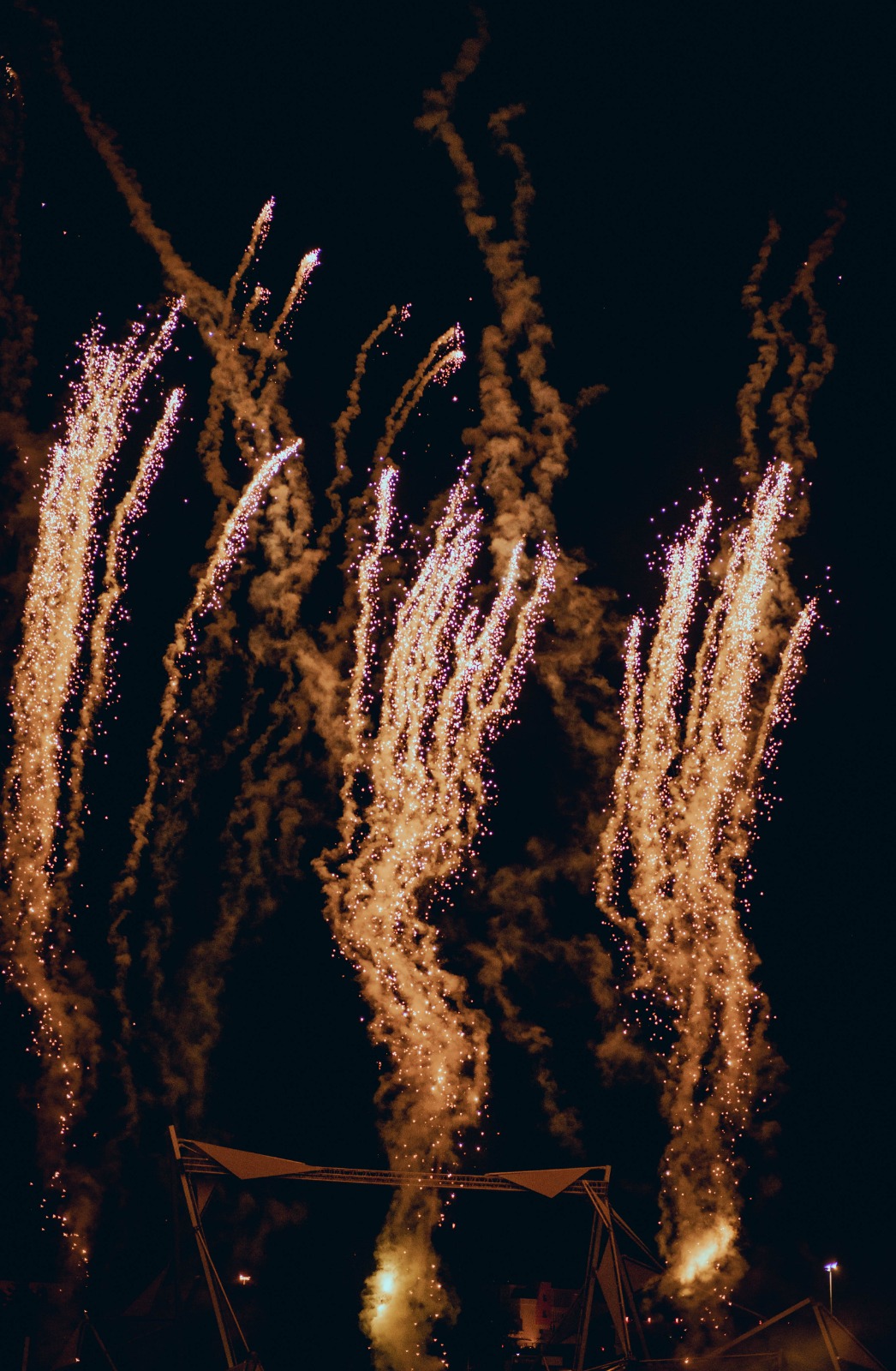
Vuurwerkshow in Luik that stays compliant, safe and on schedule
Sommaire
In a corporate event, entertainment is not “nice to have”: it is a strategic lever for attention, internal pride and message retention. A Vuurwerkshow creates a shared peak moment that helps leadership anchor a change, a milestone or a recognition program in one clear, memorable sequence.
In Luik, organisations typically expect a show that is spectacular but discreetly managed: no last-minute surprises with authorities, no sound or fallout issues with neighbours, and a tight integration with dinner, speeches and transport windows. Decision-makers also want predictable risk management and a supplier who can speak operations, not slogans.
From our Brussels base, we deploy production teams on the ground in Luik with local site knowledge and a tested network of compliant pyrotechnic partners. Our role is to protect your agenda: we plan the technical constraints early, secure the correct authorisations, and deliver a show-night execution that your executives can trust.
Operational credibility for projects in Luik
10+ years of corporate event production across Belgium, with recurring clients in industry, services and public-sector ecosystems.
150+ corporate events/year delivered through our Brussels hub and trusted partner network (AV, staging, catering, security, pyrotechnics).
24/7 show-weekend availability with a documented escalation path (production lead, safety lead, venue contact, pyrotechnic chief).
One integrated run-of-show: speeches, cues, music, lighting, security, crowd flow and transport aligned to the second.
Who we support across Luik’s corporate ecosystem
We work with organisations active in Luik and the wider Liège area that need executive-grade delivery: industrial sites with strict HSE culture, scale-ups hosting investor or recruitment moments, and institutions organising protocol-heavy receptions. Many collaborate year after year because they value predictability: clear documentation, early risk identification, and a show that respects site constraints (access, noise, proximity of housing, waterways, and traffic).
If you share the company names you want us to cite as local references, we will integrate them here in a sober, credible way (sector, event type, and the operational challenge solved), without disclosing sensitive information.
 Besoin d’un devis rapide ?
Nous vous envoyons une première proposition sous 24h.
What a Vuurwerkshow changes for leadership teams in Luik
A well-produced Vuurwerkshow in Luik is not just a finale; it is a management tool. It creates a single, controlled peak moment that senior leaders can use to reward performance, mark a transformation, or close a conference day with unity and clarity.
Executive messaging with a clear “moment of truth”: when the show is scripted with your speech and music cues, it turns a generic closing into a deliberate leadership signal (recognition, merger, safety milestone, anniversary).
Employee engagement you can feel on site: on internal events, we often see the biggest impact in cross-site cohesion—teams that rarely meet share a concrete emotional high point, which improves informal networking afterwards.
Stakeholder reassurance: for clients, partners, and elected officials, a compliant, well-framed show demonstrates operational maturity. In territories like Luik where industry and institutions coexist, professionalism matters as much as spectacle.
Better control of the end-of-event flow: a finale creates a natural “closing arc” that helps you manage bar consumption, transport waves, and a disciplined wrap-up without forcing people out.
Content value without chaos: if planned, the show becomes a clean asset for internal comms (intranet, LinkedIn, recruitment), with controlled camera points, safe distances and brand-consistent sound design.
Luik is a pragmatic, engineering-driven territory: people respect what is well executed, safe, and correctly authorised. When the production is tight, the show supports your credibility rather than distracting from it.
Which local constraints matter most in Luik
In Luik, the feasibility of a Vuurwerkshow is often decided by practical constraints rather than creative intent. We start with a site-and-context diagnosis: proximity of housing, traffic axes, waterways, sensitive infrastructure, and the venue’s own insurance and safety rules.
Local stakeholders can include the venue operator, municipal services, police, fire services, and—depending on the exact zone—specific environmental or navigation constraints. Your internal HSE team may also impose requirements beyond legal minimums (wind thresholds, fallout management, debris checks, exclusion zone signage, and emergency procedures). We integrate all these elements early to avoid the typical corporate nightmare: a late “yes, but…” that forces last-minute downscaling or cancellation.
Another local reality: guest mobility. If your event involves guests coming from Brussels, Antwerp, Maastricht or Luxembourg, the end time must respect transport windows. We therefore build the show duration and its placement (before dessert vs. after speeches) around your operational constraints, not the other way around.
Which corporate entertainment pairs well with a show in Luik
Entertainment works when it supports your event objective: recognition, recruitment, client trust, or change management. In Luik, we often combine a Vuurwerkshow with formats that keep guests engaged before the finale and create a coherent narrative rather than a “random acts of fun” sequence.
Animations Interactives à Luik
Leadership Q&A with live polling: ideal after a plenary, especially when you need to capture sentiment (post-merger, new strategy, safety program). We manage the technical flow so it remains respectful and time-boxed.
Guided networking circuits: for client events, we structure introductions by theme (innovation, procurement, sustainability) with host facilitators—useful in a territory where industrial and institutional stakeholders mix.
On-site content studio: short executive interviews and team testimonials recorded in a controlled setup, then released internally the next day. This is often more valuable than a generic highlight reel.
Animations Artistiques à Luik
Live music with cue discipline: a quartet during reception, then a tighter band/DJ set that ends exactly when the fireworks start. The operational gain: fewer schedule drifts and cleaner transitions.
Light scenography on façades: architectural lighting or projection mapping to frame the outdoor zone and guide guest movement. Particularly effective when the venue has a strong industrial aesthetic (brick, steel, riverfront).
Animations Innovantes à Luik
Timed dessert reveal: dessert service can be the biggest source of delay. We coordinate catering pass timing so speeches and the Vuurwerkshow stay on schedule.
Local pairing bar: curated Belgian pairings (including non-alcoholic options) with controlled service rhythm. It improves experience without pushing consumption at the wrong time.
Animations Gourmandes à Luik
Drone light show feasibility check: where noise constraints are strict, we assess whether a drone sequence is feasible (airspace, take-off zone, weather). Sometimes it complements a shorter fireworks segment.
Silent outdoor disco after the show: headphones reduce neighbour impact while keeping energy high. This is a practical option when the venue is close to residential areas in Luik.
The key is alignment with your brand image: an industrial group may prioritise precision and safety messaging; a service company may prefer elegance and controlled emotion; a public institution may need protocol and neutrality. We design entertainment so it reinforces what you want to be known for—especially when guests will film and share.
Where can a Vuurwerkshow be launched safely around Luik venues
The venue is not a backdrop; it is a technical constraint. For a Vuurwerkshow in Luik, the right setting is the one that provides a compliant launch zone, clean spectator lines, and controlled access—while keeping neighbours, traffic and emergency access in mind.
| Venue type | For which objective? | Main strengths | Possible constraints |
|---|---|---|---|
Riverfront or waterside sites (quays, docks, waterfront terraces) | Prestige client evening, anniversary, executive hospitality | Open sightlines, strong “stage” effect, easier crowd orientation | Navigation/safety constraints, wind exposure, stricter coordination with authorities |
Industrial or business park venues with private outdoor space | Employee celebration, safety milestone, plant anniversary | Controlled access, strong HSE culture, easier logistics and security perimeter | Noise constraints if near housing, internal compliance layers, limited guest parking |
Castles, estates and large gardens in the Liège area | High-end gala, awards night, partner reception | Elegant setting, good photo value, natural guest journey outdoors | Heritage restrictions, neighbour sensitivity, limited load-in and power access |
We strongly recommend a site visit in Luik with the venue and the pyrotechnic lead. It avoids wrong assumptions about distances, wind corridors, guest flow, and access for emergency vehicles—elements that directly determine feasibility, budget and safety.
What budget to plan for a corporate show in Luik
Pricing for a corporate Vuurwerkshow in Luik depends less on “minutes of fireworks” and more on constraints: launch configuration, safety perimeter, permits, access, and production requirements. We prefer to quote transparently with line items you can defend internally (procurement, legal, HSE).
Show format and duration: corporate shows commonly range from 3–8 minutes for a controlled finale to 8–12 minutes for major anniversaries, depending on venue context and neighbour tolerance.
Launch location complexity: rooftop vs. ground launch, distance to spectators, and the need for reinforced barriers or elevated firing positions.
Authorisations and compliance workload: documentation, safety plans, and stakeholder coordination can be significant in dense areas of Luik.
Safety and staffing: certified pyrotechnicians, additional fire watch if required, security for exclusion zones, and an on-site production manager.
Weather contingencies: contingency planning, alternate dates, and cancellation/postponement conditions that protect your financial exposure.
Integration with AV: music synchronization, timecode cues, PA delays outdoors, and lighting blackout requirements so the show reads cleanly.
From an ROI perspective, the question is not only “how much does it cost?” but “what risk does it remove and what message does it secure?”. When the finale is compliant and controlled, it protects brand reputation, avoids operational disruption, and delivers a clear peak moment that increases perceived event value without extending the program.
When does a Luik-based partner make a real difference
For pyrotechnics, local execution matters because decisions are site-specific and time-sensitive. Working with a partner who is operationally present in Luik reduces risk on three fronts: coordination with venues and local stakeholders, realistic planning based on the site’s constraints, and faster problem-solving during setup day.
At INNOV'events, we bring Brussels-level project structure and deploy locally with the right partners. If you need an agency presence rooted in the city, we can operate as your single point of contact while coordinating local specialists through our network—so your team does not have to arbitrate between multiple suppliers.
For readers comparing providers: ask how they handle permits, who signs off the safety plan, who is on site during firing, and what happens if weather changes. Those answers reveal whether the agency is truly operational or only commercial. If you want to evaluate our local coordination approach, see our event agency in Luik overview.
- Shorter decision loops: faster access to site information, realistic setup timings, and fewer assumptions.
- Supplier accountability: one production lead responsible for schedule, security interfaces and the pyrotechnic chief’s requirements.
- Better risk anticipation: knowledge of typical neighbour sensitivity patterns, access constraints and venue operating rules seen in the Liège area.
From an ROI perspective, the question is not only “how much does it cost?” but “what risk does it remove and what message does it secure?”. When the finale is compliant and controlled, it protects brand reputation, avoids operational disruption, and delivers a clear peak moment that increases perceived event value without extending the program.





What we have delivered for corporate events in Luik contexts
Our productions range from executive dinners with a short, high-precision outdoor finale to large employee events where crowd flow and transport are the main operational challenge. In practice, the complexity is rarely the firing itself; it is the integration: keeping speeches on time, coordinating catering pass, managing lighting blackouts, and ensuring security teams enforce the perimeter without creating friction with guests.
Typical situations we handle include: a last-minute program shift because an executive train is delayed; a venue requiring stricter exclusion zones than initially assumed; a wind forecast pushing us to re-angle launch positions; or a corporate client needing a lower-noise profile due to nearby residential streets. In each case, we rely on pre-approved scenarios and a clear chain of command so leadership is not forced into improvised decisions in front of guests.
We can share anonymised case outlines (objectives, constraints, setup plan, and show-night timeline) during a call, which is usually what procurement and HSE teams need to validate feasibility.
Which risks companies in Luik should avoid
Choosing a venue before checking launch feasibility: we often see companies sign a venue contract and only then discover that the exclusion distances cannot be met.
No single run-of-show owner: when AV, catering, security and pyrotechnics work in silos, cues drift and the show starts late or in poor conditions (too much ambient light, guests scattered).
Underestimating neighbour and noise sensitivity: in some Luik areas, complaints escalate quickly if communication is absent or the schedule slips beyond the announced time.
Weak weather decision framework: the worst operational moment is debating “go/no-go” in front of VIPs. Clear thresholds and an alternative plan must be agreed in advance.
Insurance and liability ambiguity: you need clarity on who covers what (pyrotechnic supplier, venue, organiser), and documented attestations before show day.
Guest flow not managed: bar lines, smoking areas and photo hunting can cause guests to drift into risk areas if the perimeter is not enforced with tact and signage.
Our role is to prevent these risks with early feasibility checks, written safety documentation, and disciplined show-night production—so you can focus on hosting, not firefighting.
Why corporate clients renew projects in the Luik area
Repeat business is rarely about creativity alone; it is about reliability under pressure. Clients come back when the agency consistently protects the agenda, manages stakeholders calmly, and documents decisions so internal teams can defend them.
High repeat rate on annual moments (end-of-year events, safety awards, anniversaries) where the organisation wants the same operational rigour with fresh execution.
Reduced internal workload: clients typically report fewer last-minute escalations once the permit/safety/production workflow is standardised.
Vendor continuity: consistent crews and documentation improve setup speed and reduce site friction over time.

Loyalty is proof of quality because it is earned in the hardest context: when your leadership team expects the same result every time, with zero tolerance for compliance or timing surprises.
How we produce a corporate Vuurwerkshow project in Luik
👉 Feasibility call and objective framing in Luik
We start with a structured intake: event objective (internal vs. client), guest count, venue short-list, desired timing, and brand constraints (noise profile, music tone, protocol). We identify immediate blockers (site size, proximity of housing, access) and propose realistic scenarios.
👉 Site visit, perimeter design and technical concept
On site in Luik, we map the launch zone, spectator areas, access routes, and emergency lanes. We define the safety perimeter and the operational layout (barriers, signage, staff positions). Only then do we design the show content (effect type, height, pace) that fits the site.
👉 Permits, insurance and documentation pack
We consolidate the documents your legal/procurement/HSE teams will ask for: risk assessment, site map with zones, insurance attestations, supplier certifications, and the draft run-of-show. We set deadlines and owners so nothing is left to the last week.
👉 Production build: AV cues, crowd flow, staffing
We integrate the Vuurwerkshow into the full event production: music playback, lighting blackout cues, MC script, catering timing, security briefing, and guest movement plan. We also agree the weather thresholds and decision authority (who can postpone/cancel and at what time).
👉 Show day execution and post-show handover
We run a disciplined setup with safety checks, perimeter installation, and a final coordination briefing (venue, security, AV, pyrotechnic chief). After the show, we manage cool-down, site inspection and a clean handover, then provide debrief notes if needed for internal reporting.
FAQ sur l'organisation Vuurwerkshow à Luik
How early should we book a Vuurwerkshow in Luik?
Plan 6–10 weeks ahead for a straightforward venue; 10–16 weeks if the site is dense, near housing, or requires heavier stakeholder coordination. For peak dates (June–September, December), earlier is safer.
What show duration works best for corporate events in Luik?
Most corporate finales are 3–8 minutes: long enough to feel substantial, short enough to control noise, timing and guest flow. Major anniversaries can go 8–12 minutes if the site context allows it.
Can we run a Vuurwerkshow in Luik if wind is strong?
It depends on the launch layout and the safe fallout direction. We define wind thresholds in advance with the pyrotechnic chief. If thresholds are exceeded, options are typically: shorten the show, change angles/positions, or postpone/cancel under pre-agreed conditions.
What information do you need to quote in Luik?
Venue address (or shortlist), guest count, preferred time slot, whether it’s indoor/outdoor reception, any noise sensitivity, and whether the venue already hosted fireworks. With that, we can propose scenarios and a budget range, then confirm after a site check.
Who is responsible for safety during a Luik fireworks show?
The certified pyrotechnic team is responsible for the firing operations and technical safety, while the organiser/agency manages the event perimeter, crowd control interfaces, and coordination with venue and security. We clarify responsibilities in writing and align them with the venue’s rules and your internal HSE expectations.
Request a feasibility check for your Luik event date
If you are considering a Vuurwerkshow in Luik, the fastest way to de-risk the project is a short feasibility review: venue context, launch options, safety perimeter, stakeholder timeline, and a budget range you can validate internally.
Send us your date, guest count, and venue (or shortlist). We will respond with a clear recommendation—what is realistic, what needs early decisions, and how to keep the show compliant and on schedule.
Agence INNOV'events Luik
Justin JACOB est le responsable de l'agence événementielle Luik. Contactez-le directement par mail via l'adresse belgique@innov-events.be ou par formulaire.
Contacter l'agence LuikToutes nos prestations & animations Luik, Belgique
Découvrez nos prestations événementielles
Découvrez nos animations événementielles disponibles au Belgique
- Hôtesse événementielle à Luik
- Escape Game à Luik
- Cours de cuisine type MasterChef à Luik
- Magicien à Luik
- Location de chapiteau à Luik
- Atelier colorimétrie à Luik
- Jeux gonflables à Luik
- Service de voiturier à Luik
- Simulateur de football à Luik
- Location de mobilier lumineux à Luik
- Flocage lumineux à Luik
- Repas insolite à Luik
- Light Painting à Luik
- Murder Party à Luik
- Jeu concours à Luik
- PLV événementielle à Luik
- Réalité virtuelle à Luik
- Cuisine moléculaire à Luik
- Animation Halloween à Luik
- Feu d’artifice à Luik
- Jeux géants à Luik
- Animateur événementiel à Luik
- Animation photo à Luik
- Père Noël à Luik
- Animation enfants à Luik
- Visite guidée à Luik
- Rallye urbain à Luik
- Piscine à balles à Luik
- Simulateur de vol à Luik
- Location de food truck à Luik
- Record du monde à Luik
- Simulateur de surf à Luik
- Casino du vin à Luik
- Atelier relooking à Luik
- Atelier création de parfum à Luik
- Atelier acting à Luik
- Animations RSE à Luik
- Tir à l’arc à Luik
- Agent de sécurité à Luik
- Œnologie à Luik
- Mime à Luik
- Jeu télévisé à Luik
- Fête foraine à Luik
- Atelier gestion de crise à Luik
- Atelier négociation de crise à Luik
- Jeux d’arcade à Luik
- Simulateur de chute libre à Luik
- Simulateur de ski à Luik
- Simulation circuit automobile à Luik
- Baptême de l’air à Luik
- Dégustation à Luik
- Création de baby-foot à Luik
- Rallye 2CV à Luik
- Challenge LEGO à Luik
- Animation casino à Luik
- Interprète / traducteur à Luik
- Goodies à Luik
- Bus / transfert à Luik