MasterChef-Style Cooking Workshop in Antwerp for teams that need real coordination
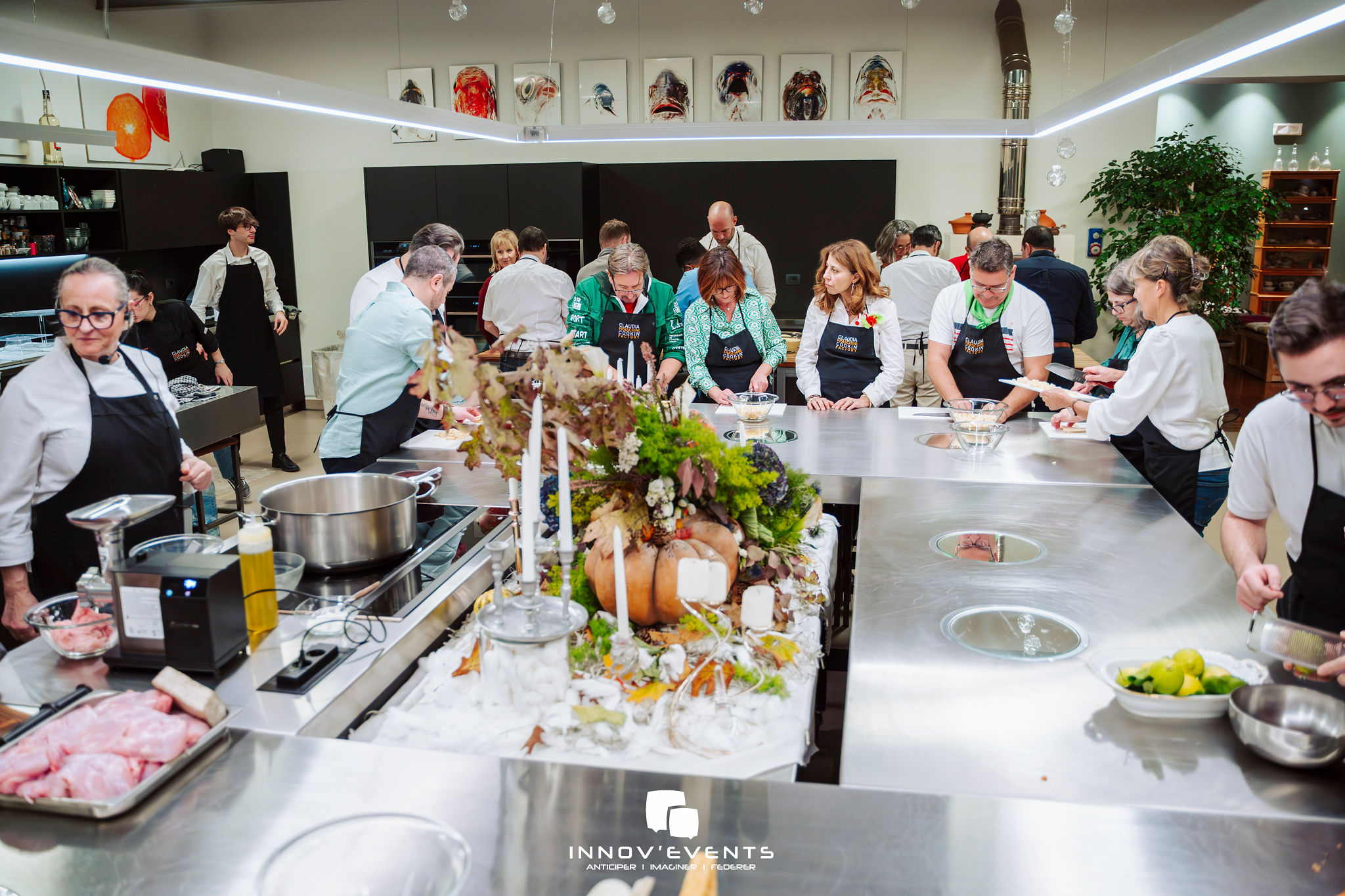
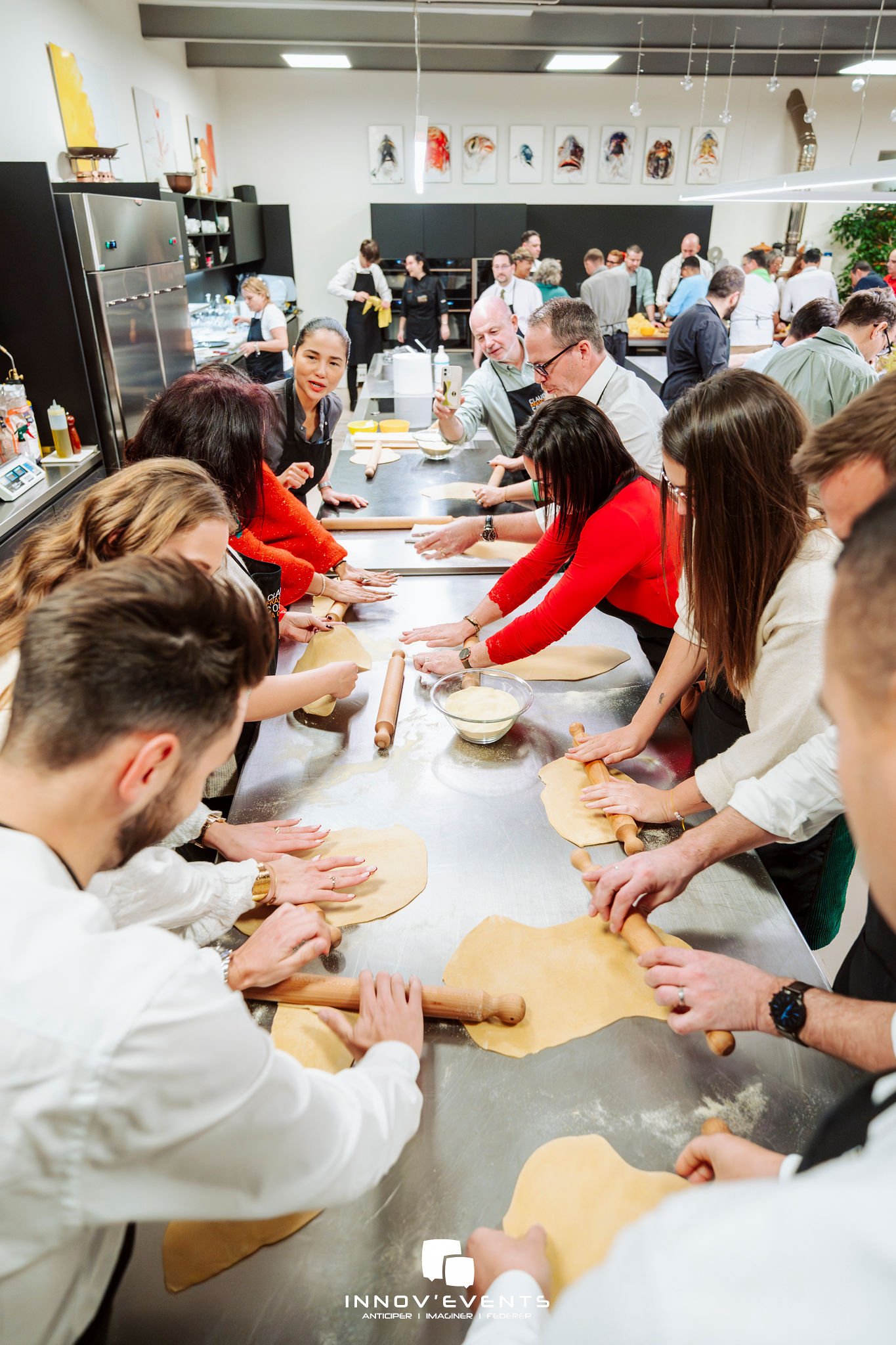
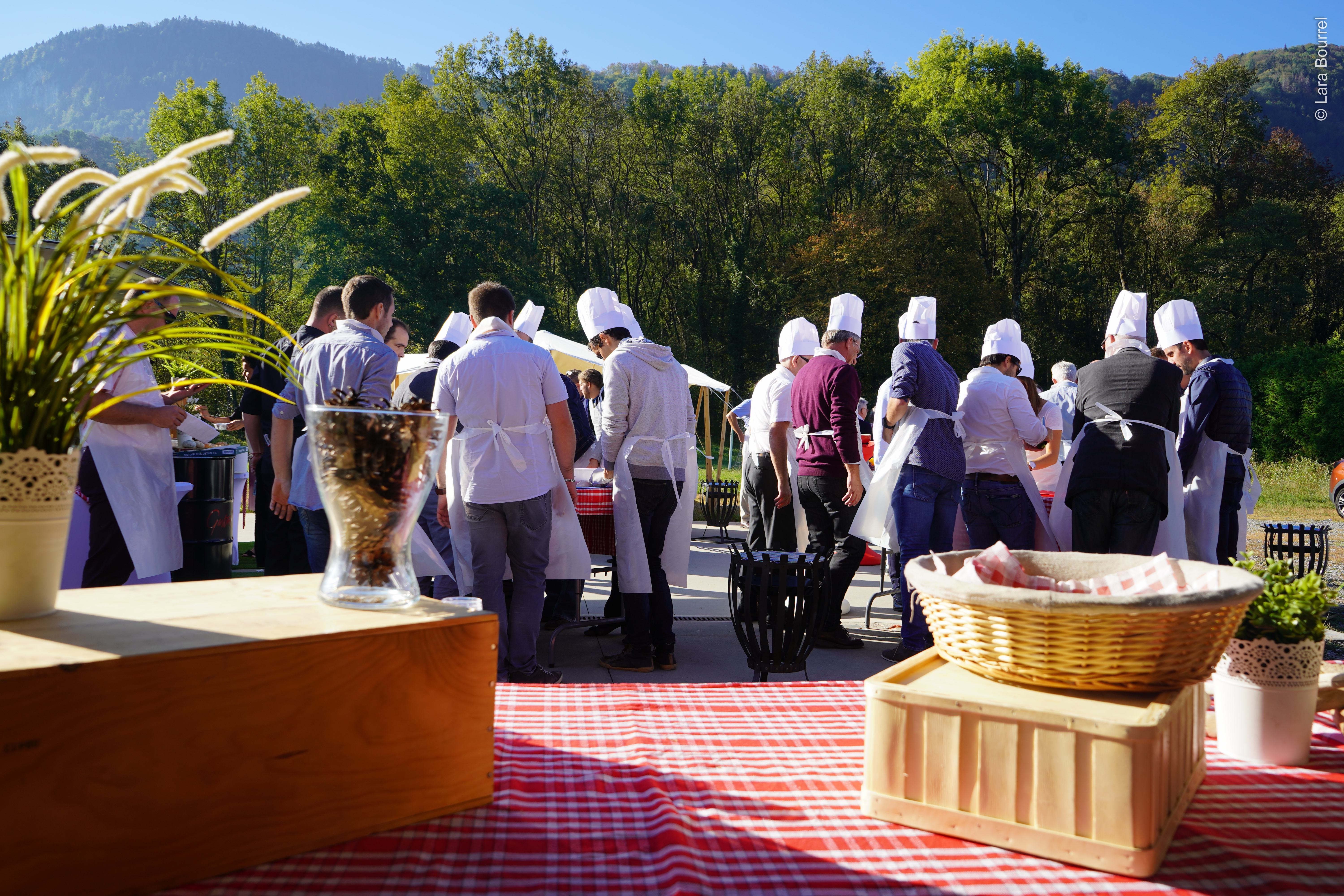
INNOV'events (Brussels) designs and produces MasterChef-Style Cooking Workshop formats in Antwerp for executive offsites, HR team buildings, and client events—typically from 12 to 200 participants. We handle the full operational chain: venue sourcing, chef staffing, ingredient logistics, timing, safety, and on-site production so your internal teams stay focused on stakeholders.
Whether you need a high-energy competition after a strategy day or a structured collaboration workshop for cross-functional teams, we build a cooking format that respects your agenda, your brand standards, and the realities of event day.
Sommaire
In a corporate agenda, entertainment is not a “nice-to-have”: it is a controlled moment to create alignment, reward effort, and reinforce leadership messages without another slide deck. A well-run cooking workshop gives you a measurable outcome (teams deliver plates under time pressure) and a reliable setting for informal conversations that often unlock decisions.
Organizations in Antwerp typically expect tight timing (no drift from the conference schedule), professional facilitation in English/Dutch where needed, and a level of service consistent with the city’s international port and HQ culture. They also expect zero compromise on food hygiene, alcohol management, and venue compliance—because internal risk teams will ask.
We operate in Antwerp with a field-first approach: pre-event technical checks, clear run sheets, ingredient and equipment redundancies, and a production lead on site. You get one accountable point of contact and a format designed to work in real venues—from modern kitchens near ’t Eilandje to conference spaces around Antwerp Central.
INNOV'events delivery capacity for Antwerp events
10+ years producing corporate events across Belgium, including recurring team formats in Antwerp.
1 project lead responsible end-to-end (briefing → supplier lock → run of show → on-site command).
24–48h to deliver a first proposal with format options, realistic budgets, and venue directions for Antwerp.
Chef and facilitator network sized for 12 to 200 participants with consistent staffing ratios and backup planning.
Antwerp references and recurring clients in the 2000 area
We regularly support companies and institutions active in Antwerp and the wider 2000–2060 area: port & logistics groups, European headquarters, scale-ups, and professional services teams bringing international colleagues to the city for quarterly reviews.
You mentioned “the company names I provided as references”; we can integrate those references exactly as you want (logo list, case snippets, or NDA-safe wording). In practice, several of our Antwerp clients book year after year because the operational reliability matters more than the concept: venues change, headcounts shift, last-minute dietary constraints appear—and they want a partner who already has a playbook for those realities.
For procurement and compliance teams, we can also provide supplier documentation on request (insurance, food safety practices, subcontractor agreements, and a detailed production schedule) to facilitate internal validation before the event is locked.
 Besoin d’un devis rapide ?
Nous vous envoyons une première proposition sous 24h.
Why a cooking workshop works for leadership teams in Antwerp
A MasterChef-Style Cooking Workshop in Antwerp is not a gimmick when it is designed around managerial objectives: collaboration under pressure, role clarity, decision-making, and quality standards. The kitchen is a controlled environment where behaviors become visible quickly—without putting people in an artificial “role play” they resist.
For HR and Communications, it is also a predictable content generator: photos of teams producing concrete results, short debrief moments with leadership, and a narrative that fits well with employer branding—provided the format is run professionally and the venue is aligned with your image.
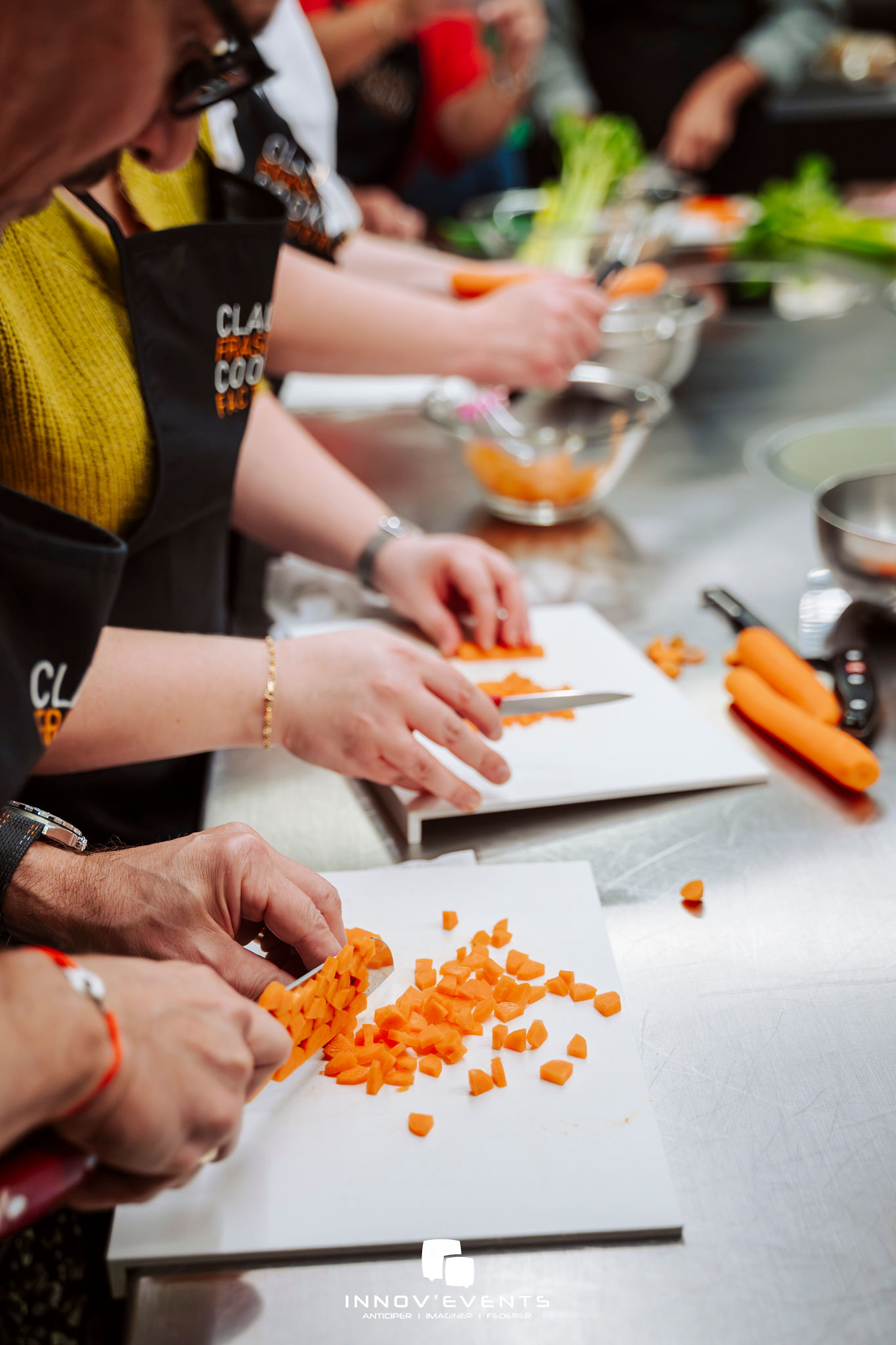
Operational collaboration you can observe: you see how teams allocate roles, manage time, and recover from mistakes—useful after reorganizations or when merging departments.
Structured cross-silo mixing: we design team composition rules (functions, seniority, languages) so people don’t default to their usual clusters.
A fair competitive frame: clear criteria, equal equipment per team, and a judging method that prevents “politics” from taking over.
Employer branding with substance: not just photos—teams produce deliverables, receive feedback, and close with a debrief that links to company values.
Inclusive by design: non-alcoholic pairing options, vegetarian/halal/kosher-style solutions where feasible, and allergy-safe workflows (separate tools, labeling, controlled cross-contamination points).
Agenda reliability: the workshop is built around your fixed constraints (plenary end time, transport windows, dinner service) with buffer logic and a strict run of show.
Antwerp is a city where international standards and pragmatic execution meet—especially in port-related sectors. A cooking competition mirrors that culture: fast, quality-driven, and team-dependent. When we frame it properly, it fits naturally with how Antwerp organizations operate.
What Antwerp companies typically demand from an event format
When we design a MasterChef-Style Cooking Workshop in Antwerp, we plan for expectations that are specific to the local corporate fabric. Many groups have a mix of Dutch-speaking and international staff; they want clear facilitation, not improvisation. Several also work with strict safety cultures (port, chemical, engineering, logistics), which means you cannot treat a kitchen like a casual party.
Common constraints we plan for in Antwerp:
- Transport reality: participants may come from offices near the port, from Berchem, or from Brussels by train—so start times must consider peak traffic and predictable arrival windows.
- Venue compliance: corporate clients will ask about ventilation, HACCP-aligned practices, and liability. We select venues and chefs that can support these requirements and document them.
- Dietary complexity at scale: Antwerp’s international teams often include multiple dietary patterns. We handle this through pre-event data capture, recipe engineering (swap modules), and on-site labeling.
- Brand-image sensitivity: for client-facing events, a “fun” concept is not enough; the venue, service level, and host tone must match the standards of a board dinner or investor meeting.
Because of these local realities, our approach is production-led: we lock the operational backbone first (space flow, equipment, staffing ratios, food safety, timing), then build the creative layer on top.
Which add-ons make sense around a cooking workshop in Antwerp
In Antwerp, we often integrate a cooking workshop into a broader corporate sequence: a strategy afternoon, an award moment, or a client reception. The right add-ons are those that serve a purpose—energize the room, facilitate networking, or create content—without creating operational noise in a kitchen environment.
Interactive animations in Antwerp
Executive “mystery ingredient” brief: leadership introduces the challenge in 3–5 minutes with one business message (quality, safety, customer obsession). It anchors the activity without turning it into a speech.
Judging panel with clear criteria: taste (40%), presentation (25%), teamwork (20%), waste management (15%). This keeps discussions factual and avoids popularity contests.
Real-time scoreboard: we track milestones (mise en place ready, plating on time, cleanliness) to reinforce execution discipline—useful for operational cultures common in Antwerp.
Art animations in Antwerp
Discreet live music for dinner: we recommend formats that do not compete with conversation (solo jazz guitar, low-volume trio). In many Antwerp venues, acoustic constraints matter; we pre-check sound limits and neighbor sensitivity.
Food photography corner: a controlled setup (light, backdrop, quick direction) that produces usable internal communications assets without disrupting service flow.
Innovative animations in Antwerp
Local pairing logic: optional tasting elements inspired by Antwerp and Belgian staples (e.g., seasonal North Sea references, local chocolate finishing). We avoid clichés and focus on quality and sourcing clarity.
Zero-proof pairing: crafted non-alcoholic options so the experience stays inclusive for teams with driving responsibilities or strict company policies.
Gourmand animations in Antwerp
Waste and cost challenge: teams get a “budget” and penalties for waste. This resonates with procurement and sustainability priorities and creates a practical conversation after the event.
Hybrid debrief kit: we provide a short digital recap (team photos, winners, key learnings) that HR can reuse for internal channels within 48 hours.
Whatever we add, we align it with your brand image and risk profile. A client event in Antwerp does not need the same tone as an internal team building; the production choices (music level, judging style, alcohol policy, photography) must match the audience and the message you want to land.
How to choose a venue in Antwerp for a cooking workshop
The venue is not just a backdrop: it dictates what is feasible operationally—how many teams can cook at once, whether your schedule will hold, and the level of comfort for executives and guests. In Antwerp, we frequently see a gap between “beautiful spaces” and “spaces that can actually run a cooking competition safely”. We help you select a venue that supports the format, not the other way around.
| Venue type | For which objective? | Main strengths | Possible constraints |
|---|---|---|---|
Professional cooking studio in Antwerp | Team building with strict timing and equal workstations | Designed for workshops, reliable equipment, strong hygiene flow, easier facilitation | Capacity caps (often 12–60 cooking spots), less suitable for large plenaries |
Hotel conference venue with kitchen partnership (Antwerp centre) | Combine plenary + workshop + dinner in one address | Convenient logistics, AV readiness, good for executive comfort and guest handling | Kitchens may be built for service, not for many participants cooking; needs careful station planning |
Industrial event space near ’t Eilandje (with temporary kitchen build) | Large groups, brand-driven settings, client-facing productions | Strong brand impact, scalable layouts, room for staging and content capture | Higher production cost (temporary kitchens, power, extraction), more technical checks required |
We strongly recommend a site visit in Antwerp before confirming: we check power distribution, extraction/ventilation, cold storage, loading access, and participant flow (arrival, apron pickup, handwash points, judging area). These details are what prevent delays and last-minute compromises on event day.
What budget to plan for in Antwerp for a MasterChef workshop
Pricing for a MasterChef-Style Cooking Workshop in Antwerp depends on format complexity, the venue’s built-in capabilities, and the level of service expected by your audience. Two workshops with the same headcount can differ significantly in cost if one requires a temporary kitchen build, higher-end ingredients, bilingual facilitation, or a client-facing production layer.
To help decision-makers, we usually frame budgets in clear ranges and identify the cost drivers upfront—so you can arbitrate intelligently rather than receiving a single opaque number.
Headcount and staffing ratio: more participants require more chefs/facilitators and production support. Typical planning ratio: 1 chef/facilitator per 15–20 participants.
Venue model: cooking studio (lower production build) vs. conference venue with partial kitchen access vs. raw space requiring temporary stations, power, refrigeration, and extraction.
Food level: standard team menus vs. premium ingredients; also impacts allergy management complexity and prep time.
Service format: do teams eat what they cook, or do we add a catered meal after the competition? The latter increases comfort and reliability for executive audiences.
Timing constraints: compressed schedules require more staff and pre-prep to guarantee on-time delivery, especially when your Antwerp program is attached to plenaries or client arrivals.
Branding and content: branded aprons, signage, photo/video coverage, and post-event recap packages.
Language and facilitation: English-only vs. bilingual facilitation (EN/NL) depending on your Antwerp workforce mix.
Compliance: additional documentation, safety stewarding, and insurance extensions requested by some corporate policies.
From an ROI perspective, a cooking workshop earns its keep when it replaces “passive” networking with structured collaboration and creates a clean story for internal communication. We can propose two or three calibrated options for Antwerp—for example a cost-efficient studio version, a premium client-facing version, and a hybrid format that balances both—so you can choose based on impact and constraints.
When you plan a workshop in Antwerp, why use a local partner
Even if your HQ is in Brussels, Antwerp events have their own operational ecosystem: venue access rules, supplier lead times, traffic patterns, and the practicalities of moving people and equipment in and around the city centre. Working with a team that is used to producing in Antwerp reduces friction and protects your internal credibility when the schedule is tight.
As INNOV'events, we manage Antwerp productions regularly and can mobilize the right suppliers quickly. If you are comparing options, our approach is transparent: we will tell you what is feasible, what will introduce risk, and where budget is better spent.
- Venue and supplier reflexes: knowing what a space can truly support (power, extraction, loading) before you sell the concept internally.
- Faster troubleshooting on site: short supply loops for last-minute needs (extra induction plates, replacement ingredients, additional service staff).
- Better timing reliability: understanding local mobility and building realistic buffers for arrivals, especially when participants come from the port area or Antwerp Central.
- Consistent quality control: we keep production standards stable across Antwerp venues rather than relying on whoever is available on the day.
- Clear accountability: one production lead who owns the run of show and supplier coordination.
From an ROI perspective, a cooking workshop earns its keep when it replaces “passive” networking with structured collaboration and creates a clean story for internal communication. We can propose two or three calibrated options for Antwerp—for example a cost-efficient studio version, a premium client-facing version, and a hybrid format that balances both—so you can choose based on impact and constraints.





What we have delivered in Antwerp for demanding corporate teams
Our Antwerp projects range from compact leadership workshops to larger formats integrated into full-day corporate events. What changes is not only the headcount; it’s the stakeholder map: HR wants inclusion and engagement, Communications wants a clean narrative and brand consistency, executives want pace and zero operational distractions, and procurement wants clarity and documentation.
Examples of real-world scenarios we regularly handle in Antwerp:
- Post-merger integration: two departments that don’t naturally collaborate. We design team composition and roles (captain, quality, timing, plating) to create practical interdependence.
- Client-facing evenings: customers invited after a day of meetings. We run a shorter competitive segment followed by a controlled dining experience, protecting hospitality standards.
- International offsites: mixed languages and seniority. We keep instructions visual and structured, with bilingual facilitation where relevant, and a judging method that avoids cultural bias.
- High compliance cultures: strict alcohol policies and safety expectations. We design the beverage service, knife briefings, and kitchen flow accordingly and document the approach.
Across these cases, the constant is production discipline: realistic planning, clear roles, and execution that protects your brand on the day.
Common risks we prevent on event day in Antwerp
Overestimating venue kitchen capacity: a beautiful Antwerp venue may not support 10 teams cooking simultaneously. We validate stations, power, extraction, and cold storage before committing.
Too few facilitators: when staffing is light, safety issues appear and timing slips. We keep a strict ratio and add floor production support.
Ignoring allergies until the last minute: we capture dietary data early, engineer recipe swaps, and label everything by team and profile.
No buffer for arrivals: Antwerp traffic and multi-site programs require a realistic check-in window and a briefing that can start without everyone present.
Unclear judging rules: without criteria, winners are disputed and the mood drops. We define criteria and communicate them upfront.
Sound and neighbor constraints: especially in central Antwerp locations, noise limits can be real. We choose appropriate music and plan announcements accordingly.
Logistics bottlenecks: loading access, elevator size, and waste removal are often underestimated. We map the flow and plan contingencies.
Our role is to remove these risks before they become visible to your guests or your leadership. In Antwerp, where many participants are used to high operational standards, a single avoidable mistake can undermine the whole initiative—so we plan like production, not like “animation”.
Why Antwerp clients renew with INNOV'events
Repeat business is rarely about the concept; it is about trust under pressure. Clients come back when their internal stakeholders felt protected: timing held, the venue delivered, dietary needs were handled discreetly, and leadership could focus on people rather than problems.
1 single point of contact from briefing to event day, with a documented run of show shared in advance.
48h recap readiness: photos, winners, key moments, and short copy blocks for internal channels (optional).
Contingency planning built in: backup equipment, buffer ingredients, and staffing flexibility for last-minute headcount shifts.

Loyalty is a consequence of consistent execution. For Antwerp events, we prioritize operational predictability and stakeholder comfort—because that is what makes internal sponsors willing to sign again next year.
How we build your Antwerp cooking workshop from brief to delivery
👉 Define objectives and constraints for Antwerp stakeholders
We start with a short working session (30–45 minutes) to clarify your audience, the event context (team building, client evening, offsite), timing constraints, brand sensitivities, and risk policies (alcohol, safety, procurement). We also define success indicators: collaboration goals, leadership visibility level, and the desired tone.
👉 Select the right Antwerp venue and validate feasibility
We propose venue types that match your constraints and then validate feasibility with a site check: number of stations, power load, extraction/ventilation, handwash points, storage, and participant flow. If the venue is “almost right”, we cost the missing technical elements transparently so you can decide.
👉 Design the MasterChef game mechanics and menus
We build the workshop structure: team sizes, roles, challenge type, time blocks, judging criteria, and menu architecture. Recipes are engineered for corporate reality: achievable within the time, scalable, and adaptable for dietary requirements without creating unfairness between teams.
👉 Lock staffing, logistics, and compliance documentation
We confirm chefs/facilitators, production staff, ingredient orders, equipment lists, and transport plans into Antwerp. We also provide the documentation many companies require: insurance proof, supplier details, and a clear run of show for internal approvals.
👉 Deliver on site with production control
On event day, our production lead runs a control point: check-in flow, briefing, timing, supplier coordination, and issue escalation. We manage the environment so your executives and internal teams can focus on people, not operational details.
👉 Close with a clean debrief and optional content package
We close the workshop with a short debrief aligned with your objectives (what worked, what behaviors we observed, how it connects to your messages). If requested, we deliver a recap package for internal communications within 48 hours.
If you are still evaluating partners, you can also consult our event agency in Antwerp page to understand how we structure local production support across formats.
FAQ sur l'organisation MasterChef-Style Cooking Workshop à Antwerp
How long should a cooking workshop last in Antwerp?
Plan 90–150 minutes for the workshop itself. If it includes dinner service and awards, a realistic total block is 2.5–4 hours, depending on venue flow and whether teams eat what they cook.
What group size works best for Antwerp team buildings?
The sweet spot is 20–80 participants (teams of 4–8). We can run 12–200 with the right venue model—either a large studio, parallel sessions, or a temporary kitchen build with additional chefs and production staff.
What is a realistic budget range in Antwerp?
As a working range, expect roughly €120–€260 per person for many corporate formats in Antwerp. Price varies with venue choice, menu level, staffing ratio, and whether you add a catered dinner, branding, or photo/video coverage.
Can you handle allergies and dietary needs in Antwerp?
Yes. We collect dietary data in advance, engineer menu swaps, label ingredients per team, and use controlled workflows to reduce cross-contamination. For large groups, we recommend closing dietary input 7–10 days before the event to keep procurement and prep reliable.
Do you run MasterChef-style workshops near Antwerp Central?
Yes—depending on capacity and kitchen feasibility. We often prioritize locations that are walkable or a short transfer from Antwerp Central for international guests, then validate loading access, timing constraints, and technical requirements during a site check.
Request a quote for your Antwerp cooking workshop
If you have a date, an estimated headcount, and a venue preference (or none yet), we can respond with a first proposal within 24–48 hours: recommended format options, a realistic budget range, and a production approach that fits your internal constraints.
To move fast, send us: target date(s), participant profile (internal/client mix), approximate headcount, language needs, dietary complexity level, and whether the workshop must integrate with a plenary or dinner. We will come back with concrete options for a MasterChef-Style Cooking Workshop in Antwerp that is credible for executives and safe to deliver on the day.
INNOV'events Antwerp Agency
Justin JACOB is the manager of the INNOV'events Antwerp office. Reach out directly by email at belgique@innov-events.be or via the contact form.
Contact the Antwerp agencyToutes nos prestations & animations Antwerp, Belgique
Découvrez nos prestations événementielles
Découvrez nos animations événementielles disponibles au Belgique
- Event Hostess in Antwerp
- Escape Game in Antwerp
- MasterChef Cooking Workshop in Antwerp
- Magician in Antwerp
- Marquee Rental in Antwerp
- Color Analysis Workshop in Antwerp
- Inflatable Games in Antwerp
- Valet Parking Service in Antwerp
- Football Simulator in Antwerp
- LED Furniture Rental in Antwerp
- Light Branding in Antwerp
- Unique Dining Experience in Antwerp
- Light Painting in Antwerp
- Murder Mystery Party in Antwerp
- Prize Contest in Antwerp
- Promotional Displays (POS) in Antwerp
- Virtual Reality in Antwerp
- Molecular Gastronomy Workshop in Antwerp
- Halloween Entertainment in Antwerp
- Fireworks Show in Antwerp
- Giant Games Challenge in Antwerp
- Event Host / MC in Antwerp
- Photo Booth Animation in Antwerp
- Santa Claus Entertainment in Antwerp
- Kids Entertainment in Antwerp
- Guided Tour in Antwerp
- Urban Rally in Antwerp
- Ball Pit in Antwerp
- Flight Simulator in Antwerp
- Food Truck Rental in Antwerp
- World Record Challenge in Antwerp
- Surf Simulator in Antwerp
- Wine Casino in Antwerp
- Makeover Workshop in Antwerp
- Perfume Creation Workshop in Antwerp
- Acting Workshop in Antwerp
- CSR Activities in Antwerp
- Archery in Antwerp
- Security Staff in Antwerp
- Wine Tasting in Antwerp
- Mime Performer in Antwerp
- TV Game Show in Antwerp
- Funfair in Antwerp
- Crisis Management Workshop in Antwerp
- Crisis Negotiation Workshop in Antwerp
- Arcade Games in Antwerp
- Indoor Skydiving Simulator in Antwerp
- Ski Simulator in Antwerp
- Racing Circuit Experience in Antwerp
- Introductory Flight Experience in Antwerp
- Tasting Experience in Antwerp
- Build Your Own Foosball Workshop in Antwerp
- 2CV Rally in Antwerp
- LEGO Challenge in Antwerp
- Casino Night in Antwerp
- Interpreter / Translator in Antwerp
- Promotional Giveaways in Antwerp
- Shuttle Transport in Antwerp