
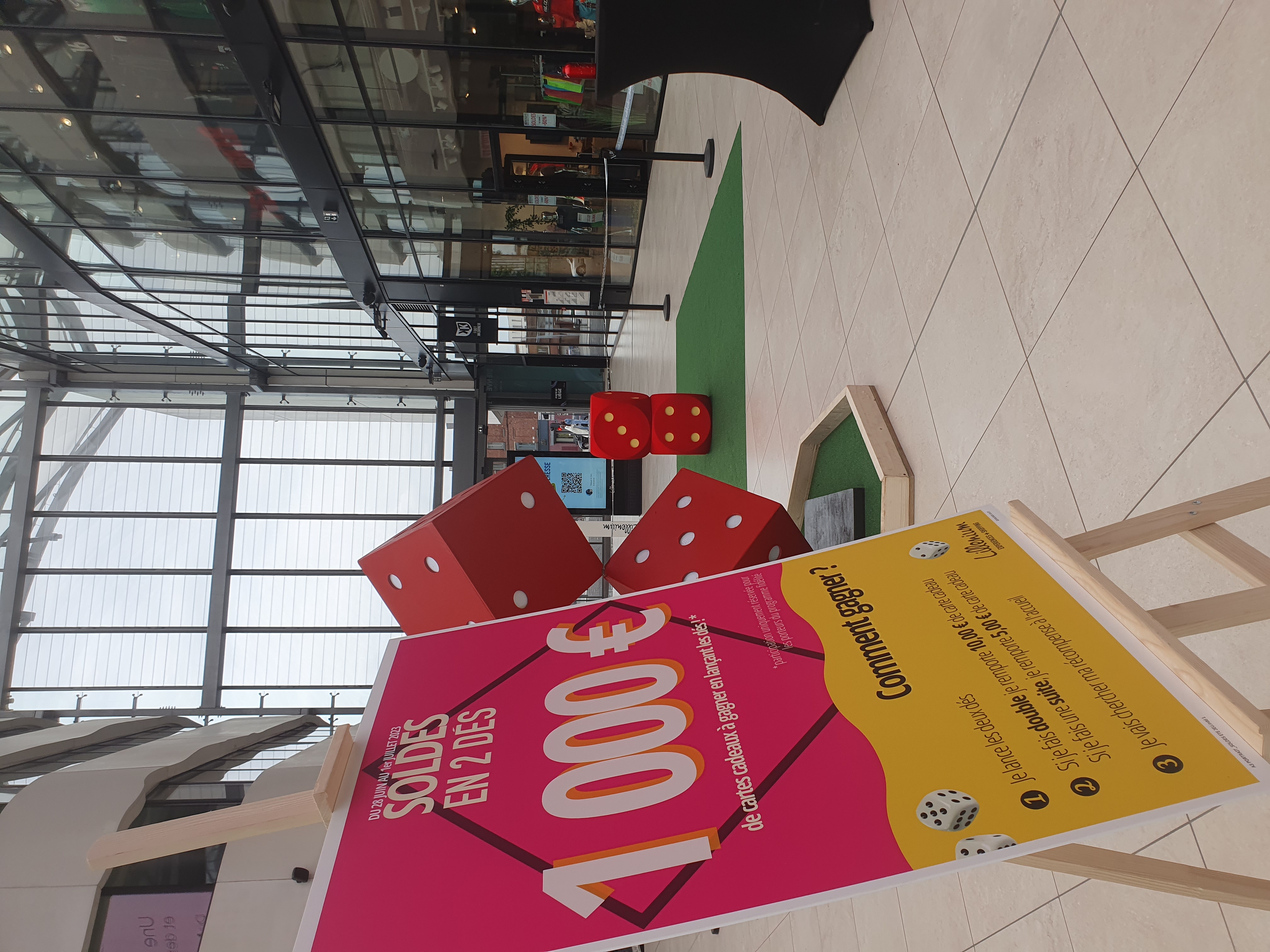
Shopping Mall Entertainment in Antwerp that increases dwell time without disrupting operations
INNOV'events delivers Shopping Mall Entertainment for retail centres in Antwerp, from compact weekend activations to multi-day seasonal programmes for 5,000–80,000 visitors on-site. We manage concept, permits, production, artists, security coordination, and on-floor operations so your teams can stay focused on tenant performance and visitor experience.
You get one accountable project lead, clear risk controls, and a run-of-show built around peak hours, access routes, and retail constraints.
Table of contents
In a shopping centre, entertainment is not “nice to have”: it is a lever to increase footfall quality, dwell time, and conversion while protecting the retail baseline (cleanliness, circulation, and tenant trading). Done well, it supports leasing objectives and brand partnerships; done poorly, it creates bottlenecks, complaints, and lost sales.
Organisations in Antwerp typically expect measurable impact (traffic to target zones, lead capture, store engagement), strict safety discipline, and seamless collaboration with mall management, cleaning, and security. Timing matters: lunch peaks, after-school spikes, and Saturday surges require different formats and staffing ratios.
INNOV'events operates from Brussels with an on-the-ground partner network in Antwerp: technicians, performers, host teams, and compliant suppliers who know local access rules, loading constraints, and the realities of live activations in high-traffic retail environments.
INNOV'events numbers you can benchmark in Antwerp
12+ years delivering corporate and public-facing activations across Belgium, including complex, high-footfall environments.
250+ events produced annually through our national network (artists, AV, staging, hosts, security partners).
48 hours typical turnaround for a structured first proposal (scope, options, and budget ranges) once we have your site constraints and objectives.
1 accountable project lead from brief to show-call, with documented run-of-show, risk log, and vendor coordination.
How to organize a professional event in Antwerp?
- Define the objective (cohesion, announcement, fidelity, performance).
- Set date, format and size (20–1 000 people).
- Secure the venue and accommodation according to seasonality.
- Lock down technical, suppliers and logistics.
- Drive the day J (timing, scene, entrance, flow).
Who we support in Antwerp and nearby retail corridors
We regularly support organisations operating in and around Antwerp—from retail real-estate groups and centre management teams to brands running seasonal activations and HR-driven engagement days. Several clients renew year after year because the operational reality of a shopping centre rarely changes: trading hours remain strict, loading bays stay constrained, and any activation must respect tenant priorities.
You mentioned providing company names as references; we can integrate those into a formal credentials deck under NDA and match them with comparable deliverables (e.g., Christmas traffic programmes, back-to-school zones, product sampling with lead capture, kids’ circuits, or brand partnership weekends). In procurement contexts, we also share method statements, safety documentation examples, and a typical staffing plan to make evaluation concrete.
We send you a first proposal within 24h.
What Antwerp leadership actually gains from shopping mall entertainment
For executives, HR, and communication teams, mall entertainment is a public-facing operational project with reputational upside and real risk exposure. The strategic value comes from driving measurable visitor behaviour while keeping the centre safe, compliant, and commercially stable.
Commercial uplift you can defend internally: we set target behaviours (zone visits, dwell time near anchor tenants, participation counts, opt-ins) and design formats that convert footfall into action, not just “spectators”.
Stronger tenant relations: tenant complaints usually come from noise, blocked shopfronts, and queue spill. We map tenant sensitivities and build buffer zones, sound caps, and queue management into the floorplan.
Brand and CSR alignment: for corporate partners, we translate brand guidelines into on-floor realities (acceptable messaging, sampling rules, staff scripts, child protection rules where relevant).
Operational discipline under trading conditions: activations are scheduled around deliveries, escalator flows, and peak times. This avoids the “event vs. operations” friction that mall teams dislike.
Staff engagement without disrupting retail: internal employer-brand moments can happen in mall spaces (e.g., recruitment corners, staff recognition) but must remain invisible to shoppers when needed. We design back-of-house and discreet touchpoints accordingly.
Risk reduction: documented run-of-show, crowd control measures, and clear escalation paths protect the centre and management team if something goes wrong on a Saturday afternoon.
Antwerp is a competitive retail city with strong weekend traffic and demanding visitor expectations. Entertainment works best when it respects the local pace: fast access, clear signage, and programming that feels purposeful rather than intrusive.
How Antwerp’s retail context changes your entertainment plan
In Antwerp, shopping centres and high-street retail face a mix of local residents, tourists, and cross-border visitors. That means your programme must be visually clear and multilingual-ready at the touchpoints that matter (signage, host scripts, safety instructions). It also means higher sensitivity to circulation: visitors move quickly and will abandon an activity if it looks confusing or congested.
We plan around realities that executives often underestimate until the first live weekend: loading windows restricted by trading hours, limited storage, strict fire lanes, and the need to keep emergency exits unobstructed at all times. We also account for the “tenant optics” issue: a premium tenant will not accept a noisy performance at their storefront, even if your contract says the mall can program the common area. So we build a tenant-aware zoning plan (sound direction, queue orientation, and a plan B location).
Finally, Antwerp buyers are pragmatic about ROI. They want a clear reason for each cost item: why that many hosts, why that barricade length, why that technical setup. Our proposals reflect that reality with line items tied to risks and objectives rather than generic packages.
Which Antwerp entertainment formats drive participation in shopping centres
Entertainment creates engagement in a mall when it lowers the barrier to entry, keeps the footprint controlled, and gives visitors a clear reason to participate. We focus on formats that are operationally stable under heavy footfall: fast throughput, visible rules, and minimal setup time between sessions.
Interactive animations in Antwerp
Rapid-win challenge stations: 60–120 second games (reaction wall, mini skill challenges) designed for high throughput. Best for weekend peaks because they avoid long queues. We add a simple prize logic and a participation counter for reporting.
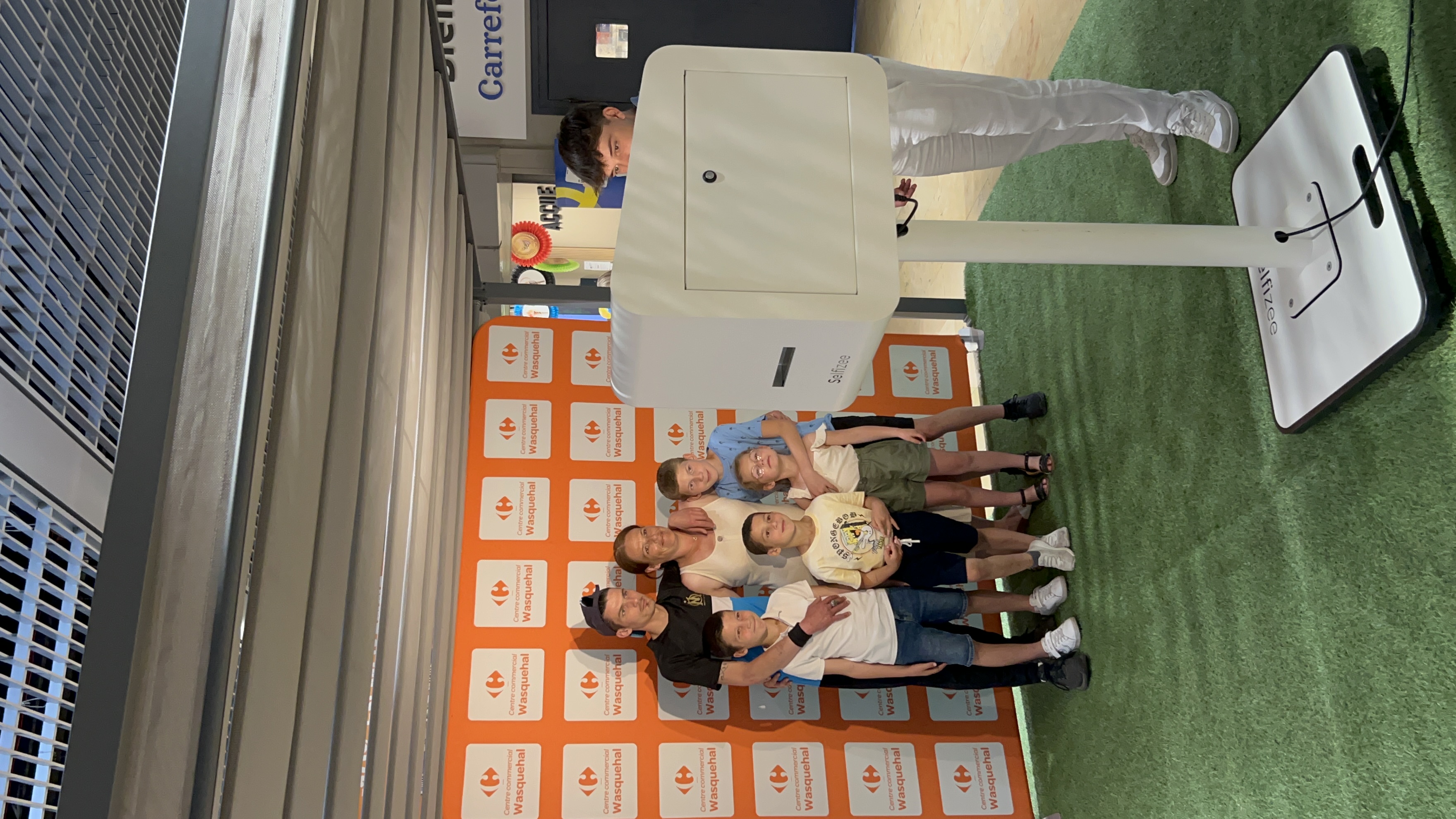
Photo activation with lead capture: a themed photo point with QR opt-in (GDPR-compliant) and instant delivery. Works for partner campaigns when the objective is measurable leads rather than just visibility.
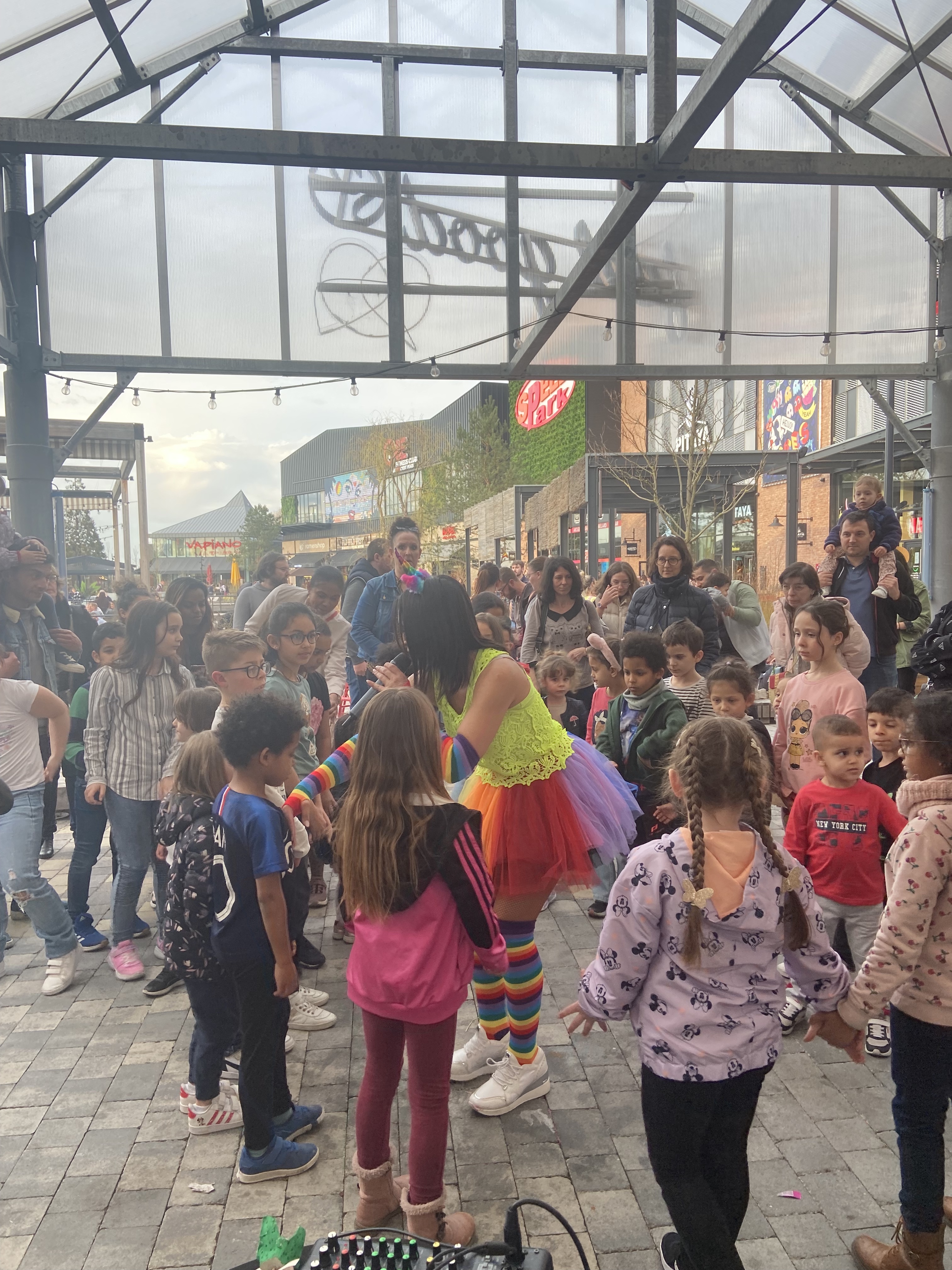
Kids’ circuit with timed slots: wristband time slots and a defined route. This prevents parents from clustering in fire lanes. We staff entry and exit separately to keep control.
Pop-up “meet the brand” corners: product demos with scripted hosts, sampling rules, and a strict waste plan. We coordinate with cleaning and set a hard cap on open food/drink zones.
Art animations in Antwerp
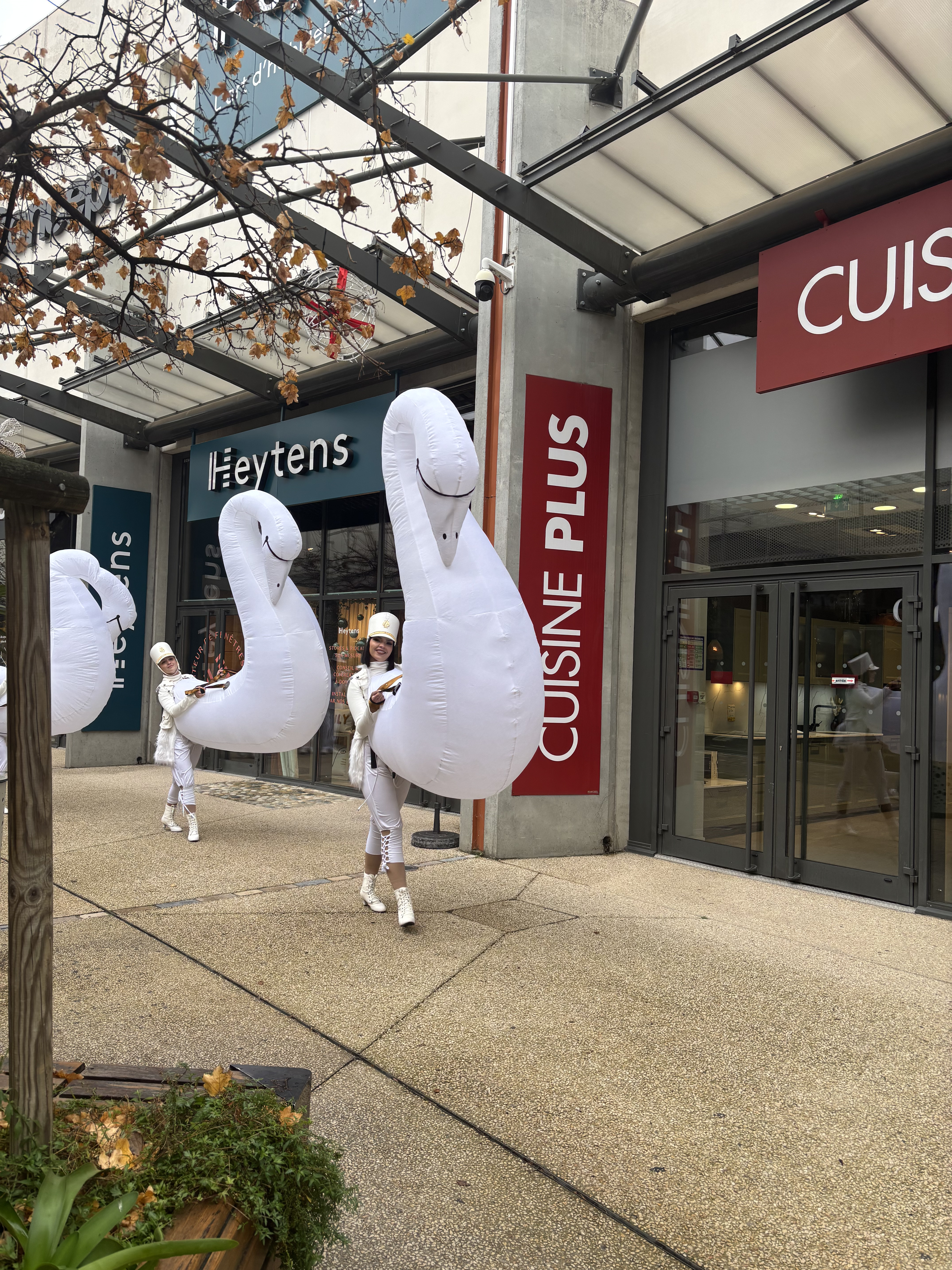
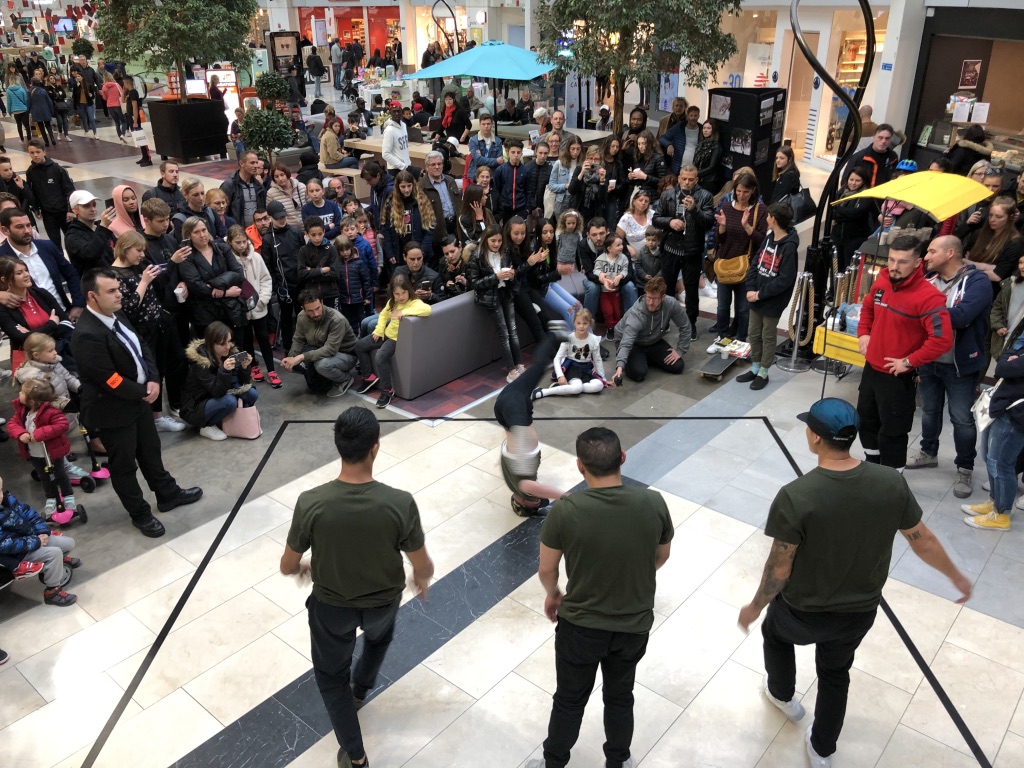
Roving performers with fixed “micro-stops”: instead of drawing uncontrolled crowds, we define exact stop points and durations (e.g., 6 minutes every 25 minutes). Security and mall management appreciate the predictability.
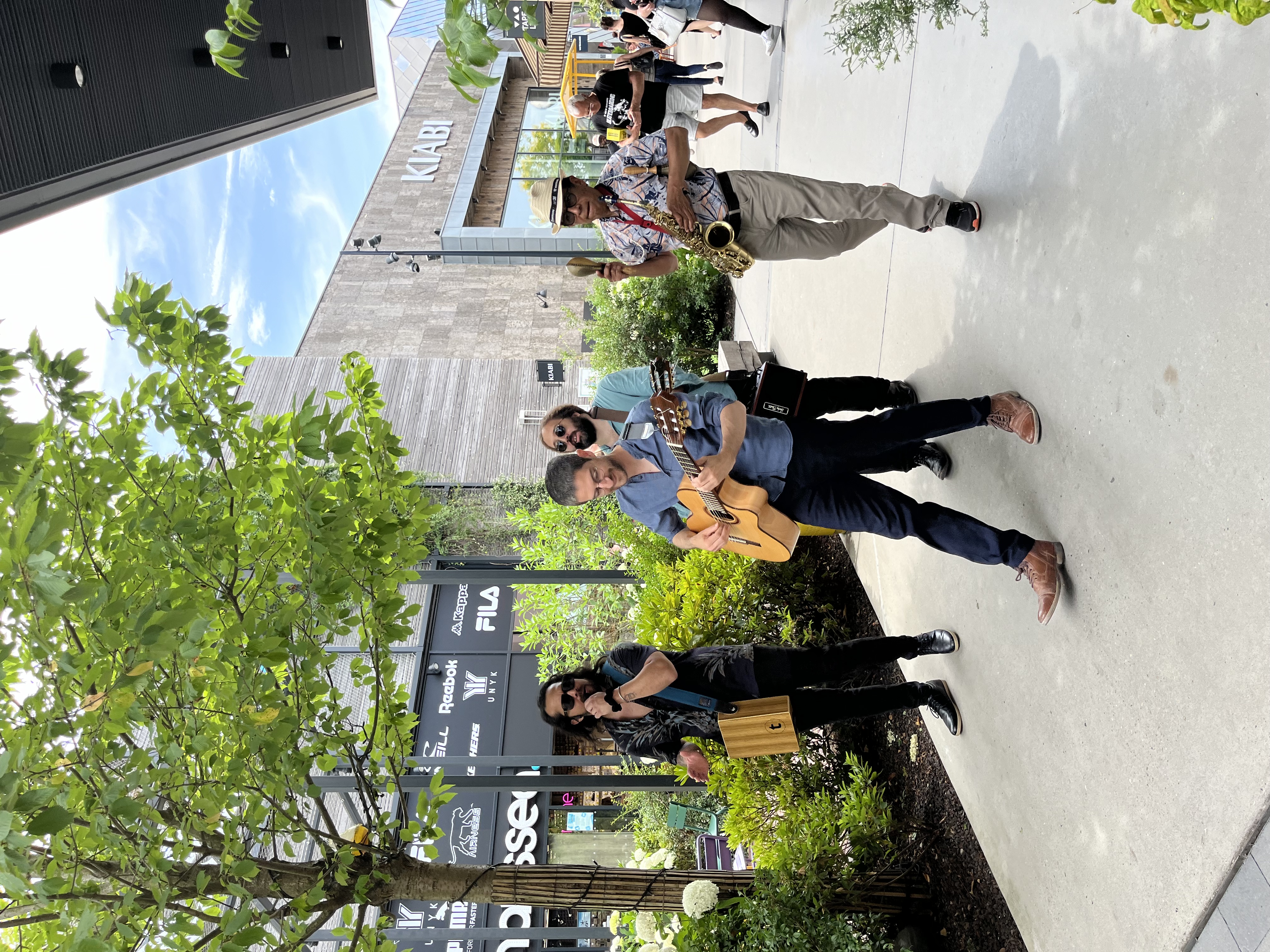
Acoustic sets with sound governance: small footprint, premium feel, and lower complaint risk. We specify decibel targets and speaker direction in advance.
Short-form stage moments: 10–12 minute shows repeated hourly to create rhythm without “parking” crowds for 45 minutes. This supports trading rather than competing with it.
Innovative animations in Antwerp
Controlled tasting bars: single-serve portions, allergy signage, and an explicit waste stream plan. We position these near zones that can handle micro-queues and keep hand sanitiser and cleaning kits on hand.
Local-themed pairings: formats that nod to the Antwerp identity (e.g., local confectionery partnerships) while staying compliant with mall rules and brand guidelines.
Gourmand animations in Antwerp
AR treasure hunt across the centre: visitors follow a route using their phone, spreading traffic across multiple zones and supporting tenant engagement. We define stop points with participating stores and track completions.
Data-driven heat mapping (where permitted): counting entries to activation areas and participation rates per hour to show what worked. Useful for management reporting and next-season planning.
Micro-influencer meet-and-greet with strict control: pre-registration, time slots, and controlled barriers to avoid uncontrolled crowds. We plan for security escalation and a hard stop if density rises.
Whatever the format, we align it with brand image and centre positioning: premium centres need visual discipline and sound control; family-oriented centres need throughput and clear safeguarding rules. That alignment is what keeps tenants supportive and makes corporate event entertainment in Antwerp defensible at board level.
How to choose the right Antwerp setting inside a shopping centre
The perceived quality of an activation is shaped by its location: visibility, acoustics, and how much it interferes with trading. The same concept can feel premium or chaotic depending on whether it sits at a crossroads, near an escalator landing, or in a narrow gallery.
| Venue type | For which objective? | Main strengths | Possible constraints |
|---|---|---|---|
| Central atrium / main plaza (inside the mall) | High visibility activation, partner showcases, short stage moments | Strong sightlines, natural gathering point, good for branded structures | Crowd density risk, noise sensitivity for nearby premium tenants, requires strict queue and barrier plan |
| Wide gallery zone near anchor tenant | Drive traffic to a target retail corridor and support tenant engagement | Balances exposure and flow, easier to manage micro-queues, supports sampling or demos | Must keep shopfront access clear; delivery routes may cross the area at specific hours |
| Vacant unit / pop-up store space | Immersive experience, paid workshops, controlled lead capture | Controlled capacity, weather-proof, easier sound control, better for premium brand experience | Needs lease/short-term agreement, fit-out rules, electrical compliance, staffing at entry/exit |
| Outdoor forecourt or entrance apron | Footfall acquisition, street visibility, seasonal photo moments | Draws attention from outside, reduces indoor congestion | Weather contingencies, permitting may be stricter, power and anchoring constraints |
We strongly recommend a site visit (or at minimum a detailed walk-through with centre management) before finalising production. In Antwerp, small differences in corridor width, ceiling height, and access to power can materially change the staffing plan and the risk profile.
What shopping mall entertainment costs in Antwerp
Pricing is driven by operational constraints more than creative ideas. In a mall, the cost drivers are often safety coverage, technical integration, staffing, and compliance documentation—not just the performers.
Format and duration: a 4-hour Saturday activation is not priced like a 3-week seasonal programme. Expect different staffing rotations, storage needs, and maintenance.
Footprint and infrastructure: staging, truss, floor protection, power distribution, and branding elements change the technical plan and labour time.
Staffing ratios: hosts for welcoming and throughput, supervisors for queue control, technical crew for changeovers, and coordination with mall security.
Compliance requirements: risk assessment depth, insurance levels, child safeguarding protocols, and any special permissions for sampling, pyrotechnics (typically avoided), or animals (often restricted).
Hours and access: night installs, restricted loading slots, and long walking distances from loading bay to activation zone increase labour.
Measurement and reporting: lead capture, participation counters, and post-event reporting add value but require tools and staffing.
As a practical range, a well-managed mall activation in Antwerp often starts around €4,000–€8,000 for a compact, low-tech setup and can reach €15,000–€60,000+ for multi-day programmes with significant infrastructure, staffing, and partner integrations. We position budget in ROI terms: what behaviour you want to change, where, and how we will prove it.
Why working with an Antwerp-focused agency reduces delivery risk
In retail entertainment, “local” is not a branding claim—it is an operational advantage. Having people who can be on-site quickly, who understand typical centre rules, and who can coordinate with local suppliers reduces last-minute surprises.
If you need deeper local coverage, we also operate through our dedicated event agency in Antwerp network to ensure rapid sourcing, site responsiveness, and continuity of crew.
For executive stakeholders, the practical benefit is fewer escalations on the day: faster fixes for technical issues, smoother compliance validation, and reliable staffing even during peak seasonal periods.
- Faster site coordination: quicker alignment with centre management, security, and cleaning to validate floorplans and access routes.
- Supplier reliability: tested local technicians, hosts, and artists with retail experience (not just festival experience).
- Better contingency handling: rapid replacement options if an artist cancels or if weather forces a move outdoors-to-indoors.
- Local permitting familiarity: understanding typical municipal and venue approval processes to avoid last-minute refusals.
As a practical range, a well-managed mall activation in Antwerp often starts around €4,000–€8,000 for a compact, low-tech setup and can reach €15,000–€60,000+ for multi-day programmes with significant infrastructure, staffing, and partner integrations. We position budget in ROI terms: what behaviour you want to change, where, and how we will prove it.






Examples of Antwerp-style retail activations we deliver
Our projects range from compact “traffic moments” to full seasonal programmes. The common thread is disciplined execution in public spaces where safety, brand image, and trading continuity must coexist.
Typical delivery scenarios we handle:
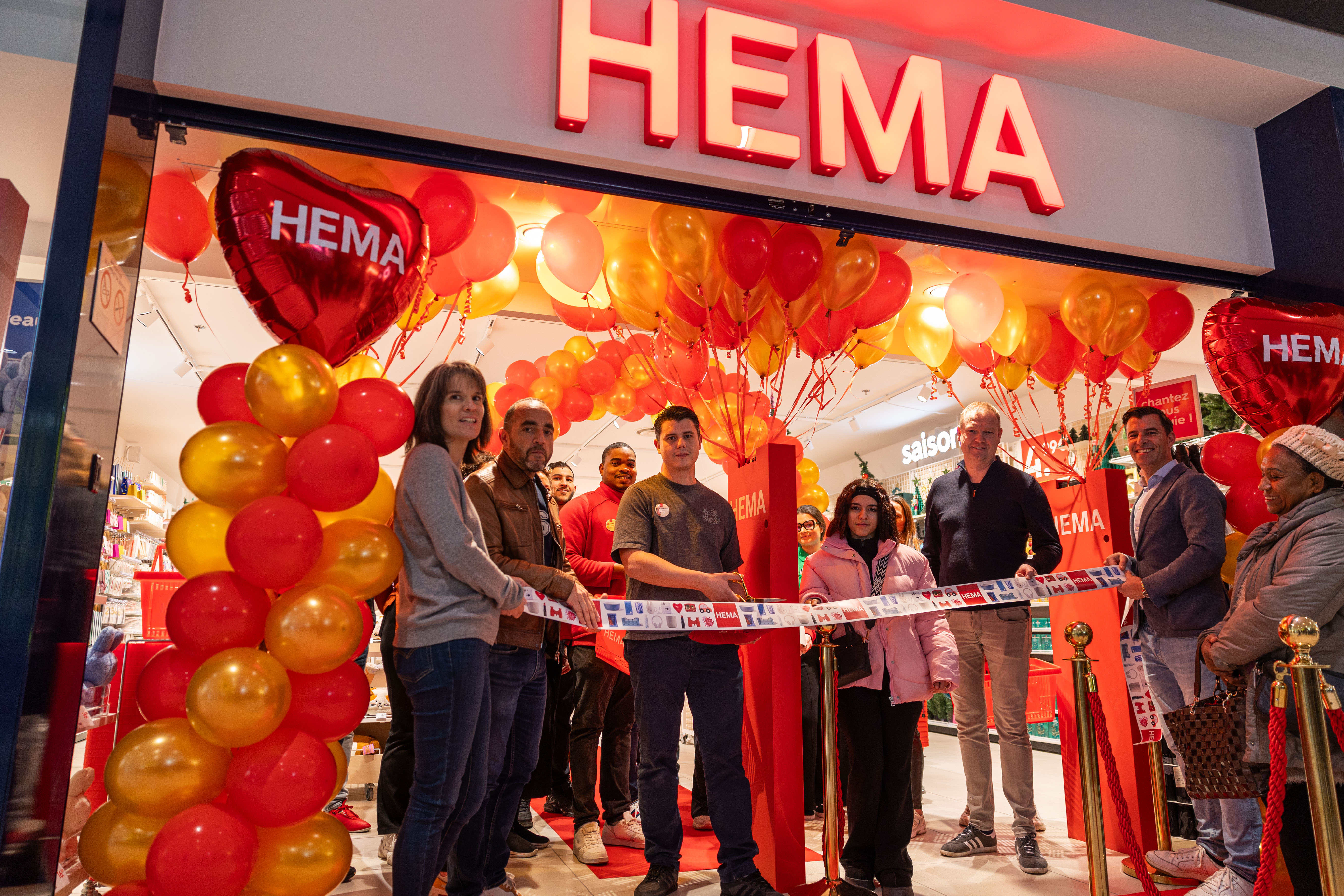
- Seasonal programmes: Christmas and winter activations with rotating entertainment blocks, photo points, and controlled queue systems to keep corridors clear.
- Partner weekends: a brand sponsors a zone, wants lead capture, and expects GDPR-compliant reporting. We provide host scripts, opt-in mechanics, and a clean data handover process.
- Family traffic boosts: kids’ workshops with time slots and safeguarding measures, designed to create dwell time without creating noise complaints.
- Premium positioning: acoustic sets or art-based installations that improve atmosphere while respecting sound governance and sightlines.
- Operational rescue: stepping in when an internal team is overloaded—tight timelines, restricted access, and a requirement to “make it work” without visible disruption to tenants.
In each case, our deliverables include a run-of-show, staffing plan, floorplan, risk controls, and a clear decision chain with the mall duty manager.
Common mistakes that derail shopping mall entertainment in Antwerp
Underestimating queue behaviour: one popular activity can block a corridor in minutes. Without stanchions, staff positions, and stop criteria, the centre ends up dealing with complaints and safety risks.
Programming long shows in high-traffic zones: long dwell crowds can create density around escalators and junctions. Short repeated moments are usually safer and more commercial-friendly.
Ignoring tenant sensitivities: noise, sightline obstruction, or a queue near a luxury storefront creates friction and damages tenant relations.
Weak technical planning: power assumptions, cable runs, and speaker placement cause last-minute fixes that look unprofessional to visitors and centre management.
No written escalation path: when a child is separated, a visitor falls, or density rises, teams need predefined decisions and contacts—otherwise the situation escalates unnecessarily.
Messy sampling operations: without clear hygiene and waste plans, cleaning costs spike and the centre may restrict future activations.
Our role is to prevent these risks with upfront engineering: floorplans validated on-site, documented controls, and the right staffing levels to keep the activation stable during peak trading hours in Antwerp.
Why Antwerp clients renew their entertainment programmes
Clients come back when an agency is reliable under pressure. In shopping centres, the pressure is very concrete: high footfall, strict rules, and immediate visibility if something goes wrong.
Repeat programming is common for seasonal activations because once an approach works (flow, sound, staffing), management wants consistency rather than constant reinvention.
Fewer incident reports and fewer tenant complaints are the metrics that matter internally, even more than social media reach.
Improved operational efficiency year-on-year: shorter install times, better positioning, and stronger coordination with cleaning and security teams.

Loyalty is proof of quality in retail: it means the centre trusts the agency to deliver Shopping Mall Entertainment in Antwerp that supports trading and protects reputation.
Our Antwerp delivery process from brief to show-day
👉 Step 1: Antwerp brief and success metrics
We start with objectives that executives can defend: which zones need traffic, which tenants need support, what “success” looks like (participations per hour, leads, or dwell time). We also gather constraints: trading hours, access routes, noise limits, and any centre policy constraints (sampling, child activities, inflatables, etc.).
👉 Step 2: Site validation and floorplan engineering
We validate the activation footprint: exact placement, barriers, queue direction, emergency lanes, cable routing, and storage. Where a site visit is not possible immediately, we request current floorplans and do a remote pre-check, then confirm on-site before production is locked.
👉 Step 3: Proposal with options and operational notes
You receive a structured proposal with 2–3 options (e.g., low-footprint, mid-footprint, and premium), each with clear inclusions: staffing, technical scope, timings, and compliance deliverables. We flag operational implications (install hours, sound governance, queue risk) so your internal approval is easier.
👉 Step 4: Permits, compliance, and stakeholder alignment
We prepare and share the documentation pack required by centre management: risk assessment, method statement, insurance, and supplier compliance. We align with security, cleaning, and tenant liaison so responsibilities are unambiguous (who stops intake, who cleans, who approves changes on the day).
👉 Step 5: Production, rehearsal, and show-call execution
We manage install, technical checks, and briefing for hosts and performers. On the day, the project lead runs the show-call, monitors density and queue length, and coordinates with the mall duty manager for any adjustments (pause, relocate, or shorten sets). We keep a log of incidents and decisions.
👉 Step 6: Reporting and next-step recommendations
Within agreed timelines, we deliver a concise report: participation counts, lead volumes (if applicable), peak hours, what caused friction, and what to change next time. This is typically what management needs for internal reporting and partner debriefs.
FAQ sur l'organisation Shopping Mall Entertainment à Antwerp
How early should we book entertainment in Antwerp?
For a weekend activation, plan 3–6 weeks ahead to secure the right talent and get centre approvals. For seasonal programmes (e.g., Christmas), plan 3–5 months ahead because staffing, storage, and technical suppliers get booked early.
What budget range is typical in Antwerp shopping centres?
A compact activation often lands between €4,000 and €8,000. Larger multi-day programmes with structures, multiple performers, and heavier staffing typically run €15,000 to €60,000+, depending on footprint, technical needs, and compliance requirements.
Do we need permits for mall entertainment in Antwerp?
Inside a mall, approvals usually come from centre management plus their safety/security procedures. If you use outdoor forecourts, amplified sound outdoors, or public space elements, additional municipal permissions may apply. We confirm the exact approval path during the first site validation.
How do you prevent queues from blocking corridors in Antwerp?
We use a combination of stanchions, floor markings, timed slots where needed, and staffing at entry points. We also set a maximum queue length and a stop-intake rule. In high peaks, we switch to higher-throughput formats (shorter participation cycles) to reduce density.
Can you measure ROI for Antwerp mall entertainment programmes?
Yes, with practical KPIs: participation counts per hour, leads/opt-ins (when relevant), voucher redemption, and tenant engagement rates. Where permitted, we add entry counters for the activation zone and compare peak-hour performance to baseline periods to support management reporting.
Request a scoped Antwerp quote before your calendar fills up
If you are planning Shopping Mall Entertainment in Antwerp, share your dates, target zones, centre rules (if available), and your key objective (traffic, leads, tenant support, seasonal atmosphere). We will come back with a structured proposal and budget ranges within 48 hours, including operational notes on flow, safety, and staffing.
For retail environments, earlier planning is not bureaucracy—it is what keeps trading stable on the day. Contact INNOV'events to lock the concept, validate the footprint, and secure the right crews for your peak periods.
INNOV'events Antwerp Agency
Justin JACOB is the manager of the INNOV'events Antwerp office. Reach out directly by email at belgique@innov-events.be or via the contact form.
Contact the Antwerp agencyAll our services & entertainment Antwerp, Belgique
Discover our event services
Discover our event entertainment available in the Belgique
- Event Hostess in Antwerp
- Escape Game in Antwerp
- MasterChef Cooking Workshop in Antwerp
- Magician in Antwerp
- Marquee Rental in Antwerp
- Color Analysis Workshop in Antwerp
- Inflatable Games in Antwerp
- Valet Parking Service in Antwerp
- Football Simulator in Antwerp
- LED Furniture Rental in Antwerp
- Light Branding in Antwerp
- Unique Dining Experience in Antwerp
- Light Painting in Antwerp
- Murder Mystery Party in Antwerp
- Prize Contest in Antwerp
- Promotional Displays (POS) in Antwerp
- Virtual Reality in Antwerp
- Molecular Gastronomy Workshop in Antwerp
- Halloween Entertainment in Antwerp
- Fireworks Show in Antwerp
- Giant Games Challenge in Antwerp
- Event Host / MC in Antwerp
- Photo Booth Animation in Antwerp
- Santa Claus Entertainment in Antwerp
- Kids Entertainment in Antwerp
- Guided Tour in Antwerp
- Urban Rally in Antwerp
- Ball Pit in Antwerp
- Flight Simulator in Antwerp
- Food Truck Rental in Antwerp
- World Record Challenge in Antwerp
- Surf Simulator in Antwerp
- Wine Casino in Antwerp
- Makeover Workshop in Antwerp
- Perfume Creation Workshop in Antwerp
- Acting Workshop in Antwerp
- CSR Activities in Antwerp
- Archery in Antwerp
- Security Staff in Antwerp
- Wine Tasting in Antwerp
- Mime Performer in Antwerp
- TV Game Show in Antwerp
- Funfair in Antwerp
- Crisis Management Workshop in Antwerp
- Crisis Negotiation Workshop in Antwerp
- Arcade Games in Antwerp
- Indoor Skydiving Simulator in Antwerp
- Ski Simulator in Antwerp
- Racing Circuit Experience in Antwerp
- Introductory Flight Experience in Antwerp
- Tasting Experience in Antwerp
- Build Your Own Foosball Workshop in Antwerp
- 2CV Rally in Antwerp
- LEGO Challenge in Antwerp
- Casino Night in Antwerp
- Interpreter / Translator in Antwerp
- Promotional Giveaways in Antwerp
- Shuttle Transport in Antwerp